




齐格扎格齐格尔的指南 - 格鲁吉亚(GS)
Georgia can push for continuous Golden Ages while tying religion and city-state diplomacy together. Here, I detail Georgian strategies and counter-strategies. Introduction Following this guide requires the Gathering Storm expansion. It also assumes you have all other Civ 6 content, listed below, though it is not necessary to have these to utilise the key strategies of each civ. Pre-Rise and Fall content packs Vikings, Poland, Australia, Persia/Macedon, Nubia, Khmer/Indonesia Rise and Fall Expansion New Frontier content packs Maya/Grand Colombia, Ethiopia, Byzantium/Gauls, Babylon, Vietnam/Kublai Khan, Portugal These content packs include exclusive civs, city-states, districts, buildings, wonders, natural wonders, resources, and a disaster, but not core game mechanics - all you need is the base game and the Gathering Storm expansion for those. God's work stops for no-one. Not the hordes who assault my kingdom, not for the drunkards who fight without thought and not for ignoble nobles who know nothing of governing a nation. As you take the burden of the crown and arise as the new defender of Georgia, know that faith and determination shall overpower the sinners of the world. How to use this guide This guide is divided into multiple sections explaining how best to use and play against this specific civ. The Outline details the mechanics of how the civilization's unique features work and what their start bias is if they have one. The Victory Skew section describes to what extent the civ (and its individual leaders where applicable) is inclined towards particular victory routes. This is not a rating of its power, but an indicator of the most appropriate route to victory. Multiple sections for Uniques explain in detail how to use each special bonus of the civilization. Administration describes some of the most synergistic governments, government buildings, policy cards, age bonuses, pantheons, religious beliefs, wonders, city-states and Great People for the civ. Only the ones with the most synergy with the civ's uniques are mentioned - these are not necessarily the "best" choices when playing as the civ for a given victory route. Finally, the Counter-Strategies discusses how best to play against the civ, including a consideration of leader agendas if the civ is controlled by a computer. Note that all costs (production, science, etc.) mentioned within the guide assume a game played on the normal speed settings. To modify these values for other game speeds: Online: Divide by 2 Quick: Divide by 1.5 Epic: Multiply by 1.5 Marathon: Multiply by 3 Glossary Terminology used in this guide and not in-game is explained here. AoE (Area of Effect) - Bonuses or penalties that affect multiple tiles in a set radius. Positive examples include Factories (which offer production to cities within a 6 tile radius unless they're within range of another building of the same type) and a negative example is nuclear weapons, which cause devastation over a wide radius. Beelining - Obtaining a technology or civic quickly by only researching it and its prerequisites. Some deviation is allowed in the event that taking a technology or civic off the main track provides some kind of advantage that makes up for that (either a source of extra science/culture or access to something necessary for a eureka or inspiration boost) CA (Civ Ability) - The unique ability of a civilization, shared by all its leaders. Compact empires - Civs with cities close together (typically 3-4 tile gaps between city centres). This is useful if you want to make use of districts that gain adjacency bonuses from other districts, or to maximise the potential of area-of-effect bonuses later in the game. Dispersed empires - Civs with cities that are spread out (typically 5-6 tile gaps between city centres). Civs with unique tile improvements generally favour a more dispersed empire in order to make use of them, as do civs focused on wonder construction. GPP - Short for Great Person Points. Districts, buildings and wonders generate these points and with enough you can claim a Great Person of the corresponding type. GWAM - Collective name for Great Writers, Artists and Musicians. All of them can produce Great Works that offer tourism and culture, making them important to anyone seeking a cultural victory. LA (Leader Ability) - The unique ability of a specific leader. Usually but not always, they tend to be more specific in scope than civ abilities. Some leader abilities come with an associated unique unit or infrastucture. Prebuilding - Training a unit with the intention of upgrading it to a desired unit later. An example is building Slingers and upgrading them once Archery is unlocked. Sniping - Targeting a specific city for capture directly, ignoring other enemy cities along the way. Typically used in the context of "capital sniping" - taking a civ's original capital as quickly as possible to contribute towards domination victory without leading to a drawn-out war. Start bias - The kind of terrain, terrain feature or resource a civilization is more likely to start near. This is typically used for civilizations that have early bonuses dependent on a particular terrain type. There are five tiers of start bias; civs with a tier 1 start bias are placed before civs of tier 2 and so on, increasing their odds of receiving a favourable starting location. Super-uniques - Unique units that do not replace any others. Examples include India's Varu and Mongolia's Keshigs. Tall empires - Empires that emphasise city development over expansion, usually resulting in fewer, but bigger, cities. Uniques - Collective name for civ abilities, leader abilities, unique units, unique buildings, unique districts and unique improvements. UA (Unique Ability) - A collective name for leader abilities and civ abilities. UB (Unique Building) - A special building which may only be constructed in the cities of a single civilization, which replaces a normal building and offers a special advantage on top. UD (Unique District) - A special district which may only be constructed in the cities of a single civilization, which replaces a normal district, costs half as much to build and offers some unique advantages on top. UI (Unique Improvement) - A special improvement that can only be built by the Builders of a single civilization. "UI" always refers to unique improvements in my guides and not to "user interface" or "unique infrastructure". UU (Unique Unit) - A special unit that may only be trained by a single civilization, and in some cases only when that civilization is led by a specific leader. Wide empires - Empires that emphasise expansion over city development, usually resulting in more, but smaller, cities. Outline Start Bias Georgia has no start bias. Civilization Ability: Strength in Unity Golden and Heroic Age dedications also provide their normal age era score bonuses. +50% production when building Ancient Walls, Medieval Walls and Tsikhe buildings. Tamar's Leader Ability: Glory of the World, Kingdom and Faith

击杀军事单位可获得相当于其近战强度50%的信仰值。此效果与“战神”万神殿叠加后,可获得相当于单位近战强度100%的信仰值。当你在某个城邦获得使者时,若该城邦信奉你城市中占多数的宗教,则额外获得1名使者。若你的城市中没有单一宗教在至少半数城市中占据主导地位,则此加成不生效。该效果不影响“阿曼尼(外交官)”在城邦时提供的+2使者加成。此效果在“宗教统一”创立者信条之后生效,因此通常会产生2名而非1名使者。当你激活“外交联盟”或“遏制”政策卡时,向信奉你宗教的城邦派遣首位使者将仅获得3名使者,而非4名。特殊单位:克赫苏尔战士

一种中世纪时期的近战步兵单位,可替代“披甲战士” 研发 淘汰 升级自 升级至 成本 资源 维护费用

军事战术 科技 中世纪时代

火药** 科技 文艺复兴时代

Swordsman\n(150

10

)

火枪手 (170
10

) 160

or 640
ć 320

* 10
3
使用信仰值购买单位需要“宗师礼拜堂”政府建筑,该建筑需研发中世纪时代的“神权”或文艺复兴时代的“探索”市政。 **若硝石不足,您仍可在研发“火药”科技后继续训练克赫苏尔单位。 战斗力 远程战斗力 移动力 射程 视野 负面属性 正面属性 48

N/A 2

N/A 2

对城墙和城市防御造成-85%伤害 +5
对抗反骑兵单位时 +7
攻击或防御丘陵地形时 忽略丘陵地形的额外移动成本 变量变更:所需科技由“学徒制”改为“军事战术” 正面变更:训练成本从20铁降至10铁(减少50%) 战斗力从45提升至48 在丘陵地形攻击或防御时+7战斗力 丘陵地形的移动成本从2点变为1点 特色建筑:Tsikhe

文艺复兴时期的市中心建筑,可替代文艺复兴城墙 研究 前置条件 建造要求 成本 维护费用 掠夺产出

围攻战术 科技 文艺复兴时代 无法与以下建筑同时建造:

钢铁 科技 现代纪元

远古之墙

中世纪城墙 无 260
ć 520
* 无 无 *用信仰值购买市中心建筑需成为瓦莱塔城邦的宗主国。此效果不包含瓦莱塔信仰购买城墙时的30%折扣。 固定产出 其他产出 公民槽位 伟人点数 其他效果 4
3

在黄金时代或英雄时代,这些产出将翻倍。无 无 无 为其所在城市提供+3战斗力,除非其外围防御被完全摧毁。为城市外围防御增加200点生命值,直至解锁现代 era 钢铁科技。该城市的外围防御无法被攻城塔绕过。*需要现代 era 环境保护市政。积极改动:产能/信仰消耗从300/600分别降至260/520(-13%)。每回合提供4点信仰。在黄金时代或英雄时代,额外提供+4信仰;若已解锁现代 era 环境保护市政,还将提供+3旅游度。为城市外围防御提供200点生命值,较之前的100点提升100%。胜利倾向 在本节中,文明将根据其对特定胜利类型的倾向程度进行主观评分——而非其强度。评分达到3分或以上意味着该文明在该胜利路线上至少具备轻微优势。 领袖

ćĺ

ĺ¤äş¤

控制区域

ĺŽć

科学 塔玛尔 7/10 (良好) 9/10 (理想) 7/10 (良好) 9/10 (理想) 5/10 (尚可) 格鲁吉亚在文化胜利方面表现出色。信仰可通过自然学家、国家公园和摇滚乐队促进旅游业绩,而在城邦中获得的额外使者可能有助于科学、文化和奇观的产出。建造奇观是时代分数的最佳来源之一,这反过来又能带来强大的黄金时代加成。在黄金时代期间,独特奇观“齐克赫”将提供更多旅游业绩。 外交是格鲁吉亚最佳胜利途径之一。很少有文明能与格鲁吉亚获取城邦使者的能力相媲美,这为格鲁吉亚提供了同时成为众多城邦宗主国的绝佳机会。这反过来可以带来大量额外的外交支持。此外,低廉的城墙建造成本、特色建筑“茨赫”(Tsikhe UB)以及君主制政体相结合,能提供显著的外交支持加成。 凭借格鲁吉亚的特色单位,统治胜利也相当有效。虽然该单位本身并非特别强大,但搭配寡头政体和攻城塔后,就成为了性价比很高的全能战争选择。城邦中的额外使者也让你能轻松成为拥有庞大军队的城邦宗主国,并征召其单位。或者,借助“圣殿骑士团教堂”建筑,你可以用信仰值购买单位——这与塔玛领袖能力中“击杀获得信仰”的特性结合起来效果显著。 宗教胜利是格鲁吉亚的另一条强力胜利路线。UB能提供相当数量的信仰值——尤其是在黄金时代/英雄时代期间。不过,真正能为你带来大量信仰值的是塔玛的领袖能力——既可以通过宗教城邦的额外使者,也能通过击杀获得信仰值。但有几个问题需要注意——格鲁吉亚在创立宗教方面没有直接优势,而且发动战争会使你的宗教单位面临严重风险。话虽如此,在与其他文明交战时转化其城市是获得时代分数的最佳途径之一。 最后,格鲁吉亚也能尝试走科技胜利路线。“耶稣会教育”信条允许用信仰值购买学院建筑,更重要的是,格鲁吉亚的额外使者能帮助你从科技城邦获得更多科技值。塔玛尔的领袖能力:世界、王国与信仰的荣光(第1/2部分)
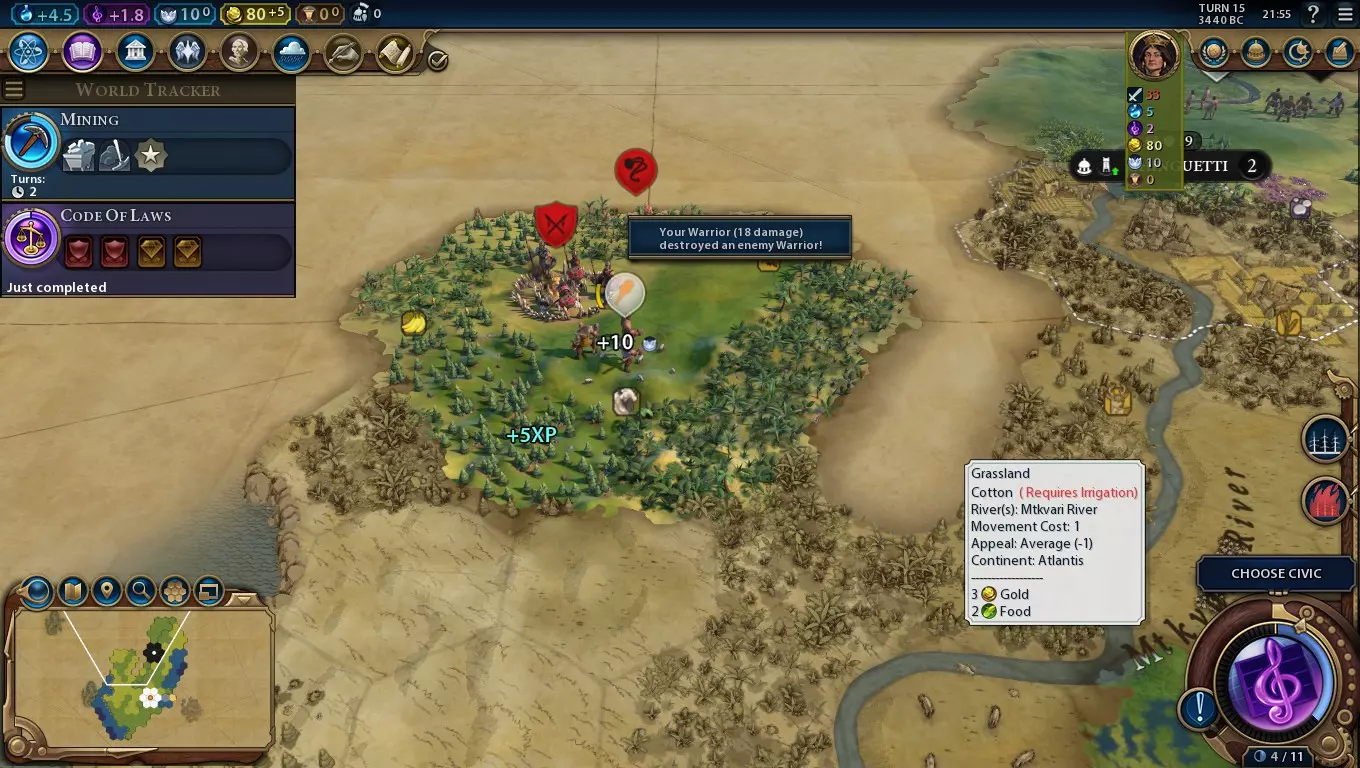
塔玛尔的领袖能力明确表明,格鲁吉亚的游戏玩法围绕信仰构建,不过其能力的两个部分与信仰的配合方式大相径庭。 要想充分利用这一能力,你需要确立宗教。由于格鲁吉亚在创立宗教方面并无直接优势,尽早发展圣地就显得至关重要。尝试向山区扩张——山区不仅能为圣地提供强大的相邻加成,还能让你在后期有效防御这些城市。 击杀获得信仰 与希腊的戈尔戈击杀敌方单位可获得文化的能力类似,塔玛尔能获得信仰。在游戏初期,击杀一个蛮族战士可获得10点信仰——击杀三个蛮族战士就足以确立万神殿。保留一个蛮族前哨站而不清除它可能会很有用,这样它就能生成更多蛮族供你击杀以获取额外信仰值。 可以考虑将此能力与“战神”万神殿叠加使用,该万神殿与这个加成类似,在击杀单位时会根据其近战强度的一半为你提供信仰值。“战神”万神殿仅在圣地周围8格内生效,但该圣地不一定必须是你自己的! 信仰与战争通常难以兼顾,因为敌方军事单位可以轻易掠夺你的宗教单位。不过,转化与你处于战争状态的其他文明的城市将获得额外时代分数,这是维持持续黄金时代的好方法。 进攻性战争 如果你想通过这种能力主动获取大量信仰值,或许可以考虑入侵其他文明。克赫苏尔战士、攻城锤或攻城塔在摧毁敌方防御工事方面表现出色,同时它们拥有足够的实力来对抗任何中世纪时期的单位。拥有二级政府后,你可以建造“总领礼拜堂”政府广场建筑。虽然它没有外交部那种有用的城邦征召加成(这与塔玛尔领袖能力的另一半很搭配),但它允许你用信仰值购买军事单位。这意味着在战争中,你可以通过消灭敌方单位来加速未来单位的生产,但要注意单位的成本增长速度比敌方单位的强度增长速度更快。 防御战争 这种能力的另一种用法是让敌人主动来找你。格鲁吉亚文明的能力让建造城墙变得轻松,这样你就能在保证城市安全的同时,通过消灭敌方单位来获取信仰值。 由于塔玛尔特别擅长成为城邦的宗主国,其他文明可能会想要直接入侵并征服这些城邦,以阻止塔玛尔获得相关加成。占领城邦可能会引发城邦紧急状况——作为成员加入紧急状况是与其他文明开战而不产生不满的好方法,这可是个通过消灭敌方单位获取信仰值的绝佳机会! 总体而言 塔玛尔领袖能力中的这一元素并非信仰值的主要来源,且其重要性会随着游戏进程逐渐降低。不过,它确实能为清剿蛮族、防御其他文明,甚至发动克赫苏尔战争提供不错的奖励。塔玛尔的领袖能力:世界、王国与信仰的荣耀(2/2部分) 已转化城邦的使者数量翻倍
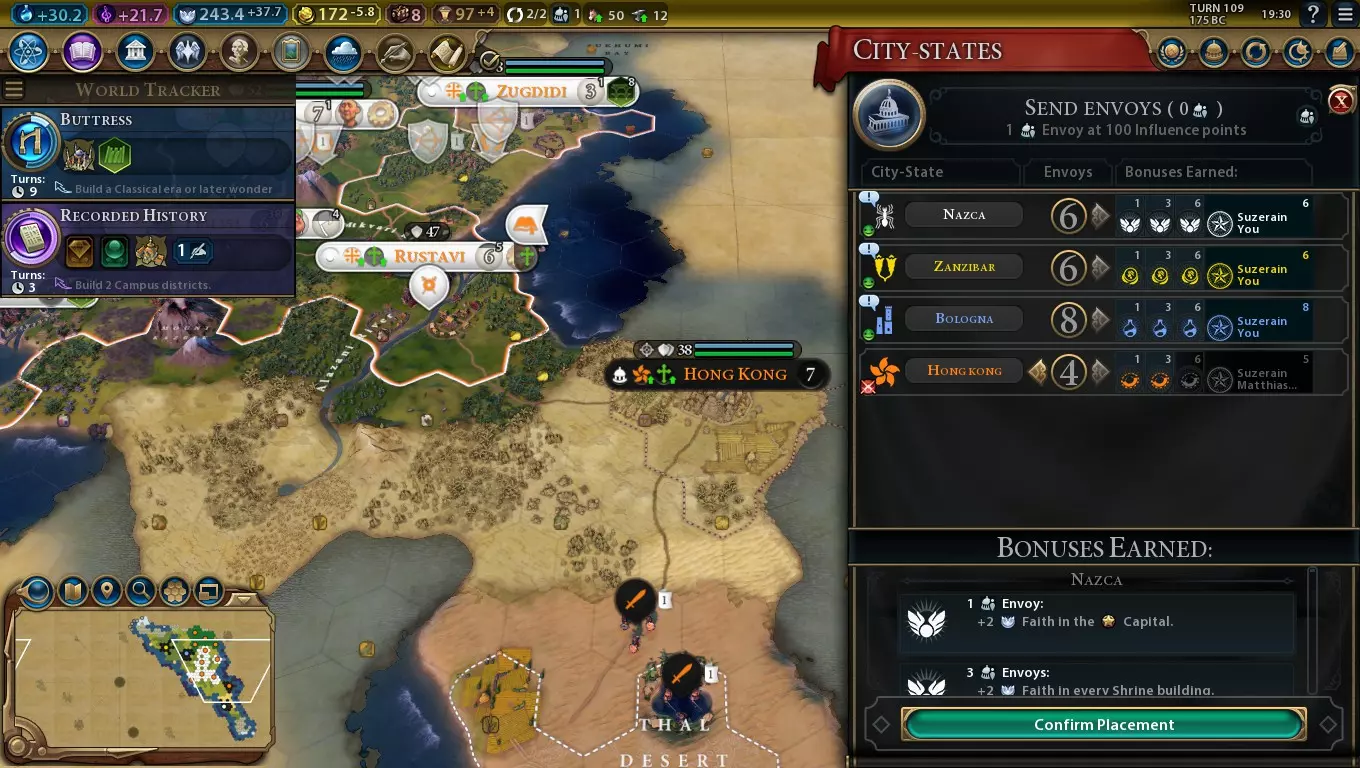
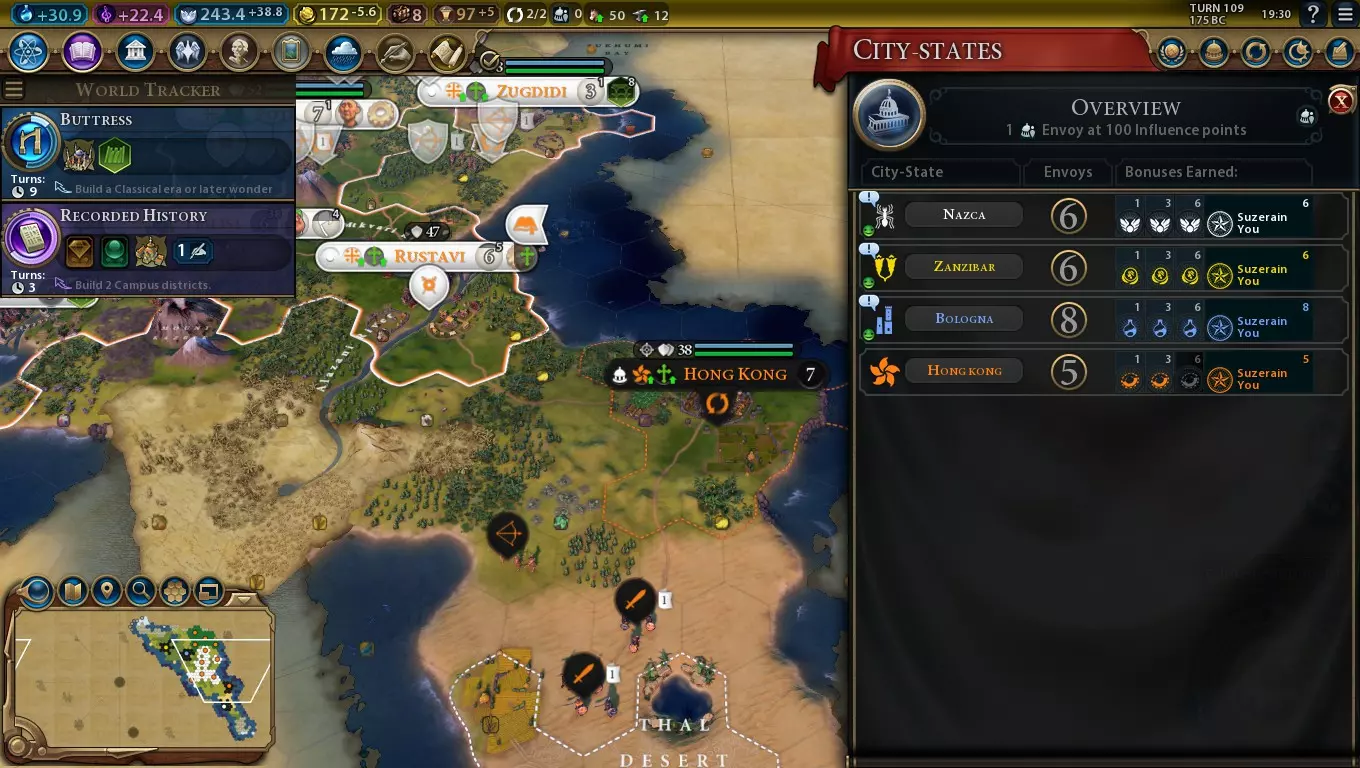
Just one envoy sent gives you two when the city is of your faith - meaning it's easy to flip back city-states to your control when the envoy race gets competitive. The more consistently powerful part of the leader ability lets your envoys stretch much further than they would for other civs, letting you become suzerain over far more city-states than practically anyone else. For the sake of efficiency, unless city-states have particularly important bonuses you need as soon as possible, avoid spending envoys in city-states you haven't converted. If you're already suzerain over all the city-states you've converted, just hang onto those envoys until you convert another city-state or someone else takes control of the city-state from you. For a list of the city-state suzerain bonuses most relevant to Georgia (and therefore some of the city-states you'll want to favour the most), head to the Administration section of this guide. As for envoy bonuses, those from religious city-states are generally the most relevant, but otherwise it largely depends on what you need at the time. If in doubt, scientific and industrial city-state envoy bonuses are almost always useful. Keep in mind that the 3 and 6 envoy bonuses require you to build corresponding buildings to make use of the bonus. Here's all the methods of obtaining envoys: The Religious Unity founder belief provides Georgia with +2 envoys in a city-state when they convert one to their religion. Some government options help accumulate them over time (the Monarchy government and the Charismatic Leader, Diplomatic League, Gunboat Diplomacy and Containment policy cards), along with the Diplomatic Quarter district. Certain civics grant you envoys directly when unlocked - usually civics that are off the main research path. The classical-era Apadana wonder offers two envoys, plus two more for every wonder built in the same city - considering wonder construction is a great way of gaining era score, it's a good fit for the Georgian civ ability. Some Great People grant envoys when used - see the Administration section of the guide for more details. Amani (the Diplomat) grants 2 envoys in a city-state she is present in. This, however, is not doubled by Tamar's leader ability. If promoted enough, Amani also doubles the number of envoys you have present in a city-state when she is placed there. Liberating a captured city-state puts you at 3 envoys if you liberate it in the medieval era or earlier, 6 envoys if it's between the renaissance and industrial eras, or 9 envoys in the modern era or later.Be warned that enemy Spies can remove some of your envoys via the Fabricate Scandal mission. Of course, you can use that mission yourself to set back everyone else. Having lots of envoy bonuses and city-state allies is useful for boosting all kinds of yields, but it also helps provide a handy defensive advantage - when you go to war, all your suzerain city-states will join you, and for an affordable price you can take levy their military, taking control of all their military units for 30 turns. Furthermore, every city-state you are suzerain over grants +1 diplomatic favour per turn, or +2 with the industrial-era Országház wonder. This can give you a significant advantage in the World Congress. Further Reading: Tamar of Georgia and Civilization VI Tamar (and Georgia)'s inclusion in Rise and Fall might be a surprise to players who were unfamiliar with developments in the Civ community prior to the release of Civ 6, considering Georgia has never featured in a Civ game before. Between Civ 6's announcement and its release, the civs that would be featured in the base game were introduced - generally on a weekly basis - in a series of First Look videos. Occasionally different videos were released to explain elements of the game's development, and one of those videos included a blurry poster in the background. This poster appeared to showcase the leaders that would feature in Civ 6's base game, and as more First Look videos were released, it confirmed that the poster was accurately showing which leaders (and therefore which civs) would be in the game. Deciphering the poster wasn't easy for the Civ community. The blurry resolution meant that it was necessary to find historical images that roughly corresponded to its shape. Some were easy enough to find, but some proved elusive. One in particular was mis-identified as representing Tamar of Georgia. As more First Look videos were released, the idea that the next one would showcase Tamar of Georgia became an in-joke, particularly in the CivFanatics forums. This extended even past the release of the game once First Look videos were released for DLC civs, slowly morphing into an increasingly popular desire to see Georgia in the game, and ultimately culminated in Tamar and Georgia actually featuring in Rise and Fall. Conclusion Tamar's leader ability pushes you to tie together religion and city-states. You may have to spare a couple of Missionaries more than the typical religious civ for the full advantage, but faith from kills and suzerain or envoy bonuses from city-states will help make up for that. Civilization Ability: Strength in Unity (Part 1/3)
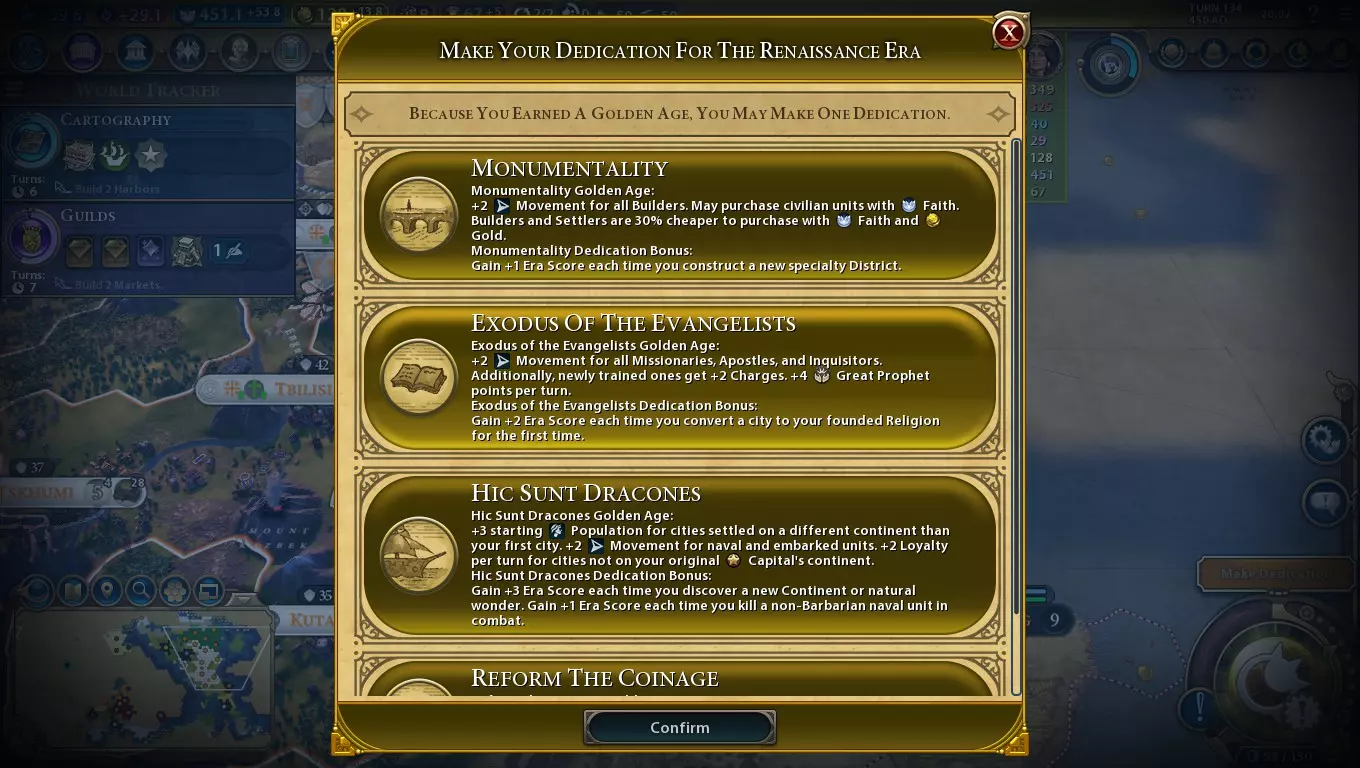
Georgia's civ ability is a tricky one to use well - misjudge era score just slightly and you can end up with no benefit from it for at least 40 turns. Smart use of it allows you to enter constant Golden Ages that other civs would never manage to achieve. Dark, Normal, Golden and Heroic Ages The game is divided into nine game eras: ancient, classical, medieval, renaissance, industrial, modern, atomic, information and future. These last between 40 and 60 turns depending on the rate at which civs research technologies and civics. During a game era, various actions grant era score, elaborated on later in this guide. Depending on how much you earn during a game era, you will have a Dark, Normal, Golden or Heroic Age during the next game era. The four different types of ages have distinct effects: Dark Ages You will enter a Dark Age if you produced insufficient era score during the previous game era to reach any other kind of era. During Dark Ages, your citizens will provide half as much loyalty pressure as normal, which can cause border cities to become disloyal, making it much trickier to hold onto conquests. However, you also have access to Dark Age policy cards. These go in a wildcard slot and provide significant benefits but also significant drawbacks. To help you get out of a Dark Age, you may choose one of four dedications, which grants you bonus era score from certain actions. The selection of possible dedications varies every game era. Normal Ages You will always start the game in the Normal Age. Further Normal Ages can be entered if you produced a moderate amount of era score in the preceding game era. Normal Ages have nothing particularly special about them. Like Dark Ages, you may choose one of four dedications for bonus era score. Golden Ages Golden Ages can be achieved if you had a particularly large amount of era score in the preceding game era. Golden Ages cause your citizens to provide 50% more loyalty pressure than normal, making it much easier to resist enemy loyalty pressures. More importantly, you get access to a choice of one of four Golden Age dedication bonuses, which offer some powerful advantages for the rest of the era. However, the dedications in a Golden Age do not provide era score, making it harder to avoid a Dark Age in the following era. Heroic Ages If you are in a Dark Age, achieving enough era score for a Golden Age will instead place you in a Heroic Age. These ages are identical to Golden Ages, except they let you choose three dedication bonuses instead of just one. Era Score Thresholds The amount of era score you achieve in a game era will determine your next era status - the exact numbers are as follows: By default, having 13 era score or less will result in a Dark Age in the next game era. By default, having between 14 and 27 era score will result in a Normal Age in the next game era. By default, having 28 or more era score will result in a Golden Age in the next game era, or a Heroic Age if you are currently in a Dark Age. These thresholds are lowered by 3 for the ancient game era, so you only need 25 era score to achieve a classical-era Golden Age. These thresholds are increased by 1 for every city you controlled at the start of the game era. These thresholds are increased by 3 for every previous Golden or Heroic Age you entered, and decreased by 3 for every previous Dark Age you entered. Enter Georgie Georgia's civ ability makes a notable change to the typical rules - Golden and Heroic Age dedication bonuses provide extra era score as well as direct advantages. The main effect of this is it makes it much easier to follow up Golden or Heroic Ages with another Golden Age, but it does come with the problem that Normal Ages are pretty useless for Georgia. Unless you're out conquering and need the loyalty boost, it's often better to get a Dark Age than a Normal Age. Era Score So, we've established that Georgia needs plenty of era score to make the most of their civ ability, and now we need to consider where era score comes from. There's too many sources to list them all, but most of them are one-off boosts. Here are the key repeatable methods: City-States Being the first suzerain of a city-state prior to the renaissance game era grants +2 era score. Cancelling another civ's levied units by equalling or exceeding their envoys present in the corresponding city-state grants +2 era score. Dragging a city-state out of a war by equalling or exceeding their suzerain's envoys grants +2 era score. Warfare Destroying a Barbarian Encampment prior to the renaissance game era offers +2 era score, and an extra 1 if it's within six tiles of one of your cities. This is one of the best (and easiest) sources of era score early on. Killing an enemy unit with a unit with a Great Admiral or General attached gains +2 era score. This can only be done once per Great Admiral or General you have. Killing a corps or army with a unit gains +1 era score. Killing a unit with at least two more promotions than your own grants +3 era score. Converting a city of another civ to your faith while you're at war with them adds +3 era score. Reconquering a city adds +2 era score, though you probably don't want to rely on this. Taking the capital of a civ adds +4 era score. Eliminating a civ adds +5 era score. Other Uncovering a tribal village in the ancient game era offers +1 era score. Earning a Great Person adds +1 era score, increasing to +3 if you earned it via faith or gold patronage in a way that represented more than 50% of the progress needed to unlock it. Each wonder built offers +3 era score, and an extra 1 if it corresponds to the present game era or later. Creating a national park adds +2 era score each time. Flipping a free city to your civ adds +2 era score. Winning an emergency as a coalition member prior to the atomic game era grants +3 era score. Winning an emergency as the target, regardless of era, grants +4 era score. Of special interest to Georgia is the ability to get +3 era score every time you convert a city of a civ you're currently at war with, considering the faith-on-kills attribute on Tamar's leader ability. Keep religious units escorted with military units so they can't be condemned, and you should be able to get quite a lot of era score that way! Constructing wonders is also a reliably good source of era score, which goes nicely in conjunction with the Divine Inspiration belief for extra faith. The renaissance-era Taj Mahal wonder, available at Humanism, is of particular note - it makes anything that grants 2+ era score grant an additional 1 point. Out of the one-off bonuses, it's worth noting that training your first Khevsur or building your first Tsikhe will grant +4 era score each. Civilization Ability: Strength in Unity (Part 2/3) Dedication Bonuses Now that we know some good sources of era score, it's time to consider what can be done with it all. Each era has a set of four possible dedications, and as the game goes on some new ones become available to replace old ones. Here they all are: Dedication Name Era Score Bonus Golden Age Bonus Start Era End Era Free Inquiry 1 era score per eureka unlocked, 1 per science building built Eurekas provide an additional 10% of science cost. Harbour and Commercial Hub adjacency adds to science. Classical Medieval Pen, Brush and Voice 1 era score per inspiration, 1 per building with a Great Work slot Inspirations provide an additional 10% of culture cost. All cities gain +1 culture per speciality district. Classical Medieval Monumentality 1 era score per new speciality district Builders gain +2 movement. May purchase civilian units with faith. Cost of purchasing Settlers and Builders (including via faith) reduced by 30%. Classical Renaissance Exodus of the Evangelists 2 era score for converting a city for the first time Missionaries, Apostles and Inquisitors get +2 movement and new ones get +2 charges. Gain +4 Great Prophet Points per turn. Classical Renaissance Hic Sunt Dracones Gain +3 era score per natural wonder or continent discovered. Gain +1 era score for killing a non-Barbarian naval unit. Cities settled on a foreign continent gain +3 starting population, and +2 loyalty per turn. Naval and embarked units gain +2 movement. Renaissance Modern Reform the Coinage Successfully completing a trade route grants +1 era score. All traders are immune to pillaging. Gain +3 gold per speciality district at the destination from international trade routes. Renaissance Modern Heartbeat of Steam Gain +2 era score for each industrial-era or later building. Gain +10% production towards industrial-era and later wonders. Campuses also add their adjacency bonus to production. Industrial Atomic To Arms! Gain +1 era score for killing a non-Barbarian corps and +2 from killing a non-Barbarian army. Gain +15% production towards military units. Also unlocks a special casus belli that reduces warmonger penalties by 75% relative to a formal war and can be used immediately after denouncing a foe. Industrial Information Bodyguard of Lies Gain +1 era score per successful Spy operation. Spies take no time to establish themselves in an enemy city. Offensive Spy operations take 25% less time. Atomic Future Wish You Were Here Gain +1 era score per artefact excavated. National Park tourism doubled. Cities with governors gain +50% tourism from world wonders. Atomic Future Sky and Stars Gain +1 era score per Aerodrome building constructed and Great Person gained. Air units gain +100% experience. Gain 3-4 eurekas (Information era: Satellites, Robotics, Nuclear Fusion, Nanotechnology. Future era: Smart Materials, Predictive Systems, Offworld Mission). Aluminium mines produce +2 resources per turn. Information Future Automation Warfare Gain +1 Era Score for each non-Barbarian unit killed with a Giant Death Robot. Gain a Giant Death Robot. Receive 3 uranium per turn. Uranium mines accumulate +1 more resource per turn. Future Future Early on, Exodus of the Evangelists will be extremely useful for Georgia getting their religion off the ground, through Monumentality can be great as well; cheap Settlers purchased with faith can really help expand your empire. If you don't feel you can achieve a religious victory, the Wish You Were Here Golden Age bonus offers a very effective boost to help you convert your strong faith output into tourism. Because of the rising era score thresholds for Golden Ages, you'll probably eventually need to enter a Dark Age at some point to lower it again. This also creates the possibility of a Heroic Age, so it's not a huge loss if done well. Here's a potential plan of action which ensures you get the most relevant Golden Age bonuses, without the difficulty of relying on a non-stop chain of them. Classical Era: Golden Age - Exodus of the Evangelists Medieval Era: Golden Age - Exodus of the Evangelists Renaissance Era: Golden Age - Exodus of the Evangelists Industrial Era: Dark Age - Reform the Coinage is probably the easiest dedication bonus for era score. Modern Era: Heroic Age - Heartbeat of Steam, Hic Sunt Dracones, Reform the Coinage (replace the latter with To Arms! if you're likely to do a lot of combat) Atomic Era: Golden Age - Wish You Were Here Information Era: Golden Age - Wish You Were Here Future Era: Golden Age - Wish You Were Here Destroying a few Barbarian Encampments will help you get to the first few Golden Ages. The UU and UB will also help provide bonus era score to secure the renaissance-era Golden Age. The industrial era has the least relevant bonuses to a heavily faith-centric strategy, so it's a good time to concede a Dark Age. If you end up in the wrong kind of age, just continue this path as if that never happened. An alternative approach is to concede a classical era Dark Age so you can get a Heroic Age going when the Khevsur UU is most relevant, and to make subsequent Golden Ages a bit easier to acquire. You'll probably unlock the Khevsur UU before the medieval game era, but you'll need time to train them up seeing as you can't upgrade anything into them. Civilization Ability: Strength in Unity (Part 3/3) Bonus Wall Production
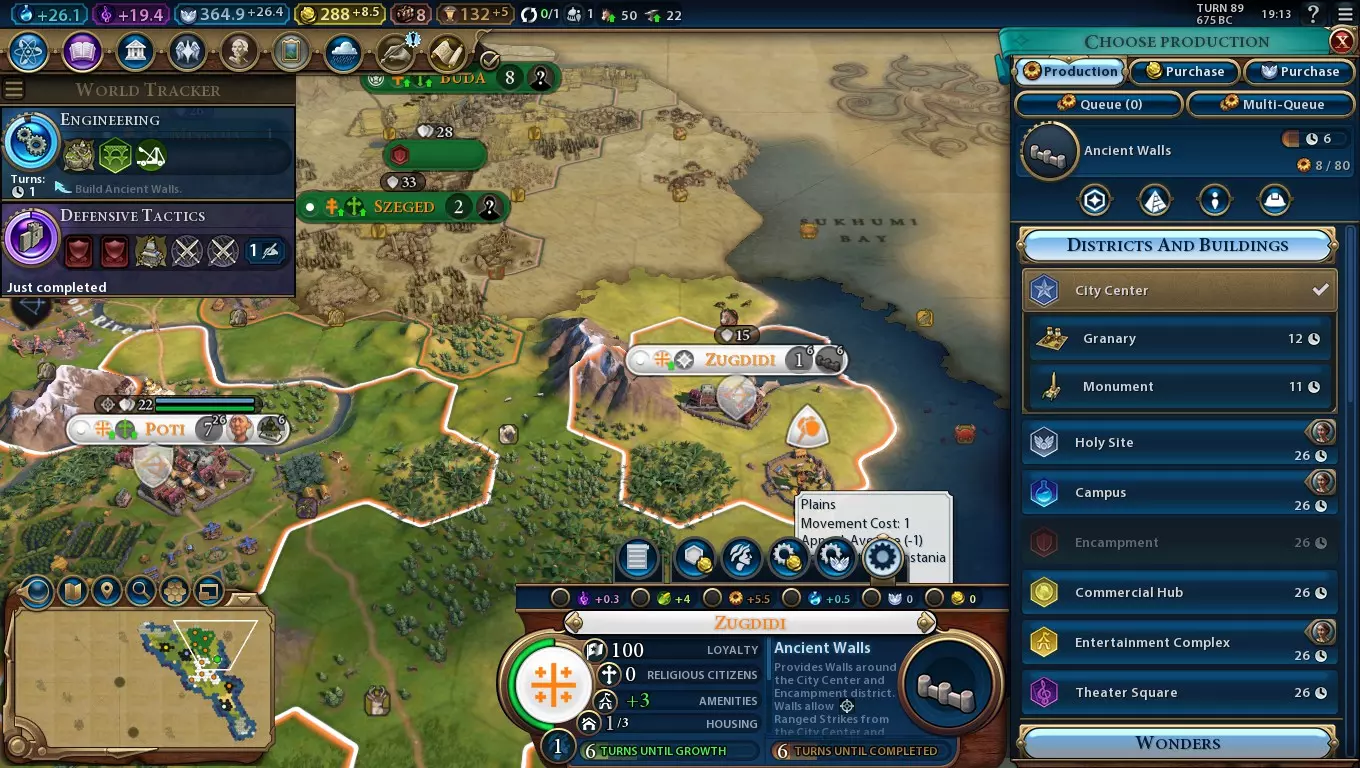
即便是这座生产力低下的新城,也能迅速建立起防御工事。 除了格鲁吉亚文明能力的主要时代分数加成外,游戏中的三种防御建筑——远古城墙、中世纪城墙和特色建筑“齐赫”(Tsikhe UB)还能获得50%的生产力加成。这与“罗马边境”(Limes)军事政策卡(古典时代,需“防御战术”科技)叠加后,可获得150%的加成。 这显然有助于更快建造特色建筑,对早期防御也很有用。与其他文明相比,远古城墙的建造时间大约减少33%(假设双方均未使用“罗马边境”政策卡)。如果双方都使用“罗马边境”政策卡,建造时间则大约减少20%。这能节省更多生产力用于其他方面,比如防御单位。它还能让你在更具侵略性和风险的位置建立城市,因为你可以快速构建一些坚固的防御工事。此外,城市城墙在现代时代的“保护”市政下能提供旅游业绩。远古城墙提供+1旅游业绩,中世纪城墙提供+2,而“茨赫”特色建筑提供+3(在黄金时代/英雄时代期间为+6)。再加上格鲁吉亚良好的信仰产出(可以轻松用于购买自然学家以建立国家公园,或购买摇滚乐队),如果宗教或外交路线未能成功,格鲁吉亚也具备进行不错的文化胜利游戏的条件。 城市防御机制 关于城市城墙,值得更深入地解释一下城市防御的运作方式。城市拥有的近战 strength 等于你最强单位的近战 strength 减10,或者等于驻守单位的近战 strength(取较高值)。若该城市是你的首都,基础防御值+3;若位于丘陵地形,+3;每拥有1个特色区域,+2;若有维克托总督( castellans )驻守,+5。城市每损失10%生命值,防御值便降低1,机制与单位类似。 城市拥有200点生命值,是单位生命值的两倍。城市每回合恢复20点生命值,除非处于被围攻状态(完全被敌方单位的控制区域包围)。 城墙从三个方面保护城市:首先,只要城墙未被摧毁,每级城墙可为城市增加+3防御值,若城市拥有文艺复兴城墙,总计可+9防御值。其次,城墙允许城市对两格范围内的邻近敌人发动远程攻击(远程攻击力等同于你已训练过的任何单位的最高远程攻击力)。第三,也是最重要的一点,城墙为城市增加了外层防御。 外层防御相当于城市的第二条生命值。当拥有城墙的城市受到攻击时,外层防御和城市生命值都会受到伤害。不过,剩余的外层防御越多,城市生命值受到的影响就越小。拥有满值外层防御的城市所受直接伤害微乎其微,通常能够自行恢复。若一座城市连续三回合没有相邻敌人,即可启动“修复外围防御”城市项目,完成后将完全恢复已损耗的城市防御值。此外,外围防御受到近战攻击时伤害降低85%,受到大多数远程攻击时伤害降低50%。但攻城单位、海军远程单位和轰炸机类飞行器对其造成全额伤害。远古城墙提供+100外围防御值,中世纪城墙额外+100,文艺复兴城墙再额外+100(格鲁吉亚的“齐克赫”为+200),总计300(格鲁吉亚为400)。当解锁现代 era 的“钢铁”科技后,将无法再建造任何类型的城墙,且城墙也不再影响外围防御等级。相反,所有城市都会获得“城市防御”效果,使其拥有400点外围防御值并具备远程攻击能力。不过,已有的城墙仍会为城市提供防御加成,且所有相关的产出加成(例如君主制政体提供的住房)依然适用! 总结:尽可能避免普通时代。 获取时代分数的一个简单可靠的方法是转化与你处于战争状态的文明的城市——将此与你的击杀信仰值属性相结合。 如果你有足够的剩余生产力,建造奇观也是获取时代分数的合理途径——可搭配“神圣启示”信条以获得额外信仰值。 “福音传道者大迁徙”“不朽丰碑”和“愿你在此”这三个黄金时代加成,与格鲁吉亚的信仰优势最为直接相关。特殊单位:克夫苏尔战士(Khevsur)
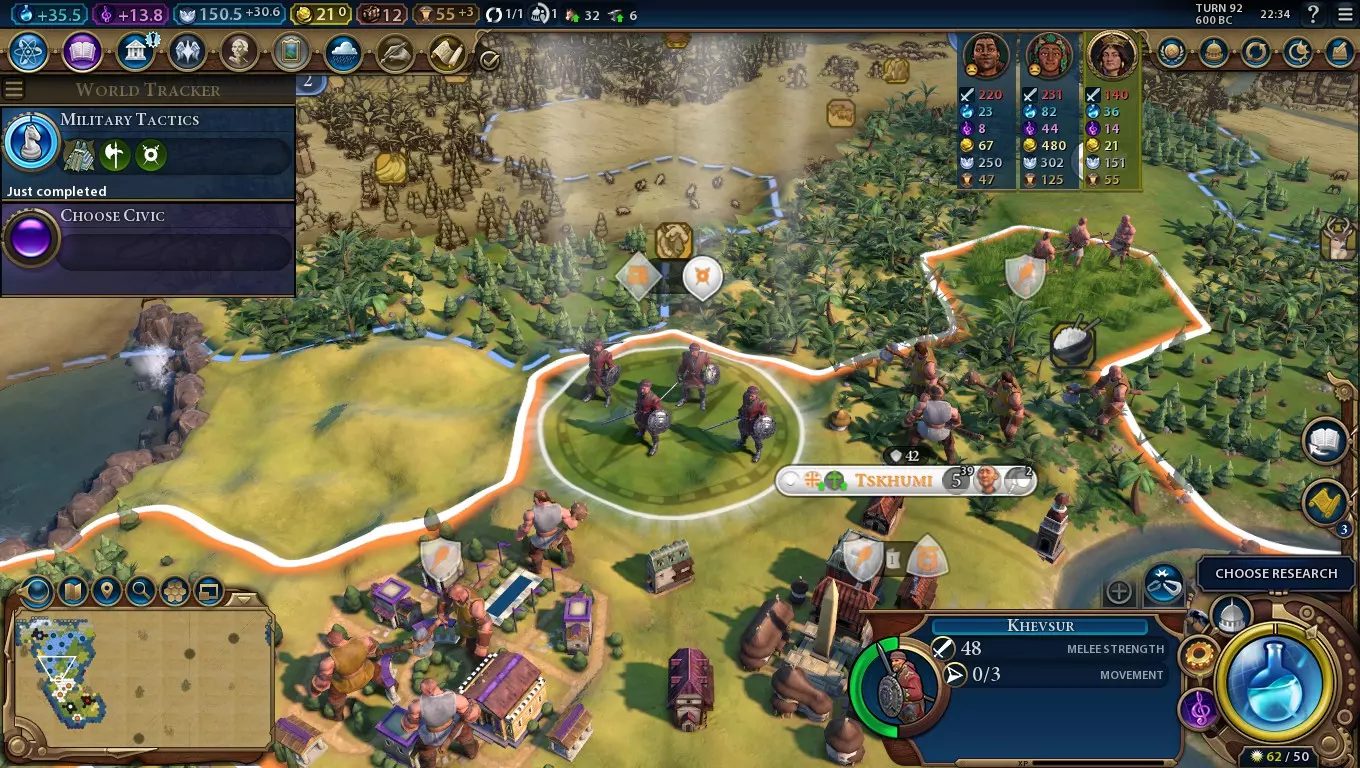
克赫苏尔人机动性和战斗力均属中等,在中世纪战争中颇具优势,尤其擅长摧毁蛮族营地和防御作战。如果你愿意,甚至可以将其用于进攻;若打算这么做,记得带上攻城塔。只要拥有足够的信仰,即使没有建造军营区域,也能招募大将军。 准备工作: 要解锁克赫苏尔人,需要研发“军事战术”科技。此外,还需“青铜冶炼”科技来揭示铁资源,以便训练他们。你可能还需要先研究“占星术”“箭术”以及“灌溉”等关键的建造者科技,但在其他条件允许的情况下,越早研发出相关科技,这些单位的效用就越大。 若想充分发挥克赫苏尔人的实力,你需要采用“寡头政治”政体,它能提供+4战斗力加成,使克赫苏尔人的战斗力超过骑士。此外,如果你能获取“封建制度”市政以解锁“封建契约”政策卡,将能更快训练他们。或者,如果你有足够的金币,可以将战士或剑士升级为他们,但为此你需要绕道研发“铁器”科技。 用法 在战斗中,克赫苏尔战士应尽可能坚守丘陵地形,以获得+7战斗力加成和移动优势。拥有“突击队”晋升或古典/中世纪时代大将军的克赫苏尔战士在丘陵上的机动性比骑士更强,作战效率也显著提升。他们还可以利用丘陵安全地从敌方远程单位处撤退。 克赫苏尔战士在山脉间的狭窄通道中尤其有用。它们能够清除敌方单位,因为其对丘陵的攻击加成足以抵消地形防御加成,且敌人很难将它们从丘陵上驱逐。当然,丘陵并非随处可见。有些区域只有零星几处丘陵,但克赫苏尔战士在那里仍然有用。让克赫苏尔战士在丘陵上驻防,可以形成敌方文明难以撼动的控制区域,从而让你在其后方调动更脆弱的单位。不过,拥有冲锋晋升的骑士可能会构成威胁——你或许需要一两个长枪兵来配合克赫苏尔战士组成的军队。一旦火枪手出现,你会希望将大部分克赫苏尔战士升级为火枪手。保留一两个(克赫苏尔战士)一段时间仍然有用,因为它们在丘陵地带的机动性可以让你在敌方其他单位占领之前抢占一个良好的防御位置,或者更快地对城市展开围攻。之后你可以将克赫苏尔战士替换为火枪手。 结论 克赫苏尔战士主要作为防御单位发挥作用,但对格鲁吉亚而言出现得正是时候。一支性价比高的防御部队意味着你可以将更多生产力投入到圣地建设和扩大信仰产出上。 特色建筑:齐克赫(Tsikhe)
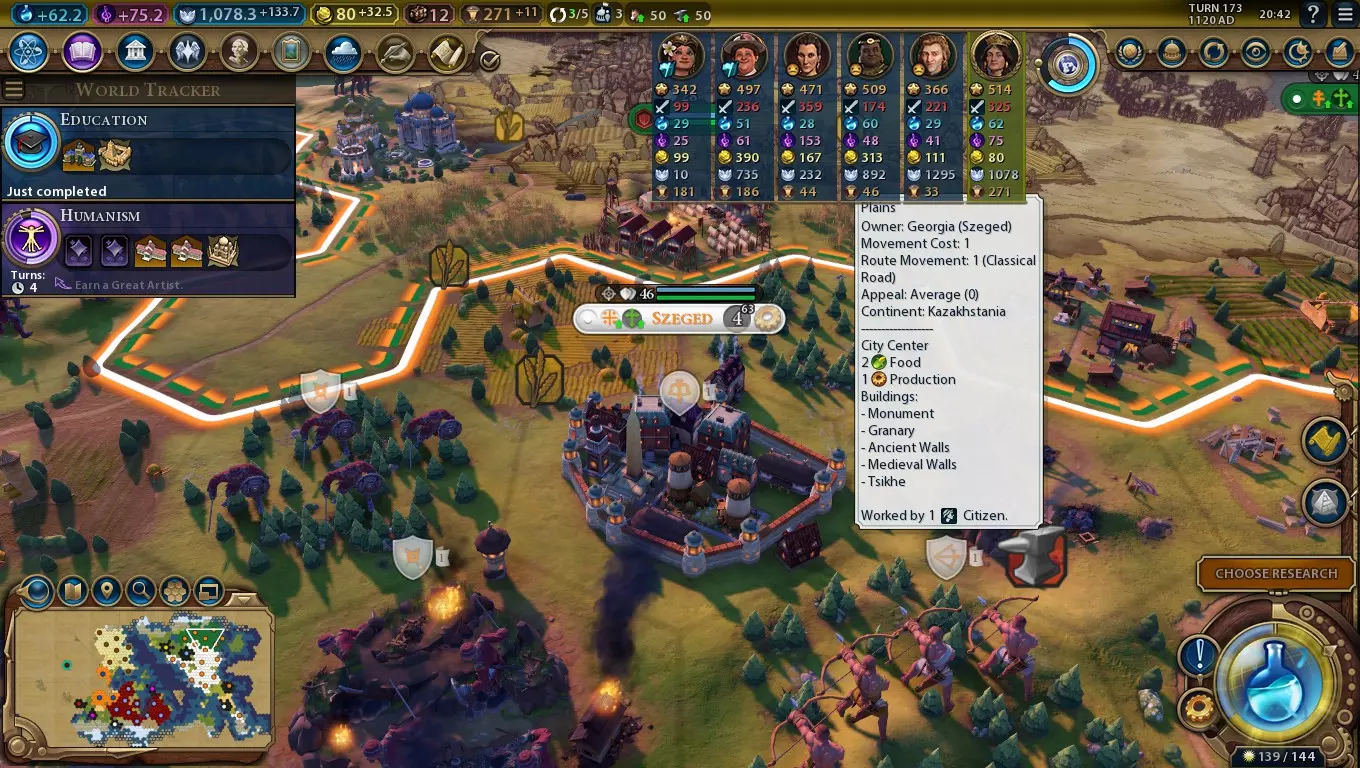
The Tsikhe building offers a lot of great advantages for Georgia - some obvious and some subtle; some direct and some indirect. It'll help you defend better, collect plenty of faith and even get some bonus tourism, alongside lots of other potential boosts. Construction The Tsikhe comes available at the renaissance-era Siege Tactics technology, which is relatively easy to beeline once you're done with Military Tactics and whatever other technologies you need. The Limes military policy card (available at the classical-era Defensive Tactics civic) grants a +100% production boost while building it as well as its prerequisite buildings, and Georgia's civ ability adds another +50%, so it can still be manageable in relatively small cities. Importantly, the Tsikhe is rare among UBs by not requiring a specific speciality district. This makes it easy to build in every city in your empire, but there's a catch - the Tsikhe is also the only UB that obsoletes, so be sure to build it everywhere before the Steel technology so you can keep its bonuses! Yields The Tsikhe building offers 200 outer defence, up from the typical 100 Renaissance Walls offer. A Georgian city with a Tsikhe building will be as well-defended as a city with Urban Defences from the modern-era Steel technology, making it particularly hard to take out. Even Bombards will struggle to leave a dent in Georgian cities. The Tsikhe building also offers a decent +4 faith boost, which is better than most worship buildings, and without the need for a specific speciality district. Enter a Golden or Heroic Age, however, and this is doubled to a very impressive +8. With the modern-era Conservation civic, all Renaissance Walls (including the Tsikhe UB) offer +3 tourism. However, the Tsikhe UB doubles this to +6 during a Golden or Heroic Age - better than most Great Works! There's two other handy bonuses you can apply to Renaissance Walls (and by extension, Tsikhe buildings): The Monarchy government adds +1 housing per level of walls, so a city with a Tsikhe building will have a +3 housing advantage. More significantly, it adds +2 diplomatic favour for every Tsikhe you have, granting an incredible diplomatic advantage. The industrial-era Urbanisation civic offers the Military Research military policy card, which adds +2 science for each Tsikhe you have. Conclusion The Tsikhe building might replace a relatively niche building, but its impressive faith output in Golden and Heroic Ages, lack of prerequisite district and fast construction speed makes it worth constructing in every city. It's useful for diplomatic, religious and cultural games alike, and helps your cities stay well-defended between up to the modern era. Administration - Government and Policy Cards Note that the Administration sections strictly cover the options that have particularly good synergy with the civ's uniques. These are not necessarily the best choices, but rather options you should consider more than usual if playing this civ relative to others. Government Tier One Oligarchy is useful to enhance the power of your Khevsurs, though Classical Republic can be good as well if you need an extra edge to Great Prophet Points to help secure a religion, or if you want the extra economic policy card. The Ancestral Hall is probably the best tier one government building for Georgia seeing as faith output is largely scaled to the number of cities you have. Tier Two Monarchy complements both Tamar's leader ability and the UB well, with significant advantages in the diplomatic game. Alternatively, take Theocracy for the religious advantages. The choice of tier two government building is fairly open. If you find yourself in offensive wars, the Grand Master's Chapel is a good choice. If you're in defensive wars or are specifically playing the diplomatic game, the Foreign Ministry makes raising a quick army out of your city-states affordable while also offering an unconditional boost to diplomatic favour. If you find yourself rarely at war, the Intelligence Agency provides you with an extra Spy you can use for the Fabricate Scandal mission. Tier Three Democracy is a reliable choice. Its high number of economic policy cards helps support the religious game, and the incentive to have allies makes it work well in a diplomatic game as well. The Royal Society lets you turn Builder charges into faith via the Holy Site Prayers project, or diplomatic favour via the Carbon Recapture project. The War Department helps with theological combat. If you're switching to a faith-based cultural victory approach, the National History Museum may be more useful. Tier Four For a cultural game, Digital Democracy is the least bad option of the three. It doesn't have particularly strong synergy with a cultural game, but avoids the more awkward penalties the other tier four governments have. For a diplomatic game, take Synthetic Technocracy so you can get Carbon Recapture projects done faster. Policy Cards Ancient Era Corvée (Economic, requires State Workforce) - Building wonders is a great source of era score, though keep in mind Georgia's production will often be tied up in basic expansion and building Holy Sites. Discipline (Military, requires Code of Laws) - One of the best ways of getting era score prior to the renaissance era is to destroy Barbarian encampments. This policy card helps you kill Barbarians faster. Revelation (Wildcard, requires Mysticism) - Though this policy card is useful for any religious civ without a religion yet, it's even more important for Georgia. Unlike most religious civs, that can simply use their advantages for something else if they can't found a religion, the double envoy bonus Tamar offers only works if you can found a religion. Classical Era Charismatic Leader (Diplomatic, requires Political Philosophy) - Accumulate envoys at a faster rate. Diplomatic League (Diplomatic, requires Political Philosophy) - If you have no envoys present in a city yet, and the city is converted to your religion, Tamar's leader ability combined with this policy card means the first envoy will be worth three. Limes (Military, requires Defensive Tactics) - Offers a huge production boost to walls, including your UB. Stacked with Georgia's civ ability, even weak cities can get a Tsikhe building up reasonably fast ensuring you can enjoy a considerable faith bonus during Golden and Heroi Ages. Medieval Era Feudal Contract (Military, requires Feudalism) - Helps you train Khevsurs faster. Gothic Architecture (Economic, requires Divine Right) - Boosts wonder production up to the renaissance era. Once you're done training Khevsurs and building your UB, you should have much more production spare. Building wonders will help you keep your era score high, ensuring you can chain together those Golden Ages. Merchant Confederation (Diplomatic, requires Medieval Faires) - Georgia can end up with nearly twice as many envoys as most other civs, which means this policy card will be nearly twice as good as it is for other civs. Industrial Era Military Research (Military, requires Urbanisation) - This policy card helpfully makes all copies of your UB provide +2 science. Raj (Diplomatic, requires Colonialism) - Got a lot of suzerain city-states? Want more out of them? This policy card gives you +2 science, culture, gold and faith for each one you have. Skyscrapers (Economic, requires Civil Engineering) - Boosts the construction of all wonders - handy for getting a little more era score. Modern Era Gunboat Diplomacy (Diplomatic, requires Ideology) - Helps you accumulate envoys even faster. Atomic Era Containment (Diplomatic, requires Cold War) - Is a city-state following your religion, but has a suzerain with a different government to you? Pick up this policy card and every envoy you send there will be worth three. Information Era Collective Activism (Diplomatic, requires Social Media) - Helps you get through the last few civics by leveraging the city-states you're suzerain over. It will also help you accumulate domestic tourists to slow down rival cultural civs. International Space Agency (Diplomatic, requires Globalisation) - Offers a stacking 5% science bonus per city-state you are suzerain over. On larger maps, this can be quite considerable - if religious or cultural victory doesn't work out, maybe science will? Future Era Non-State Actors (Wildcard, requires Cultural Hegemony) - This wildcard allows you to directly choose which promotions Spies get. This allows you to consistently pick the Smear Campaign promotion, making Spies more effective at removing envoys other civs have present in a city-state. As the number of envoys removed scales to the Spy's level, that promotion essentially makes them remove two more envoys every time. Consider also adding Disguise and Linguist so the Spies can act even more rapidly to remove rival envoys. Administration - Age Bonuses and World Congress Age Bonuses Only bonuses with notable synergy with the civ's uniques are covered here. Monumentality (Golden Age/Dedication, Classical to Renaissance eras) - Killing a few units combined with this bonus lets you really spam Settlers and Builders early on, which can be a nice boost to your early civ development. Exodus of the Evangelists (Golden Age/Dedication, Classical to Renaissance eras) - A reliably powerful choice for Georgia, making your religious efforts considerably more effective. It's also a good source of era score in itself. If your religion is strong enough, you should be able to keep this bonus up for the full three eras. (Cultural) Flower Power (Dark Age, Atomic to Future eras) - Allows you to more effectively leverage your faith advantages into a tourism advantage by boosting the effectiveness of Rock Bands. Wish You Were Here (Golden Age, Atomic to Future eras) - Great if you want to convert your faith advantage to a tourism one. World Congress How you should vote in the World Congress will often be specific to your game - if you have a strong rival, for example, it might be better to vote to hurt them than to help yourself. Furthermore, there may be general bonuses to your chosen victory route or gameplay which are more relevant than ones that have stronger synergy with civ-specific bonuses. Otherwise, here's a list of key relevant votes that have high relevance for this civ relative to other civs. City-State Emergency - Always vote in favour. Winning this emergency as a coalition member gives you a permanent gold bonus for every envoy you have present at a city-state. Given how many envoys Georgia can generate, that can become a considerable source of money. Espionage Pact - Effect B (The chosen Spy operation is unavailable) on Fabricate Scandal Avoids the risk of Spies taking away your precious envoys. Military Advisory - Effect B (Units of the chosen land promotion class lose 5 strength) on siege units Georgia's reliance on walls for defence can make siege units a threat, but this resolution makes them significantly less of one. Nobel Peace Prize - Always vote in favour Georgia's strong envoy generation means you should be suzerain over plenty of city-states, generating plenty of diplomatic favour. That makes this scored competition easier to win. Religious Emergency - Minimise your vote against this resolution when you are the target. Succeeding a religious emergency as the target causes your faith to have a considerable one-off burst of religious spread. This can be a cost-effective way to convert a lot of cities - including city-states. Treaty Organisation - Effect A (Double diplomatic favor earned from being suzerain of a city-state of this type) on whichever city-state type you're suzerain over the most. Use your advantage in the World Congress to win yourself an even bigger one! Urban Development Treaty - Effect A (+100% production towards buildings in this district) on city centres. Helps you get your UB built faster. Administration - Pantheons, Religion and City-States Pantheons Divine Spark - An incredibly important pantheon if you want a better shot at founding a religion. God of Healing - Holy Sites are typically best-placed near mountains, where there tends to be plenty of hills. This can make an incredibly good spot for Khevsurs to defend, as they'll simply heal through most damage they take. God of War - So long as you're fighting within eight tiles of any Holy Site (owned by you or otherwise), you'll receive 100% of a unit you kill's base strength as faith. Initiation Rites - Out hunting Barbarians for era score? You can grab some faith as well. Monument to the Gods - If you have a lot of spare production, this pantheon can help you get some early wonders. If you don't, you're best-off picking a different pantheon. Religious Beliefs You can have one founder, one follower, one enhancer and one worship belief as part of your own religion. Crusade (Enhancer) - Converting cities while you're at war with them is a great source of era score. With this belief, it'll also make it much easier to capture them. Divine Inspiration (Follower) - Building wonders is also a great source of era score. With this belief, you can get bonus faith out of them as well. Feed the World (Follower) - The Monarchy government combined with your UB will provide plenty of housing. This belief will help you fill that housing capacity. Pagoda (Worship) - Ties together Georgia's strengths in religion and diplomacy. Papal Primacy (Founder) - Papal Primacy gives you religious pressure when you send envoys to a city-state, helping to ensure you can carry on getting two envoys a time there. Religious Unity (Founder) - Convert a city, and you'll immediately create two envoys! This is a consistently great founder belief for Georgia. City-States Akkad (Militaristic) - While this city-state is useful if you're taking your Khevsurs on the war path, the main point of becoming suzerain over Akkad is to prevent other civs doing the same, ensuring your cities' walls stay strong. Ayutthaya (Cultural) - The Limes policy card in conjunction with Georgia's civ ability makes walls much faster to build than their production cost would suggest. In conjunction with Ayutthaya, this is a great way to obtain culture. Bologna (Scientific) - Becoming suzerain over Bologna early on will really help your efforts to found a religion thanks to the extra Great Prophet Point bonus. Brussels (Industrial) - Building wonders is a great source of era score, and Brussels will help you build them faster. Fez (Scientific) - In conjunction with the Exodus of the Evangelists dedication or the Religious Unity belief, you can get even more rewards for a first-time city conversion. Valletta (Militaristic) - Valletta lets you buy the Tsikhe UB (and its prerequisites) with faith. While you might not want to do that if you're pushing for a religious victory, it does help free up production for wonder construction or unit training. Then again, the existence of the Limes policy card and Georgia's production bonus means the production cost is a lot more manageable than it would be for most buildings. Administration - Wonders and Great People Wonders Oracle (Ancient era, Mysticism civic) - The Oracle makes faith patronage of Great People much easier, which is rather useful considering Great People are a source of era score. If you're not aiming to use that faith to help with a religious victory, it's not a bad wonder to have. Stonehenge (Ancient era, Astrology technology) - It's an extremely competitive wonder but secure it and you don't have to worry about the trouble of founding a religion. You'll also get some early era score to help you secure a classical-era Golden Age. Apadana (Classical era, Political Philosophy civic) - An excellent wonder for Georgia. Building lots of wonders in the city with this wonder will provide plenty of era score anyway, but now it can provide lots of envoys as well. Mahabodhi Temple (Classical era, Theology civic) - Wonder construction in general is a good source of era score, but add advantages that help your religion and diplomatic victory points on top, and this is a great wonder for Georgia. Kilwa Kisiwani (Medieval era, Machinery technology) - Become suzerain of enough city-states and this wonder can provide some powerful empire-wide boosts. Generally this wonder will be stronger in larger map sizes as they have more city-states available. Potala Palace (Renaissance era, Astronomy technology) - Georgia benefits from a lot of diplomatic policy cards, and this wonder provides an extra slot for them. Of course, so does the Forbidden City via its wildcard slot, but the research path for it is a little more out of the way. You'll also gain a diplomatic victory point on top! Taj Mahal (Renaissance era, Humanism civic) - Had trouble making it into Golden Ages? You shouldn't any more thanks to the bonus era score the Taj Mahal offers. Just be warned that it does make it harder to deliberately enter a Dark Age as well, and therefore a Heroic Age. Országház (Industrial era, Sanitation technology) - A very powerful wonder for Georgia, as all those suzerain city-states will now produce twice as much diplomatic favour. This will help you dominate the World Congress. Statue of Liberty (Industrial era, Civil Engineering civic) - Georgia's great wall-building ability enables aggressive city placements, though loyalty pressure can be a limiting factor. The Statue of Liberty removes that problem. More to the point, it provides four diplomatic victory points. Great People Any classical or medieval-era Great General would complement Khevsurs nicely, but it would be redundant to list them all. Medieval Era Hildegard of Bingen (Great Scientist) - Been getting Holy Sites early to secure a religion? Have you been neglecting science to do so? Hildegard will help fix that problem by making a Holy Site provide science for you. Imhotep (Great Engineer) - Great for grabbing an early wonder for some era score. Isidore of Miletus (Great Engineer) - Helps you rush a wonder (and grab its era score). James of St. George (Great Engineer) - The Georgian UB can be quite expensive to set up in smaller cities (though the Limes policy card greatly helps). James of St. George makes that task a lot easier by setting up Medieval Walls in three of your cities. Favour using him in weaker cities that can't so easily spare production. Piero de' Bardi (Great Merchant) - Provides an envoy. Send it to a city-state that has your religion present and it'll be worth two. Renaissance Era Ana Nzinga (Great General) - Provides an envoy when retired. Filippo Brunelleschi (Great Engineer) - Helps you rush a wonder. Jakob Fugger (Great Merchant) - Provides 2 envoys, or 4 with Tamar's leader ability. Raja Todar Mal (Great Merchant) - Grants an envoy. Industrial Era Gustave Eiffel (Great Engineer) - Helps you rush a wonder. John Jacob Astor (Great Merchant) - Grants two envoys. Modern Era Matthew Perry (Great Admiral) - A powerful stalemate-breaker in the race to be suzerain over a city-state, as he completely eliminates all other civs' envoys from it. That could be quite devastating if used against you, so it helps to acquire Matthew Perry for yourself if you can. Furthermore, if the city-state follows your religion, you won't only get enough envoys to become suzerain, but you'll get double that number! Counter-Strategies Georgia is a relatively hard civ to conquer - their incentive to build city walls, the Khevsur UU, their tendency to have a lot of city-states allied to them and their loyalty pressure boost from Golden Ages can all make it trickier. Nonetheless, they have weaknesses - particularly early in the game. Civilization Ability: Strength in Unity Era score Era score isn't the most predictable thing in the game, but there are some reliable means of obtaining it. Destroying Barbarian Encampments, converting cities while at war with them and building wonders are three good ways. Deny Georgia the ability to do those actions, and it becomes a lot harder for Georgia to make the most of their civ ability. Working out Georgia's Golden Age bonus will also help, seeing as they'll provide era score via the dedication bonus as well. If their religious units are moving faster than normal for example, they have Exodus of the Evangelists - condemning their religious units so they can't convert any cities will deny them plenty of era score. Georgia's high number of Golden Ages does mean that their loyalty pressure is likely to be constantly at a high level. Invading Georgia while you're in a Dark Age will often be a bad idea for that very reason. On the other hand, continuous Golden Ages will eventually cause Georgia trouble when the Normal/Golden Age threshold raises later in the game. Without good management, Georgia can be very prone to falling into a Dark Age (or several) later on at a time where they're unprepared to deal with the consequences. Furthermore, age thresholds increase the more cities a civ has at the start of a game era. Allowing Georgia to settle in weak locations like tundra or snow could make it much harder for them to achieve Golden Ages - though remember that their faith output is largely scaled to how many cities they have, so be prepared to face a more powerful Georgian religion. Wall-building bonus Georgia is exceptionally good at building up city walls. This means that you can't neglect siege when fighting them, and you'll need to ensure your siege units are relevant to the era as well. The counter-strategies subsection for Tamar's Agenda and the Tsikhe building will provide more information on this. Tamar's Leader Ability: Glory of the World, Kingdom and Faith Faith on kills Tamar won't get any faith from her unique ability if she can't kill anything. Make sure your higher-strength units always have an escape route when fighting her so you can retreat them if necessary. Ranged units with a low melee strength won't give her much culture if she kills them, so if given the choice between sacrificing a Knight and a Crossbowman, you may want to sacrifice the Crossbowman. Embarked units can be attacked by naval units without dealing any damage in retaliation themselves, making them easy for her to kill. As such, be sure to invest in a navy of your own when taking units overseas near Tamar. Once you're able to form corps or fleets, do so. The faith Tamar gets from killing a corps or fleet is less than the faith she'd gain from killing two of the individual units. Double envoys in city-states of Georgia's religion If Tamar can't convert a city-state, she won't get extra envoys there. If you have a faith of your own - or have someone else's faith and a Shrine - you can buy a Missionary and convert the city-state away from Tamar's faith. If you have enough spare faith, you could even leave an Apostle there to ambush any Georgian Missionaries that try and convert it back. Alternatively, Georgia cannot use this ability if no religion covers a majority of her cities. A strong enough presence of rival religions in Georgia - even multiple different ones - may be enough to set back Georgia's ambitions. If Tamar's envoys in a city-state are too much to handle, simply conquering the city-state will end that problem. Tamar's Agenda: Narikala Fortress A computer-controlled Tamar likes building up walls in her cities, and likes civs that do the same. She dislikes civs that don't bother building them. This agenda is mostly impactful between the medieval and industrial eras. Civs that have an incentive to take the Monarchy government (e.g. Greece) may find it useful to build more walls and may therefore get along better with Tamar. Warmongers will struggle to win her trust seeing as capturing cities destroys the fortifications. Once you reach the modern-era Steel technology, urban defences take the place of walls, meaning you can't play around this agenda any more. Unique Unit: Khevsur Khevsurs are hard to fight on hill tiles, but sooner or later they'll have to leave the hills. There, they'll be vulnerable to Charge-promoted Knights. Crossbowmen are also effective against Khevsurs. By positioning them in open land and firing on Khevsurs that refuse to move from their defensive position, you force them to either attack your Crossbowmen (putting them in a more vulnerable spot) and stay put, constantly taking damage until they're killed. Unique Building: Tsikhe The main impact this UB has when you're fighting Georgia will be their tendency to have highly-fortified walls in the renaissance and industrial eras, meaning you'll need particularly good siege units to get through it. Multiple Bombards may be necessary. The Tsikhe UB also provides Georgia with plenty of faith, and unlike other UBs, cannot be pillaged. The best way to minimise that issue is to try and prevent Georgia entering a Golden Age by preventing them destroying Barbarian Encampments, building wonders, and other key sources of era score. To widen the window in which Georgia can build this UB, they may neglect researching Steel for quite some time. This can make Georgia vulnerable to late-game warfare, particularly from the sea. Other Guides If you like these guides and want to send a tip, you can click here![ko-fi.com] Gathering Storm Compilation Guides Civ summaries (Start here for an introduction for all civs) Civ-specific tricks, secrets and clarifications (Ideal for more experienced players)Individual Civilization Guides America - no additional content* (Cultural/Diplomatic/Domination) America - all additional content* (Cultural/Diplomatic/Domination/Scientific) Arabia (Domination/Religious/Scientific) Australia (Domination/Scientific) Aztecs (Domination) Babylon (Cultural/Domination/Scientific) Brazil (Cultural/Domination/Religious/Scientific) Byzantium (Domination/Religious) Canada (Cultural/Diplomatic) China (Cultural/Domination/Scientific) Cree (Diplomatic) Egypt (Cultural/Diplomatic/Religious) England (Cultural/Domination/Scientific) Ethiopia (Cultural/Religious) France (Cultural/Domination) Gaul (Domination) Georgia (Diplomatic/Religious) Germany (Domination/Scientific) Gran Colombia (Domination) Greece (Cultural/Diplomatic/Domination) Hungary (Diplomatic/Domination) Inca (Religious/Scientific) India (Domination/Religious) Indonesia (Cultural/Domination/Religious/Scientific) Japan (All) Khmer (Cultural/Religious) Kongo (Cultural) Korea (Scientific) Macedon (Domination/Scientific) Mali (Diplomatic/Religious) Māori (Cultural/Religious) Mapuche (Cultural/Domination) Maya (Scientific) Mongolia (Domination) Netherlands (Scientific) Norway (Domination) Nubia (Domination) Ottomans (Domination) Persia (Cultural/Domination) Phoenicia (Domination) Poland (Cultural/Domination/Religious) Portugal (Diplomatic/Scientific) Rome (Domination) Russia (Cultural/Religious) Scotland (Scientific) Scythia (Domination/Religious) Spain (Domination/Religious/Scientific) Sumeria (Diplomatic/Domination/Scientific) Sweden (Cultural/Diplomatic) Vietnam (Cultural/Domination) Zulus (Domination)*The Teddy Roosevelt Persona Pack splits Roosevelt's leader ability in two, meaning the game with it is substantially different from without - hence two different versions of the America guide. Lincoln was added later and is only covered in the latter guide. Other civs with alternative leader personas are not split because the extra personas added in later content do not change the existing gameplay - as such the guides are perfectly usable by players without them. Rise and Fall These guides are for those with the Rise and Fall expansion, but not Gathering Storm. They are no longer updated and have not been kept up to date with patches released since Gathering Storm. To look at them, click here to open the Rise and Fall Civ Summaries guide. The "Other Guides" section of every Rise and Fall guide has links to every other Rise and Fall guide. Vanilla The Vanilla guides are for those without the Rise and Fall or Gathering Storm expansions. These guides are no longer updated and have not been kept up to date with patches released since Rise and Fall. To look at them, click here to open the Vanilla Civ Summaries guide. The "Other Guides" section of every Vanilla guide has links to every other Vanilla guide.
2026-02-11 13:31:02 发布在  席德·梅尔的文明®VI







说点好听的...
收藏
0
0