


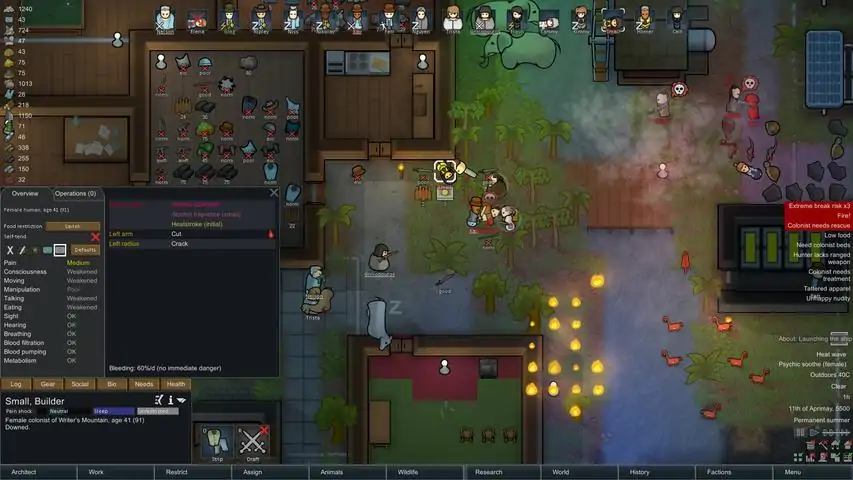

《环世界》游牧畜牧指南
This guide discusses various aspects of Nomadic way of life in Rimworld. Introduction Welcome, fellow Nomads and Ranchers! Nomadic way of life provides for a very different Rimworld play style, and after having done a few runs as a Nomad I decided to share my experiences. Nomadic ranching can be very rewarding when done right, leading to the development of a unique and fun story. NOTE: This guide is not based on any modding, its principles apply to the base game and the official DLC (Ideology and Royalty). Why be a Nomad? Rimworld is designed primarily for a sedentary play style: you settle your tile, you work that tile, you defend your tile, you die on your tile. The game does a very good job of tethering you to your land, and most games are played that way. Being tied to the land of course has some big advantages, such as the ability to fully exploit the land, amass tremendous wealth, build beautiful cities, etc. It also has the drawbacks of having to defend that land versus all kinds of calamities, since there is no Plan B: you have to defend your home. Nomadic lifestyle alleviates that issue and in some cases is actually even more efficient than settling. So, why be a Nomad? 1. To reach the ship that will take you to the stars. On 100% size worlds this is a huge undertaking. 2. To engage in a global campaign of exterminating your enemies, be it Pirates or Nudists, or whomever else. 3. To become the ultimate mercantile faction, visiting every friendly settlement to conduct trade, buying their technological artifacts in exchange for your endless supply of wool, leather and animals. Those three would be the primary in-game reasons to pack up and start a new chapter in the life of the New Tribe (or New Arrivals). Pros and Cons of being a Nomad Any play style is a balancing act of sorts, and being a Nomad is no different: there are advantages and disadvantages to it. Advantages: 1. Versatility. Settling a tile with the foreknowledge that you will only be there for a short time is very liberating. The tile is not your home, your home happens to be wherever your Horde is. So, if a disaster strikes, you just pack up and leave, taking everything of value along with you. Volcanic winter has messed up the hunting? -- Pack up and leave. Mechanoid cluster has too much for you deal with? -- Pack up and leave. Toxic Fallout is poisoning the land? -- Pack up and leave in a hurry. Nearby friendly settlements have run out of cash to buy your stuff? -- You get the picture. On top of that, you can survive just about anywhere, eat pretty much anything, and make money even without having a permanent base of operations. This freedom to move whenever you like, in any direction, flips the game on its head in the sense that the Caravan becomes the normal state of the Horde, while settling is something temporary and done for a very specific purpose. 2. Comparatively low colony wealth. Nomadic life is minimalist. Minimal buildings, minimal power consumption, minimal production. The lion's share of the colony wealth falls on people, weapons, consumable artifacts, and war beasts. In other words, most of the colony wealth can fight, allowing the Horde to punch way above the weight of the traditional colony of similar wealth. 3. Ability to bring the weight of the entire colony against its enemies. No outpost, no settlement, nothing can withstand the onslaught of the Horde with all its people and animals. Not the pirates, not even the Empire, should you choose to fight them. Upon reaching a respectable size the Horde is unstoppable. Disadvantages: 1. Minimal farming. Let's face it, farming is probably the most efficient way to feed the people as well as make money. It also has the drawback of tying you to the land like nothing else. Thus, Nomads would do little farming. Settling for a season to grow a bunch of Haygrass and maybe a small patch of Cotton? Sure. Growing Devilstrand or drugs? No. Simpler to buy the drugs and replace devilstrand with high grade leather. 2. Slower than usual Tech Advancement. Minimalist doesn't at all mean Low Tech, but since Research can not be done while on the road, the tech will come at a slower rate than it otherwise would. This makes prioritizing crucial techs over less crucial ones that much more important. The Nomadic Horde The Horde is more than just humans. It is more than just animals. It is a combination of humans and animals engaged in a symbiotic and mutually beneficial arrangement. Humans feed and protect the animals. Animals feed and protect the humans. This delicate balance is what makes the Nomadic Horde such an interesting experience. The Horde can be subdivided into three distinct aspects: the People, the Herd, and the Pack. Below, I will explore and explain these aspects in depth. The People The simplest, most self explanatory, and most important part of the Horde. The Horde exists for the people. Any pawn capable of holding a weapon along with some useful skill is good enough, provided that the pawn is... 1. Reliable Any trait that causes the pawn to lose self-control (like Gourmand, or Pyromaniac) is dangerous, because a single pawn going on a Mental break while the caravan is packing up will sabotage the entire process thus endangering the Horde. 2. Agreeable Not everyone is a nice and happy person, and having a single mood decreasing trait like Depressive is not by itself disqualifying. But more than one trait like that? Fuhgettaboutit. Not worth the hassle or the risk. 3. Capable That Frail seventy-something lovable grandpa with a Bad Back and Dementia would only slow things down. I wouldn't expel someone who has lived and grown old with the Horde, but recruiting one? Not unless they are absolutely spectacular in some singular task like Cooking or Mining. The most important thing to remember is that no pawn is too important to sacrifice for the overall good of the Horde. The Herd Just as there is no Horde without the People, there is no Horde without the Herd. Life on Rimworld is harsh, moreso for the Nomads, and yet even more for the animals. Thus, the animals of the Herd need to be as tough as the surrounding environment. This means that the traditional duckies, chickies and moo-moos need not apply. In fact, the number one job of the Herd is to provide the Horde with Packing capacity. Riding is important, Meat is great, Wool and Leather are fine, Milk is okay, but if the animal is unable to carry luggage, it is unfit for the Herd. Below are some of the animals that I would recommend: Muffalo

早期抢先体验阶段的可靠伙伴。拥有出色的驮运能力和肉类产量,皮革与羊毛质量尚可。对温度的耐受范围极佳,能适应从冰原到干旱灌木丛的环境。 野牛

我还是不明白这种动物有什么意义。不过是换了皮的毛牛,羊毛还稍微差一点。羊驼

温顺且易于驯服。其优质的羊毛和皮革在一定程度上被较低的产肉量和驮运能力所掩盖。它对寒冷也更为敏感,在北方森林以北的地区表现不佳。尽管如此,它仍是一种出色的初始动物。 单峰骆驼

简单来说,它就是沙漠生物群系之王。拥有出色的骆驼皮、驮运能力,而且还能骑乘。虽然不会把它带到北方的寒带森林去,但在任何温暖的地方,它都占据统治地位。不过,它产奶而非产毛,这使它无法成为完美的牧群动物。 马

比单峰驼更快,耐寒性也更好。你可以称它为“北方单峰驼”。它是加快商队速度的最佳方式。 驴

穷人的马。不过,总比没有强。牦牛

没有理由选择这个而不是毛牛,除非你觉得牛奶有用(我不这么认为)。 注意:我对牛奶的评价不高,因为它不能用来制作 carnivore fine meal。因此,在有选择的情况下,我更喜欢羊毛。你的情况可能有所不同。 兽群 兽群完全由可训练的动物组成,实际上是可选的。事实上,由于兽群和人类会竞争相同的资源(肉类),随着人类数量的增加,兽群的重要性会下降,其数量可能会减少到几乎为零。不过,在游戏初期,兽群非常有帮助。再次强调,并非所有动物都适合加入兽群。 战狼

一种美丽的战争武器。一台完美的杀戮机器。强壮、耐寒、凶狠、繁殖力强。它们几乎能适应任何气候,被培育出来只有一个目的:战斗。而且,它们确实非常能打。 谜语:当蜈蚣被半打座狼包围时会怎么做? 答案:等待死亡。 这些家伙只能吃肉和尸体,这实际上是个优点。可以确保它们不会碰殖民者的任何食物。此外,它们食量不大,不需要太多食物,但如果饿了,它们也足够凶狠,能自己捕猎野生动物。它们会为部落战斗至死。体型小巧且数量众多,不必太担心友军误伤。 巨型树懒

看看这家伙。完全可训练,食草素食,战斗中堪称怪物,能提供优质的肉、皮革和羊毛。是少数能在冰原生物群系生存的动物之一。 它们很邋遢,极难驯服,繁殖和成熟速度慢得惊人。不适合没耐心的人。我把它们当作精英重装士兵,用于伏击时释放。虽然皮糙肉厚,但由于体型庞大,非常容易受到友军误伤。 灰熊

常见、可完全训练,食物需求适中。但同时易受友军误伤,难以驯服且繁殖能力不强。我通常会选择冰原狼。 北极熊

能穿越冰原而不冻死。否则,就只是头熊而已。 哈士奇

在《环世界》中,几乎没有什么能比哈士奇幼犬更可爱了。它们是出色的搬运工和救援者,但战斗力欠佳。注意不要养太多,因为它们食量很大——一只哈士奇的食量相当于两只冰原狼。它们能在冰原环境中生存。 大象

大象近乎完美。它们基本上是完全可训练的群居动物,能为你提供吃不完的肉、不错的皮革、象牙,还有巨大的驮运能力,同时还能协助战斗、搬运和骑行。 当然,由于体型庞大,它们容易中弹,食量大如……嗯,大象,而且还会随地排泄。 完全不适合任何有冬季的生态环境。 雷龙

我之所以提到这些家伙,是因为在谈论《环世界》的生物时,很难不提及雷兽。它们不太实用,因为获取它们非常依赖运气。要得到一对用于繁殖的雷兽则需要更多运气。相比其他用途,它们作为雷兽毛皮的来源要珍贵得多。没错,拥有雷兽确实很酷,但很难围绕它们制定出什么策略。 关于打包的简要说明 当准备好收拾行装组建商队并放弃当前地块时,采取一些预防措施非常重要: 1. 将所有计划带走的建筑进行微型化处理( stove 和各类娱乐建筑尤其重要),并且要等到它们被移至仓库区域内。这一点很重要,因为遗留在储存区外的物品有时会被遗漏。 2. 确保所有殖民者心情愉悦。如果有殖民者心情不佳,一开始不要在商队菜单中将他们加入商队。等到商队即将出发时,再手动将他们加入,或者为心情不佳的殖民者单独组建一个小型商队,然后在世界地图上与主商队合并。这一点至关重要,因为一次精神崩溃就可能破坏整个商队的打包进程。 3. 将所有 pawn( pawn)设置为 24 小时工作安排。不睡觉、不娱乐,只顾工作、工作、再工作,直到商队打包完毕准备出发。否则,商队准备就绪将花费大量时间。定居的时机、原因与方法 那么,你已经点击了“放弃定居点”按钮(第一次总是很难),开始了你的旅程。何时以及为何应该暂停脚步?以下列出了一些值得定居一两个季度,甚至一整年的充分理由。 1. 种植和储备植物类资源。 这在生长季节初期尤为有利,但并非必须如此:豚草生长速度极快。棉花需要稍长一点时间,而草药最好从野外采集或购买,因为其生长周期相当长。 2. 研究关键技术。 如果你找到了一两个重要的技术蓝图,或许值得定居一段时间来研究它们。 3. 转化并招募囚犯。通常情况下,在洗劫敌方聚落之后,你可能会俘获一些囚犯,其中有些囚犯可能非常有价值,不宜出售。逗留在敌方聚落会引来反击和其他麻烦,因此最好迁移到新的地块定居。 4. 与多个附近聚落进行长期贸易。 有时你会发现三个或更多友好聚落聚集在相对较近的区域,并且它们恰好出售许多有用的物资。这种情况下,在附近定居是值得的,这样可以彻底耗尽它们的财力,同时为部落买下所有有价值的东西。 5. 举行仪式,如庆典、献祭等。仪式若成功,会给予一些不错的奖励,例如新的殖民者、额外的动物等。由于仪式有冷却时间,明智的做法是一次性集中进行所有仪式,然后离开,在旅行期间让冷却时间自然结束。如此循环往复。 6. 治疗伤残者。 我通常会等到大约10%的殖民者出现严重伤残(如脑部疤痕、眼球缺失等)时,才会选择定居。此时我会建造若干生物雕塑舱(每个伤残殖民者一个),将他们全部放入舱中,等待约30天左右,他们就能痊愈出院。 当然,通常上述这些原因会同时出现,因此定居可以一举解决所有问题。 至于如何定居,我想先展示一下错误的定居方式。到达目标地格并按下“定居”按钮会触发此效果:
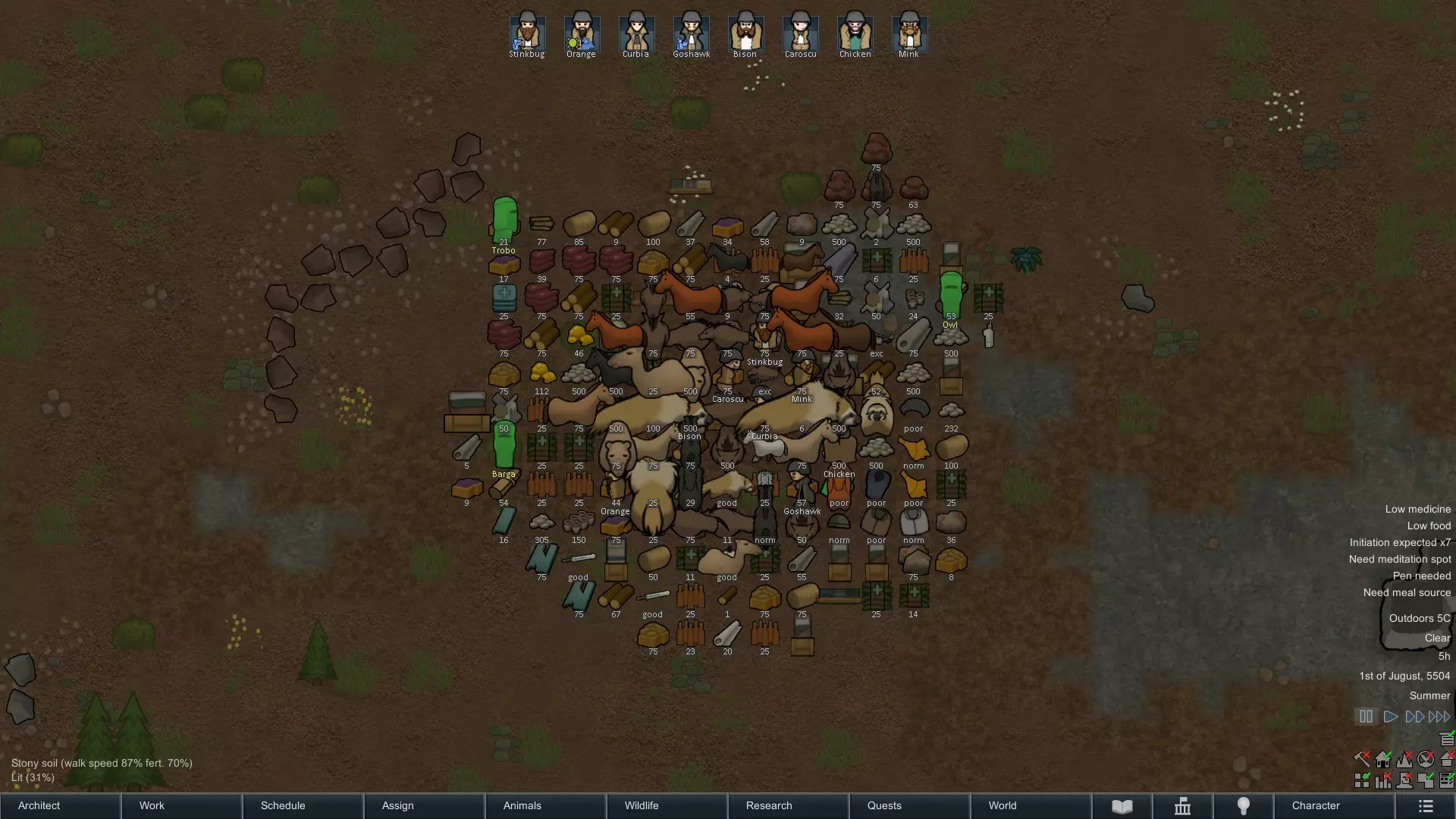
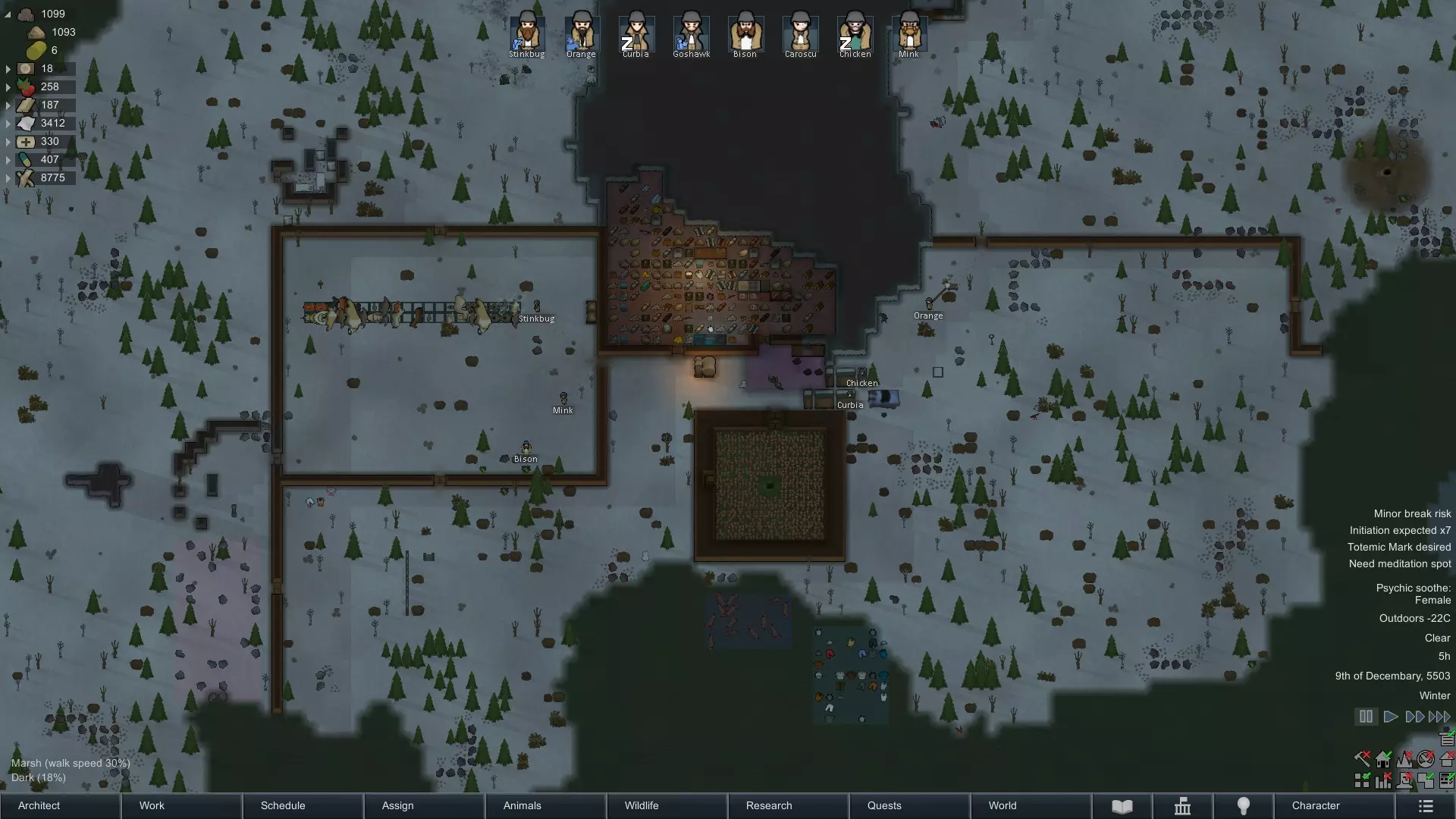
不用说,这绝对是个馊主意。你的物资会腐烂,你的牲畜群会走失,你也会陷入困境。那该怎么做呢?当抵达世界地图上的目标地块时,需要多做一个步骤: caravan 需要分成两部分,其中一部分通常会保持静止。 静止部分应由大部分殖民者(尤其是建筑工和搬运工)、运输动物(如哈士奇)、几天的食物、所有木材和金属,以及从之前定居点带来的所有微型建筑组成。它的任务是立即定居并建造两个最重要的建筑:仓库和围栏。商队的另一部分(移动部分)将包括整个兽群、几名看护殖民者以及所有易腐烂的材料和物品。移动部分将保持商队状态,直到仓库和围栏建成。届时,他们可以有序地重新加入新建立的定居点,即将所有动物赶入围栏,并将货物卸入仓库。 注意:由于游戏不允许拆分出静止的商队,因此你需要拆分出移动商队,将上述所有建筑材料留在静止部分。 定居点设计说明 由于任何定居点都是临时的,因此所需的建筑结构很少。但有些结构在任何设计中都是必需且必不可少的。 1.仓库 存放所有贵重物品。通常还包含烹饪区、生产区和娱乐区。这是唯一需要电力的建筑。说到电力,它用于驱动加工台、高科技工作台和廉价的CRT电视。仅此而已。任何可以用木材供能的设备(如 stove 或 smithy)都应保持原样。至于冷藏,游牧民族不需要冷藏。他们的食物在晚餐前都是活的。仓库强烈推荐使用草席地板,这样可以消除食物中毒的任何可能性,并能安全使用原本会弄得一团糟的运输动物。 2. 围栏 用于圈养牧群。没什么其他可说的,只是用坚固的墙壁建造远比栅栏更好。包含动物的睡眠区和一两个放置干草、宠物粮或其他物品的架子。 3. 围墙区域 一个用围墙隔开的区域,可安全抵御拾荒者和狂暴兽群。 这里是设置屠宰区以及人类睡眠区的合理位置,还可放置望远镜、马蹄铁桩等户外娱乐设施。 3. 监狱区 根据需求设置。 4. 温室 同样需视情况而定,但有时在寒冷季节是拯救牧群的必要设施。如图所示,它只是一个建在地热喷口上方的双层墙壁带屋顶的深色建筑。被动式冷却器用于平衡温度,防止过热。在生长季节则完全多余。
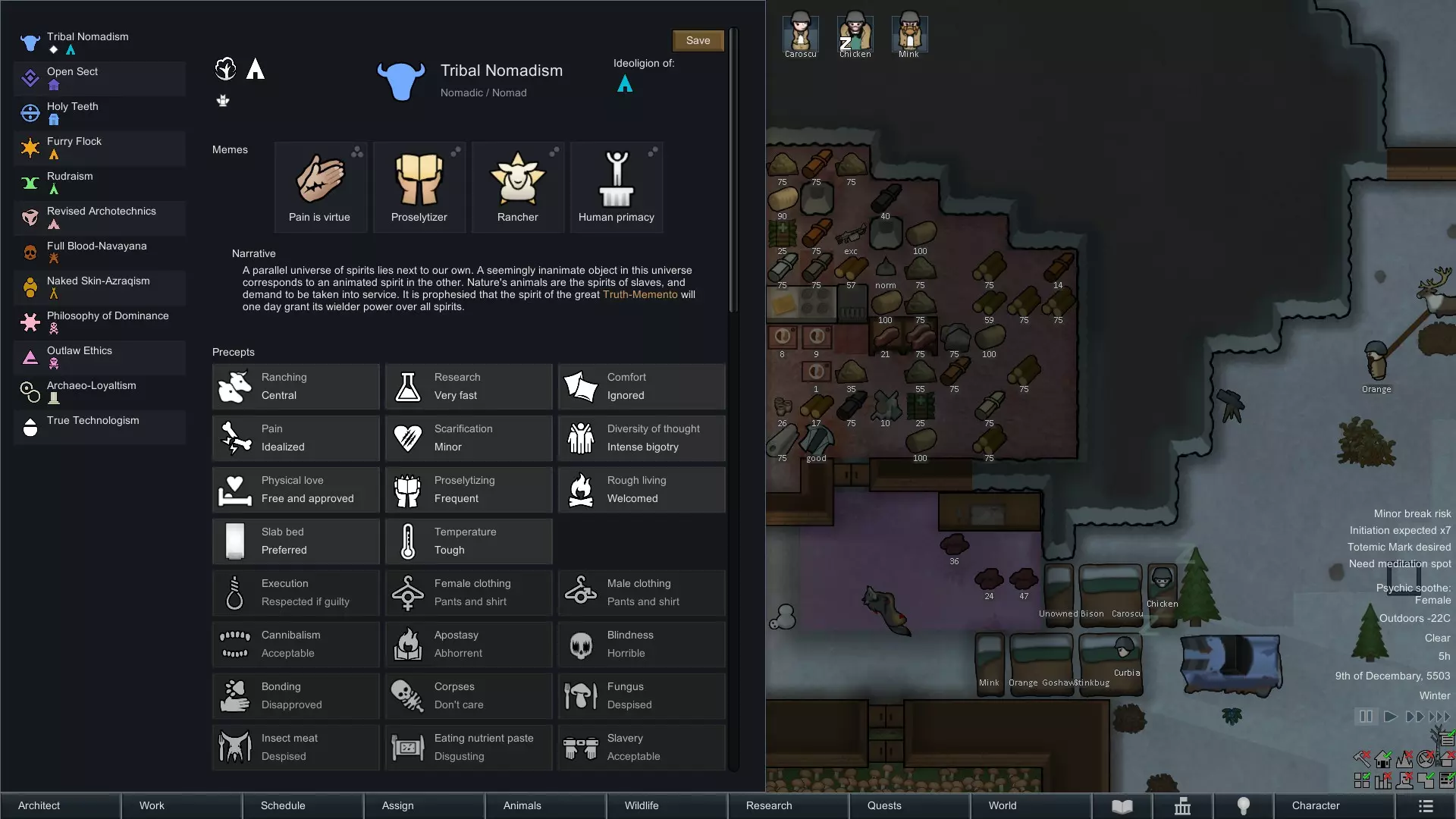
游戏与意识形态设置 在游戏设置方面,100%的地图尺寸非常重要,因为在30%大小的地图上几乎没有旅行的动力。由于动物是根据正常温度设置进行平衡的,我建议保持默认设置,否则地图的大部分区域将变成无法进入的区域。 至于意识形态,它们可以让整体体验非常愉快,也可能非常痛苦。以下是我个人关于选择和避免哪些内容的建议。 推荐选择 理念 人类至上——不仅是为了强大的生产专家,更重要的是为了禁用动物羁绊。你的动物会大量死亡,既是为了养活你,也是为了保护你。驯兽师因为他最爱的三头座狼为保护殖民地而死亡而精神崩溃,这种情况最好避免。 “痛苦即美德”依然是史上最佳模因。艰苦生活、耐温、漠视尸体——这个模因搭配的优秀戒律实在太多了。 牧场主——视情况而定。动物专家固然很棒,但只有在饲养像巨型树懒这类难以驯服且训练难度高的动物群体时才体现其价值。非专家角色借助灵感也能安全驯服任何动物,但驯服的动物和训练有素的动物之间有着天壤之别。牧场主是最出色的动物训练师。 至上主义者——同样视情况而定。对于那些不想组建动物群体的人来说很有用。它能提供射击专家,这非常不错。戒律 奴隶制:可接受——游牧生活方式与奴隶制并不契合,但能毫无愧疚地出售囚犯是个不错的额外好处。 同类相食:可接受——我发现这极为有用。袭击敌方基地后,能为人类和战狼提供稳定的肉类来源,这非常便利。更不用说人皮虽为劣质 crafting material(制作材料),却能卖出天价。就道德层面而言,与其坚守道德而死,不如道德有亏但活着。 不应采纳的理念 动物人格——在各方面都不如牧场主。动物羁绊是种负担,每次用餐都会带来负罪感。 奢华生活——与游牧生活完全相悖。对于那些定居并耕种土地的人来说很棒,但对游牧民族而言并非如此。高兰伦连接——木材是燃料,是建筑材料,但并非神圣之物。说到高兰伦树,它们多少还是有些用处的。一棵连接着单个医疗树精的高兰伦树,几乎不费什么力气就能产出大量草药。不过这不需要什么模因,一颗种子就够了。 自然至上——与人类至上相冲突。 超人类主义——另一个与游牧生活方式对立的模因。通常这是最好的模因之一,但它对能量和舒适度的要求对游牧部落来说实在太高了。 隧道挖掘者——游牧民族经常迁徙。高效的迁徙意味着要使用道路,而道路几乎总是穿过平原。选择这个模因没什么理由,因为山脉和游牧民族根本不搭。 意识形态设置示例:
总结 对我来说,扮演游牧民是一种全新的体验。这与《环世界》的常规游戏玩法截然不同,但依然充满了丰富的事件和故事。 希望你阅读这份指南时能像我撰写它时一样享受。
2026-02-11 09:01:04 发布在  环世界
环世界


说点好听的...
收藏
0
0