



齐格扎格齐格尔的攻略 - 罗马(迭起兴衰)
Rome can dominate the classical era both through war and infrastructural development. Here, I detail Roman strategies and counter-strategies. Introduction Following this guide requires the Gathering Storm expansion. It also assumes you have all other Civ 6 content, listed below, though it is not necessary to have these to utilise the key strategies of each civ. Pre-Rise and Fall content packs Vikings, Poland, Australia, Persia/Macedon, Nubia, Khmer/Indonesia Rise and Fall Expansion New Frontier content packs Maya/Grand Colombia, Ethiopia, Byzantium/Gauls, Babylon, Vietnam/Kublai Khan, Portugal These content packs include exclusive civs, city-states, districts, buildings, wonders, natural wonders, resources, and a disaster, but not core game mechanics - all you need is the base game and the Gathering Storm expansion for those. Once we realised no city could best the glory of Rome, we modelled the empire upon it. All our roads would lead to our great capital, and even the smallest of our cities commemorated our glory with great monuments. We brought civilization to a heathen world - aqueducts, baths, fora and insulae. And through our standardisation, we created the greatest fighting force our world has ever known - the Legion. Now, none may challenge our might save the gods themselves. How to use this guide This guide is divided into multiple sections explaining how best to use and play against this specific civ. The Outline details the mechanics of how the civilization's unique features work and what their start bias is if they have one. The Victory Skew section describes to what extent the civ (and its individual leaders where applicable) is inclined towards particular victory routes. This is not a rating of its power, but an indicator of the most appropriate route to victory. Multiple sections for Uniques explain in detail how to use each special bonus of the civilization. Administration describes some of the most synergistic governments, government buildings, policy cards, age bonuses, pantheons, religious beliefs, wonders, city-states and Great People for the civ. Only the ones with the most synergy with the civ's uniques are mentioned - these are not necessarily the "best" choices when playing as the civ for a given victory route. Finally, the Counter-Strategies discusses how best to play against the civ, including a consideration of leader agendas if the civ is controlled by a computer. Note that all costs (production, science, etc.) mentioned within the guide assume a game played on the normal speed settings. To modify these values for other game speeds: Online: Divide by 2 Quick: Divide by 1.5 Epic: Multiply by 1.5 Marathon: Multiply by 3 Glossary Terminology used in this guide and not in-game is explained here. AoE (Area of Effect) - Bonuses or penalties that affect multiple tiles in a set radius. Positive examples include Factories (which offer production to cities within a 6 tile radius unless they're within range of another building of the same type) and a negative example is nuclear weapons, which cause devastation over a wide radius. Beelining - Obtaining a technology or civic quickly by only researching it and its prerequisites. Some deviation is allowed in the event that taking a technology or civic off the main track provides some kind of advantage that makes up for that (either a source of extra science/culture or access to something necessary for a eureka or inspiration boost) CA (Civ Ability) - The unique ability of a civilization, shared by all its leaders. Compact empires - Civs with cities close together (typically 3-4 tile gaps between city centres). This is useful if you want to make use of districts that gain adjacency bonuses from other districts, or to maximise the potential of area-of-effect bonuses later in the game. Dispersed empires - Civs with cities that are spread out (typically 5-6 tile gaps between city centres). Civs with unique tile improvements generally favour a more dispersed empire in order to make use of them, as do civs focused on wonder construction. GPP - Short for Great Person Points. Districts, buildings and wonders generate these points and with enough you can claim a Great Person of the corresponding type. GWAM - Collective name for Great Writers, Artists and Musicians. All of them can produce Great Works that offer tourism and culture, making them important to anyone seeking a cultural victory. LA (Leader Ability) - The unique ability of a specific leader. Usually but not always, they tend to be more specific in scope than civ abilities. Some leader abilities come with an associated unique unit or infrastucture. Prebuilding - Training a unit with the intention of upgrading it to a desired unit later. An example is building Slingers and upgrading them once Archery is unlocked. Sniping - Targeting a specific city for capture directly, ignoring other enemy cities along the way. Typically used in the context of "capital sniping" - taking a civ's original capital as quickly as possible to contribute towards domination victory without leading to a drawn-out war. Start bias - The kind of terrain, terrain feature or resource a civilization is more likely to start near. This is typically used for civilizations that have early bonuses dependent on a particular terrain type. There are five tiers of start bias; civs with a tier 1 start bias are placed before civs of tier 2 and so on, increasing their odds of receiving a favourable starting location. Super-uniques - Unique units that do not replace any others. Examples include India's Varu and Mongolia's Keshigs. Tall empires - Empires that emphasise city development over expansion, usually resulting in fewer, but bigger, cities. Uniques - Collective name for civ abilities, leader abilities, unique units, unique buildings, unique districts and unique improvements. UA (Unique Ability) - A collective name for leader abilities and civ abilities. UB (Unique Building) - A special building which may only be constructed in the cities of a single civilization, which replaces a normal building and offers a special advantage on top. UD (Unique District) - A special district which may only be constructed in the cities of a single civilization, which replaces a normal district, costs half as much to build and offers some unique advantages on top. UI (Unique Improvement) - A special improvement that can only be built by the Builders of a single civilization. "UI" always refers to unique improvements in my guides and not to "user interface" or "unique infrastructure". UU (Unique Unit) - A special unit that may only be trained by a single civilization, and in some cases only when that civilization is led by a specific leader. Wide empires - Empires that emphasise expansion over city development, usually resulting in more, but smaller, cities. A note about Julius Caesar This guide will not cover Julius Caesar until all other leaders are covered. I had a similar stance on holding off on making a guide to the Aztecs when they were initially a pre-order bonus. Outline (Part 1/2) Start Bias Rome has no start bias. Civilization Ability: All Roads Lead to Rome All owned cities start with a Trading Post, removing the usual requirement to complete a trade route to the city first. Founding or capturing cities within trading range of your capital automatically generates a road to it. Trajan's Leader Ability: Trajan's Column

你所建立的所有城市均可获得一座免费建筑: 若从远古或古典时代开始,免费建筑为纪念碑。 若从中世纪时代开始,免费建筑为谷仓。 若从文艺复兴或工业时代开始,城市若毗邻河流则免费建筑为水磨坊,否则为中世纪城墙。 若从现代或原子时代开始,城市若毗邻河流则免费建筑为水磨坊,否则为下水道。 若从信息时代开始,城市若毗邻河流则免费建筑为水磨坊,非河畔沿海城市则为防洪堤。既不临河也不靠海的城市将不会获得任何免费建筑。 特色单位:罗马军团

一种古典时代的近战步兵单位,可替代剑士 研发 淘汰 升级自 升级至 成本 资源 维护费用

铁器加工 科技 古典时代

学徒期** 科技 中世纪时代

战士(150

10

)

持械士兵(Man-at-Arms) (110
20
) 110

ć 440
ć 220

* 10
2
使用信仰值购买单位需要“宗师礼拜堂”政府建筑,该建筑需研发中世纪时代的“神权统治”或文艺复兴时代的“探索”市政。 **若铁资源不足,即使已研发“学徒制”科技,仍可继续训练“罗马军团”。 战斗力 远程战斗力 移动力 射程 视野 负面属性 正面属性 40

N/A 2

N/A 2

对城墙和城市防御造成-85%伤害 +10
对抗反骑兵单位 拥有1次建造罗马要塞、清除地貌或采集资源的次数。 若仍有建造次数,可移除地格改良设施 若仍有建造次数,可修复地格改良设施 负面改动:生产力消耗110、金币440或信仰220,较之前的90、360和180分别增加22% 由战士升级而来的金币消耗从110增加至150(+36%) 正面改动:铁消耗从20降至10(-50%) 战斗力40,较之前的35有所提升 升级为双手剑士的金币消耗从150降至110(-27%) 单位升级后将保留以下加成: 拥有1次建造罗马要塞、清除地貌或采集资源的次数。与军事工程师不同,消耗此建造次数不会使单位消失,但会禁用其移除或修复地格改良设施的能力。若单位仍有建造次数,可在己方领土内移除地格改良设施;若单位仍有建造次数,可在己方或中立领土内修复地格改良设施。除建造罗马要塞外的其他行动会消耗单位本回合的移动力,但如果该单位本回合未执行其他行动,仍可进行治疗。概述(第2/2部分)特殊改良设施:罗马要塞

研究 地形要求 建造者 基础掠夺产出
冶铁术 科技 古典时代 敌方领土外的任何无特征陆地地块。

军团* 无 *由剩余建造次数的军团升级而来的单位也可建造此建筑。 防御加成 直接产出 相邻产出 其他加成 最大可能产出 4
占领单位自动获得2回合的防御状态 无 无 与其他独特单位和基础设施不同,首次建造时不会产生时代分数 无 独特区域:浴场

古典时代非特色区域,替代水渠 科技需求 所需地形 建造要求 基础生产力消耗 维护费用 基础掠夺产出

工程学 科技 古典时代 必须毗邻市中心,且靠近河流、湖泊、绿洲或山脉。 无 18
*\nć\n36
** ć 72
** ć 25
所有区域的成本会根据你的科技和市政发展进度而增加。若你拥有的特色区域数量大于或等于已解锁的特色区域类型数量,且前者与后者的比值大于你拥有的该区域数量,则可获得40%的折扣。 **使用金币购买区域时,需要城市中派驻拥有“承包商”晋升的蕾娜总督(财务官)。使用信仰购买区域时,需要城市中派驻拥有“神圣建筑师”晋升的莫克夏总督(红衣主教)。 相邻加成 其他产出 伟人点数 其他效果 1

若与地热裂隙相邻 4

拥有淡水水源的城市 5
对于沿海且无法直接获取淡水的城市
对于既不在海岸边也无法获取淡水的城市
不计入城市区域数量限制 军事工程师可消耗1次建造次数,为该区域提供20%的生产力 防止干旱期间的食物损失 正面改动:-50%建造费用 +2住房(从2-4提升至4-6) 提供1点宜居度 胜利倾向 在本节中,将根据文明对特定胜利类型的倾向程度进行主观评分——而非其强度。评分3分或以上意味着该文明在该胜利路线上至少具备轻微优势。 领袖

ćĺ

ĺ¤äş¤

控制区域

ĺŽć

科技 图拉真 5/10 (尚可) 4/10 (合格) 9/10 (理想) 4/10 (合格) 4/10 (合格) 文化胜利对于罗马而言是一个相当不错的选择。初始拥有免费纪念碑能帮助你更快解锁关键市政,例如戏剧与诗歌;更强大(且更廉价)的水渠有助于支撑规模更大的城市,使其能够建造奇观;而便捷的贸易站则让你在选择哪些城市发起贸易路线以获得25%旅游业绩加成时拥有更多自由。 外交胜利对罗马来说是一条中等弱势的路线,但也不算太差。免费道路和额外金币有助于应对各种紧急情况,而免费纪念碑带来的少量额外文化则有助于更快解锁关键外交市政。对于罗马而言,最佳选择是统治胜利。早期建造纪念碑获得的文化值能让你比大多数文明更快解锁寡头政治,从而获得+4战斗力加成,这与你40战斗力的罗马军团相得益彰,可组建一支强大的早期战斗力量。通过国内贸易更快获取金币,有助于你支持或升级庞大的军队。 与文化胜利类似,纪念碑带来的早期文化值加成也对宗教胜利有所帮助。你能更快解锁神学、宗教改革等市政,进而更快获得更多信仰值。 最后,通过水渠促进城市增长,有助于最大化你的科技产出,并通过由此提升的生产力和区域容量,帮助你达成科技启发的条件。文明特性:条条大路通罗马
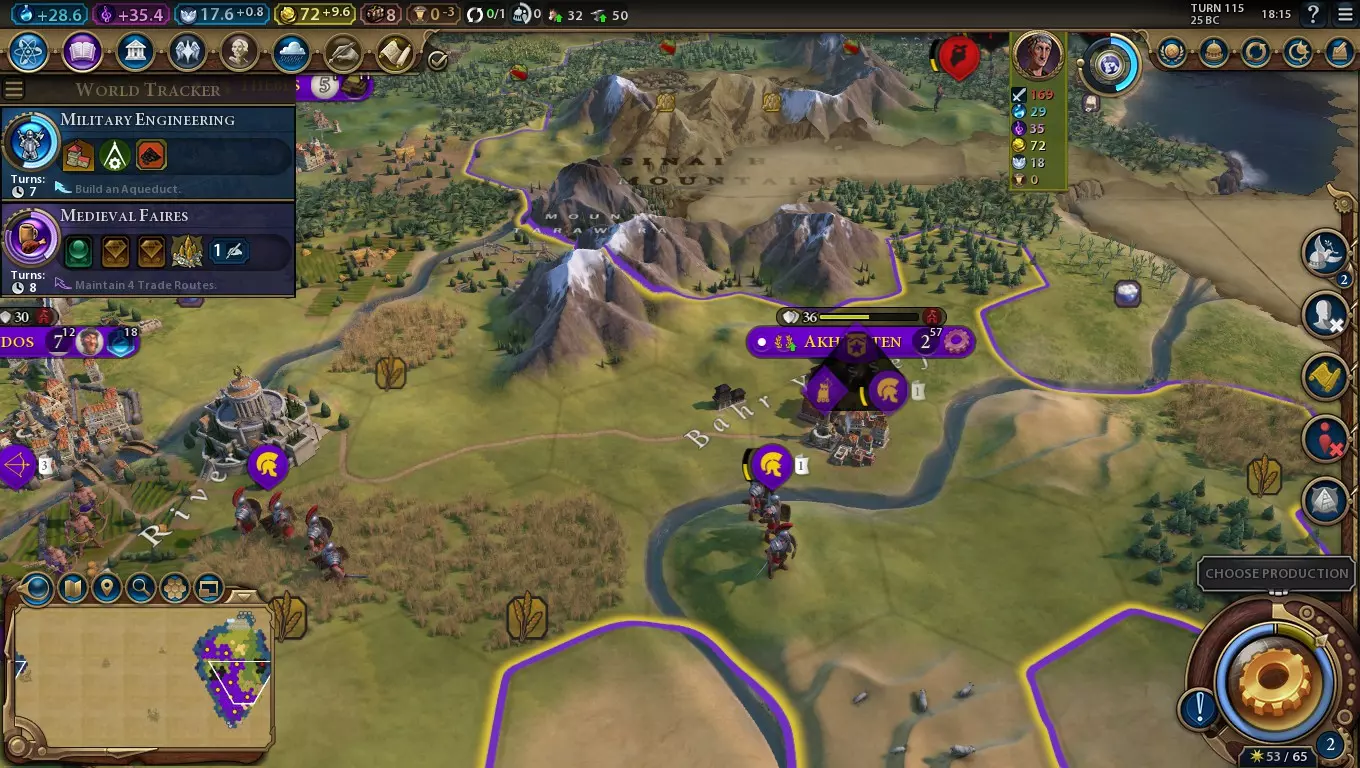
我刚刚占领了这座城市,还免费获得了一条道路! 罗马是一个发展迅速的文明——其文明特性、图拉真的领袖特性、早期就能建造的罗马要塞以及独特建筑浴场,都能帮助罗马完成许多其他文明需要更长时间才能达成的目标。这种快速发展能让你的帝国支持军团进行征服,并有望借此成为世界的主导力量。 免费道路 在建立或占领城市时立即获得免费道路,这在游戏初期是个非常实用的特性。古典道路能让所有地格(除河流渡口外)的进入成本降至1点移动力,这在多森林、雨林和/或丘陵的区域效果最为显著。古典道路(进入古典时代后立即解锁,例如通过“铁器”科技)也允许单位无额外移动成本地跨越河流。这对于帮助你防御城市抵御蛮族,或是将建造者从生产力更高的城市派往新建立(或征服)的城市非常有用。 此能力真正发挥作用的地方在于你开始踏上战争之路时。从首都直接修建道路到你已占领的城市(只要新占领的城市距离你的首都或与其相连的城市不超过15个陆地格子),能让你更容易调遣援军。这意味着你可以用少量单位发起“军团rush”,之后再用更多单位进行支援。这对于未来在与首都相同大陆上进行的战争也很有用。 一旦铁路出现,此加成效果就会减弱,但到那时你的文明很可能已经拥有了完善的道路网络。 贸易站 贸易站是游戏中较为不显眼的功能之一。以下是它们的常规运作方式: 当你向一座城市派遣贸易路线后,在贸易路线完成时(即你需要重新分配商人时),会在目标城市创建一个贸易站。 贸易站由创建它的文明“拥有”。多个文明可以在同一座城市拥有贸易站。其他文明在你的城市中建立贸易站不会对你产生任何优势或劣势,但蒙古是个例外——如果蒙古在你的帝国境内至少拥有一个贸易站,他们将获得对你的外交可见度加成。在城市中拥有贸易站会重置途经该城市的贸易路线的距离范围。默认情况下,贸易路线可通过陆路到达15格内的城市,或通过海路到达30格内的城市。当贸易路线途经己方文明拥有贸易站的城市时,该距离范围会重置。
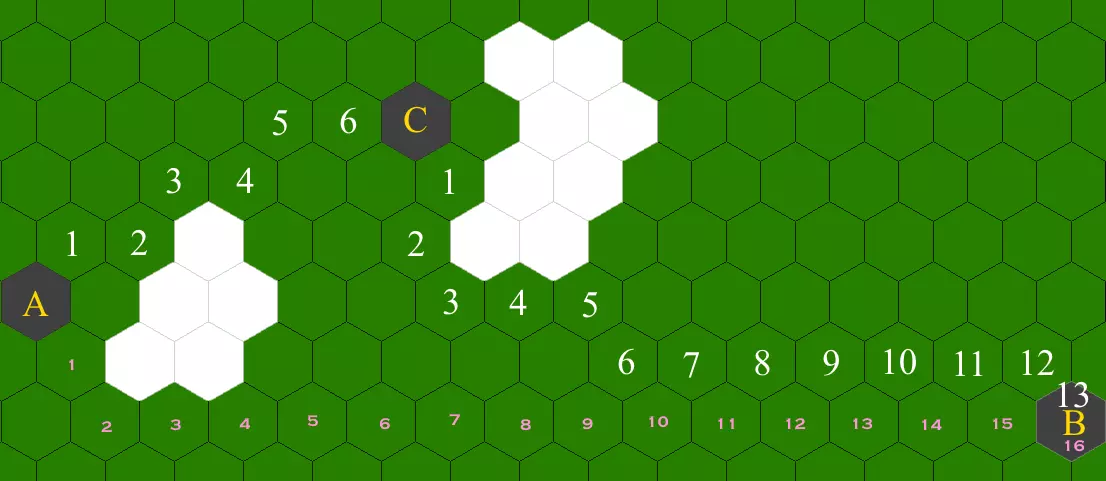
截图无法很好地说明问题,所以这里有一张示意图。城市A、B和C都位于一个大型陆块上。白色六边形是山脉,商人必须绕行。我无法直接建立从城市A到城市B的贸易路线,因为距离差了一格,但如果我在城市C有一个贸易站,就能获得足够的范围。所有贸易路线每经过一个城市的贸易站,就能获得+1金币。以下是罗马文明能力如何改变这一切的。你的所有城市默认都拥有贸易站,这意味着……你可以立即受益于贸易范围的增加;任何因罗马文明能力获得免费道路的帝国城市,都可以与其他同样获得免费道路的帝国城市之间发送或接收贸易路线。游戏初期,只要贸易路线在途中经过至少一座你的城市,你通过贸易获得的金币收益就会比其他文明更高。简而言之,你能更早获得更多金币。贸易路线经过的城市越多,你获得的金币就越多,这通常意味着横贯你整个帝国的路线将带来最高的收益。这一独特能力的主要影响在于,由于能立即获得可观的金币收益,你几乎可以专注于国内贸易,而无需考虑国际贸易。考虑到你拥有提供额外住房的独特区域,以及造价相当高昂的独特单位,你会需要大量的食物和生产力,而国内贸易正好能满足这些需求。即使没有金币优势,作为罗马,你可能也会希望将大部分(如果不是全部)贸易路线用于国内,但拥有金币能让你支持更多单位,负担得起单位升级等费用。 总结:将单位派往新城市或被占领城市很容易,因为它们通常会与你的首都自动建立道路连接。 你能比大多数文明更早从国内贸易中获得金币,从国际贸易中也能多获得一些金币。 图拉真领袖能力:图拉真纪功柱 注:本节(实际上整篇指南)均假设从远古时代开始,因此你将从图拉真的领袖能力中获得一座免费的纪念碑。
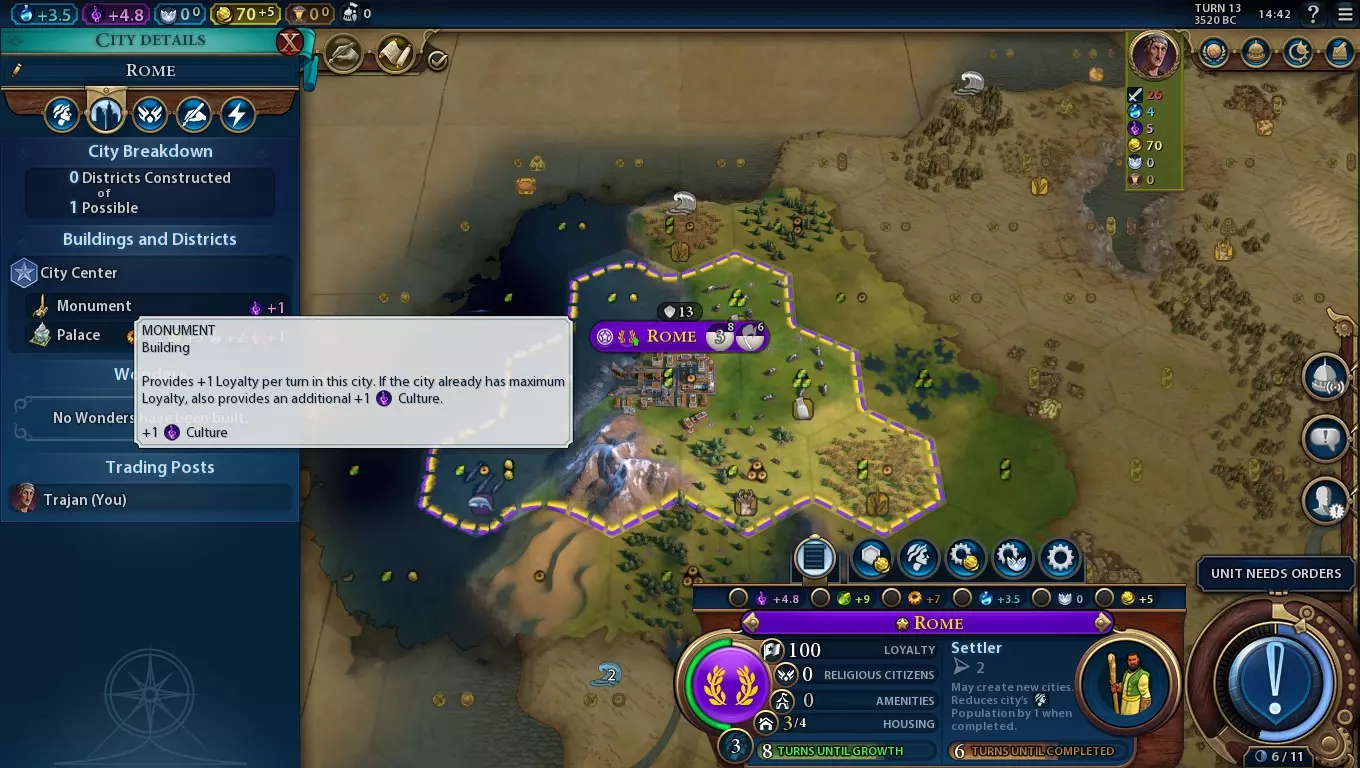
我才刚开始玩游戏,多亏了纪念碑提供的+2文化值加成,我能在不到正常时间一半的情况下解锁“法典”市政。这让我能多享受几回合“城市规划”政策卡及其+1生产力加成,帮助我更快地生产东西。 图拉真的领袖能力简单却高效:你建立的每个城市都会获得一座免费的纪念碑。在游戏初期的几个回合里,这将使你的文化产出增加一倍以上,如果你能再建立一两个城市,这些文化值能让你快速解锁“政治哲学”(同时也能在其他城市施加忠诚度压力时,让你的城市更难叛变为自由城市)。政治哲学是一项重要的市政,它能解锁三种政府类型,其中包括寡头政治。寡头政治可为你的近战单位提供+4战斗力,使你的军团拥有44点战斗力。为加快解锁“政治哲学”科技的进度,请务必在研究过程中尽可能获取以下灵感: - 工艺学:改良3块地格 - 对外贸易:发现另一块大陆(在 duel 尺寸地图或“大陆”类型地图上,这通常无法实现,因此需准备好完整研究该科技) - 国家劳动力:建造任意区域(“军营”是不错的选择——它有助于生成早期的“大将军”,为你的“军团”提供+5战斗力和+1移动力的加成) - 早期帝国:使帝国总人口达到6(拥有第二座城市后,这一目标便很容易达成) - 政治哲学:遇到3个城邦(这在一定程度上取决于地图;如果在能够研究该科技时仍未获得此灵感,直接完成研究即可)。在你开始进行军团战争时,应该差不多可以研究“政治哲学”了。不过它可能会稍晚一些解锁,因为研究它需要解锁6项市政,而解锁“军团”只需3项科技;当然,如果你能获得一些鼓舞、尤里卡或城邦加成,也可能会提前一些,但两者的解锁时间应该比较接近。另外,在研究完“政治哲学”后,别忘了研究“军事传统”,这样你就能利用侧翼和支援加成,为战斗力提供小幅额外提升。 通过免费获得纪念碑来尽早启用“寡头政治”以支持军团速攻,这是其主要优势,同时它也能让你的城市在边界扩张方面获得小幅领先。该能力在游戏后期效果会减弱,因为此时你主要通过占领城市来扩张(被占领的城市无法获得免费纪念碑),但为本就强大的早期战斗提供额外优势这一点本身就已足够出色。 特殊单位:罗马军团
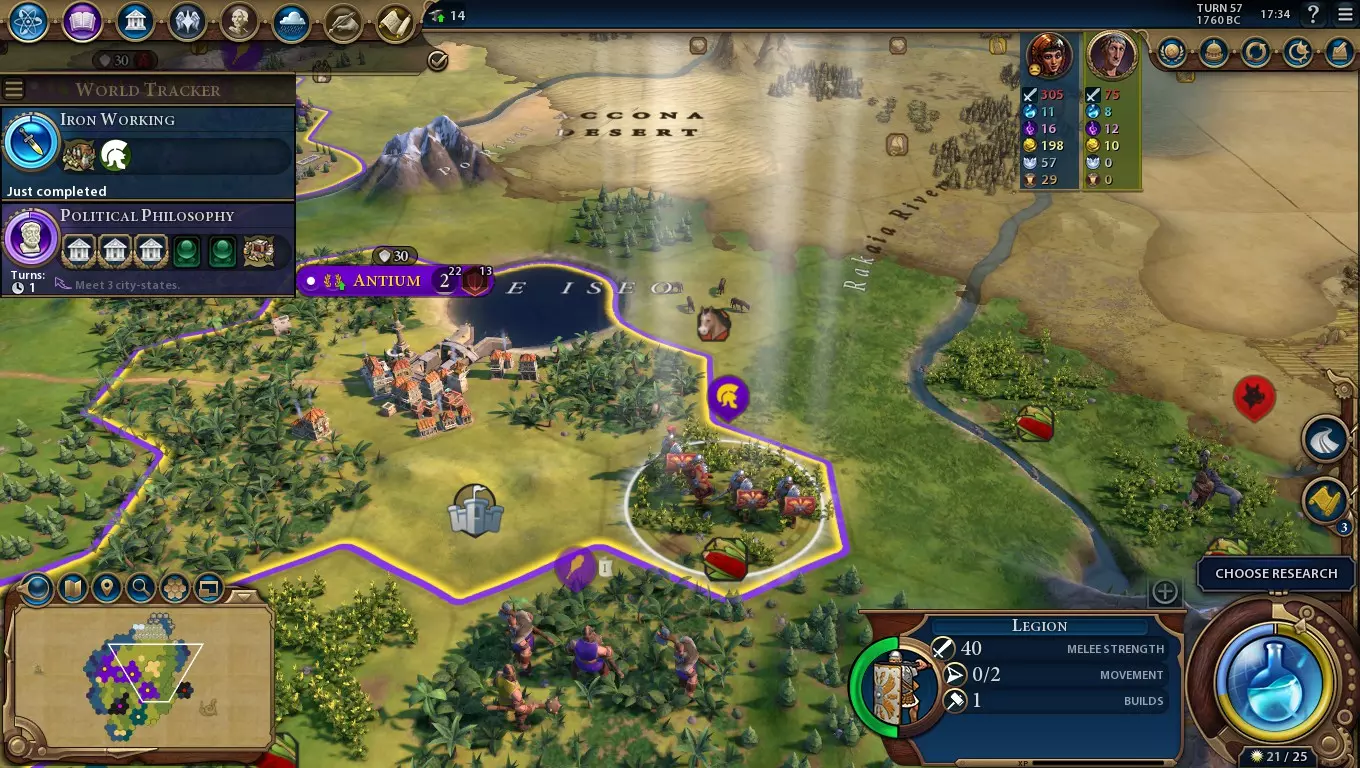
军团是将罗马从众多小国之一转变为横跨大陆的帝国所必需的力量。它们比普通剑士更强大,能造成更多伤害且承受更少伤害,所需铁资源减半,拥有建造罗马要塞的冲锋技能(这有助于防御你的家园、新征服的土地乃至中立的战略要地),而且有趣的是,它们甚至可以修复受损的改良设施和砍伐植被。 准备工作 与任何早期军事特色单位一样,关键在于速度;你希望尽快让军团做好准备。首先训练一名投石兵或战士来协助对抗蛮族。投石兵可以在不受伤害的情况下造成伤害,而战士日后可以升级为军团。击杀三个蛮族可激活“青铜工作”的尤里卡(灵感),这项科技至关重要,需尽快解锁以发现铁矿。训练一名建造者并使用其除一次外的所有 charges( charges ),可在“青铜工作”研究完成后立即获取铁矿,但更有可能需要先额外建立一到两座城市。即便尚未研发“青铜工作”,训练一名移民也是值得的,能提升单位生产和文化产出。战士升级为军团需花费150金币和10铁矿,因此在解锁“铁器工作”时要确保有足够资金。若速度足够快,无需任何攻城支援即可带领2-3个军团发动战争,否则研究“石工术”科技来建造攻城槌是个不错的选择。研究耗时不会太长。石工术还能解锁远古城墙;建造远古城墙会触发“工程学”的尤里卡(Eureka)效果,而“工程学”是你建造“浴场”区域改良设施(UD)所需的科技。
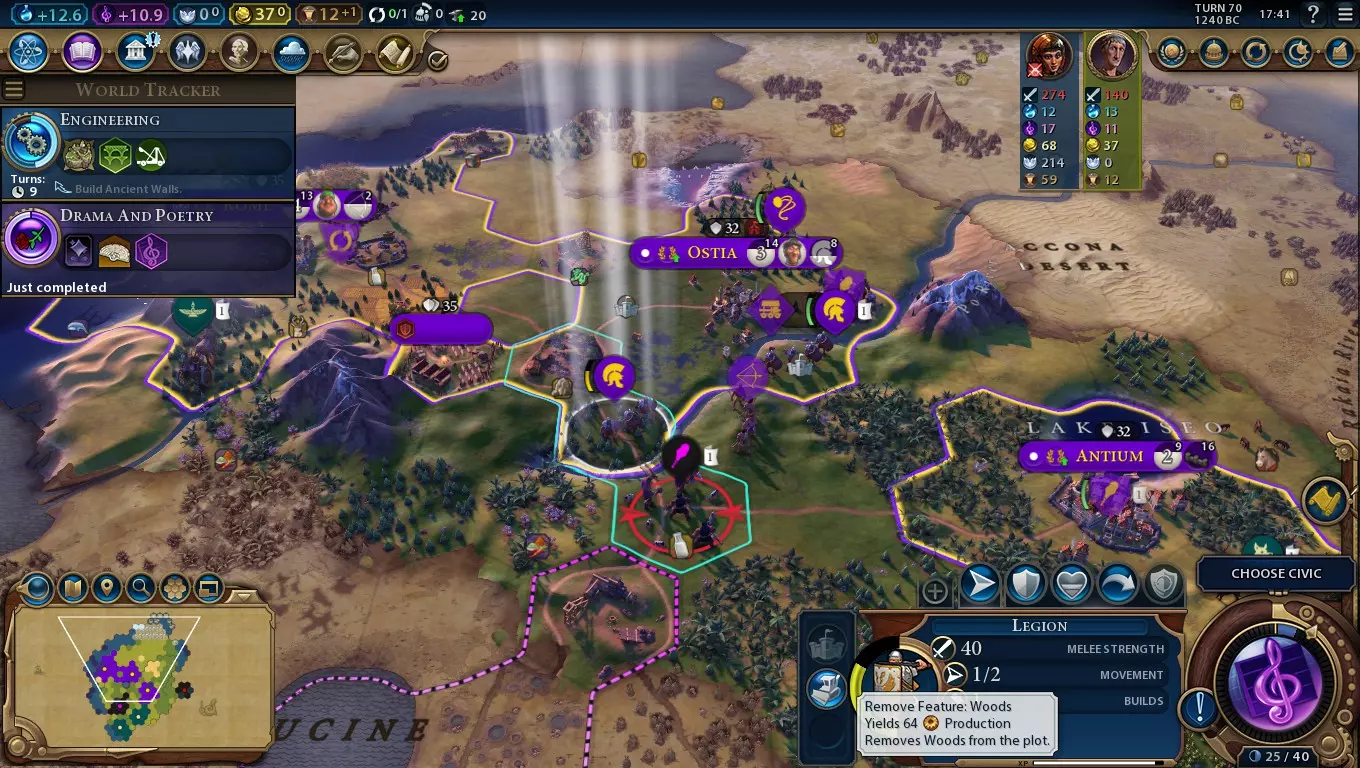
军团可以消耗建造次数来清除森林或雨林,帮助你快速生产更多单位。使用马格纳斯总督(管家)能进一步提升砍伐森林/雨林获得的生产力,这足以弥补军团较高的生产费用。 你的初始进攻应配备额外的军团以加快进程(从而在该单位淘汰前发挥更大作用)。务必使用“阿戈革”政策卡——军团的成本相当高昂!由于在首都贸易范围内占领的每座城市都会自动通过道路连接,因此将新单位调往前线的速度会很快。用法 假设你始终专注于快速获取“铁器”和“政治哲学”科技,以分别解锁“军团”单位和“寡头政治”政体,那么在决定优先攻击哪个目标时,你将拥有巨大优势。 毫无准备的邻国可能只有“勇士”单位来防御——而“寡头政治”政体下的“军团”只需两次攻击就能消灭它们。如果再为“军团”叠加“战吼”晋升,面对未晋升的“勇士”时将获得+31的战力优势,多数情况下能一击秒杀。不过,你仍需为不同的“军团”搭配不同的晋升,以便适应各种情况——例如使用“城市战”晋升来帮助应对敌方城市。不必担心在你想要攻占的城市中掠夺农场和其他地块改良设施(但要小心掠夺区域——它们可能需要很长时间才能重建)。掠夺农场有助于让你的军团保持生命值,以便他们能继续战斗,而且一旦你占领了城市,之后就可以修复这些农场。 后续处理 一旦你攻占了一座城市,假设它不是那种特别糟糕的(比如雪地城市或位于无用位置且没有资源的城市),就该将其并入帝国了。你可以让军团去修复所有被掠夺的地块,使其迅速恢复生产力。修复操作不会消耗军团的建造次数。如果罗马军团在修复地格改良设施前未执行其他不同行动(如移动或战斗),它还会进行治疗(如同执行了驻防命令)。这能节省不少时间。 请注意,任何建造了罗马要塞的罗马军团都将失去修复或移除地格改良设施的能力。 过时 随着中世纪时代“学徒制”科技的研发,双手剑士将登场,其战斗力比罗马军团高出5点。不过,若采用寡头政体或其传承政策卡,你可以缩小战斗力差距,将罗马军团作为一种成本更低、维护费用更少的替代选择。 即便你跳过双手剑士阶段,最终也需要将罗马军团升级为火绳枪兵。有趣的是,升级后它们不会失去建造罗马要塞的能力,也不会失去修复和移除改良设施的能力。因此,一旦你拥有了“工程学”科技并建造了“浴场”,就没有什么理由不尽快研发“火药”了。 罗马可以像以前一样继续游戏——用以近战单位为主的军队征服世界。你强大的国内贸易路线将为你提供良好的生产力和金币来支持这一点。 独特改良设施:罗马要塞
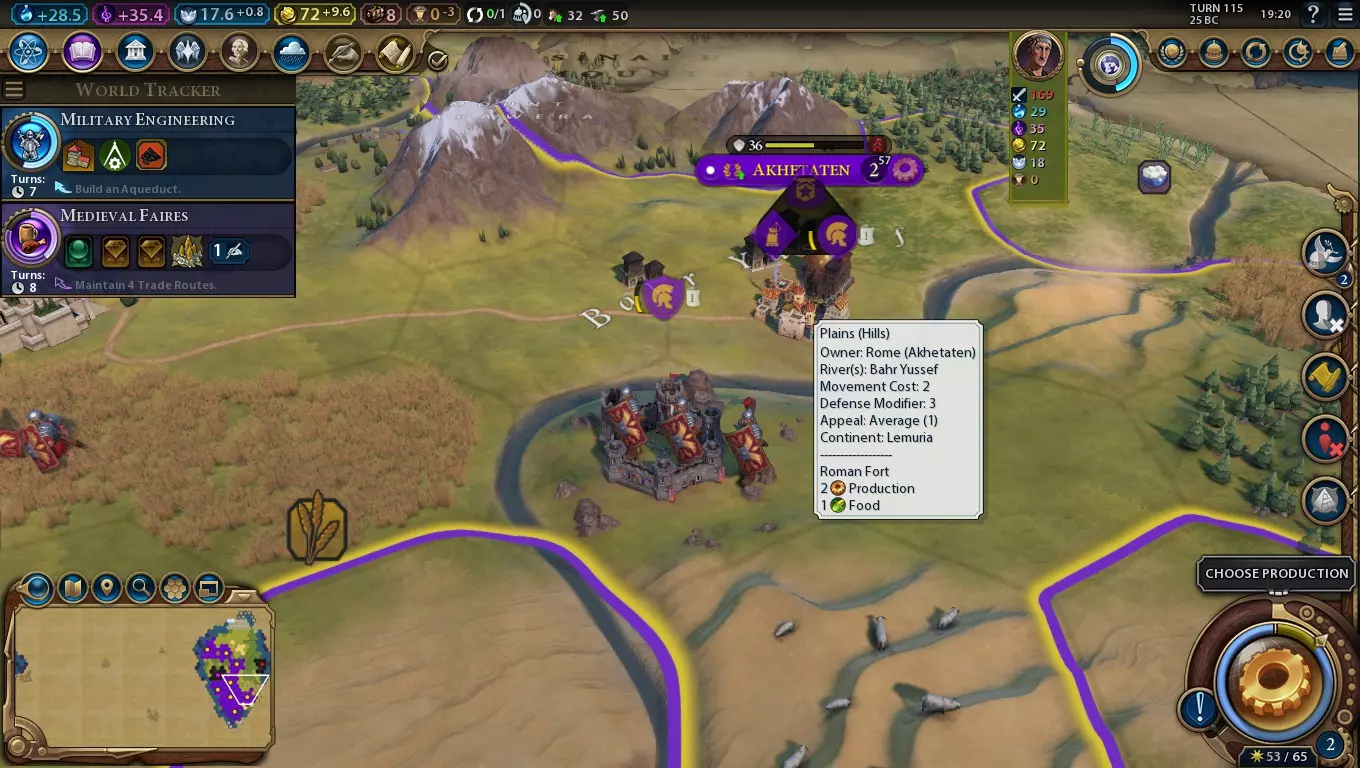
严格来说,罗马要塞并非独特改良设施——它与普通要塞基本相同,且与罗马军团(UU)绑定。为何要单独介绍它呢?因为它仍有一些值得提及的区别: 它比普通要塞早两个时代解锁,是除中国长城和格拉纳达宗主国加成的特殊阿尔卡萨城堡改良设施外最早的防御性地格改良设施。不过,它比这两种特殊改良设施更能在需要的地方可靠建造。 它由具备其他功能的军事单位建造,这意味着你无需额外消耗生产力来使用它。 建造罗马要塞不会耗尽罗马军团的移动力,使其可以放置罗马要塞后立即移动。与普通堡垒不同,罗马堡垒不会为“弹道学”这一尤里卡时刻(Eureka)提供进度。尽管罗马堡垒基本上是拥有军团后获得的免费奖励,但不要在所有地方都滥用它们。消耗军团的建造次数会使其无法修复改良设施,而这对于占领城市后的清理工作至关重要。你还会失去清理植被以获取额外生产力的机会。因此,请谨慎使用罗马堡垒。以下是建造罗马堡垒的理想位置示例:狭窄通道,例如山脉间的隘口、崎岖地形中的平坦区域,或是海洋和/或湖泊之间的狭长地带。在开阔地形上成列建造,以增强该区域的防御能力,但前提是你拥有足够的军团来执行此操作。在己方城市附近,以及可能即将对您发动攻击的文明或城邦方向。将几座罗马要塞组合起来,并在其中驻守单位,能有效阻挡潜在入侵者。 若要快速保护高价值但脆弱的军事单位(如高等级弓箭手),可先建造罗马要塞,让军团移出,再让该高价值单位进入。 以下情况不适合建造罗马要塞: - 作为濒死军团的最后行动,远离家乡且无支援。这只是给占领该土地的势力免费送一座要塞。 - 在开阔地形上呈直线排列,但彼此之间存在间隙。骑兵单位会无视控制区域,直接从间隙穿过。 - 无法派遣单位进行防守的地方。+4防御加成仅在该位置确实有单位进行防御时才生效。 需要注意的是,不要浪费建造次数——没有建造次数的军团无法修复/移除改良设施,也会失去砍伐森林或雨林的机会。 归根结底,罗马要塞在你需要额外优势来守住某个地点时很有用(寡头政体下的军团在丘陵罗马要塞进行防御时尤其难以被消灭),但这与普通要塞相比并无特别之处。按需建造,不要在不需要时浪费建造次数来建造它们。 特色区域:浴场
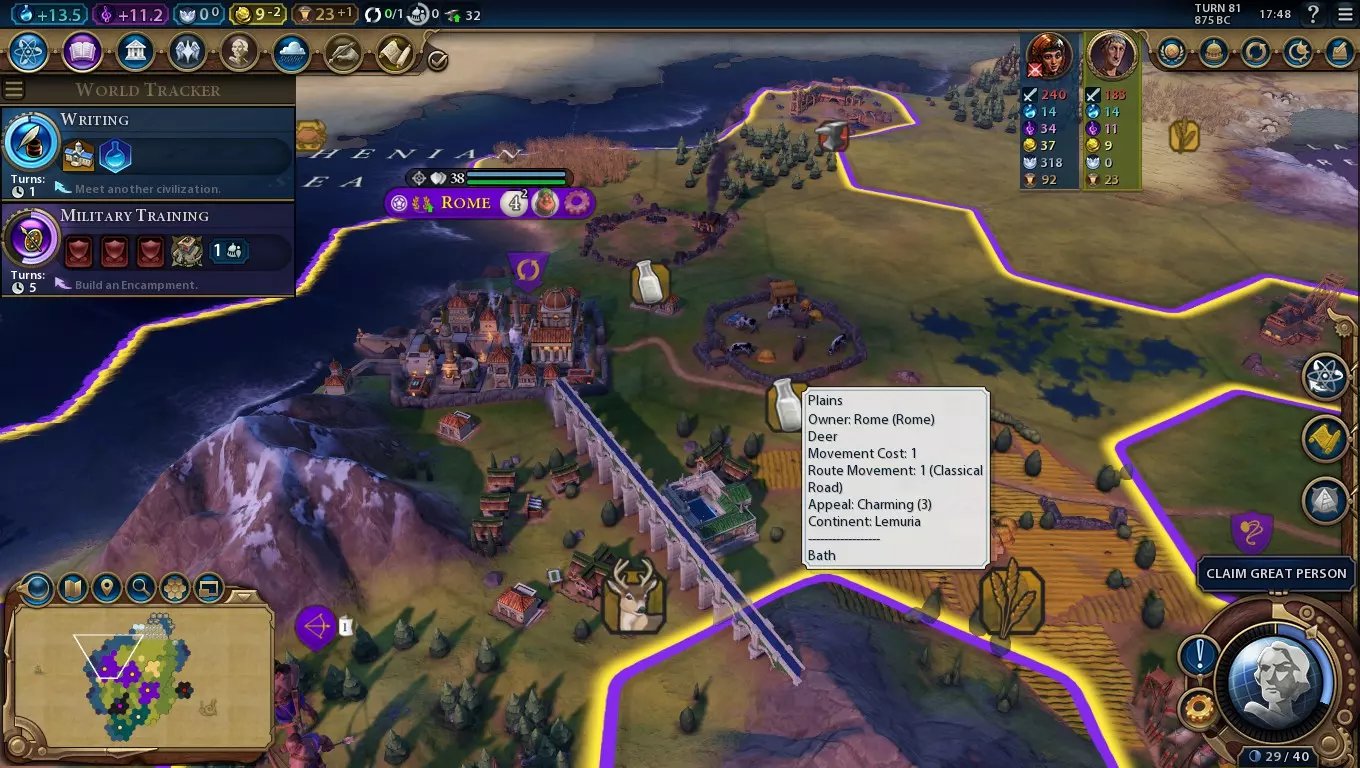
在完成早期军团部队的训练后,你还需要处理城市中的其他事务。你需要发展科技以避免在技术上落后,需要黄金和宜居度来支持后续的战争等等。当你有诸如此类的各种事务需要处理时,拥有更大规模的城市将会非常有帮助。而浴场正是为此而来。 要解锁浴场,你需要先研发“工程学”科技,其研发成本比“炼铁术”稍高一些。你可能需要先研发“建造者”所需的相关科技以及“书写”(通常在游戏早期并不急需住房加成)。“石工术”能让你建造与军团搭配效果出色的“攻城锤”,以及“远古城墙”。建造“远古城墙”可以为你提供“工程学”的尤里卡(Eureka)灵感。在此过程中,你还需要“车轮”科技,但这应该不成问题。 浴场的建造要求与水渠相同,因此你建立的任何城市都应位于河流、湖泊、绿洲或山脉的两格半径范围内。它们是游戏中建造费用最低的区域,因此即便是新建城市也能设法建造。虽然之后你可以用军事工程师的次数来加速建造浴场,但不建议这样做,因为每次加速只能提供20%的生产力。 水渠的说明在提供的住房数量方面可能有点令人困惑。以下表格将展示在不考虑其他住房加成的情况下,城市的总住房容量。城市位置 初始住房 带水渠 带浴场 无水源 2
6
8
澡岸 3
6
8
淡水获取 5
7
9
Notice that cities which initially start next to fresh water will gain the least from an Aqueduct or Bath, but still will end up with the most housing overall. Lots of housing available cheaply means you can more easily manage settling on city spots that aren't directly adjacent to water. An example of where that situation might arise is if you need to get a spot close to iron for the Iron Working eureka boost. Every point of housing essentially increases a city's population limit by 1, so receiving two extra points above normal Baths allows you to have bigger cities than most civs at this stage of the game. Those two extra points of population require one amenity - something the district neatly provides you with. All you need is a bit of food and you can have an empire with many large cities. Every three population points allows a city to build one more speciality district, and the more speciality districts a city has, the better food or production yields you'll get from domestic trade with that city. Ultimately, Baths take a district of varying utility and make it a more consistently effective way to make your cities bigger. A vast empire with conquered cities that can be repaired to their former glory quickly with Legions, become rich from internal trading, and grow to a large size thanks to the cheaply-available housing and amenity from Baths is one to be feared. Administration - Government and Policy Cards Note that the Administration sections strictly cover the options that have particularly good synergy with the civ's uniques. These are not necessarily the best choices, but rather options you should consider more than usual if playing this civ relative to others. Government Tier One Oligarchy is the obvious choice - a +4 strength bonus for Legions is quite considerable! Complement it with the Warlord's Throne so your early conquests boost the production in all your cities. Tier Two Merchant Republic and Monarchy are both good choices. For the former, the gold boost is pretty minor, but the district production bonus is good, particularly considering your Bath-enhanced cities can support more districts than the typical cities of other civs. For Monarchy, the high number of wildcards makes it versatile. Out of the tier two government buildings, the Intelligence Agency will probably be the most useful - you can use that extra Spy to steal more eurekas to keep your military up to date, or use it for the diplomatic visibility bonus to help your own units become stronger. Tier Three Fascism offers plenty of military bonuses to get you through the end of the game. Complement it with the War Department for extra health for every kill your units make. Tier Four Corporate Libertarianism works well if you're carrying on the domination game. Policy Cards Ancient Era Agoge (Military, requires Craftsmanship) - Legions are costly to train, so grab this policy card to make it much more manageable. This is particularly effective if you're chopping down trees to rush Legion production. Caravansaries (Economic, requires Foreign Trade) - Builds on the gold from trading you already get. Conscription (Military, requires State Workforce) - This will help you support your Legion army. Limitanei (Military, requires Early Empire) - For all the strength Legions have, they are one of the slower early rushing units, which can make loyalty more of an issue than it would be for civs like Scythia. This policy card will help you hold onto initial conquests for longer, giving you more time to move onto your next target. Classical Era Equestrian Orders (Military, requires Military Training) - An extra supply of iron to support Legion training. Raid (Military, requires Military Training) - The build charge Legions have allow them to repair pillaged tile improvements, meaning you can pillage with lesser consequence relative to most other civs. Use this policy card to increase those pillage yields by 50%. Medieval Era Professional Army (Military, requires Mercenaries) - You can simply keep upgrading your Legions and sending them off to war for the rest of the game. This policy card helps you to save money when doing so. Retinues (Military, requires Mercenaries) - Upgrading Legions to Musketmen costs a lot of nitre. Halving that cost frees up more for Bombards. Renaissance Era Drill Manuals (Military, requires Mercantilism) - Helps provide more nitre for upgrading Legions. Triangular Trade (Economic, requires Mercantilism) - Get even more gold out of your domestic trade. Administration - Age Bonuses and World Congress Age Bonuses Only bonuses with notable synergy with the civ's uniques are covered here. Isolationism (Dark Age, Classical to Industrial eras) - Conquering rather than founding cities? Put your trading post bonuses to good use and enjoy some powerful internal trade routes. Twilight Valour (Dark Age, Classical to Renaissance eras) - Combined with the Oligarchy government, Legions will attack with a massive 49 strength - more than a Knight! The downside is that they'll no longer be able to heal outside friendly terrain. Reform the Coinage (Dedication, Renaissance to Modern eras) - Rome has a slight (though not huge) incentive to create plenty of trade routes, so you can squeeze a bit more era score via this dedication. Reform the Coinage (Golden Age, Renaissance to Modern eras) - Rome's civ ability allows you to trade very long distances with ease, but that does leave those routes vulnerable to pillagers. This Golden Age dedication removes that risk entirely - at least until the end of that game era. World Congress How you should vote in the World Congress will often be specific to your game - if you have a strong rival, for example, it might be better to vote to hurt them than to help yourself. Furthermore, there may be general bonuses to your chosen victory route or gameplay which are more relevant than ones that have stronger synergy with civ-specific bonuses. Otherwise, here's a list of key votes that have high relevance for this civ relative to other civs. Deforestation Treaty - Effect A (Clearing features of the chosen type yields gold equal to the production and/or food) on woods or rainforest. If you have any build charges from Legions remaining, they can go further when chopping down foliage with this bonus. Mercenary Companies - Effect B (Producing, or purchasing military units using the chosen currency type, is -50% of the cost until the next World Congress) on production Enhances the effect of rushing units by chopping down woods/rainforest with Legion charges. Military Advisory - Effect A (Units of the chosen land promotion class gain +5 strength) on melee infantry units. Makes Legions or their upgraded counterparts more effective. Trade Policy - Effect A (Trade routes sent to the chosen player provide +4 gold to the sender. The chosen player receives +1 trade route capacity) on yourself or a civ you trade a lot with. Get a little more gold out of your trading posts. Urban Development Treaty - Effect B (No buildings can be created in this district) on city centres. You'll receive Monuments for free when settling cities, but other civs will be prevented from building them at all. Administration - Pantheons, Religion and City-States Pantheons Fertility Rites - A free Builder is very helpful for early development, while the growth bonus helps you fill the housing capacity of Baths sooner. God of the Forge - Legions are expensive. This combined with Agoge helps minimise that problem. Religious Settlements - The free Settler is excellent for early development and securing iron resources early on. Religious Beliefs You can have one founder, one follower, one enhancer and one worship belief. Defender of the Faith (Enhancer) - Combined with a hilltop Roman Fort, you can safeguard your cities with a minimal defence while the rest of your army is elsewhere. While the offensive counterpart of this belief, Crusade, is powerful, it's a bit harder to use as Rome due to the need to acquire religious units and spread the faith in the cities of other civs before invading them. Feed the World (Follower) - While you may only have Holy Sites in captured cities, extra food will still be useful to grow your cities to meet the housing offered by Baths. Gurdwara (Worship) - Similarly offers extra food to help hit the housing cap. City-States Akkad (Militaristic) - Who needs Battering Rams when you're suzerain of Akkad? That saves production, and cuts out the need to research Masonry. Hattusa (Scientific) - Ensures you can get iron for Legions, and saves a little time getting access to nitre once you have the Gunpowder technology. Hunza (Trade) - Trading posts allow trade routes to travel further, and therefore get more gold with this city-state's suzerain bonus. Mitla (Scientific) - Faster-growing cities can fill up Bath housing sooner. Mogadishu (Trade) - Even land-based empires will usually have some trade routes that enter the sea. Being immune to those routes being pillaged saves you having to build a navy to repel Barbarian pirates. Mohenjo-Daro (Cultural) - The bonus can be useful to help cities grow in the period before they have a Bath built. Once your cities all have Baths built (or have direct freshwater access anyway) then you don't need to worry about losing suzerain status. Singapore (Industrial) - Exploit your trading advantages for extra production. Wolin (Militaristic) - Secure Great Generals without needing to invest in Encampments. Administration - Wonders and Great People Wonders Hanging Gardens (Ancient era, Irrigation technology) - One to capture rather than build. The growth bonus helps your cities to fill the extra housing offered by Baths faster. Temple of Artemis (Ancient era, Archery technology) - You may not be able to build this wonder early on, but you may well be able to capture it off someone else. A city with a Bath and the Temple of Artemis can grow to a particularly huge size early in the game. Colosseum (Classical era, Games and Recreation civic) - Position this somewhere in range of a few good city spots, and enjoy +4 culture for every city you found in range of it. The amenity bonuses will mean those new cities will have no downsides, and the extra Trading Posts and roads those cities create will be very helpful. Colossus (Classical era, Shipbuilding technology) - An extra trade route means more gold, food and production. Terracotta Army (Classical era, Construction technology) - While your Legions are off at war, building this at home will let you upgrade all of them. Highly-promoted Oligarchy Legions are even more of a nightmare for your enemies to face. The Great General Point is also useful - if you can get a classical-era Great General, your Legions will be even stronger still. Angkor Wat (Medieval era, Medieval Faires civic) - Build upon the advantage Baths offer you with extra population and housing in every city. University of Sankore (Medieval era, Education technology) - Squeeze science out of your internal trade routes. Free trading posts mean even distant cities can get a bit of science here. Great Zimbabwe (Renaissance era, Banking technology) - Put this on one end of your empire in a bonus resource-heavy city, and send trade routes to the other end of your empire for enormous gold yields. Torre de Belém (Renaissance era, Mercantilism civic) - Can help create more powerful international trade routes. Great People Remember that these are only the ones that have particular synergy with Roman uniques, not necessarily the most effective options. Classical Era Zhang Qian (Great Merchant) - +1 trade route capacity. Zhang Heng (Great Scientist) - Can help you unlock Baths sooner. Medieval Era El Cid (Great General) - Although El Cid doesn't provide an area-of-effect bonus to Legions (you need Boudica, Hannibal Barca or Sun Tzu for that), retiring him on a Legion gives you a unit with 50 strength! Add Oligarchy on top, and you've got a unit that's on a par with a Musketman. Ibn Fadlan (Great Merchant) - +1 trade route. Irene of Athens (Great Merchant) - +1 trade route capacity. Marco Polo (Great Merchant) - +1 trade route capacity. Zheng He (Great Admiral) - +1 trade route capacity. Renaissance Era Raja Todar Mal (Great Merchant) - Makes internal trading even better for gold. Modern Era John Rockefeller (Great Merchant) - Can help you get even more gold out of trade. Atomic Era Melitta Bentz (Great Merchant) - +1 trade route capacity. Jane Drew (Great Engineer) - Offers Bath-esque housing and amenities, letting you hold off from dedicating production or tiles towards a Neighbourhood or Entertainment Complex. John Roebling (Great Engineer) - Also offers Bath-esque housing and amenities. Counter-Strategies Survive Rome's classical-era onslaught and they'll still have a pretty strong empire, but their advantages will fade letting you strike back. Civilization Ability: All Roads Lead to Rome Rome doesn't have much of an incentive to trade externally early on considering they can get gold from internal trading more easily, so look between Roman cities for good plunder targets. Fast-moving units will be the most effective at this task. Later on, Rome will only get the most out of that bonus if they send Traders on particularly long routes - which again, is vulnerable to pillaging. As for Rome's free roads, remember that you can pillage roads in neutral territory without needing to be at war. Do so and you can slow down their invasion of another civ. Trajan's Leader Ability: Trajan's Column Free Monuments in Roman cities will get them quickly through early civics, (and gives them a minor edge in resisting loyalty pressure) but will fade in effectiveness later in the game. If you're invading Rome, it's nice to know that the cities you capture will come with Monuments you can quickly repair and put to use outputting culture. Otherwise, it's generally more important to consider the threat of Legions than the power of this ability. Trajan's Agenda: Optimus Princeps Trajan wants lots of cities and land. If anyone has a high number relative to the average civ in the game, he'll like them. If anyone has fewer cities, he'll dislike them. He'll never have the Expansionist hidden agenda as it overlaps with his main agenda. If you want to befriend Trajan, you simply need to settle extensively (conquering also works, but beware of warmonger penalties). Keep an eye on your amenities - having lots of cities can be a strain on them. Unique Unit: Legion Legions require iron to be trained, so if Rome can't secure any, they'll lack a very powerful unique unit. Quickly researching Bronze Working may buy you time to grab iron tiles before Rome can, though be sure you're not hurting your other early objectives in the process. If you can't stop Legions being trained, a good defensive option is either Horsemen or Swordsmen of your own. They both require resources, but Horsemen should be a little more manageable considering horses are revealed earlier in the game and are cheaper. Garrisoning your cities with Archers is also a good idea. Rome will probably have a slight head start in the race to classical-era units, so delay tactics are important. Planting units on defensive terrain means they should be able to survive a hit or two, before retreating and being replaced with another. The Agoge or Manoeuvre policy cards will help you build pre-medieval units faster and will be pretty much compulsory. Legions are pretty expensive so even if you're losing units faster than Rome, there's a good chance you'll be able to survive until you can get a unit that can more reliably face them. Coursers and Knights can stand up to the strength of Oligarchy Legions, and can retreat quickly in case they take heavy damage. You'll need horses for Coursers, or iron for Knights. Alternatively, Crossbowmen perform well (though be sure to position them on defensive terrain). Men-at-Arms are stronger, but are more expensive than Legions, so aren't necessarily an ideal counter to them. Unique Improvement: Roman Fort An Oligarchy-boosted Legion defending on a Roman Fort seems horrible to deal with, but simply placing an Archer on a hill two tiles away allows you to shoot at it, while having enough time to retreat if the Legion wants to retaliate. When it comes to Roman Forts in general, make use of those in neutral territory if possible, but otherwise pillage any others left empty. Horsemen make good pillagers as they avoid zone-of-control and have enough strength to withstand a couple of hits from Legions. Note that unlike other unique improvements, Roman Forts are kept if you take over the tile they're in. You can then use them exactly the same way you'd use regular forts. Unique District: Bath Because Baths have to go next to the city centre, they can be quite tricky to pillage unless you're actively attacking the city. On the other hand, because they have to go next to the city centre, it forces Rome into specific city placements. It's not a good idea to settle cities to deliberately prevent Rome from getting Bath spots early on - being on the receiving end of a Legion invasion isn't worth it - but that can work somewhat later on. Other Guides If you like these guides and want to send a tip, you can click here![ko-fi.com] Gathering Storm Compilation Guides Civ summaries (Start here for an introduction for all civs) Civ-specific tricks, secrets and clarifications (Ideal for more experienced players)Individual Civilization Guides America - no additional content* (Cultural/Diplomatic/Domination) America - all additional content* (Cultural/Diplomatic/Domination/Scientific) Arabia (Domination/Religious/Scientific) Australia (Domination/Scientific) Aztecs (Domination) Babylon (Cultural/Domination/Scientific) Brazil (Cultural/Domination/Religious/Scientific) Byzantium (Domination/Religious) Canada (Cultural/Diplomatic) China (Cultural/Domination/Scientific) Cree (Diplomatic) Egypt (Cultural/Diplomatic/Religious) England (Cultural/Domination/Scientific) Ethiopia (Cultural/Religious) France (Cultural/Domination) Gaul (Domination) Georgia (Diplomatic/Religious) Germany (Domination/Scientific) Gran Colombia (Domination) Greece (Cultural/Diplomatic/Domination) Hungary (Diplomatic/Domination) Inca (Religious/Scientific) India (Domination/Religious) Indonesia (Cultural/Domination/Religious/Scientific) Japan (All) Khmer (Cultural/Religious) Kongo (Cultural) Korea (Scientific) Macedon (Domination/Scientific) Mali (Diplomatic/Religious) Māori (Cultural/Religious) Mapuche (Cultural/Domination) Maya (Scientific) Mongolia (Domination) Netherlands (Scientific) Norway (Domination) Nubia (Domination) Ottomans (Domination) Persia (Cultural/Domination) Phoenicia (Domination) Poland (Cultural/Domination/Religious) Portugal (Diplomatic/Scientific) Rome (Domination) Russia (Cultural/Religious) Scotland (Scientific) Scythia (Domination/Religious) Spain (Domination/Religious/Scientific) Sumeria (Diplomatic/Domination/Scientific) Sweden (Cultural/Diplomatic) Vietnam (Cultural/Domination) Zulus (Domination)*The Teddy Roosevelt Persona Pack splits Roosevelt's leader ability in two, meaning the game with it is substantially different from without - hence two different versions of the America guide. Lincoln was added later and is only covered in the latter guide. Other civs with alternative leader personas are not split because the extra personas added in later content do not change the existing gameplay - as such the guides are perfectly usable by players without them. Rise and Fall These guides are for those with the Rise and Fall expansion, but not Gathering Storm. They are no longer updated and have not been kept up to date with patches released since Gathering Storm. To look at them, click here to open the Rise and Fall Civ Summaries guide. The "Other Guides" section of every Rise and Fall guide has links to every other Rise and Fall guide. Vanilla The Vanilla guides are for those without the Rise and Fall or Gathering Storm expansions. These guides are no longer updated and have not been kept up to date with patches released since Rise and Fall. To look at them, click here to open the Vanilla Civ Summaries guide. The "Other Guides" section of every Vanilla guide has links to every other Vanilla guide.
2026-02-11 09:01:04 发布在  席德·梅尔的文明®VI




说点好听的...
收藏
0
0