
 换一换
换一换 


本指南旨在帮助首次接触《僵尸毁灭工程》的玩家在游戏中度过最初几天。内容涵盖关键的前24小时、战斗基础、初始“购物清单”、建立首个安全屋以及其他各种实用技巧和窍门。 简介 您好,感谢点击本指南。如果您正在阅读本文,很可能您是《僵尸毁灭工程》的新手,要么是想在开始游戏前获取一些建议,要么是已经尝试过几次,并通过惨痛的教训了解到游戏的残酷! 首先要明确的是,在《僵尸毁灭工程》中,您终将死亡。游戏没有“胜利”条件。您会一直玩下去,直到犯下致命的错误。这些错误可能千差万别——可能是像开门前没检查,结果被没预料到的僵尸突袭这样简单直接的失误,也可能是像没提前规划应对水厂停水,最终会死于脱水这样缓慢而痛苦的情况(不过这有点超出本指南的范围了)。 新手玩家最常见的错误都和僵尸有关——无论是过于自信,在战斗中招惹了超出自己处理能力的僵尸,还是仅仅吸引了过多注意力,导致无法逃脱,新手们都会深刻体会到,《僵尸毁灭工程》的“经典”僵尸比他们最初想象的要危险得多。本指南希望能帮助你减少此类失误,或者至少在你盯着游戏结束画面,清楚知道自己哪里出错时,能给你一些思考方向! 最后,这里的文字内容较多,因为需要传达的信息量大。我尝试通过一些图片,甚至几个画质一般的动图(感谢Steam的2MB文件大小限制!)来分隔内容,但即便如此,如果你不喜欢阅读大量文字,仍会觉得内容较多——这种情况下,建议你在浏览器中打开本指南,在游戏过程中遇到需要了解或复习的部分时再查阅。这样的反馈对我作为作者来说固然很棒,同时也意味着这份指南会在其他人搜索指南时更显眼,所以这也能帮助到其他人! :)
Good luck, and happy hunting! Character Creation pt1 - Occupations So, where to start in our quest to stay alive for long enough that our clothes get dirty? A lot of folks just jump straight in with their profession of choice, and whilst that's not the biggest mistake, it's a good idea when you're first learning the game to have a quick think about what you want your character to be good at, because some of the traits can have a significant impact on the way your character plays. Picking an occupationA lot of new players will see occupations like the Fire Officer and the Police Officer and their bonuses to combat-related skills and jump right on them, but that's not *always* a great idea. Combat in PZ is something you should consider a means to an end - something you have to do because it's the only way to achieve the thing you're trying to do, rather than your actual goal, so picking a profession solely because it's good at fighting isn't always the good deal it looks like. In particular, the Police Officer's bonuses offer very little to a new player, as firearms in PZ are not only hard to find and maintain, but represent an excellent way to announce your presence to every zombie in a three-block radius. Whilst a lot of veteran PZ players tend to go for the benefits of 'Unemployed', which lets them build a character from the ground up from a list of traits (more on that below), there are several occupations from the default list that have a lot to offer new players, including potentially beneficial spawn locations and skills that you can't get elsewhere. A few good options to consider are: Burglar: Lightfooted, Nimble and Sneaking are all great early skills to have if you're trying to avoid combat and detection (which you should be in the early game). The Burglar skill, which allows you to hotwire cars, is just icing on the cake. The downside is that you need to take a couple of negative traits to balance out these bonuses, but generally that's a deal you're going to come out on the right side of more often than not. Construction Worker: A solid choice. Not only do you have a better chance of spawning near a construction site (I think that's Riverside only, but more on that later), which is frequently a source of good loot, the hefty bonus to short blunt weaponry - which the majority of your early weapons will likely be - is great for when combat is unavoidable. A +1 to Carpentry is a nice bonus, but nothing special. Fire Officer: Despite my caution above, the Fire Officer is probably the safest of choices for a new player. Bonuses to Fitness, Sprinting and Strength are all immediately useful, and a slight boost to starting gear (Firefighter pants are super protective, if slow) is nice. The bonus to Axe weapons is fine, but unless you're super lucky, you're unlikely to find one early enough for that to be of immediate benefit. It's point neutral too, which means no need to worry about taking additional negative traits. There are also several occupations that are outright bad picks for a new player, whether that's because they offer skills that don't become useful until the mid or late game, they offer skills that don't really offer any benefit in the current game, or the cost in terms of negative traits isn't worth it. Occupations that I'd strongly recommend new players avoid unless they're picking them for roleplay reasons are: Farmer: The Farming skill boost isn't going to be useful to you until well into the midgame, which is too soon to be considering, and by that point you could probably have trained those levels anyway. Veteran: Firearms are a trap, the Desensitised perk is of limited value unless you're regularly fighting hordes, and -8 starting skill points is a ton of negative traits to have to take to balance it out. Metalworker: You won't be using metalworking until deep into the midgame, if not beyond, and -6 points to balance out a skill you won't be using for months isn't good for a starting player. Character Creation pt2 - Traits PZ character creation works on a points-based trait system. Positive traits cost points, negative traits give you points back. You can start with 0 available points or more, but if you have a negative point total, you'll need to add more traits before you can start the game. The benefits and drawbacks of the traits can vary significantly. Positive traits like Strong, Athletic and Fast Learner can be huge game-changers, but on the flipside, negative traits like Thin-skinned, Deaf and Illiterate can be significant barriers to progress. A lot of the decisions you'll make will be influenced by your playstyle - if you're not one for sneaking around, and you'd rather either fight or run, then taking something like Conspicuous, which makes it more likely zombies will spot you, probably isn't a big deal, and gives you 4 points towards a trait like Athletic, which is likely to be more useful. I'd probably recommend that brand new players don't get too caught up in complicated balances of traits when they're just starting out. Some traits can significantly alter the way your game pans out in ways you might not realise until it's too late (there's nothing like discovering how crippling the panic moodle can be when you're locked in a fight with four zombies and don't have an easy escape route...), and at this early stage of learning, you probably don't want to be complicating things. With that said, if you're determined to play with traits (or have picked an occupation where you need to take some traits to balance your points out), here are a few good positive traits to consider, as well as some negative traits that are less crippling: Positive traits: Fit/Athletic: Fitness is super useful, as it not only dictates how quickly you'll get tired from things like running and fighting, but also the chance to automatically push off an attacking zombie (20% at level 10!). It's one that you'll automatically train 'passively' over time, as it's levelled up by sprinting and swinging weapons, so you might want to consider taking Fit at 6 points and saving the extra 4 points you'd spend on Athletic for something else. Stout/Strong: Again, Strength is an incredibly useful skill to have an abundance of - it doesn't just impact combat, it's also directly responsible for how much loot you can carry, something that will become very important to you, very quickly! Taking Strong also gives you a massive boost to your knockback power with melee weapons, which is incredibly important when you're learning to fight. Organized: This gives you an additional 30% capacity in all containers, which is just incredibly useful when you're out exploring and you come across a large haul of heavy stuff you want to take. This can be the difference between making one trip back to the safehouse or two, which means more time searching other locations. Negative traits: Weak Stomach: This is an easy one to take, because as long as you don't do anything stupid as a player (like eating uncooked or rotten food), this pretty much doesn't do anything. Particularly in the first few weeks, where food is abundant, there's no reason you should be eating anything likely to make you unwell. Smoker: A popular one with experienced PZ players, this one is pretty much free points once you've found cigarettes and a source of flame (which isn't always as straightforward as you'd think!). The main challenge here is that about 50% of the time you'll find both in the first two days of looting, and then the other 50% of the time, you can go literal weeks without seeing hide nor hair of matches or a lighter. The downsides here aren't huge though - anxious moodles offer some low-level debuffs and can make sleeping a pain sometimes, but generally the positives outweigh the negatives with this one. Prone to Illness: Much like Weak Stomach above, this is a manageable one for the most part as long as you don't do anything silly. It makes catching a cold much more of an inconvenience, but colds can be avoided by just staying dry where possible. The faster rate of zombification is a moot point, as if you're infected, you're dead anyway, so what difference does it make if it gets there a little faster? A note on Underweight (because I know veteran players will be screaming at me if I don't include it....): A lot of players (myself included) tend to take Underweight as an insta-pick on new characters, as it only applies while your weight is between 65 and 75 (you start at 70), meaning you can effectively nullify it with a week of just inhaling every tub of ice cream and peanut butter you come across. HOWEVER, I'd think carefully before taking this as a new player, as for that first week, you're going to do 20% less damage, and your fitness is going to be reduced by 1. Those are some hefty penalties for a new player to be considering taking, and that makes it difficult for me to 'recommend' it. Think carefully before taking this one. Spawn locations - which is best for you? The first decision point you'll come across in your game (other than what mode to play, which is really just personal preference) is which town to start in. This is actually a surprisingly important decision, and each of the spawn locations is going to offer a very different experience for your first week. Muldraugh
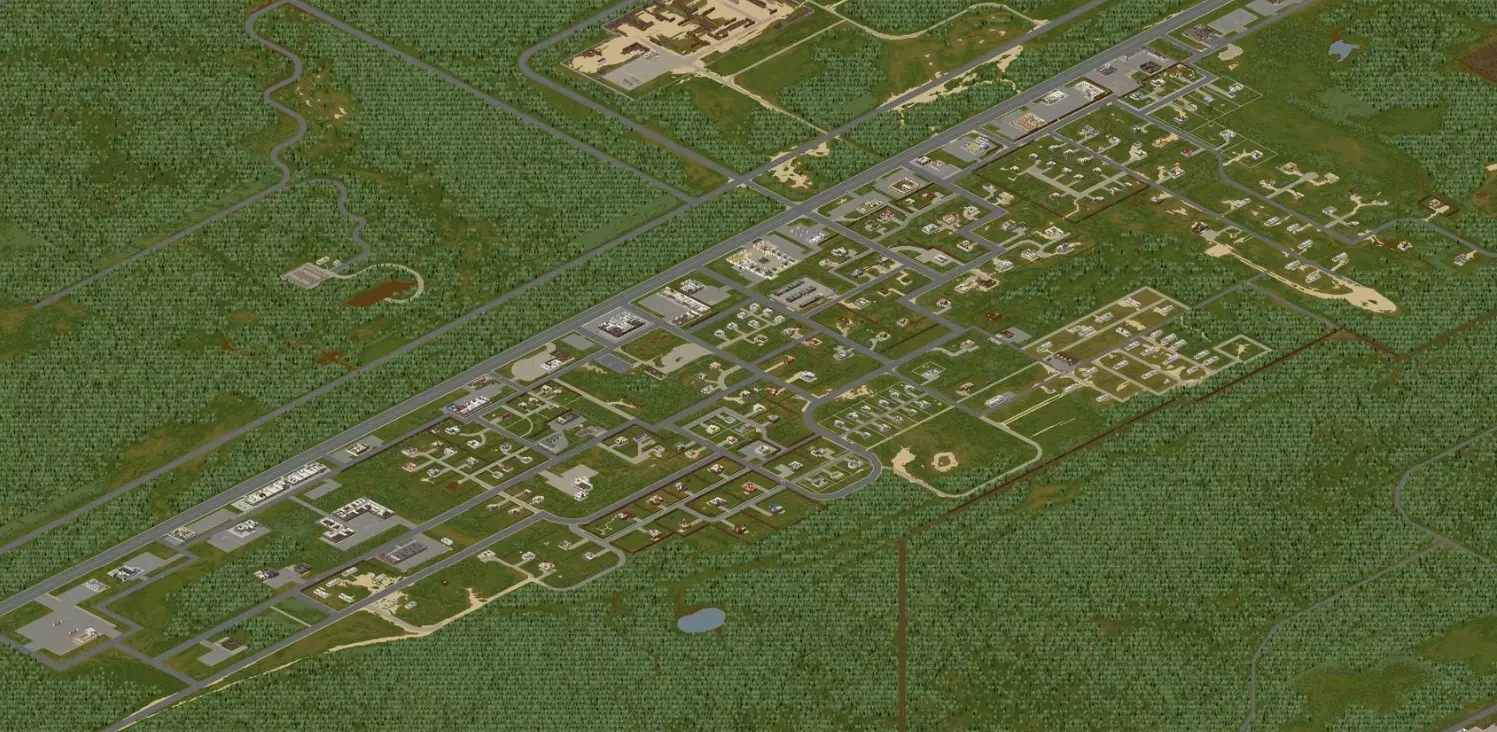
穆尔德劳可以说是“默认”的出生点,也完全有理由被认为是新手玩家的最佳起始地点。这里的僵尸数量总体上可控,有大量可搜刮的地点,意味着像食物、基础武器和衣物这类急需物资应该不难找到,非常适合你的第一周生存。 不过,许多更有趣的搜刮地点位于小镇西边缘的主干道沿线,那里几乎常年聚集着中到大型的僵尸群。一旦你实现了自给自足,这些地方的风险回报比就不太理想了——或许找一辆能用的车去其他地方会更安全,得益于穆尔德劳的中心位置,这一点也更容易实现。优点: - 有许多可用的安全屋 - 大量早期游戏的搜刮地点 - 僵尸数量可控 缺点: - 除非前往风险较高的主干道,否则战利品种类不多 - 部分出生点(如拖车公园)难度远高于其他地点 河畔镇
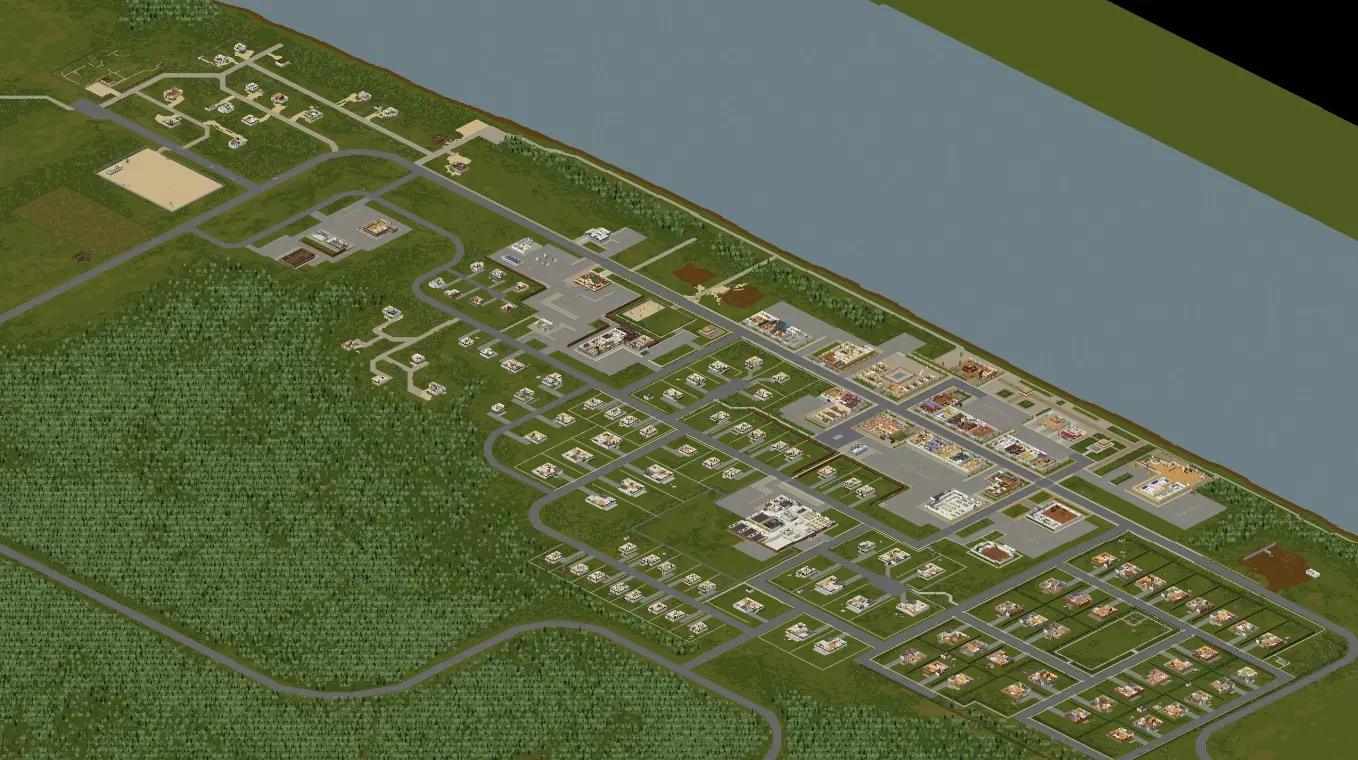
河畔镇是我个人为希望存活几天的新手玩家推荐的最佳起始地点。这里人口稀少,意味着即使是像巨型超市和酒店周边这样相对繁忙的区域,只要你保持理智和谨慎,也能应对。而且,只要你不在光天化日之下冲到主街中央,就不会意外闯入任何“高风险”区域而陷入重围。 虽然河畔镇的整体 loot 地点比穆德劳夫少得多,但仍有足够资源让你撑过最初几周。更重要的是,获取硬件商店、警察局和巨型超市等更有价值 loot 来源的风险,比在穆德劳夫低得多。小镇东边的封闭式社区也是设立安全屋的绝佳地点。 优点: 人口少,无主要危险区域 可相对安全地获取多种物资 有很多不错的安全屋选择 缺点: 物资获取量比其他地点少 距离其他人口中心较远 罗兹伍德
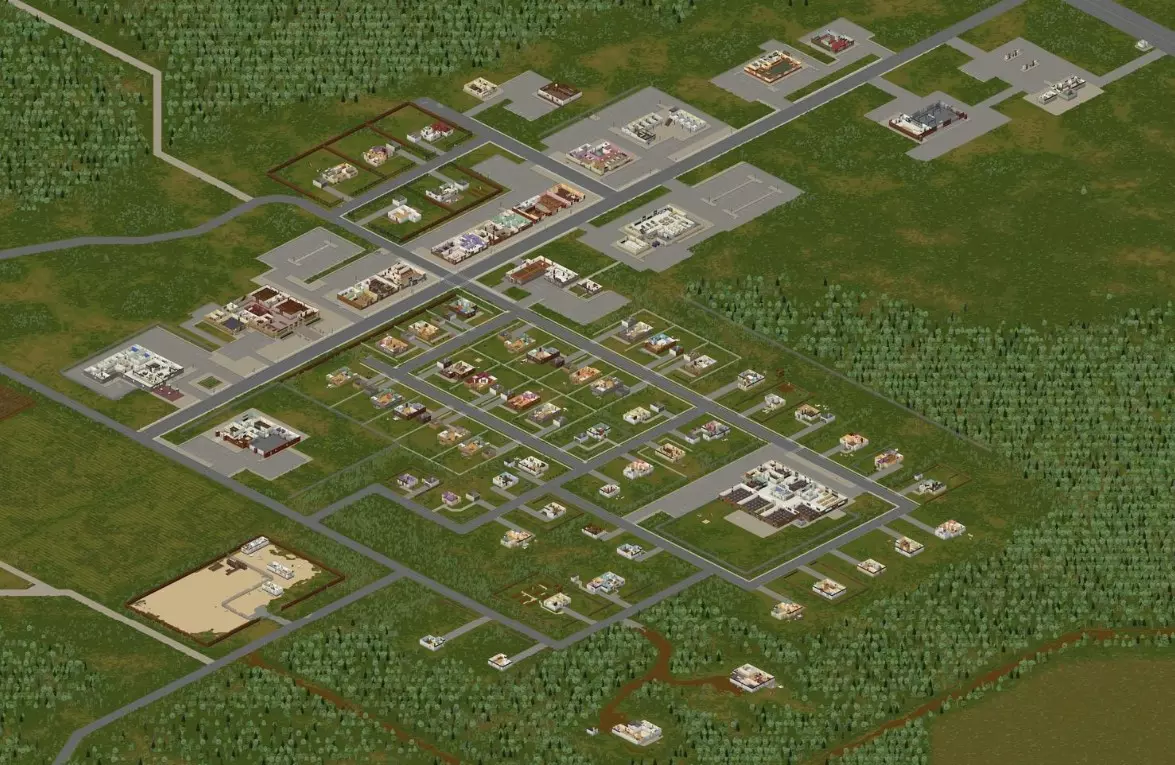
罗斯伍德的出生点有点看运气。这是个小镇,意味着人口相对较少,但人口分布相当密集,这就导致像意外触发的房屋警报这类巨大声响,几乎会瞬间把全镇的丧尸都引到你身上,即便是最有经验的玩家也会陷入困境。 这种紧凑的规模也带来了其他利弊——罗斯伍德有一些不错的搜刮地点,而且守卫并不森严——尤其是位于镇南端的警察局,那里物资丰富,甚至连其他城镇的玩家也经常来这里“扫货”。缺点是地图尺寸较小(甚至比河畔镇还小),这意味着如果战利品刷新运气不佳,你可能很难找到关键物品,比如更大的背包、有用的工具和更高等级的近战武器。这时候你可能需要找辆车去其他地方搜寻物资,而找车本身就是一项不小的任务。一旦装备齐全,附近的监狱和秘密军事基地会带来有趣但高风险的冒险。 优点: - 优质的搜刮地点 - 人口密度低 - 有趣的附近兴趣点 缺点: - 最小的战利品池 - 警报声或 loud 噪音可能会引来整个城镇的敌人 西点镇
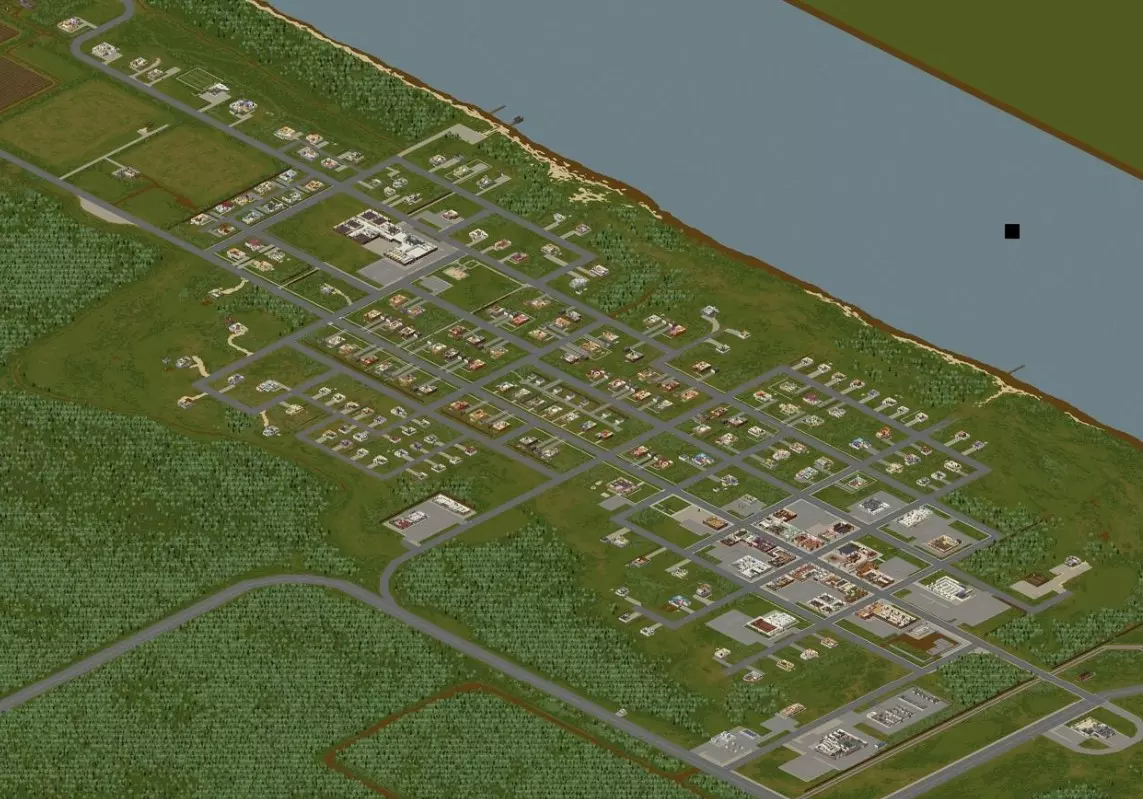
There are two types of player that knowingly choose West Point as a spawn location: 1) Experienced players who are willing to gamble on losing a character early for the quick access to West Point's many excellent looting locations. 2) Maniacs. Don't choose West Point as a spawn location if you're a new player. Whilst it's full of excellent loot, it's also densely packed with groups of zombies, and basic tasks such as establishing a safehouse and basic gear is incredibly risky, even for experienced players. Packs of 5-6 zombies are common even in low-traffic residential areas, and even attempts to pick off stragglers can quickly spiral into encounters with 10+ shamblers pursuing you, forcing you to run and inevitably pick up even more attention, and before you know it you're in the death spiral. :') With that said, if you're somehow able to survive the first day or two and get established, there's a lot to like about West Point. It's got several excellent safehouse options on the outskirts if you can clear out the existing residents, and it has the widest and largest loot pool of any of the starting locations, including the fabled gun store on the northeast outskirts of the town. Pros: Large and varied looting locations Several good safehouse locations Great long-term survival potential due to nearby locationsCons: Large and densely-packed zombie population, even in residential areas Very difficult first 24-48 hours Lights, camera... action! Your first 15 minutes in-game Okay, so you've created your character, you've selected your spawn, and you've hit start... what now?! Well, once you've read through the text reminding you that there's no win condition and that "this is how you died", you'll see your character in - hopefully (although not definitely!!) - an empty house. Securing your starting houseThe first thing you need to do is to make sure you're safe. Our goal here is to not get eaten immediately, and a very good step towards doing that is to make sure that we're the only occupants of the house, and more importantly, to keep it that way for the imminent future. First things first, and assuming you're not immediately under direct attack, switch off any TVs or radios that may be playing. They'll create noise that will attract zombies to the house. Once they're off, it's time to listen. You're keeping an ear out for any banging noises that are likely to indicate zombies slamming on doors or windows to open them. Again, unless you're unlucky, you shouldn't hear anything. If you do, quickly try and identify the source and the frequency of the banging so you know how long you've got, and where the threat will be coming from. If the source is an internal door and there's a lot of banging (more than one every 2-3 seconds or so), you're going to want to think about grabbing what you can and getting out of there sooner rather than later, as you're not going to be equipped to take on multiple zombies in a confined space at this point. If everything is okay and you've not drawn any immediate attention, it's a very good idea to try and keep things that way. Crouch down when moving around to minimise the risk of drawing outside attention, and start closing any ground floor curtains where available. Turn off any lights that may be on, too. Once you've closed the curtains and switched off the lights, it's time to start searching for items. Preparing for your first trip outsideSo, you're safe at the moment, but those four tins of soup and an apple aren't going to keep you alive forever - sooner or later you're going to need to go outside, and you're going to need to use what you've got in this house to help you do it. In an ideal world, this house will have four things in it - some food, a basic weapon, a water container, and some clothing/sheets. Two of those are pretty much locks - most houses will have at least some basic non-tinned food and some clothes or sheets. FoodFood is pretty simple - grab whatever's in the fridge and cupboards and can be eaten right away. Ideally you'll go for perishable food from the fridge first, such as fruit, vegetables and stuff like sandwiches, but if that's not an option, then easy-open non-perishables like corned beef, tuna and jerky are fine. Don't start carrying tinned foods around with you at this stage unless you got lucky and found an early can opener - you have limited carrying capacity, and without a way to open them, they're just dead weight. WeaponsWe'll cover it more in the combat section below, but you'll need a way of defending yourself sooner or later. Whilst the ol' shove-n-stomp will suffice against lone zeds, you're going to need something more robust pretty quickly. Kitchens and utility cupboards are probably your most likely sources of weaponry - a frying pan or griddle pan is a more than serviceable first weapon, but even something like a rolling pin or kitchen knife is better than your bare hands. If you're lucky, you might come across a hammer, golf club, or even a baseball bat. Letter openers, butter knives and pencils aren't worth the inventory space - stick with your fists. Water containersAs for water containers, these are a key item for the early game, and it's going to be arguably the top item on your shopping list if you don't luck out and find one right away. Water bottles can be filled at a sink or other source of water, and the player will automatically drink from them when thirsty, saving the need to constantly stop off at locations to get a drink - topping up a bottle once a day is usually more than sufficient. More or less any kind of bottle can be used as a water bottle, so keep an eye open for beer bottles, bourbon, soda, wine or even remoulade and mayonnaise bottles that can be repurposed to hold water. If you're super lucky, you'll find a bottle of bleach, which will hold even more water (just, y'know... remember to empty it first...). Stores and fridges are a good source of full bottles, whereas cars and bins are often a useful source of empty bottles. Just try not to think about drinking from a bottle you found in the garbage. ClothingClothing is a two-stage thing. Firstly, you're going to look for any items of clothing that are better than what you have on already - pants and long-sleeved tops are better than t-shirts and shorts for obvious reasons, and additional layers such as jackets or hoodies are also desirable. A 'lucky' find would be jeans and/or a leather jacket of some description, which add additional protection from zombies. The second stage is that you're going to want a source of emergency bandages. Despite our best efforts, you're probably going to make a mistake at some point and need patching up. Blood loss can be a real issue in PZ, so you *really* don't want to be tearing up your socks for bandages while your carotid artery is doing a serviceable impression of a freshly-opened faucet (no, seriously, neck wounds will kill you in literal *seconds* if you're not quick!) - you can improvise some bandages by tearing up unwanted items of clothing, and I'd *strongly* recommend you have at least 3-4 ripped sheets on you until you get access to proper bandages. Now, odds are, you're not going to get that lucky - sometimes you don't find any weapons right away. Sometimes you can be searching for a day or two before you finally get a water bottle. Either way, whether you like it or not, you're going to have to venture outside your current bubble to fill those gaps. None of these items are gamebreakers - not having them right from the word go won't be the difference between living or dying (maybe excluding the ripped sheets!), but they'll certainly make the first couple of exploration trips while you gear up a little bit more comfortable. PZ combat 101 Now, exploring the world of post-apocalypse Kentucky is a dangerous game. You're going to find yourself in a situation where combat is the best - or only - solution pretty rapidly, and knowing how to handle yourself is going to be an important part of staying alive. Not just in terms of how to fight, but just as importantly, *when* to fight. As counter-intuitive as it may seem, there are times, even in the early game, when dealing with a single zombie is actually less risky than running away and risking attracting more attention. Picking your fightsThe zombies in PZ are - by default - vanilla 'Romero' zombies. They're slow, stupid and easily outmatched on their own. But they're also tough, relentless and incredibly dangerous in numbers. It doesn't matter how experienced you are, how good your gear is, or how many you've killed so far, a group of more than 3-4 zombies should be treated as a significant threat. In close quarters, even a single zombie can represent a serious dent in your plans to keep your intestines on the inside. When deciding whether to fight or retreat, there are several things to consider: How many zombies am I expecting to fight? "Expecting to" is the key wording here - sometimes situations can get out of hand (see 'How does this situation get worse?' below), but for the most part, you're going to have a good idea at the outset of how many zombies total you're going to have to deal with. 1-2 is generally fine, 3 is manageable with the right approach and gear, 4 or more is likely going to need special tactics (see 'Larger groups' below). What is the overall picture? This is a broad one, but what is the scenario here? How is your character looking, what gear do you have? Fighting off three zombies with an exhausted character and a breadknife is a very different scenario to fighting three zombies with a fully-rested character and an axe! What are the implications if you don't take the fight? Are these zombies standing between you and an essential location, or can you just find another way around them with no major issues? Where is the fight taking place? This is a really important thing to consider - not just the physical space of the environment (IE a cramped building interior or a large, open car park), but also what you know about the area - is this an area you know well? Is it relatively safe? Is it a high-population area where other zombies could get involved? Do you have a safe escape route if necessary? How does this situation get worse? This is always an important thing to think about - even though you're trying to neutralise two zombies, is there another group nearby that could potentially aggro on you and make things much worse? What's the time of day? If you have to escape in an unexplored direction, do you have time to make it back before nightfall? All of the above can factor considerably into your decision whether to fight or not. Fighting can be tiring, and the more energy you expend in a fight, the less energy you'll have for sprinting if you do need to escape. On the same note, if you happen to run into trouble, you're going to have less energy to fight if you've been sprinting for the past two minutes. So you've decided to fight!
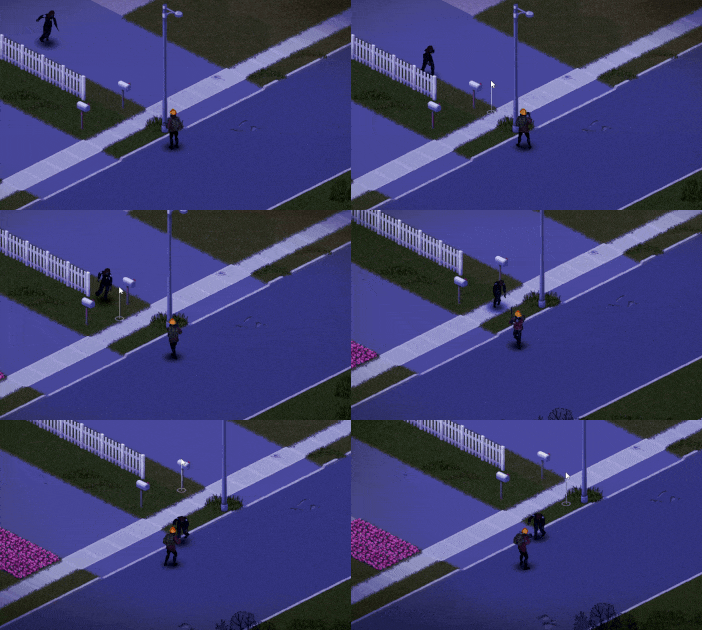
如果你已下定决心,认为这场战斗势在必行且能够获胜,那么就准备好战斗吧!不过,在你挥拳或挥舞武器之前,重要的是确保自己不会遇到任何令人不快的意外。 当僵尸靠近时,你需要进入战斗姿态,并快速进行360度旋转,以确认没有不速之客悄悄靠近想给你一个“拥抱”。我喜欢把这称为“安全旋转”,这是一个非常简单的动作,95%的情况下它什么也发现不了,但在那5%的情况下,它确实能发现一个偷偷摸摸靠近的僵尸,那时你会非常庆幸自己做了这个动作。上面是一段我使用安全旋转的低画质GIF(我可能做得有点晚——理想情况下,你应该更早这么做,这样就有更多时间做出反应)。在较长的战斗中,你可能需要多次使用这个技巧,以确保战斗情况没有发生变化,尤其是当你已经从战斗开始的位置移动了一段距离时! 战斗技巧
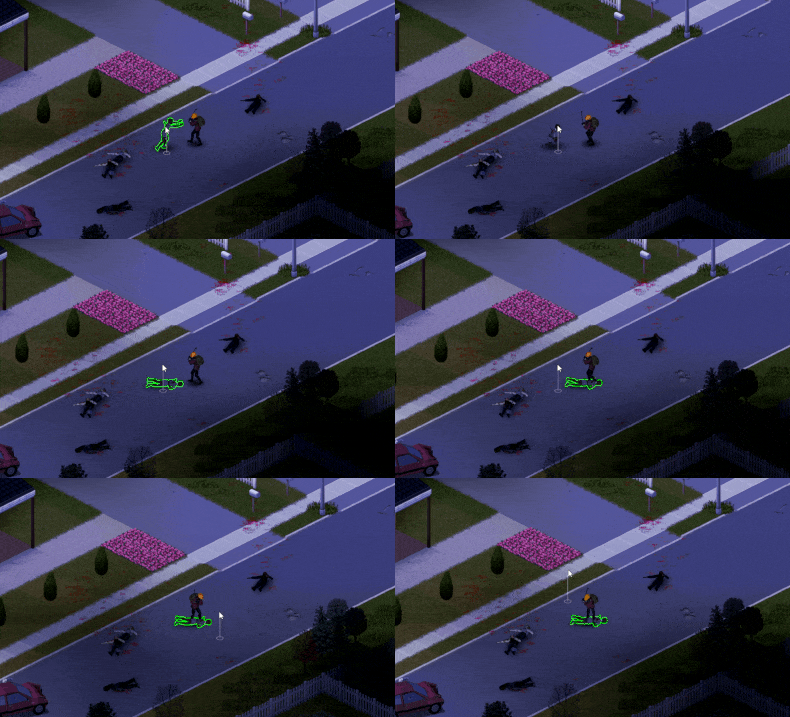
Once that's done and you're safe, it's time to lay in the pain. Whilst a single zombie is easily beatable for even an unarmed character, you still need to treat them with the respect deserving of an opponent that can kill you with a single attack. Where possible, back away from the zombie and let them come to you, strike once they're in range, back off a few steps and rinse and repeat until they either fall over or die. In more confined spaces, such as inside buildings, you may need to circle slightly whilst backing away. Once downed, a zombie's threat reduces significantly - a downed zombie becomes vulnerable to your mightiest weapon - the good ol' size 10. Stamping on a zombie's head is probably going to be the main source of your kills in the early game, as it's not only just as efficient as most of the weapons you'll have at this point, it also doesn't reduce the weapons' condition, which is often a headache with lower-tier weapons. More importantly, if you position your character so you're stood on top of a downed zed (see the gif above), they cannot get up until you move. This move isn't without some risk, as it is reliant on you being able to position yourself accurately, and if you get it wrong, you're going to be in very close quarters. However, if you get it right, you're going to be able to stamp on their head until it bursts like an over-ripe melon. It also allows you to keep on swinging at any other attackers whilst stood on top of the first zombie, turning a 2v1 into a much more manageable effective 1v1. An important thing to note is that you can differentiate between a shove/stomp and a regular attack by using the spacebar (default) instead of LMB to attack. Shoves are useful for giving you some space, and stomps - as above - are a handy way of preserving your weapon durability rather than wasting it on defenceless enemies that don't pose a threat. Fighting unarmedA common mistake many new PZ players make is to assume that they're completely defenceless against zombies without a weapon, meaning the early game turns into a never-ending chase scene that ultimately ends with an exhausted, panicked and lost player being overwhelmed. The truth is, unless your character has some massive penalties to strength as a result of bad character creation (or debuffs from hunger/panic etc), even unarmed players can easily beat a single zombie. An unarmed player in the combat stance will shove when LMB is clicked - this will result in one of two outcomes - either the zombie staggers back slightly, then continues forwards, or it will fall over backwards. It's not currently possible to kill a standing zombie whilst unarmed. Once a zombie is prone, you can use the headstomp tactic discussed above - just stand on their chest facing the head and press space until they go pop. Fighting carefullyCombat in PZ is messy and imprecise, likely reflecting the real nature of a life-and-death struggle. Sometimes swings will miss unexpectedly, or a zombie you thought you had pinned will start to get up - in these scenarios, you should always prioritise avoidance over attacking. Remember, you have ONE life. If you swing and miss, get away, get your distance, reset and try again. If a zombie starts getting up, get the hell away and treat it as a standing zombie now - even as an experienced player, I've lost month-long runs due to something as stupid as trying to hit a zombie that stood up on me rather than just taking my time and backing away. PZ combat 102 - large groups Sometimes you're going to come across a scenario where you'll need to deal with a larger group of zombies. There are two main methods for dealing with these groups - either kiting them into one large group and losing that group, or luring smaller, manageable chunks of the group away and killing them one by one. Kiting: Whilst all activity with large groups is risky, this particular approach is doubly so - not only are you deliberately creating a group that is way too large for you to deal with through combat, you're also staying within aggro range for much longer than you normally would, increasing the potential for an almost-certainly fatal mis-step. The most reliable way to do this is to try and bunch the zombies up (ideally by going to a wide open area like a field - although an intersection will do in a pinch - and moving in large circles so they naturally bunch up as they take the shortest path to you). Once you have the majority of zombies bunched, you can start to draw them away from the area you're looking to get to - just don't forget to keep your eyes open for any other zombies approaching as well as your main 'party'! Once you've drawn the main group a safe distance from your intended goal, it's time to lose them - something which isn't always as easy as it may seem - zombies can be persistent! I usually break line of sight *twice* before being happy that I've definitely lost a group - so for example, I'll try and not only go through a building, but also cut through some trees, or climb a high fence if available. One particularly important thing to consider with kiting is that you've not actually *solved* the problem of a large horde of zombies, you've just created a bigger one and moved it somewhere else, where it'll start to gradually dissipate into multiple decent-sized groups over a fairly large area - make sure that area isn't one you'll need to go to anywhere soon! Lure and kill:
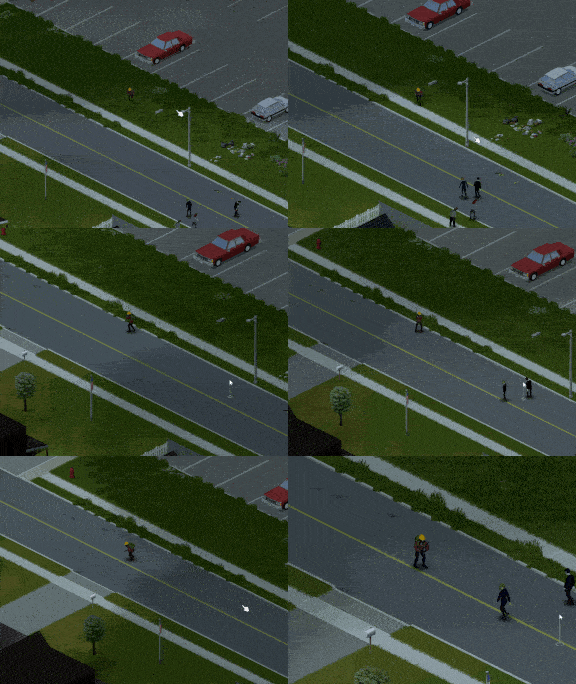
The other method of dealing with a large group is generally slower but safer, as you'll always have the option of shifting to kiting the groups if this goes wrong. This method is relatively simple - you'll be trying to peel small, manageable groups off a couple at a time, where you'll kill them safely and then repeat the process until the group is cleared out. To do this, you'll need to carefully sneak towards the group until you get the attention of one or two, back off until you're safely out of range of the others and let the isolated ones come to you, at which point you'll deal with them as you would any other isolated zeds. You then need to rinse and repeat until the pack is cleared. See the gif above for an example of this. This method is slow, but it's the safest way - generally even if this goes wrong and you end up attracting 5-6 zombies at once, you can still peel these away into a separate, smaller group and lose them as you would with kiting, returning to deal with them once it's safe to do so. Exploring the world (and keeping your insides) The time has come for you to step outside of your starting house (hopefully on your own terms!), and the exploring can begin. The world of Project Zomboid is *vast*, and it's incredibly easy to not know what to do or where to go first, or more importantly, if you do know what you want to do, how to do it as safely as possible so we continue our several-minute long streak of not being eaten immediately. General scouting and exploringThere are a few basic principles of scouting and exploring that pretty much apply no matter where you are. Be aware of your surroundings at all timesThis is rule number 1A. The big one. The great big rule to rule them all. It only takes a single zombie to sneak up on you while you're checking a map or fiddling with your inventory to absolutely ruin your whole run, or at the very least put the kind of fright into you that's going to make whoever's in charge of the laundry very unhappy indeed. There's generally very little in PZ that requires such immediate attention that it can't hold off until you can get to a safe space to do it - the only exception is probably urgent first aid such as a neck wound, and in that scenario, well, I'd imagine you're already extremely aware of your surroundings. Even just navigating the world, you'll want to throw in the occasional safety spin, just to make sure you haven't accidentally picked up a follower hiding behind a tree or round a corner who's going to creep up on you at an inopportune moment. Don't run unless you're absolutely sure you're in a safe areaBy 'safe area', I'm generally referring to an area that you have passed through multiple times and have largely cleared of zombie activity, where the majority of activity is likely to be limited to isolated stragglers who have wandered in from other areas, or out of buildings you've not yet cleared. The problem with running is that it doesn't just draw a load of attention to you, it also tires you out, so if you do happen to run right into a pack of zombies you weren't expecting, you're now fighting at a disadvantage. It also tends to make you hot, which increases your thirst - a bit of a pain if you've not yet found a water container! Keep track of the worldMore specifically, the time of day and the weather. Nighttime in PZ is markedly more dangerous, as your field of vision drops dramatically, meaning you're much more vulnerable to stumbling into bad situations and/or getting lost. If it starts getting towards 7pm/1900hrs, start thinking about how you're going to get to a safe place for the dark hours, whether that's your current safehouse or a nearby location you can use in a pinch. The weather can also have a big impact on things - foggy weather can be dangerous for all the same reasons as darkness, but rain can also be a problem - get yourself too wet and you'll run the risk of catching a cold, which not only reduces your stats, but can make you sneeze at inopportune moments. If you need to go out in the rain, consider taking a towel with you. Entering a buildingOdds are, no sooner are you going to be outside than you're going to find somewhere you'll want to go inside. If you've just left your starting house, a pretty good place to start is the house next door! However, going into buildings is a dangerous proposition. You're heading into a confined space with unknown dangers. You'll likely only have limited information available to you in terms of what's inside, and you're going to have to make a decision based on incomplete or potentially inaccurate information - a situation no-one wants to be in! Scouting a buildingWith that said, there's a lot you can do to reduce the risk. First things first, you need to ensure that your approach to the building is safe - you don't want to be caught unawares peering through a window by a zombie you didn't spot in the next garden across. Take a look at the area immediately surrounding the building - are there zombies on the street? How about in the garden behind the house? What about surrounding gardens? Even if they're out of aggro range right now, remember they *will* spontaneously wander! The best course of action where possible and safe to do so is to eliminate any zombies surrounding a target building so you can be as sure as reasonably possible that you won't be disturbed while you're inside. There's nothing worse than being on the first floor of a house you're looting and hearing the ominous sound of a window smashing from downstairs... Assuming that the most immediate threats are dealt with, you can now start scouting the building itself. I tend to not enter a building until I've done a full 360° sweep of it, peering through all available windows and doors to see what's inside - if I do come across a zombie at an entry point, I'll often consider opening it and letting the zombie out so I can deal with it on my terms rather than risk it smashing the window/door and A) potentially getting loose at an inconvenient moment and B) leaving a potential entry point to the building permanently insecure. If you decide to do the same, make sure you open the window/door and *immediately* run away to a safe distance. Zombies fall over when exiting a window, and will often follow this attack up with a very dangerous 'lunge' attack which can knock you over and put you in a lot of trouble. Similarly, zombies will immediately lunge forwards when a door they're leaning on opens, which can catch you unawares if you're not prepared for it, or mistime your weapon swing. Open up, back off, and let them come to you. Entering a building safelyIf you've scouted both the outside and inside of the building, then you're ready to enter. Try the doors first if possible, as whilst they're *usually* locked, you'll be surprised by how often they're not, and it's a lot less nervewracking walking in through the front door than sneaking in through the kitchen window! Assuming the doors are locked though, you'll need to pick a window. First things first, always try and open a window first before thinking about smashing it. Smashing windows makes noise and can attract unwanted attention, as well as necessitating the removal of the broken glass from the frame before entering.DO NOT TRY AND CLIMB THROUGH A BROKEN WINDOW WITHOUT FIRST REMOVING THE BROKEN GLASS! This is a great way to give yourself some seriously nasty injuries that require a significant amount of time - and in some cases, specialised tools - to heal. Don't do it unless the only other option is almost certain death. If you can't open your window of choice, have a think about whether to try other windows first before risking smashing a window - if you've not been lucky enough to get a weapon yet, don't try smashing windows at all - you're just going to get a nasty cut. Move on and try another window. Once inside, the approach is going to be very similar to your first house - listen, make sure the inside is safe, then do what you need to so you can loot with as little disturbance as possible. When things go wrongSometimes, things don't go to plan. Sometimes what you thought was a bathroom with one zombie in is a bathroom with five zombies in, and your hammer just broke. Sometimes, if you're *really* unlucky, the building is alarmed. In those cases, run. Don't try and fight in a bad situation, and definitely don't try and wait out an alarm. Get the hell out of that building and get the situation under control as quickly as you're able, even if that means leaving the area and coming back in a few days. If the building is alarmed, it's time to start running. Get out of the building immediately and run as fast and as far as you can in whatever you think is the safest direction (I usually pick the smallest road) and don't come back anytime soon, because that building is going to be *infested* with zombies very, very soon. Surviving the first 24 hours So, we've spawned, looted our first house, and we've even managed our first trip out into the big wide world without being eaten immediately - things are really looking up! But there's still a long, long way to go. What you do in the first 24 hours can help set you up considerably for the coming weeks and hopefully months. Establish a 'safe area'The first order of business is to set up a relatively 'safe' area you can return to if things don't go well on a scouting expedition. This doesn't have to be a large area - heck, it can even be as small as an isolated house and fenced in garden, but it just needs to be an area that's large enough that you can return to it if things have gone badly and you need to let things blow over a bit before heading back out (slices of fried gold optional). As you'll most likely be starting in a residential area, I'd usually look to just clear out a couple of houses either side so there's a stretch of 4-5 buildings that I know are relatively safe and that I can move around in without having to constantly be on 100% alert. The odds are, you won't be here long (unless you've lucked out and found an ideal safehouse location), so you don't need to go overboard - just clear out the immediate area of roaming zeds so that you know that if you're heading back for the night you're not going to have to worry about bringing any locals with you for a late-night snack. A point of note here - just because you've cleared an area doesn't mean it will *stay* clear. Not only will occasional wandering zombies amble into the area, but trapped zeds inside houses you've not cleared yet will occasionally break out. Don't switch off completely, even in 'safe' zones! Start working through your 'shopping list'As you start clearing the area, you'll be looting houses, so now is a good time to start thinking about making a dent in your 'shopping list' of items you'll need for the coming days and weeks. Some stuff will be easier to find than others, depending on your luck, but your priority will be the essentials we covered before leaving the starting house earlier - food, water containers, weapons and makeshift (or proper, if you find them!) bandages, but now with the addition of some kind of bag - getting a good backpack or duffelbag is one of the first major milestones in a PZ run, as it can easily double your carrying capacity, meaning you can carry more and need to make fewer trips to the same location. Even a school bag is worth having in the early game, as it gives you somewhere to store tools and excess food. Another useful item to grab is a watch of some kind, so you're able to see the time and can plan ahead accordingly. Watches can usually be looted from either houses or freshly-killed zombies - just don't forget to check digital watches for alarms that might be left on - it's not great to be creeping up on a couple of zombies only to have an alarm suddenly start beeping! Don't get silly with building up massive stockpiles of stuff at this stage. No-one needs 50 cans of mushroom soup in their first week of the game, so you can put those to one side and come back for them later if you really want them. A spare weapon is always useful to have, as there's nothing worse than having your trusty frying pan break mid-fight. If you come across something that's potentially useful down the line and relatively rare (such as a firearm or a generator), try and resist the temptation to grab it now, and just make a note to come grab it later once you've got the basics in place. An empty shotgun is literally just taking up encumbrance you can't spare, right now. Find and establish an early-game safehouseNow you've cleared out a few houses and done some basic looting, two things are probably happening. A) The day is starting to get on a bit, so you're going to need to start thinking about having somewhere to sleep, and B) You're starting to build a bit of a collection of loot, and encumbrance is becoming a consideration. The solution to both of these in the first day is just to find a temporary safehouse. It doesn't have to be anything spectacular, it's just got to be a location that's safe enough that you can store useful items you don't need to be carrying right now (things like tools, excess food and meds, spare weapons etc), as well as being able to sleep out a night or two in (relative) safety, before you set up a more permanent one in the coming days. In a lot of (but NOT all!) cases, your starting house is usually a pretty strong candidate for this - you know it's in a relatively safe area, as you'll likely have cleared a lot of wandering zeds, and that's normally good enough. If you've been unlucky with your spawn and started in a seriously indefensible or vulnerable location (like a trailer), then you're going to have to find somewhere a little better. Whilst you don't need to go through the full safehouse checklist (see 'Establishing your first safehouse' below), ideally you're going to want curtains on exterior windows and a couple of escape routes at the very least. Getting home safelyBy now, it's likely getting dark. It's time to head back to your temporary safehouse - make sure you've given yourself enough time to get back before it gets *really* dark and that you don't need to rush or take any undue risks to get there - you've done a good job surviving one of the hardest periods of the game - the initial gearing-up phase, so don't throw it away by taking shortcuts now! Be careful not to attract too much attention back to your 'safe zone' on the way back to it - the odd straggler here and there is inevitable, and you can deal with those safely, but if you do accidentally get the attention of a larger group, make sure you've lost them before going back home - if that means taking the long way round, then that's preferable to having to deal with them knocking down your bedroom door at 3am. Establishing your first safehouse So, you've survived your first day or two, you've got the basic gear you need to survive... what next? Well, every operation needs a good base, and this one is no different. Odds are, your starter house is fine, but it's not somewhere you're going to want to spend the next few weeks or months holding out. You're going to need a proper safehouse, and that's something you'll need to head out there and find. Picking a safehouseNow, there are a lot of things to consider when choosing a potential safehouse - you're going to be there a while, and once you've been looting for a while, packing up the entire contents of your current safehouse and moving them somewhere else is going to be a real chore, so you need to make sure your first one is a good one! When choosing a potential safehouse, there's a checklist of things I like to consider: Where is it? Are there nearby high-population areas that could see wandering groups pass by? How many floors does it have? Is there an upstairs window I can use for an escape route if the ground floor is compromised? Are there tall fences on some sides to keep zombies out? Or are there trees which could conceal approaching zombies? Is there a safe escape route I can use if the worst happens and I have to abandon it? Is there plenty of storage for my loot? How far is it from nearby looting spots? Am I going to have to walk/drive for an hour each way just to reach it?Based on this, my (and hopefully your) ideal safehouse is a two-storey building with plenty of space, tall fences on three or four sides, within a safe travelling distance of looting spots, and has multiple escape routes if needed. That's a lot of criteria, so it's no wonder picking a good safehouse is such an important step. I've included two examples of potential safehouses below to illustrate 'good' and 'bad' options.
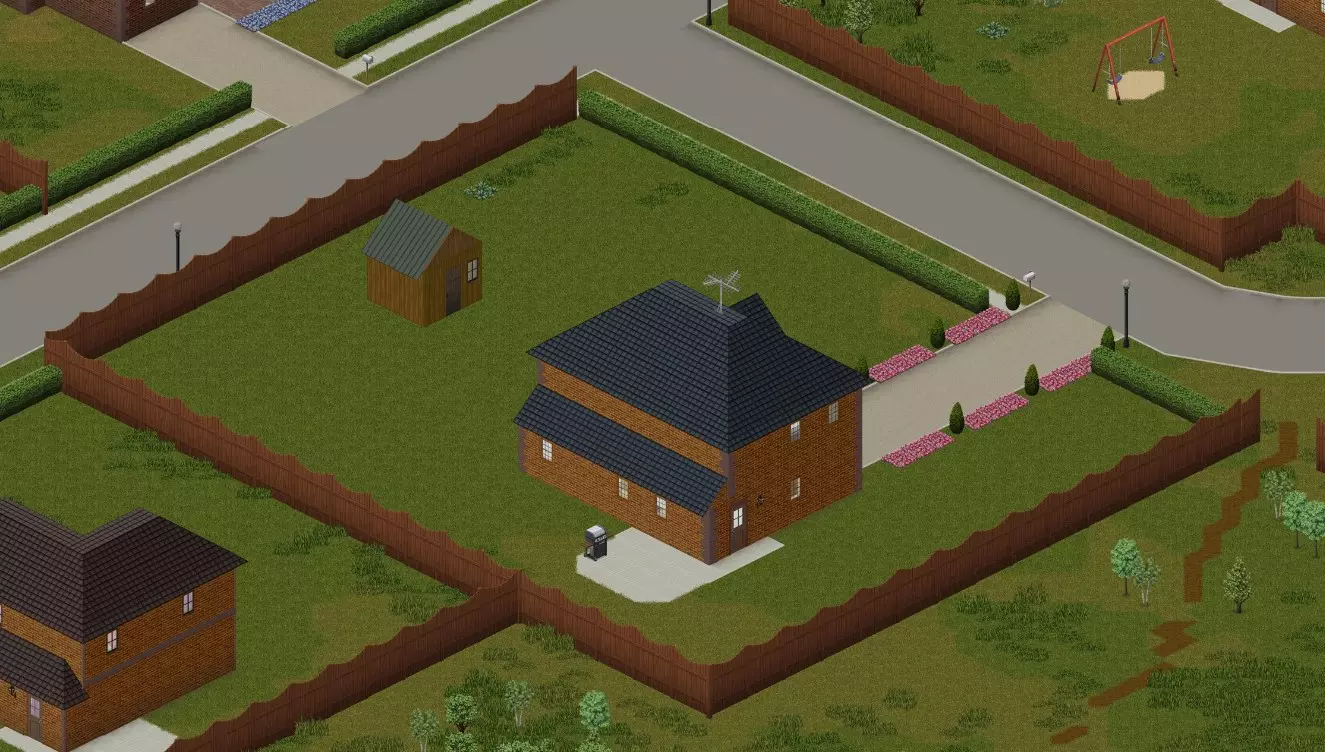
这是一个“不错”的安全屋,也是我在穆德拉夫经常寻找的一处。它三面被高高的栅栏包围,离公路足够远,路过的流浪者不太可能透过窗户发现我。房子两侧有二楼的窗户,虽然从图片上看不太清楚,但房子右边有一条土路通向一片林区,如果情况紧急,我可以把那里当作逃生路线。
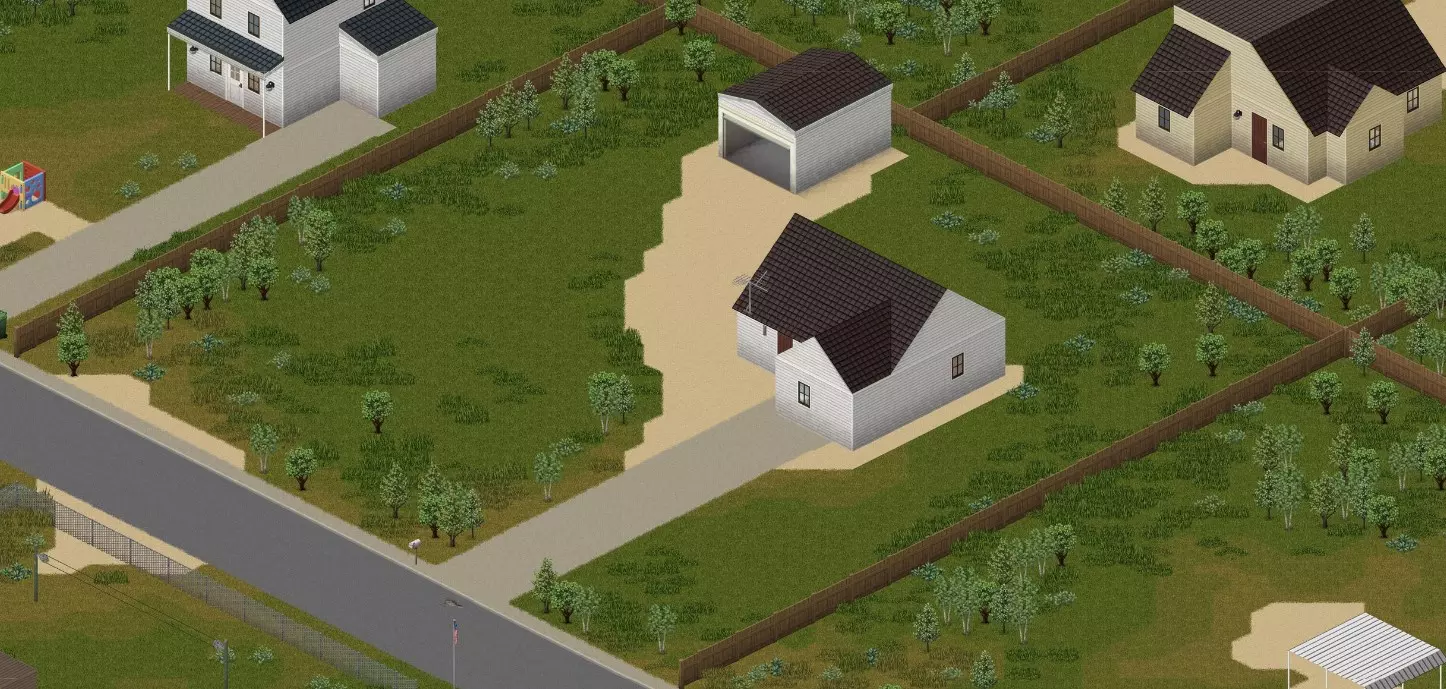
This is a 'bad' safehouse. It's a single-storey building, so I'm going to be sleeping at ground level, meaning that if we do get a break-in at night, they're going to be right on me right away. There's not a ton of rooms, so storage space is likely to be limited. Those low fences aren't going to keep zombies out, and even worse, those trees have the potential to conceal any lurkers. Sometimes you might have to accept that you can't have everything on your checklist. Sometimes the situation demands that you have to pick the best available option, even if it's not perfect, and that's fine - as long as you're using a system to evaluate what's 'good' and 'bad' for you, then you're moving in the right direction. As you get more experienced, you'll find things you value more or less in a potential location, and you'll start to base yourself accordingly. Setting up your safehouseOnce you've picked your new home, it's time to clear it out and start setting it up. Obviously you're going to be living here, so be careful not to make a mess when clearing it out by breaking windows or smashing doors. Whilst eventually you're going to want to start barricading windows and doors with planks etc, that shouldn't be your first priority - if you're that concerned about the kind of attack that would require major barricading in the first couple of nights, then perhaps this isn't the right location for a safehouse! Staying concealedThe first thing you'll want to do is to get curtains on every ground-floor window. Hopefully the majority will have them on already, but any that don't can be covered with sheets you've found whilst looting. If you don't have enough sheets, you can remove curtains from upstairs windows to cover the downstairs ones for now, then just loot curtains from nearby houses to backfill the upstairs windows later. Once that's done, start thinking about where you want loot to go - it's definitely a good idea to have some kind of organisation to your storage, as there's nothing worse than hunting through a dozen cupboards looking for that spare lighter you found a week ago! In most houses, the kitchen is generally the room with the most storage, so I tend to initially start keeping items in there, using different cupboards for food, tools, weapons etc. Sheet ropesThe final step in your initial setup is to get yourself a couple of sheet ropes set up. These can be crafted from either any spare sheets or excess clothing you've got laying around (or have looted). A sheet rope is one of the most important items in your safehouse, as it will allow you to safely escape from a first-floor window in the event that your ground floor is compromised. You'll need two sheet rope per level, a hammer and a nail to put a sheet rope in place - if you're having a hard time finding nails, try dismantling furniture and doors in nearby houses - this is also a good source of planks for when the time comes to properly barricade your safehouse! I'd recommend having a sheet rope on every upper-floor window. They're only there for emergencies by design, so you don't want to get halfway down your only sheet rope only to find a large gaggle of zombies waiting for you! BarricadingAt some point, you're going to want to barricade your windows (and possibly doors if you just want to enter/exit via your sheet ropes for extra security). To do this, you'll need up to three wooden planks and some nails per entry point. Planks can be found in the world, created from deconstructed furniture, or sawed from chopped logs. One thing to be conscious of when both deconstructing items and affixing planks is that it is noisy, so you need to keep your head on a swivel for any potential attention you might attract whilst doing your handyman thang. Personally, I probably wouldn't be looking to barricade my safehouse until maybe the later half of the first week at the absolute earliest - odds are that before that point, you probably don't have enough value in that safehouse to warrant 2-3 days' worth of work making it secure. Once you've started to build up a good stash of loot you'd feel bad about just upping and abandoning in a break-in, then it's time to think about barricading. Your 'week 1' shopping list Right, we're now hopefully in a pretty strong position. We've got ourselves some basic gear - enough to keep us alive for a few days at least, anyway - we have a nice safehouse to call home, and we're now ready to really set ourselves up for the push into week 2 and beyond. The problem is, there's a LOT of loot in the world of PZ, and the vast majority of it is stuff that will be useful at some point, but there's only so much we can carry at once - we're going to need a shopping list! A definitive list could take ages, and this guide is quite long enough already, so let's just cover off the main categories and any outliers that are super important. By now, I'm going to assume that you've got the basics (a low-tier weapon, water container, food, basic meds), and that if you don't have a bag already, it's item number 1A on your list! WeaponsWhilst your frying pan has done a sterling job up to now, there's a point where you need to invest in something a little more... specialised. There's an absolute ton of stuff you can use as weaponry in PZ, and it would take me forever to cover everything off. Instead, I'm going to list off the main 'great' and 'good' finds you're likely to come across, as well as a few 'better than you might think' items and some 'trap' items. S-tier items (Grab it immediately!): Axe, Crowbar (my personal weapon of choice!), Machete, Baseball bat, Garden fork A-tier items (A perfectly good weapon): Shovel, Lead pipe, Metal bar, Pipe Wrench, Nightstick C-tier items (better than you might think, good backup weapons): Wooden mallet, Hammer, Frying pan, Wrench, Meat Cleaver 'Trap' weapons (not as good as you might think): Sledgehammer, Wood axe, Golf club, Plank A lot of veteran PZ players swear by crafted spears, which are an incredibly effective weapon, but need crafting, and often have very low durability at low levels, so I've not recommended them here for new players. ToolsThis one's pretty simple - sooner or later you're going to need to start building, repairing and crafting things, and you're going to need tools to do it. There's a huge selection of tools in PZ (with more to come, by the sounds of things), but for a new player, there are definitely some essentials you should look to grab when you first come across them so you can store them in your safehouse for when you need them - realising you need to go out and hunt for a screwdriver when you've seen dozens of them over the past few days is a peak frustration! In no particular order, here are the tools a new player should be looking to put together: Hammer (note: not a club hammer or wooden mallet) Screwdriver Saw Nails Planks (only if you have room to carry them) Wrench Axe/Hand axe Gas canI'll add that ordinarily you're not going to need a Sledgehammer until much later in the game, but they're so incredibly rare that if you do happen to get lucky and stumble across one, grab it immediately. MedicalThis is pretty straightforward, to be honest - every time you see something medical that you don't already have, grab it and stick it in your bag for the safehouse. Medical items are pretty low bulk, and you'd rather have it and not need it than the other way round, particularly considering the occasionally imminent nature of some medical situations! Some items you might want a few more of are bandages (can never have too many!), disinfectant wipes and bottles, antibiotics and beta blockers (great for avoiding panic moodles during large or protracted fights). General utility itemsThere are a few items that are either rare enough that you'll want to grab them the moment you find them, or are useful and don't quite fit into any of the other categories: If you don't have one already, make sure you pick up a can opener - whilst you'll be fine on perishables for the first week or so, sooner or later you're going to need to start opening those 50 tins of mushroom soup you've been carrying around...! The 'how to use generators' skillbook should be an instant pick-up. Many's the tale of experienced PZ players who have traipsed halfway around Kentucky searching for this mythical book... Garbage bags will be very useful for building water containers once the water switches off, and can be surprisingly hard to find sometimes. Grab them when you see them, they're light enough you won't notice. You won't need it just yet, but having a small supply of weapon repair items (wood glue, duct tape, adhesive tape etc) is useful for when you find a good weapon you want to keep and it starts to need repairs. Cigarettes and a lighter or matches if you took the smoker trait! Useful tips and tricks And that brings us to the end of our guide on how not to get eaten immediately. Hopefully, you've not been eaten immediately, and that this guide has helped you achieve that! You're probably now approaching the end of your first week in PZ, and you'll be starting to make your way nervously into preparing for the mid-game, where things get *really* interesting as the power and water start to shut down and you need to become more self-sufficient! That's another guide altogether though, and it's one for another day. For now, let me leave you with some useful tips and tricks to make your life even easier as you adjust to post-apocalyptic life: Turn on outlines for melee weapons By default, PZ only gives you coloured outlines for ranged attacks - with these, once you're guaranteed to hit an enemy, they get a thick green outline around them. You can enable this for all weapons in the options menu under 'cursor', and changing 'Aim outline' to 'Any weapon'. This is great for helping you judge distance and avoiding costly missed swings.
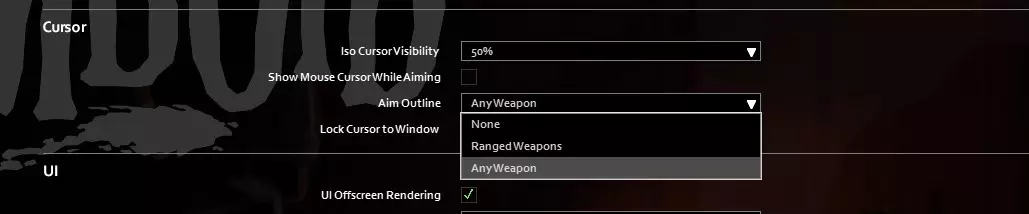
第一周观看生活与生存电视可获得免费技能经验值 本指南并未过多涉及技能与升级内容,因为重点在于基础的“活下去”相关知识,但迟早你需要一些技能来帮助自己进行建造、觅食、烹饪等活动。实际上,在游戏第一周,每天早上6点(06:00)、中午12点(12:00)和下午6点(18:00),你可以通过收看生活与生存电视频道,在多个关键技能上获得不错的起步优势。站在那里观看节目,同时让角色吃饭或看书等,你就能在30分钟内获得免费经验值——非常棒! 有一个很棒的《僵尸毁灭工程》在线地图它还具有可切换的兴趣点功能,所以如果你正在寻找特定的东西,比如仓库或医疗物资来源,都可以在这里找到! 小心直升机事件! 游戏开始大约一周后,会触发一个元事件,一架直升机会出现在上空,这将导致大量僵尸向声源迁移——如果直升机发现你,它很可能会跟着你,这意味着你将成为众矢之的! 如果被直升机发现,带上你手边所有的食物,朝着任何可能的方向尽可能远地跑。直升机事件可能持续数小时,所以你不会想把半个城镇的僵尸都引到你的安全屋!需要注意的是,你可以通过每天早上找到并调谐到自动紧急广播系统(AEBS)频率来了解直升机到达的日期。详细信息可参考PZ wiki。 潜行,不要奔跑! 在可能的情况下,移动时尽量潜行,因为在僵尸附近这样做会获得被动经验——获得经验的范围比你想象的要大得多! 门闪战术 当清理你认为可能有僵尸的建筑时(如果你还没学到的话,所有未清理的建筑都应该这样!),一个有用的战术是“门闪”。这是一个简单的技巧:当你靠近一扇怀疑后面有僵尸潜伏的门时,快速连续双击E键——你会快速地开关门,这样能让你快速瞥一眼门后的情况,但在门后的僵尸能够逃出来之前就把门关上。你会听到一声惊吓音效并吓一跳,但这是一个经过验证的检查危险门的方法。只是不要停留太久——门的生命值迟早会耗尽,到时候你就会以惨痛的方式发现门后是什么了!如果你觉得我遗漏了某些内容,或者有对刚接触游戏、正努力度过第一周的新手玩家有帮助的建议,欢迎在评论区告诉我。