
 换一换
换一换 




This guide gives an overview of the way the armies will progress through the campaign for both the original Shogun 2 campaign and the Rise of the Samurai expansion. Introduction Unlike other Total War games, Shogun 2's factions have a lot in common when it comes to military progression. This is because the game represents a civil war between Japanese clans. This applies to all of the campaigns including the Fall of the Samurai (Boshin War) however this guide will focus on the original (Sengoku Jidai) and Rise of the Samurai (Genpei War) campaigns. There is army diversity however and it manifests in two ways: Faction speciality and bonuses Research decisions Faction speciality consists of bonuses to common units to steer army composition in particular directions (e.g. bow troops) as well as a small number of faction specific units (e.g. Daikyu Samurai). However, most units are unlocked by research, buildings and resources and it takes a long time to unlock all which forces the player will have to make a choice as to where they want to focus their research and the units this gives them access to. Captured buildings are usable even without the research to build them so it is a plausible strategy to focus on your strengths and leverage these for diversity. Campaign length plays a part as there are some technology choices that will not pay off in the shorter campaigns. Sengoku Jidai Campaign The main campaign starts in 1545 and runs to 1575/1580 or 1600 depending on campaign length. It is set during the Sengoku Jidai, or Warring States, period which started in 1467 with a war which saw the collapse of the Ashikaga Shogunate, the feudal military government of Japan. This power vacuum led to the rise of powerful Daimyo (warlords) fighting for control over puppet governments. The narrative for the player is to command one of these Daimyos, build support, take control of the Imperial seat of Kyoto and claim the title of Shogun with enough territory. There are three primary societal classes that participated in the wars: the Ashigaru who were the paid regulars (not militia or peasant levy), the Samurai who were the military elite of the clans (analogous to European knights) and the elite Sohei warrior monks who supported various sides in this conflict. Socially, the period also saw involvement by European powers, especially the Portuguese and the rise of a fanatical religious sect Ikko Ikki that sought to redefine the social order. Campaign Phases There is a reasonably defined tempo to the game. The early phase is about establishing a large enough domain to build an economy, a military backbone and possibly some allies. Each faction's specialty will play a big role in the nature of its armies. The middle phase is an expansion towards the realm divide event with enough momentum to carry through to the end game. Factions will have well rounded militaries and technology decisions will start to have a bigger impact on composition. During this stage the player may claim the title of Shogun, and often there are some clear alliance blocs. Once realm divide triggers, the steady increase in diplomatic penalty drives aggressive action to reach the victory conditions. There may be only one or two major factions remaining and armies will be composed from captured province buildings or veteran armies from earlier recruiting. If the middle phase was well-planned this can be quite quick as once the opposing armies are defeated they will leave wide open lands. Sengoku Jidai Army Progression Unit progression for the main clans is a multi-branch tree so it is hard to describe a linear path but there are some common aspects to recruitment. All Ashigaru units (Spear, Bow and Matchlock) are recruitable from the first level of Fort, Matchlock however requires technology to unlock. The first two tiers of weapon Dojos (Spear, Bow and Sword) enable Samurai and Warrior Monk (in conjunction with Temples) units, the third tier buffs recruitment while the final unlocks Heroes. Cavalry relies on both weapon and cavalry Dojos so recruitment is focussed on the second and third tiers. Gunpowder units recruit from the Siege line requiring the third tier to get Matchlock Samurai. In terms of technology, within the two main areas - Bushido and Way of Chi - there are branches that guide unit unlocks. Within Bushido, there is a branch under Strategy of Defence which covers all Yari, Naginata, Matchlock and Siege unlocks, while the Strategy of Attack branch covers Sword, Bow and Cavalry unlocks. Warrior Monks are unlocked via the Zen branch of the Way of Chi area. As can be seen by the table below, Bow, Yari and Sword infantry units are the most accessible representing the traditional weapons of the Samurai. Warrior monks require three extra arts and a building to obtain core units. Cavalry requires an extra building and access to the Warhorses resource for the core units. Gunpowder units require a significant number of arts (six) to obtain Matchlock Ashigaru and Samurai and will typically be late game units unless sacrifices are made in other areas. In a typical campaign it may only be possible to focus on one of two of these last three unit groups (monks, cavalry, gunpowder), so the specialties of a faction or its starting location will influence the decision. Factions can forgo investment in cavalry and monks in the hope of capturing a province with the right buildings if the relevant arts are researched. Chain Name Tier 1 Tier 2 Tier 3 Tier 4 Yari Yari Samurai No Requirements Naginata Samurai and Monks Requires Arts Recruitment Bonus Requires Arts and Cotton Heroes Requires Arts and Cotton Sword Katana Samurai Requires Arts No-Dachi Samurai Requires Arts Recruitment Bonus Requires Arts and Iron Heroes Requires Arts and Iron Bow Bow Samurai No Requirements Bow Warrior Monks Requires Arts Recruitment Bonus Requires Arts Heroes Requires Arts and Raw Silk Cavalry Light Cavalry No Requirements All Samurai Cavalry Requires Warhorses Elite and Hero Cavalry Recruitment Bonus Requires Arts and Warhorses Requires Arts and Warhorses Siege Fire Bomb Throwers Requires Arts Mangonels Requires Arts Matchlock Samurai Matchlock Ashigaru (from Forts) Requires Arts Fire Rockets Requires Arts Monks Requires Arts Bow and Naginata Monks Requires Arts Warrior Nuns Requires Arts and Incense Heroes Recruitment Bonus Requires Arts and Incense Sengoku Jidai Naval Progressions Naval unit progression is quite straightforward as strong navies are not essential for campaign victory for some factions. Progression starts with traditional style vessels, with bow armed troops and defensive style vessels. As the game progresses, gunpowder and faster ships brings tactical diversity. The arrival of Europeans offers western vessels, troops and artillery via the naval building chain. The first two tier unlock small and medium traditional weapon ships Bow Kobaya and Medium Bune as well as the matchlock armed Siege Tower Bune when the arts are researched. The third tier unlocks the traditional Heavy Bune as well as a fast medium ship the Sengoku Bune. It also recruits the Fire Bomb Kobaya when the arts are researched. The final tier unlocks a diverse set of ships in the very heavy Nihon Maru, the fast heavy O Ataka Bune, the gunpowder armed Cannon Bune and Matchlock Kobaya At the third tier there is a second branch when the Nanban Trade Port is available. This enables the Imported Matchlock Ashigaru Infantry, while the fourth tier unlocks European Cannons, Portuguese Tercos (Otomo) and the well-armed Nanban Trade Ship. Overall, for Buddhist clans, there is a tradeoff where one can focus on matchlock ships via the gunpowder arts or larger ships via the naval arts. Sengoku Jidai Agents Agents play a large role in this game, and are an important part of the campaign aspect. For most factions there are four main agent types: Metsuke, Monk, Ninja and Geisha. Christian factions have the Missionary in place of the Monk, while the Ikko Ikki have no Metsuke and have the Ikko Monk. The first three agents, Metsuke, Monk and Ninja are readily accessible from the first tier common buildings: Marketplace, Buddhist Temple and Sake Den respectively. The Geisha is only available from the final tier ninja building the Infamous Mizu Shobai District. Chosokabe Clan

该氏族拥有更优秀(更廉价且更强)的弓箭单位:足轻、武士、僧兵和英雄。他们还拥有独特的大弓武士弓箭单位。因此,弓箭将是该派系玩法的关键部分,专注于武士道技艺中的攻击策略分支将使他们受益匪浅。其初始省份拥有港口和木材资源,木材资源可降低舰船招募成本。 伊达氏

该家族的野太刀武士更为精锐(成本更低且性能更优),其部队拥有更高的冲锋加成,这鼓励玩家采用进攻性的游戏风格。此外,他们还拥有独特单位【防弹武士】,这是一种坚韧的长枪单位,比其他单位更能抵御子弹。该势力无需过度专精即可享受其增益,但需要略微侧重【进攻策略】。他们的初始省份拥有港口和【锻造】特长,可强化护甲或武器。北条家族

北条氏专注于攻城战术,无论是进攻还是防守。他们拥有(更便宜且更优秀的)高级攻城单位:火焰炸弹投掷手、火焰投射投石机、加农炮和火箭。该家族还有独特单位【手炮】。此派系将从【防御战略】中获益。北条氏初始拥有两个省份,一个带有金矿,另一个带有港口和【锻造专长】,可强化护甲或武器。 服部氏

该家族的优势在于潜行能力,这体现在其大部分步兵接受的奇袭训练以及精锐的奇袭忍者上。这使他们具备游击部署能力,但同时也增加了单位的招募成本和维护费用。其独特单位为山贼,可从忍者建筑序列中招募。此外,该家族执行忍者行动的成功率更高,且所有将领初始即拥有夜袭能力。为充分发挥精锐单位的优势,他们将从气之艺的忍术学派分支中获益。该家族起始于一个拥有忍者特长的内陆省份。 毛利家族

毛利氏拥有更优秀(更廉价且更强)的海军单位。他们拥有独特的步兵单位【倭寇突袭者】,可从港口招募。若要充分发挥其专注点的优势,他们应专注于【海之道】武士道技艺。该氏族的初始省份拥有已发展的2级港口(海港)和【圣地】特性,可提升僧侣或所有单位的士气。 织田氏

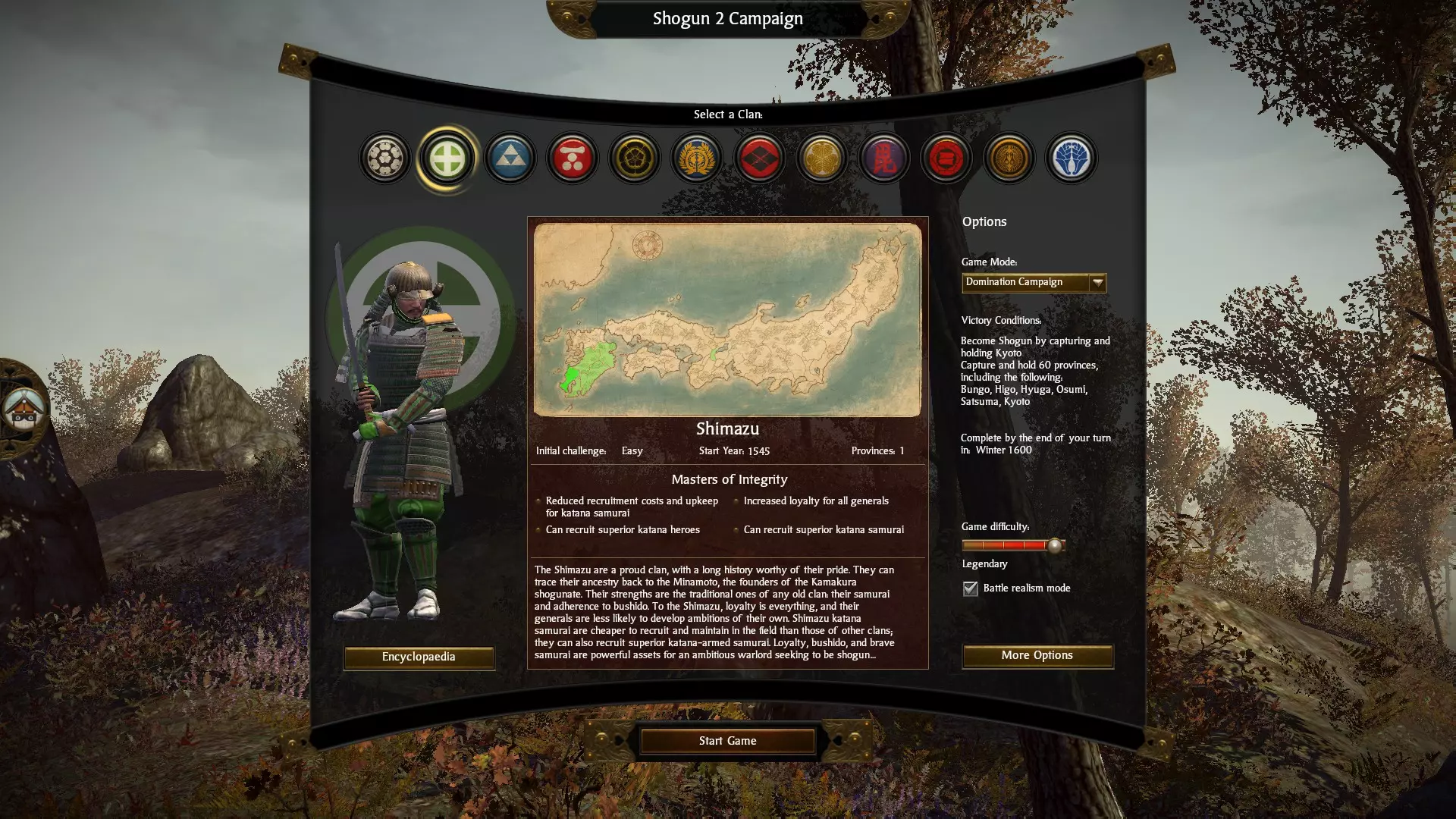
岛津氏拥有精锐的足轻部队:长枪足轻、弓箭足轻和铁炮足轻,这些部队将决定其在整个战役中的军队构成。他们还拥有独特的长柄枪足轻单位,可施展长枪与火枪协同战术。这一势力拥有独特的玩法风格,其长枪部队可从【防御策略】中获得加成。此外,他们也可选择专注发展经济,采取以量取胜的战略。其初始省份拥有港口,虽无特殊资源,但土地极为肥沃。

岛津家族的专长是武士刀,这使他们拥有更精锐(更廉价且更强)的武士刀武士和英雄单位。他们还拥有独特的重炮手火绳枪部队,该部队可从攻城建筑序列招募。岛津家族所有将领的忠诚度都有所提升。在气之术方面,他们需要【攻击策略】来获得精锐武士刀武士,但需要深入【防御策略】分支才能解锁重炮手。他们的初始省份拥有港口和锻造专长,可强化盔甲或武器。 武田家族

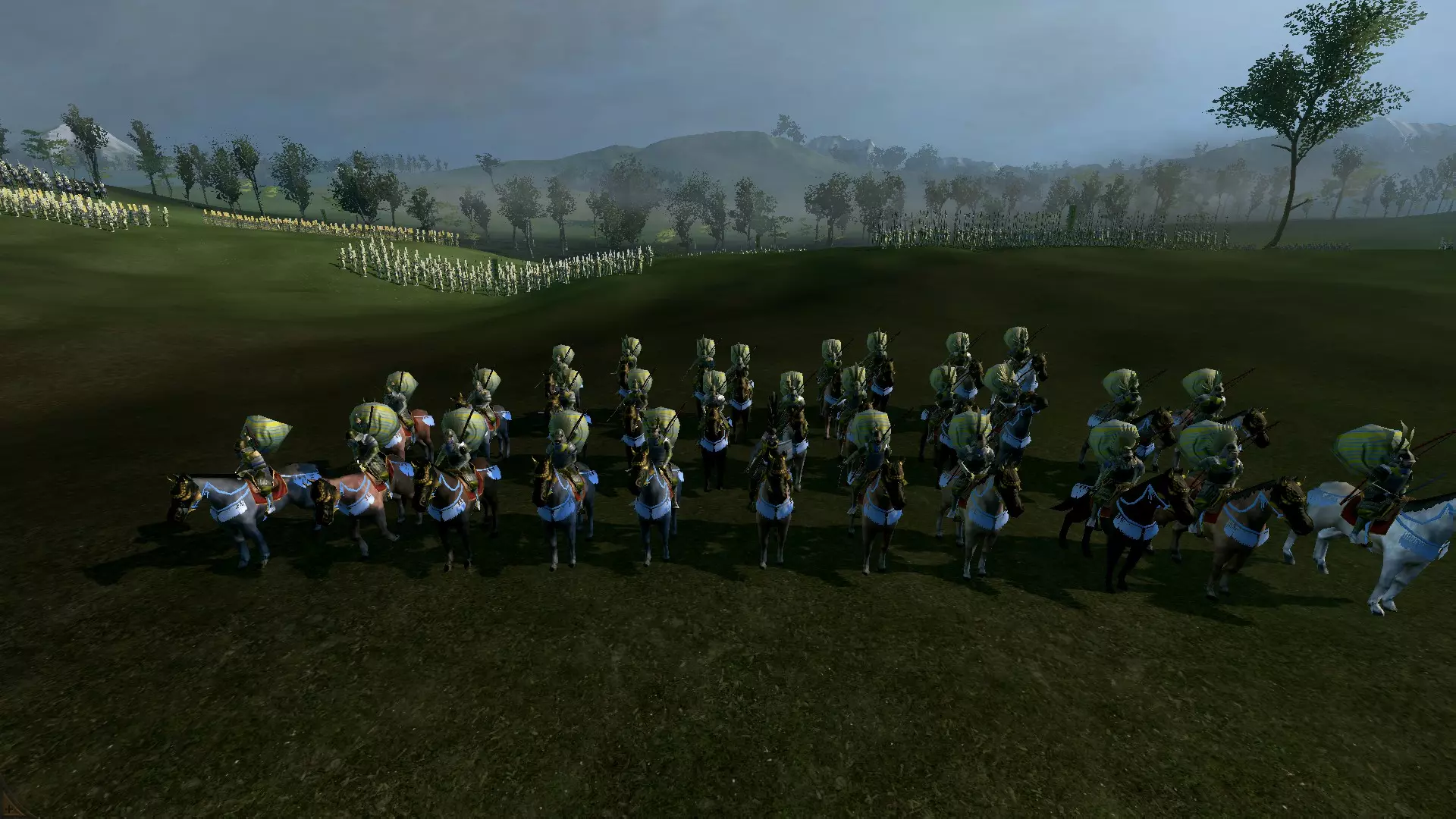
历史上,武田氏以骑兵闻名,拥有更优秀(更廉价且更强)的骑兵单位:弓骑兵、轻骑兵、枪骑兵和剑骑兵。他们还可以招募独特的持枪火骑兵。在气合技方面,他们的大多数独特单位不需要比武士道更多的资源,因为资源更为重要。他们起始于一个拥有战马资源的内陆省份。 德川氏

上杉氏以外交实力著称,这意味着他们拥有更优秀的目付和奇袭忍者,并且与其他势力的关系有加成。他们还拥有来自攻城科技链的独特骑兵单位【骑马铁炮队】。他们在气之术方面需要细致的策略,因为【气之道】能增强他们的优势,而要解锁【骑马铁炮队】则需要深入研究【防御策略】。他们初始拥有一个港口和战马资源。

上杉家可招募更精锐(更廉价且更强)的僧兵:长柄僧兵和弓箭僧兵,以及独特的马拉松僧兵单位。他们在 campaign map 上拥有更优秀的僧侣,并能获得额外贸易收入。在“气”之道方面,他们将受益于专注禅宗分支,但需要先解锁一些早期的武士道技艺才能招募僧兵。其初始省份拥有港口和海军传统特性,可提升贸易和舰船经验。 大友家

该氏族初始为基督教派系,因此能更快解锁欧洲单位与建筑。他们可招募更优质(性能更佳且成本更低)的火绳枪单位:足轻和武士,同时能更快获得进口火绳枪足轻。此外,该氏族对本土火绳枪单位的科技研发和建筑需求低于其他氏族。 其特色单位为葡萄牙方阵兵和短管燧发枪骑兵。若想充分发挥这些单位的优势,应重点发展武士道科技中的防御策略和海洋之道分支。该氏族的初始省份拥有2级港口【南蛮贸易港】,并具备海军传统特性,可提升贸易效率与海军单位战力。 一向一揆

这是一个独特的派系,因为它代表的是一个宗教教派而非封建氏族。他们的单位名册因没有武士单位而独具特色。其僧侣能够煽动叛乱,使该派系直接获得省份所有权。作为宗教教派,他们拥有净土真宗寺庙建筑链,而非佛教寺庙。 他们的足轻单位规模大于常规,并且拥有一个佩刀足轻单位——【雇佣佩刀足轻】。武士单位被较弱的枪浪人、弓浪人和刀浪人单位所取代。该派系的僧侣更为精锐(更强但不更便宜)且可更早招募,还拥有独特的【铁炮僧兵】和【马拉松僧侣】。骑兵是该派系的弱点,只能招募轻骑兵和独特的【长柄僧兵骑兵】。由于该派系擅长运用僧兵,因此【气之道】中的【禅宗】分支将十分重要。他们初始拥有两个省份,一个带有港口和【工艺】特性(可强化弓箭单位),另一个则仅有【锻造】特性(可强化护甲或武器)。 源平合战战役与进程 【武士崛起】战役设定于1175年的源平合战时期,这场战争因镰仓幕府的建立,被广泛视为武士阶层开始在日本政治中掌权的开端。在战争时期,主要存在三个大家族:藤原氏、源氏和平氏。传统上,天皇的权力由藤原氏掌控,他们负责挑选天皇的摄政者。然而,近期的事件导致了源氏与平氏这两个军事氏族的崛起。1180年,平氏将自家成员推上了天皇宝座,这种对权力的新垄断引发了源平合战。历史上,源氏成功击败平氏并建立了第一个幕府,即军事行政机构。在军事方面,这场冲突体现了两种战斗方式的对比:传统的古流武术与新兴的武士武艺。 战役时间跨度根据战役长度不同,为1175年至1199年或1219年。本战役中的单位升级深度不如第一部战役,这反映了现实中(火药和欧洲人出现前)没有技术或文化上的颠覆性变革。军队初期将包含大量农民征召兵(质量低于足轻),并辅以少量侍从、僧侣或武士。在武道技艺的古流侧可归类为传统分支,而武士道侧则为武士分支。若愿意,任一分支都能组建全面的军队。 所有地区的田所建筑链均可招募征召兵单位,包括弓箭兵和长枪兵,而三级兵营可解锁火焰炸弹投掷兵。甲流学派(含寺庙)的前两个等级可解锁薙刀侍从、薙刀僧侣、弓箭武僧,后两个等级则解锁骑马薙刀兵和僧侣英雄。武士学派的前两个等级解锁刀剑侍从、弓箭侍从和足轻武士,后两个等级解锁骑马武士和骑马武士英雄。由于本战役中没有战马资源限制,骑兵更易获取。 海军发展十分简单,第一等级可建造轻型侍从舰和重型侍从舰。第二等级新增中型侍从舰以及所有武士舰船,武士舰船拥有更精良的船员。最终等级解锁中型火炸弹舰。 共有四种特工类型:白拍子、巡査使、僧侶和物见。前三种可通过普通建筑解锁,而【Monomi】需要【Isolated Hamlet】资源,该资源仅存在于三个位于中心位置的省份。这意味着部分派系在早期可能无法使用它们。 源氏家族 这两个派系在武士单位和技艺方面具有优势。它们开局即掌握【Bushi Art】,从而解锁【Bushi School】和【Foot Samurai】。


镰仓源氏:该派系拥有10%的装填速度加成和20%的武士单位维护费减免,因此专注于武士分支将使其受益。他们还能获得额外20%的总体武道技艺掌握速率。此派系初始拥有两个省份,一个带有金矿,另一个拥有锻造特产。 木曾源氏:该派系的武士招募时间减少1回合, campaign移动速度提升20%,专注于武士技艺将使其受益。他们在文化技艺掌握方面有惩罚,这促使他们采用激进的游戏风格。此派系初始拥有两个省份,均无任何资源或特产。 平氏家族:这些派系初始就掌握了古流技艺,这使他们在传统单位和技艺方面具有优势。
八岛平氏:该势力拥有20%海军移动范围加成和20%舰船成本降低,这使他们倾向于制霸海洋。再加上15%的贸易收入加成,他们在控制贸易节点方面处于有利地位。此势力初始拥有三个省份,其中一个省份拥有生丝资源。 福原平氏:该势力的长戟部队拥有20%维护费减免和+1护甲,因此将拥有强大的传统陆军。此势力初始拥有三个省份,包括京都本身(京都拥有国立学院),另一个省份拥有孤立村落。他们还靠近另外两个拥有孤立村落资源的省份,因此可以垄断物见(Monomi)特工。 藤原氏:这些势力具有更微妙的特点,在行政艺术方面拥有优势。


藤原 Kubota:该势力专注于僧兵,招募的僧兵额外提升一级经验,但征召兵和侍从的招募成本增加10%。他们初始掌握【诗歌与文学】,在僧侣相关技艺上领先一步。招募部队仍需【古流技艺】。此外,他们还能使【文化技艺】的掌握速度提升30%,这有助于他们建造更高等级的寺庙并获得良好收入。该势力初始拥有两个省份,其中一个包含圣地。 藤原 Hiraizumi:初始掌握【稻米借贷】,该势力专注于战役优势,拥有5%的税率加成,提升【巡察使】的成功几率并降低行动成本。该派系转化省份的速度将快于其他派系。此派系初始拥有两个省份,一个拥有铁矿,另一个拥有锻造业。 进一步阅读 有一些优秀的指南对整体游戏玩法进行了更深入的探讨 Frogbeastegg的《全面战争:幕府将军2》指南 幕府将军2综合经济指南