
 换一换
换一换 



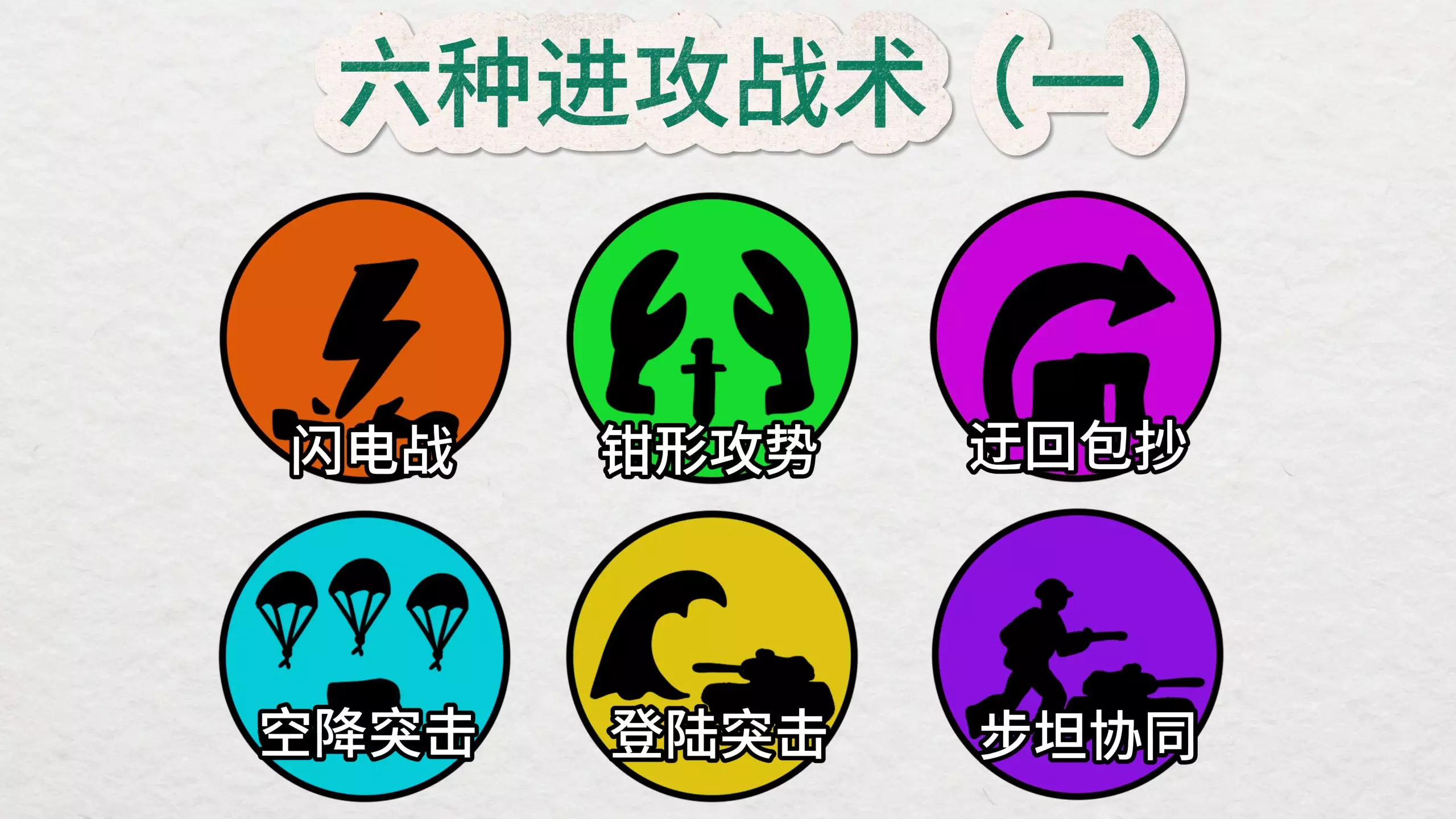
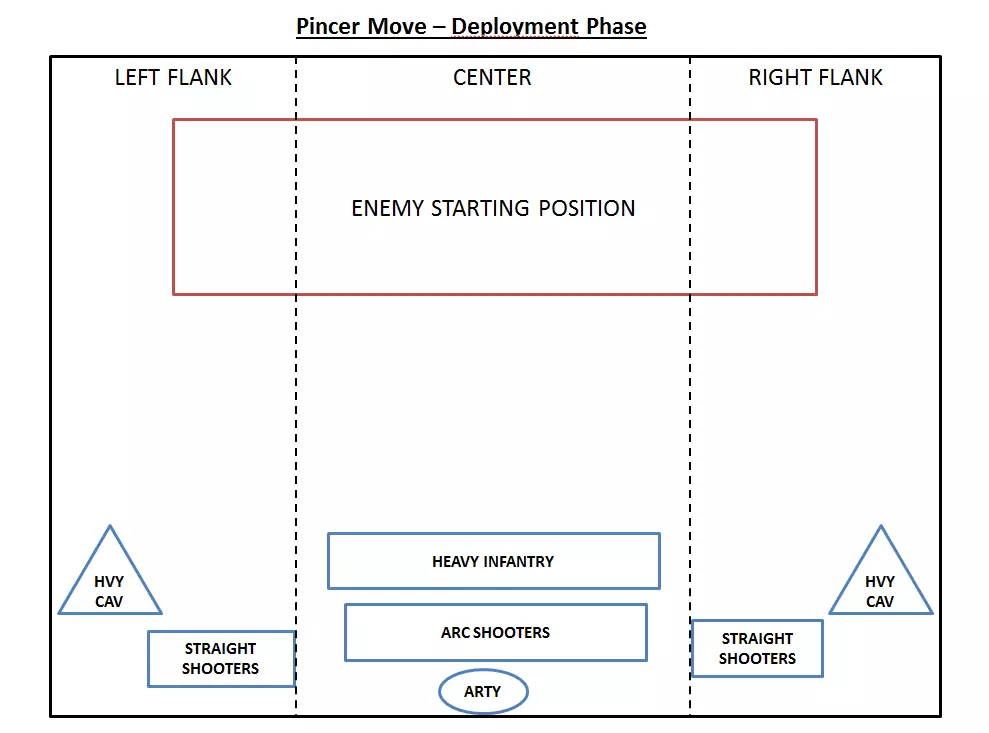
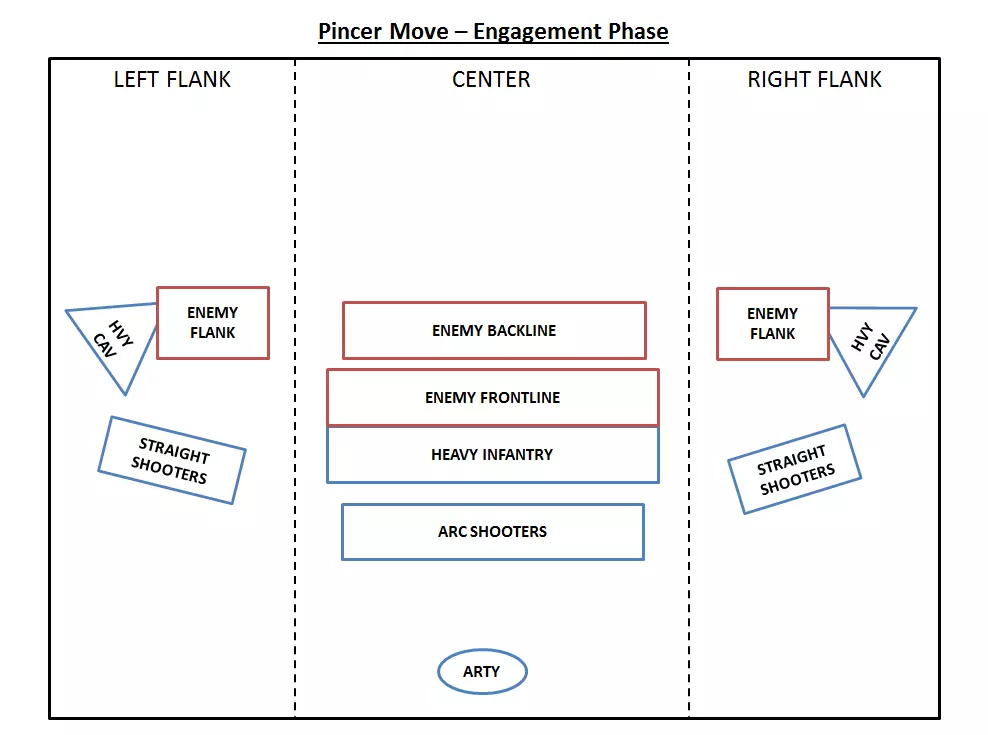
本指南旨在解释钳形攻势的主要原理,以便玩家能将这些原理应用于自己的军队配置。 本指南假定读者已了解移动、射击、冲锋、行走/奔跑、选择部队、施放法术等基础知识。 钳形攻势有多种变体,我将在指南末尾介绍其中几种。 简介 目标: 钳形攻势是一种简单有效的包围敌人以击败对方的战术。它由能够在面对优势兵力时长时间坚守战线的前线部队组成。当前线部队稳住阵脚时,侧翼部队会包抄到敌人后方。何时使用钳形攻势: 坦白说,在《全面战争:战锤》和《全面战争:战锤2》中,我80%的战斗都会使用钳形攻势,因为AI在应对这一战术时表现得极为笨拙。即便是使用矮人部队或处于兵力劣势时,我也会采用这一战术。不过,尽管该战术在多数战斗中都能奏效,但在以下几种情况下使用钳形攻势最为高效且易于实施,因此如果你刚接触这一战术,建议先在这些场景中进行练习: - 兵力多于敌军 - 拥有大量重骑兵 - 敌军没有骑兵 本指南的预期内容: 本指南旨在解释钳形攻势的主要原理,以便玩家能根据自身的军队配置灵活运用这些原理。本文默认读者已掌握移动、射击、冲锋、行走/奔跑、选择兵团、施放法术等基础知识。 因此,为更清晰地说明钳形攻势的原理,我做了以下设定: - 不使用截图,以便更清晰地进行可视化说明 - 将战场视为一片平坦的土地,不包含森林、河流或建筑 - 假设双方军队实力相当,且均采用经典的均衡 army composition 钳形攻势有多种变体,我将在本指南末尾介绍其中几种。 关于效率的简要说明: 战锤的 AI 相当糟糕,因此除非处于极度不利的局面,否则你几乎不需要什么策略就能赢得任何战斗。然而,关键在于以尽可能少的损失赢得战斗,这样无需让部队长时间休整恢复就能继续作战。本指南旨在介绍一种最高效的战术,以及如何让这种战术在任何军队配置下都更加高效。 术语表: 重步兵:任何擅长长时间坚守战线的步兵或怪物 例如:黑卫、巨剑兵、凤凰守卫、蜥人战士、铁砧勇士、黑兽人、三角龙等 轻步兵:任何能造成伤害但自身无法承受大量伤害的步兵 例如:女巫精灵、 Crypt ghouls、屠夫、鞭笞者等重骑兵:指任何拥有高额伤害且能持续作战的骑兵或怪兽单位。例如:瑞克禁卫、圣杯骑士、混沌骑士、 Carnosaurus。 轻骑兵:指任何速度快、依赖冲锋加成或远程攻击造成伤害但无法持续作战的骑兵或怪兽单位。例如:先驱骑兵、地精狼骑兵、战犬等。 弧形射击单位:以弧线弹道进行射击的远程单位,这意味着它们可以越过己方或敌方部队进行射击。例如:任何使用十字弓或长弓的部队。 直线射击单位:以直线弹道进行射击的远程单位,这意味着它们需要对敌人有清晰的【视线】。例如:雷霆枪手、 handgunner 等。 炮兵:包括曲射或直射类型,你应该知道炮兵是什么吧?例如:加农炮、投石机、弩炮、耀光灯塔、独眼巨人等。 散兵:任何可以使用先锋部署并进行射击的单位。例如:暗影、先驱者、夜地精弓箭手、游侠等。 军队阵型 要成功实施钳形攻势,需满足两个条件: - 你的主战线必须能够在前线坚守相当长的时间, - 你的侧翼部队需要能够击溃敌方对应的侧翼部队。 大多数军队配置都可以使用钳形攻势。 为便于举例,我们将使用经典的均衡野战军队配置: 中路为重步兵,后方有弓箭手和炮兵提供支援。侧翼由重骑兵和直射射手组成。
英雄的部署位置取决于英雄类型以及你如何分配他们的点数。一般来说,尽量分散领导力,例如让一名英雄负责一个侧翼,领主则坐镇主线。 交战阶段 交战阶段的作用是按照你的战术与敌人交战,并将敌人“固定”在地图上。 要执行钳形攻势,你的主战场部队需要与敌方主战场部队交战,同时你的侧翼部队要清除敌方侧翼。 如果能在与敌方主战场同一水平线上攻击其侧翼,胜利会更容易。这能让你更快击溃侧翼。 尽量避免你的侧翼受到敌方中央后排射手的攻击。 战场的关键在于制造你能利用的优势,从而赢得战斗。在钳形攻势中,你必须接受这样一个理念:你的主力战线的作用就是在战场中央尽可能长时间地牵制住敌方最多数量的部队。中央的兵力平衡应处于对敌方有利的状态,而侧翼的兵力平衡则应处于对你有利的状态。关键在于,中央的兵力失衡可以通过使用坚韧、难以消灭的部队来缓解,而侧翼的兵力优势则需用你最精锐的部队来最大化,这意味着你将在中央防线崩溃之前赢得侧翼战斗,从而能够让侧翼部队向中央合围,进而赢得整场战斗。 在此示例中,侧翼的胜利是通过重骑兵冲锋与直射火力支援相结合实现的。这种组合效果很好,因为它的冲击力非常强,能更快清理侧翼。使用这种组合时,尽量让你的重骑兵从外侧攻击敌人的侧翼,以便为你的直射射手提供最大的视野。
包抄侧翼与后续行动 当一侧或两侧侧翼获胜,即敌方侧翼开始溃败时,你可以指挥这些侧翼部队向敌人的后方防线发起包抄。
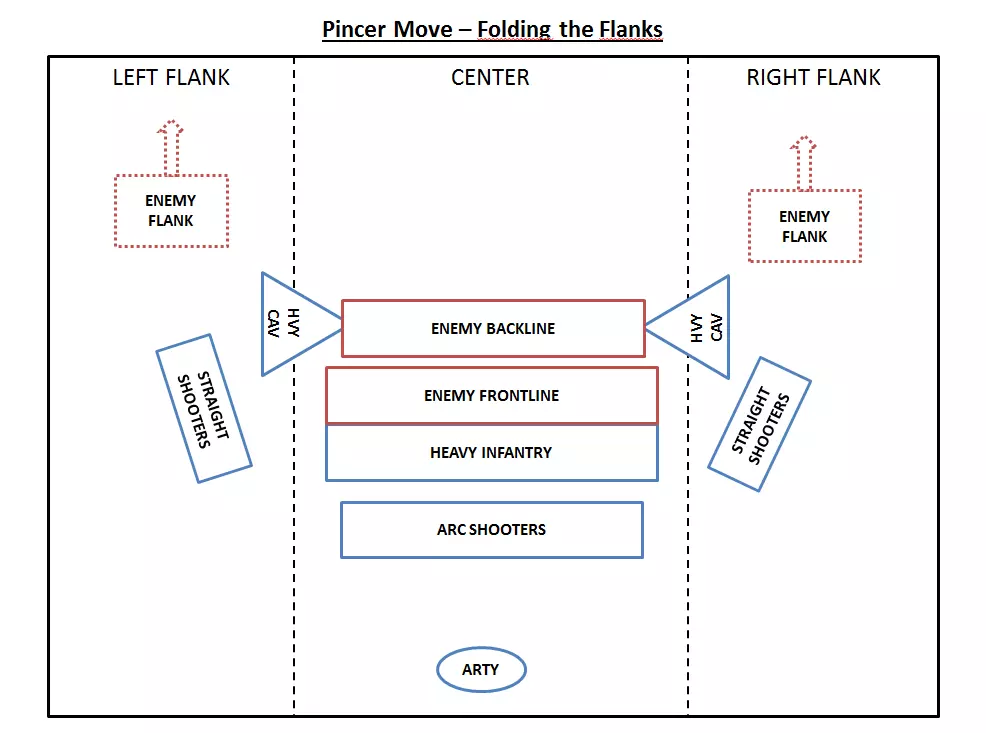
在这个示例中,远程单位开始攻击敌军前线的后方,同时骑兵负责清理后排。骑兵应该很容易击败后排,一旦清理完后排,你就可以进一步从敌军前线后方包抄,从而彻底消灭敌人。
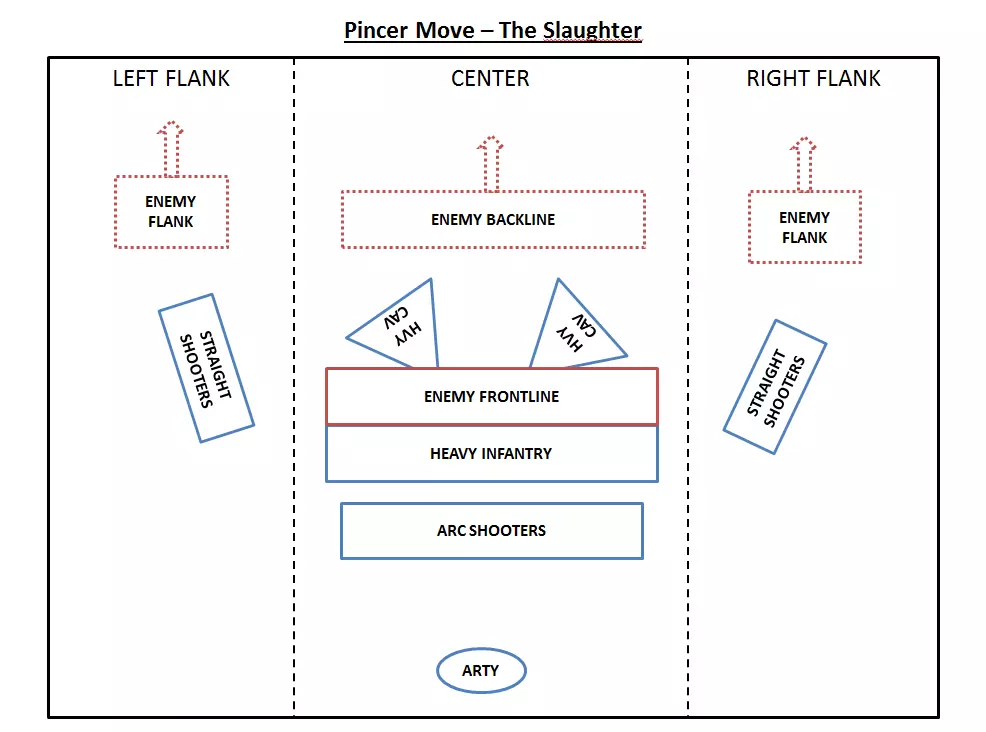
一旦陷入这种局面,实际上就是一场屠杀,敌军应该很快就会溃败。
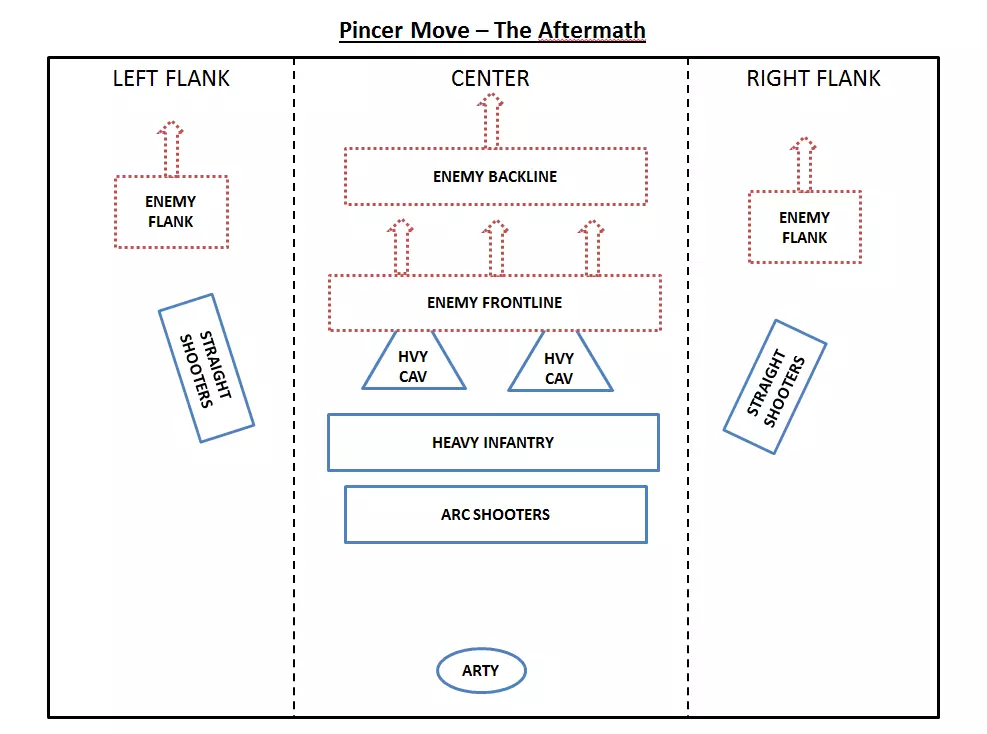
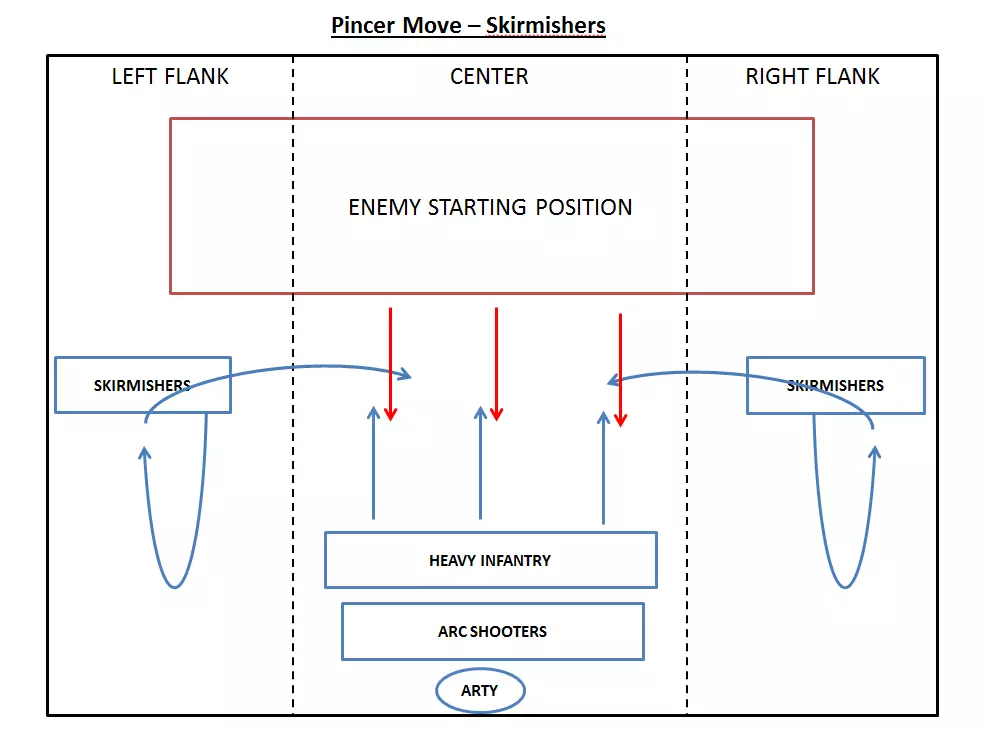
This is when you tell your cavalry to finish off routing enemy elite regiments to maximize casualties. What if... What if one flank can't rout the opposing one in time? Then fold with just one flank, in most cases it will be enough to rout their center. If your front-line holds very well, you can divert some of your back-line shooters and/or arty to help the struggling flank. What if both flanks can't rout the opposing ones? Check your front-line, if the front-line holds very well, divert some of your back-line shooters and/or arty and/or melee reserve to help one or both flanks. What if your center collapses before you won the flanks? That's a crappy situation to be in. Check the following: Is it possible to free some flanking units to fold on the back-line even if the enemy flanks are not routed yet? Do you have reserve melee unit in the back-line that you can send? How's the enemy center? Can your back-line shooters rout them either by a combination of volleys and melee combat? Can your back-line shooters play skirmish (shooting and retreating) with the enemy center to give enough time to your flanks to win and fold? What if your center routs the enemy before your flanks? Then it's not a pincer move :p and you've probably put too much strength in the center and not enough in the flanks. Send help from your center to both flank to rout them as well. What if both flanks and center collapse? You're screwed. Try to regroup your units, create multiple fixation points and pockets of resistance and try to recreate imbalances on the battlefield that you can exploit. It's time for heroic charges, frontal counter charges, skirmish fights and last stands. Theoretically you should lose, you might win, good luck ! What if the enemy flank regroups and counter-attack? I'm looking at you Skavens, Orks and the likes, they flee, regroup and charge or shoot at your back while you are folding the flanks. To prevent it, you can evaluate the strength of the routed units and check if you can spare one or two regiments to make sure they stay routed. Light Cavalry is very good at it. If it happens anyway, it's very frustrating but totally manageable: - Check the potency of the regrouped flank, can you ignore it or not? If you can, then let them shoot and charge and accept the extra casualties if it allows you to rout the enemy army faster - If the potency of the regrouped flank cannot be ignored, cancel the folding on one or both flank for one to all units, rout them for good and fold again. Relationships The following relationships are noteworthy: The strength of a unit is relative to the opposing one. It means that you can have a strong reliable center while using tier one melee infantry if the opposing units will struggle against these. For example, Dwarf Axemen can hold for ages against ork boys and goblin infantry, you don't need Ironbreakers for holding the center in this case. It also means that your flank strength is only relative to the opposing flank, making Dark Elves shades a perfect flanking unit if they are not going to face heavy cavalry for example. The weaker the center, the stronger the flanks need to be: It's all about timing. The center needs to be strong enough to hold the line while the flanks are won. It's a matter of balancing the speed at which the flanks will win against the amount of time the center can hold. The speed of winning the flanks should be faster than the amount of time your center will hold. Those two relationships have the following consequences: You don't need to outnumber the enemy in the flanks, you just need to be able to smash it. Say one of your flank is made out of only 2 Reiksguard regiments but facing 4 skaven slaves regiment, they'll still win that flank. You might need to outnumber the enemy in the center, especially if their center is much stronger than yours. For instance if you face a High Elf army which center is made out of 6 regiments of Hoeth Swordmasters, trying to hold it using 6 regiments of Ork Boyz might not do the job. It is important to always evaluate the strength of each unit relatively to what they will face and therefor the strength of the flanks and center is relative to the opposing strength. Variants There are multiple variants to the pincer move. First of all, it is important to state that you don't need cavalry to accomplish a pincer move neither you need to have symmetrical flanks, it doesn't matter. Stay true to the essential: the pincer move is about winning flanks and folding them while the center holds. I'm going to quickly go through main variants of the pincer move: 1- Heavy Cavalry only on flanks It's the "natural" pincer move. Your heavy cavalry should smash the opposing flanks and smash the backline, as it is theoretically the fastest way to win the flanks, you can afford having a weaker center. 2- Infantry only on flanks It's much slower so it means your center needs to be balanced accordingly. Try to balance infantry and missile units on your flanks. Shooters are actually very efficient flankers: either arced or straight, missile infantry will always do much more damage flanking the enemy than shooting over your own troops. Special mention to hybrid melee/missile troops like Free-Militia, Corsairs, Shades, etc for their great flanking ability... if you can manage any opposing heavy cavalry. 3- Cavalry only on center This one is funny but very tricky and "unnatural", meaning that it's doable but definitely not the most efficient way of using cavalry. However, in some rare cases, it's actually extremely effective. Put your heaviest cavalry in the center and "fix" the enemy front-line using Hit and Run techniques: you charge, you back, you charge, you back etc... while your flanks, either made of infantry/missile/cavalry beat the opposing flanks and fold. I don't advise this technique for newcomers, you need to know exactly what your heavy cavalry is capable of and really master the Hit and Run cavalry technique. In a lot of instances this variant cannot be used or will result with low efficiency, meaning the ratio between losses and damage dealt is unfavorable. 4- Skirmishers only on flanks This one is the trickiest variant. You can use Dark Elves Shades, Night Goblins Archers, Outriders, etc. Skirmishing flanks will do amazing at flanking if you can manage the enemy cavalry, either by adding a couple of anti-large infantry in the vicinity or anything that will pin down the enemy cavalry long enough to use the skirmishers to shred them and then fold on the center. Artillery is very interesting at supporting a skirmisher flank by the way. The dynamic of a pincer move with skirmishers is very different as it will usually follow a different flow and will use elements of other battle tactics like the Parthian Arrow and Hit and Run. In a classic pincer move the flanks move toward the enemy flanks to destroy it. Using skirmishers, it might be better to have them deployed far from your center, skirmish while retreating, let the center reach more or less the same line as your flanks and then using the skirmishers to counter attack the weakened flanks and fold on center. Don't try it against a very cavalry oriented enemy army. However it wreaks havoc on armies without cavalry, yes, I'm looking at you dwarves :p
结论 钳形攻势有数千种可能的变化,基本上,只要你牢牢把握以下两个原则,你的想象力就是唯一的限制: 侧翼必须是制胜力量,并向敌军后方包抄。 中路需要足够强大,能够坚守阵线足够长的时间,让侧翼完成包抄。 你既可以在防御时使用钳形攻势(即敌军向你进军时),也可以在进攻时使用(即你向敌军进军时)。 在本指南中,我将钳形攻势解释为一种作战层面的行动(整支军队在战场地图上的移动),但请记住,它也可以在战略层面(在战役地图上,涉及整个作战区域)和战术层面(战场上的部分军队)使用。例如,当你的一个近战兵团与敌军兵团交战,同时你的一个骑兵单位从侧翼或后方发动冲锋,这就是战术层面的钳形攻势。作为吸血鬼,你入侵帝国,计划经由奥弗领和努恩进攻阿尔道夫,同时其他军队从斯特领和肯普巴德进行侧翼包抄,这便是战略层面的钳形攻势。祝你玩得开心!