
 换一换
换一换 


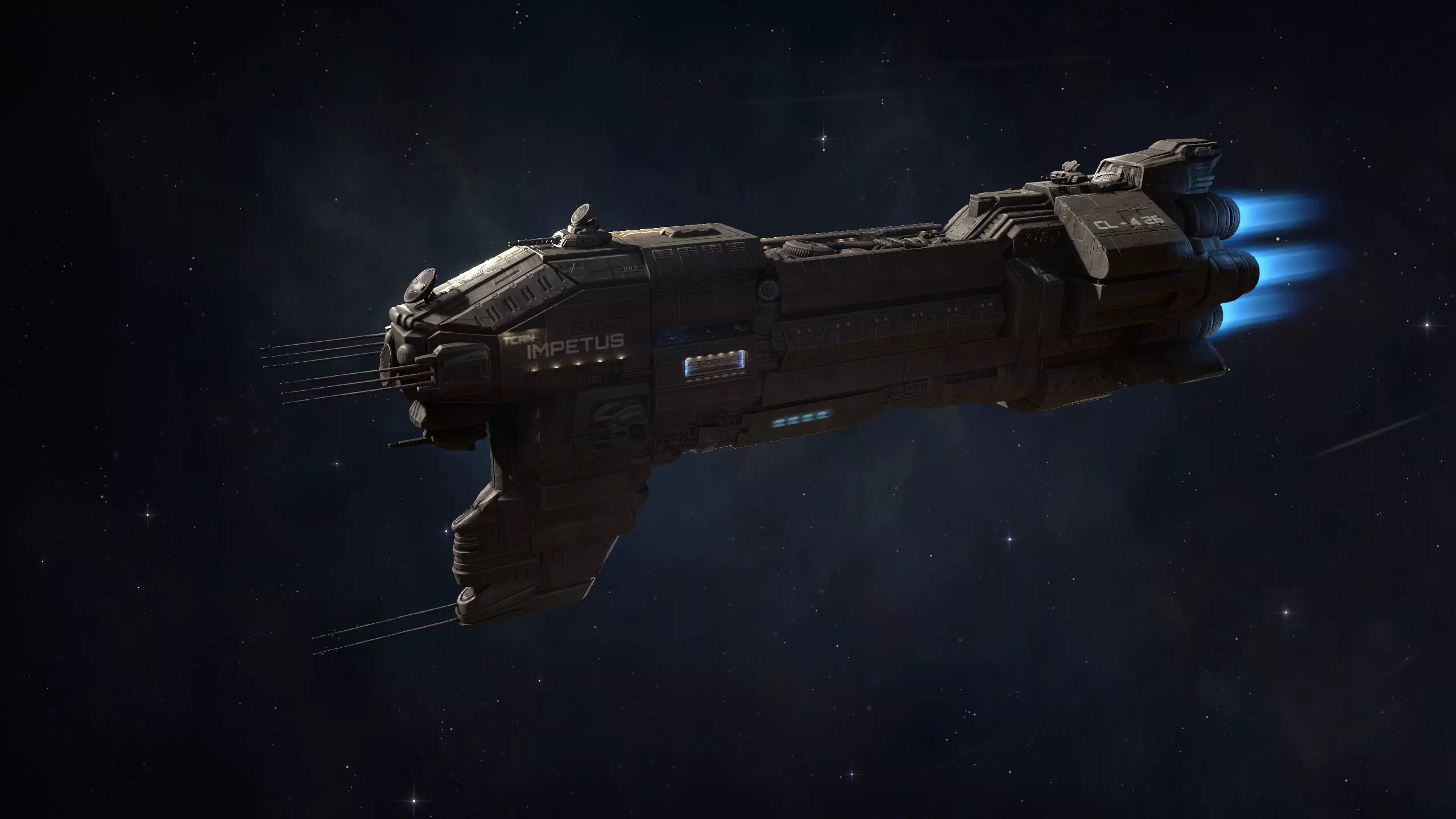
Yes, Major, FUBAR is the nickname that the crew apparently gave you. "Why", you ask? Well, if you don't know "why", I am afraid they were right in the first place... Sir. INTRO First of all, Major, my congratulations on taking your first actual command and let me just say that... Well, yes, it might be that the 85% casualty ratio we have suffered upon our entry into the Wayback system was indeed what prompted the surviving crew to giving you the nickname. Of course, It could also be because of some nameless VR tech who, observing the practical application of your c2 skills, decided to patch the live feed of your training session to the mess hall, during the survivors' post-defrosting lunch. I guess we will never know for sure, Sir. Speaking of training... while I am certain that graduating as the 244th out of a class of 250 from the Auxilliary Navy Officers Academy Online Course has left you as capable a commanding officer as the TCR Marines are used to having, am I right to assume that the Murphy's Laws of Combat Operations were not included in your curriculum? A lucky guess about this quite obvious omission, Sir, as the Laws are indeed quite dated and they never really were a part of formal military knowledge. However, over years of my military service, I have found them still surprisingly applicable and therefore hope that they, with an added ounce or two of my own thought added, could be of use to you as well. Who knows, Major, maybe putting them to use will help you coining that freshly acquired nom de guerre into something different than the... akhem, commonly accepted definition, too. Like what? Oooh, well, how about "First Uniformed Bastard Acting Reasonably"? Don't worry if you don't like it, Sir, I am sure we will think of something better, just later. Now, why don't you grab a chair and a pen? To write, Sir. You do know how to write with a pen, right Major? Just making sure, Sir, I did not mean anything else by it, honeslty. Now, where do I start? How about... Murphy's Laws of Combat Operations, part 1 1. Friendly fire - isn't. Only because you have ordered the team with the minigun to fire on the enemy NEXT to your other unit does NOT mean that they will hit JUST the enemy. The bigger the recoil and the poorer the training is, the more likely friendly casualties are. Survivors are sure to assign blame accordingly to both the ordering officer and the squad leader dumb enough to listen to such orders. If repeated often enough, you may want to look up the "FRAGGING" term in the military dictionary. 2. Recoilless rifles - aren't. Heavy weapons kick back hard. Most need deployment, some need setting up a tripod and assorted munitions and few, like the good old 'coiless, can't fire from bunkers or watchtowers more than once. No, Sir, its because the crew dies the first time it does. ALWAYS check the post-its from our logistics team slapped on the weapons to make sure you do not misuse them. 3. Suppressive fires - won't. Pin, flank and eliminate is indeed the staple of infantry warfare, which you would be wise to adhere to. However, DO NOTE that telling a three-men squad with one pistol and two bullets between them to suppress a squad of pirate boarding commandos is UNLIKELY to end as ordered. ALWAYS make sure that you're actually ABLE to suppress before you call that flanking manouvre. This brings us neatly to law 4. 4. You are not Superman; Marines and fighter pilots take note. Despite numerous requests, our marines were not provided with kevlar underwear. That in turn means that flanking one enemy by walking right into the firing lane of another, yet undiscovered, unit will most likely end poorly for us. Proper RECON, as in knowing where enemies are and are not, is paramount to successful flanking. However, COVER and PROPER PERSONAL ARMOUR can be a mitigating factor. 5. A sucking chest wound is Nature's way of telling you to slow down. If your units get caught in the open without proper and mentioned precautions (like mark V armour), they are prone to catch more than a cold. No, Sir, not a ball, more like a volley of 40mm grenades. 6. If it's stupid but it works, it isn't stupid. Considering all of the above, driving an APC with our unit straight into an enemy position might sound like a strongly discouraged suicide. IT IS. HOWEVER, it is also last thing many enemies expect and the basic tactic utilised by our units with MOBILE INFANTRY training. Just make sure that: - they are armed with weapons appropriate to dispatching targets in close combat, like SMGs and shotguns - they have enough ARMOUR to survive any retaliation OR are able to board the relative safety of an APC BEFORE the enemy reacts. And remember, the ability to ignore contradictions is one of primary requirements for TCR Marines. 7. Try to look unimportant; the enemy may be low on ammo and not want to waste a bullet on you. If the enemy can see your units, he fire on the unit most dangerous to them. Or the closest. Or the one with the most trinkets, in case of pirates. Or the most tasty-looking one, as is the case with local fauna. In fact, it would be best if the enemy CAN'T SEE YOU, so that they are spared the choice dilemma and even if so, that you are in proper armour, in cover, or, preferably, in both. 8. If at first you don't succeed, call in an airstrike. Storming a position held by several enemy units might be a bad idea. It happens so, that it is also a bad idea for them to bunch up if you have artillery. Or an airstrike available. Or a big flamer on a truck. I see you get the drift, Sir, just remeber that the enemy has AREA OF EFFECT weapons as well. 9. If you are forward of your position, your artillery will fall short. Calling in a danger-close orbital missile airstrike may apply all the danger to your unit instead of the enemy. So can mortar strikes. And marines are known to get quite vocal about getting blown up and coming back with less limbs than they had went to combat with, as it may turn them into some useless taxi driver, like Bog or Rewa. Just don't tell any of them I said that though, Sir. And AVOID CLOSE CALLS. 10. Never share a foxhole with anyone braver than yourself. Pretty self-explanatory, Sir. An officer should always direct the battle from far, far away, and not the trenches. To not endanger others, of course. 11. Never forget that your weapon was made by the lowest bidder. While proper weapon maintenance is almost a religion among the TCR Marines, there is not much it can do for a pirate chaingun made out of a 200-year old dishwasher - the thing will jam, sooner rather than later, and get you killed. Our men will use those weapons if ordered to, but they would rather not. 12. If your attack is going really well, it's an ambush. The Impetus sensor package is pretty much fried and will not pick up much, but it can still detect heat signatures and mark them on our tac-table duing mission briefings so we're NOT entirely BLIND - without upgrades though, we likely will not be able to say if that blip is a family taking an afternoon stroll or bug the size of a house. Also, as mentioned before, running through an open field usually gets you killed, so while it might be fine to rely on the briefing map immediately after landing, it might be PRUDENT to MOVE CAREFULLY to avoid getting caught with our pants down. And yes Sir, being in public without pants on is also a violation of the Navy Officer Conduct Regulation 134b, I am glad to hear those seminars at the Academy weren't wasted on you. Murphy's Laws of Combat Operations, part 2 13. The enemy diversion you're ignoring is their main attack. Sir, pay attention please, as I have seen enough reunification after-action reports to know for certain that THIS is the field where the most officers get buried. While the TCR Marine doctrine emphasises aggressive tactics and seizing the initiative, on occasion we will also need to conduct defensive actions. I divide those into two types, A and B: A1) STOP ENEMY BREAKTHROUGH: The enemy, if intelligent enough, WILL PROBE our lines for holes and weaknesses. If they shall suffer vehicle losses or heavy fire at one point, they MIGHT as well PULL BACK and try to FLANK through a different approach to REACH their TARGET. They might also utilize SPEED and STEALTH to that effect. A2) PRIME TACTICAL COUNTER TO A BREAKTHROUGH: In the perfect situation, the manuals advise us to form a BALANCED LINE of 4-5 units with - MAXIMIZED VISION, to detect enemies early and engage them at most EFFECTIVE RANGE and LEAVE NO GAPS for the enemy to slip through unnoticed - BALANCED EQUIPMENT, so that they can ENGAGE LIGHT and HEAVY targets - QUICK REACTION FORCE in the back, to allocate reinforcements/firepower once enemy commits to a breakthrough. B1) DEFENCE IN ENCIRCLEMENT Enemy waves will strike from multiple directions and try and do it simultanously, in order to overrun your positions. BAD NEWS is that they will have more bodies than you, the GOOD NEWS is that you can shoot in any direction and still have a big chance to hit something worth the bullet! B2) PRIME TACTICAL COUNTER TO ENCIRCLEMENT Again, in the perfect situation, the manuals advise us to form a BALANCED PERIMETER of 2 units on each side with - MAXIMIZED VISION, to detect enemies early and engage them at most EFFECTIVE RANGE - BALANCED EQUIPMENT PER SIDE, so that each can ENGAGE LIGHT and HEAVY targets - COVER FROM ASSIGNED DIRECTION, so that they can stay entrenched and provide more dense and accurate fire while being "covered" by other units doing their jobs. However, with things as they are, we might not have the resources to employ these tested strategies immediately and thus may need to adapt. SECONDARY TACTICAL COUNTERS: A good officer must be able to promptly study and recognize battlefield conditions, then USE AVAILABLE MEANS to achieve his goals. - TERRAIN FAVOURABLE? Tree copses provide excellent concealment. Rock formations give reliable cover. Impassable terrain like big buildings, thick forests and mountains obstruct vision, allow to shorten the lines or even to ignore a direction entirely, thus strenghtening others. - LACK OF SQUADDIES? Understrenght squads can still contribute if they are given SUPPORT WEAPONS (autogun, laser, MGs, RPGs) and ITEMS (grenades, single use rpgs, binocs). - LACK OF SUPPORT WEAPONS? Numbers matter. Eight marines, a determined squad leader and proper BATTLE RIFLES, like Kr-Bar, ARC or KPAC will turn a pirate truck into swiss cheese in a couple of volleys, if at RIGHT RANGE. Two squads will do that three times as fast. Don't ask how, Sir, this is not a physics class. - LACK OF SQUADS? Beef up what you have but diversify*, set up in dense formation, in cover and likely on the objective itself, with overlapping fields of fire to support each other. *REMEMBER - with small number of squads, close quarters battle is INEVITABLE. With three infantry squads and a pilot, the composition suggested would be 1 long range, 1 medium range, 1 cqb and the pilot in QRF role with, preferably, an autocannon, which works great both against hard and soft targets. Also forget about finishing broken enemies off - let them rout and prioritize engaging targets still posing danger, instead. - LACK OF SUPPLY CAPACITY? Sir, a sniper that will sit in the back and MAYBE fire a single shot from the CROCODILE AT RIFLE does not need that PIRATE BOARDING ARMOUR, CQB KPAC with AP ammo and 8 marines "just in case of an enemy ambush". There's only so much stuff we can fit into a dropship and you don't need much armour if the enemy does not get close enough/lives long enough to shoot or stab you. - SUPPLY CAPACITY IS THE ONLY AVAILABLE RESOURCE? That would mean that the Impetus has suffered terminal losses of both personnel and materiel, which would be gross incompetence on your part and, I wager, a rather lethat stain on the TCR Navy Officer honour. Rest assured, Sir, I would never allow for your reputation to remain tarnished by such an occurence and would provide immediate and adequate... relief. In a ballistic manner, likely through the back of your skull, Sir, if you have to ask. Focus, Sir, we're not done yet! 14. The enemy invariably attacks on two occasions: (1) when they're ready, (2) when you're not. One would imagine this truth manifests most strongly on defence missions. One would be wrong. Such attacks mean that we are called in to evacuate friendly personnel from a position being already overrun by a major enemy assault. Speed is of the essence and the success is measured in men saved, not enemies killed. 15. No OPLAN ever survives initial contact AKA There is no such thing as a perfect plan. The maps and intel presented on the tac-table in the briefing room might look like a chess table, but it is not and hostlies are anything but mere pawns. Enemies CAN and WILL MOVE in various patterns and not just towards you. A seemingly clear field of fire may include copses of trees granting enemy excellent concealed firing positions and not flimsy supply boxes offering minimal cover. BE READY TO ADAPT. 16. Five second fuzes always burn three seconds. It's like with chances of one to a million, they work nine times out of ten. No, really. 17. There is no such thing as an atheist in a foxhole. As mentioned before, TCR Marines are strong believers. Mainly in "proper weapon maintenance", but, since we fully embrace religious diversity idea, followers of "peace through superior firepower" are found in the Corps in comparable, if not equal numbers. 18. A retreating enemy is probably just falling back and regrouping. As the famous saying goes, "If you had not seen them scatter to the four winds before your own eyes and heard the wail of their women, they are likely to take a breather and run back at you, so just stay in your bush and make them catch the bullets they have missed previously". Attributed to one Koonan DeDe Stroyer. Yes, Sir, I too believe he must have been Dutch. Murphy's Laws of Combat Operations, part 3 19. The important things are always simple; the simple are always hard. So "shoot them before they shoot and/or eat you". And yes, actually managing to do it is the tricky part. 20. The easy way is always mined. If it isn't, it should be. See to it. 21. Teamwork is essential; it gives the enemy other people to shoot at. Which is precisely why footmen and pilots agree to work with each other at all, Sir. Well, that, and the threat of facing a firing squad for disobeying orders during active hostilities. But mostly that. Oh, did you know that Infantry Fighting Vehicles make for perfect mobile covers and not just combat taxis? Well, now you do. 22. Don't look conspicuous; it draws fire. Snipers love nothing more than soldiers saluting an officer on the battleground, as it gives them a clear priority of targets. Which is one of the main reasons why you are commanding from the Impetus. 23. Never draw fire; it irritates everyone around you. Many a pirate felt impervious in their boarding armour, using the jetpack to engage a single spotted marine squad. Few of them read much about "concealment", "ambush tactics" and "overlapping fields of fire" and fewer still will have a chance to make up on those topics. DON'T BE LIKE THEM. 24. If you are short of everything but the enemy, you are in the combat zone. Which is also why ADDITIONAL MAGAZINES and AMMO POUCHES are so vital. 25. When you have secured the area, make sure the enemy knows it too. If you have moved through an area but NOT KEPT VISION over it, a flanking force or a formerly panicked straggler may reside there and catch a careless unit by surprise. 26. Incoming fire has the right of way. Especially AREA OF EFFECT weapons. Artillery, rocket barrages and even acid vomit of some of the local wildlife cares little about cover - although it seems that being crouched and in higher-grade armour seems to negate the shrapnell effects somewhat. We currently lack sufficient numbers of volounteers and artificial limbs to conduct adequate testing of this theory. 27. No combat ready unit has ever passed inspection. AND 28. No inspection ready unit has ever passed combat. Sir, I can honestly say that I have never seen a unit as combat ready as this one. 29. If the enemy is within range, so are you. This remains true, provided that your name is not DARBY, you have never heard of MATCH AMMO and you have not TRAINED making IMPOSSIBLE SHOTS. It also means that you're screwed, because DARBY has had a much better education in those areas. 30. The only thing more accurate than incoming enemy fire is incoming friendly fire. Be careful what you tell your soldiers to aim and fire at. An itchy trigger finger ruined plenty of friendships. 31. Things which must be shipped together as a set, aren't. Most of our stuff was, in fact, shipped together. It was also spaced together during the accident, along with 85% of the crew. Ironic, isn't it, Major? 32. Things that must work together, can't be carried to the field that way. Normally? No. But with LOAD BEARING RIGS? They can. 33. Radios will fail as soon as you need fire support. That's excellent news, Sir! Since we do not have any fire support available at the moment, our comms should be working perfectly for the foreseeable future! 34. Anything you do can get you killed, including nothing. STUDY your own arsenal and your ENEMIES, pay attention to their EQUIPMENT to make informed choices, Major. Knowing who and when to strike, and when to sit quitely or retreat to better positions is half the battle. 35. Tracers work both ways. They sure do, so if a copse of trees starts behaving aggresively towards your units and you could see which one it was exactly, feel free to return the attention. 36. If you take more than your fair share of objectives, you will get more than your fair share of objectives to hold. Sometimes the mission might require you to capture several objectives and then evacuate. Investing in INTEL OCI MODULES will help you to evaluate if it will be more advantageous to move a single strong task force, clearing and taking the objectives point by point, or maybe to send a small but mobile secondary group to a weakly defended objective and rally at evac or strike the third objective from two sides. 37. When both sides are convinced they're about to lose, they're both right. Nothing can be truer about a war. Fortunately for us, this is a police action. Like the XXth century's Korea conflict. Or Vietnam. Professional soldiers are predictable, but the world is full of dangerous amateurs. Alas hopefully, by now, you're a bit less dangerous, Major. Afterword Sir, that should be enough for now of boots-on-the-ground-knowledge to leave you with plenty to chew through. If needed, let me know in the comments if you want me to expand on or rephrase something. And now, with permission, I'm going to my bunk.
《重大混乱》攻略

2026-02-15 13:00:17
发布在威赫战线 MENACE
转载

导读
这是《重大混乱》的游戏攻略,以幽默的口吻向玩家(指挥官角色)讲解结合实战经验的墨菲战斗法则,涵盖火力运用、防御战术、战场应变等内容,帮助玩家提升指挥能力,降低战损。


评论
共0条评论

小技巧 【断箭正式版Broken Arrow】萌新进阶必学技巧快捷键操作 成为战场指挥官
建议1.5倍速 观看
2026-02-18 00:170赞 · 0评论
骑马与砍杀2怎么指挥以少胜多 骑砍2萌新攻略 战场指挥技巧 以少胜多战术
《骑马与砍杀2》怎么指挥以少胜多?萌新必看的战场指挥攻略来了!学会高效指挥部队、合理运用阵型与战术,即使兵力劣势也能扭转战局,轻松击败数倍于己的敌人,快速提升你…
2026-06-01 13:170赞 · 0评论
暂无更多
最新更新
- 《威赫战线》在Hooded Horse五月发行商特卖中的最新消息汇总 — 《威赫战线》近期开发动态汇总 过去几个月,《威赫战线》的开发团队十分忙碌。自游戏发售以来,Overhype Studios团队已发布了十次常规更新和一次重大更新…
- 《威赫战线》修复补丁5:蓝图出现过晚问题 — 《威赫战线》v0.7.2 - 第五号热修复更新内容 1. 修复了战役进度低于30时,基础研究蓝图不会在黑市中显示的问题 2. 修复了已故领袖仍会显示情绪状态覆盖…
- 《威赫战线》修复补丁#4:修复构造体不显示等问题 — 《威赫战线》v0.7.1 - 热修复#4 更新内容 1. 修复了在补丁#9之前已完全击败威胁的存档中,构造体行动未重新出现的问题 2. 修复了在特定情况下首次行…
- 《威赫战线》更新内容1 - 现已上线! — 《REDACTED》更新1 - 现已上线! 首个大型抢先体验版更新现已推出!未来一年我们将不懈努力,持续改进游戏的各个方面,更多更新也将陆续到来,今天就来体验我…
- 《威赫战线》开发日志#45:REDACTED更新1 - 发布日期及更多内容 — 《威赫战线》构造体更新1将于下周三,即4月22日发布!目前内容正在我们的封闭测试组中进行测试,一切进展顺利,预计不会有任何延迟! 想要了解更新中将推出的新工坊和…
- 《威赫战线》更新补丁9:平衡调整与问题修复 — 《威赫战线》更新补丁9带来了一些平衡性调整、漏洞修复及改进。明天将发布更详细的帖子,介绍即将于下周推出的大型【已编辑】更新1! 最重要的是,我们对新的异星DNA…
- 《威赫战线》更新内容:新任务、断线钳与枪械! — 《威赫战线》内容更新公告 本周,我们为游戏带来了包含诸多小型新增内容的实质性更新。 1. **新增两个任务**:其中第一个任务包含独特的游戏内物品、沙漠遗迹、全…
- 专家战斗方式 附·海军陆战队人事考核 — 专家级铁人模式的心得与各分队长的个人评价。 面向已在一定程度上熟悉游戏的玩家。 前言 问候 各位从开局高层全灭后被强制任命为指挥官、历经坎坷的黑色TCR海军少校…
- 敌人视野与友方隐蔽快速指南 — 关于如何判断敌方对我方单位(班长和载具)的侦察能力的快速参考指南。 隐蔽与视线(LOS) 在《威赫战线》中,大多数开火情况需要验证两项检查: A) 开火单位必须…
- 前期卡组构筑 - 机动火焰兵 — 卡达的一款早中期build,能让你在卡达基础85点行动值(AP)的情况下,下车、开两枪,然后返回载具。 简介 本指南仍在完善中。后续将添加图片和更多说明。 卡达…