



《激战》介绍
本指南旨在为希望了解《激战》更多内容的新玩家,以及希望重温核心游戏机制的回归玩家提供大致概述。 简介
本指南旨在帮助新玩家入门《激战》。如果你尚未购买《激战:重铸版》,请考虑以下几点独特之处,它们可能会影响你购买和游玩该游戏的决定: 1. 无月费。《激战:重铸版》采用买断制,无需月费。尽管目前暂未对Steam玩家开放,但游戏设有现金商店,提供账号升级(更多角色栏位、存储空间、额外任务)、外观道具以及提前解锁内容(服装、技能、宠物、PVP升级),不过即使你只想体验核心游戏内容,也不会处于任何劣势。 2. 所有可探索区域和任务均为玩家队伍专属的完全独立副本。这意味着尽管你可以合作游玩大部分内容,但只能在城镇和游戏枢纽区域遇到其他玩家。 等级和角色属性有较低的上限。《激战》中的最高角色等级为20级,武器和 armor 通常在游戏早期就能“满级”。 玩家在特定时间最多可装备8个技能,这些技能可从主职业和副职业的技能池中解锁。已解锁的技能升级可在任何城镇自由切换。 《激战》没有传统的制作系统,但玩家仍可通过向商人交换材料来“制作”物品。 《激战》没有拍卖行或交易站。希望与其他玩家买卖物品或服务的玩家必须通过本地聊天或城镇中有限的组队工具进行。 游戏仅有一个可玩种族(人类),其他不可玩种族有时会以雇佣兵或非玩家角色的形式出现。 《激战》的世界分为三个篇章,每个篇章都可独立游玩。角色在完成特定任务后,最终可以在已拥有的其他篇章间穿梭,并完成其中大部分内容。部分职业只能在特定篇章中创建。名为【激战:北方之眼】的单一核心资料片,在购买并解锁后可从任意篇章进入。 《激战》包含独立的PVP和PVE模式。虽然PVE(角色扮演)角色可以参与PVP,但玩家也可以创建仅用于PVP的角色,这类角色初始拥有最高属性和等级,但无法用于PVE。 《激战》的内容设计为面向完整团队,并采用雇佣兵系统为空缺的队伍槽位提供NPC选项,方便单人或小型团队游玩。 如果你对本指南涵盖的任何主题有疑问,请在下方留言。 如果你需要的是入门帮助,而非游戏功能和机制的高阶概述,请参阅我的另一篇《激战》指南:预言(第一部分):入门。 资料片/扩展包(从哪里开始?)
《激战》分为三个篇章,它们不仅决定你的初始剧情和地点,还会影响你能创建的职业。每个篇章都有其独特的风格、节奏和长度。无论选择哪个篇章,所有角色都能使用相同的账号仓库,并且最终都能前往其他篇章的地点和体验剧情(初始教程区域除外)。 篇章 风格 可用职业 长度 预言 西方风格 W R Mo E N Me 长 派系 亚洲风格 W R Mo E N Me A Rt 短 黑夜降临 北非风格 W R Mo E N Me D P 中等 总体而言,《预言》(最初的篇章)是三个篇章中最长且节奏最慢的。从这里开始的玩家学习技能和赚钱的速度非常慢,大约要到战役进行三分之二时才能达到等级上限。《派系》可能是一个流程很快的战役,并且独家拥有刺客和仪式师职业。《夜幕降临》独家推出了苦行者和 paragons 职业,并引入了新的可自定义雇佣兵,这些雇佣兵可能会让新玩家很快感到难以应对。 休闲玩家从《预言》开始会很不错,但必须做好面对节奏较慢的任务和持续低等级游戏体验的准备,因为《预言》在设计上更宽容,能让玩家逐步学会有效使用所选职业。更有经验或擅长策略的玩家可以选择《派系》,它包含大量教程,但节奏非常快。在初始教程区域之后,派系角色会迅速进入一个复杂的迷宫式城市,这里需要满级的8人队伍(由玩家或NPC组成)。作为参考,预言角色要到战役进行到四分之三时才能组建这么大规模的队伍。任何系列新手或休闲玩家,无论是否有经验,都绝对应该避免选择夜暮,因为它需要玩家对核心游戏机制有深入的了解。 除了三个初始战役外,《激战》还有一个共享的资料片《激战:北方之眼》,其故事设定在预言战役结束六年后。北方之眼(EOTN)在任何战役中,当玩家达到10级并抵达该战役的首都城市后即可进入。 职业/专业
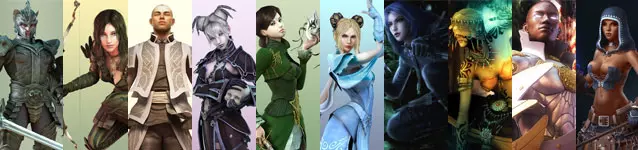
Guild Wars features 10 different classes or professions, catering to many different playstyles. Though six of the main, "core" classes may be created on any campaign, Factions and Nightfall each have two classes unique to their respective campaigns. Early in the game, characters are asked to select a secondary profession. A secondary profession can be any other class available on that campaign, and can later be switched to any other unlocked secondary class when in a town or outpost. Players will additionally have access to three of the four trait lines available for their secondary class; the remaining trait line is reserved for those who use that class as their primary profession. Though each class has one or more primary weapon type, any class can equip any weapon as necessary. Armor, however, is exclusive to your primary class type and soulbound to your character when purchased. Class Description Campaign Primary Weapons Armor Rating Warrior (W) Warriors typically play as expected. Using melee weapons, they may make use of powerful skills called Shouts to increase the party's defensive or offensive capabilities, or Stances to increase their own effectiveness. All Sword, Axe, Shield, Hammer 80 Ranger (R) Rangers are one of the most powerful and versatile classes. Using bows, they may specialize in heavy DPS, condition dealing, traps, enemy shutdown, or beast mastery (pets). All Longbow, Shortbow, Hornbow, Recurve Bow 70 Monk (Mo) Monks are a caster class that typically falls into either an offensive or defensive role. Their primary attribute strengthens the effectiveness of spells that target allies, making them the most powerful healers in the game. All Wand, Focus, Staff 60 Necromancer (N) Necromancers are a hugely versatile class that can uniquely benefit from creatures dying near them with additional energy recovery. Due to this class-specific benefit, Neromancers can make poweful healers or "minion masters," or even sacrifice their own health for powerful spells. All Wand, Focus, Staff 60 Mesmer (Me) Mesmers are nearly a caster-equivilant to Rangers, specializing in enemy shutdowns. They cause hexes instead of conditions, and what they lack in outward DPS is made up for by their unique fast casting ability. Mesmers can interrupt, disable skills, remove enchantments, and steal energy. All Wand, Focus, Staff 60 Elementalist (E) Elementalists are powerful casters with more energy than any other class, and can manage their large mana pools more effectively. Powerful skills often leave Elementalists overcast, which enables them to activate unique variations of their core skills. They may choose to focus on one or more specific elements: Air, Water, Earth, or Fire. All Wand, Focus, Staff 60 Assassin (A) Assassins are a fast, nimble class, uniquely able to execute quick attack chains with increasing power. Focusing on Critical Strikes as their primary attribute, Assassins can deal an incredible amount of damage in a short period of time, teleporting to their enemies to take them out even more quickly. Factions Daggers 70 Ritualist (Rt) Ritualists are a "summoner" class that can conjure powerful, immobile spirits and perform rituals to aid their allies and eliminate their foes. A Ritualist's summons may form an offensive, impassable wall, or even wholly absorb a party's damage. Their rituals can augment a party's power, granting them boons for the duration of the ritual or increasing their collective damage output, making them both poweful healers or DPS. Factions Wand, Focus, Staff 60 Paragon (P) Paragons are effectively warrior bards, ranged characters who augment the party with Shouts and Chants. Paragons can cause AOE conditions such as burning or raise their party's morale with a single skill. They focus on leadership and carefully command control over the battlefield. Nightfall Spear, Shield 80 Dervish (D) Like Assassins, Dervishes wear medium armor and are capable of dealing massive amounts of AOE melee damage with their powerful scythes. Carefully managing enchantments is key to succeeding as a Dervish, where each skill may have a different effect when an enchantment is removed or applied. Nightfall Scythe 70 I suggest that new players avoid certain difficult classes for their first character. Mesmers, Ritualists, and Dervishes particularly can be very complicated classes to survive with while also trying to learn how to play the game. Likewise, Necromancers and Monks may initially appear straightforward, but require a steep learning curve to play well until you see how the parties are designed to work together. Many veteran players (myself included) have stories about abandoning our first characters in frustration and only coming to love them years later after we better understood how to play the game. Warriors, Elementalists, and Rangers are excellent classes to start with for your very first character. Besides being the most powerful, these classes are more straightforward to understand in terms of skills and attributes, have self-healing skills available, and will give the player more room to become comfortable with various core game mechanics like conditions, party effects, and energy management. Game Modes and Mechanics
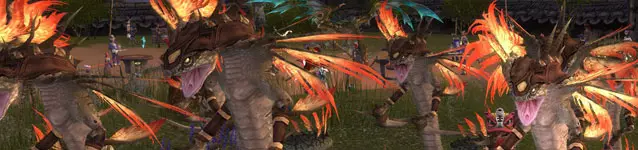
Each campaign features a complete primary storyline unique to that campaign. Each story revolves around you, the hero, and your interaction with other characters and factions. Stories are typically mission-driven, allowing you to play or replay scripted events in a specific sequence. Primary and side quests lead players from one location to another and can be used to unlock skills and attribute points. Attribute PointsAs characters level up, they earn Attribute Points that can be used to increase attributes in one of four class-specific trait lines (five for Warriors & Elementalists), and three additional trait lines for their secondary profession (four for Any/W or Any/E). Standard traits like strength, vitality, and intelligence are manipulated exclusively through weapons and armor, and their effectiveness is frequently based on an attribute point requirement (eg. "Requires 4 Fire Magic"). Each attribute level requires progressively more points than the last, and by level 20 a character will have enough points to "max out" two trait lines. These trait lines may be further increased using upgrade items worn on armor or weapons. Missions & QuestsGame missions have primary & secondary objectives, and reward experience and gold upon completion. Missions are initiated from specific towns or outposts and can be repeated at any time. Completing a mission frequently teleports the player to a new, sometimes previously inaccessible, location. Quests are available from objects and NPCs as in standard MMOs and are often not repeatable. Quests can reward skills, weapons, and consumables, as well as experience and gold, and may be completed in towns or other explorable areas. For the most part, quests are an optional game component and do not need to be completed to progress the story. Missions also include optional "bonus" objectives that reward extra gold and experience. These challenge objectives are sometimes as simple as completing missions quickly or killing an extra boss, or may require solving complicated puzzles or protecting key NPCs. TravelGuild Wars uses a free map-travel system to allow players to teleport quickly to any previously visited town or outpost. These are separated by instanced, explorable areas populated by appropriately-leveled enemies and NPCs. Killing an enemy in an instanced zone will remove that enemy permanently while in the same zone, allowing these areas to be fully "cleared," though revisiting an explorable area will reset them. GearPlayers earn weapons from defeating enemies and collecting quest rewards. Armor is "crafted" by exchanging a specific quantity of materials and gold to certain NPCs. Some weapons and all armor may be upgraded using salvaged items from certain enemy drops or purchased from vendors. Gear may also be earned by trading other enemy drops with special "collector" vendors, frequently in the same explorable areas as the enemies which drop the item they require. Weapons may be optionally bound to a given character ("customized") and as such will receive a permanent 20% base damage increase. Most weapons and armor may also be dyed. There are four main grades of weapons which imply item rarity, all of which share the same base statistics. Common "white gear" is not upgradeable, but any other rarity (blue, purple, and gold) may be freely upgraded. Player Death, Morale, and Death PenaltiesWhen a player dies in Guild Wars, they must wait for their party to resurrect them or for their entire party to be defeated. In missions, party death means mission failure, and all players will be moved to that mission's starting outpost to retry or change loadouts. In explorable areas, defeated parties are returned to the nearest "Resurrection Shrine" in the same zone. When a character dies, they incur a -15% death penalty (up to a maximum of -60%) which reduces all stats by that amount. Death penalty can be removed by using consumables, simply defeating enemies, or by returning to a non-combat town or outpost. Death penalties will carry between explorable areas unless the player visits a town or outpost, where death penalties are automatically reset. Players may also earn morale boosts which counteract death penalty and can improve stats by defeating bosses or using consumables. Specialty VendorsMany towns and outposts in Guild Wars have specialty NPC vendors called "traders" that will buy and sell certain items based on supply & demand. These traders' prices fluctuate in real-time depending on the demand for an item and its supply from other players. For example, if many players are buying Black Dye but few players are selling it, the prices for that item can increase substantially. On the other hand, if Blue Dye is so common that few players are buying it, the prices for that item can quickly decrease. As a rule, traders will sell items for more than they buy them for. Because they coexist with the player economy, players will frequently sell items for slightly more than a trader will pay, but for less than it would cost to purchase the same item. In this system, traders actually do a good deal to maintain economic stability in the game. DungeonsEach campaign has unique "elite missions" intended for group play. Like regular missions, party death in an elite mission will cause that mission to be abandoned and the party to be returned to the starting outpost. Most elite missions require a modest fee for entry, and are designed for groups of 8-12 players. These missions also include primary objectives which may or may not include auxiliary quests inside the mission instance. Completing a mission rewards each player with gold, experience, and an end chest frequently containing rare items. The Eye of the North expansion includes more than a dozen new dungeons which are easier and can be managed by either full player groups or single players with NPC mercenaries. Hard ModeCompleting any Guild Wars campaign will unlock a "Hard Mode" variant of all content in that campaign. This elite gameplay mode features tougher enemies, better drops, and better enemy AI. Certain items may only drop from enemies in Hard Mode, and explorable areas can be fully "vanquished" for experience, gold, and sometimes allied faction points. Completing Eye of the North dungeons also unlocks a Hard Mode variant of each dungeon. Once Hard Mode has been unlocked for a given campaign, it will become available to all level 20 characters on the same account, regardless of whether or not they've completed that campaign. Skills
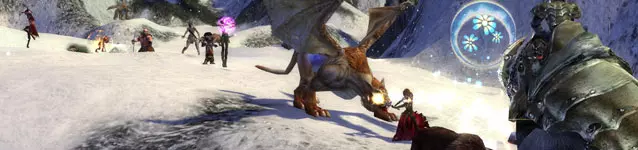
激战角色使用不超过八个技能,这些技能组合被称为【配装】。配装可以是该角色主职业与副职业技能的任意组合,并包含角色当前的属性点分配。配装可本地保存至磁盘,且能在城镇和前哨站自由更改,这意味着玩家可以尝试新技能或属性,而不必担心永久或不可逆地改变角色。由于有数百种技能可供选择,加上副职业的多样性,两个拥有自定义配装的玩家几乎总是不同的。 六个【核心职业】各自在游戏中拥有超过100种可用技能。阵营或“夜幕降临”专属职业各拥有至少70个技能,此外所有职业还可共享50个额外技能。借助副职业系统,单个角色在所有战役和资料片中可同时解锁超过200个技能。 技能可通过完成特定任务或从技能商人处购买来解锁。一旦解锁某个技能,该账号下所有纯PVP角色或可自定义的雇佣兵都能立即使用该技能。不同战役的技能各不相同,部分技能甚至为特定战役所独有。玩家每次升级都会获得技能点,可用于从技能商人的有限选单中购买技能。通常情况下,随着角色在战役中不断推进,会有更多技能可供购买。购买(即解锁)任意技能后,同一账号下的其他角色便可在该战役的所有技能商人处购买此技能。玩家也可以选择从游戏的现金商店购买技能解锁包,从而让后期技能能在游戏早期就从商人处获得。 除了普通技能外,《激战》中每个职业都拥有数十种强大的精英技能。每个角色可以通过击败持有特定技能的 Boss,并使用特殊技能从被击败的敌人身上“捕获”来获取这些精英技能。角色一次只能装备一个精英技能。与常规战役中玩家需要手动从首领处获取技能不同,在《激战:北方之眼》中,角色可以通过完成特定任务获得职业通用的精英技能。玩家经常与其他玩家分享自己成功的配装,并且可以选择在游戏内或在线上使用一种特殊文本代码来分享配装,这种代码能让其他玩家轻松加载或保存特定配装。由于《激战》玩家的技能栏需要不断调整以应对当前挑战,因此玩家们会经常分享和完善那些特别适合特定情况的配装。例如,一个包含致残技能、减速诅咒和击倒效果的配装可能特别适合需要玩家牵制快速移动目标的任务,而这些技能在其他情况下效果会较差。PVP
《激战》拥有丰富且平衡性极佳的PVP系统。部分技能设有仅用于PVP的特殊变体,以防止过于强力的PVE技能在PVP环境中造成不公平的统治地位。尽管每个资料片都包含独特的低等级PVP竞技场,但它们都共享一个共同的“核心”PVP组件。 除资料片专属竞技场外,所有角色必须达到20级才能参与PVP。大多数角色将使用易于获取且属性值最大化的装备进行竞争,这使得同职业玩家之间不太可能存在属性上的优势,胜利与否将完全取决于纯粹的技巧。PVP角色仍可通过各种升级来强化装备,但这些升级对纯PVP角色是免费提供的,这意味着每个角色都将拥有相同的机会。参与PVP的PVE角色可能需要为相同的升级付费,不过这是因为这些升级在游戏的PVP和PVE元素中均能生效。 玩家参与PVP可获得一种名为【阵营】的替代货币。各种类型的阵营货币可用于购买技能、可自定义的雇佣兵或独特的装备外观。花费任何类型的阵营货币通常都有助于提升玩家的公会等级。 《激战》中有多种PVP类型,从简单的竞技场模式、夺旗战到迷你任务以及大规模的持续锦标赛。《激战》有一种名为【法典竞技场】的PVP模式,该模式中每个职业使用固定的技能和属性组合,且每周轮换,这使得《激战》的PVP既富有挑战性又易于上手。 《激战》还包含【观战模式】(默认按键“B”),玩家可通过该模式观看来自顶级公会战和锦标赛的预录PVP比赛。此特殊模式允许玩家跟随任意队伍的任意角色,用于观察顶尖玩家的策略和配装。
公会是官方认可、由玩家运营的玩家群体,以公会【标签】为标识。公会可以与其他公会组成联盟,还能为成员购买“公会大厅”及各种便利设施,包括便捷的储物空间和商人访问权限。公会大厅可从游戏内任何地点传送进入,为成员提供舒适的聚集空间,并可在其中进行PVP公会战来磨练技能。玩家通过公会标签或独特的公会披风来标识自己的公会。 在《激战》中,公会会从“ factions”资料片的阵营中选择一方结盟。成员可以消耗个人阵营声望来提升公会排名。在阵营玩法中,排名靠前的公会可以临时“租用”城镇,使其成员能够独家访问特定商人以及仅限当前所有者进入的区域。 每个账号的玩家只能加入一个公会,但如果愿意,也可以以访客身份加入另一个公会。多个公会还可以选择结成联盟,为所有联盟公会的成员提供一个独特的私人聊天频道,以及直接进入任何联盟公会大厅的权限。 雇佣兵(英雄与佣兵)
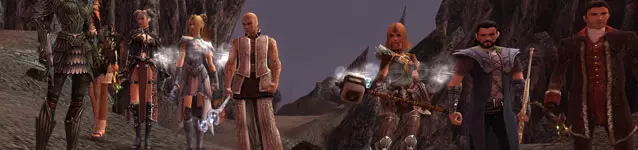
《激战》采用雇佣兵系统,允许玩家“雇佣”名为“佣兵”的NPC队友,确保玩家始终能组成完整队伍。在《激战:夜幕降临》和《激战:北方之眼》中,游戏引入了可自定义的永久性佣兵,称为“英雄”。由于游戏内容设计为需要完整队伍体验,当玩家没有完整的人类队伍时,这些电脑控制的雇佣兵是必不可少的。否则, solo玩家会发现冒险变得困难,并且很快会陷入寡不敌众的境地。 佣兵:在每个城镇或前哨站,通常在通往可探索区域的出口附近,会有一排可用的佣兵。这些追随者通常是后续内容的推荐等级,你可以通过直接邀请或使用队伍窗口(默认按键:P)将他们“雇佣”到你的队伍中。雇佣追随者没有直接费用,但系统会无形地分配一些本应属于玩家的金币和掉落物给他们。 例如,如果一名玩家带着四名追随者从地上捡起10金币,玩家可能只能获得2金币,其余8金币则平均分配给追随者。掉落物品的分配方式也是如此,不过追随者获得的物品掉落对玩家来说是不可见的。但追随者不会分享任务或任务奖励,这些奖励始终会完整地分配给每个玩家。追随者拥有自身的技能、护甲和武器,无需直接管理。追随者会在战斗中自动跟随玩家,并攻击范围内的任何敌对目标。玩家可以通过游戏地图将追随者标记到特定位置,但如果标记位置过远,他们可能会被地形或其他障碍物卡住。需要注意的是,在标记时,追随者(和英雄)在到达目的地前不会执行任何动作,这意味着标记追随者时需谨慎,因为他们在移动到标记位置的过程中即使受到攻击也无法做出有效应对。 英雄是永久性的、可自定义的追随者,需要玩家定期进行维护。这些英雄可通过完成《激战:黄昏》和《激战:北方之眼》中的关键任务或剧情来解锁,每个职业至少有三名英雄(幻术师除外,只有两名)。新解锁的英雄初始仅拥有基础技能,玩家需要在英雄与自己一同升级时,手动为其分配新技能和属性点。英雄的护甲会随等级自动调整,但玩家需要手动为其装备对应等级的武器。 与佣兵类似,英雄会无形地获取部分金币和战利品,但玩家可以对其进行一定程度的控制。队伍中的每个英雄都可以在不同的战斗姿态间自由切换:被动、攻击和守护。被动姿态的英雄不会采取任何进攻行动,但仍可执行治疗或守卫等防御技能。设置为攻击姿态的英雄会像随从一样,自动攻击范围内的任何目标。防御姿态命令英雄保持被动,直到受到攻击或玩家发起攻击。 无论处于何种姿态,玩家都可以直接控制英雄的技能。玩家可以强制英雄选择特定目标、执行特定技能,或在需要时阻止英雄使用一个或多个技能。玩家还可以单独将队伍中前三位英雄标记到特定的不同位置,否则英雄将遵循队伍标记(如果存在)。由于英雄可能需要极高的操作量和维护成本,新玩家或休闲玩家往往会感到难以应对。 佣兵英雄:佣兵英雄是一种特殊类型的英雄,玩家从游戏内现金商店购买一个或多个佣兵英雄槽位后即可解锁。佣兵英雄是玩家角色的装甲完全相同的复制体,可供该账号下的其他角色使用。佣兵英雄的功能与普通英雄相同,需要手动为其分配武器和技能。 《激战1》还是《激战2》?
许多系列新作玩家需要决定游玩《激战1》还是《激战2》。这是两款截然不同的游戏,各自更适合不同类型的玩家。 总体而言,《激战1》可能更适合喜欢独自游玩或与朋友组队的玩家。所有主要游戏内容都可以通过NPC队伍“单人”完成,而且新玩家在早期等级可能很难找到其他玩家一起游玩。游戏中的副本区域和数量众多的城市,使得玩家在游戏的大部分时间里甚至可能遇不到其他玩家。从这个角度来说,《激战2》更接近标准的大型多人在线游戏,同一区域内的所有玩家都能相互看见并互动。《激战2》具有合作战斗机制,玩家无需组队即可共同游玩,一同对抗敌人且不会受到惩罚。 《激战1》拥有数量众多的任务和剧情任务,而其续作则完全取消了任务系统,转而采用游戏世界中动态且重复出现的事件。《激战2》虽然包含个人专属的剧情故事线,但与前作不同的是,这些主要剧情任务无法重复游玩。两款游戏均将标准PVP和PVE模式分开,不过续作还新增了大型PvPvE游戏模式,不同服务器可以相互竞争,以获取服务器范围的奖励和排名。虽然两款游戏中的角色都使用有限的技能栏(《激战1》为8个技能,《激战2》为10个技能),但《激战1》支持多职业设定,并且拥有数百种可用技能。因此,《激战1》的大部分内容会让人感觉更偏向策略性,玩家可以在不同区域之间更换技能,以应对特定区域或任务的挑战。《激战2》的职业则更加精简,到游戏后期也只有几十种技能可用。 《激战1》采用更传统的队伍结构(前排、中排、后排),而其续作则致力于让核心职业更加多才多艺且自给自足。《激战2》的这一改动既受到了赞扬,也遭到了批评,最终在其付费资料片中推出了自己的多职业设定版本。同时,免费基础游戏中的职业仍然或多或少以输出伤害为核心。 随着2025年《激战:重铸》的推出,原版游戏再次受到关注。蒸汽甲板和控制器支持以及画面升级吸引了大量新玩家和回归玩家,由前ArenaNet员工组成的2weeks开发团队一直在努力为游戏带来新的变化和模式,此外还有许多不同的活动和日常任务已实现自动化。《激战2》会频繁推出大型内容更新,但许多更新中的内容可能仅在有限时间内可用。在后者游戏中,不持续活跃的玩家会因错过内容而受到设计上的惩罚,他们可能无法参与限时任务、获取限时资源或装备。 在我看来,《激战》比其续作提供了更紧凑、更完整的体验,但上手所需的技能投入可能会让人望而却步。而《激战2》则更容易上手和取得进展,但其故事可能会让你感觉自己更像一名外交官,而非英雄。 技巧与窍门
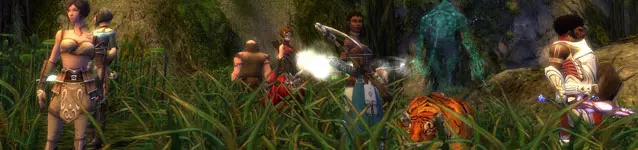
There are many tips and tricks new players can use to become more proficient with Guild Wars. If you're playing Guild Wars for the first time, please review this list as even if you don't remember everything, it will be helpful for you to get an idea for the types of things that are available to you. YOU DO NOT NEED TO GRIND. Too many new players seem obsessed with grinding. While it can be rewarding at later levels, it is near pointless at the beginning of the game. You may use the "/bonus" command in any town or outpost to give your current character any additional items unlocked with your current licenses. These items can include free, max-stat weapons, items, or summoning stones. Items you do not need from /bonus may be safely deleted, as you can re-acquire any of these items at a later time by using the command again. Hold down the CTRL key to highlight players & enemies, and the ALT key to highlight NPCs and landmarks. Both keys will allow you to see and target the names of players, objects, and enemies through walls or terrain. Most quests are optional. With the exception of primary quests, nearly all quests are optional. The game can be completed without much trouble doing only the primary quests and missions, with the exception of quests in early Prophecies that reward skills. Always bring a full party. With the exception of a character in Ascalon at the beginning of the game, mercenary henchmen are always available to fill any empty party slots. Be sure and add henchmen with a variety of character classes. A balanced party is necessary to succeed in Guild Wars. All parties should include at least one designated healer and one or more DPS classes. Healer henchmen are almost always indicated as "Healer Henchman" or "Protector Henchman." Pick up everything. Your main source of income in the game outside of quest & mission rewards is profit from selling miscellaneous weapons and drops. There may also be collector NPCs that will give you something decent for those five Gargoyle Skulls you picked up along the way. Make the one-time investment in bags. Early in the game, you can often exchange various tokens or gold for bags & belt pouches. Purchasing a "Rune of Holding" from any merchant can permanently double your bag size! Buy identification kits and identify everything. Although only some items may be marked as "Unidentified," all items may be identified for increased vendor value. With few exceptions, the additional value at the very least covers the costs of the identification kits. Use the F9 key to quickly open all bags. Pay attention to enemy group formations. All effective parties will need to be able to quickly identify the biggest threats in a group. Generally, focus on monks or ritualists first, spike down elementalists or assassins, then necomancers, mesmers & paragons, warriors & dervishes, and finally rangers. It will take some time to learn which enemies are which, but learning enemy formations is hugely critical to later success. Use the C key (default) to target the enemy closest to you. You can then use the spacebar to perform the default action on that target. Use the F10 key for quick links to the game's comprehensive wiki. You'll see links for each quest you have, all of your skills, and the locations you visit. You can also use the "/wiki SEARCH TERM" command to quickly search the wiki from in-game. Upgrade your personal storage to include crafting storage. For just 50 gold, a Xunlai Agent will unlock a storage space exclusively for crafting materials that can store a maximum of 250 of each material. You can mix up to four dyes. When dying your armor, you can add up to three additional colors to create the perfect armor color. Don't have an orange dye? Just mix red and yellow! Sell items to the correct vendor. Certain items may be more valuable when sold to a specific vendor instead of the general merchant. Guild Wars has unique traders for dyes, runes, scrolls, and crafting materials that will frequently offer a higher price than the merchant. Always carry a longbow in your inventory, regardless of class. Longbows are the ideal weapon for safely pulling enemies from a distance as they can reach enemies from outside aggro range. Effective pulling is an essential technique to learn for any player. Blue "minor" runes are often more valuable than their purple or gold counterparts. Purple ("major") and gold ("superior") runes are indeed more powerful, but can carry heavy health penalties. Because of this, players often prefer "minor" runes, meaning that salvaging that minor component and selling it to a Rune Trader is an easy way to make money very early in the game. If you die in combat, you can switch to another character's point of view. For example, if you're waiting for a healer to revive you, you can click on the healer's name in the party window to switch to their "camera" and see what they're doing. This is especially helpful for new players who may want to observe their own party's more successful tactics. NPCs and monsters can level up. Just like the player character, any creature participating in battle will gain experience when an enemy dies. Henchmen that have leveled up will retain their level bonus between explorable areas, but it will be reset when visiting any town or outpost. Heroes retain experience permanently, and enemy levels reset when revisiting a given zone. Adding runes to your headpiece can give you bonus increases. Many headpieces will include the text "Item's attribute +1" in their descriptions. This means that adding a minor, major, or superior rune to your headpiece will give you an extra +1 to the matching stat. Questions & Answers
Have questions? Let me know in the comments below and I'll add them here. Where is everybody? Does anybody play this anymore?Because Guild Wars uses instanced areas, players can go for hours at a time without seeing another player. Even in towns where you can see other players, you might be surprised to see only one or two other people. Aside from mission outposts which are generally more populated, most players congregate in one of the three capital cities or elite mission outposts. How do you travel from one campaign to another?Quests are available in each campaign's capital city (Lion's Arch, Kaineng City, Kamadan) that will unlock travel to other campaigns. Travel from the Nightfall campaign to Prophecies is a notable exception, as players will need to reach level 17 or the rank of Sunspear Captain before being able to unlock that travel quest on their own. This page[wiki.guildwars.com] lists the quests required to unlock travel from one campaign to another. How do I remove death penalty?There are several ways to directly remove death penalty: using consumables, killing bosses, or just killing normal foes. In PVE, players will lose 1% death penalty for every 75 EXP earned. Bosses will reward a +2% boost, and killing bosses with no death penalty can actually give a morale boost up to +10%. In PVP, players remove 2% death penalty for every living teammate after killing an enemy. What am I supposed to do in this mission?Looking at your quest log (default key: "L") during a mission will show your current objective(s). If you're having trouble figuring out where to go, you can see maps and get tips from the Guild Wars wiki[wiki.guildwars.com] (external link), or use the F10 key during the mission for a direct link. Please note that the wiki typically includes spoilers, so use at your own discretion. What do I do after I beat a campaign?Besides unlocking Hard Mode for that campaign, Prophecies, Factions, and Eye of the North include free expansion storylines that take place after the events of the main story. These storylines take the form of quests that address new situations and events that have arisen since completing that campaign. Some players also work to achieve titles, faction for their guild, or try to earn elite armor. Of course revisiting dungeons is popular, as well as continuing your adventure in the other campaigns. What is the difference between item rarities?Common (white) items typically do not include modifiers or upgrades. Blue items are also considered common, but often have low-range modifications. Purple items are uncommon and include mid-range modifications, while gold items are rare and typically have maxed modifications. There are two other rarity levels: green items (unique) usually have maximum stats and modifiers and often drop from bosses or dungeon chests. Red items are PVP rewards and are "crafted" by PVP players. Armor is only available in white & blue rarities. What are salvage items and salvage kits?Drops labeled "Salvage item" may be refined into crafting material using a salvage kit. Salvage items may be sold as-is instead of salvaged, though the crafting material they refine into is often worth more than the salvage item itself. Blue, purple, and gold salvage items contain upgrade components, which are sometimes very valuable. Salvage kits may be purchased from nearly all merchants, and are available in three varieties: Basic, Expert, and Perfect. Basic kits may not be used to salvage upgrade components. Expert kits or above must be used to recover a specific component, but have a chance to destroy the original salvage item. Perfect kits eliminate the risk for item destruction, but are prohibitively expensive for regular use. Upgrade components recovered from salvage items may be sold to a Rune Trader, often for a high price. What things will I find early in the game that are valuable?For crafting materials, be on the lookout for Feathers, Granite Slabs, Iron Ingots, Piles of Glittering Dust, and Plant Fibers. Each of these items can usually sell (in stacks of 10) to a "Crafting Material Trader" for a couple hundred gold. Also, be on the lookout for anything labeled "Radiant", "Survivor", "Minor Rune of...", "...of Vitae", or "...of Vigor". These prefixes and suffixes will be on various salvage items, so buy an Expert Salvage Kit and salvage the corresponding component to sell to a "Rune Trader." Notably, look out for any gold weapons with the suffix "...of the [Profession]" which denotes a component added in 2025 that may be particularly valuable to other players! What kind of mistakes do you see new players making?Many new players struggle with the slower pace of Guild Wars, especially early in the game. New players need to understand that unless they are doing a timed mission, there is no rush. Enemy groups should be encountered carefully, one-at-a-time. Rushing into multiple groups and careless aggro is a huge point of frustration for new players. Players should slow down and carefully evaluate enemies before engaging. Beyond that, new players need to quickly learn that they must pick up everything. That useless trash enemies are dropping is your number one source of income in the game. On a related point, just because the stats on a weapon you just picked up are better than the one you have doesn't mean you should switch: if the new weapon has any kind of requirement (eg. "Requires 3 Fire Magic") and you don't meet said requirement then in practice it may perform less damage than what you're already using. Lastly, new players are often obsessed with multiclassing, trying to master two classes before they even understand the basics of one. For example, many players choose Elementalist or Monk as their secondary profession; Elementalist skills are too expensive to be pracitcal and healing is always better left to a designated healer. At the beginning of the game, players simply cannot afford to be wasting attribute points in secondary trait lines and should promptly replace their free secondary skills with ones appropriate for their class as soon as they are able. What kind of items are sold in the cash shop?Purely cosmetic & ease-of-access items. Guild Wars does not offer any gameplay-enhancing items like mounts or exclusive skills through its shop, but does provide account management tools like name changes, extra storage space, and a pet unlock pack that saves the user the trouble of physically capturing each type of charmable animal in the game. You can view the types of items that are available on the Guild Wars Website[guildwars.com] (external link).
2026-02-15 22:00:21 发布在  PC&主机
PC&主机


说点好听的...
收藏
0
0