
 换一换
换一换 


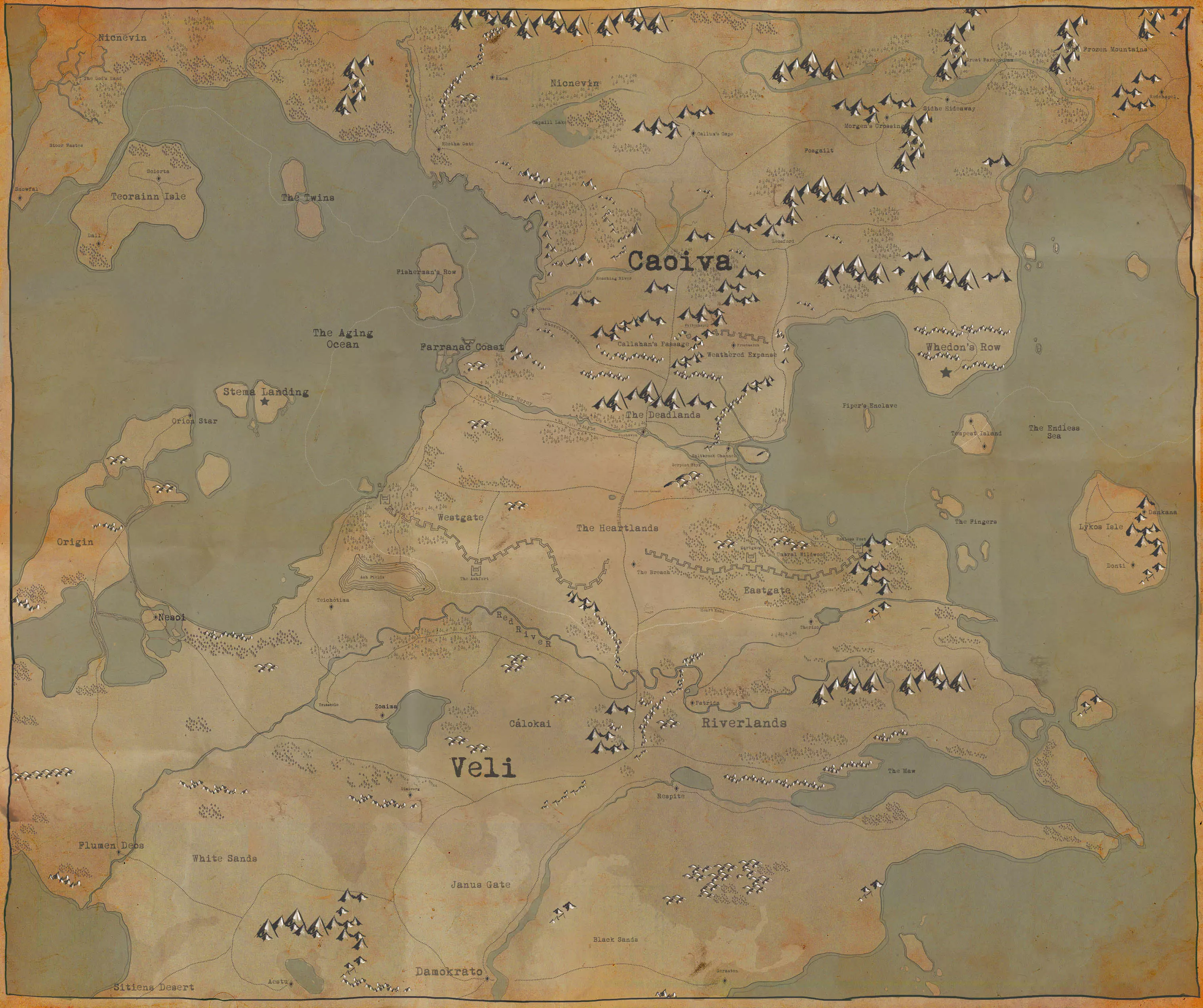
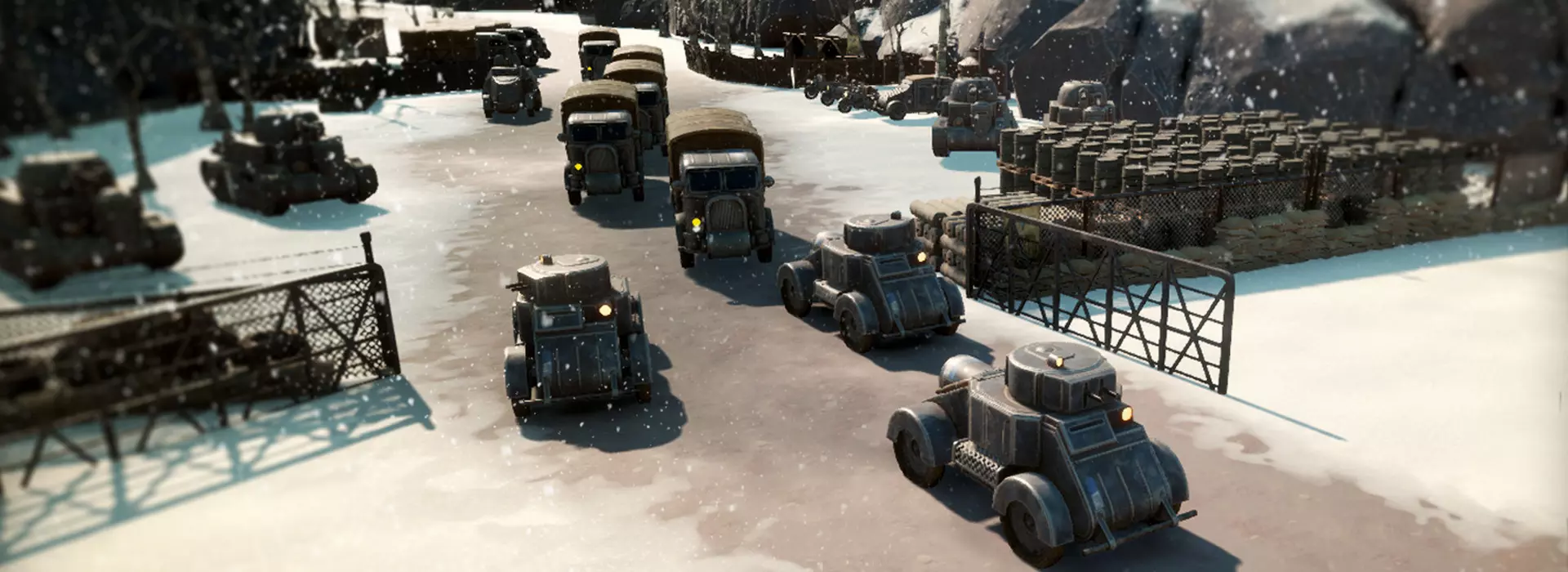
Foxhole is a game that has a lot of depth and breadth. It tries to cover the complexity of modern war: from combined arms combat on land and sea (and soon the air!), to industrial scale military production, to military engineering, to supply and logistics. As a result, it attracts a wide variety of players based on their interests. The obvious extremes of this are players who spend most of their time at the front lines feeding the meat grinder and those who happily spend most of their time at the rear focused on optimizing production efficiency; then there are the players in between these extremes that do a varying mix of everything. The beauty of this game, no matter how you choose to play it, is it makes you feel like you belong to a bigger whole, a larger purpose. Even though the opening screen in the game bluntly declares that “you are not a hero”, I firmly believe that “we are all heroes”. It’s the collective endeavor to all do our part for the war effort that has the potential to bring out the best in each one of us as individuals! So how will studying military theory add to our enjoyment of this game? I think getting at least a basic understanding of it can help us better appreciate all the “moving parts” individually and as a whole. Also, it may also encourage us to cooperate and collaborate in more creative and fulfilling ways during the course of each war. I. The Essence of War: Attack and Defense What is the essence of war? There are a whole lot of political and philosophical answers to this question. We’re not going to go into those. For our purposes, we’re going to focus on its “essence” or what defines it as an activity different from others. The essential principle of war (or, honestly, any type of combat) is: “To destroy the enemy and preserve yourself” Simply put, it’s all about understanding the relationship between attack (“destroying the enemy”) and defense (“preserving yourself”). “Destroying the enemy” doesn’t necessarily mean physically destroying each and every individual enemy soldier, it means depriving them of the capacity and will to fight. True, this is primarily accomplished by wounding or killing the enemy; but their capacity and will to fight also depend on other factors such as supply and morale. The goal is to do everything in your power to place the enemy in a situation of complete hopelessness so that they are no longer able or willing to continue fighting. It’s not all about kills, okay? Since ancient times, this universal truth has always been reflected in the tools and methods of war. The sword and the shield are prime examples of this. While the sword was primarily used to cut and stab (attack), it was also used to block and parry (defense). The shield, on the other hand, was used for protection against thrusts and swings (defense); but could also be used to push or knock your opponent down (attack). In the context of “modern warfare” which Foxhole seeks to model: Infantry must not only know how to shoot accurately and effectively (attack), but should also be adept at using cover and concealment while shooting (defense). Their advance toward enemy positions (attack) should ideally take covered and concealed routes, and be supported by suppressing fire and the use of smoke (defense). The tank is an amazing machine of war that combines attack and defense in one powerful package because of its mobility, guns and armor, but it should make sure that it is always within range and should never move far too forward from its supporting infantry and logistics (defense). Commanders must not only know how to gain ground and secure objectives (attack); but must also know how to consolidate and defend these victories against counterattacks (defense). They should also know how to maximize the combat power at their disposal (attack); but must ensure that it is not wasted needlessly and preserved and maintained for where and when it is needed (defense). To use sports as an example: ever wonder how your favorite team or MMA fighter would do if they only focused on offense and didn’t bother about defense, or the other way around? Offense (attack) and defense are essentially bound together; like hot and cold or day and night. This is the way. What exactly do we mean by understanding the relationship between attack and defense? Like everything else in the world, their relation to one another is never equal and is always changing. Just like it can’t be hot and cold or day and night at the same time, a commander must know how to decide whether it’s time to attack or defend based on the situation of the battlefield. This doesn’t mean just focusing on one and totally forgetting about the other; this means identifying which is the priority and which is secondary at any given time. So how do we actually decide if it’s time to attack or defend? II. Using Strength Against Weakness Sun Zi, the ancient Chinese military strategist, said it best in his book “The Art of War”: “When troops take action, the impact must be that of a whetstone flung against an egg. It is a matter of asymmetrical force.” This simply means that we should use a stronger force to defeat a weaker force. As much as possible, we want to be the “whetstone” while the enemy is the “egg”. How can we tell if a force is strong or weak? The strength or weakness of a force can only be determined relative to its opposing force; they need to be objectively compared. “When one understands the condition of the opposition and the condition of one’s own side, one fights a hundred battles without ever facing defeat. When one does not understand the condition of the opposition, but does understand the condition of one’s own side, one loses one battle for every battle won. When one understands neither the condition of the opposition nor the condition of one’s own side, one faces defeat in every battle.” - Sun Zi, The Art of War What factors do we look at when comparing forces? Numbers - which side has more people Weapons - their quality, quantity, destructiveness, and range Mobility - their ability to cover distances and change direction Supply - their capacity to preserve and sustain their force Communication - their capacity to relay orders and exchange information Leadership - the level of knowledge and skill of their commanders Training - the level of knowledge and skill of their soldiers Morale - their will to fight and endure hardship and sacrifice These factors can be grouped into the Physical (Numbers, Weapons, Mobility, Supply, Communication) and Mental (Leadership, Training, Morale). Between the two, the Mental factors play a decisive role while the Physical factors play a supporting role. Before anyone gets their panties in a twist, just because something plays a supporting role doesn’t mean it’s unimportant, okay? What use are Numbers, Weapons, Mobility and Supply if your commanders and soldiers are inept or don’t want to fight? Conversely, even if your force is highly motivated and well-trained, the lack of Numbers, Weapons, Mobility or Supply will have a negative effect on the effectiveness of your Leadership, Training and Morale. Two other physical factors that also need to be considered: Terrain - determine whether a force is located on or is moving through terrain that will provide it with an advantage or disadvantage in attack or defense. Example: Fighting in wide open spaces is different from fighting in an urban setting. Weather - operations during different weather conditions can provide advantages or disadvantages to each force. Examples: Heavy rains and the resulting mud can severely affect the mobility of motorized or mechanized forces. Fighting at night limits visibility and situational awareness. Among all these factors, the most basic is Numbers. People are the actors in the theater of war. All other factors being equal, it’s a foregone conclusion that ten will easily subdue one. What use are the other factors then? A fancy military word for them is force multiplier. An advantage in any of the other Physical or Mental/Moral factors can have a “multiplying effect” on your Numbers. This means that it’s possible for a smaller force to defeat a larger one if it has or creates certain advantages over the other (ex. Better weapons, supply, leadership, training, morale, terrain). To summarize, if your force is stronger, attack; if your force is weaker, defend. It’s a total waste of time and resources to continuously push an attack when your force is up against a stronger and well positioned defense. Not only will it be fruitless, your force will be weakened and your position will become vulnerable to a counter attack by the enemy. It’s better to take a defensive posture until such time that you are able to gather a superior force to defeat the enemy. III. The 3 Levels of Modern War In Foxhole, both forces start out with relatively equal numbers, territory and resources on the strategic level. So how exactly do we use a stronger force to attack a weaker one? This is done by using local superiority at the operational and tactical levels. So what do these fancy military words mean? Strategic - The war situation taken as a whole, meaning the balance of forces across the entire Foxhole map. Operational - The overall situation or balance of forces within a particular hex or group of adjacent hexes on the map. Tactical - The situation or balance of forces in a particular encounter, engagement or battle inside a hex. Given that, as a whole (ie. on the Strategic level) and for most of the war, both sides are relatively equal, it is crucial to achieve local superiority at the Operational and Tactical Levels. How do we achieve this? By using what is called economy of force. IV. Economy of Force or “Just Flank, Bro!” What is Economy of Force? Simply put, it is the principle of massing the majority of your combat power or main effort to strike at the weak point of the enemy while using only minimal forces for supporting efforts. What then is the weak point of the enemy? At the tactical level, the weak point of the enemy is their flank or rear. Why? Because the combat power of an enemy force is concentrated at its front. Attacking it at its flank or rear gives us the chance of inflicting the most damage to the enemy while minimizing the risk to ourselves. At the operational level (and in some cases, the tactical level), the weak point of the enemy is a portion of their force that is separated or isolated from the rest of their force. What needs to be done to ensure that we are able to launch a successful attack on the flank, rear or isolated part of the enemy force? This is where the cooperation between the main effort and supporting effort comes into play. It’s the job of the supporting effort to gain and retain the attention of the main force of the enemy while the main effort attacks the weak and isolated part of their force using secrecy, surprise and speed. This is a very old principle that has been applied throughout the history of warfare. Sun Zi refers to the main and supporting efforts as the Chi and Cheng forces. The Wardens…ehem…I mean the German Wehrmacht during World War 2 referred to them as the Schwerpunkt and Nebenpunkte. “Now, while we determine the dispositions of the opposing forces, our own dispositions cannot be discerned. This allows us to concentrate while the enemy remains dispersed. We converge as one while the enemy is spread across ten locations. It means we have overwhelming numerical superiority, attacking with a ten-to-one advantage. Our numerical superiority, going into battle, renders our adversary helpless.” - Sun Zi, The Art of War In other words, use one portion of your force to distract, deceive or pin down the rest of the enemy force while concentrating another more powerful force to decisively attack their weak point. Once that weak point has been destroyed, find the next weak point, concentrate a superior force against it, rinse and repeat until you have defeated your enemy piece by piece. In military terms this is what is called defeat in detail. Take note that this can work both ways. It is very important that you find the enemy’s weak points without revealing your own. Essentially, we want the freedom to concentrate our forces to destroy the enemy piece by piece while denying the enemy that freedom. As much as possible, we want to be the "whetstone" while the enemy is the "egg". “An accomplished campaigner imposes his will on the opponent rather than being imposed upon.” - Sun Zi, The Art of War In modern military parlance, this is referred to as having the initiative. It is our ultimate goal to possess the initiative while denying it to our enemy. V. Conclusion How is all of this relevant to Foxhole? As mentioned earlier, the game models the strategic, operational and tactical levels of modern war. Hopefully, the principles I just discussed get people’s minds churning and encourage them to reevaluate how they play the game. I also hope this sparks open and intelligent discussion on how getting grounded in military theory can help us get the most out of the depth and breadth of this game. Looking forward to everyone’s constructive feedback and eager to learn from all of you! Shameless plug: if you are a like-minded individual or group who would like to explore how we can use these theories to enhance your Foxhole experience, I encourage you to join or ally yourself with my regiment, The Colonial Dragoons[discord.gg]. See you out on the battlefield!
《狐狸hole》玩家军事理论入门

导读
这是一篇《Foxhole》(狐狸hole)的玩家军事理论入门帖,介绍了战争的攻与防、以强击弱、现代战争三层次、兵力节约等军事理论,说明掌握这些理论能帮助玩家更好理解游戏机制、提升协作能力,优化游戏体验。

评论
共0条评论

Foxhole-视频介绍
2026-04-04 03:300赞 · 0评论
《狐狸hole》全成就指南
这是一份详细指南,介绍了获取游戏中所有成就的方法。如果你从未玩过这款游戏,或者正在专门解锁成就,本指南将告诉你如何全部获得。 成就信息 IT'S WAR BOI…
2026-02-17 19:000赞 · 0评论
第二部分:物流
《Foxhole》波兰语攻略计划中的第二部分。 本第二部分介绍游戏后勤部分的规则和职责:收集资源、资源转换、车辆制造、路线规划等。 来自作者: 本攻略是针对《F…
2026-02-17 19:000赞 · 0评论
Foxhole-视频介绍
2026-04-04 03:300赞 · 0评论
《狐狸hole》步兵指南
每个新手进入游戏时都从步兵开始,却常常犯下致命错误,这是不可接受的,因为步兵是任何战斗的基石! 射击/掩护/压制 射击
2026-02-17 22:000赞 · 0评论
《Foxhole》新手基础指南
说实话,我们不是什么巨人也不是英雄,这里的每个人都只是普通士兵。我们不是游戏专家,只是普通玩家,如果你发现本指南中的错误,我们会非常感谢。 另外,保护好自己和身…
2026-04-05 13:000赞 · 0评论
《Foxhole》后勤准则
后勤人员的职业操守:如何避免让后方成为新手的噩梦 职业操守 为了确保后勤工作的高效,同时避免引发队友的不满,每位后勤人员都必须遵守基本的职业操守。以下是相关规则…
2026-04-05 13:000赞 · 0评论

《狐狸hole》新手后勤指南
Being updated for 1.0 Inferno! An overview and explanation of the role of a Logi…
2026-02-17 19:000赞 · 0评论

节奏大师 金币 节奏大师金币获取方法介绍 节奏大师兑换奖励
在节奏大师中有许多的玩法,每一个玩法都有自己独特的机制和设定。由于有很多玩家对于节奏大师金币获取方法一览不了解,所以在玩这款游戏的时候出现了问题,导致自己的胜率…
2026-05-15 06:100赞 · 0评论

解谜 【老爹圣代店历险记】100%完成度攻略 第一期
久等了!三代开更! !!!观前提醒:攻略视频较长,倍速或拉进度条食用更佳哦 本期为《老爹圣代店历险记》100%完成度攻略的第一期,完成第一关的第123钥匙 本系…
2026-05-15 06:090赞 · 0评论

暂无更多
最新更新
- 《Foxhole》新手基础指南 — 说实话,我们不是什么巨人也不是英雄,这里的每个人都只是普通士兵。我们不是游戏专家,只是普通玩家,如果你发现本指南中的错误,我们会非常感谢。 另外,保护好自己和身…
- 《Foxhole》后勤准则 — 后勤人员的职业操守:如何避免让后方成为新手的噩梦 职业操守 为了确保后勤工作的高效,同时避免引发队友的不满,每位后勤人员都必须遵守基本的职业操守。以下是相关规则…
- Foxhole-视频介绍
- Foxhole-视频介绍
- 实用模组包 — 本指南包含一些实用的模组。精选的模组尽可能贴近原版,不包含模型修改之类的无关内容。以下所有模组均为最新版本,且在正确安装的前提下不会相互冲突。
- 《狐狸hole》步兵指南 — 每个新手进入游戏时都从步兵开始,却常常犯下致命错误,这是不可接受的,因为步兵是任何战斗的基石! 射击/掩护/压制 射击
- FOXHOLE_UA 本地化工具 — FOXHOLE_UA 本地化工具 这是大家期待已久的乌克兰语本地化! 要安装它,需要将本地化文件添加到游戏中。 套装包含: - 本地化文件; - 安装说明; -…
- 《狐狸洞》世界观 — 游戏背景故事设定 前言 游戏中的背景故事并非通过直接文本呈现,而是通过分布在地图各个角落的书籍或记录中的各种技术描述来展现。 玩家可以从这些记录或描述中推断出游…
- 常见首字母缩写、缩写词和俚语 — When communicating information via text, clear and concise messages are key. To …
- 第二部分:物流 — 《Foxhole》波兰语攻略计划中的第二部分。 本第二部分介绍游戏后勤部分的规则和职责:收集资源、资源转换、车辆制造、路线规划等。 来自作者: 本攻略是针对《F…