
 换一换
换一换 


困难模式比中等模式难得多,以至于你可能在“中等”难度下表现出色,但到了“困难”难度就会碰壁。我就遇到过这种情况,以下是帮助我彻底扭转局面的策略。 关于本指南 困难模式会压缩收入,这意味着利润空间更小。如果你正在阅读本指南,很可能是因为你要么钱花光了,要么赚钱速度太慢,导致“困难”难度玩起来很乏味——所以本指南旨在帮你解决这个问题。 我们将寻找更好的利润空间,从建造或购买的所有东西中获取更多利润。我们不会偿还贷款,而是为更多项目提供资金。我们会在前进和返回的路上都赚钱。我们做的每一件事都会有积极的回报。运输基础 盈利能力:船舶 盈利能力:利用率 - 速度、坡度和空载情况很重要 更多贷款 有收益的投资 “升级”真的是升级吗? 最终总结 新增:两个额外的高利润示例 如果您采用本节中的策略,不仅困难模式会更有趣,您还会发现您的运输公司将更贴近运输业的历史发展——是的,这要归功于《运输狂热》的开发者们。 运输基础 本指南的很多内容都源于本节。这些内容可能看起来非常明显,但请尽可能深入理解。词典中对“运输”的定义是:将货物和人员从一个地方运送到另一个地方。有趣的是,《狂热运输2》中的收益模型正好体现了这一点——我们的收入来源如下: 货物:按运输距离计算 乘客:按运输距离乘以速度系数计算(稍后详细说明) 由此可知,我们不应让货物停滞或花费时间装卸:我们希望所有物品时刻都在运输途中——这是我们唯一的收入来源。 乘客的速度溢价似乎主要受线路上速度最慢的交通工具的最高速度影响。换句话说:如果你将最后一节机车或车厢的速度从80公里/小时提升至100公里/小时,此时速度溢价就会上升(因为这是更快的服务)。总结: 货物需要被运往正确的地点,人们也希望快速到达目的地。当然,还需要能向外眺望的窗户。这意味着在游戏初期,当一切都进展缓慢时,运输货物对你来说是最佳选择。 盈利能力:船舶 盈利能力至关重要,尤其是在游戏初期。你的初始选择决定了发展速度。 为什么呢?初期投资500万,每年获得10万回报和每年获得50万回报,这两者之间存在巨大差异。这种效应会复利增长:10年后,通过利润再投资,你将分别拥有610万或1300万。 现在让我们对比游戏早期的4种运输方式。看看这张1880年困难模式游戏的截图,以及收入与成本之间的比率(盈利能力)。
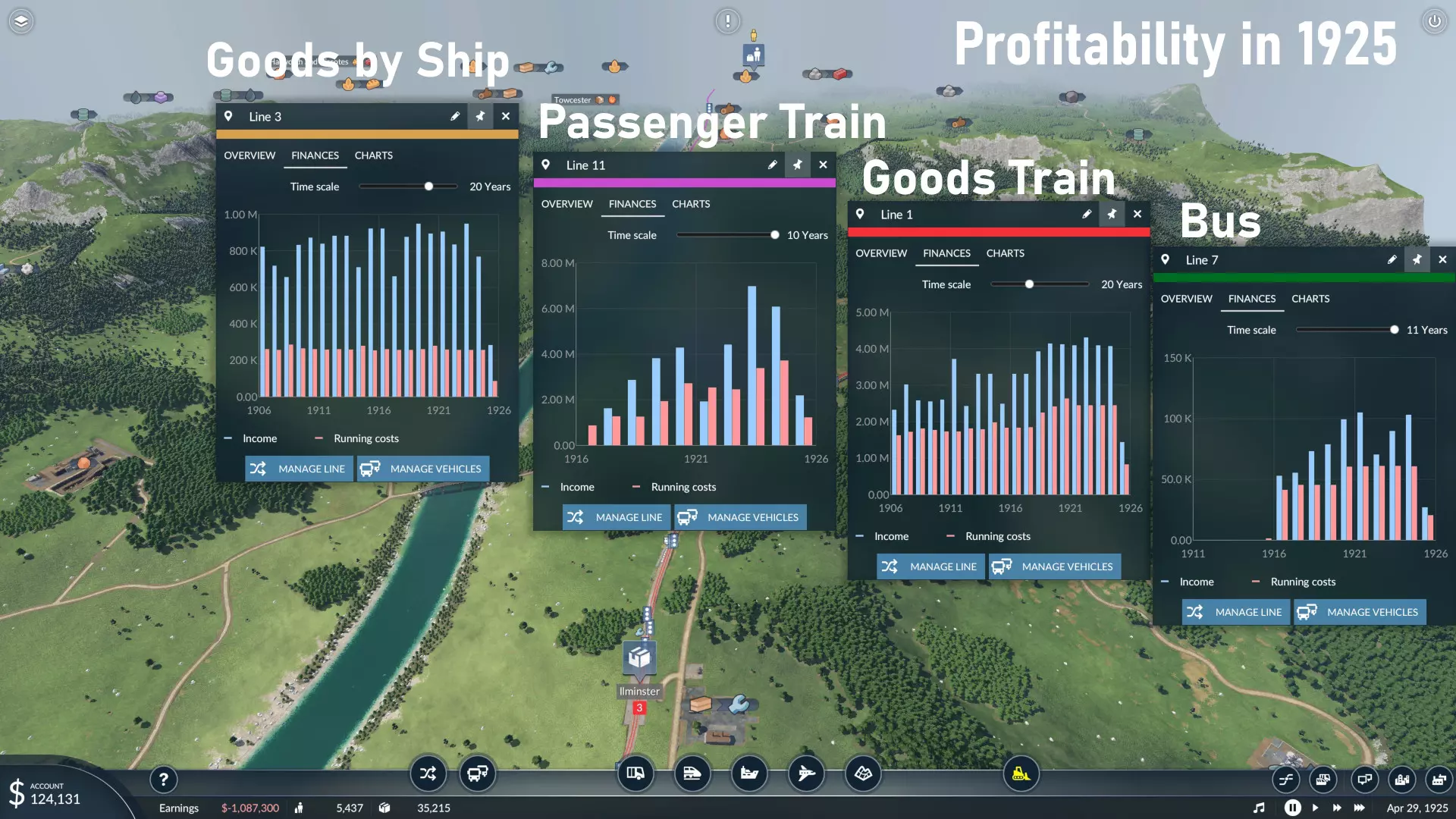
如你所见,这条航线产生的收益极为稳定,约为其成本的2.5倍。其他任何运输方式都无法与之相比。其投资成本也相当低:河流和海洋是免费的,小型港口和船只相对便宜,使用寿命长且运营成本低。 在这个例子中,客运服务表现不错,但我建议在你的城市通过货物供应发展起来,并且火车以约100公里/小时的速度运行后,再开始提供客运服务。 请注意,所有4条线路在其(往返)旅程中至少有75%的时间承载着(付费)负载,这有助于它们实现盈利。关于这一点,下一章“利用率”将有更多介绍。 总之,尝试先找到最有利可图的航运路线。下一节将提供一个示例。开始时选择一张有利的地图,并花时间寻找盈利路线,尤其是那些你可以供应并发展2-3座城市的路线,之后还能在这些城市之间开通客运服务。 如果港口需要通过马车或早期卡车服务与城市、工厂和资源点连接,这是可行的:道路部分的投资较低,而且公路运输至少是盈利的,不像短途铁路运输。 盈利性:利用率——为何速度、空车和坡度至关重要 虽然关于盈利性的第一章探讨了运输类型,但同样重要的是,要最大限度地利用你所投资的车辆或基础设施以获得最大回报。这意味着: 尽可能快速行驶,只有覆盖一定距离的货物运输才能获得报酬 满载运输——空车不会产生收入 对于铁路和公路,在同一基础设施上运行尽可能多的线路(不影响第一点) 仅在车辆使用寿命结束时或出现明显更优的车型时才进行升级。 1. 快速行驶,选择便捷路线 以10公里/小时的速度爬坡的火车,其收入仅为以30公里/小时行驶的火车的三分之一。这已经损失了67%的运力!因此,调整列车长度时,既要考虑无需在车站等待装满货物,也要考虑车厢的运行速度。 通常情况下,尤其是在蒸汽时代和游戏初期,应避免运输货物爬陡坡。专注于容易完成的任务。像工业时代那样,待在山谷中并靠近水源。 2.始终满载运行 如果你习惯空车返回的运输方式,这意味着你的投资最多只有50%的时间在被利用。所以我们希望的是始终有付费货物运输。水上运输很容易做到这一点,但对于需要专用车厢的(铁路)服务来说则更复杂。 不过首先,为了说明问题,一个开始游戏并获得2.5倍收入成本比的好方法是:你需要一个靠近城市的农场和一个距离适中的食品加工厂,就像这样:
这里有2到3艘小型、经济实惠的船只满载谷物出发,返回起点时则装载半船食物,这样有利于提高利用率和利润。如果加工厂附近还有另一个农场,你可以开通一条公路运输线路,这样返程的食物运输也能满载。这在游戏初期是能获得的较高利润方式了。顺便说一下,马匹或卡车会将运回的食物分发到城市。 3. 铁路车辆利用率 - 2条供应链 以下是两条众所周知且能提供高 wagon 利用率的供应链: 1. 木材运输,主要使用平车,搭配几辆棚车用于运输工具 2. 原油运输,完全可以使用油罐车 其他指南也提到过这一点,但重要的是(a)尽量减少无负载的路段,以及(b)使用最少的轨道。此图表中未付费的行程部分以红色显示。
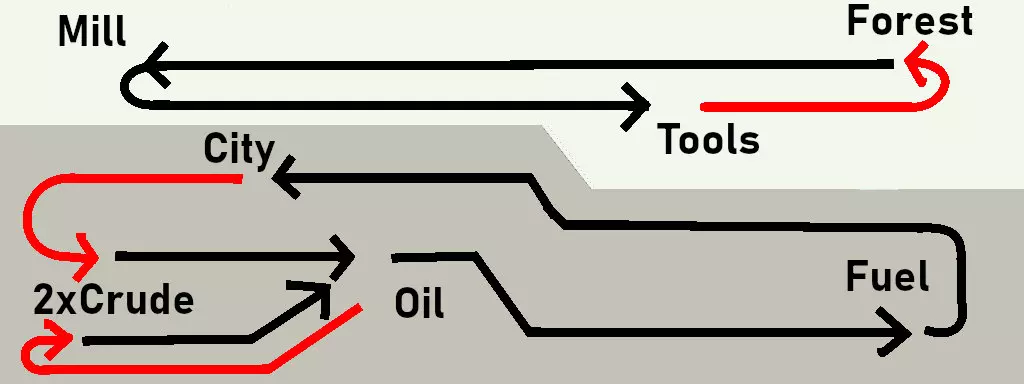
为了说明高效的【木材】供应线路,请看这个游戏内示例:绿色表示【载货运输】,红色表示【空载运输】。我们仅使用1条双轨(成本效益高)线路:
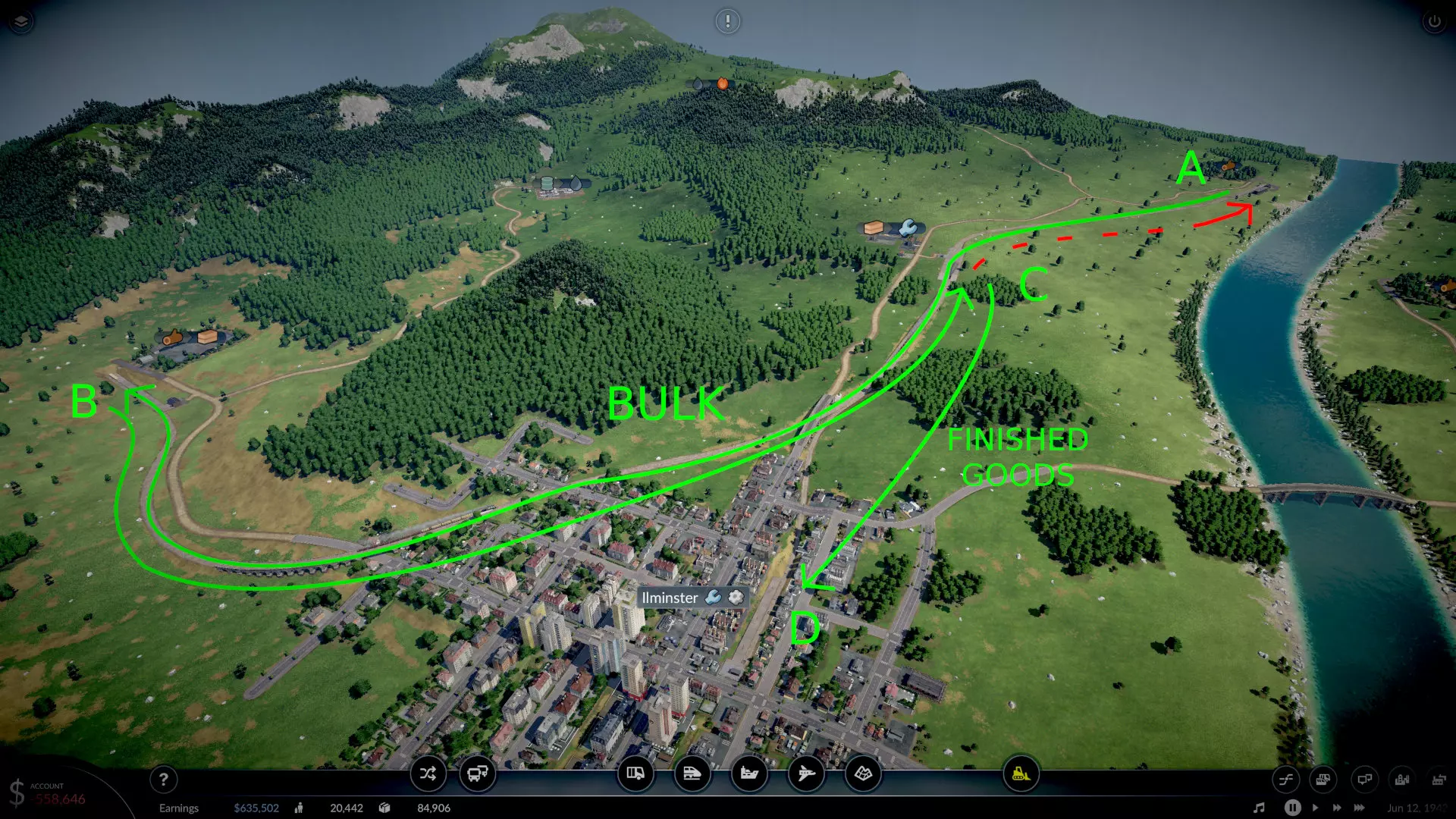
Here, the tool plant is in the middle and not too far off a city either. First we have the fully loaded A>B bulk-wood run to the other end. Then we return with planks and only the final C>A bit lacks a paying load. For keen observers, the tools-to-city does return with empty wagons, but it is with just a few wagons - so it doesn't dampen profits all that much. ConclusionsApart from the type of the transport, our 2nd focus is high stock utilisation: reduce empty runs, reduce loading times and optimise running speeds. Again boats, with low running cost, can take all types of goods which enables having loads in all parts of their journey. They could even serve two different supply lines. Take your time identifying the best options at the start - there are usually a couple of stand-outs in each map, including the wood and oil supply chain opportunities for rail. Note that rail is pretty hard to get profitable in 1850, so you may want to hold off some decades for that. More loans Every 1 in 2 guides seems to focus on paying of loans. We'll stay well away from any such notions. To clear this up let's distinguish 2 types of credit. A personal loan whether or not secured by your home to purchase something. This type of credit generally only increase your liabilities (things that cost you) and typically does not increase your assets (things that generate money for you). GDP rises with this, but productivity does not. Credit created to get metal and oil out of the ground to create machines and fund the industrial revolution such as Transport Fever models. Here the credit unlocks productivity and brings profits and efficiency benefits forward. Number 1 is the loan you'd best pay off. Number 2 you'll have more of and that is the type you are taking on in Transport Fever 2. A further look tells us we're charged a fixed 1% interest per annum in TF2 and there's no risk of rate changes or say, repossession :-). Our sole task then is to have every loan yield more in profits than the additional interest charged. That is actually not too hard with the tips from the previous 2 'profitability' sections. What is hard in 'hard' mode is to have the revenue growth go up exponentially quickly like it did in 'easy' or 'medium', so for that purpose we'll take any credit that we can put to good use. We're only paying off to have enough credit to fund our next project. Paying off the loan to grow slower - no thanks. That's about all :-) Investments with benefits Ok. This section is pretty straight forward, but may be more difficult to plan ahead for to get maximum benefits. It's a dodgy example, but it's like investing in candy companies for dentists: we have an investment, but it drives your other business too. The reason we look for this is that in hard mode we run on much smaller margins, so any upside we get as a bonus makes a larger difference. So let's put on that strategic hat and look at an example. Let's say two cities have a passenger train running between them, one small, one big. The train is fully occupied one way but only 2/3rds from the smaller city, owing to its smaller population. If our next investment would supply, say bricks, to the small city, its population would grow and the train can fill up both ways. That's a clear win-win and an example of 'investments with benefits'. In fact you'll see the profit of that train line go up a lot. Another effect you may well be aware of comes from the 'connections %' factor in city growth. So when connecting cities by rail, the 'connections' factor of all cities goes up, not just the one you just joined up. This will see demand and eventual overall revenue climb across all passenger services. So it's clear that train and bus passenger traffic are the prime target getting upside from investments in creating supply routes into cities. Other opportunities are to route new train traffic over your existing rail network. Even just putting a goods line next to a passenger-only line can save nicely (up to 50%) in terrain levelling, bridging and tunnelling costs. ConclusionNew investments that improve older ones or can make use of earlier investments - all help. Plan ahead to string these benefits together over time. Since margins are tight in hard mode, any upside has a noticeable impact and will see your TF2 game take off much earlier. Are 'upgrades' upgrades? In 'medium' games, cash tends to roll in so fast that upgrading can be done without too much thought. In hard games your first wave of vehicle replacements will come lurking well before you are rolling in cash and - as we'll see later - not every upgrade is an upgrade. I will illustrate this with 2 upgrades I did in a recent game, one worked very well, the 2nd not so much so you can draw your conclusions from that. Initial situation - Upgrade choices in 1918 What I was looking to upgrade is a wood > planks > tools supply chain, ran by 6 trains - with 4 being over the end of life age. Each train consisted of a BR53 with 8 small flat cars. So in 1918 I had three replacement options:
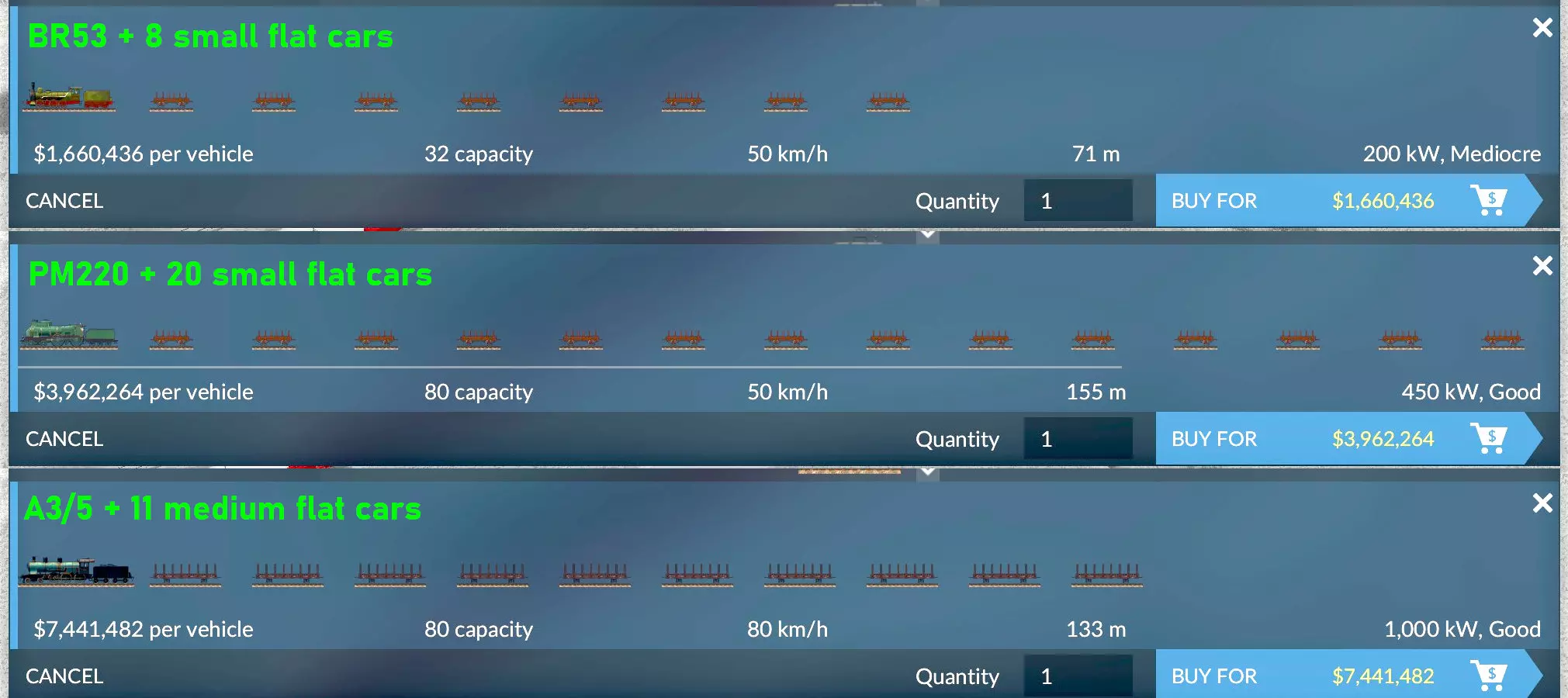
我可以继续使用BR53型,而PM220型需要更多车厢,A3/5型的运行速度能从50km/h提升到80km/h——但这是有代价的。那么该如何选择呢? 以下是黄色区域升级的简要计算:
第一次升级及次要收益 A3/5选项直接被排除,因为我甚至买不起两台。那样的话就只能买一台,还要在时速50公里的BR53列车之间运行——这会拖慢攒钱买第二台的进度。 所以我选定了PM220,并将站台从120米延长到160米。 三台PM220的成本比六台BR53高出约20%,但它们速度稍快,且运力增加了25%。此外,由于线路空闲出来,我很快就能增开第四台PM220来承接木材供应的剩余运力。 小贴士:在使用频繁的线路上,有时通过升级到更高运力的列车来释放基础设施的运力,就能获得回报。 1938年的第二次升级 第二次升级的考虑较少。这是在20岁时仅使用PM220完成的,事后看来这些数据并不理想(上述电子表格中的橙色部分)。不展开细说,我们将在1942年审视财务状况。 50年利润与2次升级 以下是50年间使用3种列车编组类型的财务结果。收入和成本中出现的小幅持续增长是由于额外增加了机车/列车编组。
回顾与经验总结 回顾过去,从6辆BR53型列车更换为3辆PM220型列车的举措非常成功。通过这一调整释放了线路容量,我在短短几年内就新增了第4辆PM220型列车。这使得现金流较BR53时代几乎翻了一番。 升级到时速80公里的A3/5型列车则效果平平——这笔资金或许更适合用于开辟新线路,让PM220型列车继续运行10年。虽然总现金流略有提升,但投入2340万却只换来这样的回报,实在不值。 结论 由此可见,“升级”可能效果显著,也可能是对资金的严重浪费。在我看来,进行快速计算以评估总容量和成本,判断是否真的属于“升级”是很有必要的。使用更快的机车所带来的效果仍然难以猜测:在电子表格中可以看到,速度为80千米/小时、容量264的机车,其效果大致相当于速度50千米/小时、容量320的机车,因此这种关系并不明确,而坡度会让猜测变得更加困难。你只能对此进行“大致估算”。 结语 亲爱的读者,本指南到此结束。希望你已经掌握了一些新的策略和思路,以应对《运输大亨2》的困难模式,并在接下来的游戏中获得额外的现金流。
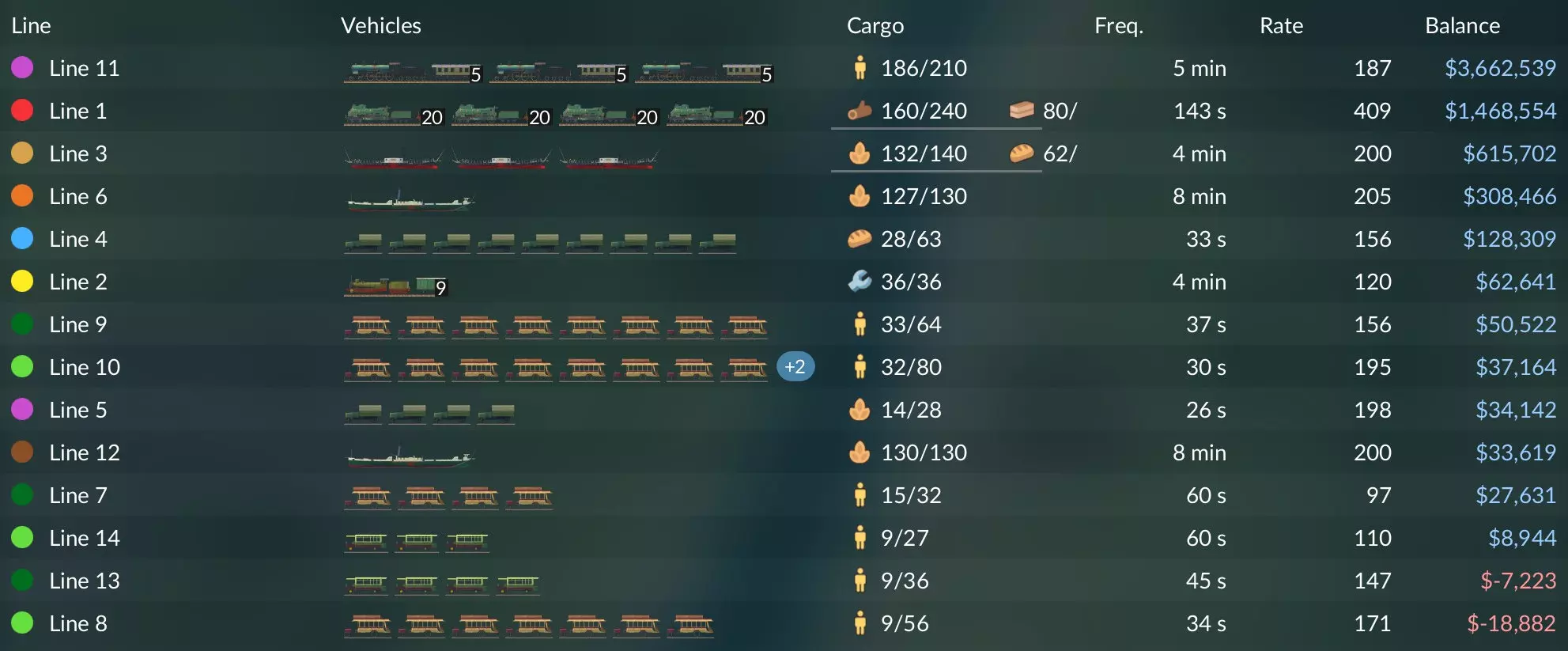
在这款硬核游戏中,请注意货物利用率和相应的利润水平。 两个额外的高利润示例 虽然本指南已完整,但这里提供两种可在大多数地图中设置的补给线变体。当没有合适的航运路线作为起始选择时,这是一个很好的替代方案,能带来丰厚利润——详见底部截图。 其工作原理是:这种设置解决了2单位木材仅能生产1单位木板,或2单位原油仅能生产1单位石油的问题。因此,你可能先有100%的满载,而返程时(运输木板或石油)只有50%的负载。所以,简单的思路是:两次装载资源,然后用同一列火车运输上游产品。 结果是,在三分之二的路程中,你将拥有全额付费的负载。以下是木材-木板-工具的示例。木材现在从中心区域采集,工具工厂靠近城镇。
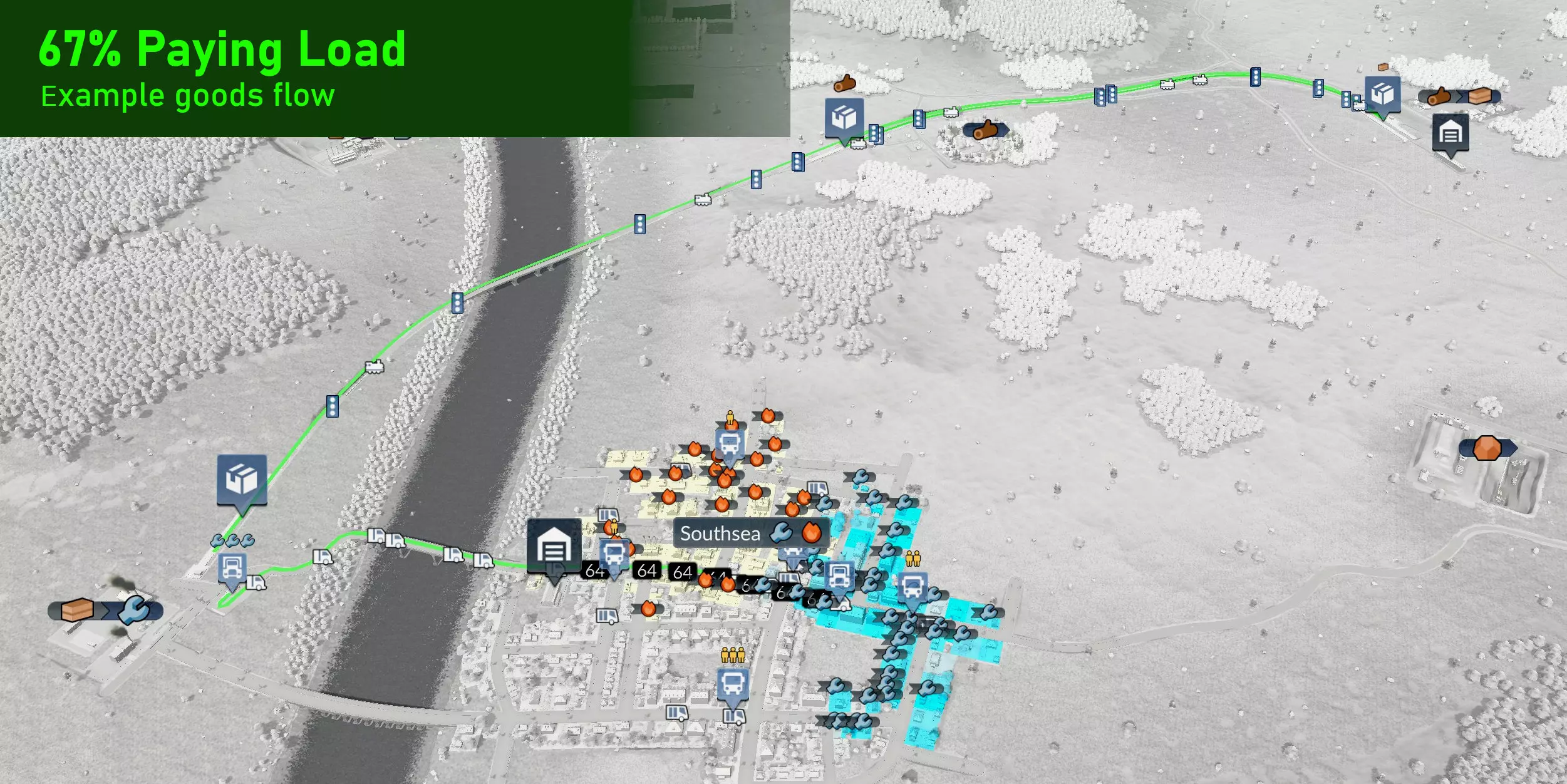
提升利用率:无交叉轨道 为了保证列车运行,当我们拥有5-6列火车时,我们将使用更多基础设施,确保列车不会相互交叉或等待。这比节省轨道和信号更有价值,尤其是在距离较短的情况下。 以下是相关示意图:所有已付费且100%满载的路段再次以绿色显示。轨道和站台严格按照示意图建造,因此通往工具工厂的是双轨,通往磨坊的是四轨。仅在装载木材时设置一个【等待满载】指令。调整 wagon(车厢)数量以尽量缩短等待时间。就是这样。
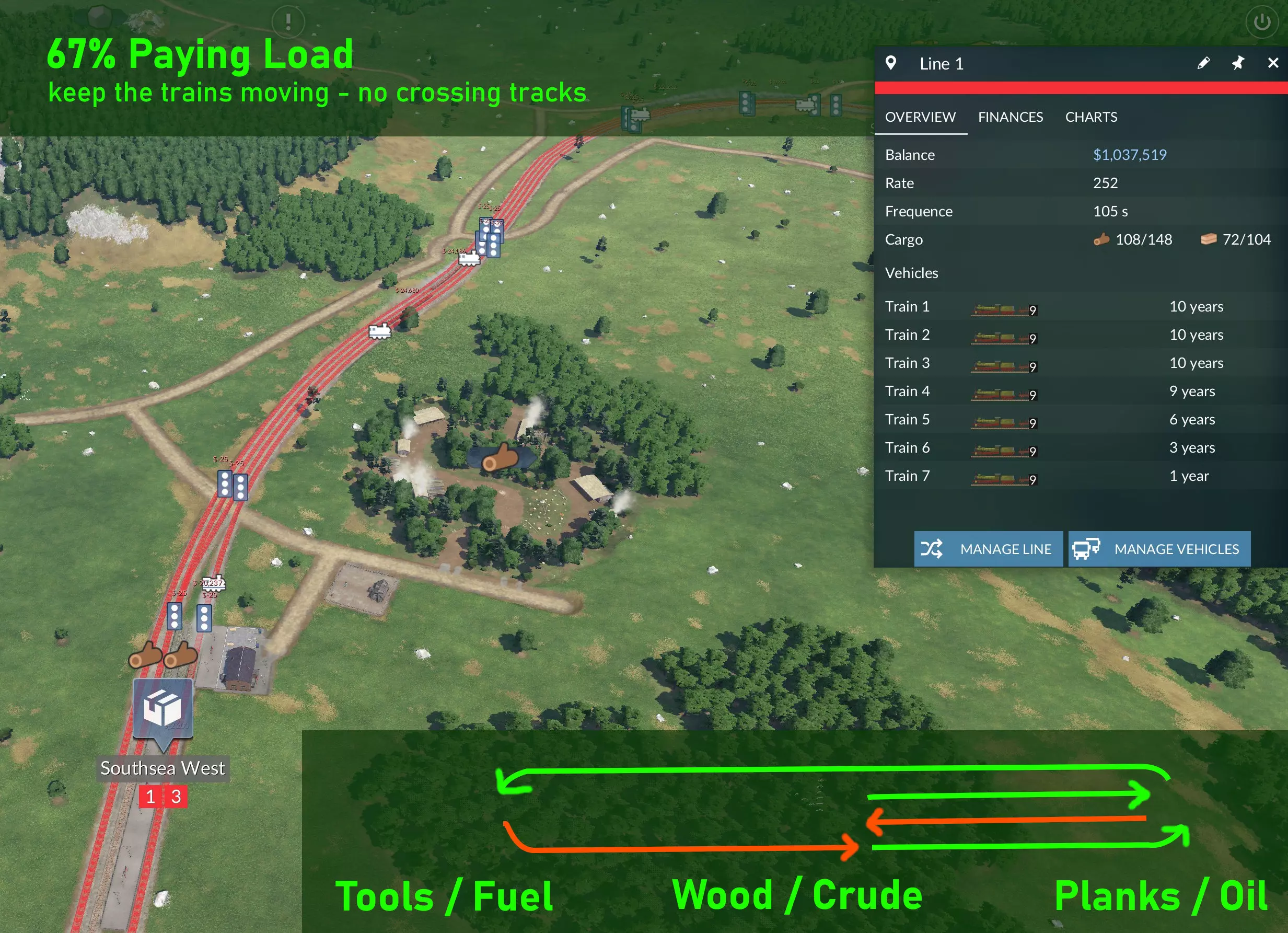
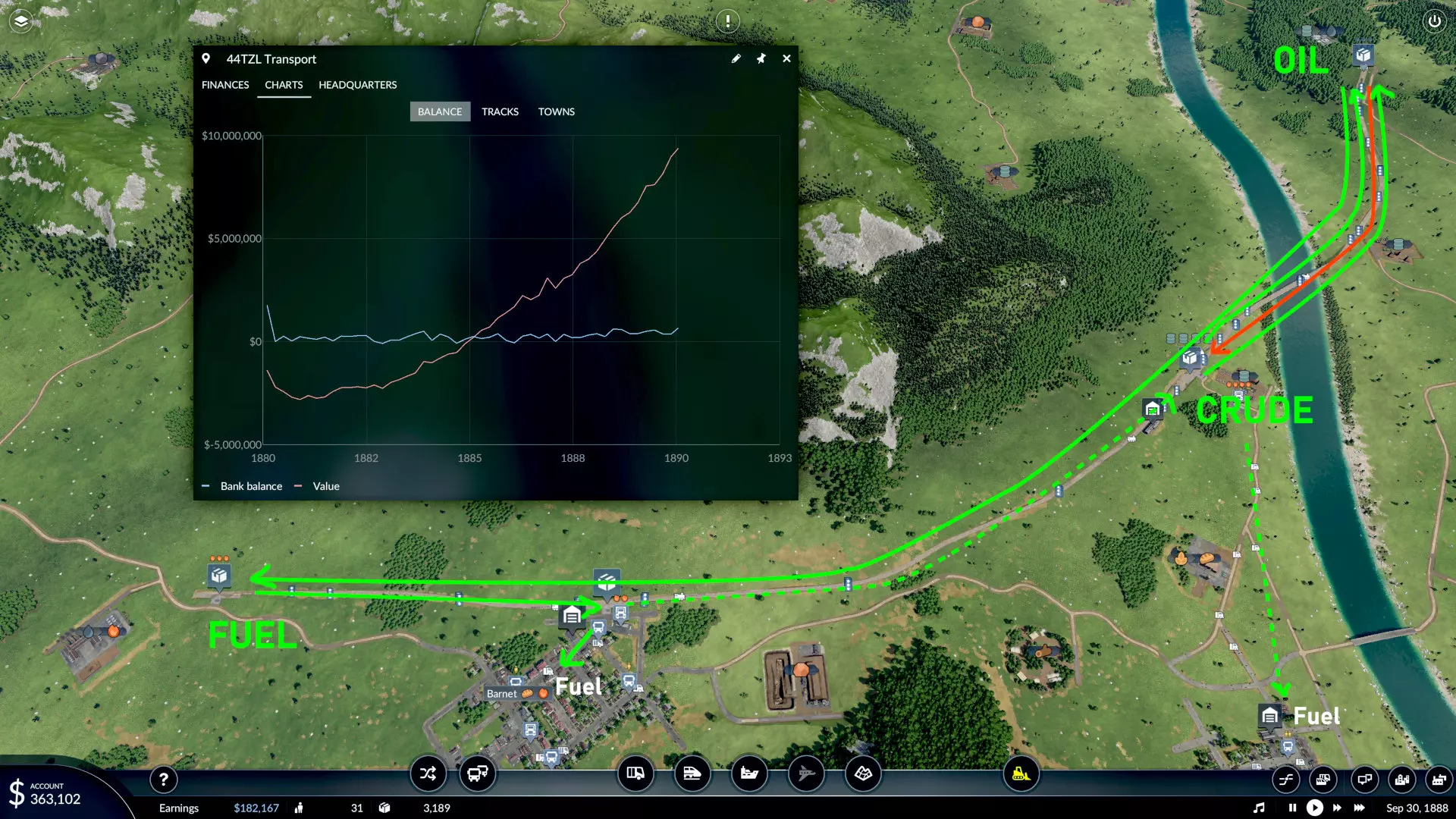
应用于原油-燃料:这是一个用于长距离石油供应链的相同设置,沿途卸载燃料。它只需要双轨就能平稳运行。该设置利润极高,因为在返回装载原油的途中,它会向两个城镇输送燃料,因此除了一小段路程外,几乎不会空驶。