换一换
换一换 


埃塞俄比亚文明灵活性高,防御能力出色,且在高难度下表现良好。本指南将详细介绍埃塞俄比亚的战略、特色单位及应对方法。 简介 注:本指南默认你拥有所有影响游戏机制的DLC和扩展包(所有文明包、《远古世界奇观》、《神与王》以及《美丽新世界》)。

埃塞俄比亚历史的最初岁月被时间的迷雾所掩盖,2000多年前这里曾存在过多个王国。距今1900年前,阿克苏姆帝国在红海南部崛起并逐渐显赫,成为连接罗马帝国与印度及更远地区的重要区域贸易强国。公元4世纪,阿克苏姆皈依基督教,是世界上第二个这样做的国家;7世纪时,阿克苏姆为一些早期伊斯兰信徒提供了庇护。但这个王国随后开始衰落,并于10世纪瓦解。扎格维王朝继之而起,对埃塞俄比亚进行了短暂的统治,之后所罗门王朝从1270年开始掌权。在最初的几个世纪里,埃塞俄比亚不断扩张,逐渐主导了东非地区,并重新与欧洲列强建立了联系。然而,当东部的阿达勒苏丹国入侵时,埃塞俄比亚不得不向其欧洲盟友葡萄牙求援——而葡萄牙人带来了天主教传教士。这引发了新的宗教冲突,一方是迅速增长的天主教徒,另一方则是埃塞俄比亚东正教教会。 公元18至19世纪期间,埃塞俄比亚陷入了动荡之中。敌对的宗教派系都试图夺取控制权,这段时期被称为【王子时代】。19世纪中期,国家重新实现中央集权,但没过多久,贪婪的欧洲列强便开始觊觎非洲大陆,企图掠夺其一切资源。1895至1896年,一场关于意埃条约内容的争端引发了战争——埃塞俄比亚赢得了这场战争。凭借这场胜利,埃塞俄比亚的国际地位得到提升,获得了更广阔的平台,包括在1923年加入国际联盟,但这仍远远不够。在法西斯统治下,意大利于1935至1936年再次入侵并征服埃塞俄比亚。直到第二次世界大战期间,外部势力才开始援助埃塞俄比亚,使其再次获得独立。随后,埃塞俄比亚开启了现代化进程,但在1974年,不满情绪引发政变,海尔·塞拉西皇帝被推翻,一个共产主义政权取而代之,该政权一直持续到1991年。如今,埃塞俄比亚或许因贫困而闻名于世,但你可以向世界展示它远不止于此。它拥有悠久的历史,也拥有丰富的文化。这是一个尽管常常在世界上处于孤立状态,却经受住了时间考验的文明。

在深入介绍本指南之前,先为新玩家解释一些我将通篇使用的术语。 直冲科技:专注于尽早获取某项科技,只研究解锁该科技所需的前置科技,不研究其他科技。例如,要直冲“青铜工作”科技,你只需研究“采矿”和“青铜工作”,在完成“青铜工作”前不研究其他任何科技。 政策树奖励:完成一个社会政策树后获得的奖励(例如,“自由”政策树的奖励是免费伟人)。 前置定居:故意在竞争对手首都附近建立城市,通常是为了让后续入侵更容易。 GWAM:指大作家、大艺术家和大音乐家。这三种伟人可以创作伟大作品,是文化型文明获得旅游业绩的主要来源。初始政策 - 解锁一项社会政策树的奖励(例如:自由政策树的初始奖励为每个城市+1文化值) 高人口帝国 - 城市数量少但每个城市人口数量高的帝国。“发展高人口帝国”指的是将帝国建设成高人口类型。 UA - 独特能力 - 文明所拥有的无需建造即可获得的独特特性。 UB - 独特建筑 - 替代普通建筑的特殊建筑,仅能由特定文明建造。 UU - 独特单位 - 替代普通单位的特殊单位,仅能由特定文明建造,或通过与军事城邦结盟获得(仅适用于当前游戏中未出现的文明的陆地独特单位)。独特单位/能力(Uniques):独特能力、单位、建筑、改良设施和伟人的统称。 铺城流(Wide empire):拥有大量低人口城市的帝国。“铺宽”指将帝国发展为铺城流。 快速概览(上) 起始倾向 埃塞俄比亚没有起始倾向。 独特单位/能力 埃塞俄比亚的独特能力和独特建筑会立即生效,而其独特单位则要到工业时代才会出现。 独特能力:阿杜瓦精神 所有单位对拥有比你更多城市的文明或城邦的单位获得20%战斗加成。 傀儡城和正在被夷平的城市也计算在内,因此如果你有4座城市,而对手有2座普通城市和3座傀儡城,你仍会对其单位获得20%战斗加成。 城市远程攻击不受此20%战斗加成影响。特色单位:梅哈尔 Safari(替代步枪兵)

火药近战单位 科技 淘汰科技 升级自 升级至 生产费用 购买费用 所需资源

膛线 工业时代 第一列 (总第十列)

可替换部件 现代时期 第一列 (总第十二列)

火枪手(110

)*

大战步兵(250
无法识别内容,已删除。

680
ć

N/A 2

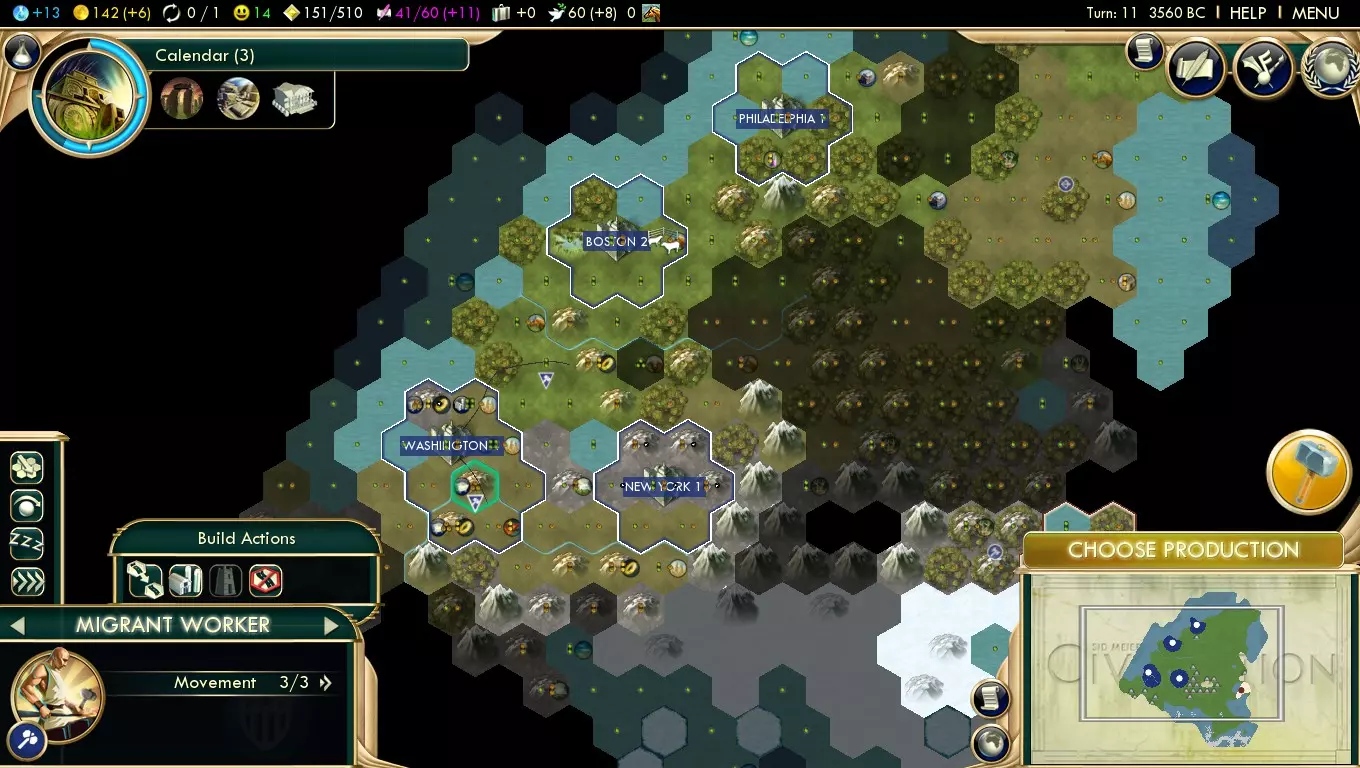
【负面改动】 - 标准速度游戏中,升级费用从200金币增加至250金币(+25%) 【正面改动】 - 标准速度游戏中,生产力消耗从225降低至200(-11%) - 标准速度游戏中,金币消耗从740降低至680(-8%) - 标准速度游戏中,升级所需金币从160降低至110(-31%) 【升级后保留的正面效果】 - 15% rough terrain战斗加成(Drill I) - 首都区域30%战斗加成,离首都越远加成越低 - 每远离首都1格,加成降低3% - 距离首都10格或以上时,该加成无效 【独特建筑】石碑(替代纪念碑)

文化线建筑 技术 所需建筑 建造要求 生产费用 购买费用 城市限制 维护费用 初始可用 无

圆形露天剧场 40
280
* None 1
【假设为正常速度游戏】 基础产出 产出乘数 专家 伟人槽位 其他效果 2

2

积极变化 额外产出2点信仰值 一目了然(第2/2部分) 胜利路线 请注意,这些评分是基于对该文明的体验得出的个人观点。你可能会发现以非常规方式更有效地利用该文明的方法。

文化性:8/10

外交:6/10

统治模式:7/10

科学评分:8/10 和凯尔特人类似,埃塞俄比亚看似评分不高,但这是因为其独特能力往往是间接助力胜利路线,而非直接作用——毕竟游戏中没有防御胜利或宗教胜利。在单人游戏中,埃塞俄比亚随着难度提升表现会更好,因为电脑对手在建立城市方面会有先发优势(这样你就能轻松利用UA的防御加成),而且通常创立宗教难度较大(UB正好解决了这个问题)。因此,在最高难度下,埃塞俄比亚的表现可能优于许多专注于单一胜利类型的文明。 那么,该选择哪种胜利路线呢?如果你控制自己拥有的城市数量较少,可以将UA用于 domination victory——只需不断摧毁你征服的城市即可。你的文明倾向于发展高人口城市,这与科技胜利的玩法有很好的协同效果,不过你的特色建筑则鼓励扩张发展。早期宗教通常更适合文化胜利,而非科技或征服胜利,因此朝着文化胜利的方向发展会很有效。总体而言,文化胜利或科技胜利可能是最有效的选择。 类似文明及特色 总体而言 埃塞俄比亚在游戏早期就有很强的信仰加成,这一点与凯尔特非常相似。埃塞俄比亚的防御能力更强,通常能率先创立宗教,但凯尔特在游戏中期拥有强大的快乐加成,并且通常能率先获得万神殿。 另一个值得考虑的文明是玛雅。他们同样拥有早期信仰加成,但明显倾向于科技胜利,这与埃塞俄比亚和凯尔特不太明确的发展路径有所不同。相同的起始倾向 埃塞俄比亚与美国、中国、法国、德国、希腊、玛雅、波斯、罗马和肖肖尼一样,没有起始倾向。 与独特能力的相似之处 肖肖尼的独特能力中也包含防御加成,但该加成仅适用于其领土内的陆地单位,且加成幅度为15%而非20%。不过,该加成与城市数量无关。 其他一些在防御方面特别强大的文明包括巴比伦、印加、易洛魁和摩洛哥。巴比伦拥有独特的城墙替代建筑,能提供略高的城市强度和两倍的城市生命值,而其他文明则拥有使其在偏好地形类型上更容易防御的独特能力。与马哈尔·塞法里类似 其他步枪兵特色单位包括丹麦的挪威滑雪步兵和瑞典的卡尔十二世火枪手,但马哈尔·塞法里与美国的特色单位 Minute Men( minuteman )更为相似。原因在于两者均拥有【训练 I】晋升,这使得这两种单位能更轻松地获得更高级别的晋升。 其他初始就拥有基础晋升、能让你更快获得更好晋升的特色单位包括:匈奴的骑射手、日本的武士、荷兰的海上乞丐、波兰的翼骑兵以及美国的另一个特色单位 B17。 与石碑类似 早期信仰加成与凯尔特的文明特性和玛雅金字塔所提供的加成相似。另一个提供信仰加成的特色建筑是印度尼西亚的坎蒂神庙——它要到中世纪时代才会出现,但可能提供更大的信仰加成。 特色建筑:石碑
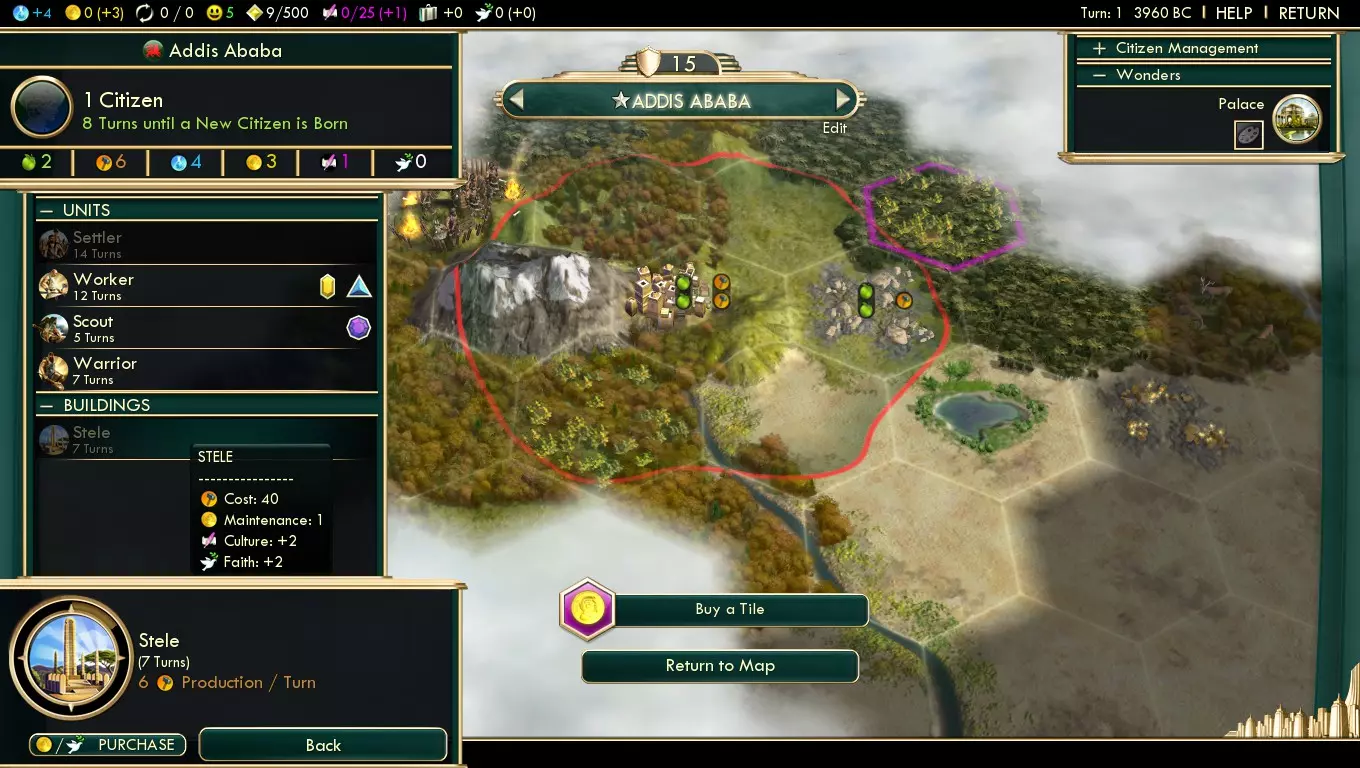
介绍 这次我要打破先介绍独特能力的常规。为什么呢?因为石碑可以立即建造,而独特能力则需要一段时间才能发挥作用,而且石碑是埃塞俄比亚最重要的独特改良设施。 作为游戏中唯一的纪念碑替代建筑,石碑是唯一可以立即建造的独特建筑。但这并不意味着你必须马上建造它——由于石碑提供的信仰值是神龛的两倍,即使你先建造其他建筑,你也很有可能第一个创立万神殿。先建造一个侦察兵来了解起始地形是个不错的主意,这样你就能利用石碑提供的信仰值选择最合适的万神殿。扩展内容 作为埃塞俄比亚,轻松建立万神殿和宗教并非难事。若想快速获得宗教,你可以尽早建造新城市,并利用传统政策树中的法治社会政策,让新城市立即拥有石碑。 有些玩家喜欢采取更极端的策略,即广泛铺城以最大化信仰产出。通过这种方式,埃塞俄比亚能拥有游戏中最强的信仰产出(在印度尼西亚获得其坎蒂之前),这与对信仰需求较高的信条(如神之荣耀)搭配效果很好。但这种做法的问题在于会使埃塞俄比亚的文明特性失去作用,因此如果你选择这条路线,务必保持强大的防御来应对这一问题。不过总体而言,我建议建立一个高人口帝国,这样你就能利用埃塞俄比亚的UA,让你的军队保持高效的小规模。尽管如此,快速扩张到至少三座城市仍然很有用,这样可以在早期获得良好的信仰产出(而且城市建得越早,就有越多时间发展成熟)。 获取宗教 埃塞俄比亚很容易成为第一个创立宗教的文明,因此能优先选择宗教信条。选择与高人口帝国相关的信条是个好主意——它们可以助力科技或文化发展,这意味着如果游戏后期某条胜利路线行不通,你还有备选方案。 由于埃塞俄比亚在创立宗教方面的先发优势,你可以比其他文明更早开始传播宗教。这会为你带来显著的宗教压力优势,意味着你能够转化大量城市,并充分利用创始人信条。选择一个能根据宗教信徒数量或追随你宗教的城市数量提供奖励的信条,以发挥最大潜力。 继续发展 创立宗教后,你可以在游戏剩余时间里朝着自己偏好的胜利路线努力。同样,科技胜利或文化胜利最适合高人口少城市的帝国,且它们的科技树紧密相连。在游戏中期,值得建造大圣殿以保持信仰(进而保持传教士)产出,从而与更广阔的帝国竞争,但到了工业时代及以后,应坚持用信仰购买伟人。独特能力:阿德瓦之灵
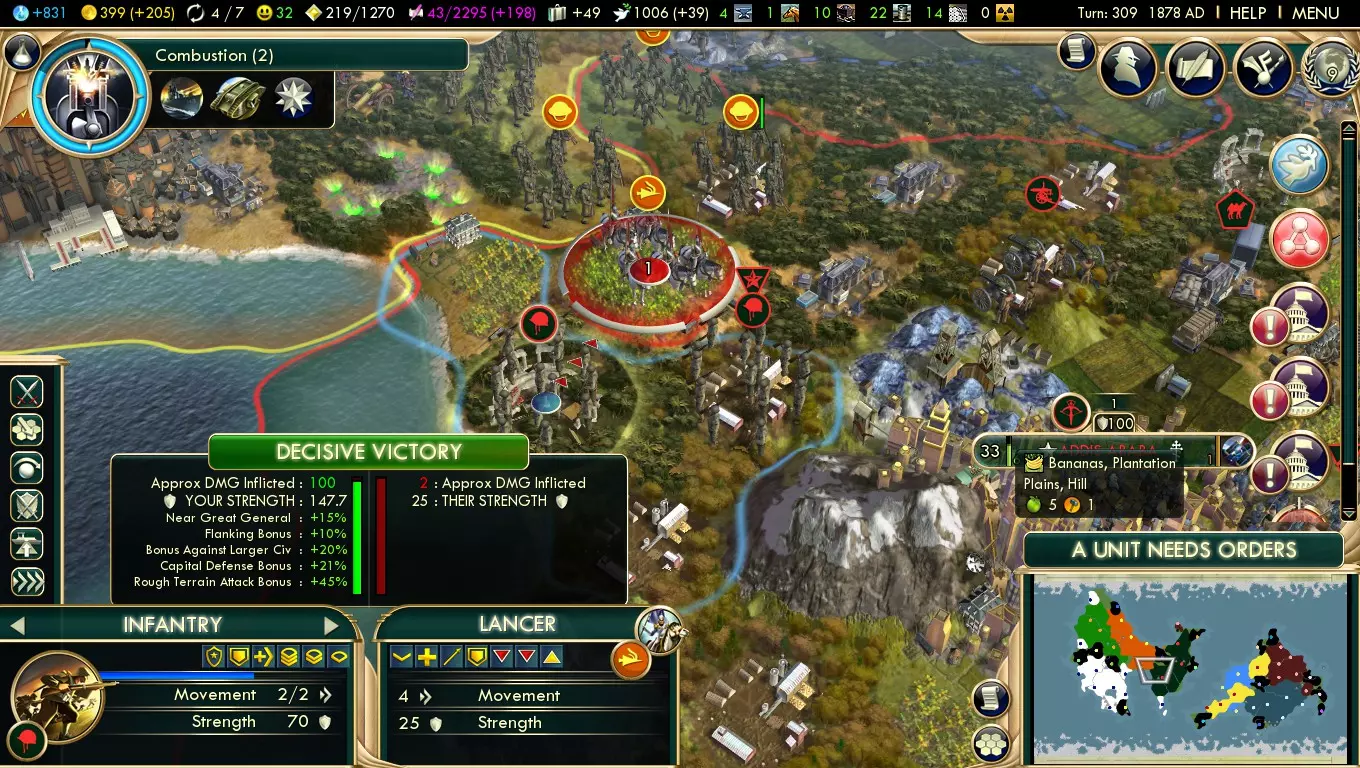
上面提到:这里有大量的加成,但更多的加成仍然是有用的。 凭借早期宗教,你正走在通往最终胜利的漫长道路上。但方尖碑并非埃塞俄比亚的全部特色——他们还有两个独特能力,虽然旨在防御用途,但在进攻方面也表现不俗。 在防御方面 埃塞俄比亚UA的主要用途是在对抗规模更大的帝国时获得防御优势——这里的“规模更大”指的是拥有更多城市。你拥有多少土地或人口并不重要,重要的是城市数量。如果有人向你宣战,且他们拥有的城市数量比你多,那么你的所有单位将对他们的单位获得20%的加成。这里的核心优势在于,只要你不过度扩张,就能维持一支规模更小或发展程度较低的军队,同时仍保持竞争力。在游戏的大部分时间里,军事科技与科学和文化科技位于科技树的不同分支,但得益于这个UA(独特能力),你可以放心推迟这些迂回的科技研究。你可以将这种能力类比为玛雅或暹罗的UU(独特单位)——让你能够专注于获取国内优势,而不必建造庞大的防御部队。 到了游戏后期,单位的战斗力无论在绝对值还是相对值上都会显著提升。文艺复兴时期的单位比中世纪时期的强不了太多,但进入工业时代后会有相当大的飞跃,而到了现代则更是如此。幸运的是,工业时代会有你的UU(独特单位)前来助力,而且它们的升级路线与适合高人口和平发展文明的科技相契合。因此,虽然20%的加成本身可能不足以应对拥有军事科技优势的文明,但当这真的可能成为问题时,你也已经拥有了其他辅助手段。 总之,埃塞俄比亚的UA(独特能力)让你可以专注于和平发展,而不必费心组建军队。 特殊加成策略:进攻型 此策略并非埃塞俄比亚玩法的核心,但值得一试。 埃塞俄比亚的UA在友方、中立或敌方领土作战时并无区别。只要对手的城市数量多于你,你所有单位对其所有单位的作战效率就会提升20%。这与肖肖尼文明的文明特性有很大不同,后者的加成仅适用于其领土内的陆地单位。这意味着你不必仅在防御时使用文明特性,在进攻时也能有效发挥其作用! 如果想用埃塞俄比亚文明发动战争,首先可以入侵城市数量略多于你的文明,然后逐步挑战拥有庞大帝国的对手。这样可以确保你在每场战争开始时都能获得20%的战斗加成,因为你无法摧毁对方首都,所以每场战争都能获得城市。当然,当你从其他文明手中夺取城市后,最终你的城市数量会超过他们,届时你将失去对他们的20%加成,但到那时你应该已经拥有足够显著的优势,这一点加成与否也就无关紧要了。 特色单位:梅哈尔 safari
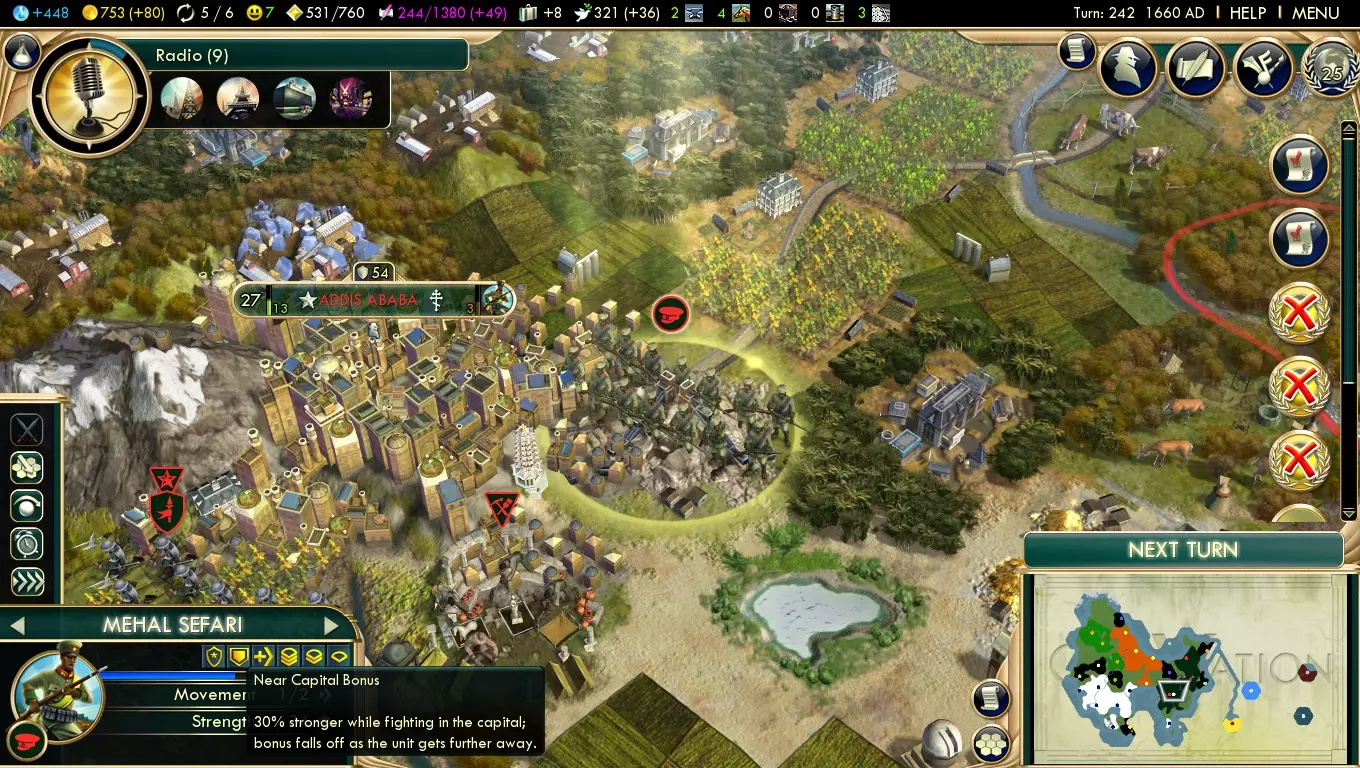
Mehal Sefari are much like Ethiopia's UA. On the face of it, they're a defensive unit, but they also have good offensive capabilities, too. On Defence Mehal Sefari come at a useful time, where combat strengths of units are increasing rapidly and as such the 20% combat bonus your UA offers may not be enough on its own. With a slightly cheaper cost, the Drill I promotion and a bonus near your capital, they're an affordable and effective way to keep safe. There's a catch, however - their position on the technology tree is a little off the main cultural or scientific technologies of the time, meaning you'll need to make a little diversion to get them. As they obsolete with Replacable Parts (which has the very useful Statue of Liberty wonder) you'll want to build plenty while you can for maximum effect. Drill I The main advantage to starting with the Drill I promotion is to get to stronger promotions sooner. Backed by an Armoury, you can get Mehal Sefari straight to Medic II, Drill III or Cover II, or one promotion away from Blitz or March. If you get hold of the Brandenburg Gate with a Military Academy, you can build them immediately starting with Blitz or March; the latter essentially making them super versions of Sweden's Caroleans. A unit with stacked combat bonuses healing every turn can stand up to Civs even with a significant combat advantage. Near capital bonus Despite the uniqueness of this attribute, the free Drill I is probably the more useful bonus. Still, this attribute is excellent for defending your capital, and can help out a little for cities near to it. If you lose your capital, the strength bonus will move to being based on your new capital's location. Let's look at the actual strength bonus offered: Distance from capital (tiles) 0 1 2 3 4 5 6 7 8 9 10+ Strength bonus 30% 27% 24% 21% 18% 15% 12% 9% 6% 3% 0% 0 tiles means your Mehal Sefari would be fighting from the capital's tile. To give an idea of the distances, 2 tiles is the limit of a city's ranged attack, 3 its workable area and 5 the maximum limit it can obtain tiles in through culture. The bonus may still be noticable for the nearest cities to your capital, but any further out it'll likely be too small to make any real difference. Together with your UA's bonus, Mehal Sefari will fight essentially as if they were one tier of technology stronger when close to your capital. Upgraded to Infantry, they can fight reasonably well against even Modern Armour. Just don't forget that your other cities besides your capital need defending, too. On Offence Like your UA, you don't have to use Mehal Sefari defensively. Their near-capital combat bonus can deal with forward settlers though this is rather late in the game for such a course of action. The real advantage comes in the free promotion. As already mentioned, you can get Mehal Sefari immediately to the March promotion if backed by a Military Academy and the Brandenburg Gate. Bring a Medic-promoted unit with them, and they'll get particularly hard to kill. Special promotions kept on upgrade 15% combat bonus in rough terrain (Drill I) Near capital bonus of up to 30% Aside from the cheaper cost, (Mehal Sefari are more expensive to upgrade than regular Riflemen,) everything is kept on upgrade. Be sure to build a good number before they obselete, and your capital will be pretty much secure for the rest of the game. So long as no-one builds nuclear weapons. Social Policies For the rest of the guide, I'm assuming you're building tall and going for either culture or science, as that neatly strings together all of Ethiopia's uniques. As such, you should start with the Tradition Social Policy tree. Piety works decently as a second tree, though it's probably a good idea to either move into Aesthetics (for cultural players) or Rationalism (for scientific players) as soon as you can after Tradition's done. If you're playing culturally, you can always cut out Piety and go into Rationalism once Aesthetics is done. Tradition Opener Together with a Stele, your capital will make 6 culture a turn, which isn't bad at this very early stage. Aside from eating up the first few Social Policies faster, it's good for expanding your capital's borders quickly to make forward settling by other Civs harder. Oligarchy Your UA allows you to keep a small army. This ability allows you to save even more on unit maintenance. It also compensates a little for the fact city ranged attacks don't gain from your UA's combat bonus. Legalism Free Steles in your first four cities! That means more faith the moment you found new cities, cutting the time it takes to found a religion. Landed Elite Growing your capital taller will be good for increasing its science output as well as production for building wonders. Monarchy This is a great source of early cash, and helps ensure a growing capital doesn't cause you problems with happiness. Aristocracy There's a little happiness on offer here, but the main advantage is the bonus to wonder building. It's a good idea to develop all your cities so they're capable of building wonders at a reasonably speed rather than just depending on your capital - especially if you're playing culturally. Finisher Now, all your (first four) cities can grow faster to help with science or wonder-building. Piety Piety is a decent filler tree between Tradition and Aesthetics/Rationalism, helping you to keep your religion strong through the mid-game and late-game. Opener You probably won't have built Shrines up to this point, meaning the faster building of them and Temples offered here is still relevant. Plus, you've got a potential shot at the powerful Great Mosque of Djenne wonder. Organised Religion A way to ensure your faith generation remains competitive with Civs with more cities. A city with a Shrine, a Temple and a Stele together with this Social Policy makes 7 faith a turn compared to the 3 faith per turn that would be generated by other Civs with the buildings but without this Social Policy. Religious Tolerance If any rival religions slip into your cities, you can make use of their Pantheon. This usually is minor in impact, as most Pantheons don't offer that much by this point. Still, this policy's needed on the way to Reformation. Reformation There's a couple of decent choices here, which are good late-game uses of faith. That's covered in more detail in the religion section of this guide. Mandate of Heaven Get an edge to generating those Missionaries, Inquisitors and Great Prophets and keeping your religious spread high. Excellent with the Great Mosque of Djenne, but still useful without it. Theocracy Temples now essentially act as a fourth gold building. Together with a Stock Exchange, the base gold output of cities will be doubled providing plenty of cash for things like Research Agreements. Finisher It'll probably be late in the game by the time you get around to finishing Piety (if at all) but four uses of unstoppable religious spread may still be useful for keeping your religion strong. It makes it easier to push through the World Religion decision in the World Congress if you have more Civs following your religion, so it may be worth considering for those playing culturally. Aesthetics (Cultural Ethiopia favoured) Opener Faster GWAM generation means more Great Works and hence more tourism. Fine Arts Building tall with a low number of cities tends to give you plenty of excess happiness. Aside from Golden Ages, now you have another use for it - mopping up Social Policies faster. Take this after Cultural Centres if your excess happiness isn't particularly high or you haven't built that many cultural buildings. Cultural Centres This helps to get through buildings such as Opera Houses, Museums and Broadcast Towers as soon as you need them, saving production for things like building wonders. Flourishing of the Arts This is a major reason for developing all your cities so they're capable of building wonders themselves - they can all get a significant culture boost that way. Plus, have a free Golden Age (and hence a production boost) at a time where there's plenty of good wonders. Cultural Exchange A good, strong boost to tourism. Thanks to your early-game religion, you can make use of the 40% boost from sharing a religion. Trade Routes and Open Borders aren't particularly hard to maintain, so you can make the maximum potential out of this Social Policy. Don't forget to use Spies as Diplomats - it may not be boosted by this policy, but it's still a tourism boost nonetheless. Artistic Genius Prior to the industrial era, Great Artist slots are rare. Additionally, this policy doesn't lead anywhere but the finisher. As such, this policy should be taken last in the Aesthetics tree. Still, a free Golden Age/Great Work is better than nothing. Finisher Been building plenty of cultural wonders and got plenty of Great Works? Now, you can have more tourism and culture from their theming bonuses. And the ability to buy GWAMs with faith will be useful for giving a further edge to tourism output. Rationalism (Scientific Ethiopia favoured) Rationalism is good for any type of Civ, and if you're playing culturally, it may be a good choice as a "filler" tree instead of Piety. Opener Keeping your empire happy won't be hard, so enjoy a global 10% science multiplier. Secularism A decent immediate science boost for those tall cities with many specialists. Humanism Faster Great Scientist generation means, well, more science. Use them for Academies prior to around the Plastics technology, and rush technologies with them after that point. Free Thought Enjoy another immediate science boost for those tall cities with Universities. Sovereignity This policy is stronger for wide empires, though money is money and is still useful. Scientific Revolution If you took Tithe or Church Property, you should hopefully have plenty of cash now, if not necessarily as much as a typical diplomatic Civ would have. Still, it should be enough for plenty of Research Agreements, which this policy makes much stronger. Finisher This saves some time in getting to Plastics/Spaceship techologies and hence time until victory. You can now also buy Great Scientists with faith to help cut off even more turns until then. Ideology Assuming you're building tall and going for either science or culture, the Freedom tree will be the most suitable. As usual, I'm assuming you're just choosing the first "inverted pyramid" of tenets (3 from level 1, 2 from level 2, 1 from level 3). Level One Policies - Freedom Avant Garde Whether it's Great Scientists or GWAMs you're generating, more of them will reduce the number of turns needed towards victory. Taking this tenet first ensures it makes as much difference as possible. Civil Society You should have quite a few specialists around by this point, so cutting the food they need in half makes a significant difference in helping your cities to grow faster. Creative Expression (Cultural Ethiopia favoured) Get even more culture out of Great Works, helping to eat up the remaining tenets. Covert Action (Scientific Ethiopia favoured) Economic Union works well in this slot as well if there's another Freedom-taking Civ with good potential Trade Route yields. Otherwise, consider that by the end of the game, you'll almost certainly have more Spies than cities (and most other Civs will only send Spies of their own to your capital) freeing up a few. By planting them in nearby City-States, you can cheaply hold alliances, freeing up some gold for Space Procurements. Level Two Policies - Freedom New Deal Landmarks and Great Tile Improvements alike see a greater yield, so that's good for cultural and scientific aims alike. More culture on Landmarks means more tourism with a Hotel/Airport/National Visitor Centre, while more science on Academies and more production on Manufactories helps get the spaceship up sooner. Universal Suffrage Slightly better for the scientific players among us (as you're more likely to need the happiness to resist ideological pressure) but nonetheless, longer Golden Ages is useful for building wonders and spaceship parts alike. Level Three Policies - Freedom Media Culture (Cultural Ethiopia favoured) A straightforward and reliable way of getting a tourism bonus. Space Procurements (Scientific Ethiopia favoured) If you've taken a good gold-granting Founder belief and spread your religion well, you'll be able to get spaceship parts finished sooner. The costs are rather high (parts exceed 3000 gold each on normal-speed games without taking Commerce's Mercantilism or the Big Ben wonder) so you shouldn't neglect production to build some of the parts the old-fashioned way. Religion Religion is crucial to Ethiopia's game. Without it, all you have are wartime advantages. Thankfully, you're usually the first to a religion and hence have the first pick of the beliefs as well as an advantage to spreading it. Following is a list of good beliefs for Ethiopia, arranged in general priority order by type. Highly-situational beliefs aren't covered, so it helps to use your own judgement a little. A faith-giving Pantheon for example can be particularly useful to get your religion completed earlier. Pantheon God-King The sheer speed you can pick up a Pantheon as Ethiopia means you can make use of this and get a significant advantage in the early-game. Even one point of each of these outputs makes quite a difference. It's also a great Pantheon for denying its effects to other Civs, as it'd have to spread to their capital (and by the time it does, its effects will be much less pronounced.) Goddess of the Hunt or Sun God Provides an extra source of food for your cities to grow faster, so long as you have the respective terrain types. Fertility Rites This'll help your cities to grow just that little bit faster. Combine with Swords into Plowshares for a 25% growth bonus when not at war. Founder Tithe Tithe is an excellent source of money for things like Research Agreements. It's stronger for scientific players as money matters less towards cultural victories than any other route. After all, you can't buy Wonders, Archaeologists or GWAMs with money. Church Property A little weaker than Tithe unless most cities around are small. Tithe can get you money even in cities it's not a majority religion in - Church Property cannot. Still, cash is cash. Pilgrimage The idea here is to use early conversions of cities for more faith, to be able to keep up with the faith generation of wide empires (or those with lots of faith wonders you haven't managed to pick up.) Follower Religious Community Grow your cities nice and tall and it isn't too difficult to exploit the full 15% production boost here for building wonders or other such production-intensive things. Swords into Plowshares A worthwhile growth bonus is on offer here to ensure your low number of cities can produce the buildings, wonders and spaceship pieces you need. Pairs nicely with Fertility Rites and Religious Community. Divine Inspiration (Cultural Ethiopia favoured) Another way to keep up with the faith output of wide empires while still building tall. Cathedrals (Cultural Ethiopia favoured) Great Art slots are hard to come by prior to Museums, and for a tall empire, they may be limited even beyond that point. Here's a way to help address that issue. Religious Art (Cultural Ethiopia favoured) A reasonable source of pre-Hotel tourism, and a Follower belief which is hard for opponents with your religion to exploit. Feed the World This can help get your cities growing a little bit faster, though the need to build Shrines and Temples early on for its full effect is annoying for a Civ which has a key advantage of being able to ignore them at first. Enhancer Religious Texts or Itinerant Preachers Both of these give an advantage to religious pressure without you having to spend any faith. That's particularly good for keeping your Founder beliefs strong in the end-game, where your faith will be mostly going towards Great People. Just War (Warmongering Ethiopia favoured) For those of us following the unconventional route as Ethiopia, it's worth mentioning this. Your high faith output makes it much easier to spread your religion to other cities earlier on (without some rival religion rapidly replacing it) giving you a good shot at using the 20% combat bonus offered here. Together with your UA, your enemies will be facing a 40% combat bonus! Neither of these advantages work on cities, though, so be sure to bring plenty of siege weapons or ranged units to help out there. Messiah or Missionary Zeal or Holy Order Saves you some faith when spreading your religion to new places. Particularly useful for distant, religion-free lands where you're unlikely to be able to spread your religion there with pressure alone. Reformation Jesuit Education (Scientific Ethiopia favoured) Gets scientific buildings up and running quickly, without having to spend gold. That freed-up gold can then be used for things like Research Agreements. Unity of the Prophets Helps to ensure the good work you did spreading your religion early on can't easily be undone. Evangelism Gives you a strong edge to spreading your religion via Missionaries. Goes well with Missionary Zeal or Holy Order. World Congress Here's a list of the decisions and brief notes on importance of some. Ones missing depend greatly on the situation you're in. Voting choices may vary depending on your game - if everyone's pushing for a policy you don't want, but your strategy doesn't rest on it, then it may be better just to abstain (or vote for it for possible diplomatic bonuses.) Note "priority" refers to how high you should prioritise your votes if it comes up, not how much you should prioritise putting them forward. Arts Funding High priority Vote no if you're playing scientifically Vote yes if you're playing culturally Cultural Heritage Sites Low-Medium priority if you're playing scientifically High priority if you're playing culturally Vote yes if you're playing culturally, vote no otherwise (unless you have a huge number of wonders) Embargo City-States Low priority Abstain Historical Landmarks Low priority if you're playing scientifically High priority if you're playing culturally Vote no if you're playing scientifically Vote yes if you're playing culturally International Games High priority Vote no if you're playing scientifically Vote yes if you're playing culturally International Space Station High priority Vote yes if you're playing scientifically Vote no if you're playing culturally Natural Heritage Sites Medium priority Vote yes if you've got Natural Wonders of your own and a cultural rival doesn't have more than you Nuclear Non-Proliferation High priority Vote yes Without nuclear weapons, late-game warmongers will have a very hard time of facing your defensive bonuses. Scholars in Residence Medium priority Vote yes unless you're in the lead (or very close to it) technologically speaking Sciences Funding High priority Vote yes if you're playing scientifically Vote no if you're playing culturally Standing Army Tax High priority Vote yes Your UA and UU let you keep your army small. Most other Civs don't have such luxuries. World's Fair Medium priority Vote yes Even when playing scientifically, the World's Fair is useful for getting through things like Social Policies faster. Wonders Ethiopia may scale well to higher difficulties due to their defensive and religious capabilities, but they're no better than any other tall empire at wonder-building, so don't spend all your time risking building early wonders rather than infrastructure. Nonetheless, building tall gives you an advantage to building wonders over the average Civ, so there's still plenty of good things you can pick up. As always, wonders in this section are listed alphabetically in each era, not in priority order. Wonders for routes other than culture or science are not covered here. Ancient Era Temple of Artemis It's a food bonus, not a growth bonus that's on offer here, so this is a strong wonder for tall-building Civs. Faster building of ranged units is useful if you need a fast defensive force if you're under attack. Classical Era Hanging Gardens (Tradition Only) A great way to grow a city nice and tall. For purposes of Social Policy synergy, it's probably best to build it in your capital. Notably, this wonder's the only way of getting a Garden in a city starting next to neither a river or lake. Oracle If you want to get through more policies of Piety before Rationalism if you're playing scientifically, or through the Aesthetics tree faster if you're playing culturally, the Oracle can help there. It's also one of the only sources of Great Scientist points prior to Universities. Parthenon (Cultural Ethiopia favoured) A very early source of a small amount of tourism. It might not seem like much, but it'll really pile up over the course of the game. Medieval Era Borobudur Six spread religion uses, or nine if you also have the Great Mosque of Djenne. Particularly good for when there's lots of small cities close to your land, to help ensure your religion stays dominant in your home region. Chichen Itza Tall empires tend not to have too many issues with unhappiness, making Golden Ages reasonably frequent. Making them longer means more gold/production/culture. Keep in mind this wonder's one of the more competitive ones. Great Mosque of Djenne (Piety Only) Generally the highest priority of the three Theology wonders - Piety exclusivity isn't usually enough on its own to prevent it being snatched up quickly. Get it, and your Missionaries will be essentially 50% stronger. Plus, including the free Mosque it offers, this wonder's worth 6 faith, which is rather good for dealing with wide-building Temple-spamming rival religious players. Hagia Sophia Similar to Borobudur, and is better if you're up against a reasonably strong rival religion due to the power of Great Prophets' religious spread ability. Alternatively, use the Great Prophet to build a Holy Site for more long-run usage. Renaissance Era Globe Theatre (Cultural Ethiopia favoured) Great Writing slots aren't particularly common, so here's a couple with a free Great Writer for some instant tourism. Leaning Tower of Pisa A competitive wonder to pick up, but one that's good for scientific and cultural players alike. Porcelain Tower (Rationalism Only) Making lots of Research Agreements thanks to Tithe? Make them even better with this. Plus, you get a free Great Scientist to make the long road to spaceships that little bit shorter. Sistine Chapel (Cultural Ethiopia favoured) Offers a couple of rare pre-Museum Great Art slots, in addition to a major global boost to culture - great for resisting cultural Civs of other ideologies later on, or just getting to the good Social Policies/tenets sooner. Taj Mahal Gold, production and culture are on offer here - good, all-round bonuses. If you're playing culturally, Great Work wonders are higher-priority and if you're playing scientifically, the Porcelain Tower is better, but this wonder's still useful. Uffizi (Aesthetics Only, Cultural Ethiopia favoured) More pre-Museum Great Art slots! Plus, enjoy a free Great Artist so you can immediately make use of one of them. Industrial Era Brandenburg Gate The odd one out of Ethiopia's wonder choices, but it goes brilliantly with your UU. Simply build the Brandenburg Gate in a city, build a Military Academy and then build some Mehal Sefari units. You'll be able to bring them immediately to March, making them exceptionally hard to kill on defence. Louvre (Exploration Only, Cultural Ethiopia favoured) I didn't mention taking the Exploration Opener in the Social Policy section as the core bonus isn't that useful to Ethiopia. Still, the Louvre offers very good pre-Hotel tourism, so if you think you can build it and fill all the slots, go for it. Modern Era Broadway (Cultural Ethiopia favoured) Another Great Work wonder, this time for Great Music. Keep in mind you can't trade Great Music, and this theming bonus requires that all the slots are filled with music from the same era, so you'll need to be able to generate two Great Musicans in the modern era in addition to the one you get for free with this wonder. Cristo Redentor Its high culture output means a decent amount of tourism for cultural players, while the reduced cost of future Social Policies is useful for anyone. Eiffel Tower (Cultural Ethiopia favoured) 12 tourism per turn. No catch, just an instant 12 tourism per turn when built. Statue of Liberty (Freedom Only) More production out of your many specialists is good for wonder and spaceship building. Atomic Era Great Firewall For cultural players, this is an excellent way to deny rival cultural players victory, by making their bonus from the Internet technology useless against you. For scientific players, you can free up a counter-Spy and worry less about your technologies being stolen. Sydney Opera House (Cultural Ethiopia favoured) The last of the theming bonus wonders, this also offers a considerable bonus to culture in the city it's built in, but has the one catch of having to be built in a coastal city. Information Era Hubble Space Telescope (Scientific Ethiopia favoured) This cuts the time to launch your spaceship, and is as such a very helpful wonder to have. Pitfalls to Avoid Ethiopia is an unusual Civ, having general advantages and a lack of an obvious push towards a single victory type. Nonetheless, that doesn't mean it can do everything. Here's a few possible errors you could make, why you shouldn't make them, and how to avoid them. Building a Stele first without thinking If you build a Stele very early, you'll probably end up picking a Pantheon before you know what your best option for one is. I'm not saying you should never build a Stele first, (I did in the screenshot game for this guide,) but if you're unsure which Pantheon to choose after seeing your starting location, build a Scout first to get an idea of where your other cities are likely to end up and hence what the most appropriate spots will be. Building lots of Shrines/Temples very early on Part of the point of Steles is that they combine faith and culture on the same building, meaning you don't need to spend production and gold maintenance on Shrines and Temples. Building up your infrastructure at this point will probably be more worthwhile. Never building Shrines or Temples On the other hand, as the game goes on, you'll be at a disadvantage to faith generation if you only focus on Steles. You'll need plenty of faith to compete with rival religions, and building Temples in all your cities also allows you to build the Grand Temple to keep the cities near your capital more securely following your religion. Aside from that, you can buy Great People with faith in the industrial era and onwards, so having plenty of it will certainly be useful. Neglecting defence Your UA's 20% bonus is good, but it's not enough on its own to prevent invasions. If your army is small, you're very likely to be attacked, so make sure it's adequate. It doesn't have to be huge, just big enough that being attacked by an army of UUs won't spell your doom. The Spirit Fails: The Counter-Strategies Ethiopia defends well and is nearly always first to a religion, but notably lacks a clear end-game direction, making it fairly weak against non-militaristic Civs if they haven't made good use of their UB. Playing against the Spirit of Adwa Ethiopia's UA only makes any direct difference at war, so for peaceful Civs, it won't be much of a problem. For warmongers, however, you've got a challenge ahead of you. Invading early using Composite Bowmen is a decent way to destroy their army and take their capital before you have more cities than them, though the diplomatic penalties associated with this (and the need to divert away from building up your infrastructure) makes it problematic in the long-run. If you don't want to do an early rush, it's still a good idea to invade prior to the industrial era as the combined bonuses of Ethiopia's UA and UU makes taking their capital particularly difficult. Take more units than you usually would for a Civ of their size. Playing against Mehal Sefari Far away from Ethiopia's capital, Mehal Sefari are just regular Riflemen with an extra promotion, and aren't generally too much to worry about. Close to their capital, however, they and their upgraded varients with the combination of UA strength and close-to-capital strength essentially fight as if they're one tier of technology stronger. The trick to dealing with these? Artillery and bomber-class aircraft, and lots of them. Mehal Sefari are strong but slow, and the range of both Artillery and bomber planes is further than they can move in a turn (without roads/railroads, that is - use a fast unit to pillage those routes so they lose any possible speed advantage.) Keep in mind the near-capital bonus is applied with respect to their current capital, so if you intend to take out all of Ethiopia's cities, it's probably a good idea to take their strongest cities other than their capital first. That way, you won't have to face the full force of Mehal Sefari multiple times. If you're just after their capital, then by all means just go straight for it. Playing against Steles Unless you take Ethiopia out early on, they're almost certainly going to get a religion and almost certainly going to get one first. Nonetheless, the most effective way to weaken Ethiopia's chances at victory is to stop their religion getting very far. If you want to stop the spread of Ethiopia's religion, capturing their Holy City and using an Inquisitor on it will make things much harder for them, but this often isn't viable. An alternative if you have a religion of your own is to build plenty of cities so your total faith output can exceed theirs, then plant Inquisitors near cities you own they're likely to send Missionaries to - it'll put them off converting your cities. A third option is to bribe someone to go to war with them, and give them Open Borders so this third Civ can capture Ethiopia's Missionaries and prevent them being used. Strategy by Style Early and Mid-game Warmongers - Take more units to Ethiopia than you usually would for a Civ of their size. If you actually have fewer cities than them, it's often a good idea to start by invading their strongest city, so you don't have to face both the strength of it and the strength of Ethiopia's UA. Late-game Warmongers - Make good use of Artillery, Battleships and bomber-class Aircraft. The idea is to prevent Mehal Sefari (or upgraded varients) from being able to reach your units. Pillage their roads and railroads using fast units to keep their infantry units slow. Cultural Nations - Make use of your Diplomats to bribe Civs to vote against Ethiopia getting the World Religion. Building more cities than Ethiopia earlier on is a good way of securing more faith than them (and hence allowing you to generate more Missionaries and Great Prophets than them.) Diplomatic Nations - Using your money to bribe a Civ to attack Ethiopia is a good way to cause trouble for them both. Ethiopia will see lots of Missionaries being captured, while the opposing Civ will have trouble killing Ethiopia's military units. Don't worry about Ethiopia gaining too much out of the conflict; if they take too many cities, they'll lose their 20% bonus hence making them more vulnerable again. Scientific Nations - Ethiopia's scientific game is based more heavily on Research Agreements than many, as their religion will be a major source of money for them. Weaken their religion and you weaken their flow of money and weaken their ability to get Research Agreements. Sending a Great Prophet into their cities is a lovely way of messing everything up for them for a while. Alternatively, consider switching to militaristic technologies for a moment - prior to the industrial era in particular, Ethiopia will probably be neglecting them. Then, you can perform the fine art of invasion. Other Guides If you like these guides and want to send a tip, you can click here![ko-fi.com] Meta-guides These guides cover every Civ in the game and can be used as quick reference guides. Civ summaries (Gives a brief overview of how each Civ plays) Civ-specific tricks, secrets and clarifications (Compiles the lesser-known features of each Civ) Civ-specific guides, in alphabetical order All 43 Civs are covered in in-depth guides linked below. In brackets are the favoured victory routes of each Civ. America (Domination) Arabia (Diplomatic/Domination) Assyria (Cultural, Domination and Scientific) Austria (Cultural, Domination and Scientific) Aztecs (Domination/Scientific) Babylon (Scientific) Brazil (Cultural) Byzantium (Cultural/Domination) Carthage (Diplomatic/Domination) Celts (Cultural) China (Domination) Denmark (Domination) Egypt (Cultural) England (Domination) Ethiopia (Cultural/Scientific) France (Cultural) Germany (Diplomatic/Domination) Greece (Diplomatic/Domination) Huns (Domination) Inca (Scientific) India (Cultural/Scientific) Indonesia (Diplomatic/Domination) Iroquois (Domination/Scientific) Japan (Domination) Korea (Scientific) Mayans (Scientific) Mongolia (Domination) Morocco (Diplomatic) Netherlands (Diplomatic, Domination and Scientific) Ottomans (Domination) Persia (Diplomatic/Domination) Poland (Domination) Polynesia (Cultural) Portugal (Diplomatic) Rome (Domination) Russia (Domination) Shoshone (Domination/Scientific) Siam (Diplomatic/Scientific) Songhai (Domination) Spain (Cultural/Domination) Sweden (Diplomatic/Domination) Venice (Diplomatic) Zulus (Domination)