
 换一换
换一换 



Working code for sorting and harvesting cacti. Easy to understand even for coding beginners. Will of course contain spoilers. Introduction Here is a quick and working guide for sorting cacti and harvesting the whole field. I'm a junior-dev IRL though not with Python. This game was a little and fun learning experience for me. Meaning my code can surely be improved on and optimized. Though i don't care right now, it's working and doing it's thing. This guide will provide code, therefore it contains obviously spoilers for the cactus puzzle. It should be obvious, but we live in difficult times regarding common sense and thinking capability ;) Might also contain spelling errors, i wasn't to keen to double and triple check everything. If you find a spelling error: finders keepers :) Overview Important: i have the option in Options -> Errors -> Shadowing Errors disabled (as i'm a developer myself and know the basics about scopes). If you have that option enabled, you probably get errors. Either rename the loop variables inside the small helper functions to something unique (no variable used inside the main script) or also turn said option to disabled. The basic idea is just like the hint of the cactus introduction tells you: If we sort all columns and afterwards all rows (or vice-versa) in a grid, the whole grid will be sorted. I have some useful functions (also useful for other puzzles), so here is what we're going over: 1. Initial tilling 2. trade to bound 3. go to position 4. cactus script Initial Till A small function to till the whole farm area: def initial_till(): for i in range(get_world_size()): for i in range(get_world_size()): till() move(North) move(East) Really nothing fancy, and also ends at the field you're starting in. Trade to Bound I don't like buying more seeds than i need, so sometimes this function is helpful if you know exactly how much seeds you need. Because cacti always do grow (unlike pumpkins), we do know how much seeds we need. def tradeIfLower(item, number): nItem = num_items(item) if nItem < number: trade(item, number - nItem) For example, if you have 4 cactus seed, and want to buy up to 10 seeds, this will buy 6 seeds. Go to position Often, you can traverse the whole field with just moving north and east until you're back at the starting position. Sometimes though, we want to move to specific tiles. This function does exactly that: def goTo(xCoord, yCoord): if get_pos_x() > xCoord: goRight = xCoord + get_world_size() - get_pos_x() else: goRight = xCoord - get_pos_x() if get_pos_x() > xCoord: goLeft = get_pos_x() - xCoord else: goLeft = get_pos_x() + get_world_size() - xCoord if get_pos_y() > yCoord: goUp = yCoord + get_world_size() - get_pos_y() else: goUp = yCoord - get_pos_y() if get_pos_y() > yCoord: goDown = get_pos_y() - yCoord else: goDown = get_pos_y() + get_world_size() - yCoord # move left or right, whichever is faster if goLeft < goRight: for i in range(goLeft): move(West) else: for i in range(goRight): move(East) # move up or down, whichever is faster if goDown < goUp: for i in range(goDown): move(South) else: for i in range(goUp): move(North) I don't want to go too much in depth, as this guide is about cacti, but here is the gist: We are getting the x and y coordinate of our goal position. Then we calculate if it would be faster to go left or right and up or down. Then we move accordingly to the shortest path. Cactus Script Finally the main script for the cacti. You'll need the helper functions shown before, without them, you'll get errors. First the script, explanation is below. clear() cache = {} initial_till() while True: tradeIfLower(Items.Cactus_Seed, get_world_size()**2) for i in range(get_world_size()): for j in range(get_world_size()): plant(Entities.Cactus) cache[(i,j)] = measure() move(North) move(East) #sort columns for h in range(get_world_size()): count = 0 for i in range(get_world_size() - 1): #check if already sorted sorted = True for s in range(get_world_size() - 1): if cache[h,s] > cache[h,s + 1]: sorted = False break if sorted == True: break for j in range(get_world_size() - count - 1): if cache[h,j + 1] < cache[h,j]: swap(North) cache[(h,j)] = measure() cache[(h,j + 1)] = measure(North) move(North) goTo(h,0) count += 1 move(East) #sort rows for h in range(get_world_size()): count = 0 for i in range(get_world_size() - 1): #check if already sorted sorted = True for s in range(get_world_size() - 1): if cache[s,h] > cache[s + 1,h]: sorted = False break if sorted == True: break for j in range(get_world_size() - count - 1): if cache[j + 1,h] < cache[j,h]: swap(East) cache[(j,h)] = measure() cache[(j + 1,h)] = measure(East) move(East) goTo(0,h) count += 1 move(North) harvest() If you just want to copy the code, stop looking here. Anything below is just explanation of the main script. This is a little bigger, but let's break it down. First of all, we're do clear(), to reset to default. This also puts the drone at our starting position of 0 , 0. Then we're defining an empty dictionary. We will use that to keep track of the cactus values. Before entering the main loop, we also do an initial_till, because cacti need soil. Starting in the main loop, we have this block first: tradeIfLower(Items.Cactus_Seed, get_world_size()**2) for i in range(get_world_size()): for j in range(get_world_size()): plant(Entities.Cactus) cache[(i,j)] = measure() move(North) move(East) Basically, we buy seeds, if we don't have enough for the whole field. Then we traverse the whole field, plant a cactus on each field and save the size of the cactus in the dictionary with the current position as key. Next, we sort the cacti column wise. Let's start explaining from the inside. The most important loop is the j-loop: for j in range(get_world_size() - count - 1): if cache[h,j + 1] < cache[h,j]: swap(North) cache[(h,j)] = measure() cache[(h,j + 1)] = measure(North) move(North) Ignore the count for a second. This loop compares the cactus currently below the drone with the next one. If the next one is smaller, then we swap. Of course we then need to update our cache. We do these comparisons for the whole column. After this loop, the biggest number (or one of them if there are multiple identical numbers) is guaranteed to be at the far end. Of course we need the whole column sorted, meaning we need to sort as many times as the column has elements minus one. Because if you have 3 elements, you can only do 2 comparisons ( 1 with 2 and 2 with 3). Hence we wrap our loop with another loop: for i in range(get_world_size() - 1): #check if already sorted sorted = True for s in range(get_world_size() - 1): if cache[h,s] > cache[h,s + 1]: sorted = False break if sorted == True: break for j in range(get_world_size() - count - 1): if cache[h,j + 1] < cache[h,j]: swap(North) cache[(h,j)] = measure() cache[(h,j + 1)] = measure(North) move(North) goTo(h,0) count += 1 The i-loop is exactly doing that, making sure the whole column gets sorted, not only 1 number. Now we also see the count variable we use in the j-loop. Every time the j-loop sorts the biggest number to the end, we can compare 1 less field, because we already know that the biggest number got sorted to the end. You could run the code perfectly fine without the count, though it would be less optimized. I've also built another optimization: before we start sorting the biggest number, we check if the whole column is already sorted. In that case we just break the i-loop, and move on to the next column. Finally we wrap this in another loop to sort every column in the grid: #sort columns for h in range(get_world_size()): count = 0 for i in range(get_world_size() - 1): #check if already sorted sorted = True for s in range(get_world_size() - 1): if cache[h,s] > cache[h,s + 1]: sorted = False break if sorted == True: break for j in range(get_world_size() - count - 1): if cache[h,j + 1] < cache[h,j]: swap(North) cache[(h,j)] = measure() cache[(h,j + 1)] = measure(North) move(North) goTo(h,0) count += 1 move(East) After we have sorted every column, we now need to also sort all the rows. Basically it's the same code as for the rows, but simply switched some indices and movement directions to transform sorting of columns into sorting of rows. I won't go into detail here, as it is so similar. Finally, after all the rows have been sorted, we call harvest() and are happy about harvesting a full field of cacti. Afterwords Thanks for reading. If you found this guid helpful, consider a thumbs up, to also help out others looking for help. If you have any questions, feel free to ask inside the comments, i'll try to help as much as my free time allows it.
仙人掌 - 新手易于理解

导读
这是一篇面向编程新手的游戏仙人掌解谜攻略,提供了可运行的Python风格代码,包含初始耕地、交易、定位、仙人掌排序收获等功能函数,核心是通过先排序列再排序行(或反之)完成仙人掌网格排序,还提示了规避代码报错的设置,帮助玩家完成仙人掌谜题。


评论
共0条评论

打字器已替换,点点寻宝发布与改进
大家好👋 今天我有个有趣的东西要分享。 几个月前,我们有了个有趣的想法:要是能用《农场主被替换了》来自动操作另一个游戏会怎么样?这是我们为此做的一个小实验: …
2026-04-13 11:270赞 · 0评论
Recycling Achievement
轻松获取重复使用同一迷宫300次成就的提示与方法 获取【Recycling】成就的方法: 要获得【Recycling】成就,你需要重复使用同一个迷宫300次。 …
2026-04-07 07:000赞 · 0评论

使用嵌套函数解决迷宫问题
一个用于解决迷宫的极简嵌套函数方案。 其工作原理: 一个用于解决迷宫的极简嵌套函数方案。 定义执行分支(起点): 若获取实体类型()等于实体.宝藏: 收获() …
2026-02-20 16:000赞 · 0评论
俄语翻译
很遗憾,这款游戏没有被翻译成所有语言,因为像这种实用的、教授编程的游戏应该面向所有人,包括那些英语掌握不够熟练的人。有一种观点认为,如果从事编程工作,就应该懂英…
2026-02-20 16:000赞 · 0评论
解锁成本
自动化 farming 的终极挑战是尽可能快速地自动完成游戏流程。以下是游戏自动化相关的解锁内容概述: 解锁树 本指南包含游戏 1.0 版本前的解锁成本信息。
2026-02-20 16:000赞 · 0评论
《仙人掌农场》(2025)
It's the cactus farm, with explanations inside the code as comments. You can jus…
2026-02-20 10:000赞 · 0评论
编程初学者的代码
*DUE TO STILL GOING THROUGH THE GAME, THIS IS A WIP. * I have never created, lea…
2026-02-20 07:000赞 · 0评论
成就解锁器.exe
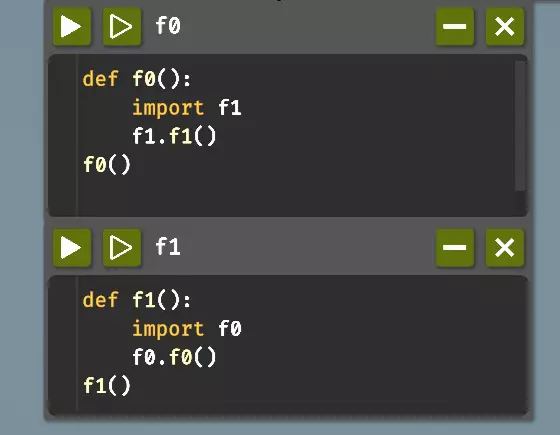
# 奖杯自动化 解锁(成就) 循环导入和栈溢出 此成就需要2个脚本:f0和f1 循环导入f0: import f1 f1: import f0
2026-02-20 07:000赞 · 0评论
解开迷宫
The maze levels are very different than the remainder of the game. It's possible…
2026-02-20 01:000赞 · 0评论
大多数成就代码
Title is self explaining I want to say something First of all im not a native sp…
2026-02-19 22:000赞 · 0评论
暂无更多