可运行抢先体验云存档家庭共享

--

+关注

--

热度

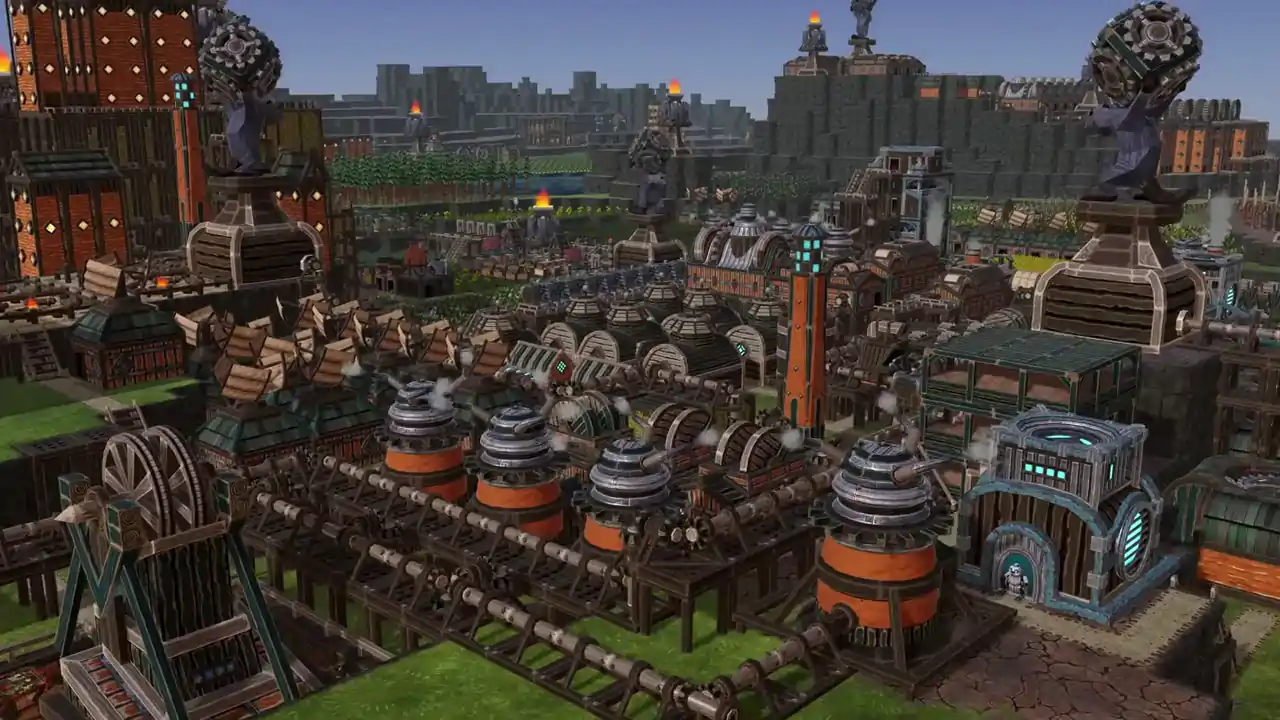
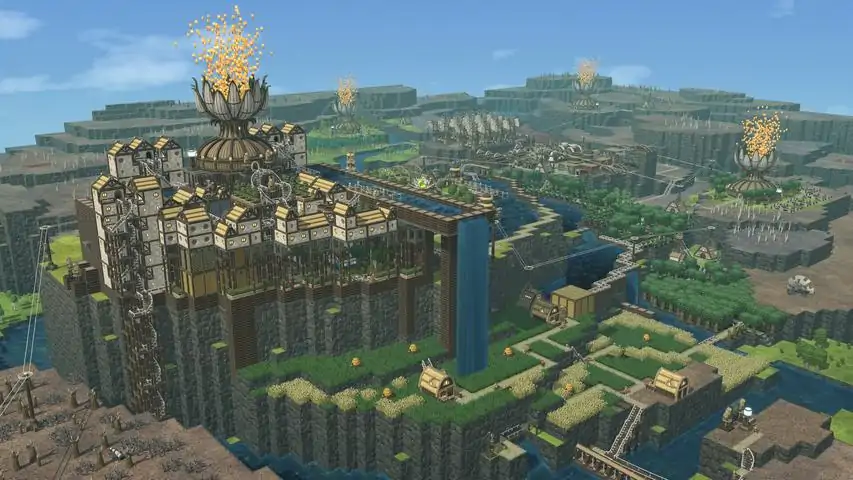
人类将地球变成了一片干涸的荒芜之地后走向了灭绝,但有些物种却适应了严酷的环境并不断进化。选择一支海狸部族,看看你的海狸社会能延续多久。海狸社会海狸部族二选一:热爱自然的“神尾”或勤劳肯干的“铁牙”。每个部族都有其独特的建筑、技术与玩法。选择一个你喜欢的来开局吧!潮湿、干燥和有毒季节做好准备,应对不断来袭的干旱和一波接一波的有毒废料。囤积食物,让田地与森林在旱季来临时仍然生机勃勃。利用自然水源与灌溉技术,维持土地耕作并确保海狸们的安全。水物理利用与地形改造海狸的工程技术堪称传奇。有了 3D 水物理与地形改造技术的加持,你也能化身海狸般的能工巧匠。建造堤坝与闸门,架设巨型渡槽,用炸药轰出运河与隧道,按照你自己的喜好重塑地形。垂直架构充分利用游戏独特的垂直建筑系统。由于空间有限,你需要把木屋和作坊堆叠放置,搭建平台与桥梁,建造能量网,让你的海狸通过滑索或管路快速奔行。木造朋克使用木材构建精密的机械,从水轮、木板厂到发动机与机械泵。木头是《海狸浮生记 Timberborn》的核心资源,但最先进的结构需要金属。要找到金属,你需要派出拾荒者,去探索旧世界的废墟。机关人用机械化海狸助力你的部族加速发展。记得为它们提供能量,对它们进行维护,你就能在各种工作中拥有更高效的劳工。它们全天候不间断地工作,可以被派往最危险的地区。康乐度建造一座拥有高效生产链的庞大城市,日夜关注城市居民的生活。随着海狸数量的增长,用均衡的饮食、娱乐、装饰和帮助恢复地球环境的终局纪念碑来满足这些不断进化小可爱吧。地图编辑器与模组你可以在游戏内置地图上进行游戏,也可以创建自己的地图并与社区分享。除了内置的地图编辑器外,《Timberborn》还提供官方模组支持。这里有大量玩家自制内容与生活品质追加物可供使用,每天还会有更多新内容推出。
游戏圈
共50条帖子
0770
2026-02-18 04:00:11 · 发布在 「海狸浮生记 Timberborn」
《木架》新手入门指南
A collection of useful tips, occasional madness and sleep deprived ramblings that will probably make sense, all gained by playing, failing and reading. Until 7am in the fluffing morning. Intro. Hello and welcome to the first ever guide I've published, if not the biggest written work I've done for years... And as this is currently a work in progress it'll be updated roughly every week content wise until it goes over most, if not all of the game's features. Which given it's in early access, is going to be for quite some time. And then then there's the mountain range of editing /cough Firstly though, this guide assumes you know how to access the build menus, place stuff to be built, make planting/logging zones etc. Simply because describing those would take a lot of work and is also kind of boring for me to explain :P Fortunately youtube exists for those who need to learn the very basics. But I am working out how to make a video to show those bits and will post a link here when it's done. Anyhow - the aim of this guide is help the perplexed deal with Timberborn's game systems, it's quirks, occasional weirdness (water) and point out what fun you can have with the game and how to avoid killing all your adorable beavers. Unless you need to. And keep me from playing Timberborn too much, because dear elder gods is this addictive, more so that factorio. i.e. stuff like how to use dams, what to plant, the dark horrors of logistics, surviving crises, dam worshipping 101, wellbeing and why you should maximise it etc etc. In theory I should be able to get it all across relatively well (depression has it's "perks", definitely not worth the cost though), and I hope I manage to do that. But any constructive criticism, highlights of mistakes of the factual or grammar kind etc is highly welcome. Because I at present I never get enough sleep due to nortriptyline side effects giving me night sweats. Also there will be humour. So, hopefully this helps other enjoy this wonderful game just as much as I have and if not, that's fine. And if you need further help, the discussion page for this game is full of mostly friendly, helpful people. _____________________________ Translations wise - as long as you give me credit/blame, go for it. I do not expect the jokes to survive translation of course :P _____________________________ Timberborn 101: Part 1 - How Not to Kill Your Beavers - Water, Food, Building and Priorities, Jobs, Wood and Storage 1) Don't panic. 2) Water 1 - Water is life and fortunately you can build dam blocks right from the start, so the first thing you should do when starting is dam the nearest river asap and also try and get floodgates 2 sooner, rather than later. But we'll discuss dams and power in a later sections. Due to time pressure, you want to dam the smallest distance possible, later on once you've got forestry started and have flood gates unlocked, then you can go nuts. e.g: https://steamcommunity.com/sharedfiles/filedetails/?id=2621455604 3) Water 2 - And in the same vein - build water storage, the ratio is 1 beaver, 2 water per day from available sources. Roughly you want twice the amount of water storage you have beavers. Pump's are fairly efficient so you can get away with 1 to start with. Ideally they should be located somewhere with 2 block deep water. But to start with, place them upstream of your initial dam. 4) Getting Stuff Done - Want something built or hauled asap? Prioritise it, especially you should tick the option to prioritise haulers for this building for pumps, water tanks, food to start with. This can be exploited to get a dam's first layer built more easily without resorting to putting a path on top of that layer by layer caking priorities on the dam wall's levels. Or prevent an expensive building eating all your resources when it's being built. 5) Food 101 - Early berry patches will not last you, get a farm up immediately after building the dam. beavers need 2.5 food per day, but droughts can kill your plants and you'll need a safety net of food stores. However, to fulfil Wellbeing you need all three foods, say hello to future planning fun. And a lot of math if you want to optimise... Ideally you want 2 farms, 1 set to plant, 1 set to harvest. But at the start go with 1 farm and leave space for another one because you will need it. With 1 job slot open and fill it when you can and switch priorities when need be. Start off with carrots, they mature quickly and without a reservoir with at least 2 layers of water stored, you run the risk of a long drought killing your crop. Leave 1/2 the available green space for potatoes and plant once you've got a 2nd farmhouse set up. Suggested ratio is [[need to research, suggested 7 carrots: 8 potato: 5 wheat, but what per farmer is ??? + feeding...]] Once you've got the initial boom of building and got some wood spare you can build a grill to get grilled potatoes. Should also have some storage by now for the spuds, uncooked and cooked, but farms can hold 50 units of each crop. Roughly half and half carrots and potatoes works to satisfy Nutrition I and II. Wheat requires about 1/2 the land potatoes does though, so you don't need much to provide a plentiful supply. And if playing with the Folktails, get beehives asap, you'll need to put more farmhouses down, but they provide a 25% boost to crop growth. Which means you'll be swimming in food if you can feed the grills wood and set up wheat processing and cooking. Use new Districts for wheat or save some flat land for it. As you need 30 gears and 20 planks for the Grist Mill on top of lumber, and it'll take a while to get the industrial infrastructure for gear production up and running. Never mind having a constant power supply. Plus inventors to create the points to unlock the Grist Mill and Bakery. 6) General Build and Research Build at least 2 inventor's huts when you can and get forester asap, it's in wood. Unlock flood gates 2 asap, then what ever you need. Dynamite's definitely worth focusing on though, since it makes storing water far easier and cheaper. As levee's are very expensive when mass building. Otherwise, for basic wood industry you want 4 plank and 1 gear factories to start with, and unless you're mass producing gears, keep the ratio to 1:4 when expanding. Because you will need a lot of planks. Otherwise: In Paths the highest priority is stairs and wooden platforms. With them you can access more of the map and build bridges allowing for better pathing and thus allowing you to build further out from the district building. 2nd highest priority is in Landscapes for levees and floodgates 2 and 3, which you need to make higher dams to get through longer drought seasons. Housing wise - Larger the better, simply because you can rapidly house homeless populations. But even the mid tier and mini lodge options can be useful to fill in space in apartment builds. Unlock as need be. Depending on game difficulty and the map being used, you can easily just have 3-4 inventors and produce points on X3 game speed while you get other things done. Though for the big stuff, you are going to want to build more of them. As 3000 research points is a pain to reach otherwise. Unlock decorations etc when you can spare the points, the bonuses can be very, very useful to boosting productivity. 7) Jobs and How to Effectively Use Them Early On - At the start you have limited adults with which to get started and no forester either. So to help keep the logs flowing pause any lumberjack flags once all the adult trees are harvested while you wait for the saplings to grow. Along with scrapping flags when you're done. Or if you need to harvest crops, open up the jobs at the farm. Though where this is most important is in emergencies or recovering from mass die off. It is pretty tedious though to turn off every building you don't need, but that's what pausing the game is for. So get pausing anything that isn't water/food/hauling. 8) WOOD IS LIFE - Grow maple, gives you 8 logs for 24 days growth, shrugs of droughts with ease. To start with though, you will probably want some birch, because you may need some logs asap, but make sure to put down some maple and replace the birch once you've got your first harvest of maple going. 1 Forester to 2 lumberjacks usually results in regular drip feed of wood from my experience, as maple's take awhile to gnaw down and overlapping foresters can help keep planting up. Also place 1 lumber pile near the forester. 9) Storage - There's 4 good places to build these, near district boundaries (we'll get to that later), next to production buildings, close to Distribution Hubs/Drop Off Points and under or by houses. Wood storage you especially want on the borders and next to planks and for the starting faction, you're especially going to want to put them on the boundaries and by foresters. As as they can only store 180 logs and you're going to need a lot of logs. Get warehouses when you can, as they provide a massive amount of storage and can be stacked on top of each other with some work. [[go over how to set storage up to take only certain items, need to test]] Timberborn 101: Part 2 - Housing, Expanding and Building New Districts, Power and Builders + Haulers Split into 2 for more room to explain things + the eventual pictures. Editing brought to you by Tired Lion - Breakfast For Pathetics, which fluffing rocks. _____________________________________________________ 11) Housing - With Folktails Housing is how you grow your population, so you want some excess housing if you want more children. And if you want them fast, you're going to need to cut working hours and have more leisure buildings etc. But some otherwise general housing tips: To start with house everyone you have + 1 extra 3 person lodge for more kids or to house them once they've exited the pod(s) if playing Iron Teeth Houses are stackable, so get stacking once you've unlocked the relevant platforms and stairs like I suggested. And remember to make paths on the platforms too. Helps though to plan for adding in leisure, deco and monuments in the future, and leaving a 9x10 (for the stairs) or more square and building in a C-shape, with some storage included can help with that. e.g. here's the two I use roughly, as they're prototypes:[[grab one of the main housing block in D1 already]] As for where to build - since green land can be at a premium at the start, usually any area of grey, dry land will do. And can even be expanded via platforms and dynamite. And since area of effect monuments give is as high as the map, feel free to build up as high as the pathing will allow for. 11) Expansion! - To build a new district it must be connected by a road with a district gate to another one, which can create problems on more hilly maps. However, overlap districts, combined with placing storage in the over lap makes districts more effective and can allow another district to build the stuff in the overlap. Which is very useful for expensive buildings. Generally though, you want to expand up river and create the largest body of water you can + get metal scrap so you can get dynamite. For example on the Prairie map, the best spot is the dry valley next to the C shaped hill. As you can dam the river and the valley using the hill and get a decent starter dam that will provide you with 1 level of water for droughts. And can be expanded to provide 3 levels with temporary labour Districts. Next place on that map would be at the exit of the lake so you could dam it to create a 3 layer high lake, giving you plentiful water for pumping. Also the dam can be used to channel water for power production. Important - you can plant trees and they will still grow underwater, so you can use this to get the logs you need until you can solid distribution set up. Though generally you want to aim to get a 3 layer deep dam set up. Which is why my usual River's End district for damming the lake in the Prairie map is sitting unoccupied in the current save. Generally you want to set up forestry and potato farming and processing if you can in every district, as you're going to need the logs. Also read 12), you're going to want to know how to use the limits to avoid killing your beavers by sending off all their food/water or running out of wood products etc. As otherwise they will send everything you need to survive. 12) Power - Rather annoying it is, basically stick to waterwheels, as with the buildings in the power menu you can chain them together to produce massive amounts of power. Which you will need. And with floodgates you can have them running all drought if you dammed enough water. Anything powered by windmills will eventually shut off when the wind drops, and since wind drops effect the whole district, say goodbye to making anything. Don't worry, I'll be doing a whole section on it :evil: In red is the core I started my industrial section off for that save: https://steamcommunity.com/sharedfiles/filedetails/?id=2624268330 All three wheels will usually run when there's flow and provide enough power to make sufficient planks and gears to get you started from just 2 Water Wheels. Also, once you unlock levee's you can redirect the water flow, which is useful when you have a curve in the river you want to run water wheels on or at the entry for a dam. More details (eventually) In Dams 101. Which you can see an attempt to do in the above picture. Although, given the variability of wind speed across the map, in theory you could set up a map wide power network to average out the wind speed variability for Large Windmills. Placing power transmission parts on platforms. Royal pain to do though due to the need to sometimes dynamite land for water canals. Otherwise is an option provided you work within the constraints Hamster Wheels are also an option, especially for low power needs, like small scale local plank, gear production or for a Grist Mill for wheat. But it doesn't scale like water wheels or even windmills can. Of course Hard Difficulty changes this, due to 21-30 day droughts you're going to need to use Large Windmills and Power Wheels, or if playing as Iron Teeth - Power Plants, as water will not be available anywhere near as long. Which means I really need to test out the distributed windpower network already... 13) Builder Huts and Hauler Posts - You will need them, also when they're not building stuff, builders act as haulers, making it very worth building them. Haulers you will never have enough of until you build a very high population district, but can be run at 4/8 usually until you have enough unemployed or high hauling needs. You'll know when you need more by checking how much processing buildings (like Wood Mills or Grist Mills) are stocked with ingredients vs how much is stored in farms/woodpiles etc. If the worker is having to run off to get goods you don't have enough haulers. And since I didn't mention it yet - build haulers next to production buildings and close to lumber piles, along with having storage close to production buildings. Timberborn 101: Part 3 - Distribution Posts and Wellbeing I keep running out of space dam it. _____________________________________ 14) Distribution Posts and Drop Offs - Welcome to hell, population you. Since beavers haven't invented 1 wheel cargo wheel barrows, trains or cargo barges, they can only haul 23kgs of goods. Which amounts to crap all if you set up lots of routes. Don't do that, instead each distribution post should only send 1 to 2 things to only 1 to 2 places, although posts feeding districts that are starting up can send everything to begin with. Drop off posts should be right next to haulers or places using the cargo. To avoid the hub giving away all your stuff you need, you can set limits in the hub's panel for how much you want of each item, low = amount you want to keep locally, high = the threshold stuff will stop being imported. Especially important for outposts sending food to other outposts, as if you don't set a limit you will run the risk of starvation. i.e for food, it's usually better to send potatoes or flour than grilled potatoes or bread, because they take up less space. However, on starting a new place, you're better off sending grilled potatoes or bread until food processing is sorted there.. Water can be safely hauled, and should be because not every outpost is going to have a water source. For logs, you're better off just putting log piles in the zones of district overlap and using haulers to do the dirty work. But if you really, really need to move them, you've going to need multiple distribution hubs with the full 8 workers Probably the most efficient way to use these is to chain them, making sure to send stuff only to the nearest district, rather than a far one. That way you can multiple deliveries done in 1 work day. 15) Wellbeing - The Nuts n' Bolts - Actually worth building, as they increase work speed, walking and growth rate. Books for example give a massive 30% buff to work rate. So build them when you can. [[rewrite asap dam it]] Managing Crises 101 Originally part of section 2, ran out of space lawl. But hey, makes it eaiser to find. [edit] Ugh, oh for a better text editor with steam. ___________________________________________ Crisis Management 101 - Unless you're hyperaware at all times, statistically speaking things will go wrong. Maybe you forgot to set a district limit at the Drop Off Point or Distribution Hub and sent all your food/water off. Maybe you forgot to seal a dam up properly and flooded you water pumps or just didn't build enough pumps and had your population boom. Fear not, for you probably don't need to give up just yet. Even if the deaths are piling up in the event ticker. Don't Panic. Pause the game and go though the ye olde "Orientate, Observe, Act" mantra, and work out what's needed and how bad it actually is. See What Resources You Have. Chances are you probably have a stock pile or harvestable plants in the ground or in a store house. Or lots of water stored in another district. So retask Distribution Hubs (or build them and free up 8 workers for them) from sending anything other than food and water and set them to deliver those. Beavers Can Survive More Than You Think. Basically from my observations they can go 1 day without food or water, they'll still flash the water/hunger icons, but they wont die and those 1st to reach those states gets resources first. So you can string a population along with deliveries until the cause of the crisis is sorted. Job Reallocation - Unless you need to build stuff, restask any builders, and any factory workers (bar Grist Mills of course) to fill needed jobs. Namely Water Pumps, Farms, Food Processing and Haulers. Why Haulers? Because sometimes food needs to be processed and due to the distances involved the worker can't get themselves. Also water needs to be stored to prevent it evaporating during a drought. Sacrifice - At the moment there's no negative effects for beavers dying of anything, which means if you only have enough resources to keep a certain number of beavers alive, you can make a district and send them there to die. Though you're going to need to turn buildings off to ensure vital stuff stays functional. Save Scum - Sometimes things are too f*cked to unf*ck or you brain's got the dumb and can't see a solution despite this guide + other guides etc and provided you didn't turn it off autosaving you should have plenty of autosaves to turn to. Learn From It - i.e. what went wrong, how did it go wrong and what's needed to prevent a repeat? It might be you need more water storage, or more food, or even more dams. Could be you grew your population outside of the available resources or failed to set up Distribution Hubs properly. Probably the most important step, and who knows, maybe you'll learn to do it irl :P Dams 101 - Part 1: A Guide to Dams and Where and How to Build Them. 1) Intro You might think this game is about beavers, but you're wrong, it's about dams. Mighty, majestic, towering dams of mere wood. Holding back gigalitres of oh so heavy water, threatening to flood you if you fail to master damming. Which are used to help keep your beavers alive so they can build more dams, through the worst of droughts where even the deepest of lake can dry out. And your tiny 1 level high dam ain't going to save you then. No, as all there will be left is dead beavers and no one to build more dams. Fortunately for you this game provides you some very nice tools and the minions to fulfil your dam requirements. Minions who think they are star of the show, but will work night and day even if you feed them only potatoes and leave them homeless with nothing fun to do. Just remember to water and feed them and keep the replacements coming as the current ones attempt to escape their grim reality as slaves to the god that is the DAM. /ahem Anyhow, now that's out of my system (ADHD can be fun) - To survive droughts as they intensify you're going to need to build dams and potentially lots of them. And depending on the terrain it may be something massive or something relatively small, but remote and a pain in the rear to get to/supply. So my aim here is to take some of the headache out of building dams. So you can move onto stupidly big mega projects like greening the whole map or flooding everything. And just maybe start thinking hard difficulty is possible. 2) Dam Basics: So you want to build a proper dam? Well, you're going to need the following: Forester unlocked and forests grown and harvested and the wood industry to provide planks Levees + Floodgate 3 unlocked, all the wood platforms + stairs, Distribution Hubs and Drop Off Points + the population to fully staff 3 or more of them. A suitable choke point in the terrain that can be blocked with Levees and Floodgates A path that goes to or close to the area so you can place a district Preferably some land you can grow hopefully maple trees on. And some Dynamite set up and being produced will help a lot here. Mainly to allow water to not get trapped and to increase reservoir capacity. Which will in turn give you more water. Preferably some watered land at the site you can grow trees on, even if you drown them after planting, because they will still grow. So find your ideal location, often the maps contain gorges or pre-existing lakes that can be raised in height to 3 levels or more. The smaller the space to span with flood gates and passes to block with levees the better. Because the faster you build it, the quicker you can fill it up before the drought hits. For example, on the Prairie map there's 2 good locations for major dams that you can hit early on, 3 if you rush it. Site 1 Location: https://steamcommunity.com/sharedfiles/filedetails/?id=2621466977 The exit for the lake is one and can give you a 2 level high reservoir and has the wood available locally to get the dam completely build. And you can make a road around the edge of the map to get to it without needing to build anything. Though it is downstream of your starting area and so unless you're irrigating via water dumps, you run the risk of crops drying out in longer droughts without water flow from upstream. Site 2 Location: https://steamcommunity.com/sharedfiles/filedetails/?id=2621465805 Reachable once you've got stairs unlocked and you can easily bump it up to 1 level high safely by sticking a line of levees across it. This can be done by building a district so it covers both sides of the hill, allowing you to build a dam across the dry flats. However, to get it up to 3 you'll need 4 districts. 1 temporary one on the lowest part of the hill to build the route across + the stairs to get up 1 level at the edge 1 near the edge to set up forestry and gain access to the higher sections of the map. This allows you to keep building the levee dam on the edge of the map up two levels. Pretty easy to do though and no dynamite needed. Unless you want to increase capacity of course :P Site 3 Location + Side Dams: https://steamcommunity.com/sharedfiles/filedetails/?id=2623450267 Just upstream of Site 2 is the main gorge of the river. This is almost ideal to dam with a layer or two of levees + 6 to 7 Floodgate 3's. As you can see from the picture, you've got 3 side dams + the main one to build. Do to this, it'll takes 3 districts - 3 permanent ones, 1 possible temporary one. One permanent one is seen in the upper left, and the upper right one can be set up from that one or a temporary one in the basin which I usually do to save some time and make it easier to blast out the terrain to allow more water to flow.. Along with the 1 at the bottom left, which helps with the lower side dam and further work + harvesting scrap metal. Site 3 provides considerable water, on part with site 2, but also provides more power and scrap metal. Site 1 is the easiest for new players to deal with, since you only need to send water and planks to get started given the local berries and trees and secures drinking water for your main settlement due to it's shear size. Site 2 however provides something a bit more useful - water to power waterwheels through the drought. Meaning industry can work and not be subject to the variability of wind power or the lumber devouring of Iron Teeth power plants. Site 3 provides even more potential power from modifying the gorge, which is useful if you need to produce a lot of dynamite etc. However, it requires considerable investment in Distribution Posts to feed, but is faster than Site 2 to get completed due to needing less investment in levees. It does however, rely heavily on dynamite to be fully effective, due to the pass into the basin needing to be dynamited to get access to the full 3 potential layers of water there. Now that you've got examples - more generally the best spot to build dams is the locations that allow you to capture 3 or more layers of water with the least amount of levee blocks and explosives that you can reach and supply with ease. As your colony grows, and you build up the forestry and population to support more distant locations, along with an explosives industry, you'll be able to do larger projects and possibly green the whole map depending on water sources and drought length. Though to survive those 21+ day droughts you're going to need more tricks than just dams. Which I will eventually get around to :P Dams 101 - Part 2: Dam Building Logistics and Droughts: The Dam Bit + Overfilling Why yes, I ran out of space again, was it obvious lawl?... Dam Building Logistics It's actually a lot easier than you think, as you can exploit the fact saplings will still currently grow when submerged, i.e. https://steamcommunity.com/sharedfiles/filedetails/?id=2623450222 A temporary district was set up above the level 1 water height and 2 foresters where built, though ideally you want to place more to get trees planted asap so you can have more wood sooner. Also provides a longish term local supply of wood for future long term projects. In this case for building a high canal of levees to water the highlands to the right on the image. This temp district was then used to build stairs to gain access to the left and right of the map and then deleted once the dam to block off the edge of the map was built and the lake level could be raised. And rebuilt up on the high lands. The new district can then be used to plant trees up on the new arable land, expand arable land via explosives and water dumps and so provide to the district that's building the next dam (Site 3 in this case). Along with building my mega project to green the highlands. Otherwise the general scheme is so: A new District that can cover most of the building site or all of it with routes in that wont get blocked off when you start building. You'll need 2 relatively close by full staffed Distribution Posts as the Source A steady supply of logs or the ability to feed the Source with logs via ofter Distribution Posts A dedicated Drop Off Point with local district distribution limits set to 480 logs for high and low settings A Distribution Hub to send food, planks, water until local water supply is up and food if possible. The Dam District should have 2 Drop Off points, the District building set to be fully staffed, 1 Builders Hut, set to fully staffed, 1 Haulers, set to 3 workers, 3 log piles close to the dam site(s) and a small warehouse for food and planks. Plus enough beavers to beaver the lumberjack flags to eat up any local sources of wood. We need haulers to move logs to keep them flowing. And lastly - Foresters and beavers to run them if there's any arable land we can plant trees on. Make sure the Dam District has been supplied and send enough beavers to it to man everything. And now you can more easily build most medium sized dams, though remember, floodgates tier 3 are expensive, so make sure to have a good supply of planks and the platforms set up to build them. As for bigger projects - if aiming to build them faster, you need to have more builders huts and the larger supply of wood needed to feed them material. Along with preferably a local water supply as water is heavy to haul and also some crops to help feed the local workers. But I'll go over the specifics in Distribution Posts 101 and District Specialisation and do a section afterwards showing an example. Since I have some big projects I'll end up doing in the current save. Droughts - The Basics For Dams Worry not, there will be a section on this going into the numbers (oh elder gods), but generally a 0.5 drop in a single floodgate is enough to sustain a flow downstream to feed downstream dams and keep water wheels ticking over. You will need to adjust the top dam's floodgate. Case in point: https://steamcommunity.com/sharedfiles/filedetails/?id=2621465805 But basically, the deeper the dam the longer it will last, so the more water you can have behind your dam the better. Though due to the mechanics of evaporation, a shallow dam reservoir will evaporate quicker so it pays to blast out unneeded land submerged in one. But if you place the floodgates atop levees at the front of the dam, you can have an emergency amount of water you can release if need be. You just need builder access and the resources to replace the deleted dam parts come the wet season. And you can build a line of flood gates 2 blocks in front to help trap some water while waiting for the dam to be rebuilt. In fact, you could do this upwards as much as need be, the only issues being rebuilding everything in the right order. At least until we get higher floodgates etc. As for refilling, build a water level next to the dam and, put all bar 1 floodgate at the dams usual full level and have the remaining one set to zero. You should notice the water level rises above 0.5m above 0m position. Once it has, lift the floodgate up in 0.5m increments until the reservoir has risen back to the normal height of the dam. Overfilling Dams You can also overfill the dam in the day just before the drought, e.g. if you had seven floodgates tier 3 you'd set 4 to 3m and the remaining ones to 2.5, adjusting as need be to keep the dam from spilling over. This allows you to get 0.49m of water that gives you just under 1 day's worth of evaporation losses. Power Generation 101 - A Guide to it and the Art of Water Flow Manipulation WIP __________________ To Do: 1) basic power generation, ie how to exploit rivers effectively + hamster wheels Can use d1 industrial zone pic? Need to highlight 1st 3 water wheels Exploiting gorges 2) Rework Water Flow, have rivers first, then dams, then canals for fun and profits 3) Industrial POWER - or how to gets all teh powers 4) Windmills - backup power, power networks to mitigate wind variability (theory and practice) and best uses. ________________________________________ Cut from dams: Water Flow and How to Exploit It It Water in this game has momentum, and drains similar to water in real life. Which creates some issues with dams and insuring a good water flow to keep the water wheels running all the time. I found this out the hard way with the precursor to this set up: https://steamcommunity.com/sharedfiles/filedetails/?id=2621465759 Originally there was a line of wheels behind the dam top, but they had inconsistent flow and only the wheels placed downstream seemed to move consistently. So finally getting sick of it I deleted everything, and built the lines of levee walls seen bellow and finally got strong enough flow in the same direction as the wheels to run them. This ran even when the dam was closed off and set to 2m on all but one floodgate to .1.5m to give some flow. Though not always and I suspect at greater evaporation rates there will be reduced flow. As for rivers, this sort of works: https://steamcommunity.com/sharedfiles/filedetails/?id=2621495682 main issue is the lack of space and failure to build some levees under the Explosives Plant. So often some of the wheels wont work. This works much better I used the natural constraints of the gorge to further channel the water:And eventually would have had further supporting levee walls to direct flow downstream to power more water wheels. More generally though, the smaller the gap the water has to flow through and the greater it drops (in theory, game engine may have a hard limit), the greater the speed with which it flows. Which means you can potentially get power out of any flowing water source provided you work with the constraints of the game's water physics. _______________________________________ And from the department of "using" the game's systems, here's how to generate energy with water dumps and pumps: https://steamcommunity.com/app/1062090/discussions/0/4814903332720658648/ https://steamcommunity.com/sharedfiles/filedetails/?id=2629074248 Credit goes to tenderloveheart for showing this off :P Work in Progress + Future Sections + To Do. Scratch pad to show what should be coming and what I should be doing, because ADHD and depression = fun getting stuff done WIP Current- will probably sort out a dam and a power guide, but first I need breakfast and my bloody 4-bag cup of tea damn it. - Dams - mostly done, edit pass, more pictures - Power - Started, includes water flow Roughly other bits: - Housing - Folktails to start with obs. - FOOOOOOD - aka farming 101, food bonus and data stuff, when I find it to replace the mk1 eyeball method. - Water and how to irrigate effectively + cisterns and water storage - Forestry tips - because someone will totally need it. - Storage, how to use it the smart way lawl. - Districts 101 with specialisation in a separate section, as you need knowledge of distribution hubs to pull it off. - Drought survival - Expanding the smart way - How To on Distribution Hubs and Drop Offs. - Whatever else my sleep (and now caffeine) deprived brain comes up with. ---------------------------------- To Do/get started 4/10: - Get started on Dams, 3 sections - intro, how to build effectively, long term aims [2/3rds done, needs a pass over] - Power and You - show how you can build waterwheels under water and have them work, minimum flows need to run them and how to get effectively generate massive amounts of power. Also bits on how to route power effectively despite terrain getting in the way. [getting there] To Do: 8/10 - Split Timberborn 101 into 3 sections, ran out of space in part 1 damn it. - Done! To Do 10/10 [shifted here, as too tired to do this on the day from biking 10Km...][edit - lawl, got caught up again in Timberborn >_< it's 12:30am so hitting the bed...] - Get pics for the sections, make a physical list so I remember - Finish dam guide and review it for errors, grammar, sensibility - Do some more work on Power section, probably start on Farming and Food, because it's something people seem to struggle with. but will take 2-3 days vis research etc. - More editing as need be. - Add food data to guide from here: https://steamcommunity.com/sharedfiles/filedetails/?id=2616182664 if I can do it today. ______________________________Stuff to include: Drought management stuff: https://steamcommunity.com/app/1062090/discussions/0/2956041222227392007/Another source for info + as an alternative to my guide:https://steamcommunity.com/app/1062090/guides/ Update Log Record of updates so I know wtf I've done, because sometimes my memory is totally crap. All NZ dates and date format. 06/10/21 - Added Update Log section + spelling/editing as need be + (add stuff done today) 07/10/21 - Added new sections due to running out space and splitting off stuff into the correction sections (Dams 101 Part 2, Power Generation 101), add pictures (finally lawl), various edits and corrections. [edit] Plus more corrections, edits and edits, because editing is foreeeeever. [edit2] And more edits, because only at 10:30PM NZ time do I notice stuff ;-; 08/10/21 - Fixed the wrong picture for site 2 (how the?....), split Timberborn 101 into 3 due to lack of space (stupid character limit is stupid), edits. Procrastinated and wrote the intro, added sources/credit section. 09/10/21 - Fixed formatting in Timberborn 101: Part 2. 10/10/21 - Some minor edits, finished Dams 101: Part 1 to first final level and added remaining picture to it and Part 2. Added picture of a good spot to put a water wheel + industry. 11/10/21 - fixed formatting error in Dams 101: Part 2. 12/10/21 - fixed food per day value in Timberborn 101, added note on hard difficulty power generation to Timberborn 101 and added a source for District Limits stuff to Credits/Sources section for future reference. 18/10/21 - fixed a mistake in the Timberborn 101 section's bit on research, and over the last couple of days have outlined new sections that are work in progress so I don't forget to make them later. Semi-confirmed the lodge based dam doesn't actually work. 19/10/21 - Added WIP section for the walkthrough video, outlining it's content. Sources/Credits - WIP Sources/credits dump - need to learn how to put html anchors in/if it's actually possible in steam for proper citing Water and food usage - https://steamcommunity.com/sharedfiles/filedetails/?id=2616182664 Building productivity data: https://www.reddit.com/r/Timberborn/comments/pyfhev/building_productivity/ - District Limit's and Distro Posts stuff from The Undead Watcher: https://steamcommunity.com/app/1062090/discussions/0/2953788788205365663/#c3084394448739390265 - One weird trick for dams. credit to Aieonae for showing it off: https://steamcommunity.com/sharedfiles/filedetails/?id=2616520787 Dams 101: Part 3 - Advanced Dam Design (WIP - Stuff To Test) So it turns out that a single gap in a dam wall can actually dam the flow and regulate how much it flows, thus allowing massive dams.. But this probably depends on much water flows from the water blocks in the map: https://steamcommunity.com/sharedfiles/filedetails/?id=2616520787 Moar testing is required. But not tonight. As this could mean that it's possible to build a dam that can last though out the hard difficulty's long droughts without having to constantly rebuild [edit] - Huh, it actually works. Dams take longer to recharge though, but the downside is you need a massive reservoir to keep it running through the dry season. My upper reservoir bottomed out in testing yesterday in less than 4 days days, but that's relatively small. Hmmmn, need to hit a map with moar water for it... There is a hybrid approach to this though - just place a single floodgate lower than the others and it'll boost dam drought usability by a day or more depending on the size of your reservoir. __________________________ And then there's this: https://steamcommunity.com/sharedfiles/filedetails/?id=2626291276 It's magic. I think I know how it works, but dear elder gods, it's going to be fun to test... [edit] - doesn't work face forward, maybe side on? Had massive water flow, equivalent to the open gap in the dam testing it with it coming out of the dam. [edit 2] - Okay, I think I know how this works, it's basically the single gap dam but with 2 gaps as the lodges aren't waterproof and water flows through them. Will change my mind if there's new evidence, but I've got other things to do that test this again. (WIP, just notes) Food 101: How to Feed Your Beavers + Irrigation Right, rough notes while I remember I need to do this, because ADHD = forgetful at the best of times: - values are in the timberborn datasheet guide, need to bring them up and frame the info in such a way it sticks in people's heads - like using food per beaver per plot value (have spreadsheets will do maaaaaaaths) - need to go over good plans for fields (maybe? area's probably better), the cost/benefit of placing farms on arable land vs off it, plus the problems with height reducing farmer's abilities to reach crops. - general method for farming effectively is one farmhouse on planting, one on harvesting. Ensures a steady use of crop fields unless the patch is too big or there's not enough storage/haulers. - Food storage = warehouses dedicated to only food, nothing else. Why? Need food stocks for feeding districts that can't farm, setting them up and in the event the faecal matter hits the fan and you run out of water to keep your crops alive. - Is a section on how to feed distant districts needed? Probably, but better off in distro posts 101, maybe just a mention it's better to send potato's and wheat/flour rather than processed foods. - Irrigation is basically easy. 1 dynamite, 1 water dump = huge area of arable land. Or use a corner of the land, block it off with levees and use a water dump for the same effect. Canals are ascetically pleasing though and have utility as a place to put buildings like farms and distribution posts and hauler's huts. But should not be used for drinking water. - berries = not that useful at present except for starting off a new district or if you're playing the Iron Teeth faction. Need berries per pod value for that too. Should mention it here and in population management for Iron Teeth. WIP - Water 101: How To Keep Your Beavers And Crops Watered Note - there will be maths, so sorry for anyone with dyscalculia those brain can't use numbers ;-; There will be some written guidelines though. While the info's still in my brain: - 1 cube of water contains 5 units of water (way to small frankly, should be 100) and evaporates at 0.045m/day. So 1 cube of water will last 22 days, 1/2 a cube 11 days - Pumps can output 44 water per 18 shift before any , which is enough to water 22 beavers, or in the case of one of my 10 pump set ups, water 220 beavers before wellness bonuses. But that's 440 units of water, which is a fluffing lot per day. - Therefore, for hard, you really want to store as much water as possible in tanks, mainly because the water in them doesn't evaporate and also compresses 60 units of water into 1 tank. And 1 large tank contains enough water for 150 beavers for a day. Which comes out as 0.0066666666 tank/beaver aka 1/150 per beaver. Using that we can then use your population number to find out how many tanks you need per day and use the length of a drought to find out how many tanks you need. - Ugh, really need to buy a grided maths book to work out the formulas if they're not elsewhere available. - But basically, take the water height, times it by the width and length of the reservoir, then by 5 (the units of water per cube) and it'll give you the number of units of water per reservoir. Which for a hypothetical 2.5 high, by 10 wide and 10 long reservoir gives us 2.5x10x10x5 = 1250 units of water, which dividing it by 2 gives us the number of beavers it can support. Divided by the number of days a drought lasts gives you the rough estimate of a reservoir's capacity to provide drinking water. Which for a 9 day drought, gives us enough water for 69.444444444... beavers. Taking into account evaporation, that's more like 2.1 levels of water, which running the numbers gives us enough water for 58.333333... beavers before we take into account water dumps or any canals. - So basically, for storing water in reservoirs, the bigger the surface area for 2.5 level water depth they are, the better they are - Ultimately though we're limited by the strength of the water source blocks in the map in terms of how much water is available per wet season. (WIP) Timberborn 101 - Part 4: Walkthrough for The Still ??? So turns out my computer wont catch on fire when recording with AMD's built in stuff in their graphics driver package and the game plays "okay" enough on 3x speed. Which means I can finally do something about the very, very basic stuff + a walkthrough for starting on the Prairie map. Because writing isn't always the best way to explain things, especially when you need a butt ton of pictures. Time limit will be about 20 minutes and it'll go through using the UI, setting up path networks, forestry, water, food + farming and the importance of daaaaaaaams, industry start, research and even making new districts + where to put your next dams! But it'll take me 1-2 weeks from now to make it and learn to cut and edit it together into an acceptable mess :P And yes, there will be timestamps and I'll aim to make it add free, but with Youtube's "content" ID system who fluffing knows what will happen. __________________________ Right, finally getting started on the ground level stuff, youtube now customised, script outline which I'll ad-lib from being drafted out. And my handwritting is utterly horrible lawl
两全
2026-02-20 01:00:16 · 发布在 「海狸浮生记 Timberborn」
海狸基础知识及其他信息
《木架》“啊,我真希望早点知道”指南及其他实用信息 比弗顿的开端欢迎来到《木架》! 你即将进入一个后启示录世界,这里唯一的幸存者是被俗称为海狸的水生矮人。 这群勤劳的啃树一族擅长筑坝和种植作物,你将与它们一起改造这片土地,以满足自身需求:通过可再生资源发展工业。 本指南希望能让你了解如何与海狸合作,从而生存并发展壮大。有些机制曾让我感到困扰,我希望将自己的经验分享给大家,让大家不必经历同样的困难。 我可能不会涵盖所有主题,因为我的重点是介绍一些基础知识,然后讨论我认为比较隐晦或鲜为人知的机制,以及我偶然发现的机制副产品。我无法写出一份包罗万象的终极指南,但希望能与大家分享一些见解。欢迎提出建设性的补充意见,但请不要对我的每一个字吹毛求疵。如果有任何想让我详细说明的内容,尽管告诉我! 话不多说,借用《矮人要塞》中的名言,让我们开挖吧! 资源基础 资源概述: 在《木架》中,有多种可见资源,还有几种虽不能立即看到但也必须追踪的资源。在建设和规划你的海狸城时,资源管理至关重要。大多数资源都是可再生的,能够快速生成且易于管理。我们首先来了解用户界面上直观可见的那些资源。 屏幕顶部会显示一个资源栏。从左侧开始,依次为:幸福度 | 科技 | 各类物资 | 食物 | 原木 | 储存水 我们将按倒序进行说明。 储存水: 储存水是指你的海狸在城镇水塔中储存的水量。这是干旱来临时你所储备的总水量概览。这并非所有可用水源,水库中拦截的水属于另一种资源。没有储存水,海狸会因口渴而死亡。 原木: 原木是原始木材,可用于建造大多数基础建筑,也能被加工成木板,进而制成其他材料。原木通过砍伐树木获得,不同树种的收获量有所差异。 食物: 食物是维持海狸生存的必需品。如果没有食物,海狸会饿死。食物有多种类型,获取方式也各不相同。在游戏初期,从浆果丛中采集的浆果可以维持你早期的人口生存。到了后期,随着小麦和土豆田遍布大地,食物将变得更加充足。 储存的水、原木和食物是你的海狸文明的支柱。没有它们,就没有发展。 未加工食物: 这些食物无法直接食用,需要经过进一步加工才能成为可食用的食物,例如土豆在烤制后才能成为食物。杂项物资: 杂项物资是一个总称,涵盖了许多可生产和储存的其他物资。杂项物资包括建筑材料和药品,也包含需要加工的物品,例如原木可以被加工成木板,这是第一种高级物资。 科技: 科技由发明家创造并以点数形式储存。使用这些点数可以解锁新建筑。请注意,有些物品可能会被提前解锁:例如,建造平台需要木板,但平台可能在木板能够被制造出来之前就被解锁,导致解锁了一项无法建造的科技。 福祉: 幸福度是决定居民满意度的综合评分。分数越高,我们勤劳的小水矮人生产力就越强。幸福度有多项要求,点击幸福度数据即可查看一份便捷的说明表。提高海狸的生活质量会带来加成效果,点击海狸即可查看这些加成。三种不同的物品分别是生长速度、移动速度和预期寿命。生长速度决定海狸达到成熟的速度,移动速度提升海狸的奔跑速度,预期寿命则增加海狸的最大年龄。 最大化幸福感并非极其复杂,且回报丰厚。 海狸基础知识及其他资源 聊聊海狸: 海狸,顾名思义,是我们最宝贵的资源。除了上述的幸福感外,还有其他与海狸相关的重要信息需要说明。 人口:海狸的人口分为“成年海狸”和“幼年海狸”。成年海狸是你的劳动力,它们可以生育更多幼年海狸。幼年海狸当然需要时间成长为成年海狸。 游戏中还有机器人,但这部分内容将在后续讨论。 到了睡眠时间,海狸会随意找地方睡觉,但它们更倾向于在合适的住所中休息。住所能提供舒适度,这是“幸福感”属性组中的一项指标。 为海狸提供充足的住所也很重要,因为当有额外住房时,folktails族会进行繁殖。根据我的游戏经验,如果没有足够的空间,海狸是不会生育新海狸的!这也意味着过度建造住房可能会引发海狸幼崽潮。 注意:获得更多海狸的唯一途径就是让现有海狸繁殖。它们似乎没有性别,因此同一小屋内有空闲时间且小屋有空位的两只海狸会繁衍后代。(铁牙族的机制有所不同,等我有机会体验后再进行说明。)此标签将追踪你的就业情况。与大多数城市建造游戏不同,失业人口似乎不会拉低幸福感。他们会四处闲逛、吃饭、喝水、前往休闲建筑并等待工作。显然,失业海狸的生活相当不错。 不过,他们是待利用的资源,因此追踪失业海狸十分重要。将失业海狸迁移到劳动力不足的区域,是实现成功发展和向新区域扩张的关键。同样,拥有可持续的失业人口是更好的,因为这意味着在海狸死亡时,岗位空缺能立即得到填补。 来谈谈隐藏资源 【隐藏资源】指的是那些在用户界面或游戏本身中未明确显示的资源。这些并非什么秘密,只是人们可能不会去思考或讨论它们。不过,它们是需要了解的重要信息。 土地: 最显而易见却又极容易被忽视的可能就是土地了。 土地分为两种类型:可耕地和非可耕地。耕地呈现绿色,这是由附近有水导致的。距离会受地形高度、水源类型的影响,但不受水深影响。 在非干旱季节要留意土地。这类土地很有价值,因为它是能够维持农业生产的土地。在选择筑坝或改变河流流向时,追踪河流和湖泊的范围以及由此产生的耕地情况十分重要。将耕地用于建造建筑有时会阻碍食物和木材的生产。 创造更多耕地需要使用灌溉塔(仅适用于【folktail】):或者建造大型建筑,比如渡槽或是由水坝和湖泊改造而成。就我个人而言,不建议使用灌溉塔,因为其产生的可耕地面积所对应的水分流失率非常高(蒸发相关计算见下方水分部分)。相反,建议在条件允许时建造小型湖泊。不过,非耕地仍有其价值。它可以通过各种方法转变为耕地,包括上述及其他方法。此外,非耕地也适用于建造住房和工业设施,因为海狸并不介意居住在哪里。找到不会被开垦为耕地的区域,是建立住房中心的理想地点。在这张图片中,你可以看到大约一半的区域土地是可耕种的,另一半则不可耕种。尽量将建筑物集中建造在非耕种土地上,这样可耕种土地就能用于农业生产。建筑堆叠机制对于这种建造方式来说会是一个很大的优势。 并且要记住,可建造土地是可以创造出来的:请注意,部分建筑必须建造在坚实的地面上,例如营火和神庙。学会有效利用土地将提高我们的生存几率。时间:人类固守着一个奇怪的小概念,那就是时间。我们的居民会按照这个时钟工作,我们可以通过 +/- 按钮来设置时钟。圆圈的深色部分当然是夜晚,应该留出来睡觉。 默认情况下,我们的海狸每天工作16小时,睡觉8小时。这会让它们几乎没有时间社交、休闲或繁衍新海狸,除非它们不工作(或失业)。如果将工作时间减少到15或14小时,这会降低商品产量,但能让海狸有休闲时间。 如果你遇到人口问题,要确保有额外的住房,并尝试给海狸一些休息时间。 每只海狸每日消耗量测试1:场景设定为一个与其他区域隔绝且相距较远的区域。工作时长设定为14小时。傍晚时分,我将一只失业的海狸派往这个新建、无人居住但物资充足的区域,并等待一天后查看结果。这只新海狸在区域中心“受雇”为建筑工人,却整天都在休息。它能够获取水、食物,有工作场所和一间单人卧室。 设定: 水:30单位 食物:151单位 第一天结束: 水:28(-2) 食物:149(-2) 第二天结束: 水:26(-2) 食物:146(-3) 第三天结束: 水:25(-1) 食物:144(-2) 第四天结束: 水:23(-2) 食物:141(-3) 第五天结束: 水:21(-2) 食物:139(-2) 测试1结果: 看起来海狸的消耗量约为1。每天8单位水和2.4单位食物。 本次测试存在一个可能导致二次测试的复杂情况,即食物来源混合:浆果、烤土豆和面包。如果食物种类多样,海狸可能会为了达到最高的幸福感而每天消耗更多食物。 测试2: 设置与上述完全相同。唯一的区别在于食物。海狸不再食用多样化的食物,而是只吃烤土豆。初始设置: 水:30单位 食物:200单位烤土豆 第1天结束: 水:28(-2) 食物:198(-2) 第2天结束: 水:26(-2) 食物:196(-2) 第3天结束: 水:24(-2) 食物:193(-3) 第4天结束: 水:22(-2) 食物:191(-2) 第5天结束: 水:20(-2) 食物:188(-3) 测试2结果: 看起来海狸每天大约消耗2单位水和2.4单位食物。 这些结果与测试1相比没有太大差异。暂时没有想到干扰因素,但如果有可以测试或控制的内容,请评论。 总体结果: 数据显示,一只标准海狸每天会消耗2单位水和2.4单位食物。请据此进行规划! 河流、水坝和水道: 《木架》的主要卖点之一是其水资源机制。干旱、改道水流、筑坝拦河以及其他地形改造是该游戏的核心卖点。游戏中有多种方法可确保旱季的水源供应。 让我们先了解一些水资源机制的基础知识和通用技巧,然后再介绍结构部件,最后讲解相关建筑。 入门的好方法是观看一些关于防洪或水利设施的视频。水流基础 游戏中的水可以轻松管理,大致遵循基本的压力规则。 若你有一个5x1的河口,并在上面建造一个5x1的水坝,水坝会注满水,然后水会流出。 若你有同样的5x1河口,安装一个4x1的水坝并堵住其余部分,你会得到流速更快的水(后期对水轮有帮助)。 若你在5x1的河流上安装了4x1的水坝,之后又添加一个6x1的水坝,水流速度会减慢。 堵住5x1的河流会形成水库,直到水最终漫过坝壁流出。 若堵住5x1的河流后没有形成湖泊,请检查湖泊周围是否有泄漏。如果水接触到地图边缘,就会流出去。 总结:水从高处流向低处将水引入更狭窄的空间会使水流速度加快(可能导致洪水)。 给水流提供足够的扩散空间会减缓水流速度。 修建水坝前请检查区域。 其他注意事项: 游泳! 是的!你的海狸会游泳!它们会沿着可能位于水下的路径移动,并且会毫不犹豫地完成水中的建筑。它们似乎也不介意处于被洪水淹没的区域。不过,当水位达到一定高度时,它们会寻找更高的地面,不会进行砍伐树木或收割作物等活动。 从上方建造 海狸可以从物体的上方或下方进行建造,这意味着它们不需要直接接触物体就能进行建造。他们可以在低于自身多个层级的水中放置堤坝组件,也可以在高于自身的平台上建造动力组件。 蒸发 水的蒸发速率为每22天1方块。 建筑组件 大坝 水利工程中使用的基本建筑模块。当水位达到特定高度后,大坝组件允许水流漫过。大坝初始即解锁,且被视为固体物体,这意味着你可以在其顶部建造建筑物。 堤坝 堤坝应是最早解锁的大坝技术组件之一,因为堤坝是我们建造坚固墙体的基础。堤坝可以堆叠,并且能够阻挡水流,直到水流漫过它们。大坝和其他物体可以放置在堤坝顶部,但堤坝不能堆叠在其他任何物体之上。在开始之前,我想说明一下,我绝不是什么工程师,所以如果我用错了术语,请大家指正。 水闸怎么样? 问得好!我没用过水闸,因为它们需要密切监控和手动启动。对于我没用过的东西,我没法写指南或发表意见! 话虽如此,它们可能有很棒且非常实用的应用,但我无法证实这一点。 建筑结构 这是一个堰 我们将要建造的第一个挡水结构很可能是堰。堰是一种低矮的堤坝,用于阻挡或减缓水流。在游戏初期,沿着起始河流建造一两个堰可以在夏季储存水源。堰由横跨河流的堤坝部件构成。这会减缓水流速度,可能导致你的水轮无法正常转动。在这张图片中,你可以看到我用堤坝部件替换了一些水坝部件,以阻挡部分水流。这意味着水流的出口减少,该区域的水流速度会稍快一些。 《Dam It All!》 水坝将包含多个堤坝部件和一个允许水从某处流出的排水口。这座水坝有2层深(中间部分有3层深),因此在旱季时,水坝会保留大量的水。水坝应建在河口处,用于在其后方形成湖泊。在拦截河流建造水坝时,务必记住要让水从某处流出,否则会引发洪水。 为减少洪水问题,可以在出水口附近建造挡土墙(如图中正在建造的那样)。让水流进宽阔区域也能减缓从水坝流出的水流速度。 最后,你还可以建造一个水闸。渡槽 渡槽是将水从一个地点输送到另一个地点的有效方式。如前所述,水渠能创造大量耕地,这对农业来说是巨大的利好。地面上的水渠建造成本高,且占用相当大的空间。水渠也可以用炸药在地下开凿。 泄洪道存在一种名为【排水口】的设施,它可以将水排放到特定区域,从而形成人工湖。排水口需要水源,但能让你将水输送到任何地方。 利用排水口建造小型湖泊可以增加可耕地面积,而无需建造或炸毁渡槽。当湖泊水位低于设定水位时,排水口会自动补水。 不建议使用抽水站来建造一个会从中抽水的湖泊。 机械水泵机械水泵需要电力驱动,它能将水从低处抽取并排放到高处,从而在任何需要的地方形成人工湖。当排水侧注满水时,机械水泵会自动停止抽水,这与泄洪道的工作方式类似。 机械水泵无需海狸工人操作,因此对于将水从低处快速输送到更高处非常有用,只要有足够的电力,它就能持续运行。 那么你已经有了一个湖……记住,湖泊和河流上是可以建造的!你可以造一个湖,然后把住房和工业建筑建在平台上。 湖泊在干旱季节也会保留下来,能为我们的海狸提供大量水源。不过要确保它们在主动从湖里抽水,因为湖里有水并不意味着我们储存了水! 区域 在《木架》中,区域一开始可能有点复杂,但如果按预期使用,它们会是强大的工具。接下来,我们将一起了解如何创建区域,以及如何利用它们进行扩张,同时避免意外导致人口挨饿。 区域基础 欢迎来到第一堂课,海狸建筑管理者们!是时候谈谈《木架》中一个有争议但又至关重要的部分:区域。简单来说,区域是城市的一部分,由中心建筑(区域中心)标记,边缘则有大门作为界限。 区域是一个有趣的概念,因为它们代表着完全独立的单元,即使相邻区域濒临崩溃,某个区域也可能运转良好。 与大多数城市建造游戏不同——在那些游戏中资源可以共享,所有居民都能平等地获取存储资源——每个区域都像一座新城市。食物、木材以及所有其他资源仅在区域范围内共享,不会跨越区域界限。这意味着当放置一个新区域时,它在功能上就是一个全新的殖民地,应当如此对待。 考虑到这一点,你可能很容易感到不知所措,或者认为这是一个糟糕的机制。毕竟,如果我们的区域受到限制,又该如何扩张呢? 有一些方法可以在区域之间运输货物,也有一些(正当或不正当的)方法来创建新区域。区域系统的一大特点是,如果某个区域稳定,且创建了新区域,那么就有机会进行扩张,同时降低现有区域不稳定的风险。过度扩张并不一定意味着整个城市的消亡。 带着这种思路,我们来讨论如何推进区域发展。 区域功能 区域基本上是一个单一的活动中心,可以把它们想象成市中心。在创建新区域之前,请考虑以下几点: 1)我为什么需要在那里设立区域? - 修建水坝?扩大农田?需要翻山越岭?开拓新岛屿? 2) 是否能获取食物和水源? - 重要提示:若干旱季节来临,是否有足够的物资储备?该区域是否会受到干旱影响? 3) 是否能与其他区域连通? 4) 是否会切断其他区域的物资供应? 在开始建立新区域前,让我们先查看现有区域的边界:这是一个区域的边缘。蓝色边框代表海狸能够互动的离区域最远的范围,而红色线条则代表建筑物被视为位于区域内的最远距离。 如果建筑物放置在红色线条之外,海狸会建造它,但该建筑会被视为【区域外】建筑,不会被使用。如果是住宅,海狸不会在那里居住,工作场所也不会获得员工。 不过,如果建筑物位于蓝色边框内,它将由该区域负责建造。这在设计水坝或其他长结构时非常有用。同样,将伐木工旗帜放置在区域边缘,可以让海狸在技术上“超出”区域边缘的地方工作。要将海狸迁移到新区域,点击现有区域中心并选择【迁移】。此界面会显示进行迁移决策所需的全部信息,包括迁移方式和地点。这部分信息非常重要,能切实影响区域的布局。 物资搬运:每个区域都有自己的物资储存,该区域的海狸只能从中取用物资。这意味着A区域的海狸只能使用A区域的物资,即使相邻区域拥有资源——即便这会导致A区域的所有海狸死亡。新区域的发展依赖于成熟区域提供稳定的发展基础或资源支持。要将资源从一个区域转移到另一个区域,需要【配送站】和【卸货点】。 【配送站】是货物离开区域的地点,而【卸货点】是货物进入区域的地点。 尽管解释起来很简单,但需要注意的是,为了实现最佳的货物运输,每个【配送站】应与一个【卸货点】配对。【配送站】的每只海狸都必须跋涉到【卸货点】,交付货物后返回。 将单个【配送站】与单个【卸货点】绑定,可以实现货物的最大运输量,避免海狸长途跋涉去卸货。距离越短,货物运输速度越快。快速运输大量货物的一个方法是找到区域边界,从较富裕的区域创建一个大型库存,并设置让搬运工优先处理这些库存。当库存满了之后,移动区域大门来改变边界。这样另一个区域就能获取这些货物了。虽然这种方法需要更多的微操作,但能在相对较短的时间内移动大量货物。 创建新区域 “细胞分裂”式区域创建法 “细胞分裂”式区域创建法就和细胞分裂非常相似。这种方法非常稳定,但创建过程需要一定时间。 首先,找到区域的边缘。然后建造必要的生存建筑: 【仓库】 【储水设施】 【水泵】 【农舍】+ 规划农业用地 【林场】+ 规划林地 【住房】 建筑完工后,等待仓库和储水设施填满资源。然后暂停游戏,切断连接旧区域和新区域的道路,放置一个大门和新的区域中心。需要将海狸迁移到新区域,但它们会拥有生存所需的资源。 这种分区方式速度较慢,因为新区域需要靠近前一个区域。优点: - 人口稳定 - 不易消亡 - 注重长期发展 缺点: - 初始资源消耗大 - 耗时较长 - 与上一个区域的相对距离至关重要 - 扩张速度慢,必须紧邻现有区域建造 区域建造:迁移模式 当需要完成某个项目但该区域并非永久性设计时,此模式非常有用。与分裂模式类似,迁移模式从建造一个仓库开始,之后基本就只需如此。 一旦仓库装满资源,就规划好所需的建筑布局,然后将新区域与原区域分离,并派遣大量海狸前往该区域担任建造者。当食物和水源不足时,拆除区域中心,将该区域重新划归原区域。或者,当食物/水不足时,将所有海狸调回主区域。 迁移模式在干旱循环区域非常有用,这里有一个中央存储区可以提供全年的食物和水,而外围区域则负责准备工程项目或砍伐森林。当干旱来临时,将海狸调回中央殖民地,让它们度过夏天。 优点: - 资源(特别是海狸)的高回报率 - 人口相对稳定 - 操作简单 - 可在任何地方建造 缺点: - 需要微管理 - 可能会分心并导致整个殖民地覆灭 建立区域:新殖民地模式(蛮力法) 这种方法基本上是“把所有东西都扔到墙上,看看什么能粘住”。基本思路是强制让居民从零开始创建一个全新的区域,完全没有任何预先规划。像这样把所有失业的海狸都塞进一个新区,可能会带来生产的爆发式增长,也可能引发大规模的死亡潮。与迁移方式不同,这种方法完全没有预先规划。它最适用于快速殖民遥远的新土地,因为上一个区域的相对距离并不重要。 优点: - 不再有失业海狸 - 快速直接 - 能完成任务 - 可以在任何地方建造 缺点: - 投入的所有海狸都有很高的损失风险(!!!) - 完全不稳定 - 必须进行监控 电力与传输(开发中)使用风车、水轮和能量传输的示例建筑。 你想制作资源吗 要点 本节将包含大量数字和流程图,如果你想跳过,可以阅读这段简介后再决定。《木架》的资源几乎都是可再生的,只有金属是例外。最大化产量有助于提高每格土地的利用率,从而让我们的海狸生产更上一层楼。 不看详细计算的话: 枫树的木材产量最高, 而小麦→面粉→面包的食物产量最高。 如果你想了解详细的流程图和计算过程,就继续往下看吧! 注意:这里的计算是从空地到产出食物的角度进行的。我没有计算每个周期的收益,这可能是我们的计算结果不一致的原因。这会使我的数据看起来比按周期计算的结果“更差”,但这是有意为之。木材生产线木材生产线的产量确实取决于种植的树木,具体数据如下: 桦树:1/9≈0.11(循环小数) 1单位原木产量 /9天生长周期 =每块土地每天产出0.11单位木材 松树:2/12≈0.16(循环小数) 2单位原木产量 /12天生长周期 =每块土地每天产出0.17单位木材 枫树:8/30≈0.26(循环小数) 8单位原木产量 /30天生长周期 =每块土地每天产出0.26单位木材 栗树:4/24≈0.16(循环小数) 4单位原木产量 /24天生长周期 =每块土地每天产出0.16单位木材 食品生产线:Food is a bit more complicated, as there are multiple food sources that give a different nutrition bonus each. This means that planting multiple of each crop is recommended. However, for maximizing food production, the math breaks down as such: Berries: 3 / 12 = .25 3 berries yield / 12 days growing = yield .25 food per day per plot Carrots: 3 / 4 = .75 3 carrot yield / 4 days growing = yield .75 food per day per plot Sunflower: 2 / 5 = .4 2 sunflower seed yield / 5 days growing = yield .4 food per day per plot ======================================================================== ~) This math assumes it takes .5 day to move good from one process to another or storage ~*) This math assumes it takes 1 day to move good from one process to another or storage ======================================================================== Potato: ~ : (1 * 4) / (6 + .5) = .62 1 potato yield * 4 grilled potato per potato / 6 days growing + .5 days processing potato to grilled potato = yield .62 food per day per plot ~* : (1 * 4) / (6 + 1) = .57 1 potato yield * 4 grilled potato per potato / 6 days growing + 1 days processing potato to grilled potato = yield .57 food per day per plot Spadderdock: ~ : (3 * 3) / (12 + .5) = .72 3 spadderdock yield * 3 grilled spadderdock per spadderdock / 12 days growing + .5 days processing spadderdock to grilled spadderdock = yield .72 food per day per plot ~* : (3 * 3) / (12 + 1) = .69 3 spadderdock yield * 3 grilled spadderdock per spadderdock / 12 days growing + 1 days processing spadderdock to grilled spadderdock = yield .69 food per day per plot Wheat: ~ : (3 * 1 * 5) / (10 + .5 + .5) = 1.36repeating 3 wheat yield * 1 flour per wheat * 5 bread per flour / 10 days growing + .5 days processing wheat to flour + .5 days processing flour to bread = yield 1.36 food per day per plot ~* : (3 * 1 * 5) / (10 + 1 + 1) = 1.25 3 wheat yield * 1 flour per wheat * 5 bread per flour / 10 days growing + 1 days processing wheat to flour + 1 days processing flour to bread = yield 1.25 food per day per plot Cattail: ~ : (3 * 1 * 4) / (8 + .5 + .5) = 1.33repeating 3 cattail yield * 1 flour per cattail * 4 cattail cracker per flour / 8 days growing + .5 days processing cattail to flour + .5 days processing flour to cattail cracker = yield 1.33 food per day per plot ~* : (3 * 1 * 4) / (8 + 1 + 1) = 1.2 3 cattail yield * 1 flour per cattail * 4 cattail cracker per flour / 8 days growing + 1 days processing cattail to flour + 1 days processing flour to cattail cracker = yield 1.2 food per day per plot This math does not cover the use of beehives (Folktails only), as they change the growth rate of the plants around them. F.A.Q. and Quick Info 0 How do I get more beavers? - Give them some downtime (reduce working hours by 1 or 2), make sure you have empty lodge space, satisfy your beavers comfort (by building homes). You can also increase fertility by meeting beaver social well-being (campfires or leisure terrace) 0 Will you write about X? - Well, if you are interested in it, sure! I will try my best to get to it when I can. While my intention was not for this guide to be a "be all, end all", it seems like the ingame tutorials aren't enough and I feel like I can help out. I will do my best to cover as much ground as I can. 0 Can you take X screenshot? - Definitely. Post a comment and I will try to get a better screenshot of my building designs for you! I would like to showcase some of my structures in hopes that you guys can be inspired by them. 0 Why are your updates weirdly timed? - Getting good screenshots and making sure my information is correct is also really important to me, and since my schedule is really busy, it can be hard to get it all to line up well. Your guys' comments really fuel my desire to return to this community and see this guide through, so I will keep working on it when I can! 0 Your math is wrong. - Yeah, that is very likely. I am not a mathematician, statistician, engineer, or logistics manager. I do simple algebraic math to best support any concepts that come up. The idea is that Timberborn favors those that plan ahead: maple and wheat take the longest to grow but produce the most goods. Updates Log ANNOUNCEMENT: Badwater Update: 1, 20, 20, 24: Hello everyone!! I have seen the Badwater update and I want to address it before the beavers start asking questions: yes, I have seen the update, but no, I have no plans at the moment for an update to the guide. The Badwater update may require an entire overhaul of this guide, as it puts into question a lot of the doctrine around irrigation that has been set up here. I will endeavor to get an update out as soon as I can, but I do not know when that is. If you are interested in helping me, please feel free to reach out to me on Steam. Draft 10: 2023, 4 days after 4/20: - Updated water evaporation rate, math given from a comment by LexFuturorum. Thank you! Draft 9: Day 96 of 2023: - Updated wood production image to be a bigger size - Updated wood production to add chestnut and correct for the growth time change of maple - Updated food production to add cattails and spadderdocks Draft 8: April 2023, Wednesday the 5th - Updated images and text in the Beaver Basics to align with the new systems. - Added mechanical pumps to the the water systems - Updated screenshots for migration - Updated information in the Beaver Basics === The food flowchart needs to be updated... Draft 7: October 2021, the 4th - Split the districts section into two pieces. - Wrote up how to move goods from district to district. === Should add a section about how to use the distribution limits. 6th Draft: 2021, September the 30 - Updated section on water dumps. There really wasn't much to say about them. Mostly just a recommendation. - Added a note about how my math is not done from a cyclical point of view, but a standing point of view. Yes, I know this means my math makes the production look worse. - Fixed a mistake where "water dumps" were called "pumping stations". - Did a second test to see how much food/water a beaver consumes per day. 5th Draft: 9/27/21 - Added information from a test about how much a beaver consumes in a day Draft 4: 21/9/21 - Added in flowcharts and math breaking down wood and food production cycles - Fixed some grammar mistakes (specifically "dam" vs "damn" mistakes) - Added a vague picture to the power section to help readers see what can be done with power - Added a new subsection to Districts about District types. Will expand upon it soon Draft 3: 2021, 20, 09 - Added a link to the Russian translation of this guide - Added some more FAQs - Began drafting the "Districts" section Draft 2: September 17th, 2021 - Fixed a few small grammar/semantic mistakes. - Left some internal notes for myself about what to add - Started district discussions Draft 1 : 16th of September, 2021 - Wrote out beginnings of the guide

下载233乐园APP

专心推荐好游戏

关于我们 · 联系我们 · 隐私政策 · 营业执照

侵权投诉 · 开发者中心 · 用户协议 · 免责声明

不良信息举报中心

纠纷处理及不良内容举报电话:

4006600910 (工作时间: 9:00-12:30,14:00-18:00)

北京市朝阳区启阳路4号院2号楼15层1803室

本公司产品适合10周岁以上玩家使用 未成年人家长监护

首页 / 海狸浮生记 Timberborn

抵制不良游戏 拒绝盗版游戏

注意自我保护 谨防受骗上当

适度游戏益脑 沉迷游戏伤身

合理安排时间 享受健康生活

京ICP备18003564号-3

经营许可证编号:京B2-20181741

京公网安备:11010502052873

Copyright © 2025 233leyuan.com All Rights Reserved

北京龙威互动科技有限公司版权所有

热门游戏: 我的世界 | 三角洲行动 | 原神 | 王者荣耀 | 超自然行动组 | 蛋仔派对 | 和平精英 | 火影忍者 | 二重螺旋 | 英雄联盟 | 梦幻西游 | 明日方舟 | 斗罗大陆 | 光遇 | 鸣潮 | 无畏契约 | 模拟山羊3 | 樱花校园模拟器