
 换一换
换一换 


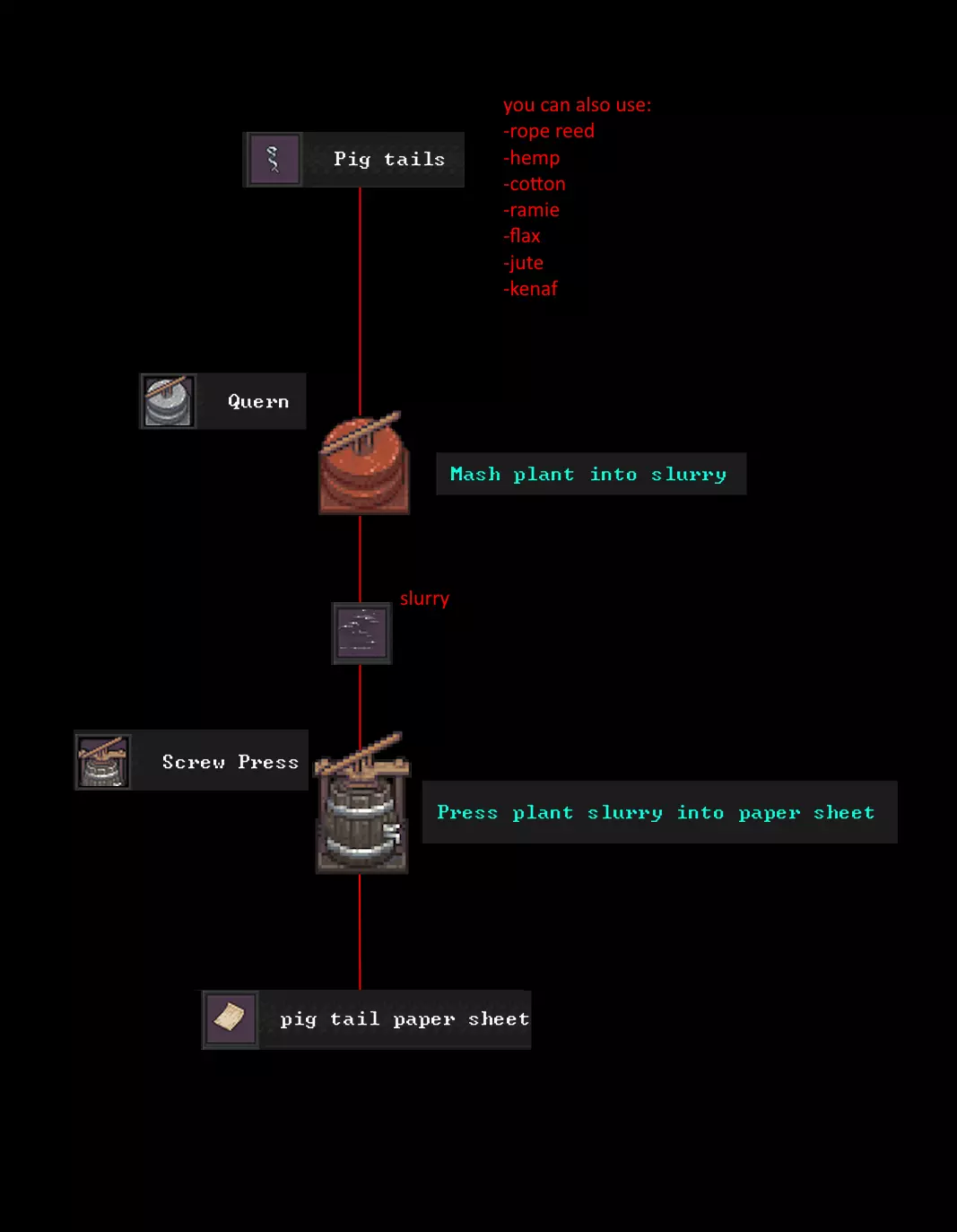
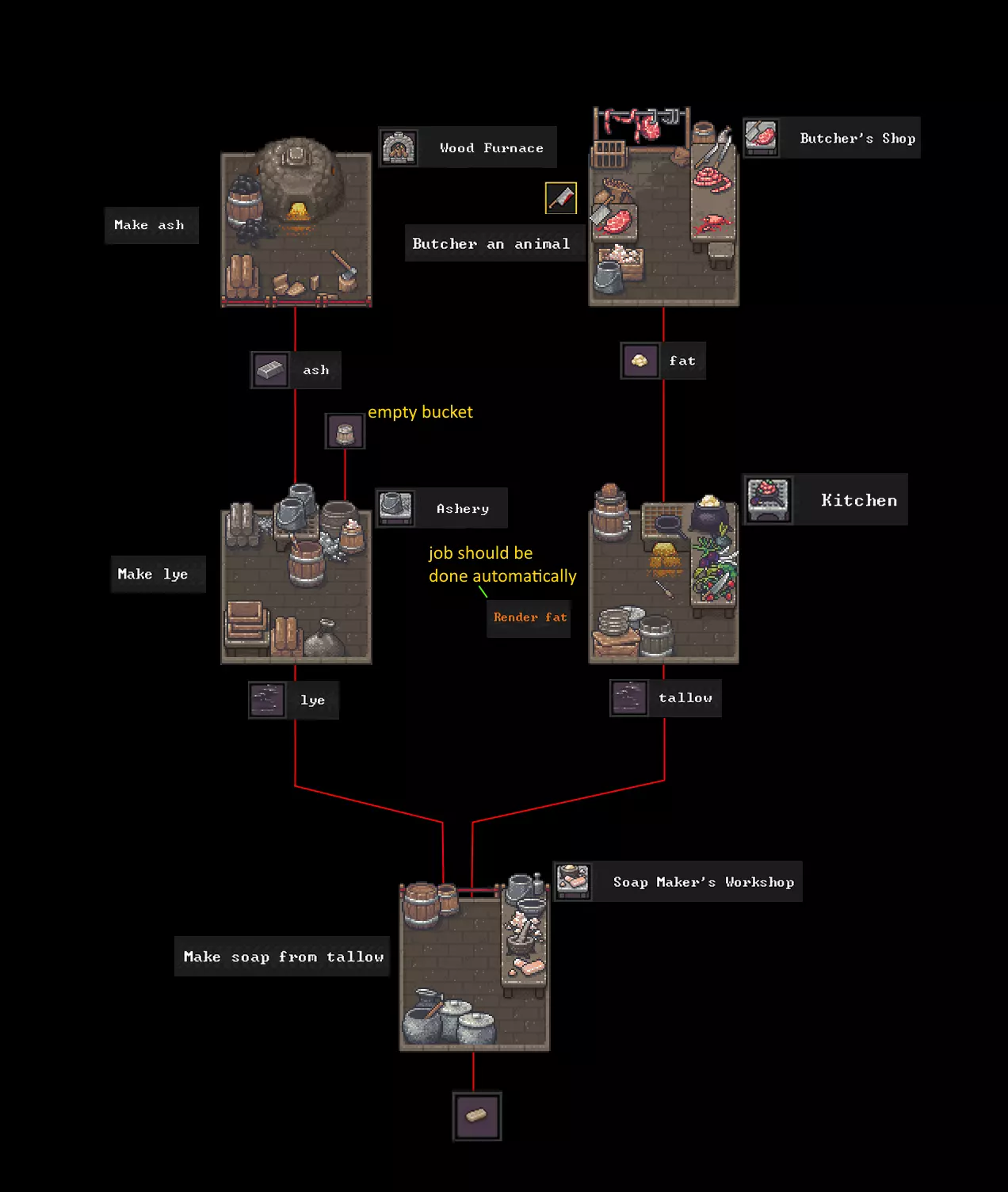
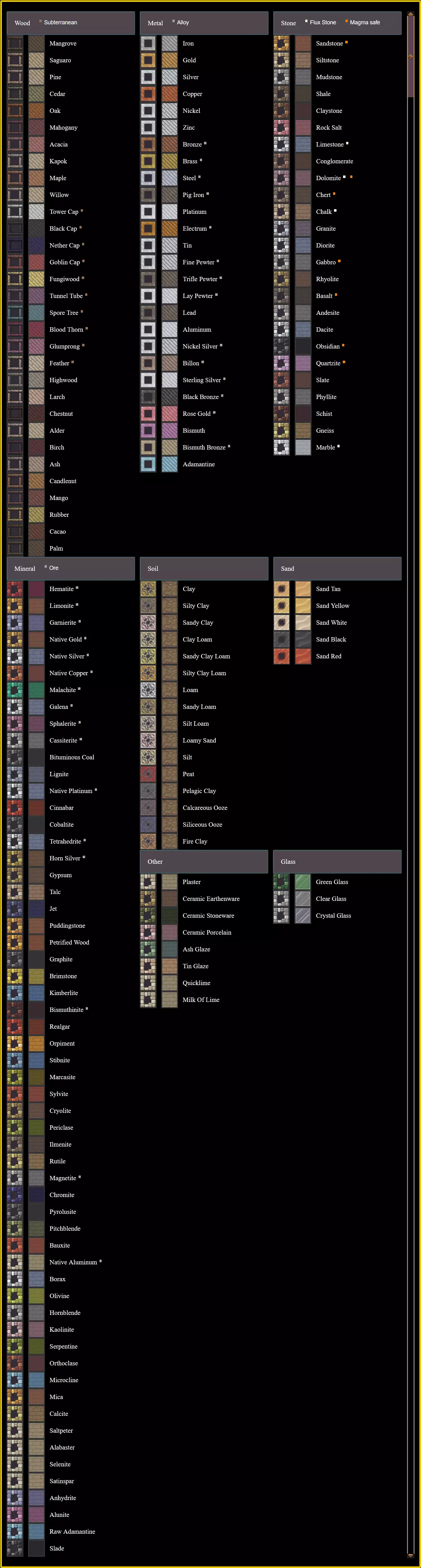
This is a collection of mechanics and bugs that knowing about would have saved me a lot of grief. Introduction Dwarf Fortress is a great game, but it also has its... quirks. This is just a list of things I learned over my first few games that I really with I knew starting out (and often felt like an idiot for not knowing). It's not terribly well organized, and I may add to it later, but hopefully it will save some of you some frustration. Basic Construction Construction is fairly straightforward, so there are only a few things to keep in mind. First and foremost, your Dwarves are stupid. If you tell them to channel out a large section of floor over an open space, they will almost certainly remove all the support from a tile sending it (and anything on it) crashing down to (and possibly through) the next floor. If you are removing constructed flooring and there is no natural floor underneath, you have to be doubly careful. Unlike construction, deconstruction does not require a tile to be unoccupied. It is entirely possible that a Dwarf will remove a floor tile, place the recovered blocks on the adjacent tile, then remove it, dropping the blocks on to whatever is below. To mass cancel construction orders, you use the remove construction icon in the mining menu (the stairs with the nope symbol on them). Stairs build from blocks under the construction menu are considered smooth floor; dug out stairs are considered rough. If you smoothed out a hallway and want to get rid of the ragged edges where the floor meets the stairs, you have to build them. You can't place floor under existing furniture. You can smooth or engrave floor under most furniture, but not all (altars are one of the exceptions). Dwarves can do a lot of things diagonally: move, mine, engrave... but not build. Constructions are invulnerable. If you are looking for magma-safe rock to build channels for your Magma Forge and Smelters, don't worry; magma cannot melt floors, walls or closed doors, regardless of what they are made of (open doors are a different matter). And finally, If you lay down the blueprint for a floor and overwrite it with a wall (or vice-versa), it will use the material you selected for the original construction, regardless of what you selected when you overwrote it. The only way to change materials is to cancel the original construction on that tile, then place the new one. Room Values and Engraving Most of your Dwarves won't need a fancy room, but they do appreciate it. Rooms values are determined by the value of the construction and furnishings. Furnishings are fairly straightforward, the value of each object is added to the room. Better items mean better rooms. Rooms can overlap, to take advantage of valuable tiles, but there are limitations and drawbacks. First, any room that shares a floor tile with another room suffers a -75% penalty to its value. The one exception to this is the floor tile under a door which, like the walls, can be shared by multiple rooms without penalty. The 75% penalty does not change, regardless of how many rooms overlap. In addition, the engraving bonus for walls only apply to rooms that include both the wall and the floor tile it was engraved from. This means that unless the engraving was made from the doorway, it cannot be shared by two rooms without penalty. The value of a room's walls and floors depends on what the tiles are made of, as well as how they are made. Common materials like wood and non-economic stone have a value of 1, going up to 2 for things like flux stones (Calcite, Chalk, Dolomite, Limestone and Marble) or low value metals like copper, and 6 or 7 for easily made, semiprecious alloys like Billon or Brass. That material value is then multiplied by the type of wall or floor: Rough Floor or Wall - 1 Smooth Floor - 4 Smooth Wall - 5 Constructed Floor - 7 Constructed Wall - 9 Smooth and constructed walls and floors made from bars or blocks (I am unsure about walls made from uncut stone) can be engraved to provide an additional bonus. This is an added bonus, not a multiplier, and is not affected by whether the tile is natural or constructed. For floors, the bonus is straightforward: Material Value x10 x Quality (x1, x2, x3, x4, x5 or x12). So an engraving on a stone floor will vary from 10 to 120, while one on a brass floor will be between 70 and 840. Walls are a little more complex. As stated above, a wall engraving only applies to rooms that include the floor it was engraved from. In addition, the material value for the engraving isn't the material the wall is made from; it's the most common material in the room. So a gold or gemstone pillar in an otherwise rock room will have significantly higher value than the other walls, but its engraving will not. This leads to the major bug with engravings - they aren't removed when the wall or floor is deconstructed or mined out. In stone caverns, this is not a huge issue, as you can smooth the floor, carve tracks to erase the engraving, then resmooth the floor. In soil layers, this is not possible, which leads to a further problem. Since wall and floor engravings are handled differently, they do not apply to the wrong type of construction. If you expand a room with engraved walls and cannot erase the engravings, those tiles will still have the wall engraving on them. Because the tile contains and engraving, you cannot order the floor to be engraved, but because it is a wall engraving, it will not be applied to the floor tile. If you are trying to make a high value room, your best bet is to make it out of metal. Bars will work, but taking the extra step to make metal blocks will keep your inventory stocks more accurate, as the bars used to make walls and floors will still be listed, and the breakdown of placed vs available objects only applies to bars as a whole, not the specific metals. To give an idea of relative values, take a 1x3 room. It will have 11 walls and 4 floor tiles (including the one under the door). For rough stone, the room will be Meager, with a value of 15. Smooth stone will improve that to 71, still Meager, but much closer to the 100 needed for Modest. Constructed stone will further improve it to 127, which makes it a modest room, even without furniture or engraving. If the rooms are engraved (and you somehow manage to get all the wall engravings inside), that would give at least an additional 150 value to the room, putting the constructed room at basic quality, and the smooth natural stone within striking distance of it (easily reached with higher quality engravings or some decent furniture). By contrast, if you made the room out of Billon, which can be easily and cheaply made from ore (always make it from ore instead of bars), it would have a base value of 762, and even all the wall engravings wound up outside, the floor engravings would provide at least an additional 240 value, to make it a Fine room. When making rooms for Nobles, Temples or Guilds, this is an easy way to increase the room value without relying on gem encrusted furniture. If you have a skilled engraver, you can add 5,000 to the value of a room with a single masterwork engraved Aluminum or Platinum floor. Workshop Shenanigans Farmer's Workshop: The various Process Plants tasks all handle different plants: Process Plants - Turns plants into thread. This is mainly going to be Pig Tails, but also covers Hemp, Jute, etc. Process Plants to Bag - Turns Quarry Bushes into leaves and Rock Nuts. If you've been harvesting Quarry Bushes, but don't have the Rock Nuts to replant the farm plots, make sure this task is active. Process Plants to Barrel - Turns Sweet Pods into Dwarven Syrup. Don't do this. Due to a bug in the cooking algoritm, Dwarves only cook with liquid ingredients as a last resort. Unless you micromanage your cooking storehouses to force the issue, they will use up all your tallow before they touch Dwarven Syrup. Instead you can crush sweet pods into Dwarven Sugar at the Millstone. Process Plants to Vial - Turns Valley Herbs into Golden Salve, which is a valuable trade good, but serves no other purpose Clothier's Workshop: Making Cloth items only uses Plant Cloth (Pig Tail, Hemp, etc.). When setting up work orders, use the adjective "Plant" to restrict a condition to these materials. There are separate tasks for Yarn items that use Wool Cloth. Their work orders use the adjective "Yarn". Thread made from Hair cannot be spun into Cloth, but can be used by Book Binders and Orderlies. Glass Making and Pottery: Loamy Sand is not considered Sand, nor is any type of "sandy" soil. Sand is stored as Sand Bags. Sand Bags are listed under Furniture in the stockpile sorting menu. For work orders, they use the adjective "Sand-Bearing". Clay cannot be dug from Sandy Clay Loam or Silty Clay Loam. Any other Clay tile, including Clay Loam, can be used. Clay is stored as Clay Rocks. The stone Koalinite can be used as well. Most clays will produce Earthenware items. Earthenware pots must be glazed to store liquids Fire Clay will produce Stoneware, which is more valuable does not have to be glazed. Kaolinite will produce Porcelein, which is even more valuable and also does not require glazing Strange Moods When a Dwarf takes over a workshop with a strange mood, you can find out (or at least get clues) to the items they need by clicking on the workshop. If you don't have the items, the Dwarf in question will sit in the workshop until they go fatally (and possibly murderously) insane. Stockpiles and Refuse Do not make stockpiles that accept everything. One of the categories for stockpiles is Refuse, and you never want to store refuse with other objects. Objects that decay do so much more quickly in a stockpile with the refuse category active. This includes clothing, weapons and armor. Instead, create a separate stockpile for your bones, wool, etc. and maybe one outdoors for the things you don't use. Vermin remains are also in this category, so if you keep winding up with dead rats in your stockpile, that is probably why. Also dead vermin are all categorized as generic "Remains" rather than by individual type. The Refuse stockpile is separate from a dumping zone. Refuse stockpiles are automatically filled and have an increased rate of decay. Dumping zones are where Dwarves take things that you have flagged to dump (the trash can icon). If the zone is adjacent to a cliff, they will chuck the item over the edge (useful for disposing of things in magma). Note that if you have a standing order to ignore outdoor refuse, they will also ignore orders to dump outdoor refuse. Backpacks, Weapon Racks and Armor Stands (all bugged) Do Not Make Backpacks! Backpacks are theoretically there to allow military Dwarves to eat while deployed. In theory this is true, but unless your only squads are on permanent assignment (training, patrol, etc.), they do more harm than good. When your Dwarf goes off duty, they get rid of their backpack, dumping all their food on the floor, usually in their bedroom. The food is considered "Owned" by the Dwarf, so others won't touch it. It will stay there until the Owner does something with it or, more likely, it rots and fills the room with miasma. Weapon racks and armor stands also do not work. I once saw a Dwarf store armor on a stand in the barracks, but I don't know what prompted it. I have never seen them use a personal weapon rack or armor stand in an assigned room (or personal chest... in fact the only personal storage I have seen used is the cabinet). Mods There are two things to know about mods in this game. The first is that there are two mod folders. The one that Steam downloads to is Dwarf Fortress/mods. The one the game uses is Dwarf Fortress/data/installed_mods. The first time a mod is activated during world generation, it is copied from the mods folder to installed_mods. It will not be updated, and, if you unsubscribe from the mod in Steam, it will still be available in game. The only way to completely remove the mod is to delete the appropriate folder in installed_mods. The only way to update the mod is to manually recopy the files from mods to installed_mods (it appears that the game can transfer updated files to the installed folder automatically). This will affect saved games, which may or may not impact the stability of those games, depending on the nature of the update. If you are trying to make changes to a mod (for instance custom reaction mods might need to be edited to work with custom races), and it isn't reflecting in your saved game, make sure you are changing files in the installed_mods folder. The second thing to know is that mods are set at world generation and cannot be changed. If a required mod is deleted from the installed_mods folder, a saved game may still load and play (for instance, if it was a graphical mod with no effect on game play), but when a new save is made, it will be unable to load due to the missing mod.
我希望在第三个要塞前弄明白的事情

2026-02-14 16:00:16
转载

导读
这是《矮人要塞》的新手避坑指南,涵盖基础建造、房间价值与雕刻、工坊操作、库存管理等多方面技巧与bug。比如拆除建筑时要注意支撑结构,避免矮人误操作引发坍塌;还介绍了提升房间价值的方法,以及背包、武器架等功能的bug,能帮玩家减少游戏挫败感。

评论
共0条评论

《伊克西翁》建造指南
尽量减少道路和闲置空间。 或者说“三思而后行”——《伊克西翁》也认同这一说法。 指南前言 不要急于开启新扇区,但终究还是要开启的。因为后续会出现需要额外空间才能…
2026-03-20 22:000赞 · 0评论
作为新玩家学到的有用知识
这是我自游戏发售时开始游玩以来学到和摸索出的一些有用内容。其中很多都是我经历了无数次失败重开后总结出来的。 常规指令 常规指令是你在 labor 菜单中能找到的…
2026-02-15 01:000赞 · 0评论
霍格沃茨 【霍格沃茨之遗】粉丝投稿/霍格沃茨之遗mod的安装使用及卸载
2025-10-02 07:500赞 · 0评论
同人 一个视频教你如何成为同人博主!
-
2026-05-14 16:050赞 · 0评论

我的世界 我的世界地下城-“坠能控的一集”(迫真)
随便整出来逃课用的,老样子刷箭。种子控大部分怪,控不了的用甲的翻滚毒藤控,再用毒鞭收割。稳一点把毒聚换成死亡交互,一个羽毛换成铁甲。理想情况下应该可以逃课3+6…
2025-09-27 15:350赞 · 0评论
星际争霸2 都2025年了,星际争霸2正版离线教程,还能使用,亲测。
我是买过国服战役的,所以战役全部解锁了。新人也可以试试,然后告诉我战役能不能全玩。 反正人族战役是免费的。 关于mod问题,看我之前星际mod,有一些比较有意思…
2025-09-23 20:140赞 · 0评论

我的世界建筑 我的世界怎么打造惊艳建筑 从入门到精通的建造指南
基础规划五步法 明确建造主题(城堡、村庄或现代别墅),根据主题选择地形平坦、资源丰富且远离敌对生物频繁区域的地址。绘制简易草图确定规模与布局,提前收集木材、石料…
2026-04-30 03:300赞 · 0评论
如何制作核香蕉发电站
只有在《气球塔防6》里 为什么你需要一座核能香蕉发电站 因为你需要一座核能香蕉发电站来制造香蕉核弹 建造指南 步骤1:从《气球塔防6》官方那里窃取蓝图 步骤2:…
2026-03-31 02:320赞 · 0评论

学习 七天世界 - 指南 三角屋
2026-05-17 04:040赞 · 0评论
建造指南:制导火箭 | 机械制造者教程
应广大玩家的强烈要求,我们再次与Krall合作,为大家带来新的教程。这次我们将介绍【制导火箭】。仔细听听Krawll的讲解吧。虽然内容有点复杂,但我们相信你能掌…
2026-05-11 13:080赞 · 0评论

暂无更多
最新更新
- 《矮人要塞》53.13版本更新内容:外交系统改进与20周年纪念 — 各位矮人同胞们, 今天我们为大家带来又一篇包含补丁说明和社区消息的综合公告!目前我们正为内容丰富的夏季新闻与更新做准备,有许多事情正在进行中。美术团队正在完成恐…
- 《矮人要塞》53.12版本更新内容:神话与魔法相关消息及便利性优化 — 大家好, 今天我们为大家带来了内容丰富的更新,其中包括一个大型的便利性补丁,以及一期新的 Tarn Time 视频。视频中包含了关于魔法(此次更新内容)、万智牌…
- Dwarf Fortress-视频介绍
- Dwarf Fortress-视频介绍
- 《矮人要塞》完全搞不懂 — 为那些……的人制作了类似FAQ和技巧一览的内容。 我会以FAQ的形式用中文记录下“我在游玩过程中遇到的问题解决方法”以及“不太容易注意到的操作步骤”等内容。希望…
- 新手简明指南 — 无论是新手还是资深矮人要塞玩家都需要了解的重要机制简述。 不含水分! 除非涉及要塞内的用水流程和设施。 1. 快速上手 - 如何生成世界 - 如何选择定居地点 …
- 如何制服囚犯 — 欢迎来到这里,你是想学习如何成为一名监狱典狱长,还是想打破任何道德准则,让你的矮人自动将无法移动的对手打成 pulp?你来对地方了。 如何用绳索、锁链、笼子来管…
- 易用型量子储物箱 — 你的仓库里是不是堆满了石头和木头,显得杂乱不堪?想清理一下吗?这份实用指南将教你如何建造一个量子仓库,只需消耗少量资源和矮人劳动力,就能在1格空间内无限存储物品…
- 矮人要塞 土耳其语指南 — 我在学习这款游戏时查阅了许多资料,但很难找到足够且多样的土耳其语资源。因此,为了给刚接触这款游戏的玩家提供一个至少能观看数小时的指引,我制作了这份指南。我的参考…
- 救命——为什么一切都这么复杂啊 D: — 你是否曾启动《矮人要塞》,却因它过于复杂而放弃?别担心,这份简短且内容丰富的指南将帮助你以更轻松的方式上手这款游戏。许多现有指南都要求你具备一定基础知识,而本指…