
 换一换
换一换 


It is a commonplace notion among some experienced Forestcraft players currently that the best way to do Roach math is "not to do Roach math at all." A notable player who clarified this point and brought it to the attention of many is Potwasher, the former Rage runner up and a skilled player, who wrote an article about this in Japanese. As is usually the case, the theoretical article served to present what many Roach players were more or less thinking and doing. Yet, clarity is in itself helpful: even when we "know" about how to do something, understanding clearly what it is that we know, can help us to make even fewer mistakes. So, while this dictum about not doing Roach math is undoubtedly true, I think the most helpful ways to conceive of the benchmarks of a Roach hand's damage capacity for a given number of play points have not been put forth clearly in words. That is what I intend to explain here. While the thinking method described can be useful for anyone, I tried to explain some basics of Roach math in detail as well, so it can be useful for newer Roach players. Hopefully I've managed to create something that exhibits both depth and simplicity. Additionally, this should be helpful for playing against Roach, so players can know how likely it is that the Roach player opponent can kill or not on the following turn based on the number of Cairn's seen, one's own health pool, and so forth. Method 1: Work Backward from OTK The attack of the first Rhinoceroach you play on a given turn is the number of cards you played before Roach, +1. This much is obvious. Although it follows naturally from that obvious starting point, what is less immediately obvious is this: with 10 PP, if we have four 1-cost cards, we need three 0-cost cards and a super evolution to do 20 damage. 8 + 9 + 3 = 20. This means our hand needs to consist of mostly 1-cost and 0-cost cards. In fact, it could, for example, consist of only two Rhinoceroach, while the other seven cards are 0-cost and 1-cost cards! In most cases, then, it should be easy to tell just by looking at your hand if you can do anywhere near 20 damage. Although, sometimes it is trickier, because there are cards in our deck that are often really a 0-cost, or multiple 1-cost cards in disguise, like Fairy Convocation, Bayle, Lambent Cairn, and Carbuncle. In any case, knowing the typical resources needed to do 20 damage helps a great deal with understanding the pace of the game as a Roach player, and when we need to spend our turn assembling combo pieces to even have a chance to kill the opponent. Sometimes, we have to forego clearing the opponent's board in order to set up lethal for next turn by getting more 0-cost and 1-cost cards into our hand. An extra advantage of leaving the opponent's followers on board, though, is that we can prevent them from playing additional wards, while leaving their followers for our fairies to trade into so we don't boardlock ourselves out of our own combo, or so we can reduce the cost of an in-hand Bayle to 0. So one way to think about our damage capacity is like this: If with 10 pp we need at least three 0-cost cards and a super evolution, if we have any fewer pp, we need more 0 cost, or we cannot deal 20 in one combo. Fewer pp available = more 0 cost needed. Less HP = fewer pp and/or 0-cost needed. Our ability to meet the requirements of play points and 0-cost cards is thus something we can essentially ascertain immediately. From there, many considerations crop up. Every card missing from our combo, whether it's a 1-cost or 0-cost, is -2 total damage, and the same goes for having even a single pp less than 10. However, what if we can get 2 damage from two Lambent Cairns? What if we already have a follower on board that can deal damage? What if we already dealt chip damage to our opponent? Knowing how ambitious it is to aspire to deal 20 damage before turn 10 (or more precisely, access to at least 10 max pp) also helps us to keep in mind the importance of chip damage, and when to look for it, if possible. Since having one more PP could mean doing 2 more damage, if we just hold off a turn, can we kill them next turn, or can they possibly heal outside of lethal range? The aim of our line of thinking, then, is to be able to tell by looking at our hand and pp approximately how much damage we can do, so that we have spare time and mental capacity to think about these latter considerations, or so that we don't end up having a weak turn after we realize too late that we aren't able to beat the opponent yet. Carbuncle is a 0-cost that gives +1 PP If we have a Carbuncle in hand, in a great number of cases, as long as we have a super evolution, we can consider it an equivalent to having +1 max play points. With 9 pp, Carbuncle and a super evolution, we effectively have 10 pp. In the last section, I mentioned that with 10 pp, we need three 0-costs and four 1-costs alongside a super evolution to deal 20 damage with a double Roach combo. The exact same goes if we have a Carbuncle in hand, but we can do it one turn sooner. In other words, if we have access to a super evolution, three 0-cost, four 1-cost, Carbuncle and two Roaches (maybe we have a Godwood Staff in play, instead of 2nd Roach), Carbuncle can allow us to do the same 20 damage on turn 9, instead of waiting until turn 10. This is because Carbuncle itself adds 1 to our combo count, while also giving us an extra PP for free. It costs two play points, but gives us three play points back. However, it's important to remember that we need to be able to attack into something with our super evolved Carbunce, or we can only deal 19 damage. So we can take everything from in the last section, and add to that, "If there's a Carbuncle, I can do it one turn sooner." If we add the PP+ button to the mix, Roach can consistently OTK on our turn 8 if we are going second. Pretty scary! Remember, though, our aim is to imagine what sort of hand we should have to deal 20 damage. We want to look at our hand and be able to quickly conclude, "this is not nearly enough 0-cost" or "I need to somehow get one more 1-cost by next turn," and so on. But don't forget about reducing the need for resources by other means, i.e. by damaging the opponent. If we can deal 6 damage on turn 6 by playing a Roach early (if we have an extra, or we can return Roach to our hand with a Bug Alert, or what have you), then the number of 0 and 1-cost cards needed to kill on turn 7 or 8 is obviously much smaller! Method 2: Max PP minus Roach PP; Bonus: Triple Roach Combos Rhinoceroach costs 3 play points. Hence, naturally, we have only the number of play points left over after counting the number of Roaches we intend to play in our combo to work with. If we have 8 play points, we can only play a single 2-cost or two 1-cost cards. On a given turn, max pp - Roach pp cost + number of 0-cost cards + 1 = the attack points of our first Roach. This means with 8 play points, if we have no 0-cost cards in your hand, we can tell right away that our damage output is not very high. Our first Roach will have 3 attack at most. With a super evolution available, 3 + 4 + 3 is 10. It also helps if we think of Lambent Cairn as two 1-cost cards during a combo turn in most cases, because if we activate its combo effect, we can play two cards for 2 play points. This is why it's nice to keep Cairn on board if possible. If we have an extra bounce for a Lambent Cairn that's on board, on the turn we intend to go for lethal, it can provide extra 1-cost cards that are missing from our hand for our combo. Since we need to bounce something with Carbuncle anyway, Cairn can also save us from bouncing our Godwood Staff. Alternatively, if we have an extra Godwood Staff on board, we can use it to bounce Cairn to our hand for more resources during our combo, if we have a lot of PP, but not many cards in hand! There are times when we even want to play three Roaches in one turn, which means we only have one play point left over; unless we count Carbuncle, which adds a play point, and the pp+ button, which adds another play point. Potentially, we can play with twelve play points on a given turn. Maybe we can even play Roach four times!? That wouldn't usually be the most practical, but it's possible. In the majority of cases, if you can output lethal damage with a triple Roach combo, we can do more damage with a double Roach combo. The reasons one would opt for a triple Roach combo would usually be lack of board space, or having several 0-cost cards in hand, but few or no 1-cost cards. In that case, we might as well use up our play points playing an extra Roach, and it might be the only way to actually do enough damage. Two Parallel Methods While the first method of working backward from OTK, helps us envision what kind of hand we are looking to assemble, and how much it helps to secure chip damage, I find that method two, counting max pp - Roach pp, helps to think about what exactly needs to be played before we play our first Roach during our combo. Even if we know we have enough damage, it is still possible to play too many cards, or not enough, or board lock ourselves, or what have you. It's difficult, so let's not feel too bad for now. Therefore, it's helpful to think "this is what I need to do this turn before I play a Roach: how can I do it with only 4 pp?" Often, to eliminate the opportunities for these kinds of mistakes, it can help to play and evolve Carbuncle as soon as possible if we intend to do so. However, since Carbuncle costs 2 pp itself, we obviously shouldn't evolve Carbuncle before spending at least 1 more play point. Perhaps it will be a Fairy, or a Lambent Cairn. Then, if we are going to use the PP+ button, it might be helpful to save it until just before we are going to play your last Roach, so we don't misunderstand the amount of play points we really still have left over.
减少蟑螂计算量

2026-02-20 16:00:08

导读
这篇文章围绕影之诗中Rhinoceroach(蟑螂)卡组的伤害计算展开,介绍了两种简化蟑螂计算量的方法:从OTK倒推、用最大PP减去蟑螂PP,既帮助新手玩家掌握蟑螂卡组伤害计算基础,也能让老手减少失误,还能帮助玩家预判蟑螂卡组对手的斩杀可能性。

评论
共0条评论

炉石传说迷你战争 炉石传说迷你战争乱斗最新卡组搭配汇总
炉石传说本周乱斗迷你战争,规则是使用自组的套牌(狂野环境)进行游戏。很多随从的能力将因身材的减少而受到削弱,也有很多随从的能力会因消耗变为1而更加耀眼。
2026-05-15 03:400赞 · 0评论
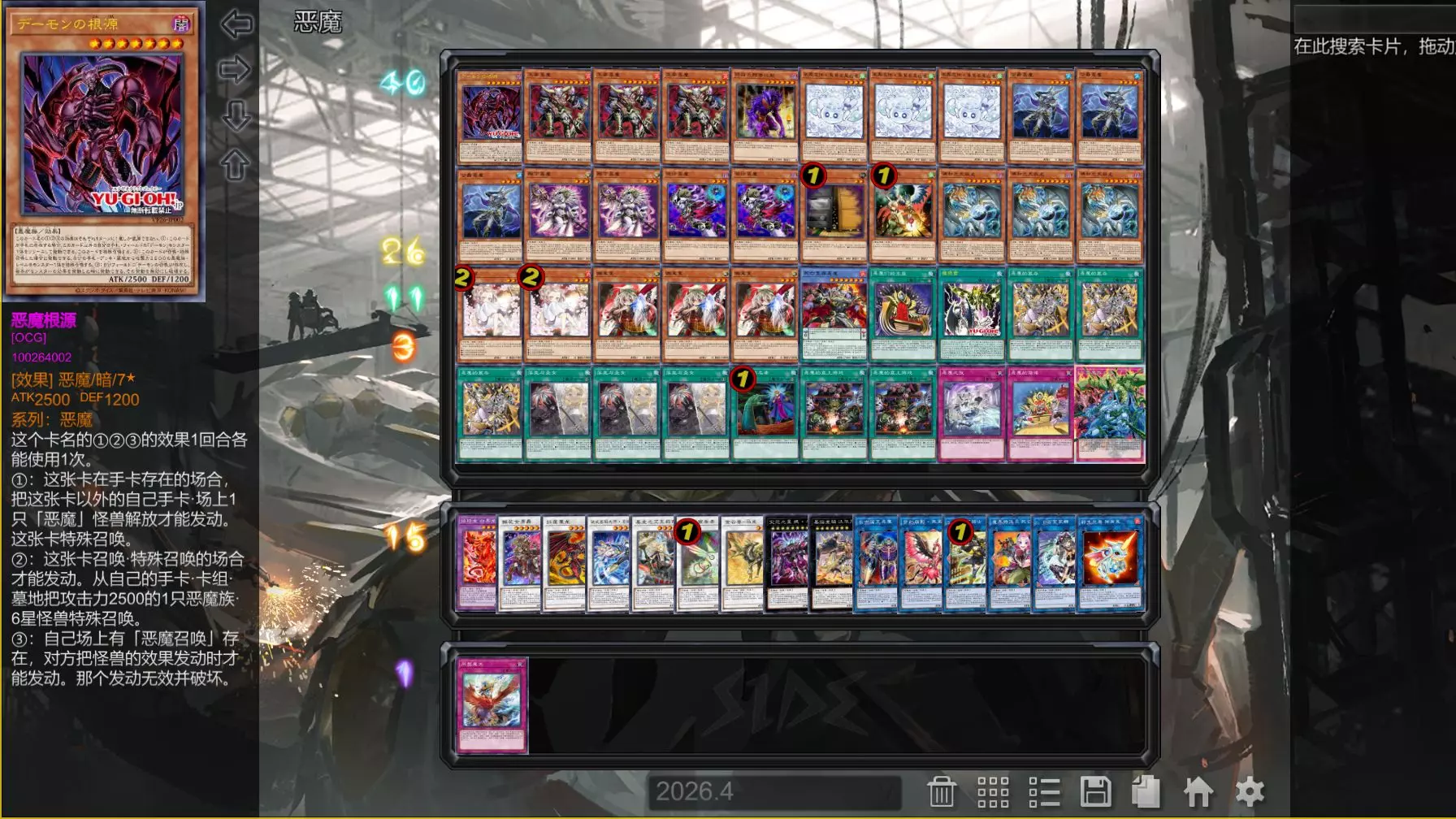
YGO 恶魔根源更新后的最新恶魔卡组构筑及combo【恶魔卡组教程】《游戏王:先行卡组构筑》——烟雨烟雨烟
恶魔根源优化掉了恶魔卡组之前的再世小轴(两者都有恶魔字段) 对比一下召唤条件: 再世魔神上手必须展示2500攻的本家仪式怪才能从手卡特召 恶魔根源解放场上或手卡…
2026-05-12 12:390赞 · 0评论
娱乐 亲眼见证了一个难以想象的otk
bushi
2026-05-06 03:110赞 · 0评论

亚里莎应援团 逆 天 斩 杀 合 集 2 !!
2026-05-15 19:060赞 · 0评论

《愚者》琳库露 绝区零式入场 影之诗塔罗牌部分正逆位演示
不要节制不要节制重要的事情说三次(。•ˇ‸ˇ•。) 一开始看到梦的这张卡两个阿尔卡纳之神合在一起我就觉得怪怪的,后面一了解只觉得cy太÷了
2026-05-13 18:410赞 · 0评论

桌游棋牌 我们影之诗真的是太有交互了
奥契丝对战奥契丝奥契丝先手拍奥契丝超进化解场奥契丝后手拍奥契丝超进化解场加返场
2026-05-13 16:410赞 · 0评论

亚里莎应援团 逆 天 斩 杀 合 集 !!
2026-05-12 13:050赞 · 0评论

炉石传说日服 2026高人气经典CCG卡牌游戏推荐:炉石传说、万智牌、影之诗等必玩之作
卡牌对战类游戏近年来持续升温,凭借策略深度、收集乐趣与多元美术风格,成为玩家热衷的品类之一。本文精选7款具有代表性的经典CCG(集换式卡牌游戏),涵盖欧美、日系…
2026-04-30 07:000赞 · 0评论

如何修复游戏连接问题!
在俄罗斯游玩《影之诗》的简单方法! 修复说明 连接问题与俄罗斯地区Cloudflare故障有关。因此可以进入游戏,但对战时会出现问题。 手机上可以通过安装带有俄…
2026-02-19 16:000赞 · 0评论

卡牌游戏 让影之诗玩家猜猜kards卡牌强度 kards研发卡特别篇
参与嘉宾:@xiaoAjuny 视频背景音乐为:脑蚀/brain rot 的无人声伴奏版
2026-01-23 20:180赞 · 0评论

暂无更多
最新更新
- 《炉石传说》中的关键词及其对应含义 — 游戏关键词简要说明及《炉石传说》对应术语(供《炉石传说》玩家参考)。若有错误欢迎指正,或提出补充建议。 关键词:说明(《炉石传说》对应术语) 昂扬:从手牌置入场…
- 减少蟑螂计算量 — It is a commonplace notion among some experienced Forestcraft players currently …
- 游戏内卡牌详细对比 — 本指南将详细对比游戏内卡牌,展示并挑选各卡包中的特定顶级卡牌。大多数卡牌简单直观、易于掌握,即便在最新卡包更新后,这类卡牌依然相当实用。如果你是游戏新手,个人建…
- 如何玩转古神龙巫(低配版指南#2) — 我抽到的第一张传说卡牌是连续三张的科塞特斯。当时我觉得这游戏在耍我,但后来我开玩笑似的把它们放进卡组里,结果发现这卡组还挺不错的,能赢不少对局,看来是我自己想多…
- 经济清单 — 以下是一些简单的资源获取任务清单。如果你发现更多方法,请告诉我,因为这份指南还很基础。 首次任务: 1. 在单人模式中击败所有CPU卡组,可获得2450金币。 …
- 剧透!!!第一章攻略 — 剧透警告!! 剧透警告! 简单来说对于女主来说博士就是父亲一样的存在。 问题的本身不单单是女主作为人,而是作为女儿认同了自己有父亲。 德莱茨茵·阿德莱特这里是相…
- 新手玩家入门指南 — 新手玩家入门指南,对于首次进入游戏世界的新手来说确实很难,所以我制作了这份指南。 初期阶段: 第一步: 这是所有人都会做的第一步。 获取所有能拿到的资源,包括主…
- 每日排位宝箱获取指南 — 这是一份帮助你在排位决斗中获胜以获取每日排位宝箱奖励的指南。 无需繁琐操作,没有多余教程,只有最直接的实用技巧。 第一步:莽就完事了 组建一套莽夫卡组。我推荐深…
- 如何修复游戏连接问题! — 在俄罗斯游玩《影之诗》的简单方法! 修复说明 连接问题与俄罗斯地区Cloudflare故障有关。因此可以进入游戏,但对战时会出现问题。 手机上可以通过安装带有俄…
- 如何玩Artifact造物术(平民攻略#1) — 造物 portalcraft(Artifact Portalcraft)是一种能够通过卡牌自然生成到手中的廉价材料,来构筑自己传说级终局王牌随从的套牌类型。 这…