
 换一换
换一换 




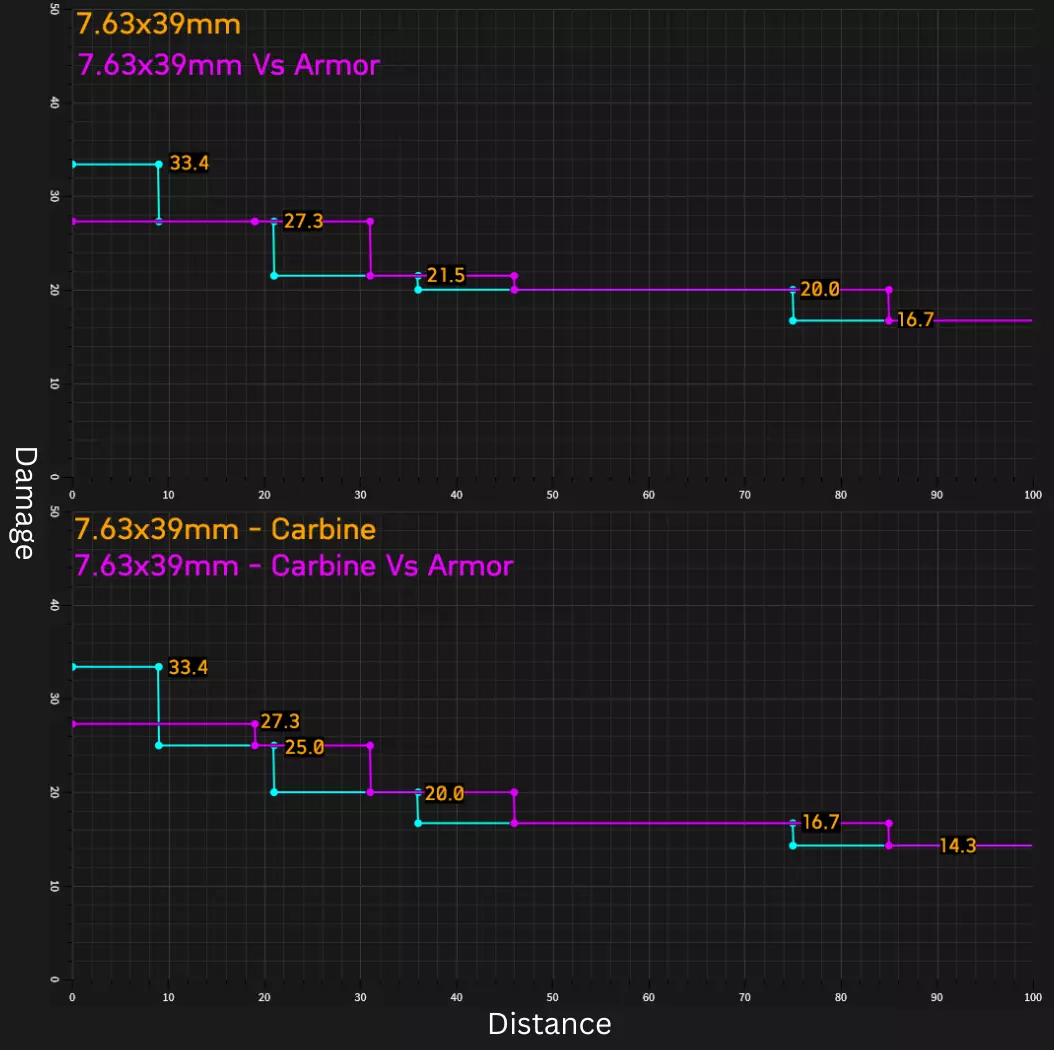
Hey everyone, The team is incredibly excited to see all the fun you’re having with REDSEC. We’ve poured years of work into it, and watching your clips, reading your feedback, and hearing your concerns has been fantastic. Thank you for playing and for sharing your thoughts. With tons of REDSEC matches played since the launch of Battle Royale and Gauntlet, we’ve seen a lot of feedback on the topic along with some recurring questions and misunderstandings around how armor works in REDSEC, how it differs from main Battlefield 6 Multiplayer (MP), and where we might be looking at bugs versus intentional design. So today we’d like to go in depth on the topic of armor and cover: Our philosophy for armor in REDSEC How this ties back to Battlefield 6 MP A deep dive on current armor mechanics from Ryan, the lead designer on the armor system Our Armor Philosophy in REDSEC When we set out to build the Battle Royale experience, one of our big goals was to keep as much parity with Battlefield 6 Multiplayer as possible, while still delivering the core fundamentals of the Battle Royale genre. We want skills and muscle memory you build in one experience to transfer into the others. If you learn recoil patterns, ranges, and damage breakpoints in MP, that knowledge should mostly still apply when you drop into REDSEC. At the same time, Battle Royale has some unique needs: High stakes: One fight can end your match. Looting: Gear progression is core to the experience. Map scale & pacing: Engagements tend to be mid- to long-range, which already lines up nicely with Battlefield’s overall DNA. Because of that, we made lootable infantry armor a key area where REDSEC intentionally diverges from standard MP tuning.What Armor Is Meant to Do Armor’s job in REDSEC is to extend time-to-kill (TTK) so you have a bit more breathing room in high-stakes fights. We want armor to impact how long you live, not make weapons feel totally different between modes. So our guiding principle is to leave core gun mechanics and soldier health damage the same across experiences, and tune REDSEC by adjusting damage vs. armor (extra health) instead. That way, a weapon feels familiar whether you’re in MP, Gauntlet, or Battle Royale. We can also make changes that only affect REDSEC by tweaking damage vs. armor, without breaking weapon balance elsewhere. We feel we landed armor in a good spot for the launch of REDSEC, but this isn’t “set and forget.” We’ll keep monitoring your feedback and our data, and we’ll make future balance passes where needed. Now, let’s hand it over to Ryan for the more detailed breakdown. Armor & Damage – A Deep Dive Hi! I’m Ryan. For those who don’t know me, I’ve been around the Battlefield franchise in one form or another since BF1, and in various Battlefield communities back in the BF3/BF4 days. For REDSEC, I’m the lead designer of the armor system, and I’d like to walk you through how armor works, how weapon damage plays into it, and how it differs from the rest of Battlefield 6.Armor Values in REDSEC Let’s start with some basic numbers: Armor in Gauntlet: 40 HP Armor in Battle Royale: 80 HP total (2 plates at 40 HP each) Think of armor as extra health layered on top of your standard soldier health. Once that armor is gone, everything works like you’re used to from other Battlefield 6 experiences.How We Think About Damage Every weapon in Battlefield 6 has a damage profile. That profile is primarily driven by the caliber of bullet it fires. A specific caliber (for example, 7.62x39mm) has a core damage profile. When that caliber is used across different weapon archetypes (like rifles, carbines, LMGs), we may tweak it slightly, but they still share underlying values and behavior. For REDSEC specifically, each caliber effectively has two damage curves: Damage vs. Soldier Health and Damage vs. Armor. In REDSEC, we only adjust weapon damage against armor. Once armor breaks, that weapon will deal the same damage to soldier health, at the same ranges, as it does in the rest of Battlefield 6. The Two Big Systemic Adjustments We currently make two systemic adjustments to how infantry weapons interact with armor in REDSEC.1. Extended Damage Drop-off Ranges vs. Armor All weapons have damage “steps” at different ranges (max damage, then lower damage as range increases). For damage vs. armor, we extend those drop-off ranges by 10 meters. REDSEC fights tend to happen at longer ranges (the larger map size and extended engagement ranges found on Fort Lyndon). Extending the effective ranges vs. armor helps weapons feel more consistent between MP and REDSEC, even though the context is different. This adjustment applies to all primary and secondary weapons.2. Lowering Extreme Close-Range Damage vs. Armor for Automatic Weapons For automatic weapons, we make another key change vs. armor. The first, very close-range max damage step against armor is essentially removed (or significantly reduced). In cases where we have a Carbine variant of a bullet (like 7.62x39mm vs. 7.62x39mm_Carbine), we keep the caliber’s max damage vs. armor aligned across the caliber and lower that close-range damage step to match the non-carbine, instead of flattening it all the way down. During playtesting, we found that at very close ranges, where both theoretical and practical hit rates can approach 100%, armor often felt nonexistent, especially against high-rate-of-fire weapons. You’d land a perfect close-range spray and barely notice armor was there at all (or worse, it felt inconsistent depending on the weapon). So this adjustment is primarily aimed at controlling high-ROF weapons at very close range and making armor feel like it actually matters when you’re face-to-face, instead of just evaporating instantly. A Concrete Example (7.62x39mm) To make this a bit more tangible, let’s walk through an example using 7.62x39mm. For 7.62x39mm (ACE, RPKM): Deals 33.4 damage out to 9 meters, then drops to 27.3 damage Drops to 21.5 damage at 21 meters Drops to 20 damage at 36 meters Drops to 16.7 damage at 75 meters For 7.62x39mm_Carbine (SIG553R): Deals 33.4 damage out to 9 meters, then drops to 25 damage Drops to 20 damage at 21 meters Drops to 16.7 damage at 36 meters Drops to 14.3 damage at 75 meters These “steps” line up with changes in bullets-to-kill (BTK) and are what you’re feeling when a weapon shifts from, say, a 3-shot kill to a 4-shot kill. Now compare that to damage vs. armor, all those damage drop-off ranges are pushed out by 10 meters vs. armor. The very close-range damage (within ~9 meters) is flattened, so armor doesn’t just vanish instantly. Example: 33.4 is reduced to 27.3 damage vs. armor at those very close ranges. Carbine variants are lowered to match that 27.3 damage, rather than being pushed even lower. At longer ranges, your damage against armor feels more in line with your expectations from MP, just with the added buffer armor provides. At very close ranges, armor meaningfully slows down TTK, especially against very fast-firing weapons, without making the gun feel like a totally different weapon.
从何入手 REDSEC中的护甲在我们看来足以满足上线需求,但这并非最终定论。我们会持续追踪所有技能水平和模式下的数据,听取你们关于护甲在实际对战中的感受反馈,并留意任何异常情况。 在分享大逃杀模式中关于护甲的反馈时,提供遭遇战中涉及的武器或武器类型的具体细节,以及交战距离,会非常有帮助。在“试炼”模式中,说明正在游玩的具体模式细节对开发团队很有帮助。请继续在EA论坛上报告漏洞。 当我们进行调整时,我们会继续倾向于选择调整而非护甲,以保持《战地风云6》中武器手感的一致性,并就所做的更改及其原因保持透明。 再次感谢您的游玩,感谢您投入时间参与REDSEC,以及向我们发送您的想法(和您那些精彩的小队团灭瞬间)。请继续提供反馈,我们在倾听,我们在不断改进,期待在下次更新中与您相见。 //战地风云团队 本公告可能会随着我们听取社区反馈以及持续开发和改进我们的实时服务与内容而发生变化。我们将始终努力让社区尽可能了解相关信息。