
 换一换
换一换 




大家好!我是@Trin Tragula,来自黑工作室的设计负责人之一。在《天下一统》的第三篇区域特色日志中,我们将聚焦东南亚地区,重点介绍全新的曼陀罗和瓦努阿政府类型,以及我们如何通过这些设定来突出该地区的独特之处。我们还将介绍新的伟大工程特色,以及在这款资料片中如何处理朝贡国;虽然朝贡国系统在《草原可汗》中已被引入,但对于这些定居国家而言,其运作方式将有所不同。 场景:中世纪的东南亚 在我们的时间线中,该地区与北方的中国有很大不同。这里极其多样化,拥有众多不同的信仰和文化。
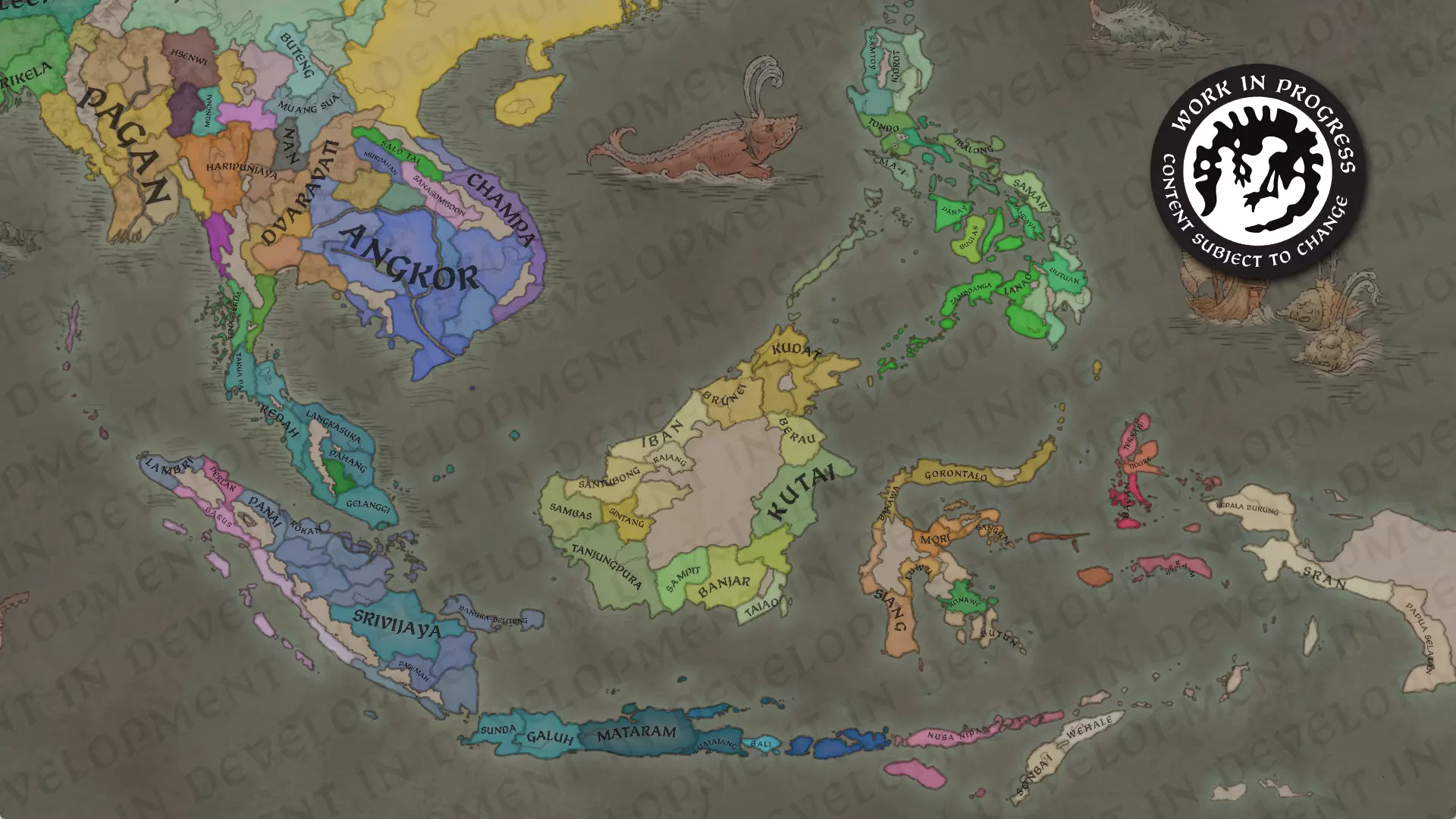
【867年开局的东南亚截图】 在东南亚的大部分地区,分布着众多部落政体。它们遍布于地理环境同样多样的区域,这里有深邃的河谷、茂密的丛林和高耸的山脉。在这样的地方,水道(海洋与河流)是连接不同人群的纽带,但尽管当地有技艺精湛的造船者和水手,该地区在维系一个较大规模国家的统一方面仍面临诸多挑战。 直到最近,该地区的王国在本质上都比中国、欧洲乃至印度的国家更具暂时性。这里的常态是由对受欢迎且有权势的统治者的个人忠诚所维系的松散城邦网络;而当将它们凝聚在一起的核心人物去世后,这些城邦网络便会分崩离析。

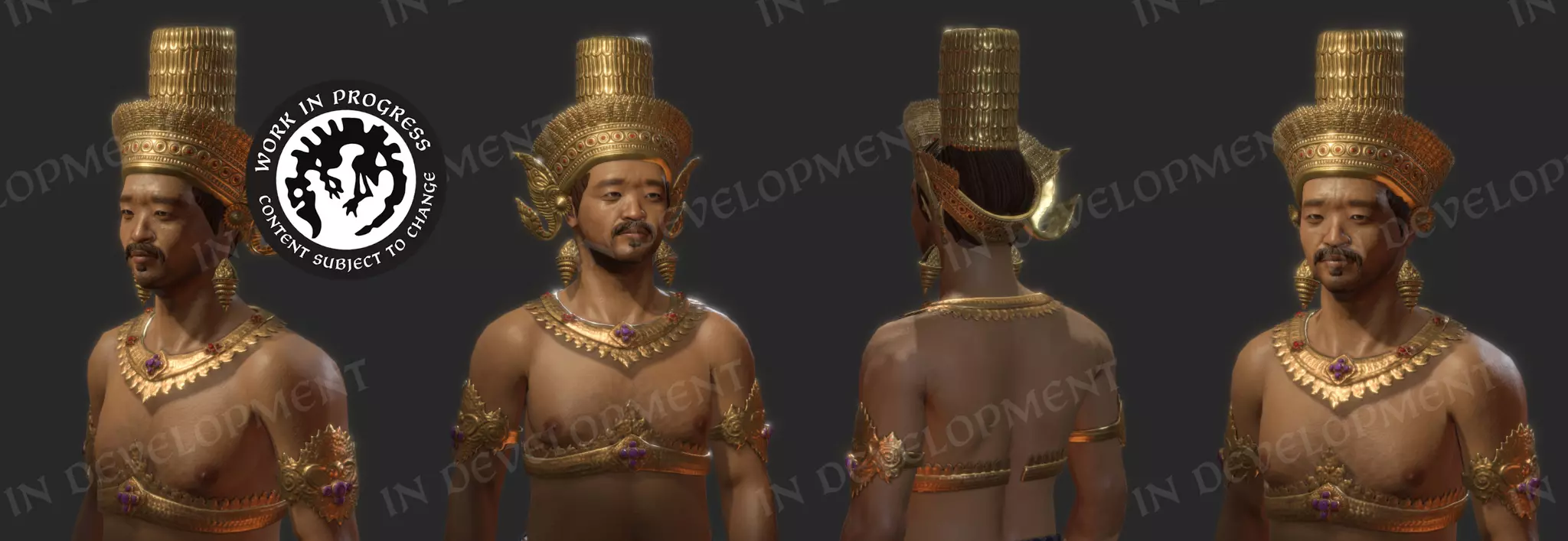
【婆罗浮屠截图】 在印度的达摩信仰(佛教和印度教)中,统治者找到了统一更大领域所需的权威和统一意识形态。他们仍然以伟大的领袖为中心,但与婆罗门祭司结盟,渴望成为活着的神:神王。 神王概念建立在印度理想统治者的理念之上,即统治者需得到众神的青睐。在东南亚,这一理念演变为受民众爱戴的国王实际上是神的化身。宗教仪式与王权在巨大的 temple cities 中融为一体,在这里,臣民和远方的附庸国共同出资建造伟大的公共工程。纪念碑既可以是宗教象征,也可以是王权的体现,比如巨大的达摩诸神雕像会刻上统治者的面容,仿佛统治者亲临臣民之中。首都的寺庙群成为曼陀罗的中心,周围环绕着附属村庄、城市和朝贡国王。 尽管如此,即便是神王统治的王国也有其短暂性。较小的国家可能会向神王进贡,但当神王去世或出现更具影响力的统治者时,它们可能会重新考虑自己的效忠对象;在曼陀罗王国的边缘地带,忠诚度变化很快。 如前所述,东南亚是一个多样化的地区。除了我在此描述的这类国家外,还有越南和南诏国(后来的大理),它们的运作方式截然不同。@PDX_Chop 之前在开发日志中已经介绍过这些内容,所以今天我们不再赘述,但在引言中不提它们是不完整的。 现在我将交给 @Distantaziq,由他来讨论我们如何努力描绘该地区。他们将详细介绍我们为在《天下共主》中表现曼陀罗领域以及周边非佛法部落领域而开发的机制。 曼陀罗——转轮圣王领域 大家好!我是 Distantaziq,《天下共主》的设计师之一! 今天,我们将探讨东南亚的神王与神后——曼陀罗!从历史角度来看,这些政权高度依赖宗教与信仰,围绕着那位宣称自己是神圣存在的曼陀罗统治者运转。
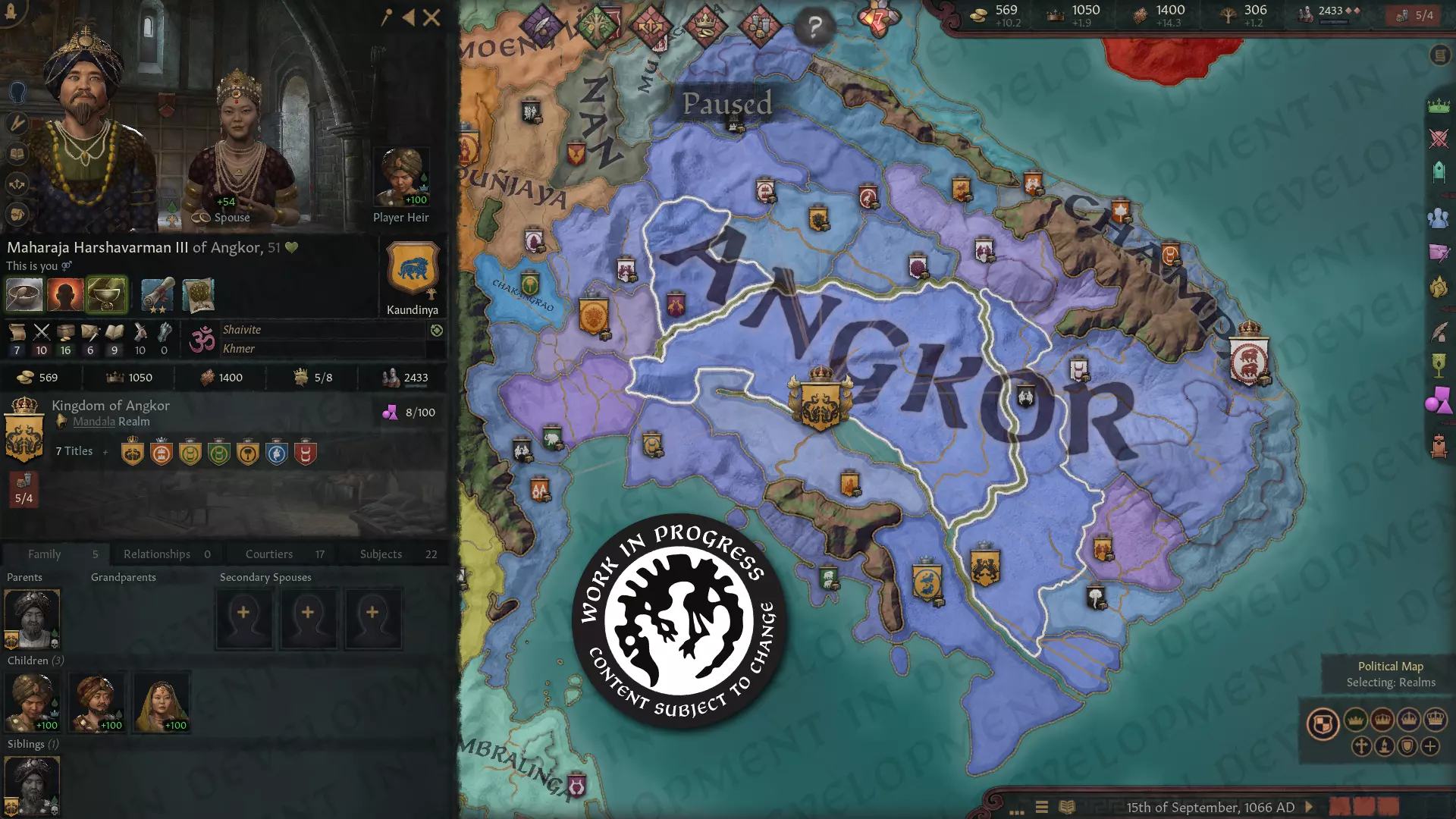
【1066年吴哥王国地图(包含朝贡国和附庸国)】 从平衡角度来看,曼陀罗政体的设计初衷是为玩家带来新挑战。如下文所述,曼陀罗政体初期实力较弱,尤其与同等规模且持续强大的封建制或氏族制统治者相比。但如果你能克服初期困难,通过数代人的努力,就能达到前所未有的权力高度——前提是你要小心维持自身的神性,并为继承人做好相应准备…… 神力模式? 如前所述,曼陀罗政体以信仰为核心,因此,虔诚值将是曼陀罗政体的主要资源。 建造首个曼陀罗首都寺庙群?主要消耗虔诚值。 指定神圣继承人?消耗虔诚值。要让你周围的人相信你确实是一位他们应该奉献生命和王国去追随的神圣存在?……好吧。那就积累虔诚值吧。还有虔诚等级!

【虔诚等级提示文本,包含额外的虔诚等级】曼陀罗政府与信仰、宗教及神性深度交织,因此拥有三个独特的额外虔诚等级:神圣、半神和神级。你可能会问,如何达到神级?答案很简单:这是历经数代证明的神性。

【一位真正如神明般的吴哥统治者】 更实际地说:如果你的角色达到新的虔诚等级之一,你的继任者将获得一个增益效果,使其能够晋升到下一个虔诚等级,依此类推。这一过程可以持续下去,直到你建立起一个如神明般的角色血脉。 哦,还有,确保不要以与你的神性相违背的方式死亡。你听说过那位宁静神性的神王死于地方性流行病吗?没有?我就知道你没听说过。
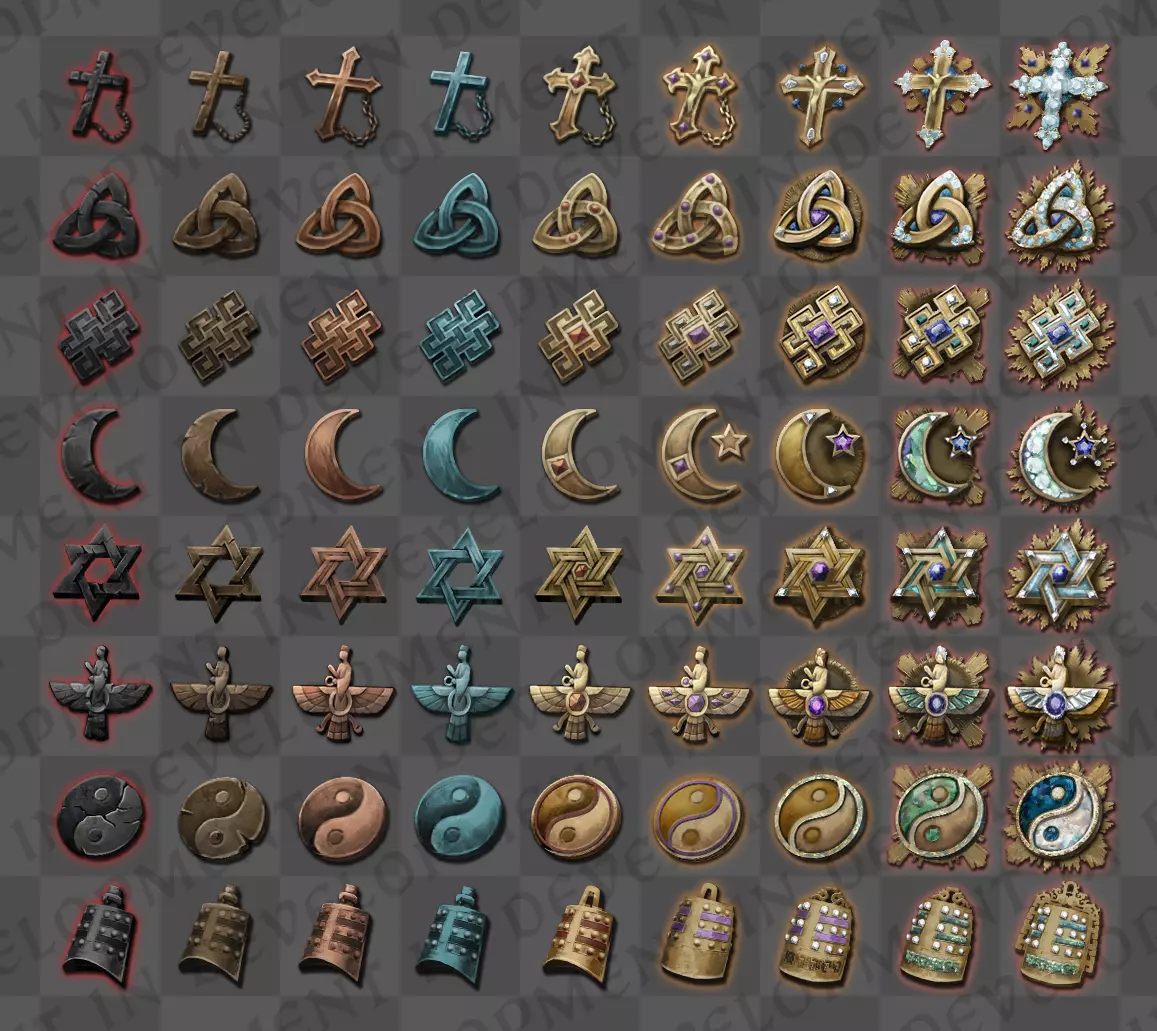
【网格中有9个虔诚等级,从罪人到神级排列】 没错,我们确实需要为这个特定功能展示一些真正华丽的艺术图标渲染! 寺庙的问题 你可能会问,一位强大的神王德瓦拉贾在这个世界上还可能需要什么呢?那么,寺庙怎么样? 在《天下》中,我们将引入一种额外的领地类型:寺庙堡垒。这将是曼陀罗统治者的主要领地,并且对于大多数其他有地政府来说,它也可以作为首都(与城堡领地一起),以确保当该地区被非曼陀罗统治者征服时,它仍然有效。你的首都的神庙堡垒是首都神庙建筑群的主要地点;这是一座拥有额外防御设施且高度重视虔诚等级的神庙,也是任何有自尊的神王的根基。这些宏伟建筑通过新的“伟大工程”功能建造,该功能是你与臣民之间的协作项目。未来的开发日志将提供更多相关信息! 最终建成的宏伟建筑,即首都神庙建筑群,将通过以下方式支持你的王国:扩大你的曼陀罗王国内的领土上限和附庸上限,以及提升你作为神王的光辉(你吸引朝贡国和附庸的能力)。
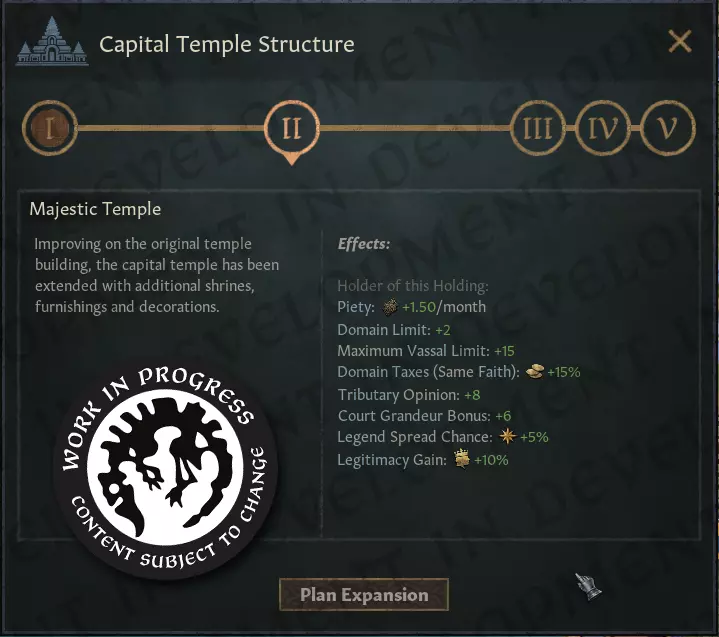
【首都寺庙群】这一伟大建筑的建造详情包含5个等级。当然,只有曼陀罗(Mandala)能够享受此类建筑的效果。若你不再是曼陀罗,或该建筑被封建或部落异教势力控制,它除了可能作为旅游景点外,将不会有太多用途。
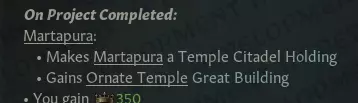
【完成基础层级首都神庙建筑群伟大项目的效果之一】 你是不是刚以新曼陀罗势力开局,还没收到神庙堡垒的相关提示?没关系!就算没有神庙堡垒也问题不大! 你的神格是什么? 在开始建造首都神庙建筑群之前,曼陀罗统治者需要从四种曼陀罗神格中选择一种。这些神格大致基于印度教神明的不同面向,会极大地影响你游玩曼陀罗势力的方式。创造:解锁连续建造的加成效果,并从抚养子女中获得虔诚值。应主要通过和平方式传承。 宁静:解锁结交的加成效果,以及在请求贡献互动中纳入盟友。应主要通过和平方式传承。 毁灭:解锁额外的宣战理由和军事力量加成。也可通过战斗或特定暴力死亡方式传承。 诡计:解锁额外的计谋,如“质疑曼陀罗”,并为某些计谋提供加成(例如对更高等级的目标使用“强迫纳贡”)。也可通过被谋杀的方式传承。 正如在分类说明中以及前文中所提到的,你不能通过任何方式死亡来让继承人提升到下一级别。关于虔诚——毁灭之神或许会战死沙场并被尊为圣,但一个因酗酒而死的欺诈之神?这可能就没那么可敬了。 每个神格方面都有其自身的进阶要求。该系统与你的虔诚等级以及首都神庙建筑群等级共同作用于…… 曼陀罗光辉 东南亚的多位统治者都宣称自己是下一位转轮圣王,坚称自身的神性?那么,你的神庙建筑群有多宏伟呢? 曼陀罗光辉代表着你的吸引力,并帮助你衡量竞争态势,只要你下令建造第一级神庙建筑群,它就会解锁。
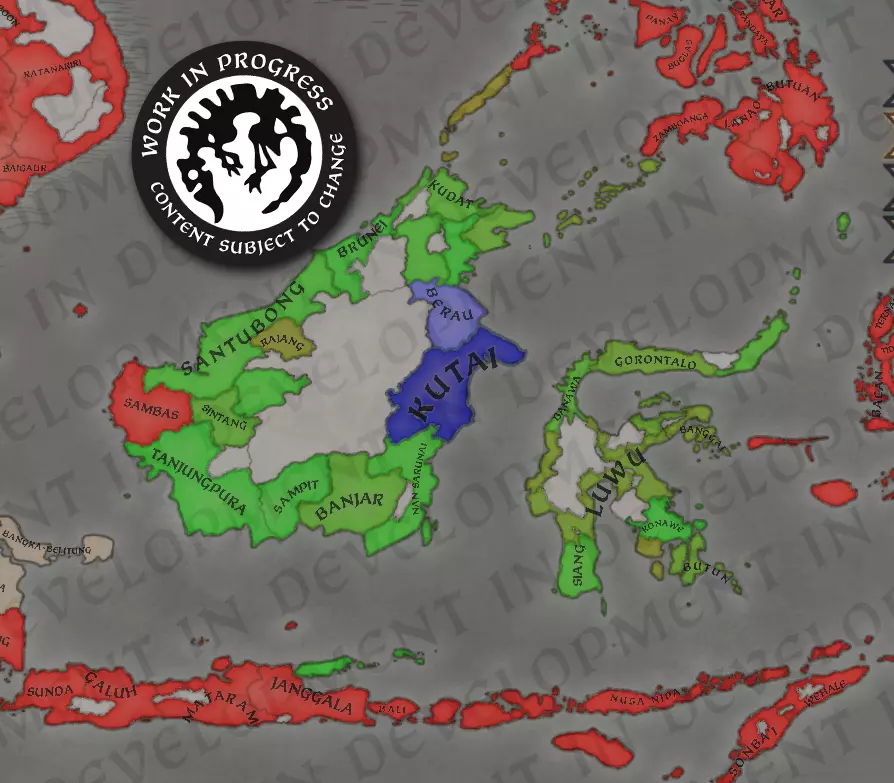
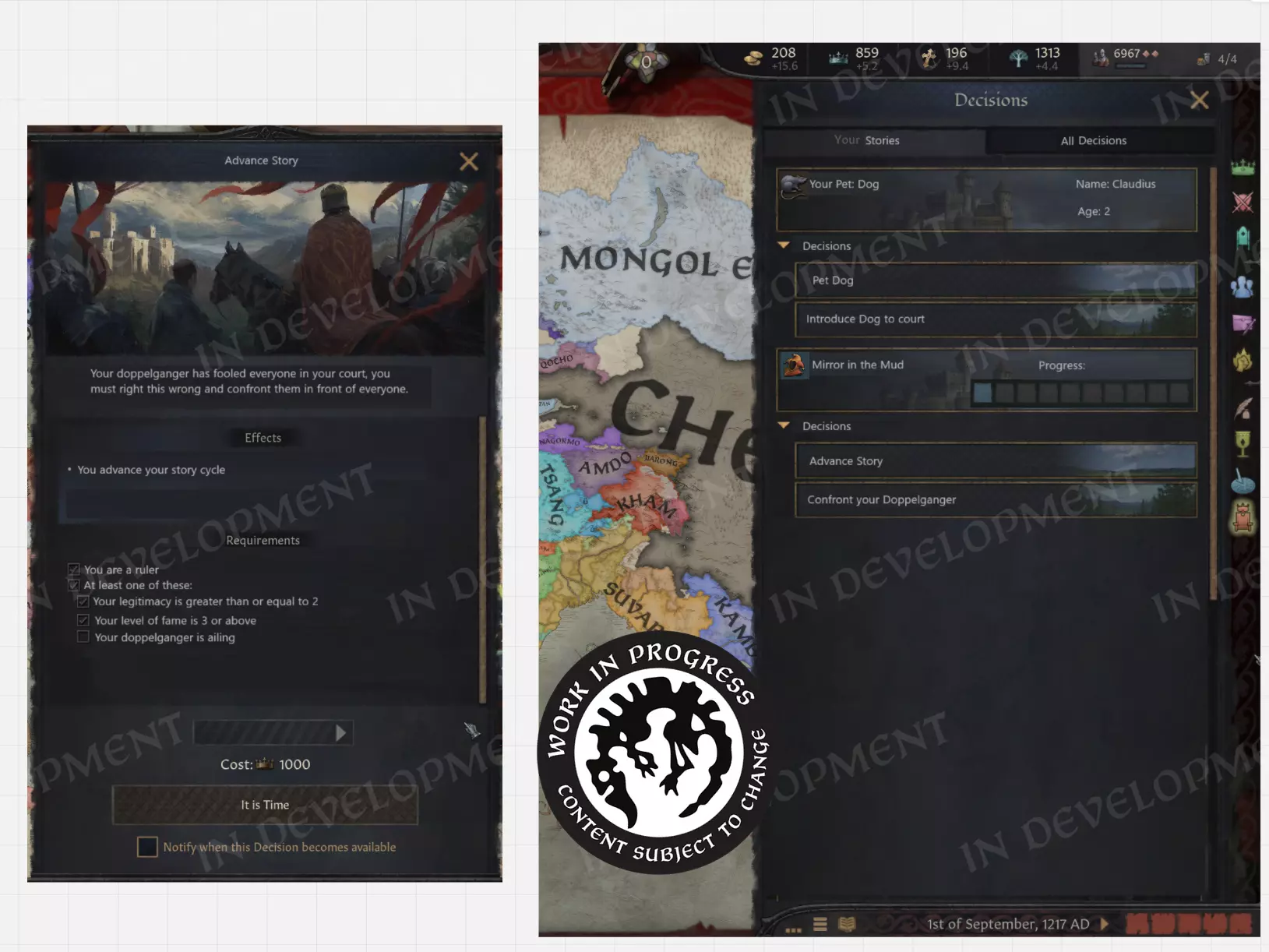
【曼陀罗】的开发中地图模式,显示谁可能接受纳贡提议。 神圣光辉应极大影响该地区的小统治者愿意向谁宣誓效忠。如果当前宗主被认为不虔诚,他们甚至可能离开,转而加入更具吸引力的转轮圣王。 我颁布… 与神相相比,法令提供了更灵活的王国统治方式。那么,神圣的统治者啊,您将颁布什么法令?
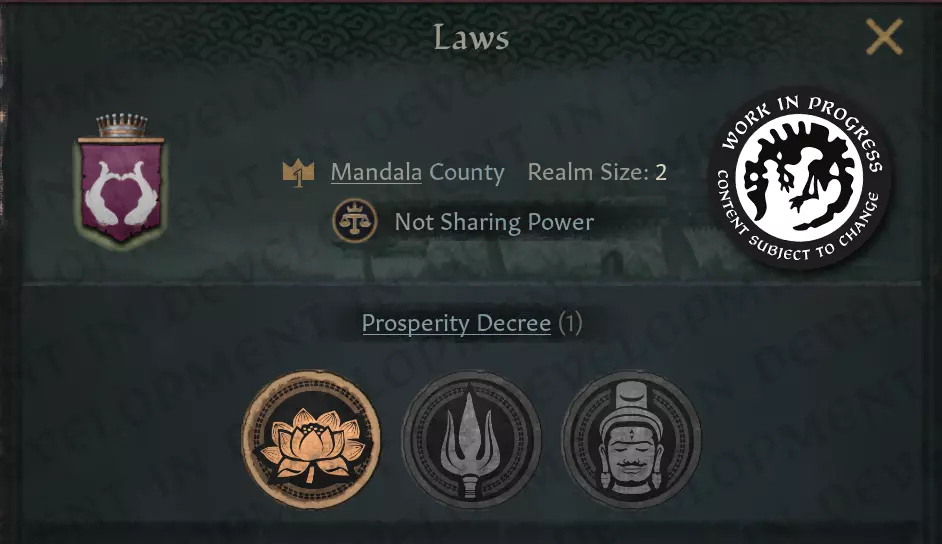
【曼陀罗法则】窗口图片,展示了法令内容。 选择你的法令,主要影响信徒(或臣民,随你怎么称呼他们)当前的关注焦点。你当前的焦点是繁荣、扩张还是崇敬?接下来你打算做什么? 朝贡状态: 曼陀罗的主要属民将成为朝贡国。由于信仰比通过附庸化巩固的关系更重要,此系统旨在提供一个相当松散的领域结构。 曼陀罗直接拥有的土地较少,主要依靠其朝贡国。虽然附庸在曼陀罗领域中仍然存在,但与其他政府相比,这里的附庸受到更多限制。随着你扩建首都寺庙建筑群,你也可以将更多朝贡国整合为附庸。附庸国无法参与派系活动,对你的所作所为意见较少,并且可以向他们的君主执行进贡任务。另一方面,如果你并非如自己所说那般神圣,或者你对他们不好,他们也可能会脱离统治。

【严重超出领域限制】 所有这些都会体现在较低的领域和附庸上限,以及游戏开始时更多的朝贡国上。 战争不是答案? 曼陀罗王国的重点在于提供除了通过战争来获取新朝贡国或扩张领土与神性之外的其他选择。例如,征服战争通常会产生常规朝贡国,而非授予虔诚值的曼陀罗朝贡国,除非你深入发展毁灭神性。 这些非战争选择之一是新计谋【强制朝贡】,这是曼陀罗玩法的核心要素之一。这是一种政治计谋,它会查看你所选择的曼陀罗相性及其相关技能,然后让你尝试迫使另一位统治者成为你的附庸国——让他们相信你就是他们一直在等待的神圣统治者。
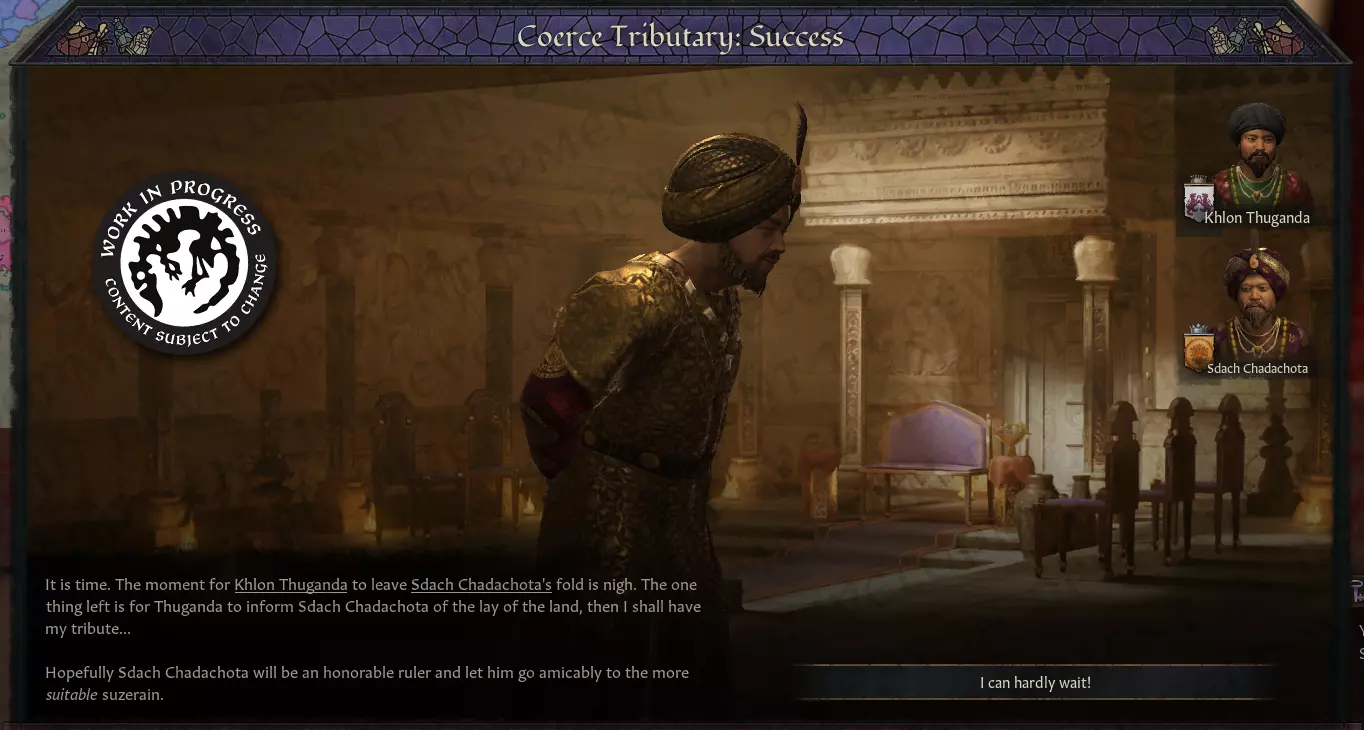
【曼陀罗统治者】正期待着成功实施【强制纳贡】计划的结果——相关事件仍在开发中!不过要注意:如果你试图拉拢的附庸国已是其他势力的附庸,那么其当前宗主国可能会采取措施促使其留下,或者在该附庸国脱离原宗主国并加入你时,你甚至可能需要通过战斗来保护它。
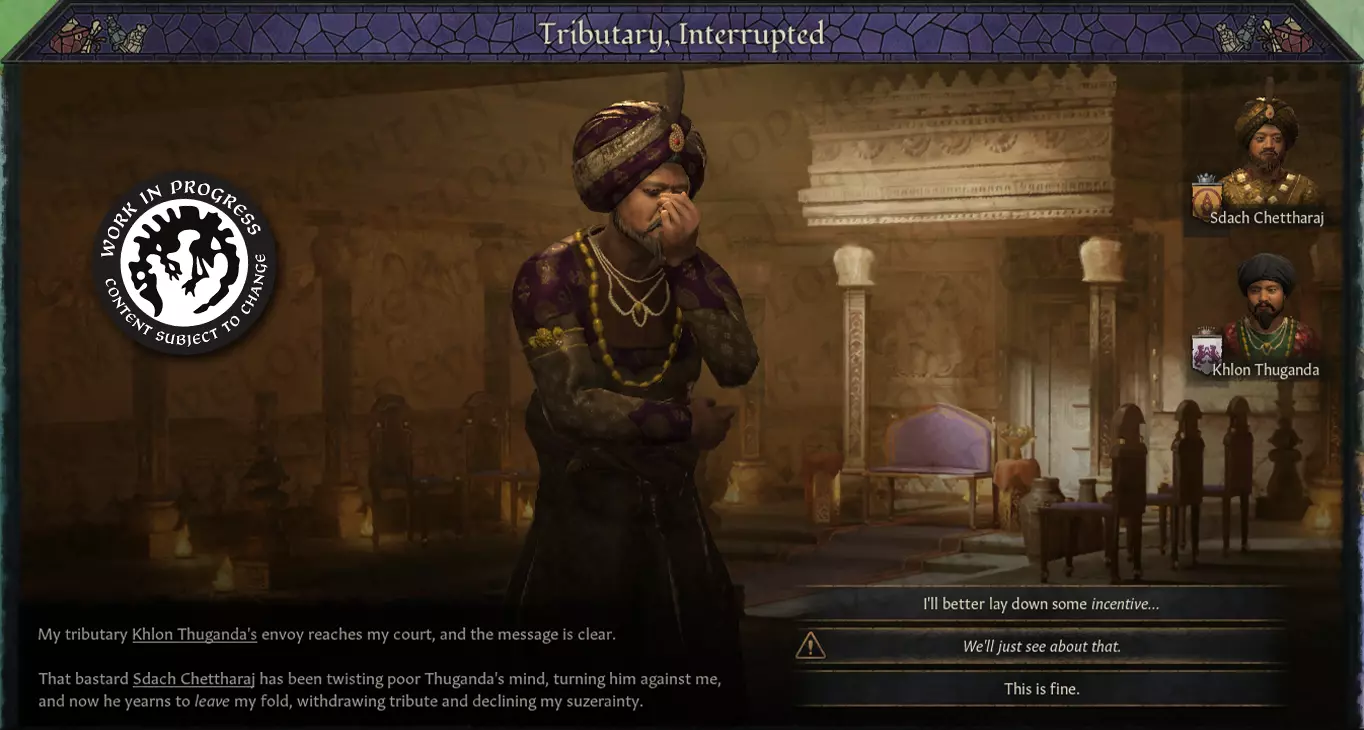
目标朝贡国的宗主国将获得干预“强迫朝贡”阴谋的选项——相关事件仍在开发中! 或者你可以选择不帮助他们,这将解除他们的朝贡国身份,并彻底断绝你与该朝贡国的关系。
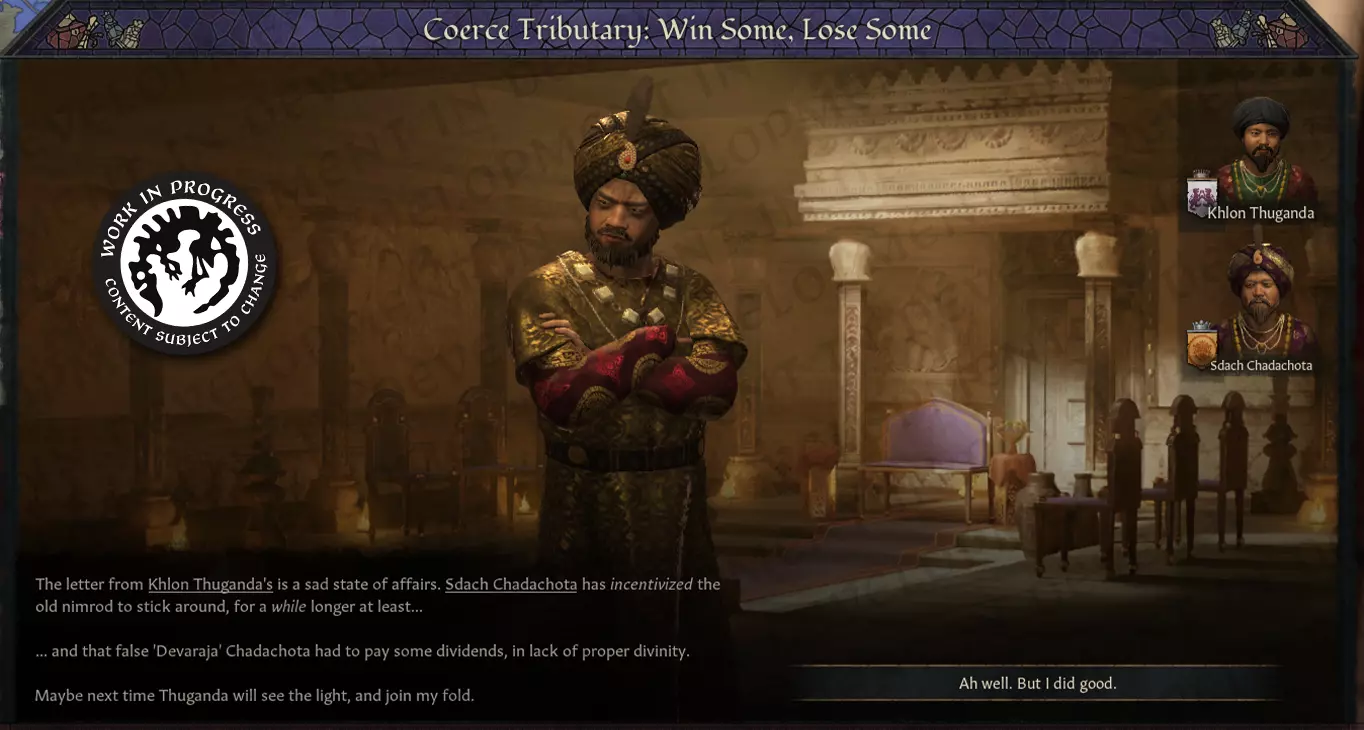
【强制纳贡】的目标被激励留下来,这让宗主国耗费了大量资源——相关事件仍在开发中! 无论如何,你可能获得了一个新的附庸国,但你肯定干扰了他们宗主国(大概是敌对曼陀罗统治者)的计划。 东南亚海域 这些岛屿简直是信仰和文化的培养皿。在大型信仰和王国对岛民的文化与信仰产生重大影响之前,我们几乎没有那个时期的文献资料。
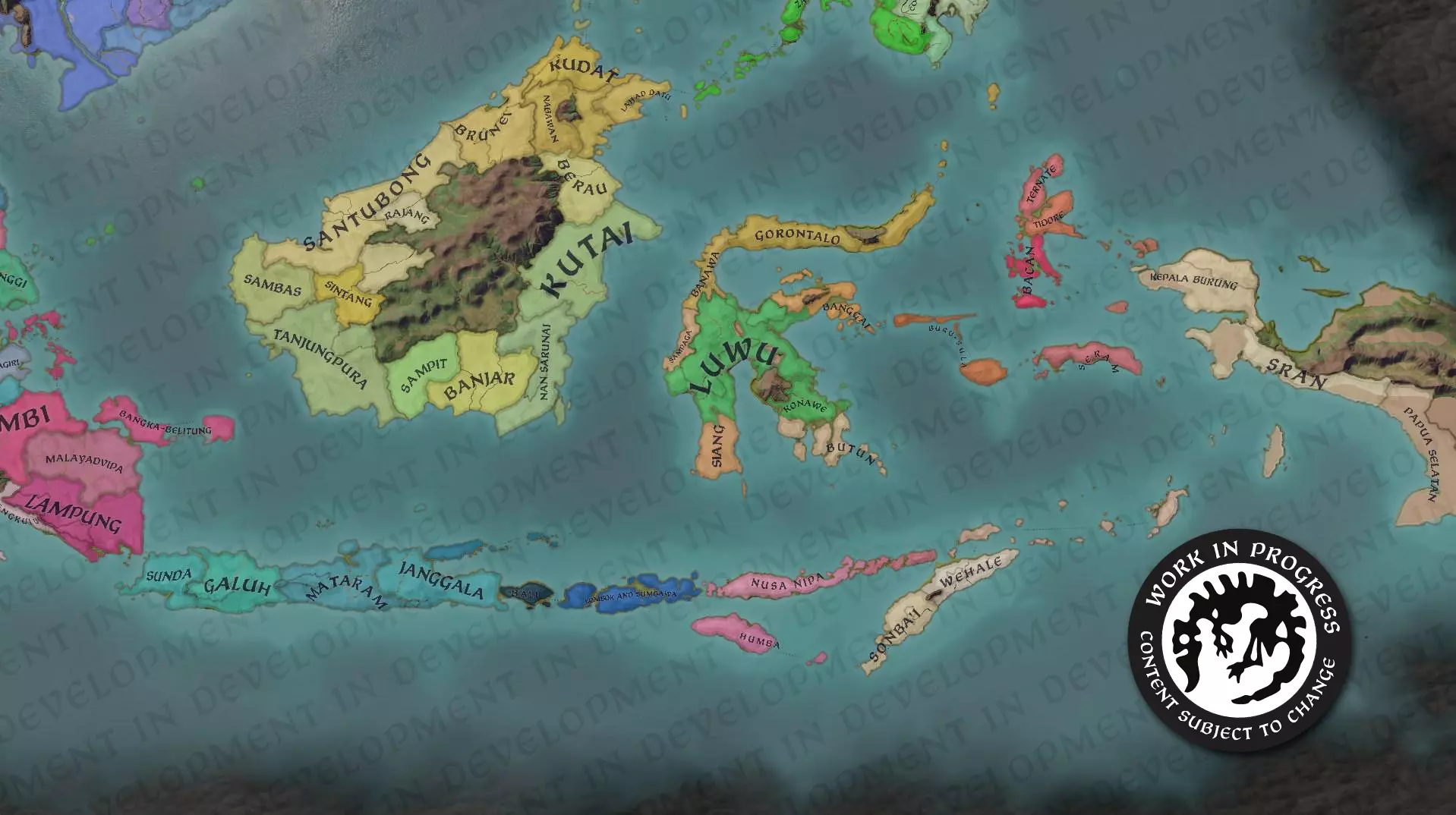
[1066年东南亚 maritime 地区的截图] 鉴于此,我们旨在添加最突出的部分。
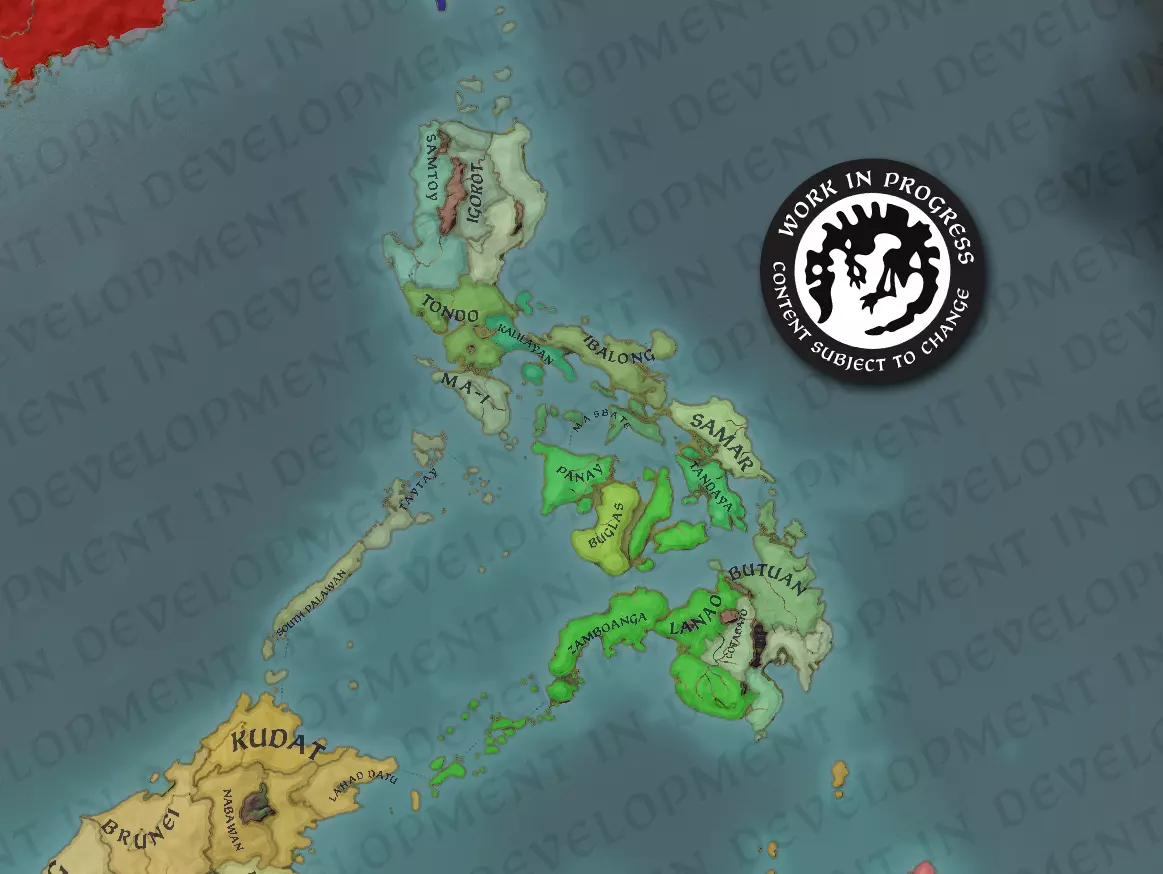
【1066年菲律宾地区截图】 地图上包含了巴布亚的一小部分,以及东南亚群岛的大部分海域区域。 瓦努阿 这是一种高度以海洋为基础的政府形式,历史上(如前所述)曾隶属于更大的王国和宗教势力。不过,它们仍属于部落制政府类型,因此受到部落制的限制。如果你想进一步发展,在革新和发展方面变得更加先进,最终需要采用不同的政府形式。 由于瓦努阿位于东南亚的岛屿上,一些曼陀罗新兴王国已经存在(其中一些在我们的游戏时间线结束后演变成了更强大的历史王国,如室利佛逝或满者伯夷)。然而,若有人渴望踏上从瓦努阿(Wanua)成为强大曼陀罗神王(Mandala God-King)的旅程,那完全是有可能的。只要你信奉了佛法信仰(或足够努力改革自己的信仰),只需简单按下一个按钮,就能前往那些亟待探索的岛屿……

【万瑙统治者采纳曼陀罗规则决议的截图】 除了文化特色外,万瑙人自然也能够跨海出征和劫掠。我们也在探索更多让万瑙人玩起来既独特又有趣的方式,例如让他们更依赖正统性(他们可通过成为曼陀罗朝贡国获得正统性)。 伟大工程 《天下一家》中还新增了伟大工程功能!该功能允许多位统治者共同出资参与项目的各个部分,这些项目若由单个统治者独立出资,不仅费用高昂,还需耗费漫长时间。
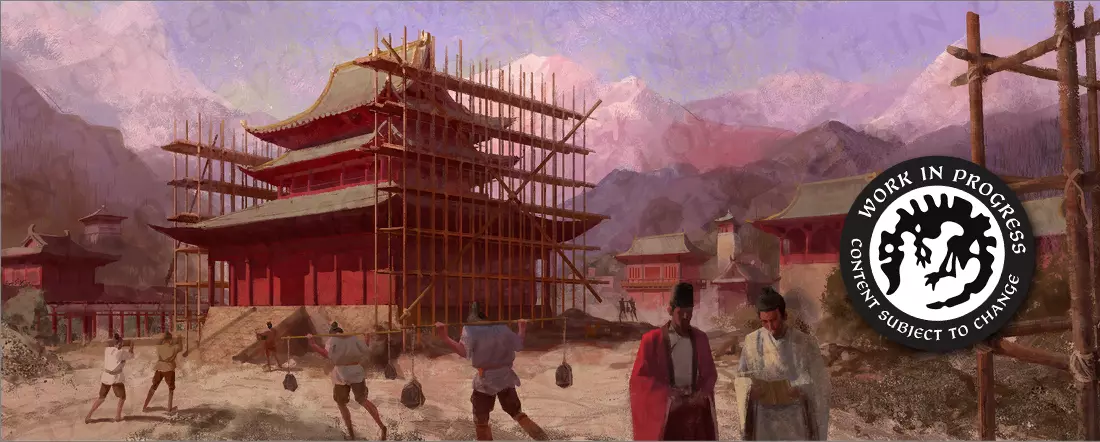
曼陀罗宏伟工程 对于曼陀罗而言,首都寺庙群便是这样一项工程;它是你精神力量的实体体现,你的信徒可以前来致敬或单纯地崇拜你。寺庙分为5个层级,一旦你完成第一层,就正式踏上了通往神格的道路(当然,前提是你能守护好它)。 强制贡献 每个层级都需要特定的贡献,你或你的任何臣民都可以提供资金;根据出资者的不同,该统治者将获得这一善举的回报,以及创始人(在这种情况下就是你)的赞赏。
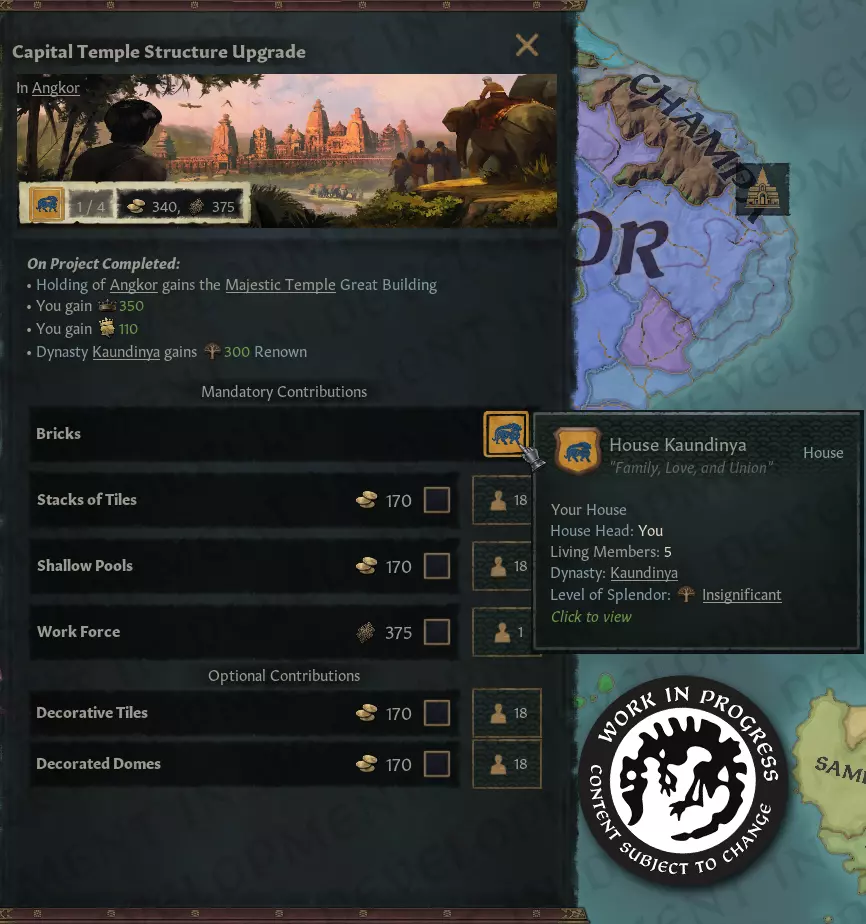
【正在开发中的重大项目窗口:曼陀罗资本升级贡献】 可选贡献 对于那些一心想要金色穹顶的人,还有可选贡献,可为贡献者带来额外奖励。 请求贡献 如果你刚开始你的曼陀罗之旅,或者你的子民因为某些原因需要额外的推动才能真正为你的项目贡献那些拱门,这里还有“请求贡献”按钮。 在其中,你可以通过各种手段激励他们响应请求,比如利用人情、贿赂,或者用你那令人压抑的虔诚精神迫使他们——任何能说服他们做出正确决定的方法都可以。一旦你完成最终等级——这可能是一项跨越数代人的成就——你将证明自己是一位合格的德瓦拉贾统治者,并将获得曼陀罗生活方式的巨大加成。 中国伟大工程 在中国,伟大工程更侧重于需要多方参与的大规模基础设施建设和其他改进项目;例如修建长城的部分段落或改善大运河。 这些项目让皇帝既能独自做出重大贡献,彰显其作为天子的威严与仁慈,也为那些渴望获得皇室恩宠的野心家提供了机会……
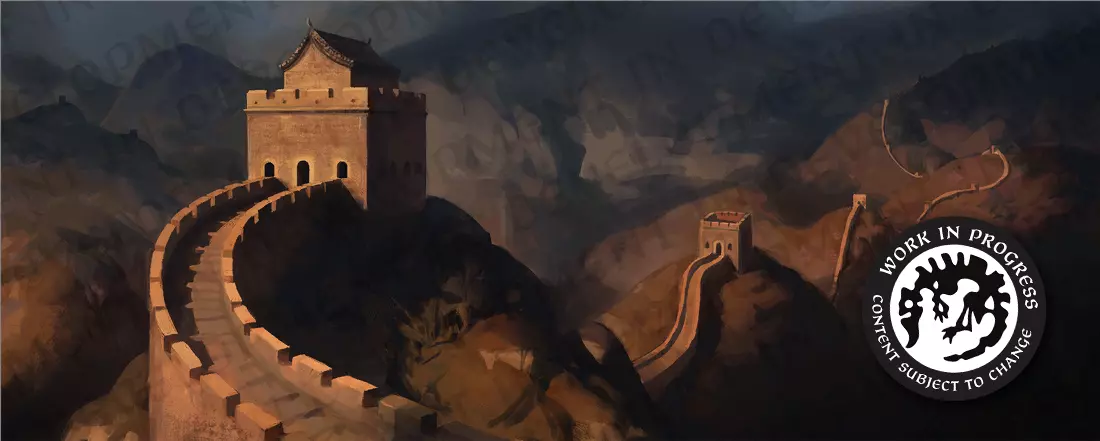
自然灾害会催生大型工程,这为玩家提供了另一个通过行善来提升自身地位的机会。虽然自然灾害可能在地图上所有地理动荡的地区发生,但只有中国境内的灾害才会影响王朝循环,并可能根据应对方式对皇帝的地位产生影响。关于自然灾害及其对王朝循环的影响,将在未来的开发者日志中详细介绍。 不用说,这一功能为模组制作和新内容添加提供了巨大机会;不仅是宏伟的建筑,还有那些足以流传后世的人类伟大壮举!朝贡任务 曼陀罗附庸国和霸权附庸国均可向宗主国执行朝贡任务,主要目的是提升自身的正统性,同时也能分享通常与宗主国相关的财富与荣耀。 曼陀罗朝贡任务 历史上,朝贡行为往往既是国家事务,也是非常直接的个人行动,表现为一位统治者承认另一位统治者的优越性,并献上礼物以证明这一点。然而,一方视另一方为宗主国并不意味着双方之间不存在互惠关系;作为纳贡的回报,附庸国可能在国内获得利益(由于得到更强大宗主国的认可,他们会显得是更合法的君主),甚至会收到可带回国内的物品(本质上是一种贸易形式)。 由于被动地长期支付资源并不完全涵盖此类关系中的人际层面,我们为东亚地区常见的那些更具自愿性质的附庸国添加了所谓的朝贡任务。为维持这些关系,每个宗主国在位期间至少需要进行一次这样的朝贡。纳贡任务以一个决策开始,你可以通过该决策决定要携带的贡品类型,贡品类型会根据宗主国的不同而有所变化。例如,如果宗主国使用宦官(如中华行政政府),你可以进贡宦官;如果他们拥有妃嫔(同样以中华行政政府为例),你可以进贡妃嫔。黄金或牧群(如果你是游牧附庸国)等标准贡品始终可用。
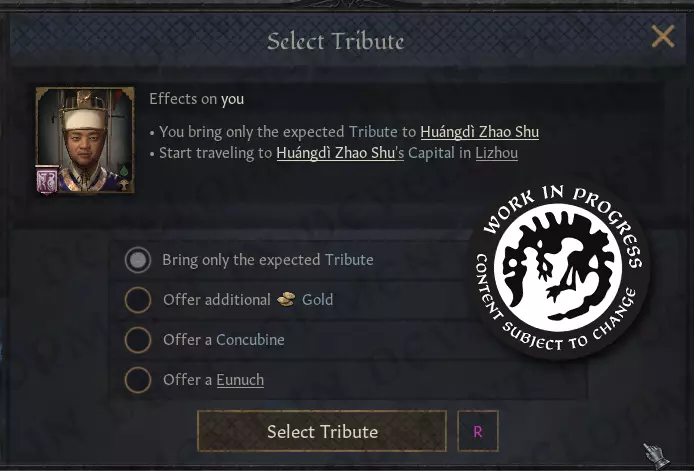
[Image of the Select Tribute character interaction for a Hegemonic Tributary] Once you’ve decided what kind of tribute you’re offering, you set off on a journey towards your Suzerain's capital! Upon arrival, you are greeted by the Suzerain (if they have a Royal Court, you are received at the Court), where you exchange gifts. First, the Suzerain receives your gift, and you may attempt to influence what the reward will be - or you leave it up to the discretion of the Suzerain. Similar to the type of tribute being offered, the type of reward the Suzerain may choose between vary depending on if you're a Mandala or the Emperor - a handful of options might be to: Award them with additional Trade Posts that increases the development of the Tributary's capital Award them with an artifact for them to bring back and display to their people Award them with a monk, to mend their heathen ways (for Mandalas to give to their tribal tributaries who are still unreformed) You start traveling back home once you’ve received your reward, eager to showcase the gift and enjoy the legitimacy you received from your tribute. Now I will hand the word over to @lachek, who implemented the Hegemonic / Celestial Tributary types. Hegemonic Tribute Missions Hello again! @lachek here, and I'm excited to once more discuss Tributaries with you! As mentioned above, tributaries were first introduced into Crusader Kings III to support nomadic gameplay with Khans of the Steppe, where they modeled the unique subject-overlord relationship between a tributary and their suzerain. On the vast expanse of Northern Asia, nomadic tributary relationships were mostly held together through military domination, either implied or by actual display of force. Nomadic rulers can demand that neighboring realms fall in line under them by building up a sizable horde, or simply go out and enforce it through warfare. Through a cascade of such relationships, enormous swathes of the plains can be held together under a single suzerain. However, they can collapse just as quickly due to migratory patterns or a foreign conqueror cutting off a key part of the chain. We also implemented a Subjugated Tributary type available outside the steppe to represent rulers dominated by more powerful neighbors and made to pay tax to their overlord. However, none of those types adequately represent how tributary relationships functioned in either Southeast Asia or China. Therefore, we are introducing both Mandala tributaries and the Hegemonic/Celestial types (more on the distinction later), where the relationship is more contingent on one-sided respect and a gift economy. Celestial Tributaries These are realms within China's sphere of influence that recognize the Emperor as the Son of Heaven and pay him a great deal of personal respect (not to speak of material wealth). In return, they are granted recognition and sovereignty by China. Unlike tributaries on the steppe, this is not primarily a military arrangement but rather a one-sided show of deference, ultimately serving both parties in the end. This relationship can be established by either party through character interaction, but is typically initiated by the prospective tributary themselves. Once established, the tributary has few immediate obligations: a little bit of Prestige and perhaps some Gold, in exchange for which some of China's Legitimacy is conferred upon them. It's usually a beneficial arrangement for both parties, especially since any taxes paid by the tributary goes directly into the Emperor's personal coffers rather than into the treasury. This makes it one of the few sources of direct income the Emperor has available for his own discretionary projects. Over time, the Emperor may decide to impose further standing obligations on some of their tributaries. Any increase in taxation or prestige transfer also comes with closer ties to China, however, thereby increasing legitimacy for the subject. However, Celestial Tributaries are also expected to Kowtow to the Son of Heaven on a regular basis, bringing immense riches and gifts with them to reaffirm their deference and respect. This is fundamentally the same kind of Tribute Mission as in Mandala realms, with a few modifications. Unlike in Mandala realms, the Chinese Emperor always has some minimum expectation regarding the size of tribute, depending on the esteem in which the tributary is already held. This is tracked by a metric we call Imperial Grace, which serves several purposes: It acts as a timer on how frequently you are expected to pay tribute; if you're only able to bring the bare necessities and wait until the last moment to reaffirm your respect, the Emperor might start to demand more frequent visits. Highly successful missions give you a longer grace period until your presence is once again expected. It gives you an opportunity to adjust your relationship depending on what kind of tributary you want to be. Do you pay only nominal respect when absolutely required, just so China will overlook you when assessing their borders? Or are you a devoted subject looking for a closer relationship? The decay rate of Imperial Grace increases during unstable periods of the Dynastic Cycle, reflecting the uncertainty of these times. Will you contribute to sustaining the ruling dynasty of China's legitimacy during troubles times, or seize on this moment to break the agreement and try to claim a piece of the pie for yourself? As a Celestial Tributary you can quite readily adjust your own tributary contract's obligations, but changing it in your favor costs an amount of Imperial Grace. Finally, at very high levels of Imperial Grace, the Emperor might decide to make China's relationship with its subject more permanent through the granting of a Seal of Investiture. This is an enduring artifact (regalia type, which can be reforged into a court artifact if you wish) that gives access to special privileges not usually available to subjects of China. Trade Access: This privilege grants the tributary access to the domestic markets of the Chinese capital, resulting in a gradual closing of the development gap between the two realms' capital provinces. A low-development tributary enjoying this privilege could potentially propel itself to wealth and power compared to their less privileged neighbors within a few generations. Family Access: This privilege negates the usual high acceptance maluses for marrying into the Chinese imperial dynasty, and even grants a small bonus to such dynastic intermingling. Palace Access: This privilege lets the tributary's representatives roam the palace grounds, rubbing shoulders with ministers, governors, and sages in the seat of power. Tributaries with this privilege become active participants in the Dynastic Cycle and can join political movements to shape the future of China. Once you have gained a Seal of Investiture, these become available as new contract privileges that you can activate in exchange for a one-time cost of Imperial Grace. This doesn't make the tribute missions redundant, however. The size of the bonuses you get from these scales with the degree of Imperial Grace you currently possess, so sustained tribute will only make your relationship with China more powerful. It is important to note that a Celestial Tributary contract is a formal agreement between a realm and the Chinese Emperor. The contract is inherited upon death of either the tributary or the suzerain, but if the Hegemony title is lost then the contract will break – even if another claimant dynasty later restores it. As long as the dynastic line is unbroken, however, accumulated Imperial Grace and the privileges that the contract yields can be maintained for centuries. You may have noted I’ve made a distinction between Hegemonic and Celestial Tributaries above. A Celestial Tributary is a type of Hegemonic Tributary, specific to China. However, other hegemony titles (e.g. India or restored Rome) can also maintain Hegemonic Tributaries that share many similarities with Celestial ones. Instead of Imperial Grace these contracts have Subject Standing. They do not use the Seal of Investiture mechanic with its tie-ins to China-specific mechanics like difficult dynastic intermarriage or the Dynastic Cycle situation, but most other aspects of the contract work in similar ways with the same dynamics. This allows Hegemony-tier titles to use the tributary mechanic not only to expand their own de facto tracts of land, but also to accept recognition and deference from select surrounding realms they find useful to their larger strategy. Moddability I'll conclude this with a final note to modders. The Hegemonic/Celestial variants of tributary types now marks five distinct types I've implemented in Crusader Kings II (with Mandala tributaries being a sixth variant in All Under Heaven's release). I'm continually amazed at how flexible this system truly is in allowing you to model different types of relationships between realms that look nothing like a feudal liege/vassal system. Anything from simple non-aggression between two specific rulers to long-standing extractive domination is possible, with the one caveat that it must always have an implied power imbalance. With the addition of Subject Standing, which tracks relationship strength over time and can theoretically be applied to any subject contract (including your typical vassal contracts, if so desired), there's a lot of fertile ground to represent entirely novel types in your own mods, be they focused on more granular historical accuracy or total conversions. So go wild! And here we are handing the microphone back to @Trin Tragula, who will have another look at the map. Map Corner As we did last time, we will conclude with a short overview of the map area relevant to this diary. Southeast Asia looks rather different in 867, 1066, and 1178, so for this I will be using a mix. If you are curious about anything in particular that I have not shown off feel free to ask us in the comments. Like everything else shown in this diary, this is a work in progress, but we would love to hear your feedback on the things we’ve covered so far.
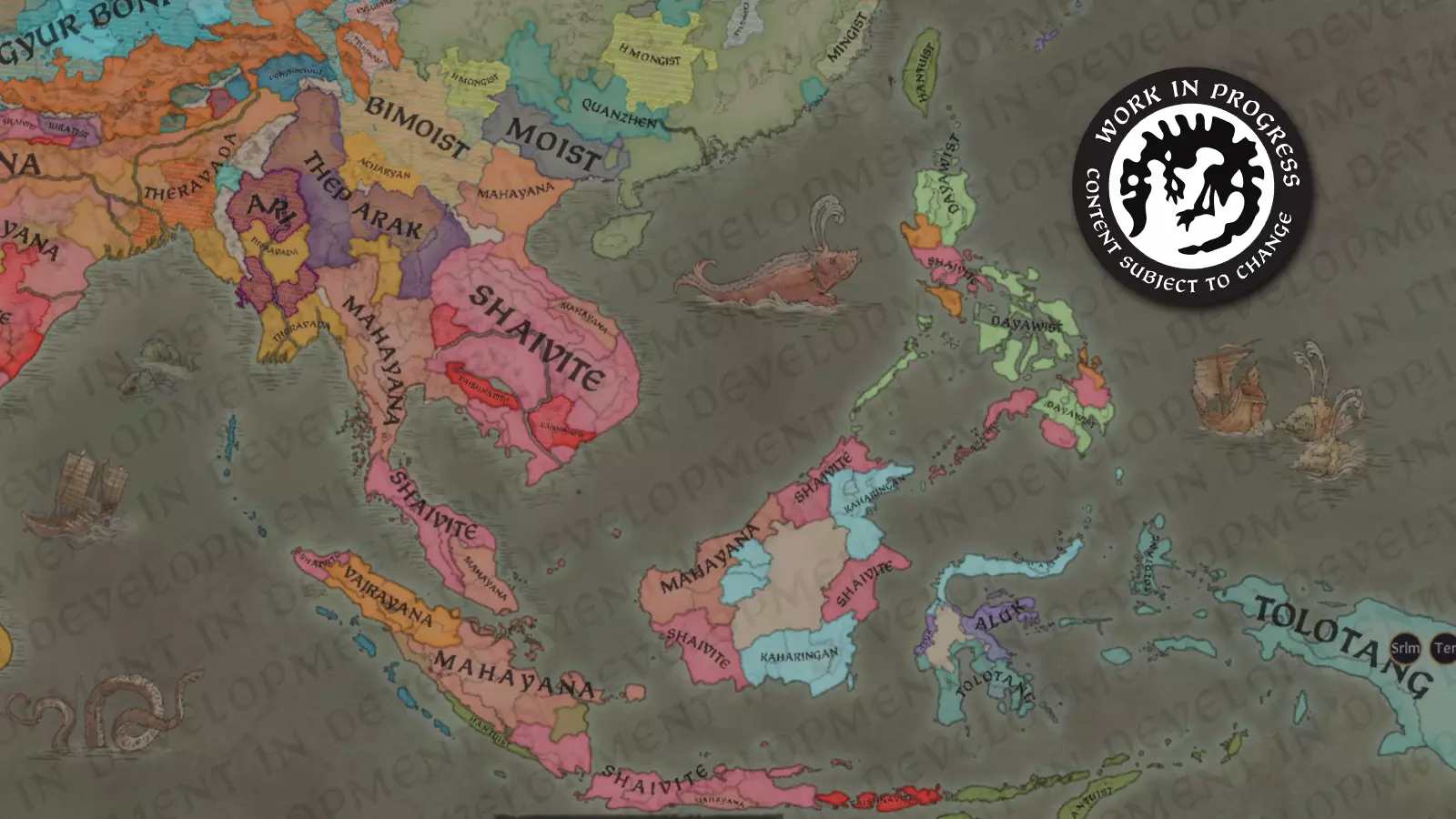
【867年信仰情况】 正如介绍中所提及的,东南亚的信仰和宗教构成相当复杂。我们已尝试在游戏中合理呈现这种多样性,同时进行概括以避免开局时出现过多规模过小的微型信仰。 到867年时,多种形式的印度教和佛教已在地图上的大部分区域占据主导地位,但更古老的本土信仰在大陆和岛屿上依然存在。
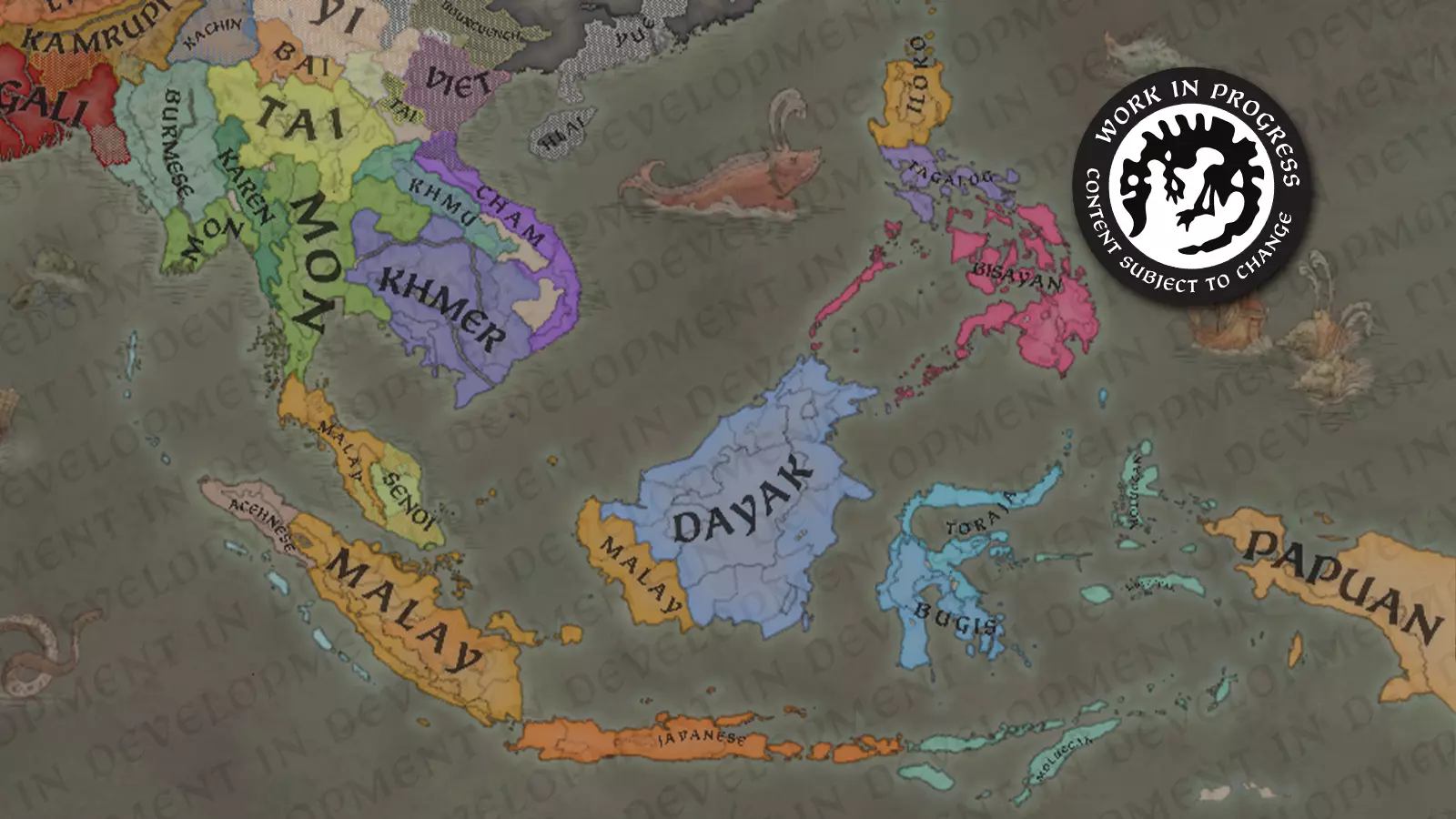
在文化方面,该地区在许多方面更加多样化。值得注意的是,泰族仍主要分布在其北部地区。从历史上看,该族群的分支曾在大陆许多地区占据政治主导地位,从现代的老挝和泰国,到印度北部的阿萨姆邦(地图上标注为“Kamrupi”的区域)。 从游戏玩法角度来看,在文化数量上取得过多或过少之间的平衡从来都不容易,但在世界的这个地区,这可能尤其困难。我们在这里展示的内容,比我们通常的目标既更简化,又更碎片化。
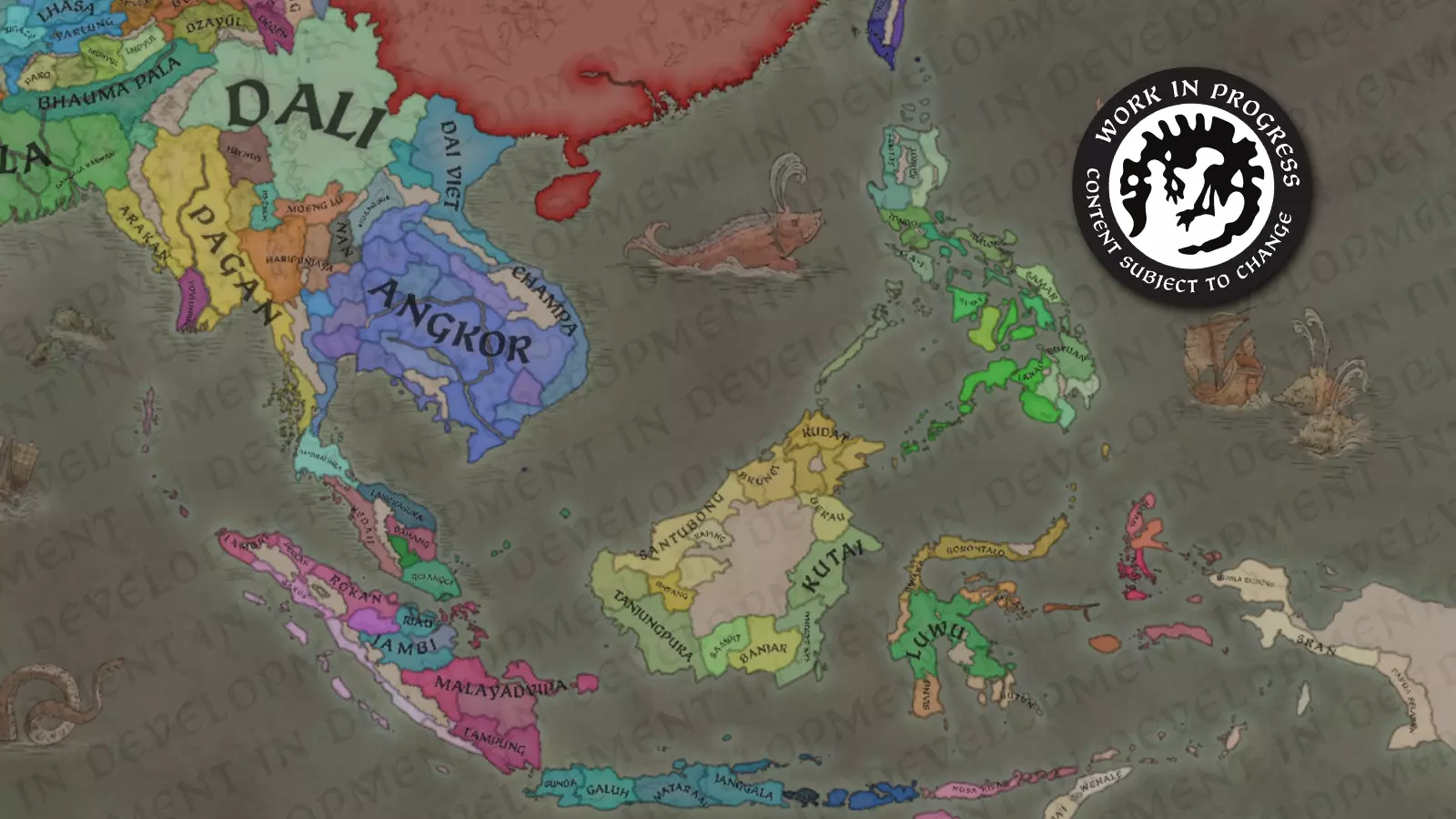
这是1066年政治局势的截图,宋帝国在北方地区占据重要地位。室利佛逝帝国(在本日志开头的初始截图中还很繁荣)最近被来自印度的朱罗王朝入侵所瓦解。
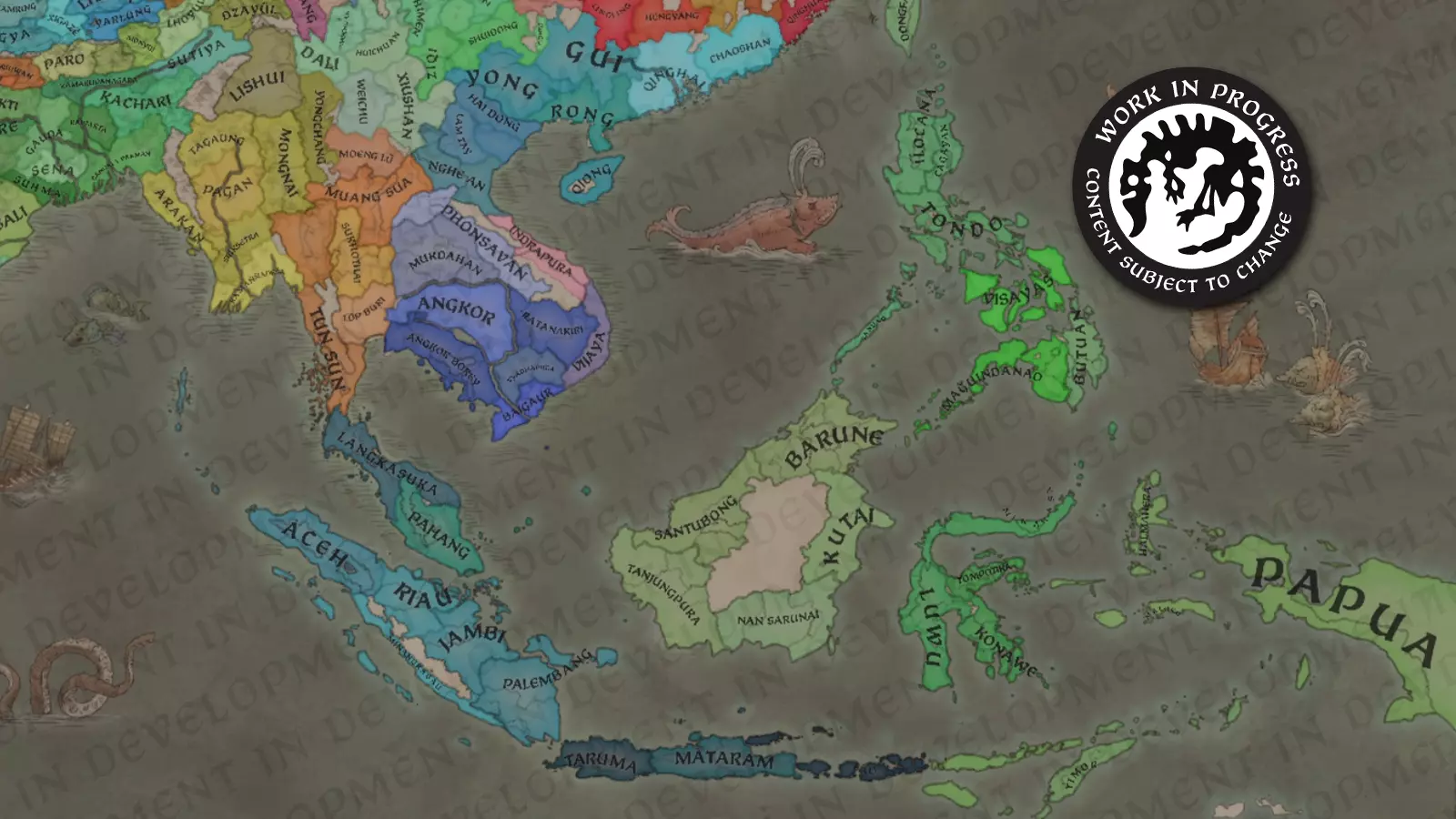
公国地图模式快速概览。在游戏开局时,东南亚地区的许多公国尚未建立,小型领地占据主导地位。与其他地区存在众多效忠于国王的强大公爵不同,该地区的公国往往被分割给各个独立的朝贡国。
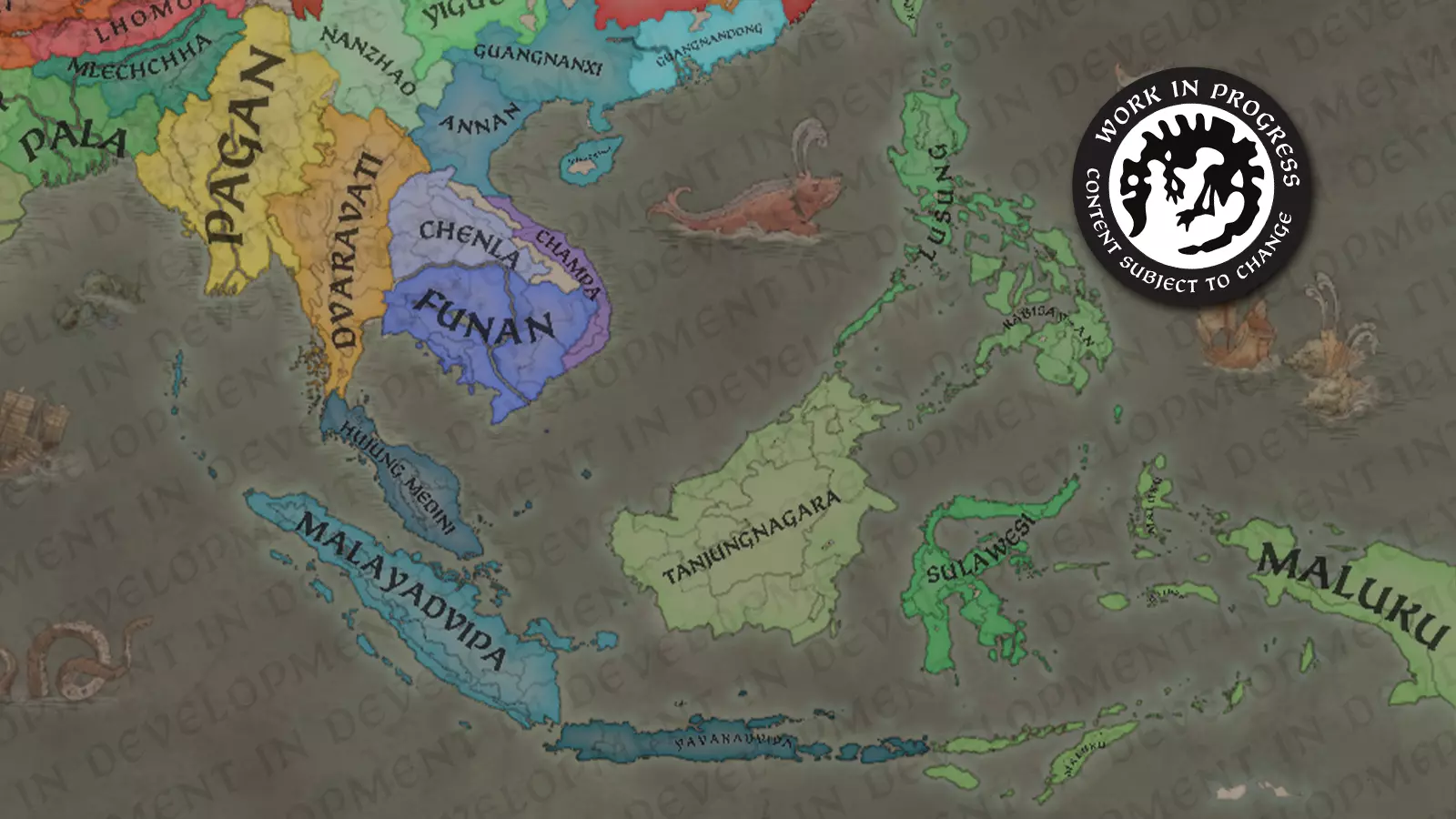
867年的法理王国
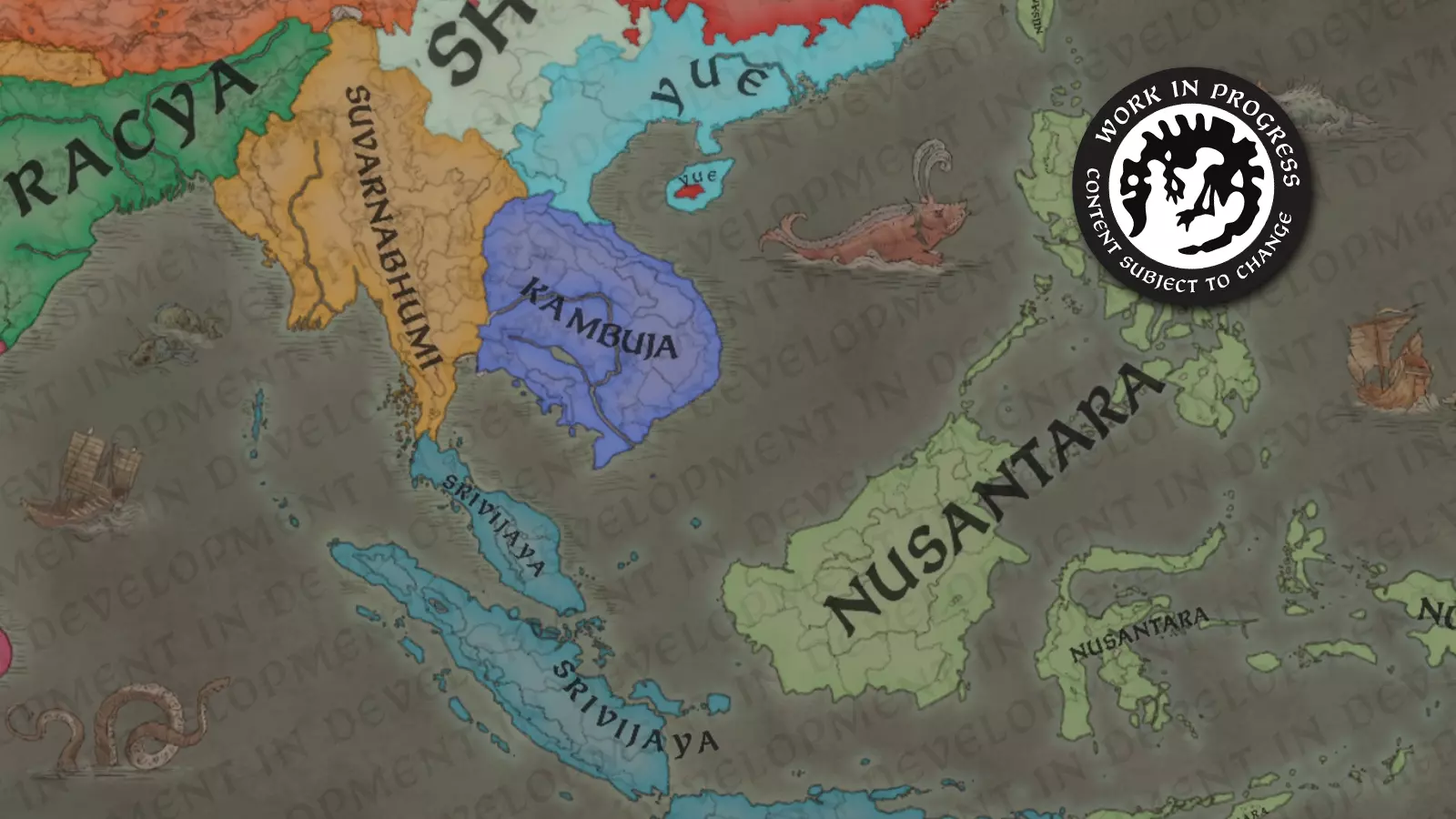
最后但同样重要的是,这些是我们为该地区设定的法理帝国!努山塔拉看起来可能很大,但就伯爵领数量而言,实际上并没有表面上那么庞大。并非这些岛屿的所有地区都有已建立的国家(即伯爵领),像婆罗洲或巴布亚等地的内陆地区往往难以通行。 以上就是本次的全部内容!这篇开发日志也是我们暑假前的最后一篇,但开发日志将于八月初恢复更新。在此期间,我们当然仍会关注大家迄今为止对我们日志(包括本篇)所提供的反馈。