
 换一换
换一换 




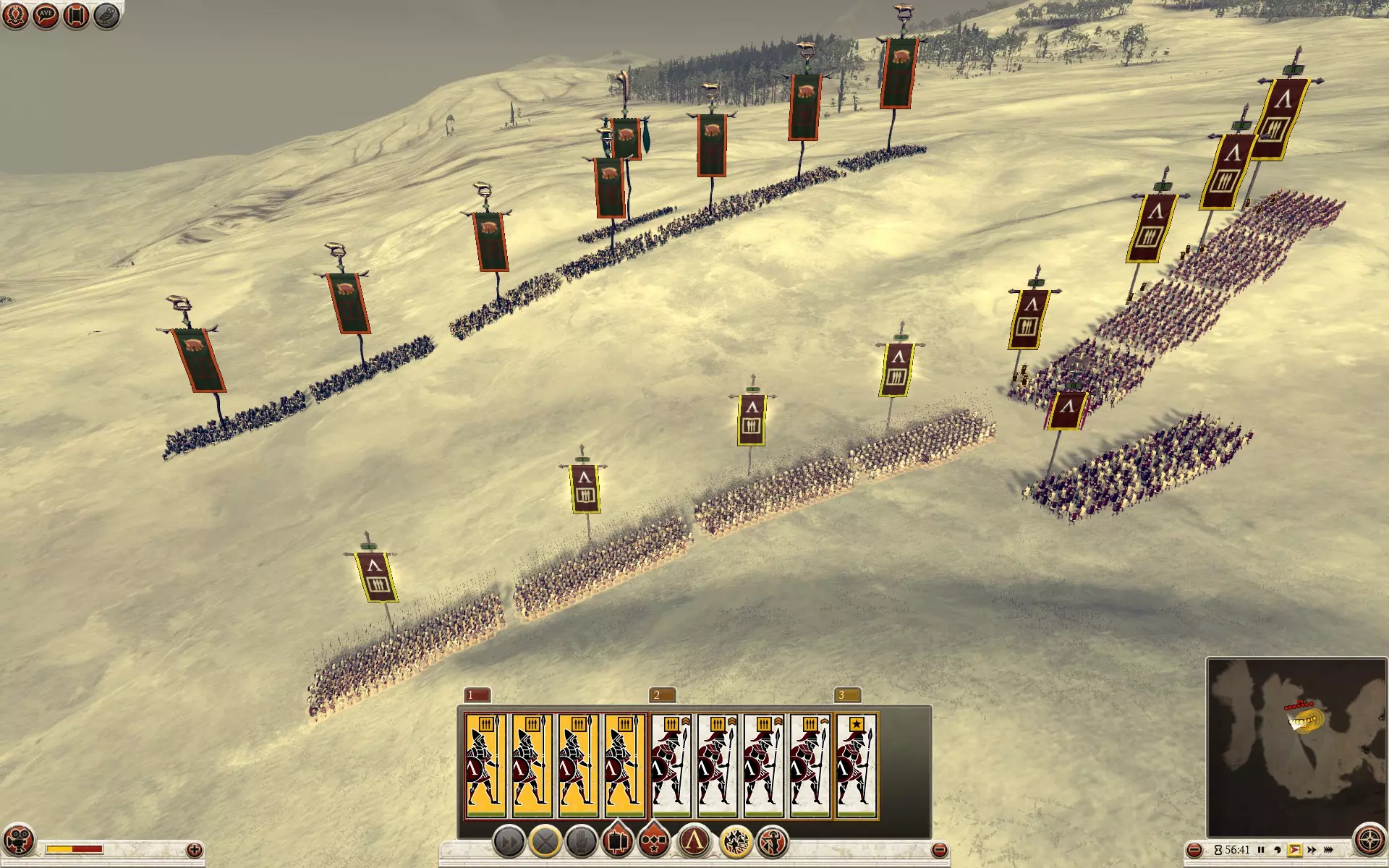
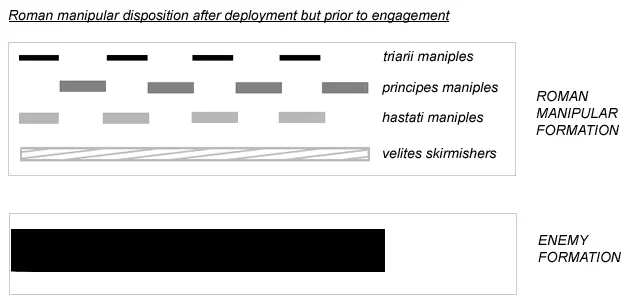
A guide to creating a historically accurate Mid-Republican Roman Army. A Brief Introduction The Total War series has been one of my favorite video game franchises for almost 8 years. As a history enthusiast, my preferred style of play is creating accurate representations of how armies fought in the ancient world. While I understand there are other guides on Steam and various Total War forums, I personally never found one I was satisfied with. I often found myself using them as a loose guideline for the type of army I wanted to make. Hopefully, this guide will help serve as a basis for anyone wanting to recreate a Roman legion during the Mid-Republican period. The change in unit sizes and variety of troops in DEI allows you to create a consular army with a nearly perfect 6:1 ratio. Personally, I like to play with two combined armies totaling 40 units to get an even closer 3:1 ratio. Please be aware at the time of this guide, the current version of DEI is 1.04a. On ultra settings, this version has 200 men in each Roman unit. In the past, this mod used to have 240 men. The Polybian Legion The Polybian Legion was eponymously named after the Greek historian Polybius who described the Roman army during this time period. Some notable changes between the Polybian Army and the Camillan Army which preceded include: Hastati and Principes fought with the gladius instead of the hasta, the Triarii carried the scutum instead of the hoplite shield, and infantry classification was based on age and experience instead of wealth. The Leves and Acensi were also combined into a single class of skirmishers called the Velites. A Consular Army at the time would consist of 2 Roman legions and 2 Socii (Allied) legions, led by two consuls who rotated command. For every legion that Rome levied, their Latin allies matched it in size. Historically, there isn't any evidence to suggest they fought or were equiped differently from their Roman counterparts. The Socii also brought with them elite troops called the Pedites Extraordinarii who made up one-fifth of their infantry, and the Equites Extraoridinarii who made up one-third of the Allied cavalry. A typical Manipular legion would consist of 4,200 infantry and 600 cavalry. This meant that a Consular Army of four legions would have a grand total of 16,800 infantry and 2,400 cavalry. Within each legion, the Velites, Hastati, and Principes would number 1,200 each, while the Triarii numbered 600. It really annoys me to see YouTube Let's Players who claim they're using historically accurate armies, yet still recruit just as many Triarii as they do Hastati and Principes. But I digress... Fielding Your Army For our purposes, each stack will represent two legions out in the field (1 Roman and 1 Socii). If you choose to fight with a two stacks for a total of 40 units, your composition should look like this: First Legion 1 Legatus 1 Equites, 1 Socii Equites, 1 Socii Equites Extraordinarii 4 Velites 2 Hastati, 2 Socii Hastati 2 Principes, 2 Socii Principes 1 Triarii, 1 Pedites Extarordinarii Second Legion 1 Legatus 2 Socii Equites, 1 Socii Equites Extraordinarii 4 Velites 2 Hastati, 2 Socii Hastati 2 Principes, 2 Socii Principes 1 Triarii, 1 Pedites Extarordinarii Notice how both stacks add up to only 18 units, leaving you with 2 open slots to fill. This gives you the freedom to recruit specialist/mercenary units into your army. Incidently, the Romans also started to implement them during this period. After suffering several defeats during the 2nd Punic War, the Romans began hiring specialist troops like the Numidian cavalry and Cretan archers to make up for some of the legion's shortcomings, so definitely feel free to make use of these open slots. If you choose to fight with a single stack of 20 units, your composition should look like this: 1 Legatus 1 Equites, 2 Socii Equites, 1 Socii Equites Extraordinarii 4 Velites 2 Hastati, 2 Socii Hastati 2 Principes, 2 Socii Principes 1 Triarii, 1 Pedites Extarordinarii This will give you a total of 19 units. Deploying the Legion Traditionally, the Socii were deployed on both flanks while the Romans fought in the center. Likewise, the Socii cavalry fought on the left wing while the Roman cavalry fought on the right. I usually deploy my legions in three separate lines in a checker board pattern called the quincunx. The Hastati would form up in the first line with gaps in between each maniple, the Principes in the second line would cover the gaps of the Hastati, and the Triarii would cover the gaps of the Principes. I often deploy my Velites in the very front of my army or on my wings between the infantry and the cavalry. The Socii also had a tendency to field more cavalry, often outnumbering the Romans. A consular army of this size would have about 1,800 Socii and 600 Roman Equites. Due to the 3:1 ratio we are playing with, I throw my general's bodyguard and Roman Equites on my right wing to create a contingent of 200 horsemen. My other general's bodyguard and Socii Equites deploy on my left wing to form 600 horsemen. If you're wondering why I don't put my generals behind the main infantry body, traditionally the consul in command of the army that day would be on the right wing while the other was on the left. If you only have a single stack, you won't be able to recreate this. Unfortunately, Rome 2's default deployment doesn't let us deploy this way and DEI's triplex acies formation is currently bugged due to the way units are classified. Rome 2 also deploys your infantry in solid lines so you have to manually space out your units if you want to accurately recreate this formation. This often becomes a tedious and time consuming task. This image does a pretty good job of illustrating the quincunx:
战场上 小规模战斗阶段 青年兵将是你的主要散兵。用他们掩护 Hastati(青年兵)的推进,或在侧翼支援骑兵。我经常将他们分成不同的小组来执行这两种任务,尤其是在面对骑兵力量占优的敌人时。双方军队完成小规模战斗后,让青年兵从 Hastati(青年兵)的间隙撤退,并重新部署到侧翼。 与 Hastati(青年兵)交战 一旦青年兵撤到后方,Hastati(青年兵)应组成稳固的战线。这意味着你和敌人之间不应存在任何空隙!我看到很多玩家让 Hastati(青年兵)带着空隙与敌人交战。这不仅与历史不符,还会使每个支队的侧翼完全暴露在攻击之下。唯一不建议结成密集阵线的情况是,当正面全面交战等同于自杀时。例如,罗马人通过机动战术击败了继业者国家的方阵军队。在这类情况下,要利用你支队的战术灵活性。 你应该让青年兵(Hastati)去消耗并削弱敌军数量。他们并不需要突破敌人的阵线。一旦青年兵疲惫不堪或伤亡过重,就将他们撤到壮年兵(Principes)后方。 与壮年兵交战时,像对待轻装兵(Velites)那样,把青年兵撤到壮年兵后方。 壮年兵才是用来突破敌人的部队。他们的作战方式与青年兵相同,但更坚韧,盔甲也更好。不过最重要的是,你的部队此时状态良好,而敌人的部队则有望已经疲惫。如果他们未能击溃敌人,就将他们撤到你的三线兵后方。 三线兵的溃败 到了这个时候,你应该已经知道这场战斗是胜是负了。从历史角度来看,三线兵在战斗中通常不会参与太多实际作战,据说他们在大部分战斗时间里都是单膝跪地休息。 然而,在危急时刻,三线兵需要掩护军队撤退,或者坚守足够长的时间让所有人重新集结。当你召唤这些士兵时,意味着你要投入百分之百的兵力。祝你好运! 骑兵 当主力步兵部队在战斗时,你的骑兵的作用是保护军队的侧翼。用他们来对抗敌方骑兵、袭扰散兵,并追击溃败的部队。 对抗优势骑兵时,我几乎总会用一些轻装步兵支援他们。如果部署得当,轻装步兵的标枪即使对最重型的骑兵也能造成严重破坏。如果你能绕到敌方步兵后方,他们的冲锋效果也相当不错。 撤回部队 古代战争更多的是在体力和精神上消耗对手,而非单纯杀戮。大多数伤亡发生在溃败阶段,而非战斗本身。我们知道,在某些时期,敌对双方会暂停战斗、重新集结,然后再次交锋。此时通常会投入生力军,而刚战斗过的部队则进行休整。遗憾的是,《罗马2:全面战争》在模拟古代战争这一方面做得并不好。将已经投入战斗的部队撤出通常会导致该单位遭受巨大伤亡。由于游戏中没有有序撤退的选项,我通常会让我的【罗马青年军】投入战斗,然后撤出【罗马壮年兵】。现实中这种做法是不可行的,而且场面可能会一团糟,但这已经是我们能做到的最好方法了。 此外,让部队通过方阵之间的空隙前进也没有意义。在这款游戏中,单位似乎可以毫无阻碍地穿过彼此的阵型,所以这对玩家来说真的只是一个可选的视觉效果。 结论