
 换一换
换一换 


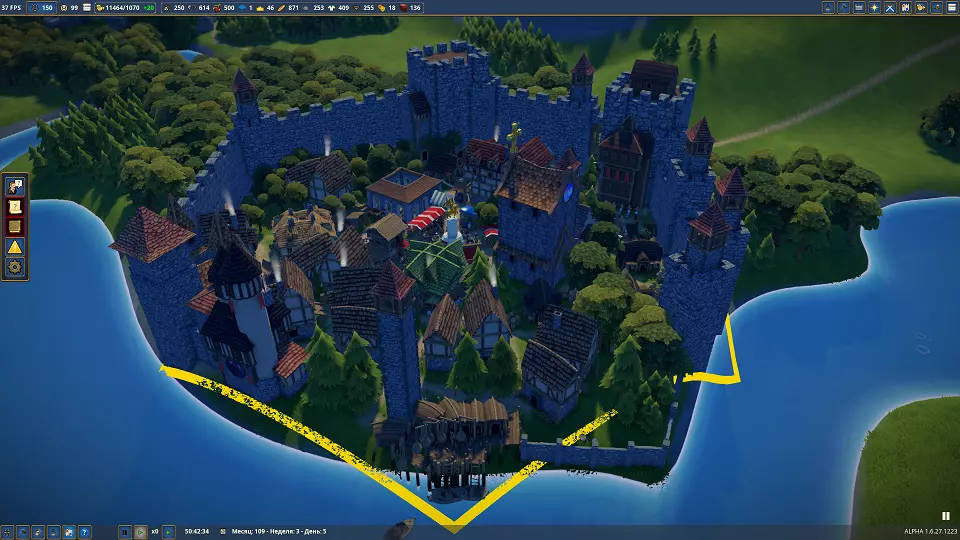
A guide to provide some useful tips and tricks I picked up along the way to help build a village that hopefully won't collapse out of nowhere :P Introduction In this guide I will share some basic tips to succeed in creating a village that is not too much maintenance and easy to grow bigger throughout the game. I picked these tips and tricks up along the way and decided to share my findings, so if there are more useful tips or tricks be sure to let me know! Quick tip: try to leave some open areas in the beginning to ensure you have enough room to expand or grow later on. Markets Food Markets should be build near residential areas with a well also nearby, a best practice is to create a market in the center and the residential areas around it while leaving enough room for further expansion. Always put a granary near a market with the food you want to sell to make it easier for market tenders to serve food. Goods Goods can also be placed with a food market, in this case it should be near where commoners or citizens live. Instead of a granary, put a warehouse near to make it easier for market tenders to get the goods. Housing Housing should be near the place villagers work. A good practice is to either place "polluting" work places (the ones with the brown circle around them when you place them) on the outside of your residential area, while "non-polluting" can be placed inside cities/villages closer to the residential areas. Residential areas won't be build in the brown circle. There are 2 kinds of leveling concerning housing. Citizen status and Size leveling/the amount of villagers in one house. Citizen Leveling the citizen status housing makes sure commoners or citizens can live in that house. To upgrade your housing to the next citizenship status beautification (trees, bushes, lanterns etc.) and a commoner resident is needed. The next status requires paved roads and a citizen. Size To upgrade the size of the house which determines how many villagers it can contain at once, you need light fortification and guard patrol. Easiest way to get this is to build walls around your residential area and a watchpost from the manor progression and set a villager to patrol.You can then mark the area where a patrolling villager should walk which ideally should be the houses near the tower so the guard has less walking distance and thus can patrol more houses. You can ignore the little light fortification towers as it requires unnecessary use of a villager. For the next house size the light fortification wall build previously should be upgraded to heavy fortification walls. Food Rustic food You only need a few berry bushes to provide a big supply. make sure you restrict some areas around bushes to avoid despawning them by villagers walking over them. Fish is even easier to provide and can also be sold. Make sure the fish is actually in your territory, it tends to be on the border where your villagers can't get them. Refined food The easiest way to get refined food throughout most of the game without needing to much territory is meat. When you have a butcher and hunter per 50 villagers you will have a huge surplus of food. just make sure to have a dense forest marked nearby which restricts villagers from walking through on all sides except the one where the hunters are placed. Bread seems to be a hassle to maintain, needing a lot of territory, so I use it mostly for upgrading trade routes and selling it. Also don't start selling refined food until you're sure you have enough to satisfy your villagers as it tends to make them less happy then when they didn't know you had any. The same goes for goods. Goods As mentioned before, only start selling goods when you are sure you can provide a steady supply. Try to have your iron mine setup before moving on to goods, I try to provide tools for building first which need an iron supply anyway. When you got that up and running focus on common wares, you can get an additional building for this production which multiplies the output of common wares. The surplus of common wares can be traded. I try to avoid shirts as common goods as they use a lot of cloth and wool which also need a large area to function while not producing that much. Cloth can then be used to build nice decorations around markets or other buildings, or you can ofcourse sell it. Logistics Some best practices to make logistics easier. 1. As said before, build warehouses near goods markets and granaries near food markets. 2. Warehouses and granaries should ideally be at the destination and not the source. For example: I have hunters which provide boar, I put a granary for boar near a butcher so he can make meat while only walking a short distance to get the boar. Then at the market I have a granary with meat for the market tenders to use. This all results in the villagers having to walk less of a distance to get what they need while having all the transporters doing the work for them. The same also applies to building projects, having a warehouse with stone and planks near the build site can speed up the building process. However, when you got multiple hunters you actually should place a granary near them to store all the boars as the new granary will collect them from all the hunters while the granary at the butcher only needs to transport them to their granary. In short, less walking means more supply and more work done! 3. Try to have as little different types of items in a warehouse or granary as possible. The more items means the transporters have to walk a lot of different routes which results in a low supply of products. Money Taxes In the beginning the easiest way to earn money is by taxing you're citizens, you can eventually get an edict (in your royal book) to lower the unhappiness percentage from taxes. Put the tax office in the center of the residential areas to provide the most coverage as the taxation is collected from the homes. Trade Trade is the next best income, in the Trade tab of the royal book you can open trade routes. Then in the resource tab you can set the resource to sell with the downwards arrow, setting a value for the resource makes sure you keep at least the set amount of resources in your warehouses before it is actually sold. So if I have some planks to sell and set the value to 100, any planks above 100 get sold. Tavern The tavern is also a good source of income. The tavern is best used for Inn Lodging in the beginning, when using it as an inn you should treat it as a residential area as the people that stay at your tavern tend to have the same needs as serfs or commoners so they also need a well and a market for food. When having a surplus of berries the tavern can also be used to provide entertainment by serving berry brew to commoners. Progression (WIP) There are, simply put, 4 progression trees: 1. The main progression, which can be bought using money. Each new tier the amount needed for the new "slots/technologies" slightly increases. This is also the main progression you will be working with as it provides all the basics for your villagers. 2. The Manor, to unlock this tree the first slot needs to be purchased (25 coins). To further unlock you will need labour points/coins and splendor (which is manor specific splendor). 3. The Kingdom/Castle, just like the manor the first unlock requires some coins but instead of labour points/coins you will need kingdom points/coins and kingdom splendor. 4. The Monastery, also a few coins for the first unlock, and clergy points/coins with clergy splendor. You will also generally need some wealth status which is influenced by multiple factors... (WIP) Wealth WIP Splendor WIP Coins WIP Select your aspiration When starting a save game you get the option to either start on your own, focus on building a manor/prestigious burg, focus on building a castle/mighty stronghold or focus on building a monastery/prosperous priory. This influences your goal throughout the game as follows: 1. Starting on your own gives you no specific goal to achieve which gives you the choice to explore as you will. 2. Building a prestigious burg gives you the requirement to: Build a City Belfry (the last tower building in the manor progression), Increase 30 houses to high density, Host the Seneschal at your tavern (unsure as to what that is yet), Raise the happiness of you village above 75, Have your labour splendor above 500. Besides these requirements you have the restriction of not building a castle or a monastery. 3. Building a mighty stronghold gives you the requirement to: Reach a population of 50 combatants, Have 100 or more meters of fortified walls, Complete a military campaign, Host the king at your castle, Have your kingdom splendor above 500. In this case the only restriction is to never build a monastery, so the manor can still be used. 4. Building a prosperous priory gives you the requirement to: Build an Abbatial church, Reach a population of 150 monastics, Host the abbess at your monastery Have your clergy splendor above 500. In this case the restrictions are to not build a castle, have a population below 75 and to never promote a villager. Manor (WIP) The manor is the progression tree you will probably use no matter which direction your village will go. Manor Contents The manor includes the following: 1. The Tax Office, this is crucial in the beginning to earn some money. Here you can select a villager who will collect the taxes. The bigger the village the more tax collectors you need to keep up. This is why it is necessary to build multiple tax office building near different residential areas. 2. The Bailiff Office, only 1 bailiff can be active per playthrough. The bailiff can switch/revise edicts and privileges for you, upgrade trade routes, earn labour coins/points and prospect for nearby resources. Another noteworthy feature is that the bailiff comes with an additional bonus when selecting a villager. This bonus can be increased by building more splendor around it's office. 3. The Guardpost. Here you can select villagers to go on patrol or guard a watchpost. Patrol was mentioned earlier as it is necessary for increasing the amount of villagers in a house. 4. The Treasury Manor Tips Manor buildings can serve as light fortification to the residential areas around it and, especially when you have a guardpost, it is recommended to build this near residential areas. The Castle (WIP) The Monastery (WIP)
发展可持续村庄的技巧与窍门

2026-02-19 04:00:20
发布在Foundation
转载

导读
这是一篇可持续村庄建造攻略,涵盖多方面技巧:规划上初期留足开阔区域;市场分食品与货物两类,分别搭配谷仓、仓库并依居民布局;住房依工作场所污染程度分区;后勤优化仓储布局减少运输路程;收入靠税收、贸易与酒馆,还介绍了4类发展进度树及对应玩法。


评论
共0条评论

《Foundation》1.11.0.17版本更新内容
《Foundation》1.11.0.17版本修复公告 1. 游戏玩法 ① 修复了无需完成所有“子任务”即可完成愿望的问题。 ② 修复了领地专精事件现在会遵守愿…
2026-04-15 14:250赞 · 0评论

《Foundation》首个大型DLC公布——丰收庆典
听着,听着,王国的欢庆者们! 自从正式发布以来,我们一直在努力构思新的方式来扩展你们与我们共同打造的中世纪世界。今天,我们激动地揭晓我们的首个扩展包:【Foun…
2026-04-09 14:070赞 · 0评论
Foundation-视频介绍
2026-03-14 22:000赞 · 0评论

Foundation-视频介绍
2026-03-14 22:000赞 · 0评论

如何建造回廊?
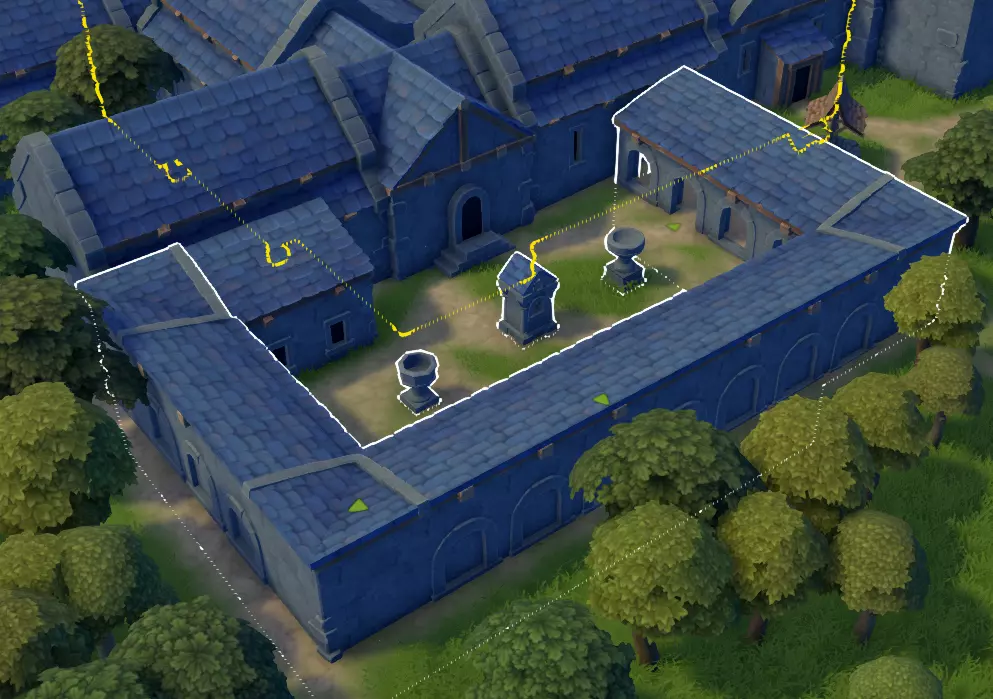
本指南将说明如何正确建造回廊。 回廊 建造回廊需要满足两个条件: - 一扇不属于回廊本身、能通往回廊且建造在修道院中的门。 - 一个属于回廊的封闭空间,且该空间…
2026-02-20 16:000赞 · 0评论
100%ćĺ°ą
2020年9月全成就获取指南。我非常喜欢这款游戏,所以决定写这篇指南。【在灾难中生存】
2026-02-20 16:000赞 · 0评论

建造修道院
《Foundation》1.0版本修道院建造指南:如何打造功能正常的修道院 如果你在指派修士和修女工作,或让他们在被指派后执行任务时遇到问题,本指南或许能帮到你…
2026-02-20 13:000赞 · 0评论
CAPcity 100%全成就通用指南 [生存-城市建造-资源管理]
100% Achievement HINTS & TRICKS for "FOUNDATION" GENERAL STARTING & EXPA…
2026-02-20 10:000赞 · 0评论
《奠基》。基本细节...
我真的希望写完这份指南后,这款游戏能终于放过我…… 注意,注意!!! 这款游戏非常让人沉迷,如果有人自制力较差,且即将面临考试(以及考试不及格可能会被征召入伍的…
2026-02-20 10:000赞 · 0评论
正式版100%全成就指南
少走二十小时弯路。 前言 这篇指南主要针对想完成全成就的玩家,主旨是为了帮助大家少走弯路,对一些游戏最基础的系统不做详细说明,有什么问题可以提出来。请善用Ctr…
2026-02-20 07:000赞 · 0评论
暂无更多