
 换一换
换一换 


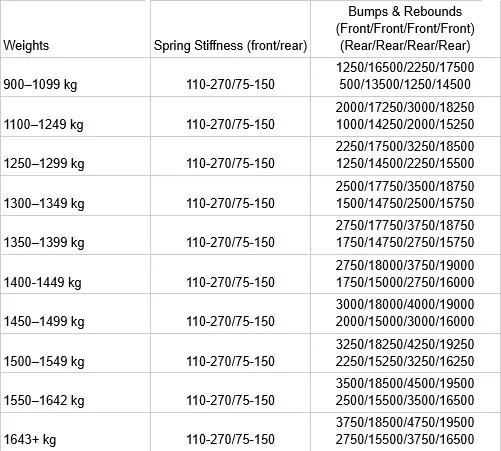
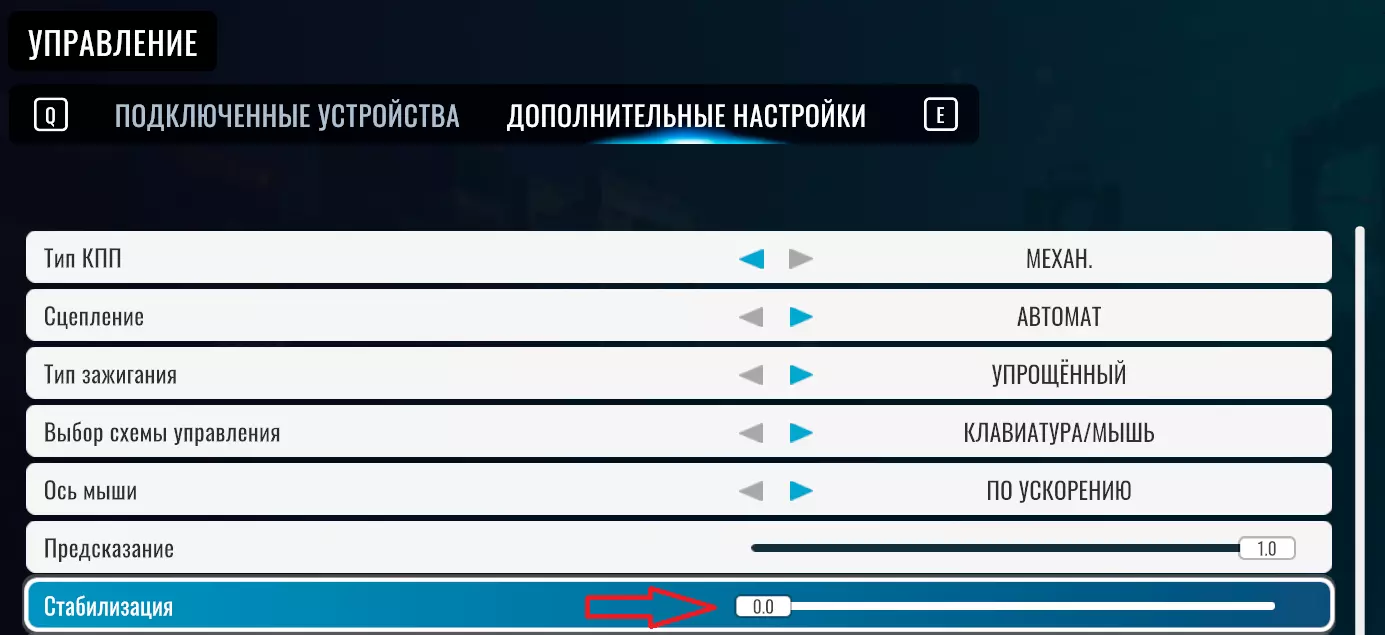
This will help you make your own tune and figure all the settings out. I added a tune i've been using for a long time as an example. Suspension Stiffness - Pretty self explainatory, its usually better if the rear suspension is a little softer than the front, gives more traction and control Fast bump - how fast the the suspension compresses going through bumps Bump - how fast the suspension compresses when braking, accelerating, turning Fast rebound - how fast the suspension decompresses after hitting bumps (goes back to normal) Rebound - how fast it decompresses when braking, accelerating, turning Now the important stuff! Toe out (negative toe) - At the front wheels it will make the car take corners a little easier, especially with grip cars. At the rear wheels, its going to do the same but with a much greater effect, also increases drift trajectory. This also means, that your car is NOT going to go in a straight line when going full gas. Toe in (positive) - it does the exact opposite. Front wheels are going to go in to turns harder. At the rear wheels though, your car will want to straighten up. Rear toe in is really helpful with drag builds, or if you cant hold your car straight. Makes drift trajectory narrower. Camber - Negative front camber will help you get more traction to the wheels in turns. It will not affect your handling drastically, and should be mostly adjusted to the other suspension and steering settings. Positive REAR camber will help you to turn out of drifts a little easier and make the car feel more responsive, while negative will help you be smoother and hold longer drifts. Anti roll bar - reduces bodyroll and CAN add traction, which means more control. If there is a lot of body movement, use this. If the engine is in the front, you should have stiffer ARB on the front. Having the same stiffness isnt bad, but its usually better for the rear to be softer, because the cars rear is lighter. Also you should not make them too stiff because it can lift up your inner wheels, leading to loss of traction. IMPORTANT you can mitigate body roll with the spring ratios if you take your time, (which i recommend) but its a loooot easier to just use ARB. Caster - Low caster will make the car smoother in turns, high caster will make the car twitchier, but its good if you want to take really fast turns. 0 caster will be the smoothest, but it will make your steering slow and sluggish. (if you play on keayboard i really recommend 0 caster, because you will be able to make adjustments a lot better in longer turns) Ackerman - Will make your car hold speed in big angles, and it will make your drifts wider too. Its good on East Touge since that map has some really long turns, but if you add too much your car will be spinning out a lot. Steering axis offset - Will make your front wheels hold themselves straight while drifting, but adding too much will decrease the drift angle. (this setting will not make your car spin out sooner but it makes it harder to correct it when you do) This setting is also helpful for keyboard players to be smooth. It is also helpful for drag tunes to remain straight. Kingpin angle inclination - this will make your front wheels lose traction sooner, but you will be able to recover it easier. Really useful for reverse entries. If you add too much you will be constantly spinning out. In my experience you should add more with smaller wheels, and less with larger wheels. Steering angle - you should always have this maxed out at 65, there are 0 drawbacks to this, you will spin out later, and be able to hold larger angles. Wheels Diameter - Big wheels will make you faster, go over stuff easier, but will slow down the turning rate of your front wheels. Tyre width - Wider = more grip, thinner = less grip. Tyre pressure - Lower will help your car to handle bumps a smoother, but too low will make your wheels twitchy and less predictable. Higher will do the opposite. Depending on the car and its weight, higher or lower might be better. use slightly less at the rear wheels to give you more control. Tyre pressure changes will feel more obvious if you have big tire profiles. Adhesion - 90 is really worn, will make you be smoother but slower. It feels a little bit like driving on ice compared to the others. 100 is a good balance between everything, just normal tires, will probably feel the most predictable since its the default. 110 is semi slicks, you can use this if you want to be faster and have more control, but you wont be as smooth. 120 is slick and has the most grip and does the same as 110 but with a greater effect, its the best for grip and drag tunes. Wheel track - Generally a narrow wheelbase will make the car more stable in a straight line, and a wider will do the same in turns. Tyre profile - Big profile has a smoother ride but makes the car less responsive and feel like a boat. Best setting is between 25 and 35. Tire width will change the profile too, so use this setting to find a good balance between your wheels. Only situation when bigger is better if you try to make a dragster or your wheels are really small. Engine For this, its usually the best to have maximum torque low and just use the rest to get the HP you want. Having a high rev limit will make your gears slightly longer. Transmission Transmission is really hard to tune. Diff locking ratio - I personally use 60, lower will be slower and less reliable at making your rear wheels spin out. 100 will make your car straighten up and slow down when you try to change sides. Final drive - lower will make your car accelerate slower but have a higher top speed. Its good to decrease this if your car is constantly redlining and you always have to speedrun through all the speeds, or you cant find a good gear. The rest will do the same thing, but individually to every gear. Adjusting one will affect the other ones too. If you want a longer gear, just pull the slider down a little, if you want a shorter gear do the opposite. This one is really tricky because it is very car depedent. But if you mess around with it for a while you will figure it out. Differential types: open - no real reason to use this spool - basically a locked diff Viscous limited slip - its the standard type, its perfectly fine to just always use this. Clutch Based LS - this is expert level, allows you to adjust a ton of stuff, but not too useful for the average player Brakes Final section on this list. Brake torque - makes you stop quicker, but its harder to make fine adjustments while drifting, so its better for it to be lower if you want to be smooth drifter. Brake bias - Lower will make your rear brakes stronger, and higher will make the front stronger. Its best to keep it above 50, so its more predictable while drifting. If we look at stopping distance in a straight line, the front wheels should have more power cause all of the weight goes to the front while braking. ABS - turning it on will help you stop quicker but turning it off will help you be a little smoother at drifting. Personal example for Royal/Toyota Crown Majesta IMPORTANT: i play with a keyboard so it might not work as well for controllers or a wheel. My control settings are: Prediction 0, Stabilization 1.0, Steering assist ON This tune is an overall smooth and very controllable one, but it might feel too slow for some. Suspension Spring length: 12 cm front, 13 cm rear Stiffnes: 70 front, 50 rear Damper fast bump: 5100 front, 3800 rear Damper fast rebound: 4400 frront, 3200 rear Damper bump:5100 front, 4700 rear Damper rebound: 4400 front, 4000 rear Sway bars: 10 both rear and front Alignment Camber: -4 front, -2,7 rear Toe: -20 front, 0 rear Caster 0.2 Steering axis offset: 7 mm Max steering angle: 65 Ackerman: 38% Kingpin angle: 2 Wheels Diameter: 19 Tire width: 255 front and rear Pressure: 190 kPa front, 180 kPa rear Wheelbase width: 3 front, 0 rear Tire profile: 25 front and rear Brakes 4300 N/m Bias: 60% ABS on Engine Tune up: 0 Max torque: 4000 rpm Rev limiter: 8800 rpm Turbo pressure: 0.74 atm Transmission Sequential Diff type: Viscous limited slip Diff locking ratio: 60 N ms/rad Final drive: 3.70 Gear 1: 3.50 Gear 2: 2.15 Gear 3: 1.30 Gear 4: 1.13 Gear 5: 0.93 Gear 6: 0.86
调校说明(2025更新)

2026-02-20 10:00:19

导读
这是2025更新的车辆调校说明,详解了悬挂、车轮、发动机、变速箱、刹车等系统的调校参数作用,还附上Royal/Toyota Crown Majesta的调校实例,助力玩家掌握车辆调校技巧,优化车辆操控性能。

评论
共0条评论

调校指南
Краткий обзор тюнинга автомобилей - что к чему и за чем идёт, на что влияет и ка…
2026-02-20 10:000赞 · 0评论

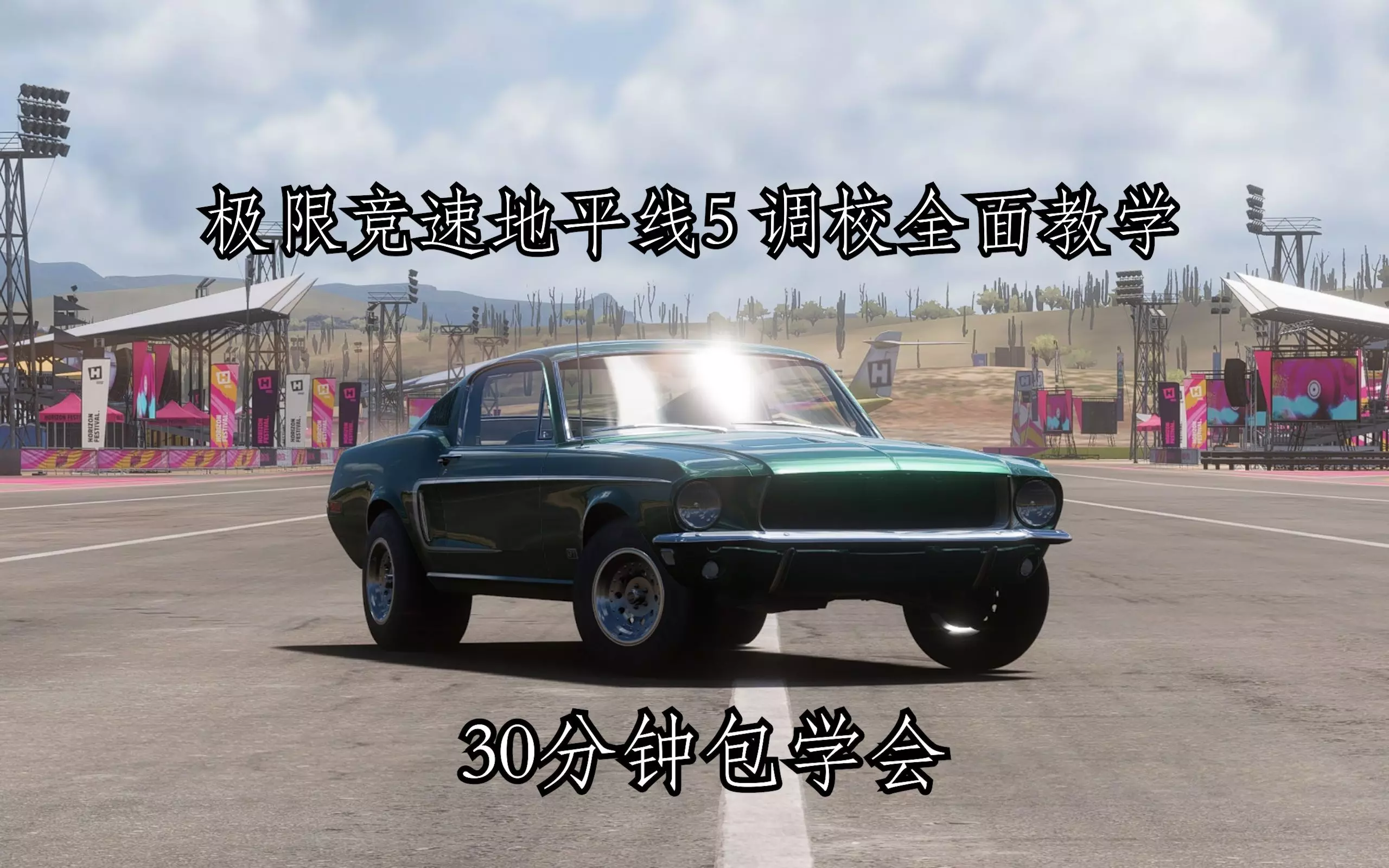
极限竞速地平线5 【地平线5】调校全面教学,全方位解析,包学会
2025-11-08 19:060赞 · 0评论
可自定义变速箱
如何调整变速箱使车辆行驶 简介 本指南将为你介绍如何调整变速箱,以确保车辆正常行驶。这里不会涉及快速加速或最高速度的设置,因为我本人对此并不精通。本指南仅帮助你…
2026-02-18 07:000赞 · 0评论
《CarX Drift Racing Online》车辆设置(2023年1月4日更新)
车辆调校是深入游戏的第一课,即便在游戏中,这也是一件相当不简单的事。 本指南将为你介绍《CarX》系列游戏中车辆调校的基础和基本知识。 基本信息 指南更新于20…
2026-02-20 04:000赞 · 0评论

终极调校指南 | 更新!
### 新手车辆调校简易指南 #### 简介 本指南将为你介绍车辆调校的基础知识,以及一些让你的爱车适应赛道或街道驾驶的技巧。请记住:调校的主要目的是让车辆尽可…
2026-02-18 04:000赞 · 0评论
调校指南
This is a guide to help players who do not understand what certain modifications…
2026-02-20 16:000赞 · 0评论
【最终游戏配置】车辆设置
早期测试版游戏后期(直至1.1.0版本第五阶段完成)可用的各类车辆设置介绍 这是一份关于车辆调校的非完整版指南。如果你希望我整理某款特定车辆的设置,可以在评论中…
2026-04-05 19:000赞 · 0评论
独立悬挂
在这里我会讲解并展示如何制作独立悬挂系统。 基础部分 我们来为未来的悬挂系统搭建这样一个基座。 尽量按照图片所示,一格一格地操作,这样做出来会更平整、更标准。 …
2026-03-19 04:000赞 · 0评论
通用漂移设置+调校计算器[更新于23.06.24]
此设置已尽可能做到通用,专为那些不知道如何以最高效率调校车辆(或不想费心)的玩家打造。当然,每辆车都需要单独调校,但作为基础方案,这个设置效果会很不错,我保证。…
2026-02-20 01:000赞 · 0评论
地平线5闪迹云游戏车辆调校攻略 赛道理解与圈速提升技巧 如何优化车辆手感
地平线5闪迹云游戏怎么调校车辆?测试自己的调校顺带练练图,赛道理解这块和老师傅们还是有次元差距...想提升圈速、优化车辆手感,还得向大神们多学习!
2026-05-22 05:070赞 · 0评论

暂无更多
最新更新
- 《CarX Drift Racing Online》2.28.1版本更新内容 — 《CarX Drift Racing Online》2.28.1版本更新内容 1.新增车辆 ①Proton GT
- Steam特卖! — Steam促销活动 - 70%折扣! 目前Steam促销活动正在进行中,《CarX漂移赛车在线》现可享受高达70%的折扣优惠!
- 《CarX Drift Racing Online》PTR版本2.28.1现已发布! — 《CarX Drift Racing Online》2.28.1测试版本现已推出! 1. 新车辆 ① 质子GT(Proton GT)
- 创意工坊维护已完成! — 《CarX Drift Racing Online》涂装与改装工坊维护完成公告 1. 各位玩家,涂装与改装工坊的维护工作现已结束 2. 所有功能均已恢复正常
- 《CarX Drift Racing Online 2》官方抢先体验预告片! — 官方抢先体验预告片! 朋友们,我们为大家准备了抢先体验版的实机游玩预告片!
- 《CarX Drift Racing Online 2》多人公开技术测试 — 《CarX Drift Racing Online 2》多人公开技术测试
- 《CarX Drift Racing Online》创意工坊维护公告 — 《CarX Drift Racing Online》涂装与改装工坊维护公告 1. 涂装与改装工坊的发布功能已暂时关闭。 2. 我们将很快恢复该功能。 3. 感谢…
- 《CarX Drift Racing Online》开发动态 #6 — 《CarX Drift Racing Online》开发日志#6 这是我们在长时间中断后的第二次开发日志。我们有一些有趣的更新想要分享! 我们最近发布了2.28…
- 新车调校指南 — 【Raven RV8】全新调校指南! 分享一份新指南! 你可以找到关于如何调校Raven RV8的所有详细信息。 你也可以查看我们之前发布的指南。
- 成为CarX Technologies官方大使! — 成为CarX Technologies官方大使! 我们为创作CarX Technologies游戏相关内容的创作者推出支持计划。 我们的目标是聚集活跃的创作者,…