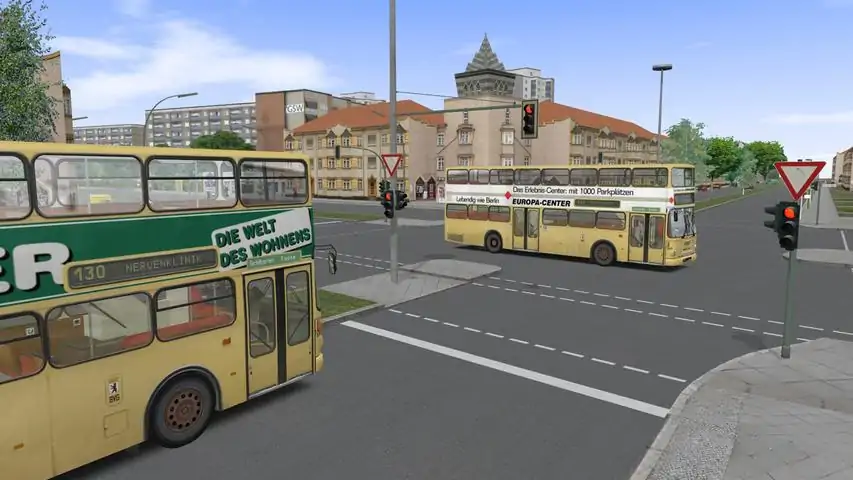
OMSI2:SteamEdition

OMSI2:SteamEdition

OMSI2:SteamEdition

欢迎来到OMSI2:SteamEdition社区! 
关注
43帖子·1新帖
游戏详情
全部
官方资讯
攻略创作
组队交友
问题反馈
--
--
--
--

大家好!本指南将帮助你设置DBC巴士(以及你可能拥有的任何DBC模组)。 DBC即【芝加哥市中心DLC】 如果你没有Hof Suite,请获取它。 安装并设置好Hof Suite后,我们就开始吧!(图片即将更新) 步骤1:打开你的【芝加哥城市巴士】文件夹 步骤2:进入你想要使用的hof文件。例如(为了举例,我将使用Bowdenham_V4_F) 步骤3:确保该文件位于DBC文件夹中,而非其他文件夹(如MAN_NL_NG或MB_O530_Facelift) 步骤4:开始删除以下文件中的所有行: Annax(侧面) Rollsign 以及Ibis 2 步骤5:删除完成后,保存文件 步骤6:打开OMSI,打开你想要的地图,进入游戏,生成巴士,然后运行正确的hof文件 大功告成

1
--
1
--

格拉茨交通公司(前身为格拉茨交通运营公司、格拉茨股份公司交通运营公司及格拉茨交通控股公司,简称GL)是格拉茨的一家公共汽车和有轨电车交通企业,隶属于格拉茨控股公司。该公司已加入施蒂利亚州交通联盟,拥有约800名员工。 格拉茨交通公司每年通过有轨电车运送约5050万名乘客,通过公共汽车运送约4150万名乘客,通过城堡山铁路和城堡山缆车运送约70万名乘客,每年乘客总数约为9270万人次。2003年(当时仍为GVB),该公司的公共汽车和有轨电车行驶里程约为1990万公里,相当于绕地球约481圈。格拉茨交通线路(前身为格拉茨交通公司、格拉茨股份公司交通运营部及格拉茨线路控股公司,简称GL)是一家格拉茨的巴士和有轨电车交通运营商,隶属于格拉茨控股公司,是施泰尔马克州交通联盟的成员。格拉茨交通线路拥有约800名员工。 GL的线路网络总长369公里。自2016年起,GL的车队除10辆仅在高峰时段作为加车使用的有轨电车外,其余均为低地板巴士和低地板有轨电车。 格拉茨交通线路每年通过有轨电车运送约5050万名乘客,通过巴士运送约4150万名乘客,另有约70万名乘客通过【此处内容不完整】。乘坐城堡山铁路和城堡山电梯的乘客,每年总计达9270万人次。2003年,GL(当时仍为GVB)的公交车和有轨电车行驶里程约为1990万公里,相当于绕地球约481圈。GL的线路网络总长度为369公里。自2016年起,GL的车队除10辆仅在高峰时段作为增援使用的有轨电车外,其余均为低地板公交车和有轨电车。

--
--

Measure performance of Omsi 2 and tune it for a modern computer. Playing with the settings Omsi 2 is an open software; there are DLCs from many contributors: maps, busses, vehicles and pedestrians, some transverse DLCs (Navigation, Auxi). The Omsi 2 software proper hasn't changed in years, however other things do change: hardware, graphical card, drivers. Some recent maps are more dense than the first ones. The Options dialog has a lot of settings. There are advices on many guides, forums, Internet sites, but I still did not understand how to best tune Omsi 2. Sometimes I was unable to drive on a map although I managed to drive previously, without me knowing what changed. I have played with the settings while looking at the FPS but I could achieve no satisfactory tuning. Then I looked for a way to get relevant measures that help tune. Measuring Performance Important measures are: processor usage for both CPU and GPU, memory allocation for both CPU and GPU. Process Explorer[learn.microsoft.com] yields: Virtual Size: the memory of the process (counts against the 4Gb). I/O History: the data read from disk. CPU (Usage), and CPU History: the load of CPU processor (counts against 100%). GPU (Usage), and GPU System Bytes: the load of the GPU processor (counts against 100%), and the allocated video memory (counts against the available/configured video memory).https://steamuserimages-a.akamaihd.net/ugc/26561914309350845/789CF5CA19FAC94569C45B8229D1CFCC63B3614A/?imw=256&&ima=fit&impolicy=Letterbox&imcolor=%23000000&letterbox=false You also get information about video memory through Omsi 2's HUD (Shift+Y thrice) or DXVK's HUD. Virtual Memory Map[learn.microsoft.com] explains how the Virtual Memory is allocated: Image: the program code of Omsi 2; always allocated. Private Data: memory allocated for the execution. Heap: memory allocated for the maps; depends on the maps, the number of vehicles, etc.https://steamuserimages-a.akamaihd.net/ugc/26561914309355589/EB87FD29CC3256F52E4F83488E41092A8A632388/?imw=256&&ima=fit&impolicy=Letterbox&imcolor=%23000000&letterbox=false Major Points The CPU usage is high, 75-80% overall, 50-60% for Omsi.exe, which is as high as most old software can get (the reminder of the time is spent waiting on the memory or on the disk). This is the limiting factor, it will balance with the FPS. The GPU Usage is quite low (I see ~25% on 1 GPU Engine out of 20). The Virtual Size is often in the range 1.5Gb-2.5Gb, quite under the limit of 4Gb. The GPU Memory is often in the range 1.5Gb-3.0Gb (though I have seen it go up to 5.5Gb, which still works out if there are 8Gb of GPU Memory). When playing around with Omsi 2's settings one should check on which figures it has an effect. One will want to reduce the CPU Usage because it is close to its limit; increasing CPU or GPU Memory is fine because it is far below its limit. Other Settings The wording "Max. Tex. Mem. for high-res Tex load" sounds misleading to me: to me this figure behaves like the limit on GPU Memory, whatever the other settings about Texture Resolution are. The default setting for "Max. Tex. Mem. for high-res Tex load" / Video Memory is very low (at 401.0Mb); one should set it much higher: one finds various advices on Internet: to the available GPU Memory, such as 8Gb=8000.0Mb, or 0.0Mb (meaning "no limit"), or 2/3 of the graphical memory. If Omsi 2 reaches the limit (it can reach 400Mb even with low resolution textures), it gets trapped in a loop (the screen stays black, sometimes flashing to show the Windows Desktop (background image, or Steam); with Process Explorer one sees the GPU Memory repeatedly going slowly up and abruptly down). With "Use Only Low-Res Textures" the GPU Memory is much lower, the GPU Usage is somewhat lower and the FPS is somewhat higher, but I experience quite long freezes (and obviously the images are more blurred). Conclusion With the 4Gb patch, and with Omsi 2 configured to use 8Gb of video memory, I can drive correctly on almost all maps. The driving experience is better with high-resolution textures (i.e. without checking "Use Only Low-Res Textures" and "Limit all textures (apart from own bus) to 256 pixels"). Other Points The wording "Reduced Multithreading" sounds misleading to me. When I play with "Deactivate multithreading for test" / Ctrl+F12 (as described in the Options / Keyboard tab) and look at the HUD Information Lines (Shift+Y thrice) I understand that "Deactivate..." switches multithreading off at start up, and Ctrl+F12 toggles it on and off during the game. After a crash or a forced termination Omsi 2 opens a dialog suggesting that crashes could be related to an issue with multithreading; as far as could test Omsi 2 has no issue with multithreading; multithreading should always be active. I can't find a clear advice about "Neighbour Tiles Count" and "Max. Obj. Visibility Distance". I think that both figures should be tuned to the same or an similar distance: if "Neighbour Tiles Count"*300 (=size of a tile in m) is much less than "Max. Obj. Visibility Distance", then each time a tile gets loaded, Omsi 2 will display many new objects and their textures at once, which freezes the game for some time. If "Neighbour Tiles Count"*300 is much more than "Max. Obj. Visibility Distance", then many objects are in memory but they are not displayed. I tested DXVK (version 2.5; https://steamcommunity.com/sharedfiles/filedetails/?id=2461019058). It somehow works and yields better FPS, but it induces delays (the simulation freezes for several seconds). DXVK has a limit on memory (on my system, the limit is about 6.6Gb; I don't know if it is absolute, or related to the 8Gb GPU Memory available); setting dxvk.conf / d3d9.maxAvailableMemory higher has no effect. At first I had it crash every 5min (the screen turns totally black and I have to reboot). It seemed to crash mostly after DXVK's HUD shows a long freeze. With "Neighbour Tiles Count" = 3 it seems not to crash. However DXVK's HUD reports much more video memory used than Omsi 2's HUD (about a factor 2); in some places on some maps DXVK's HUD reports 6.6Gb (99%) memory usage, then the simulation freezes and I have to reboot.

--
--
--
--

### 巴士启动指南 简介: 本指南将教你如何启动巴士。实际操作比看起来要简单得多。 启动步骤: 1. 按下【E】键。 2. 按住【M】键5秒钟。 3. 按下【.】键。 4. 出发!

1
--

如何启动OMSI地图编辑器?步骤如下: 1. 创建OMSI.exe主图标的快捷方式。 2. 在创建的快捷方式上点击右键,选择【属性】。 3. 然后点击【快捷方式】选项卡(第二个选项卡)。 4. 在【目标】行的末尾添加命令【-editor】(无需引号),例如:【"D: Steam steamapps common OMSI 2 Omsi.exe" -editor】。 本指南适用于Windows 10系统,其他系统的操作可能有所不同。

--
--
1
--
--
--

以下是Bustrainz制作的伊卡洛斯系列游戏的一些帮助内容。 该系列游戏的拟真度很高,你几乎需要至少拥有卡车驾照才能弄明白怎么操作。 开始游戏: - 进入驾驶座 - 打开电池 - 按E键,或者点击右箭头按钮直到看到仪表盘。让方向盘消失,然后点击中间的黑色开关 - 这样仪表盘就“启动”了。 - 按下钥匙附近的红色按钮启动发动机。根据你的维护水平设置和天气条件,你可能需要按小键盘8键加油门,才能让Rába发动机启动。小提示:你可以通过预热发动机来缩短启动时间。在乘客舱内,打开地板上的第一个盖子。里面有一个加热阀门,点击它即可。回到驾驶座。驾驶员左腿附近有一个面板。上方的开关控制预热器和循环泵。将其拨至上方位置以点燃加热器并启动泵。等待冷却液温度达到40摄氏度后启动发动机,发动机将立即启动。 - 非常繁琐的一步:等待压缩机为气动系统充气。这需要几分钟时间,因为两个制动回路、车门辅助回路以及空气弹簧回路都需要充气。等待大红指示灯熄灭或巴士从“跪姿”状态升起。 驾驶: 巴士配备6速手动变速箱。- 从二挡起步,一挡仅在坡道起步时使用 - 平地行驶时,转速达到1800-2000转时升挡;上坡时,转速达到2100转时升挡。 - 巡航转速为1500-1600转,此时城市巴士系列的行驶速度为50公里/小时,区域巴士为60公里/小时。 - 发动机制动默认通过【K】键操作。它有非常独特的声音——匈牙利俚语称之为“bubu”。 如何关闭发动机: - 切换至空挡,然后按下【K】键。发动机将关闭。 - 当气压不足时,必须使发动机熄火。按下【Tab】键+1至6中任意数字键,然后松开【Tab】键。 暖气: - 打开地板上第一个盖子下方的阀门 - 驾驶员左腿附近有两个面板。上方的面板控制“Thermal”暖气。将开关拨至上方位置可预热发动机并开启循环泵。当发动机温度达到80摄氏度时,将开关拨至下方位置,仅开启循环泵。 - 第二个面板控制干风加热器。离你较近的开关控制加热器,上方位置为加热,中间为关闭,下方为通风。较远的开关控制加热强度。 这是《巴士列车伊卡洛斯》的一份详细操作说明。

--
--

不知为何,力反馈功能总是被DLC开发者忽视。当你满怀期待地加载新买或下载的巴士时,开不了多久就会发现不对劲。方向盘感觉软绵绵的,驶过鹅卵石路面和坑洼时,感受不到发动机的震动或巴士的颠簸。问题在于,不知为何,新巴士自带的力反馈脚本无法正常工作。 通常这只需快速修复——你只需用默认车辆的力反馈脚本文件覆盖有问题的文件即可。不过,有时根本没有包含力反馈脚本,这种情况下修复会稍微复杂一些,但依然相当简单。我会介绍这两种情况的解决方法。两种情况的处理方法 首先,导航至“OMSI 2 Vehicles”文件夹。本指南中的所有修改都将在此文件夹内进行。 简单情况 适用于“[bus_name] Script”文件夹中已存在力反馈脚本文件“forcefeedback.osc”和“forcefeedback_constfile.txt”的情况。 这只需一步即可修复: 将“MAN_SD200 Script”文件夹中的“forcefeedback.osc”和“forcefeedback_constfile.txt”文件复制并覆盖到“[bus_name] Script”文件夹中。 完成! 复杂情况 适用于类似芝加哥市中心DLC的情况,即“[bus_name] Script”文件夹中缺少“forcefeedback.osc”和“forcefeedback_constfile.txt”文件。 注意:芝加哥市中心DLC已进行更新,此修复方法不再需要!以下是使用芝加哥市中心DLC中包含的两辆巴士(_40LF和_60LF)的分步修复方法: 使用文本编辑器(如Notepad++或写字板)打开文件。避免使用记事本,因为它可能会弄乱换行符。 1. 将“MAN_SD200 Script”文件夹中的“forcefeedback.osc”和“forcefeedback_constfile.txt”文件复制到“DBC_Chicago_Citybus Script”文件夹中。 2.a 打开“DBC_Chicago_Citybus Script”文件夹中的“DBC_Citybus_40LF.osc”文件。在“{frame}”下方添加行“(M.L.FF_frame)”。使用制表符使其与其他内容对齐。保存并退出。 2.b 打开“DBC_Citybus_60LF.osc”文件,执行相同操作。 3.a 打开“DBC_Citybus_40LF.bus”文件。搜索术语“Scripts”。向下滚动到“[script]”部分。将下方的数字从“23”更改为大1的数字“24”。添加行“script forcefeedback.osc”。向下滚动到“[constfile]”部分。将下方数字从“16”改为大一位的“17”。 添加行“script forcefeedback_constfile.txt”。 保存并退出。 3.b 打开“DBC_Citybus_60LF.bus”并执行相同操作。 此次“[script]”下方的数字应为“25”,“[constfile]”下方应为“18”。 完成!

--
--