换一换
换一换 




作为唯一拥有两个独特远程单位的文明,英格兰在游戏中期是极具威胁的对手。本指南将详细介绍英格兰的战略、独特单位以及对抗他们的方法。 简介 注:本指南假设你拥有所有影响游戏的DLC和扩展包(所有文明包、《远古世界奇观》、《神与王》以及《美丽新世界》)。

不列颠是世界上最大的岛屿之一,凯尔特人、罗马人、盎格鲁-撒克逊人及维京人等多个族群曾在此居住。1066年的诺曼征服融合了日耳曼文化与罗曼文化元素,助力形成了独特的英格兰文化。13世纪,《大宪章》的签署削弱了君主权力,威尔士也被完全征服。14世纪爆发了百年战争,英格兰与法国的著名敌对关系由此开始。15世纪的玫瑰战争则催生了著名的都铎王朝君主。玫瑰战争的胜利者亨利七世之后由亨利八世继位,后者脱离了天主教会。在亨利八世之女伊丽莎白一世的统治下,英格兰在美洲“新大陆”建立了殖民地,击退了西班牙的入侵,并开始确立其世界主要强国的地位。 1707年,苏格兰的国家破产导致其与英格兰合并,形成了大不列颠。作为世界上第一个工业化国家,英国在北美失去十三块殖民地并未减缓其扩张主义——到20世纪初,世界四分之一的土地和超过五分之一的人口都处于英国的掌控之中。但这一切都建立在英国不介入欧洲频繁冲突的基础上。到了第二次世界大战,由于在欧洲大陆缺乏立足点,英国无法阻止纳粹德国的推进——至少在与斯大林领导的苏联结成意想不到的盟友之前是这样。经过长达六年的灾难性战争,英国的命运永远改变了。在甘地领导的印度长期非暴力抵抗运动之后,英国人口最多、最有利可图的殖民地获得了独立。在20世纪,英国的全球影响力可能有所下降,但许多人的生活水平却有了显著提高。然而现在,这个联合王国还能维持下去吗?英格兰是否会再次成为一个独立的国家?那么,是否存在一种能将五千三百万人民团结起来的英格兰身份认同呢?因为在这个全新的世界里,你并非要领导不列颠人,而仅仅是英格兰人,这是一个你必须回答的问题。重新团结英格兰人民,建立一个能够经受时间考验的文明。

在深入介绍本指南之前,先为新手玩家解释一些我将通篇使用的术语。 直冲:专注于尽早获取某项科技,只研究解锁该科技所需的前置科技,不研究其他科技。例如,要直冲“青铜工作”科技,你只需研究“采矿”和“青铜工作”,在“青铜工作”完成前不研究其他任何科技。 政策树奖励:完成一个社会政策树后获得的奖励(例如,自由政策树的奖励是免费伟人)。 肉盾:能够替其他单位承受伤害的单位。标准近战单位通常很适合这个角色。 近战单位:在本指南中,“近战单位”通常指所有非远程军事单位,无论陆军还是海军。【标准近战单位】指战士、剑士、长剑士、矛兵、 pikemen、兰茨克内希特及其替代单位。 【开局政策】解锁社会政策树的奖励(例如,自由政策树的开局奖励为每个城市+1文化)。 【侦察单位】一种能为远程单位(通常是 siege unit)提供目标视野的单位。通常,siege unit 的最大射程大于其视野范围,因此需要侦察单位。 【高人口帝国】指城市数量少但每个城市人口多的帝国。“发展高人口帝国”指将帝国打造成高人口帝国。 【UA】独特能力——文明拥有的无需建造的独特事物。 【UU】独特单位——只能由某个文明建造或由军事城邦结盟后提供的普通单位替代单位。独特事物 - 独特能力、单位、建筑、改良设施和伟人的统称 铺城流 - 拥有大量城市但每个城市人口较少的帝国。“铺城”指将帝国发展为铺城流。 概览(上) 起始倾向

由于英格兰的特性高度依赖海岸,因此它获得沿海起始倾向是理所当然的。你的文明特性(UA)主要围绕海上移动,而你的特色单位(UU)风帆战列舰也是海军单位,所以如果没有海岸通道,你将无法使用一半的独特能力。 独特能力 英格兰在中期游戏中最为强大。长弓手出现在中世纪,但在文艺复兴时期仍然表现出色,其文明特性可能在文艺复兴时期最为强大,而风帆战列舰也正是在这个时代出现。 独特能力:日不落 +2

所有海军单位(包括军事和民用)以及 embarked units( embarked units) 当任意文明进入文艺复兴时代时,获得2名间谍而非1名。 特色单位1:长弓手(替代弩手)

标准远程单位 科技 淘汰科技 升级自 升级至 生产费用 购买费用 所需资源

机械 中世纪时期 第二列 (总第七列)

工业化 工业时代 第一列 (总第十列)

复合弓箭手(100

)*

加特林机枪
无法识别内容,已删除。

460
无(假设为正常速度游戏) 力量:13 远程力量:无 移动力:无 射程:无 视野:无 负面属性:无 正面属性:无

18

2
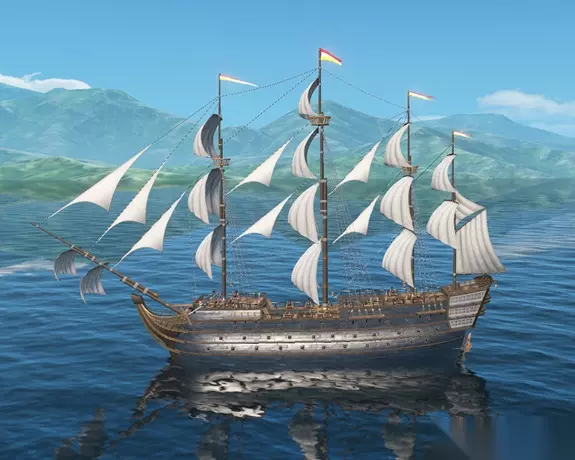
3 2 无法进行近战攻击 +1射程(射程) 正面持续升级改动 +1射程(射程) 特殊单位2:战列舰(替代护卫舰)
海军远程单位 科技 淘汰科技 升级自 升级至 生产费用 购买费用 所需资源

导航 文艺复兴时代 第二列 (总第九列)

电子学 现代时代 第二列 (总第十三列)

盖伦帆船(Galleass)
)*

ćč°
无法识别内容,已删除。
720
*

1 铁 *假设为正常速度游戏。 **需要1个石油资源。 战斗力 远程战斗力 移动力 射程 视野 负面属性 正面属性 30
35
äşć
2 3 无法进行近战攻击 无 【不包括英格兰UA提供的+2移动力。总移动力:7】
负面改动 普通速度游戏中升级费用从390调整为420(+8%) 正面一次性改动 战斗力从25提升至30(+20%) 远程战斗力从28提升至35(+25%) 生产力消耗从185降低至170(-8%) 金币消耗从770降低至720(-6%) 升级金币消耗从180降低至80(-55%) 视野范围从2提升至3 总览(第2部分/共2部分) 胜利路线 请注意,这些评分是基于对该文明的体验得出的个人观点。你可能会发现以非常规方式更有效地利用该文明的方法。

文化性:6/10

外交:6/10
统治:10/10

Scientific: 6/10 England is an almost single-minded Civ focused on domination, though their extra Spy gives them a bit of flexibility - it can help out with cultural, diplomatic or scientific aims. Similar Civs and uniques Overall For another Civ good at mid-game domination on both the land and sea, look to the Ottomans. While England has strong individual naval units, the Ottomans can easily support a huge navy and depend on sheer numbers in the sea. Same start bias The coastal start bias is the most common in the game. Aside from England, it's also the start bias of Byzantium, Carthage, Denmark, Indonesia, Japan, Korea, the Ottomans, Polynesia, Portugal, Spain and Venice. Similar to the UA Denmark, like England, has a bonus to embarked unit speed. In their case, it's only a +1 bonus instead of +2, but disembarking doesn't end the turns of their units making them faster at moving through snaky landmasses. For naval combat units, faster speed is only found on a single unique - Portugal's Nau which has one more movement point than the generic Caravel. As such, in nearly every circumstance English naval units will be faster than those from other Civs. England's extra Spy is the only unique bonus to espionage in the game, but having an extra Spy to steal technologies with is akin to Assyria's unique ability giving them technologies from conquests. Both help you out at catching up with the technological process of other Civs. Similar to Longbowmen The only other Crossbowman UU is China's Chu-Ko-Nu. While Longbowmen have the Range promotion, Chu-Ko-Nu have a promotion that acts identically to Logistics, but has lower ranged strength. Despite having different bonuses, both Crossbowmen UUs function very similarly as the backbone of a medieval army. A full comparison can be found in the guide to China. Similar to Ships of the Line Ships of the Line are one of three unique ranged naval units that dominate their eras, the others being Byzantium's Dromon and Venice's Great Galleass. Dromons are restricted in usage due to the fact they replace the only naval melee unit prior to Astronomy, meaning they need land support to take cities, while Great Galleasses have a relatively small window of usage. Both of them are also tied to Civs with other priorities in their respective eras - Byzantium will be trying to found a religion while Venice will be trying to expand their trade routes. They're also both more expensive than the units they replace. Ships of the Line, however, are cheap, extremely fast, very strong and aside from a technological diversion for Longbowmen, don't have any distractions that might limit their usage in their era. The Broader Picture Normally, I write how to deal with overall strategies in the UA section, but the nature of England's UA doesn't lend itself well to explaining the overall route. Welcome to England! In your hands is a nation that excels at evading damage and dealing lots of it. Unlike many Civs, its UA isn't really the most important thing to focus on; it's all about the UUs. The Longbowman is essentially medieval-era Artillery, allowing you to take down cities without the unit being hurt itself, while the Ship of the Line completely dominates naval warfare in its time. So, let's get started. Pre-Longbowmen Like any UU-focused warmonger, it's important to get to your UUs quickly and launch them while other Civs' armies are less-developed. Don't be tempted just to beeline Machinery though - there's other stuff you need to deal with first. Start off with appropriate Worker technologies, Writing and Sailing. Writing keeps your tech rate up, and Sailing gives you 6-move Triremes as well as allowing sea-based trading. Taking Optics after these technologies gives you a decent shot at the Great Lighthouse wonder, which makes your naval combat units even faster and extends their sight radius. Taking Bronze Working at some point will also be useful for locating iron spots - you'll need iron for Ships of the Line. Now, you can go and beeline Machinery, and build up a force of Longbowmen. Build some Horsemen or Knights to go with them, and you've got yourself a mighty land army ready to deal plenty of damage with. Don't be tempted to hold off your Longbowman attack until Ships of the Line are avaliable. That'll take far too long. If you lack iron in your starting location, try to target opponents with plenty of it if possible. Consider puppeting or razing cities you capture - it'll make National Wonders much easier to build, in particular the National Intelligence Agency, which goes well with your extra Spy. Longbowmen to Ships of the Line Once you've got Machinery, clean up any useful technologies and push towards Navigation. It's a good idea to build the Oxford University to help reach the technology sooner - if you time it so you complete it once you've got Astronomy, you can then instantly grab Navigation. Navigation gives you the powerful Ships of the Line. Ships of the Line are faster, cheaper, and can see further than normal Frigates, and both attack better and defend better than pretty much anything on the seas until Ironclads - they can stand up fairly well to even them. The downside is that like regular Frigates, they need iron, and that they can't capture cities (so bring along some Privateers for any coastal city-taking you do.) At this point, Longbowmen are still relevant, giving you dominance of the seas and also significant power on land. Still, the age of the Longbowman won't last forever as their low strength will leave them vulnerable, so at or before the time Artillery become avaliable, upgrade them to Gatling Guns. They won't be able to attack cities outside their attacking range any more, but they'll have twice the range of other Civs' Gatling Guns. The late-game If your UUs haven't quite managed to conquer the world by the late-game, there's two routes you can go. One way is to complement your former-UU armies with other units and conquer the world with conventional warfare (with a little help from your UA's naval speed bonus.) Alternatively, if a domination victory really doesn't look likely, you can use England's extra Spy to help towards a peaceful victory - steal technologies towards a scientific victory, use your Spies as diplomats for tourism bonuses towards a cultural victory, or get extra delegates from Diplomats or rigging City-State elections to help towards a diplomatic victory. The scientific and diplomatic routes will generally be easier than trying to win by culture from such a late starting point. Summary Push towards Machinery early on, but you don't need to beeline it Use Longbowmen with Horsemen/Knights to capture iron-rich areas Use Ships of the Line with Privateers to capture coastal cities Use your combined naval and land strength to try and get a domination victory Your extra Spy can be used to help towards backup victory routes Unique Ability: Sun Never Sets (Part 1/2)
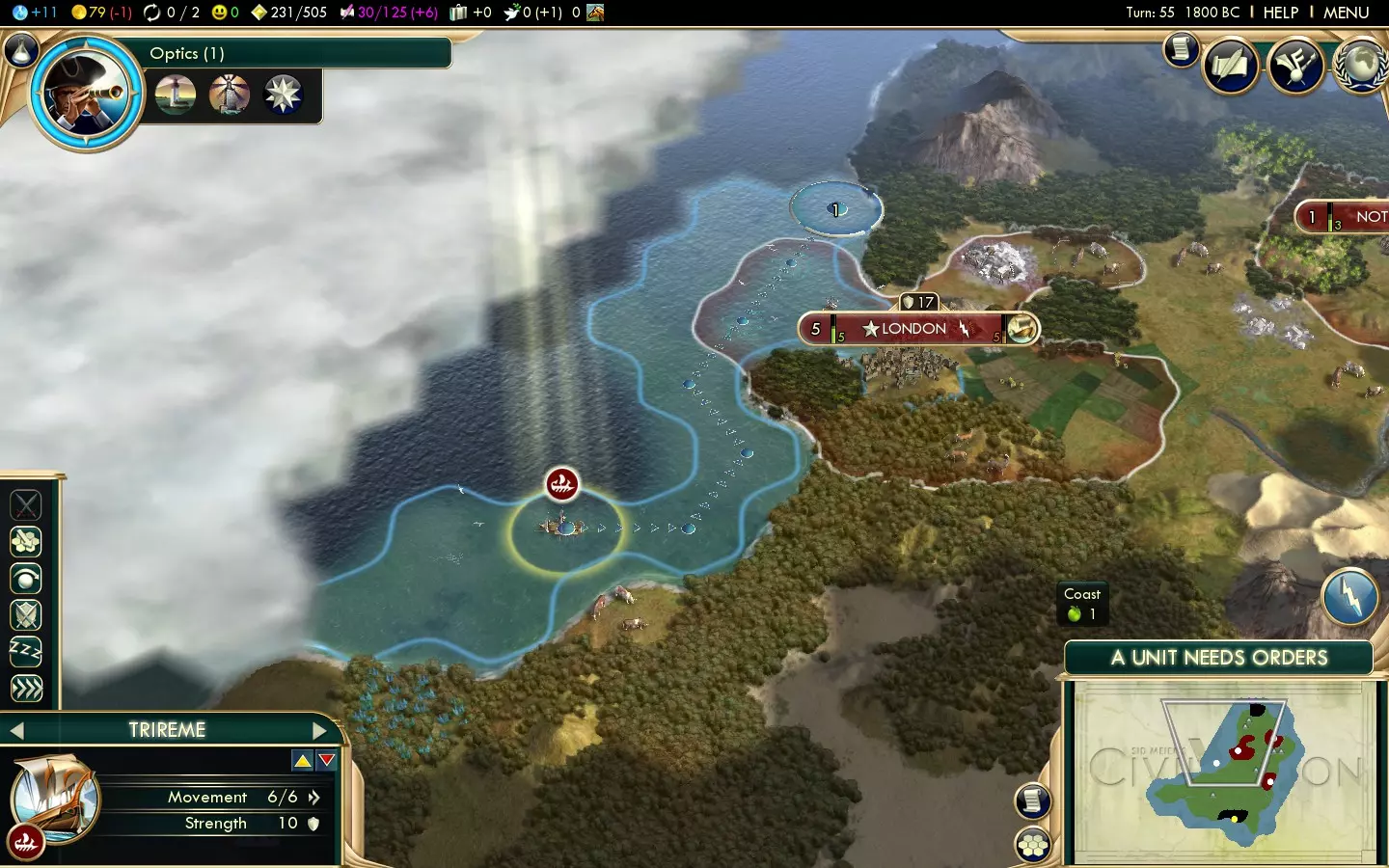
英格兰的文明特性包含两个截然不同的部分:一个在游戏早期更强(+2海军移动力),另一个在游戏后期生效(额外间谍)。 +2海军移动力 你所有的海军单位和 embarked 单位(单位上船状态)比其他文明多2点移动力。这在游戏早期最为强大,因为此时海军单位的移动点数相对较低,但在整个游戏过程中都保持实用性。 +2 embarked 移动力
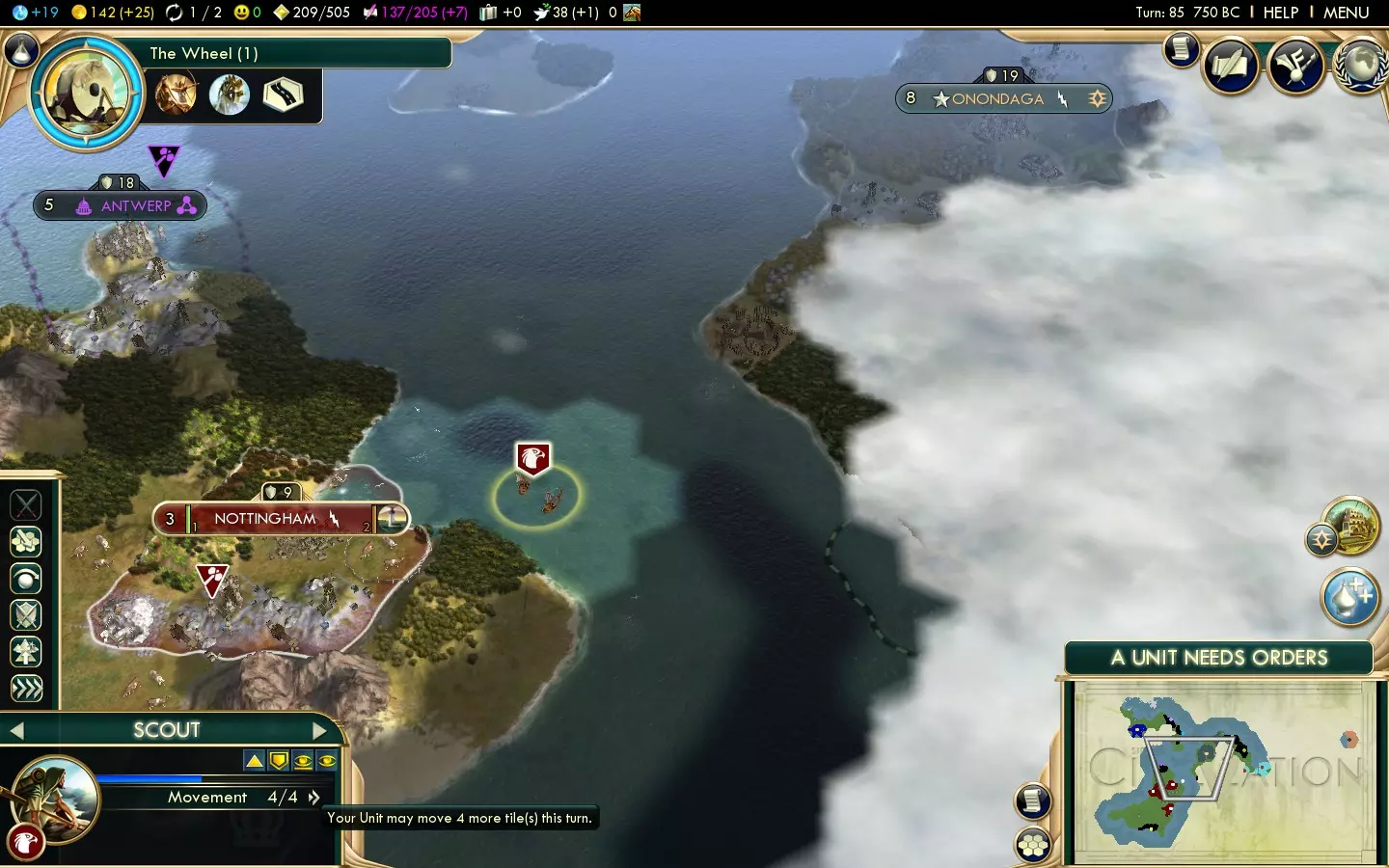
让我们进一步解析英格兰的文明特性,首先来看提升的海上移动力。一旦你研究完成光学科技并因此能够让单位上船,你的单位海上移动速度将是其他文明(丹麦除外)的两倍,因此在海上移动往往比在陆地上更快。这使得探索海岸线或管理拥有漫长海岸线的城市变得更加容易,并缩短了到达新大陆所需的旅行时间。 除了节省时间外,更快的海上移动速度对于躲避敌方单位也非常出色。例如,4点移动力比蛮族的桨帆船更快,与三列桨座战船相同。 在游戏后期,天文学和蒸汽动力科技将让你的海上单位移动速度变得更快。由于你的UA提供固定+2速度加成,随着游戏进程推进,移动速度的差异会逐渐减小——从光学科技后的双倍速度降至蒸汽动力后的快50%。 以下是相关表格说明: 科技 | 基础上船速度 | 等效于* | 英国上船速度 | 等效于*

光学 古典时代 第一列 (总第四列) 2
None 4
(+100%)三列桨座战船 卡拉维尔帆船

天文学 文艺复兴时代 第一列 (总第八列) 3
盖伦帆船 铁甲舰 5
(+67%) 护卫舰 私掠舰 潜艇 航母 战列舰

蒸汽动力 工业时代 第二列 (总第十一列) 4
轻快帆船
(+50%)驱逐舰 核潜艇 【注:未列出所有相应速度的单位。所列出的是同年代的单位,未考虑特殊能力或其他可能导致速度与常规不同的因素。】 如上表所示,大多数文明的 embarked 单位( embarked 单位)在开阔水域中通常比同时代的海军作战单位速度慢。然而,英格兰的 embarked 单位速度通常与其相当。这意味着你在调动大军时可能只需少量海军护航——只需带足够的兵力来侦察该区域以防遭遇敌方单位。 +2 海军平民单位移动力 “海军平民单位”指的是工作船和海军统帅。这两种单位每回合将拥有 6 点移动力,而非通常的 4 点。对于工作船而言,这主要在你将它们从一个城市调往另一个城市时有用(因为默认的4点移动力通常足以到达并改良城市半径内的任何沿海地格)。 对于海军统帅,移动速度的提升能让他们跟上你更快的海军作战单位。如果你能在【天文学】科技研发前生成一位海军统帅,这对探索也很有帮助,因为他们是【天文学】前唯一能跨越大洋的单位。 +2海军军事单位移动力 这是英格兰文明特性的核心。在海上,你几乎总能比其他文明拥有速度优势,这带来了以下好处: 更快的探索速度; 能更快抵达敌方领土; 受伤单位可以更快撤回友方领土(从而更快恢复生命值); 更容易包围敌方单位以利用侧翼加成; 拥有后勤学晋升的海军远程单位可以从更远距离发动游击攻击,让你能用比以往更多的单位攻击沿海城市; 在其时代速度较慢的单位(如加莱赛战舰、铁甲舰和战列舰)不再有速度劣势,因此一个主要弱点得到了弥补。
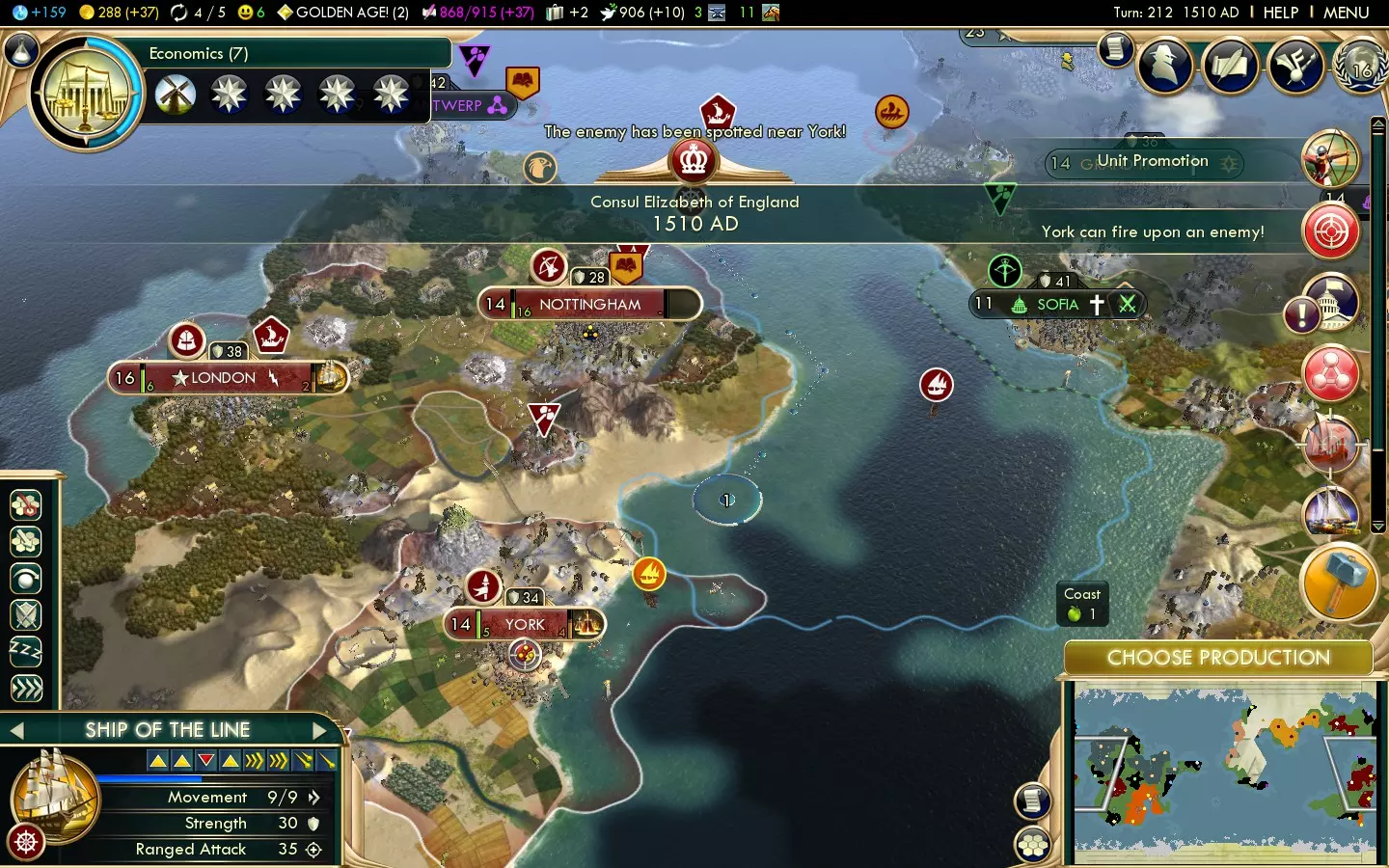
上方:拥有探索政策开局和大灯塔奇观后,你的所有海军军事单位将比没有这两者的其他文明多出4点移动力,这使得敌人如果不设下某种伏击,基本不可能追得上它们。实际上没有必要再选择机动性晋升来将移动力提升至+5;+4已经足够强大了。 下方:这些速度加成对铁甲舰尤其有效。由于铁甲舰在沿海 tiles 的基础移动力会翻倍,你的文明特性(UA)将在那里为它们提供4点额外移动力,而非2点。再加上探索政策开局和大灯塔,它们在沿海 tiles 中实质上拥有14点移动力,如果选择机动性晋升则为16点。
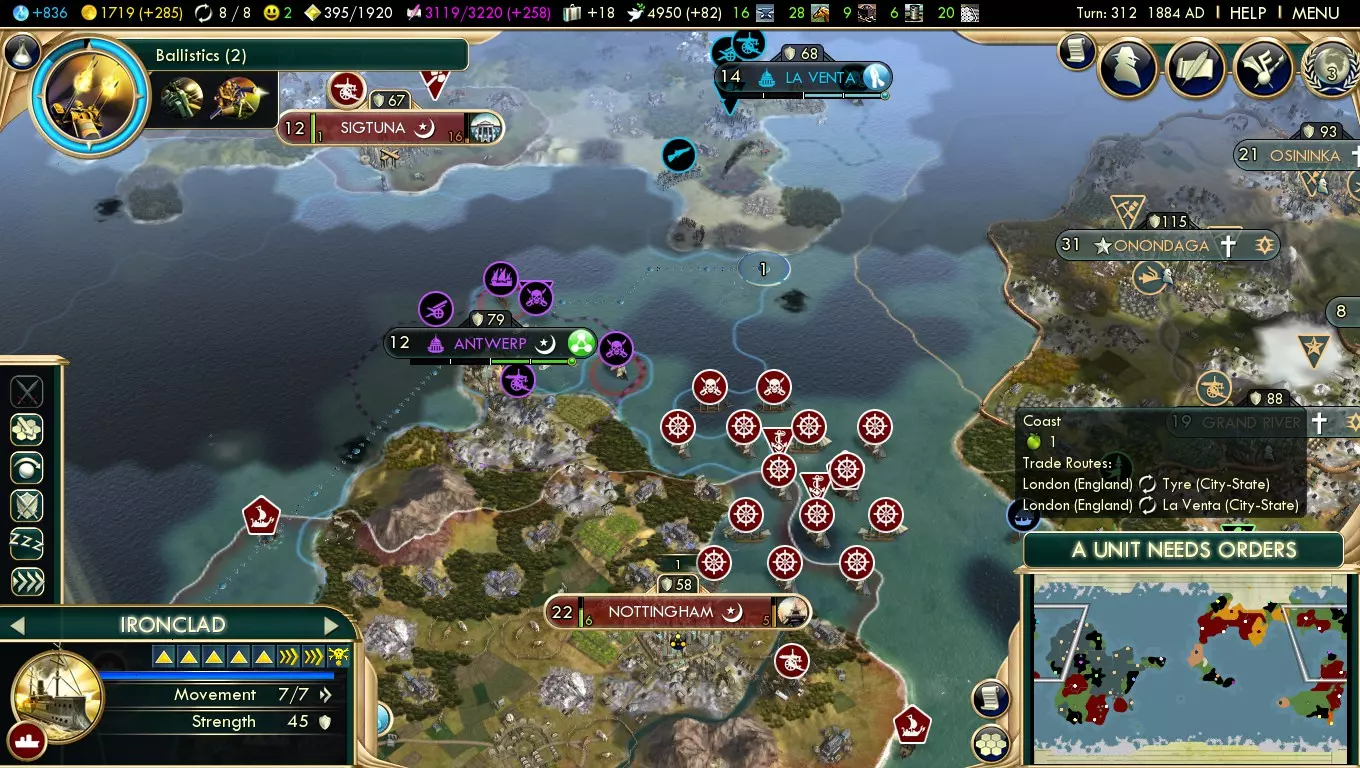
拥有高移动速度固然不错,但你可能会问,为什么还需要通过探索政策树的首发政策或大灯塔来进一步提升速度呢?主要原因是你需要确保保持这种优势。如果其他文明同时拥有这两者而你都没有,你们的速度就会持平。如果你两者都拥有,那么即便是你较慢的海军单位,也能超越同时代更快的敌方单位(或者至少与它们的速度持平),无论对方施加了何种速度加成。另一个原因是奇观和首发政策带来的视野加成,这部分将在本指南的后续内容中介绍。 独特能力:日不落(第2/2部分) 额外1名间谍
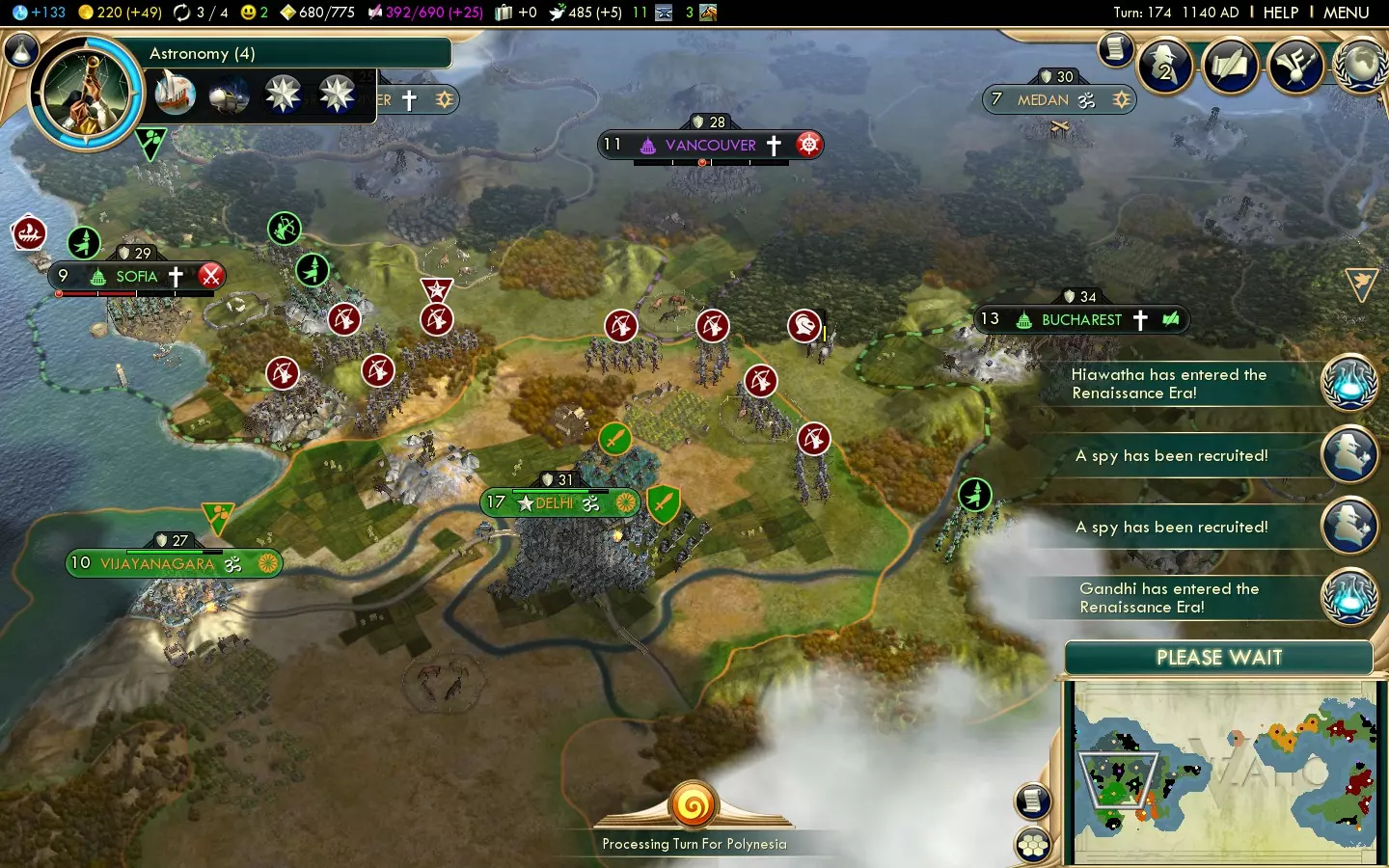
通常情况下,当任何文明进入文艺复兴时代时,所有文明都会获得他们的第一个间谍。然而,英格兰会获得两个间谍——这使他们成为游戏中唯一在间谍活动方面拥有直接加成的文明。 科技窃取与防御 首先,一个不错的策略是将一名间谍部署在你的首都(或任何其他可能成为敌方间谍目标的城市),另一名部署在敌方拥有高科研产出的城市。这能让你同时进行科技窃取和防御科技被盗——这是其他文明在进入工业时代之前无法做到的。 作为一个好战文明,你最好利用额外获得的间谍来窃取敌方科技。你可以专注于科技树的军事方面,同时派遣间谍去获取那些更偏向和平的科技,这能帮助你保持军事优势。 另一种略有不同的策略是,如果你想确保能窃取敌方的某些科技,可以向敌人大量派遣间谍。只要敌方与你处于同一时代、拥有的城市数量多于间谍数量,并且没有建造国家情报局(如果第二个条件成立,第三个条件通常也会满足),你就能确保有至少一名间谍不会被敌方消灭。不过,这种做法的代价是你将无法防御敌方间谍的渗透,但如果某个主要对手给你造成了极大麻烦,这或许是必要的一步。间谍侦察 除了窃取科技外,间谍的一大用途是充当侦察兵,为长弓手、战列舰、火炮或其他高射程单位提供视野,使其能够在自身不受攻击的情况下攻击城市。在城市中部署间谍后,需要几个回合才能执行此功能,因此如果计划快速占领大量城市,就需要足够的间谍来完成这项任务。英格兰比其他文明更容易调配出多余的间谍。 外交手段 额外的间谍还有助于在世界议会中推动局势向对自己有利的方向发展。你可以在额外的城邦中操纵选举,或者比其他任何文明都能派遣更多间谍作为外交官前往更多文明。 对英格兰而言,后者功能可能更为实用。【大量外交官】特性让你无需维持城邦同盟,就能影响大量文明的投票决策。对于那些文明态度较为中立的投票议题,说服它们支持你并不需要花费太多代价。 国家情报局:除了你的文明特性外,还有一种额外获得间谍的途径——国家情报局。它不仅能提升所有间谍的等级(新招募的间谍直接从2级开始),还能降低敌方间谍在你领土内的行动效率(这可能会让你腾出一名反间谍人员)。就像探索政策的首发效果或大灯塔奇观有助于保持海军速度优势一样,建造国家情报局能确保你拥有比其他任何文明都多的间谍。不过有个限制条件——你所有非傀儡城市都需要建造警察局。解决办法是:将你征服的城市设为傀儡或夷为平地,并且预留一些资金,以便在需要时为小型城市购买警察局。这条路线并非强制选择,但比大多数文明多拥有两名间谍是相当大的优势。
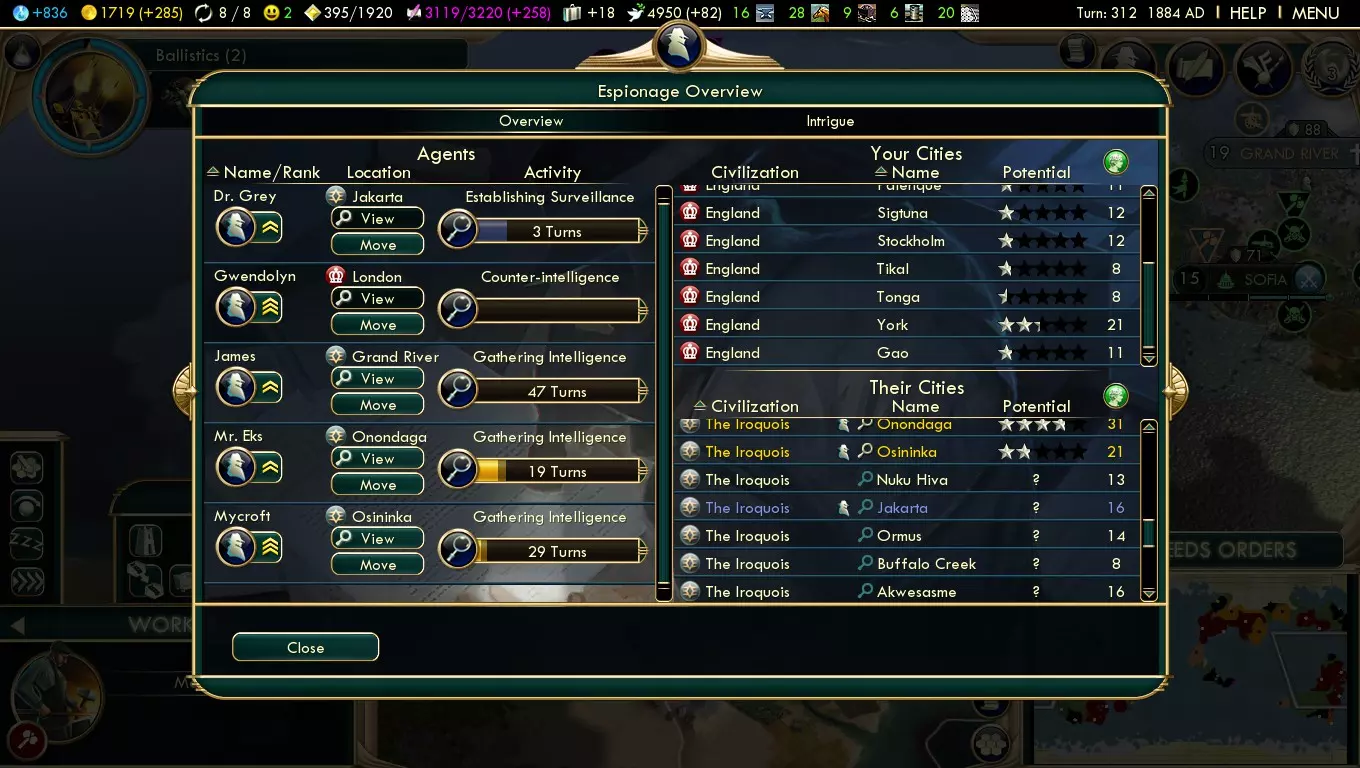
上图:现代时期可拥有5名间谍。进入信息时代后,你最多可以拥有7名间谍——或者,如果统治路线未能成功,借助全球化科技,你或许能额外获得多达7名联合国代表?你的 embarked 单位(单位上船状态)通常能与其他文明同期海军单位的速度相当,这意味着它们不需要那么多护航 你的海军作战单位通常可以安全地从前线撤退,不必担心被追击 你几乎总能追赶上撤退的敌方海军单位 选择【探索】政策树的首个政策和/或【大灯塔】奇观,以帮助保持你的海军速度优势 额外 1 个间谍意味着你在游戏后期能比其他文明更容易在科技方面跟上进度 考虑傀儡你征服的城市,以便更容易建造【国家情报局】,从而比大多数文明多拥有 2 个间谍 特色单位一:长弓手
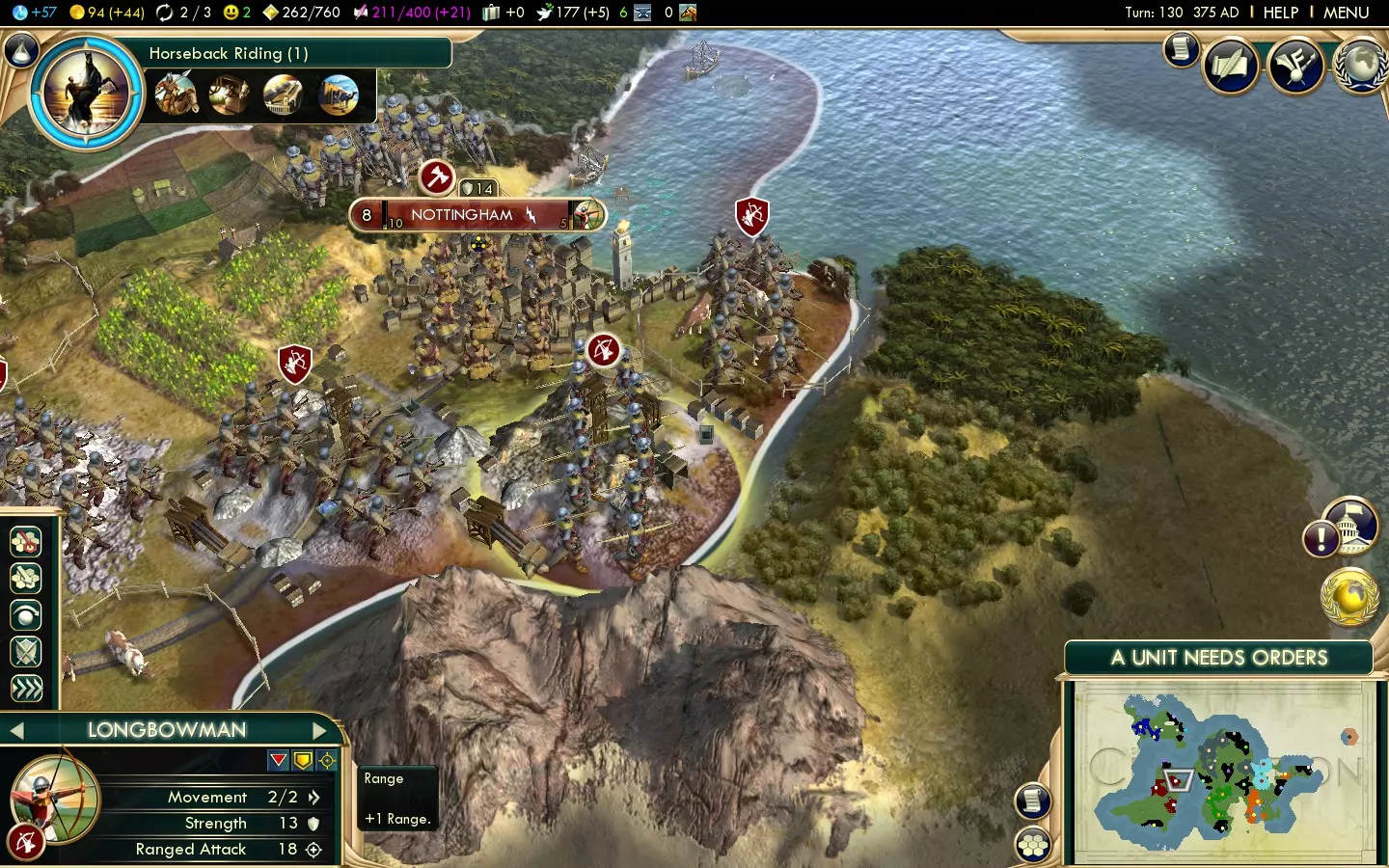
长弓兵可以攻击城市而不会遭到城市反击,本质上相当于中世纪的炮兵。一支由长弓兵组成的部队,再搭配一名作为侦察兵和补刀手的骑兵或骑士(远程单位无法占领城市,因此使用快速近战单位对城市进行最后一击是个好主意),可以轻松且安全地横扫敌方领土。 在研发出机械学科技之前,建造大量弓箭手和复合弓手是个不错的选择,这样你就可以将他们全部升级,快速组建一支长弓兵军队。发动攻击的时间越早,效果就越强大,所以要提前确定你打算首先入侵的地点(最好是铁资源丰富的地方)。中世纪火炮 长弓兵是前工业时代晚期之前唯一初始射程为3的单位。问题在于其射程大于视野范围,这意味着若要充分利用最大射程,你需要一个侦察单位。这并不难——只需在回合开始时移动一个单位,使目标进入视野,然后在回合结束时将其移回即可。
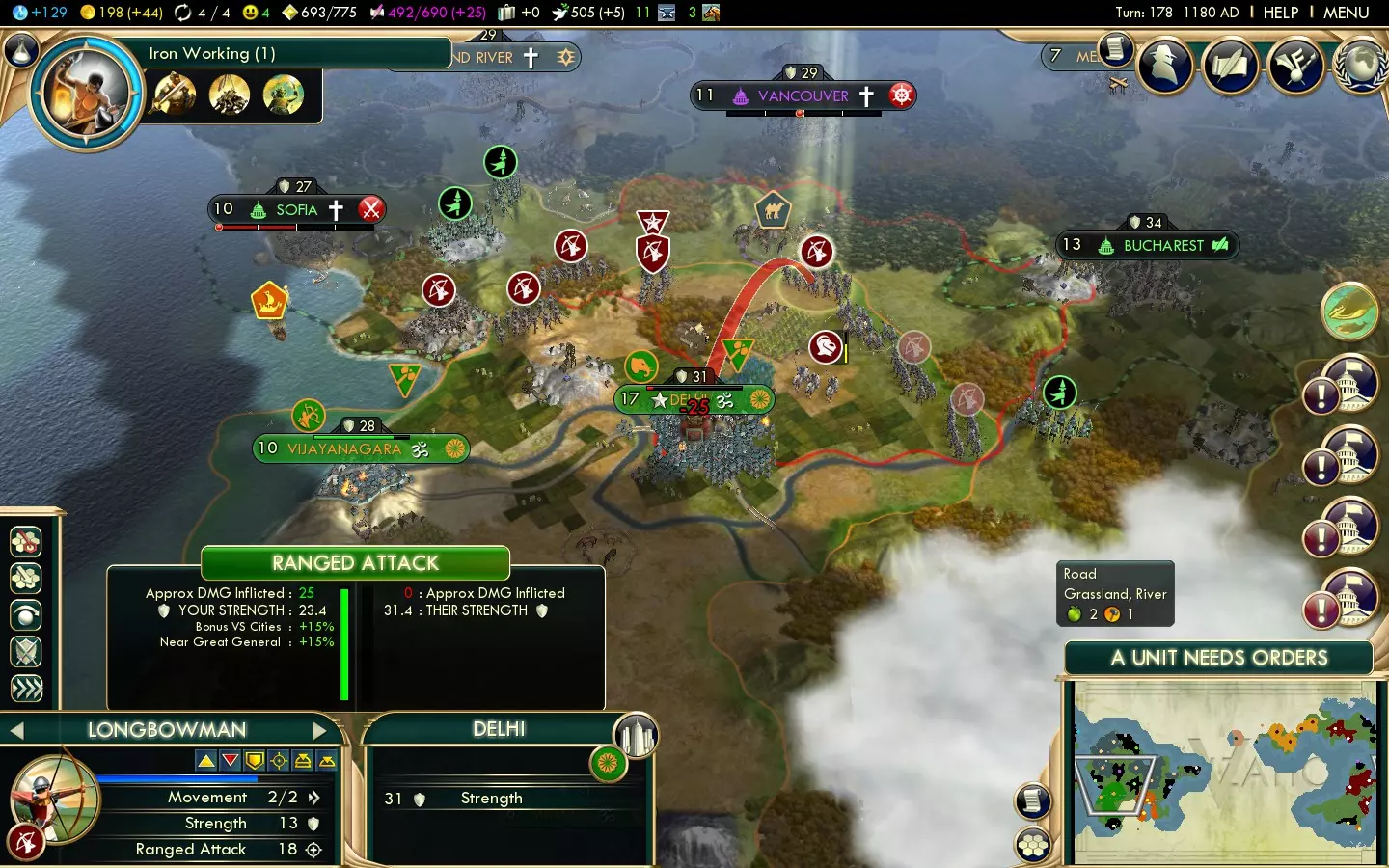
上方:实际中的动态侦察。 下方:丘陵和山脉比其他地形能从更远距离被看到,这意味着如果目标在丘陵或山脉上,你不一定需要侦察兵就能让长弓兵在最大射程内击中目标。
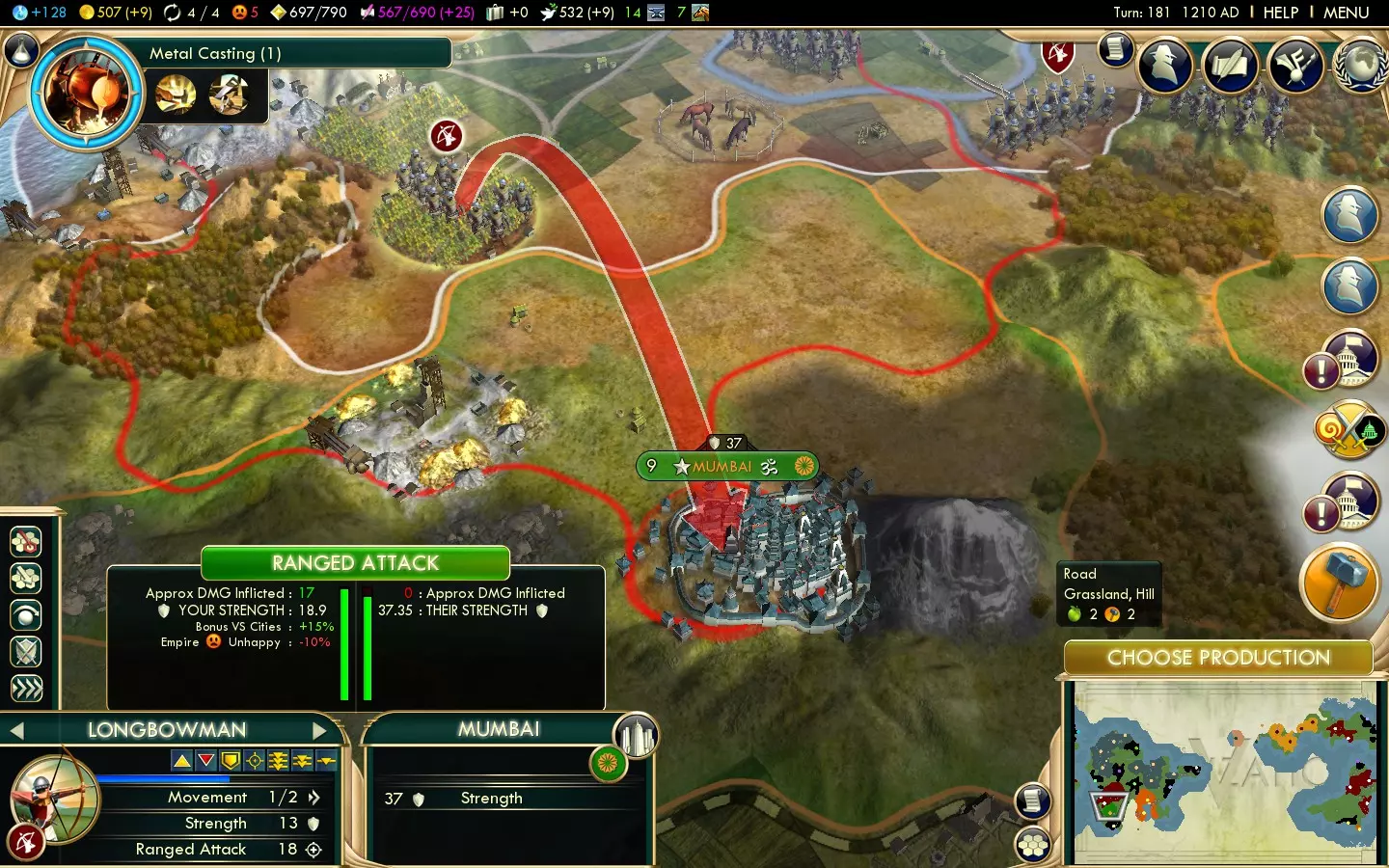
与大多数射程为3或更远的单位不同,长弓手没有间接火力。这意味着【站位】非常重要。尝试从拥有大量开阔地形的角度攻击城市。如果一座城市周围有大量森林或丛林覆盖的丘陵,最好暂时不要进攻,等到后期敌人变弱且你有充足时间时再行动。
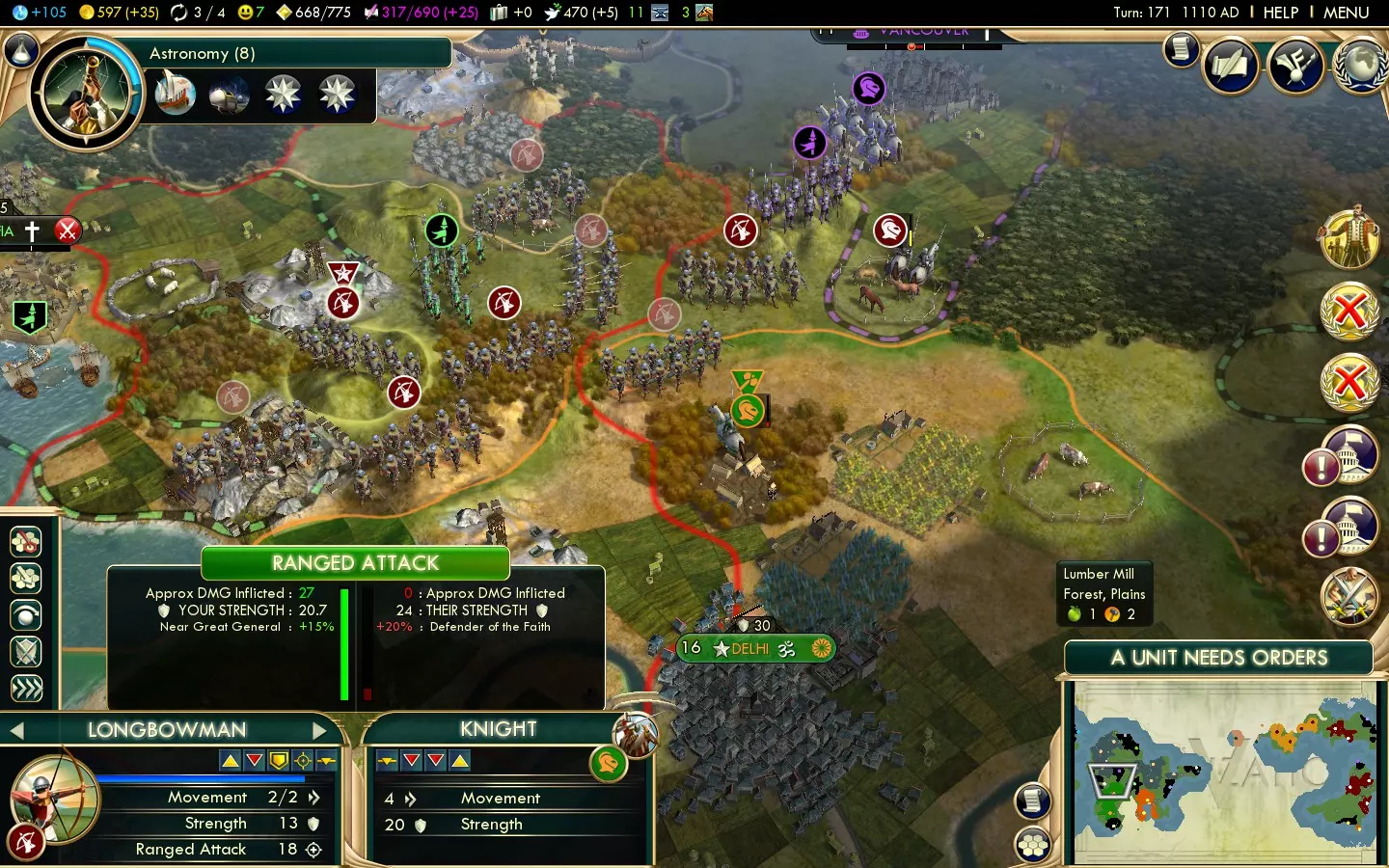
上方:所选长弓手右侧的森林山丘阻挡了其攻击敌方骑士的视线。若长弓手处于山丘上,则可以越过其他无森林覆盖的山丘进行射击。 长弓手是一种强大的单位,能在敌方难以有效反击的情况下对其造成削弱。此外,其较远的射程能在潜在攻击者靠近前对其造成重创,这意味着它们只需少量其他类型单位的支援即可发挥作用。 升级后保留的特殊晋升:+1射程(射程) 这是升级后保留效果中最强大的情况之一。十字弓手之后的远程单位通常射程为1,这使得它们即便拥有不错的防御能力,也依然极易受到近战攻击。不过,任何升级为加特林机枪及更高级别的长弓兵,射程都会变为2,这样你就可以将他们部署在前线单位后方进行保护,更容易让他们脱离危险,或者无需直接冲向敌人就能更轻松地攻击对手。
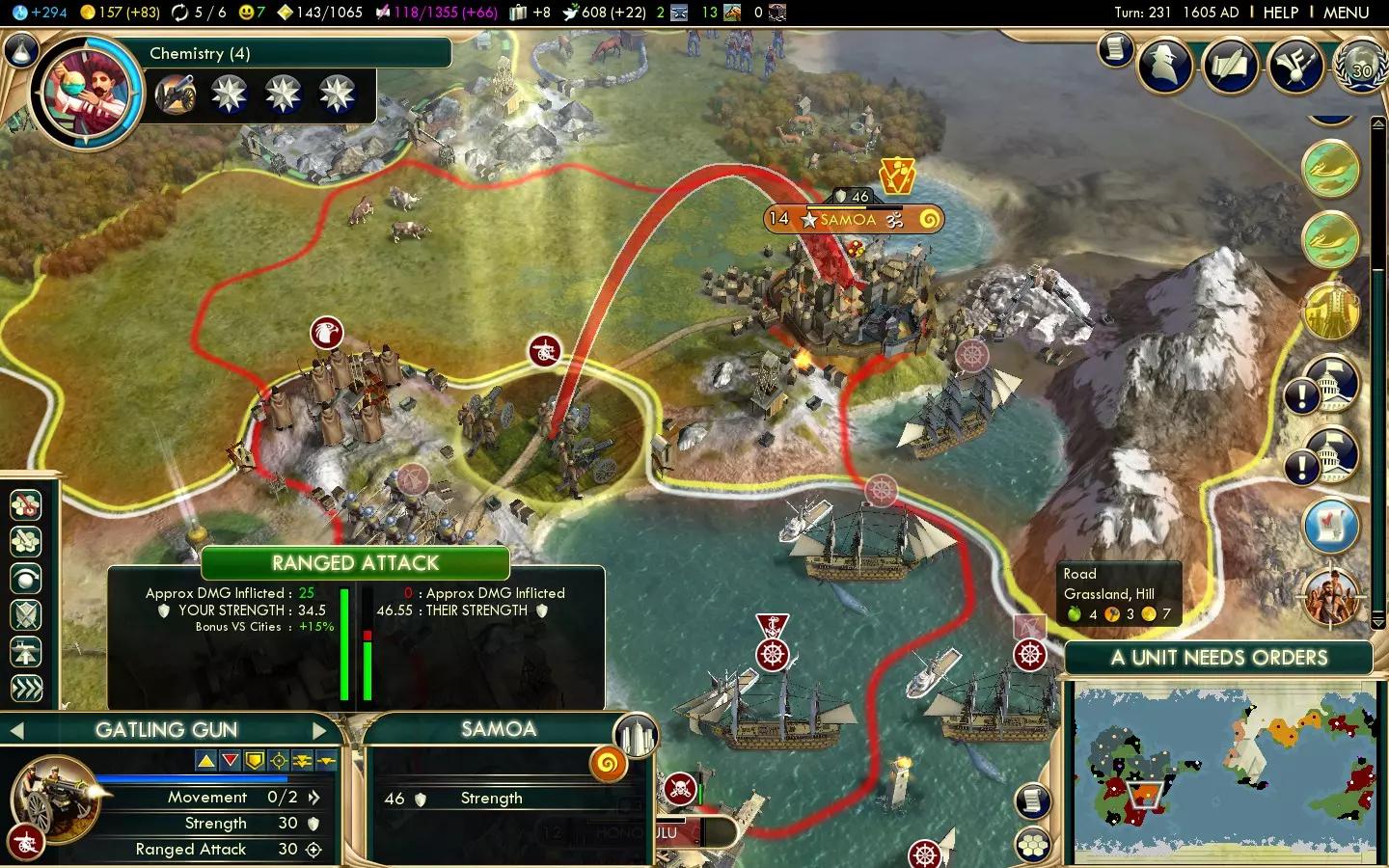
上方:由于沼泽和山丘位于我的加特林机枪与萨摩亚之间,如果单位的射程只有1,贸然突进攻击会很危险。但如果射程为2,那就没问题了。 建议尽早研发【弹道学】,因为在现代 era,你将面对的单位战斗力会迅速提升,如果你迟迟不升级加特林机枪,它们会变得非常脆弱。研发【核裂变】以升级为火箭筒的紧迫性没那么高,但届时升级成本极低,却能带来显著的战斗力提升。 特色单位二:战列舰
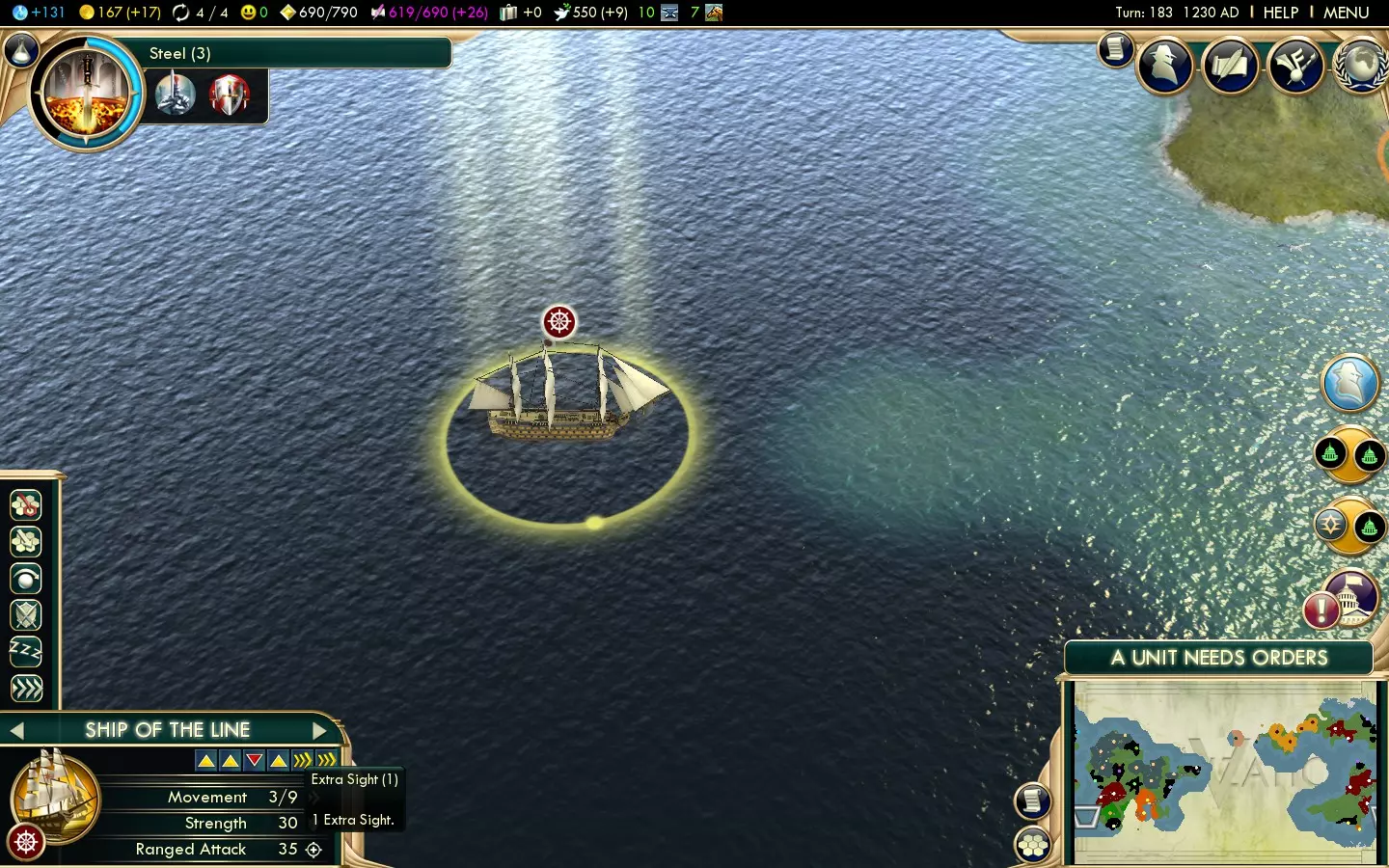
简介 在文艺复兴时代,海战的重要性远超以往时代。由于具备跨洋航行能力,纯海军对城市发动攻击比以往更具可行性。护卫舰能够削弱敌方城市的防御,为私掠船进行最后一击做好准备。 私掠船和护卫舰本身都是强大的单位。私掠船对城市作战能力较强,并且可以俘获敌方船只;而护卫舰则是文艺复兴时代所有非独特单位中伤害输出最高的。 现在,让我们来介绍战列舰。它不仅在文艺复兴时代拥有令人难以置信的强大实力,与工业时代的陆地单位相比也毫不逊色(甚至能够与铁甲舰抗衡)。多亏了你的独特能力,速度快得惊人,而且最重要的是,它更便宜,还具备额外的视野。 建造战列舰 战列舰的生产成本比普通护卫舰略低,这也意味着将加莱塞战舰升级为战列舰的成本更低。就像一旦拥有机械学科技,将复合弓手升级为长弓手是个好主意,可以立即拥有一支长弓手部队一样,你可以建造大量加莱塞战舰,一旦拥有航海术科技就将它们升级。 问题在于,和普通护卫舰一样,建造战列舰需要铁资源。这就是为什么在准备研发航海术科技时,用你的长弓手军队去征服富铁地区是个好主意。【实力】 基础实力为30,远程实力为35,战列舰的实力更接近工业时代单位,而非文艺复兴时代单位。
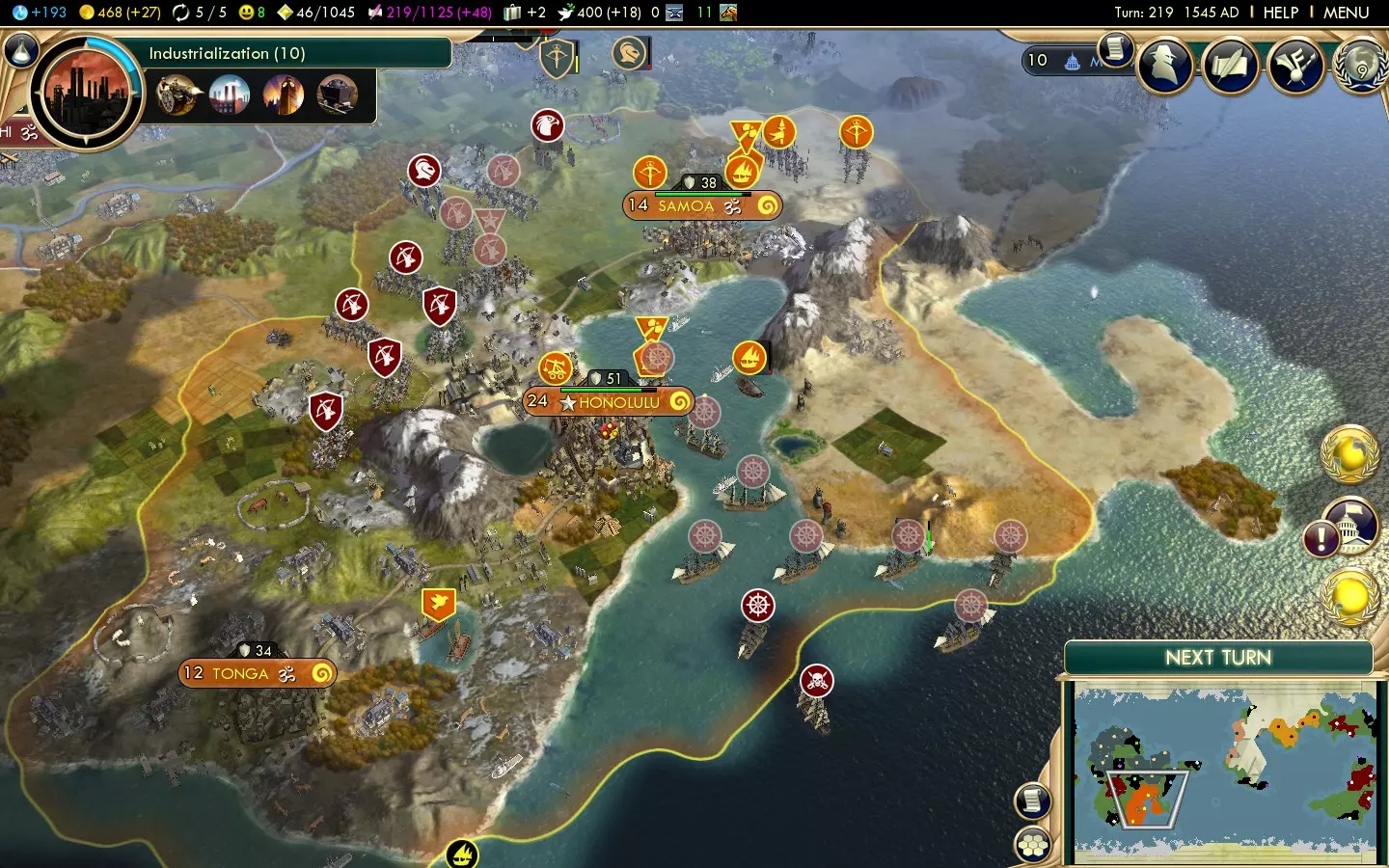
上文:尽管缺乏防御加成,战列舰依然强大到足以充当肉盾——吸引敌方远程攻击的火力,让你的长弓手能够安心向敌方城市开火。 作为远程单位,战列舰非常适合摧毁敌方城市防御,但它们本身无法占领城市。为此,在派出战列舰时带上几艘私掠船(在此过程中你或许还能缴获一些敌方船只——加莱赛战船尤其值得夺取,因为它们可以升级为战列舰;而敌方护卫舰最好予以摧毁,因为你俘获它们后无法将其转化为战列舰,反而会消耗你的铁资源来维持一个不如你现有单位的战力)。 那么,如何让这种高战力变得更加强大呢?【炮击】晋升路线。若全部点出这三个晋升,你的战列舰在攻击陆地单位时的战斗力实质上可达70——这基本相当于在文艺复兴时期就拥有了原子时代的战斗力!如果你正在进行陆海协同进攻,这将非常有利于为陆军单位开辟前进道路。视野
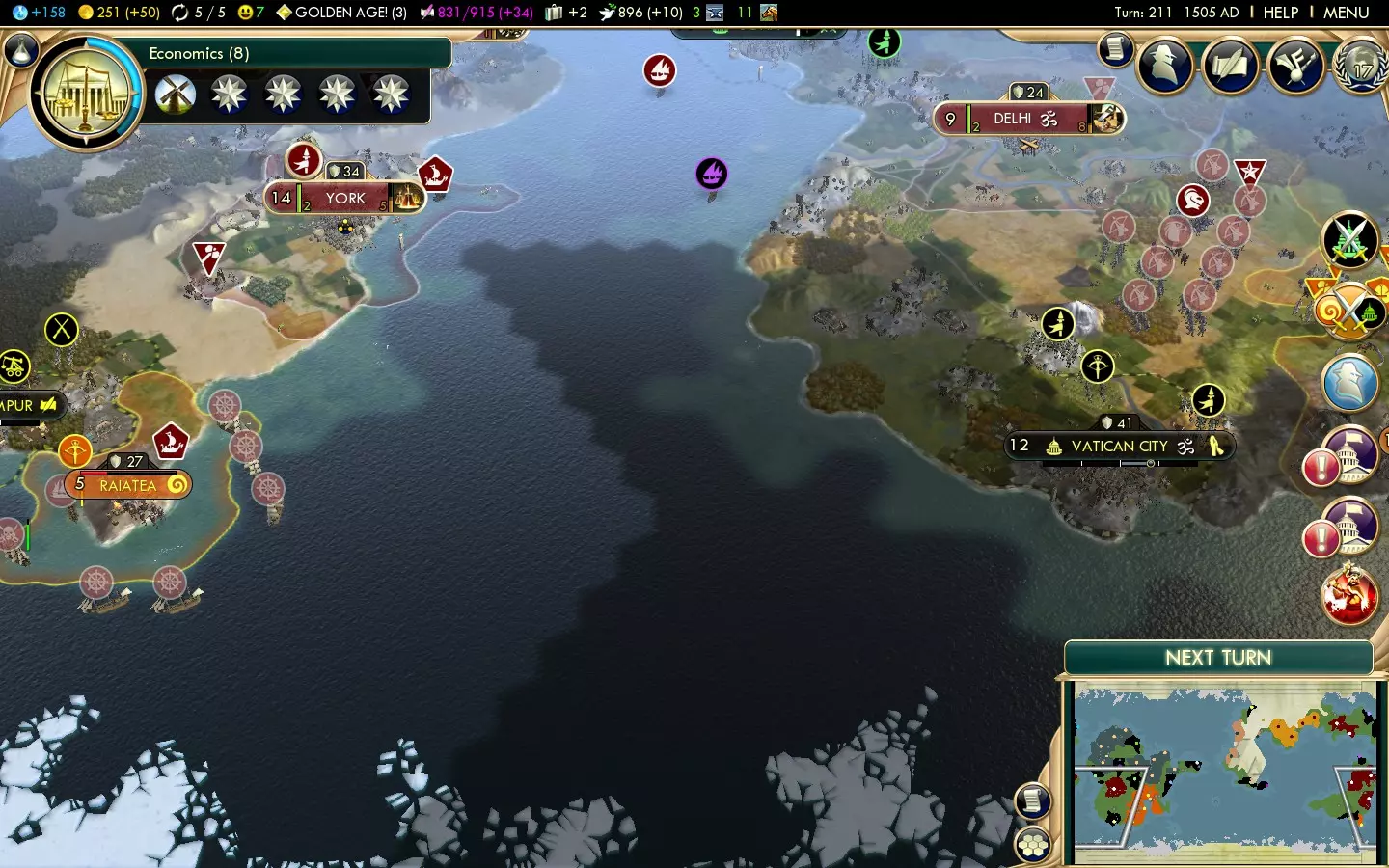
Above: Notice how far the sight range stretches? Ships of the Line have the same sight radius as Caravels while being slightly faster, so the only real reason to build Caravels is to save iron. With a base sight of 3, Ships of the Line can make excellent spotters for your Longbowmen, or even for themselves if you give them the Range promotion. That's not hard to do - while the Range promotion requires Accuracy or Barrage III for land-based ranged units, for naval ranged units it only needs Bombardment or Targeting II. Alternatively, it may be more effective to work towards the Logistics promotion. In addition to letting the unit attack twice, it lets it move after attacking, allowing hit-and-run attacks. This essentially fufills the same purpose as attacking units outside their range, with the added bonus of a second attack. In conclusion... Ships of the Line are more or less a one-size-fits-all naval unit (with the exception of taking cities.) They'll beat any same-era or earlier naval unit they face (even Korean Turtle Ships have a hard time against Ships of the Line) and work well against land-based units, too. Special promotions kept on upgrade None. Use your Ships of the Line while you can! Ships of the Line upgrade to Battleships, which require oil rather than iron. Research Biology reasonably early so you know where oil spots are, and don't be afraid to research Electronics quickly - it may render your Ships of the Line obselete, but Battleships are better in every way (aside from having slightly less sight, but if you have the Exploration Opener or the Great Lighthouse, that shouldn't be a problem.) Be sure to bring some Destroyers with them to scout out for Submarines or to get the last hit on cities. A problem with the upgrade path of Ships of the Line is that Battleships cannot be upgraded further, and by the very late game, their strength is actually quite poor. Missile Cruisers are better in nearly every way, aside from their lack of indirect fire. As such, try to win the game before information-era combat or be prepared to build your fleet from scratch. Social Policies England's Social Policy route is rather straightforward. Starting with Liberty is a good way of ensuring you can get plenty of iron for Ships of the Line, and helps support the empire you conquer. Afterwards, dip into Exploration to build on your naval advantages, and once you enter the renaissance era, go into Rationalism to keep your armed forces up to date. Liberty Opener Liberty's Opener allows all your cities to expand their borders immediately without needing a Monument. Of course, you can build Monuments and use that extra culture to offset the increased Social Policy costs from having more cities. Republic Extra production in every city helps set up sooner. It's particularly good for coastal cities, where production tends to be low (but you'll need plenty to churn out Ships of the Line at a respectable rate.) Collective Rule A free Settler helps you track down good city spots. You'll want to secure plenty of iron, or at the very least a coastal spot with decent production for churning out Ships of the Line. If you can't find any iron near your start, don't worry - your Longbowmen can capture it. Citizenship Faster Worker speed helps to repair tile improvements in cities you've captured as well as to help develop your new cities faster in the first place. Meritocracy Meritocracy helps you to deal with unhappiness concerns. If you're taking cities overseas, it's a good idea to keep a coastal city so it can build a Harbour, connecting those captured cities to your trade network and hence giving you some extra happiness. Occupied cities aren't affected by the 5% reduction in unhappiness from the population you have, but puppeted cities are, so if there's a city you want to annex, it's worthwhile to keep it puppeted until you have enough gold or production to get a Courthouse up quickly. Representation A free Golden Age is nice, but the main advantage of this policy is its requirement for the finisher. Finisher You've got a few options here. Great Admirals can cross oceans before other units, which is useful if you want to scout out an enemy ahead of Ships of the Line. A Great Prophet may help you secure a religion where you may otherwise not get one, or a Great Engineer could do the same for a Wonder. And then there's always the tried and trusted Great Scientist. Placing an Academy with them is a good way of getting to Machinery and Navigation sooner - they're nearly on opposite ends of the tech tree, so it helps to have a high science rate. Exploration When the renaissance hits, switch to Rationalism. If you have spare policies after Rationalism and your Ideology, it may be worthwhile to return to Exploration to finish off. Opener You may have a speed advantage over other Civs already, but it's important to keep the speed advantage high. As the game goes on, naval units become faster, and +2 moves gives you less of an edge. That's not to mention the fact other Civs could eliminate the speed difference by taking this Opener along with the Great Lighthouse wonder. As such, taking the Exploration Opener is a wise move, even if you go no further in the tree. Naval Tradition Happiness! The happiness boost this policy offers comes at a crucial time, where you're likely to have launched your Longbowman wars and need to offset all the unhappiness from conquests. Maritime Infrastructure Coastal cities often suffer from poor production, but with both this policy and Republic from the Liberty tree, they can get off to a great start and be ready for constructing Ships of the Line in no time. Merchant Navy Naval buildings are now cheaper, saving you money you can use to maintain more units (or perhaps to pay for the high upgrade costs your UUs have.) In addition to that bonus, the East India Company now offers culture and production to the city it's in. If you've mostly been puppeting and razing cities you conquer up until now, you've got a good shot at making use of that bonus. Build it in a coastal city for maxmimum impact. Treasure Fleets This policy is a great source of cash, and it doesn't matter whether you can manage long-distance trade routes or not - so long as they're sea based, they'll now be worth 4 more gold. Navigation School Even for one of the game's most naval combat-focused Civs, it's probably best to go for Treasure Fleets first. As it's worth switching to Rationalism as soon as the renaissance arrives, it may be quite some time until you get around to this policy, and even then, the cultural-focused Finisher doesn't give you a great incentive to spend a Social Policy where you could get a more powerful one. Still, if escorting Great Admirals is slowing your navy down, grabbing this policy could be worthwhile. Finisher Unfortunately, Exploration's finisher isn't that useful for you (unless you're trying to use England's extra Spy to help with a cultural victory.) The best use of it is probably just to deny cultural players from grabbing some hidden antiquity sites. Rationalism Opener Keep your happiness positive, and you're rewarded with a global 10% science bonus - so conquer carefully and not excessively. Humanism If you want an immediate science boost or have tall, specialist-filled cities, you can go for Secularism first. Otherwise, Free Thought works well for wide or puppet empires, and Humanism's on the way. More Great Scientists means more science, which is always good. Free Thought If you're working a lot of trading posts for cash to help maintain your huge navy, you can now get science out of it to help keep a technological edge. Universities aren't too hard to get in most cities and are themselves better at producing science now, too. Secularism If you're going for the National Intelligence Agency to make full use of your UA, you'll probably have either a tall empire or a core of moderately tall cities along with puppets. Tall cities means lots of specialists, which you can make plenty of science out of with this policy. Sovereignity Now, you can get some cash back from science buildings, which again can be used to support all that unit maintenance. Scientific Revolution It may be hard to get Research Agreements going, but even if you can't get any going, this policy's still worthwhile for Rationalism's Finisher. Finisher Use the free technology to keep an militaristic edge over rivals, to help you conquer the world. Ideology Autocracy suits England's style of domination the best, though Order's a perfectly workable alternative if you've got a large number of cities or will need to hold plenty. This guide shows the best choices from the first inverted pyramid of tenets, so that's 3 tenets from level 1, 2 from level 2 and 1 from level 3. Level One Tenets - Autocracy Industrial Espionage With one more Spy than any other Civ, you can get more out of this tenet than anyone else. In the late-game, you can beeline militaristic technologies while using your Spies to soak up the rest. Elite Forces Until they have the Supply promotion, naval units have a hard time healing up away from your own lands. As such, once they've been damaged, they'll be left weakened for a considerable amount of time. Elite Forces closes the strength gap between wounded units and those at full health by 25%, which is particularly useful for that naval scenario, but is also good for your land-based units, too. Fortified Borders This is an affordable, maintenance-free source of happiness. If you're in the business of puppeting the cities you capture, remember that puppeted cities are particularly likely to build defensive buildings, and unlikely to build experience buildings (Barracks, Armouries and Military Academies.) As such, if you have a particularly high number of puppeted cities, this could get you more happiness than the level 2 tenet Militarism does. Level Two Tenets - Autocracy Total War Late-game naval warfare is much more complicated than it is earlier in the game, and as such you need a broad range of naval units. You can't simply rely on Ships of the Line upgraded to Battleships - they're highly vulnerable to Submarines. Total War gives you plenty of production and experience to help build a navy to complement your Battleships, and gives you a decent edge on land, too. Together with a Military Academy, you can get a new Ship of the Line, Battleship or Missile Cruiser straight to the Range or Supply promotions, or one promotion away from Logistics. Nationalism Of course, all those new naval units to support your former Ships of the Line will cost a lot in gold maintenance, so that's where Nationalism comes in. Level Three Tenet - Autocracy Clausewitz's Legacy Now, you've got a huge, well-promoted naval fleet. And plenty of former-Longbowmen. It's time to take over the world once and for all. Get your armed forces prepared, and take this policy once you're ready - its limitation to 50 turns means you won't want to take it too early. Religion Religion is useful for England's game but is by no means a necessity. This section outlines the best religious beliefs for England by each type in decending priority order. Highly-situational beliefs are not listed, though taking a faith-based Pantheon isn't a bad idea if you want to improve your chances of grabbing a full religion. Pantheon God of the Sea Coastal areas frequently struggle for production, and this Pantheon is incredibly effective at covering that issue. Combined with a Lighthouse, you can make sea resources have incredibly good yields at a rather early stage of the game. Faith Healers To heal up naval units, typically you'll need to bring them back to your own lands. Even with your UA's speed boost to them, that takes them out of combat for quite a while. By using Faith Healers, you can heal them up much faster, bring them back to combat sooner and speed up your conquests. In addition to that usage, Faith Healers is also excellent if you're using mounted or naval melee units to get the last hit on a city after your ranged units have battered it down. Such units will tend to take heavy damage from the attack, and hence take a while until they can be safely re-used. With Faith Healers, that's not the case. Messenger of the Gods If you're likely to be taking a lot of cities and puppeting them rather than razing them, you may struggle somewhat for science as each city you own increases technology costs, but puppets produce less science than other cities. This Pantheon lets you pre-emptively account for that, and also helps you get your UUs sooner. God of Craftsmen This can act as a backup if you can't manage God of the Sea, offering a small amount of production to cities fairly easily. Founder Tithe or Church Property Tithe is usually the stronger of the two beliefs as it doesn't require your religion to be a majority in other cities, allowing you to still get something even if you're sandwiched between Ethiopia and the Celts. Both are still useful though, giving you gold for buying units or covering maintenance costs. Initiation Rites Converting newly-captured cities to your religion (or spreading your religion to Civs that don't have one) isn't too hard, giving you a quick rush of money with this belief. Because it only works once per city, this belief trails off in effectiveness later in the game, but if you're making good use of your UUs, that won't be a problem. Follower Pagodas Maintenance-free happiness, faith and culture. The only catch is you can't place these in puppet cities. Oh, and the fact this belief is highly competed over due to its power. Mosques More faith but less happiness than Pagodas, and makes a good backup or complement to them. Asceticism This is an affordable way to get happiness, especially if your empire consists mostly of puppet cities (which you can't buy faith-purchased buildings such as Pagodas in.) Shrines are very cheap and have a low maintenance cost, and getting to 3 followers in a city isn't difficult. Cathedrals Another backup if you can't get Pagodas or Mosques. The Great Art slot isn't particularly helpful as militaristic empires are typically better off using Great Artists to start Golden Ages than making Great Works, though then again, you may capture a few Great Works and need somewhere to put them. Guruship If you desperately need production, Guruship will help here. In new cities, you can get them started quickly by buying Workshops with gold, then filling the specialist slot for a strong production base, ready to get through other buildings quickly. Enhancer Religious Texts or Itinerant Preachers Both of these allow you to maintain religious pressure more effectively without having to spend faith, freeing up more for Pagodas, Mosques and suchlike. Just War If you can manage to spread your religion to rival cities before declaring war, with this belief you'll make the war much more one-sided. This rests on you having a decent faith output to be able to afford plenty of Missionaries, however. World Congress The World Congress is always a challenge for warmongering Civs to deal with, as generally most Civs will vote against your own interests. At least you have a slight consolation - your extra free Spy can rig elections in an extra City-State, meaning potentially one or two more delegates than other warmongers in the same situation. Note "priority" refers to how high you should prioritise your votes if it comes up, not how much you should prioritise putting them forward. If someone wants to implement an army tax, you should prioritise to vote no, for example. If you could put forward a vote, then it'd be a bad idea to put Standing Army Tax on the table. Note also that voting choices can vary depending on your game. Arts Funding Low priority Vote no Great Writers, Musicians and Artists aren't as useful to you as Scientists, Merchants and Engineers. Cultural Heritage Sites Medium-High priority Vote no Embargo City-States Medium-High priority Vote no It's easier to track trading units heading towards City-States than ones heading into the territory of other Civs, and hence it's easier to avoid them being pillaged by Civs you're at war with. Historical Landmarks Medium priority Vote no International Games Medium-High priority Vote no International Space Station Medium-High priority Vote no Natural Heritage Sites Low priority Vote no unless you have a Natural Wonder of your own Nuclear Non-Proliferation High priority Vote no unless you have no uranium of your own, another Civ does and they're likely to use it Your Nuclear Submarines have a speed of at least 8 thanks to your UA (or up to 11 with the Mobility promotion, Great Lighthouse and Exploration Opener) making them extremely effective at getting Nuclear Missiles into enemy lands without them even knowing where they came from. Scholars in Residence High priority Vote yes unless you're the leader technologically speaking Sciences Funding Medium priority Vote yes Standing Army Tax High priority Vote no World's Fair Low priority Vote no Wonders Being a mid-game warmonger, there's a little bit of a window for building wonders in earlier on, and there's some throughout the game which are useful to pick up. This section has a selection of the most useful wonders for England, arranged alphabetically in each era. Ancient Era Pyramids (Liberty Only) The Pyramids are a highly-uncompetitive wonder, meaning it's easy to pick up. With the faster Worker speed it offers, you can clean up pillaged improvements in cities you conquer in no time, and keep your cities well-developed. Statue of Zeus (Honour Only) A wonder to capture rather than to build. With it, your Longbowmen will fight against cities at 20.7 strength, and your Ships of the Line at 40.25 - the former slightly weaker than a Longswordsman's base strength, and the latter slightly weaker than a Trebuchet against cities. Temple of Artemis A tempting wonder as it'll help you build Longbowmen faster, though building a wonder so early in the game is a huge risk. Still, if you're building tall in order to secure the National Intelligence Agency, the 10% food bonus on offer here is rather handy. Classical Era Colossus The Colossus helps strengthen your economy to help you maintain your huge armed forces, though its position on the tech tree is rather awkward. It may be a wonder to capture rather than a wonder to build. Great Lighthouse One of England's highest-priority wonders, getting this guarentees you a speed advantage over every other Civ at sea no matter what they do (well, aside from them capturing the city you build this wonder in.) The extra sight is also lovely for exploration. Medieval Era Machu Picchu Provides an extra source of money to help maintain your armed forces. Notre Dame 10 points of global happiness helps to support mid-game conquests often held back due to unhappiness concerns. Renaissance Era Porcelain Tower (Rationalism Only) While you may struggle to get any Research Agreements going, a free Great Scientist is still a free Great Scientist. Industrial Era Brandenburg Gate With a Military Academy, you can build new Ships of the Line, Battleships or Missile Cruisers with an instant Range promotion, or one promotion away from Logistics. You'll be able to build new Artillery with March or one promotion away from either Range or Logistics as well. Modern Era Neuschwanstein Got lots of puppet cities spending their time building defensive buildings despite being far away from danger? Turn that into something useful. Neuschwanstein makes Castles produce gold, culture and a little happiness, and gives some itself. The happiness and gold will be good for supporting conquests while the culture is good for keeping up with ideological tenets. Prora (Autocracy Only) Prora is a good source of happiness, which you'll need to support conquests. Atomic Era Great Firewall Building the Great Firewall in your capital or a high-science-producing city will eliminate the need for having a counter-Spy there, freeing up an extra Spy to join the one from your UA and the one you may have from the National Intelligence Agency. What you do with these extra Spies is up to you. Pentagon Upgrading ranged units is fairly expensive (aside from upgrading Machine Guns to Bazookas) so a reduction in such costs may be useful. Pitfalls to Avoid England is a fairly straightforward Civ, but like any Civ there's mistakes to be made. Here's a few. Neglecting iron Few units are as dominant at what they do as the Ship of the Line. It's basically the Winged Hussar of the seas. Neglect taking iron spots and you lose all that potential. If you don't have any near your starting location, use your Longbowmen to capture some. Putting off Longbowman invasions until Ships of the Line are avaliable While Longbowmen and Ships of the Line are in adjacent eras, they're also nearly at opposite sides of the tech tree. As such, it'll take quite a while between you picking up Machinery and Navigation, and therefore there's no point to delaying launching wars until both your UUs are avaliable. The time in which both units overlap is relatively small, so start the wars with your Longbowmen and bring in Ships of the Line later. Bringing lots of siege units with Longbowmen The main strength of Longbowmen is that they can attack cities from outside their ranged attack radius. Siege units prior to Artillery don't have that ability, and are destroyed rather easily. Why spend production on building a unit that won't last when you can build lots of Longbowmen which will survive? Forgetting to bring melee units with either UU Both your UUs cannot capture cities. Horsemen, Knights or Lancers should support your Longbowmen, while Privateers go nicely with your Ships of the Line to get the last hit on cities. Refusing to upgrade Longbowmen True, Gatling Guns have 1 less range. But they also have over double the defensive strength and over 50% more ranged strength than Longbowmen. Once you're facing enemy Artillery and air units, the low defensive strength of Longbowmen is just too risky. Single-mindedly heading for the National Intelligence Agency For a Civ with 1 extra Spy, the National Intelligence Agency is powerful, but you shouldn't just avoid founding or annexing cities solely for the reason of making it easier to build it. If you have no iron, need some and there's a spot with plenty, don't hold back from taking the spot because it'll make it harder to build a Police Station in every city - take it! The Sun Sets: The Counter-Strategies England, like the Ottomans, are a dominant military force at land and by sea, but they have weak economic support. Playing against the UA: Sun Never Sets +2 naval movement The extra movement English naval units have makes them hard to catch, but there's two ways around this problem. One, is to surround the English fleets by coming in from multiple angles, leaving them nowhere to escape to. The alternative is to close the gap. If you take the Great Lighthouse wonder and the Exploration Opener, you'll match their speed assuming they don't also have the Exploration Opener. If they do, then you can just give your military naval units the Mobility promotion to help catch up. Of course, like most naval-based Civs, you can simply work around England's UA by attacking them by land. 1 extra Spy England's extra Spy allows them to keep one Spy defending against technology theft and one stealing technologies at the same time, once someone enters the renaissance. As such, even if England has a technology lead, you may need to watch out for their Spies. Probably the best way of dealing with lots of Spies is to encourage England to use them defensively. Placing a Spy in one of their smaller cities will either be a safe way to take technologies, or encourage them to recall one of their Spies to work as a counter-Spy there. If you know there's a counter-Spy in an English city, just move on to another city. By using lots of Spies defensively, England will lack the potential for stealing technologies, rigging elections or having plenty of Diplomats that it could have. Playing against Longbowmen Longbowmen, like Crossbowmen, are particularly vulnerable to Knights, which can move from outside their range to attacking them. Knights have a strength of 20 vs the defensive strength of 13 Longbowmen have, letting you take off quite a chunk of their health easily. Defensively, the speed advantage you have thanks to roads is excellent for hit-and-run attacks. The best place to fight Longbowmen is where there's lots of forested hills, though areas with lots of rough terrain will be good anyway. That'll get in the way of their range, so even if they can see your units, they won't necessarily be able to fire upon them. As ranged units, Longbowmen cannot take cities themselves. If you manage to take out all the melee units they're attacking you with, they'll be forced to withdraw. Playing against Ships of the Line Until Ironclads, nothing can really stand up to Ships of the Line - except Ships of the Line themselves. And thanks to Privateers, there's a way you can get some. Try to surround lone Ships of the Line with Privateers so they can't escape, and keep fighting them until you capture one. Heal it up, and you'll have a chance against the mighty English Navy. If you're defending against Ships of the Line, keep your land-based melee units away from the coast so they don't get bombarded, and ensure your coastal cities have good defences. Try to take out their naval melee units so they can't capture your cities. Like with Longbowmen, having no "last-hitter" unit will encourage them to withdraw. Strategy by Style Early-game Aggressors - Watch out for ranged units and fast Triremes. Otherwise, England isn't a particularly difficult opponent. Mid-game Warmongers - Do not attack England by sea. That's obvious. Attack them by land, and bring plenty of Knights/Lancers to take out their Longbowmen. Late-game Warmongers - England is likely to be vulnerable to air attacks as neither upgraded Longbowmen nor upgraded Ships of the Line (Battleships, in other words) defend well against them. Submarines and armoured units will work well, too. Cultural/Scientific Players - While defensive technologies are often at the other side of the tech tree to cultural and scientific ones, you may need to take that detour in the mid-game. For scientific players, keep in mind England's Spies can easily outnumber your counter-Spies - be prepared to build plenty of Constabularies and Police Stations to help handle that. Diplomatic Players - Chivalry is needed for Banking, so it's likely you'll have Knights ready to deal with Longbowmen. Send Spies into England's cities to encourage them to use them defensively, so you can then rig City-State elections in peace. Other Guides If you like these guides and want to send a tip, you can click here![ko-fi.com] Meta-guides These guides cover every Civ in the game and can be used as quick reference guides. Civ summaries (Gives a brief overview of how each Civ plays) Civ-specific tricks, secrets and clarifications (Compiles the lesser-known features of each Civ) Civ-specific guides, in alphabetical order All 43 Civs are covered in in-depth guides linked below. In brackets are the favoured victory routes of each Civ. America (Domination) Arabia (Diplomatic/Domination) Assyria (Cultural, Domination and Scientific) Austria (Cultural, Domination and Scientific) Aztecs (Domination/Scientific) Babylon (Scientific) Brazil (Cultural) Byzantium (Cultural/Domination) Carthage (Diplomatic/Domination) Celts (Cultural) China (Domination) Denmark (Domination) Egypt (Cultural) England (Domination) Ethiopia (Cultural/Scientific) France (Cultural) Germany (Diplomatic/Domination) Greece (Diplomatic/Domination) Huns (Domination) Inca (Scientific) India (Cultural/Scientific) Indonesia (Diplomatic/Domination) Iroquois (Domination/Scientific) Japan (Domination) Korea (Scientific) Mayans (Scientific) Mongolia (Domination) Morocco (Diplomatic) Netherlands (Diplomatic, Domination and Scientific) Ottomans (Domination) Persia (Diplomatic/Domination) Poland (Domination) Polynesia (Cultural) Portugal (Diplomatic) Rome (Domination) Russia (Domination) Shoshone (Domination/Scientific) Siam (Diplomatic/Scientific) Songhai (Domination) Spain (Cultural/Domination) Sweden (Diplomatic/Domination) Venice (Diplomatic) Zulus (Domination)