换一换
换一换 


玛雅人将宗教与科学结合以实现其目标。本指南详细介绍了玛雅文明的策略、独特单位与建筑,以及如何对抗他们。 简介 注:本指南假设你拥有所有影响游戏的DLC和扩展包(所有文明包、《远古世界奇观》、《神与王》和《美丽新世界》)

一个崭新的世界需要一位崭新的领袖。一位能够带领玛雅人民走向繁荣的领袖——那就是你。你所领导的人民,其根源位于美洲中部,他们的历史可追溯至近四千年前。大约一千五百年后,他们创造了文字,并在数学和天文学领域展现出卓越的技艺。从公元三世纪到八世纪,玛雅人建立了由城邦组成的先进文明。尽管玛雅文明整体开始衰落,但北方的城市仍在持续发展,成为当时已知世界中最先进的城市。 然而,欧洲人的到来,改变了这一切。这些人是来自遥远土地的征服者,他们除了掠夺、杀戮以及俘获美洲的人民和财宝外,几乎没有其他兴趣。玛雅人进行了顽强抵抗,一直坚持到17世纪末才最终被完全征服。然而,他们的文化却留存了下来,体现在至今仍在使用的语言和保留下来的传统中。如果玛雅人能够在美洲各民族中取得某种程度的胜利,那么在一个更公平的世界里,他们是否能做到同样的事情?你能否将他们的文明建设得足以经受住时间的考验?

在深入介绍本指南之前,先为新手玩家解释一些我将通篇使用的术语: 【直冲科技】:专注于尽早获取某项科技,只研究解锁该科技所需的前置科技,不研究其他科技。例如,要直冲“青铜工作”科技,你只需研究“采矿”和“青铜工作”,在完成“青铜工作”前不研究其他任何科技。 【政策树完成奖励】:完成某一社会政策树后获得的奖励(例如,“自由”政策树的完成奖励是免费伟人)。 【政策树开启奖励】:解锁某一社会政策树时获得的初始奖励(例如,“自由”政策树的开启奖励是每个城市+1文化)。 【UA(独特能力)】:文明所拥有的无需建造即可获得的独特能力。 【UB(独特建筑)】:由特定文明建造的、替代普通建筑的独特建筑。UU - 特色单位 - 替代普通单位,仅能由特定文明建造或与军事城邦结盟后获得。 特色能力 - 特色能力、特色单位、特色建筑、特色改良设施和伟人的统称。 宽帝国 - 拥有大量低人口城市的帝国。由于玛雅拥有无论人口多少都能产出科技的特色建筑,因此宽帝国是玛雅的不错选择。 XP - 经验值 - 积累足够经验值后,单位将升级,获得治疗自身或选择晋升的能力。 概览(上) 起始倾向 玛雅没有起始倾向。向丛林区域扩张以利用大学为丛林带来的科技加成是个不错的主意。独特能力与单位建筑 除了必有的独特能力外,玛雅文明在远古时代拥有一个独特单位和一个独特建筑。 独特能力:长计数历法 该能力在研究完神学科技(中世纪时代,第一列,总第六列)后解锁。 屏幕顶部的日历会变为玛雅长计数历法(将鼠标悬停在上面可查看公历日期)。 每个巴克顿周期开始时(日历最左侧数字每394年增加一次),你可以选择获得一位免费的伟人。 每位伟人只能选择一次。如果所有选项都已选过,则会重新开始,允许你再次选择每位伟人。 这些伟人对未来伟人的生成有不同的影响规则。下一位伟人的当前进度将被保留,但获取下一位伟人的要求可能会提高。 选择大作家、大艺术家或大音乐家后,将提高下一位同类型伟人的伟人点数消耗。 选择大预言家后,将提高下一位大预言家的信仰消耗。 选择大商人、大科学家或大工程师后,将提高这三类伟人中每一位下一位所需的伟人点数。 选择大将军或大 admiral(海军上将)后,不会提高下一位同类型伟人的消耗。 特色单位:阿特拉斯投矛手(替代弓箭手)
标准远程单位 技术 淘汰条件 升级自 升级至 生产费用 购买费用 所需资源

农业 初始解锁 (整体第一列)

建造 古典时代 第一列 (总第四列)

侦察兵(仅远古遗迹升级可用)

复合弓箭手

无法识别内容,已删除。

180
【无】(假设为正常速度游戏) 力量:5 远程力量:无 移动力:无 射程:无 视野:无 负面属性:无 正面属性:无

7

2

负面改动 - 标准速度游戏中升级费用从80提高至85(+6%) 正面一次性改动 - 所需科技从【弓箭术】改为【农业】(远古时代,第一列,总第二列) - 标准速度游戏中生产力消耗从40降低至36(-10%) - 标准速度游戏中金币消耗从200降低至180(-10%) 特殊能力:无法进行近战攻击(无效果) 特色建筑:金字塔(替代圣地)

信仰系建筑 科技 所需建筑 建造条件 生产力消耗 购买成本 城市限制 维护费用

陶器 远古时代 第一列 (总第二列) 无

çĽćŽż 40
280
* None 1
【假设为正常速度游戏】 基础产出 产出乘数 专家 伟人槽位 其他效果 2

2

积极变化 每回合产出信仰从1点提升至2点 额外产出2点科技值 概览(第2部分/共2部分) 胜利路线 请注意,这些评分是基于文明体验的个人观点。你可能会发现以非常规方式更有效地利用该文明的方法。

文化性:7/10

外交:6/10
统治:6/10
科学胜利:9/10 玛雅是追求科学胜利的较强文明之一。虽然在科技方面不如巴比伦或韩国,但你的文明特性为你提供了追求备选胜利方式的灵活性。如果你的广阔帝国周围有大量贸易站,外交胜利也是不错的选择。游戏初期,你可以速出投矛手消灭对手;游戏后期,你可以利用科技优势进行世界征服。 相似文明及独特能力 总体而言 尽管玩法存在重大差异,但与玛雅最接近的文明可能是罗马。罗马的文明特性是:当建造首都已有的建筑时,获得25%的生产力加成。你拥有的城市越多,就能从这一特性中获得越多收益。值得注意的是,罗马所具备的快速发展能力有助于玩家迅速建立科学基础设施,从而克服因城市数量增加而导致的科技成本上升问题,这使得罗马成为少数擅长在进行铺城扩张的同时追求科技胜利的文明之一。 相同的起始倾向: 玛雅与美国、中国、埃塞俄比亚、法国、德国、希腊、波斯、罗马和肖肖尼一样,都没有起始倾向。 与特色能力相似的情况: 巴比伦在研发出书写科技时会获得一位免费的大科学家,而威尼斯在研发出光学科技时会获得一位免费的威尼斯商人【其独特的大商人替代单位】。这是其他文明在特定科技研发后获得免费伟人的仅有的几个案例,但与玛雅的加成不同,这些案例没有选择余地,且只会发生一次。对于其他拥有通用伟人加成(而非单一类型)的文明,可以关注奥地利(其特色建筑咖啡屋替代风车,提供25%的伟人点数加成)、印度尼西亚(其特色建筑神庙替代花园,且不受限制,可让任何城市获得25%的伟人点数加成)和瑞典(每达成一项友好宣言,所有城市获得10%的叠加伟人加成)。 与阿兹特克掷矛兵类似的其他弓箭手特色单位包括:巴比伦的弓箭手(比普通单位更强)和印加的投石兵(被近战单位攻击时,有机会撤退而非承受伤害)。投矛手与弓箭手有相似之处,它们都能让你在暂缓研发特定科技的同时仍具备足够的防御能力(投矛手允许你推迟研发【箭术】,而弓箭手则能让你暂缓研发【建造】)。 唯一比普通单位更早解锁的特色单位是丹麦的【狂战士】,它在【金属铸造】时代即可解锁,而普通单位则需等到【钢铁】时代。这种情况下,狂战士更多是为了让你能更早发动进攻,而非提供早期防御。 与金字塔类似,金字塔提供的额外信仰值和埃塞俄比亚石碑提供的信仰值作用相似,都有助于你更快获得万神殿和宗教,并且拥有的城市越多,效果就越显著。你的信仰加成不如埃塞俄比亚,建筑出现时间也稍晚,但+2科研值的加成完全足以弥补这些不足。 没有其他特色建筑能提供直接的科研加成,游戏早期能获得科研加成的文明也只有三个——亚述、巴比伦和韩国。巴比伦的早期加成最高,但后期会有所减弱。韩国早期优势较小(在首都建造图书馆能获得类似科研协定的科研加成),但后期科研能力会大幅提升。 特色能力:长计数历

长计数是游戏中较为独特的能力之一。它不会立即生效,而是通过一次性事件给予奖励,而非持续加成。不过,若运用得当,在游戏早中期其他文明还在努力获取伟人时,你就能获得大量伟人。 解锁神学 长计数在解锁神学科技后激活。由于神学处于中世纪时代,且伟人每394年周期才会授予,因此你需要迅速行动。 以下是所需的全部科技: 陶器 历法 写作 哲学 戏剧与诗歌 神学 每拥有一座城市,科技成本就会增加5%(标准尺寸或更小地图如此,其他地图则增幅较低),若其他文明已研究该科技,成本则会降低。
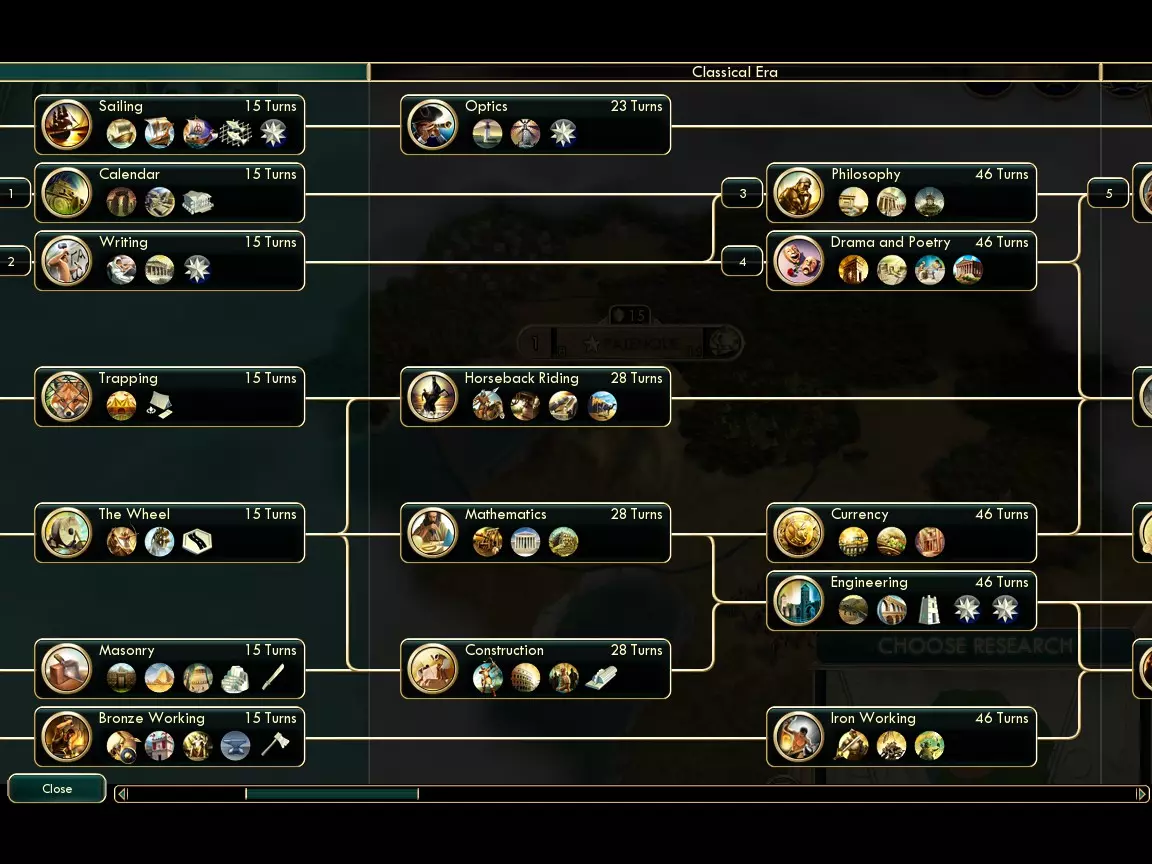
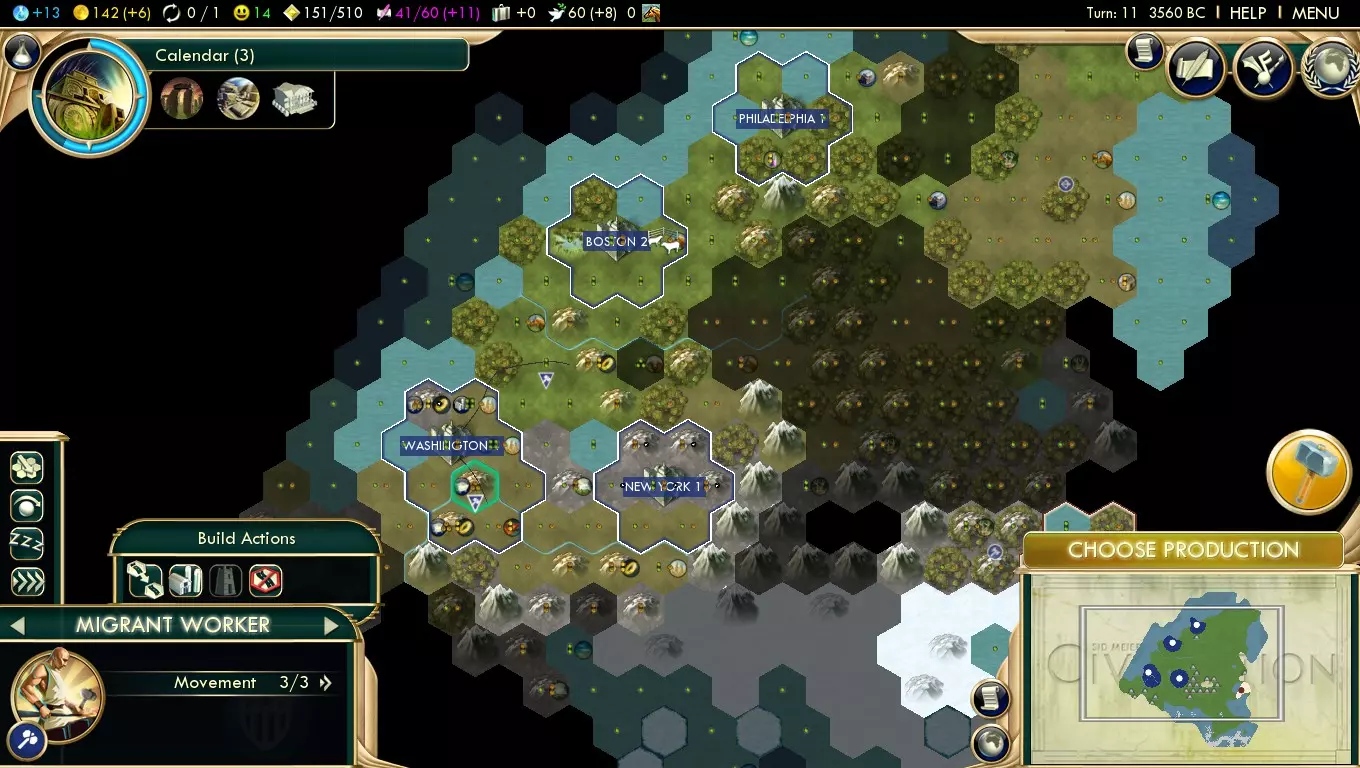
当然,你可以根据工人科技选择更多内容,但这取决于你的起始位置。如果你有未造林的种植园奢侈品,以及大量小麦或开阔的农田用地,那么走这条路线是没问题的。 除了解锁UA(独特能力)外,这条路线还能让你立即获得金字塔UB(独特建筑),并快速建造图书馆——两者都是科技建筑。由于阿兹特克UU(独特单位)投枪兵无需弓箭术即可解锁,你可以忽略该科技,专注于早期的神学研究。 从神学到教育学 在讨论UA本身的优势之前,值得一提的是,神学是解锁教育学的两个必要条件之一,而教育学是一项至关重要的科技。以下是你需要的后续科技: 畜牧业 箭术 陷阱 轮子 骑术 数学 货币 文官制度 教育 你可能需要尽快研究采矿、石工术和建筑学,所以不要盲目遵循此路径。 周期 当你研究神学后,你的日历会变为玛雅长计数日历(不过你可以通过将鼠标悬停在上面来继续查看旧日历)。它采用20进制系统,也就是说,当日历中的某个数字达到20时,它会重置为0,而其左侧的数字会加1。 最左侧的数字显示当前的巴克顿,每394年增加1,此时你将获得免费的伟人。因此,查看第二位数字可以提示你是否有新的伟人即将出现。如果该数字处于十几的高位,就要做好准备了。 现在来说日历机制中最重要的部分。394年的周期并非基于你发现“神学”的时间,而是围绕固定年份展开。以下是标准6050年游戏时间内的所有固定年份(日期为近似值)。1. 公元前2720年(标准速度游戏中为第33回合) 2. 公元前2325年(第42回合) 3. 公元前1931年(第52回合) 4. 公元前1537年(第62回合) 5. 公元前1143年(第72回合) 6. 公元前748年(第86回合) 7. 公元前354年(第101回合) 8. 公元41年(第117回合) 9. 公元435年(第133回合) 10. 公元830年(第152回合) 11. 公元1224年(第183回合) 12. 公元1618年(第234回合) 13. 公元2012年(第432回合) 第1个巴克顿之前的日期不会显示,因为在任何正式游戏中你都不会那么早研究出神学,而且此时文明特性实际上也没有任何效果。在第4个巴克顿之前研究出神学的可能性极低。如果你在正常结束日期2050年之后继续游戏,计数会继续。 最后,重要的是,除了伟大将军和伟大海军统帅外,这些免费的伟人会增加下一个同类型伟人的招募成本(并且和往常一样,伟大商人、伟大工程师和伟大科学家会互相增加彼此的招募成本)。第一位伟人 希望你能尽早研究出神学科技,最好在公元前几千年的时候。现在,你面临一个艰难的选择。由于早期游戏的重要性,你选择的第一位伟人将对游戏后续发展产生重大影响。你应该在大科学家、大先知或大工程师中选择。 大科学家 选择科技路线的话,尽早建立学院是个好主意。早期获得8点额外科技值是非常巨大的提升。 大先知 如果你还没有强化你的宗教,大先知可以帮你完成这件事。否则,在大多数敌对信仰发展起来之前,用它来传播你的宗教,或者建造圣地,以帮助你获得信仰值,用于购买宗教建筑或耶稣会教育改革信条中的科技建筑。 大工程师 加速建造奇观很有用,但最适合扩张型帝国的奇观往往出现在游戏中期和后期。或者,建造工厂以在整个游戏过程中提升生产力。 除了第一个伟人之外
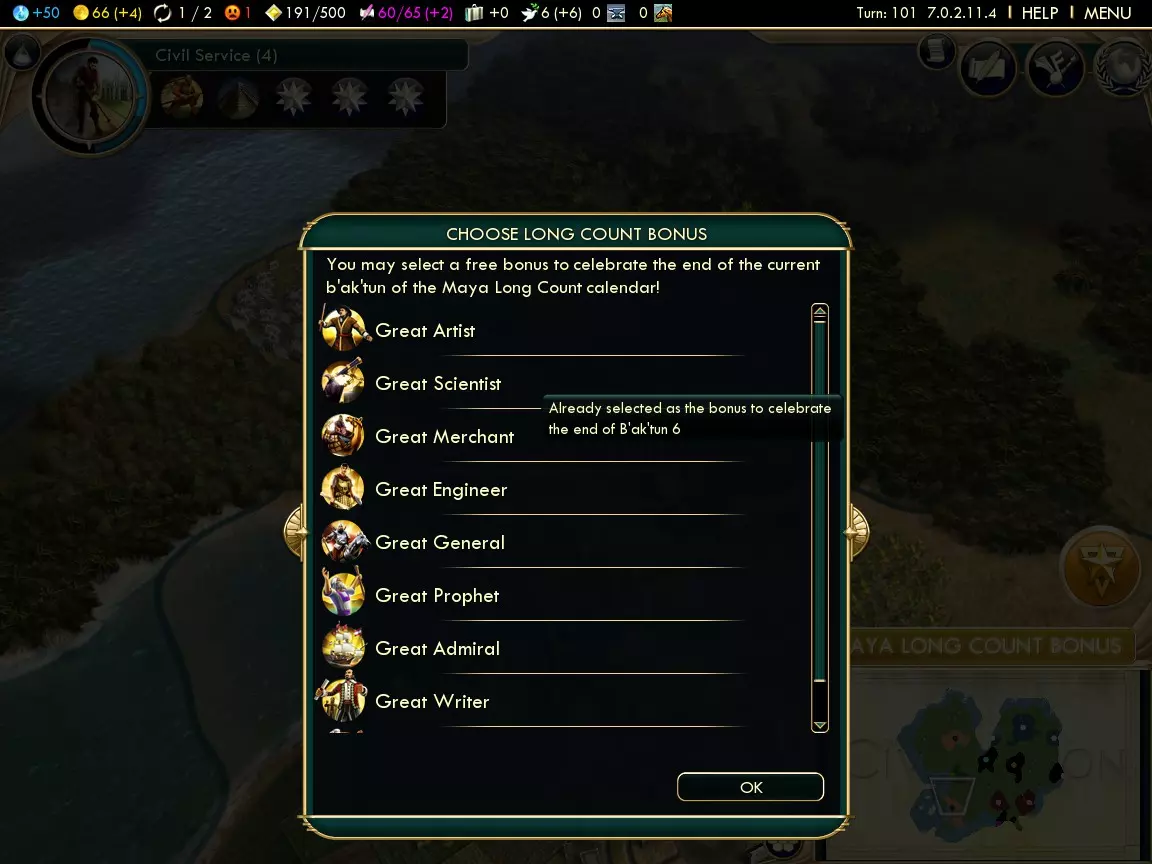
上方:你已招募的伟人会显示其招募时间。例如,这位伟人诞生于公元前748年左右。 越往后招募的伟人,间隔时间会越来越长,其作用也可能逐渐降低(因此该能力在游戏中期效果最强)。你不应将整个战略完全建立在伟人的出现时机上,但当新的巴克顿周期来临时,了解当前最适合的伟人类型会很有帮助。 前三位伟人之后的早期伟人: 商人 - 现金增益非常适合购买科研建筑(如果你拥有【耶稣会教育】,可用金币购买图书馆和天文台,用信仰值购买其他建筑),或者启动研究协议。 作家 - 能加快社会政策的解锁速度。后续的伟人 艺术家:到这个阶段,黄金时代将为你带来大量资金。 海军统帅:在防御敌方私掠船或对抗倾向于此时发动攻击的海军帝国时是不错的选择。在某些地图上,一个非常规的策略是尽早招募海军统帅,因为他们甚至可以在天文学研究完成前穿越海洋格。 将军:在这个阶段,战争进程非常迅速(从步枪兵到世界大战步兵再到步兵),保持警惕至关重要。在此之前招募伟大将军可能不是个好主意,因为这会牺牲更有用的伟人。 音乐家:音乐家对玛雅人来说不是特别有用,因此你最好将他们推迟到游戏后期(如果确实需要的话)。总结 尽快研发【神学】科技,在此期间你的【特色单位】会保障你的安全,而【特色建筑】将帮助你更快研发出【神学】 伟人的出现时间是固定的,但随着游戏进程,相邻伟人出现的回合间隔会逐渐拉长 尽早获得【先知】【科学家】和【工程师】 【音乐家】和【将军】则可以推迟到后期时代再获取 特殊额外策略:宗教速推 此策略并非玛雅玩法的核心,但值得尝试 宗教速推策略依靠快速发展自身宗教来抑制其他宗教的发展你的特色建筑能带来出色的信仰值产出,这意味着你很可能在完成虔诚政策树之前就能强化宗教(如果没能做到,那就先不要完成该政策树,等强化宗教后再完成,因为免费的大预言家会提高下一位大预言家的招募成本)。 为什么这很重要?因为这与你很可能是首个研究出神学科技的文明这一情况相辅相成,让你在那些奇观的建造上抢占先机。通过使用【长计数历法】生成的大工程师来加速建造其中一个奇观,虔诚政策树完成奖励的免费大预言家,以及【长计数历法】生成的大预言家,你可以在其他大多数文明的宗教在世界上产生影响力之前很久就传播你的宗教。方法一:早期传播 此方法会牺牲一些早期科技,但能让你在其他文明有机会之前,将世界上的很大一部分地区皈依你的宗教。 在这种方法中,你的第一个长计历伟人应该是工程师,以便快速建造圣索菲亚大教堂来获得免费的大预言家。立即派遣这位大预言家带着护卫进入外国领土(最好是那些没有万神殿的国家,因为如果你将他们皈依你的宗教,他们会更喜欢你,而且他们自己建立宗教来破坏你的可能性也更小)。 虔诚政策树的完成者应该尽早完成,因此专注于文化产出是个不错的主意,第二个长计历伟人应该是大预言家。这样,你就能在相对较短的时间内获得三位大预言家。方法二:超级婆罗浮屠 同样,思路是用大工程师加速建造奇观。这次不加速圣索菲亚大教堂,而是加速杰内大清真寺。然后,让同一座城市专注建造婆罗浮屠。由于你很可能比其他文明更早研发出神学科技,因此你很可能会率先建成婆罗浮屠,从而获得9次宗教传播次数,而非通常的6次! 如果你的文明拥有宗教对话信条,且游戏中已有其他竞争宗教存在,这种方法的效果会特别好。 特色单位:投矛手
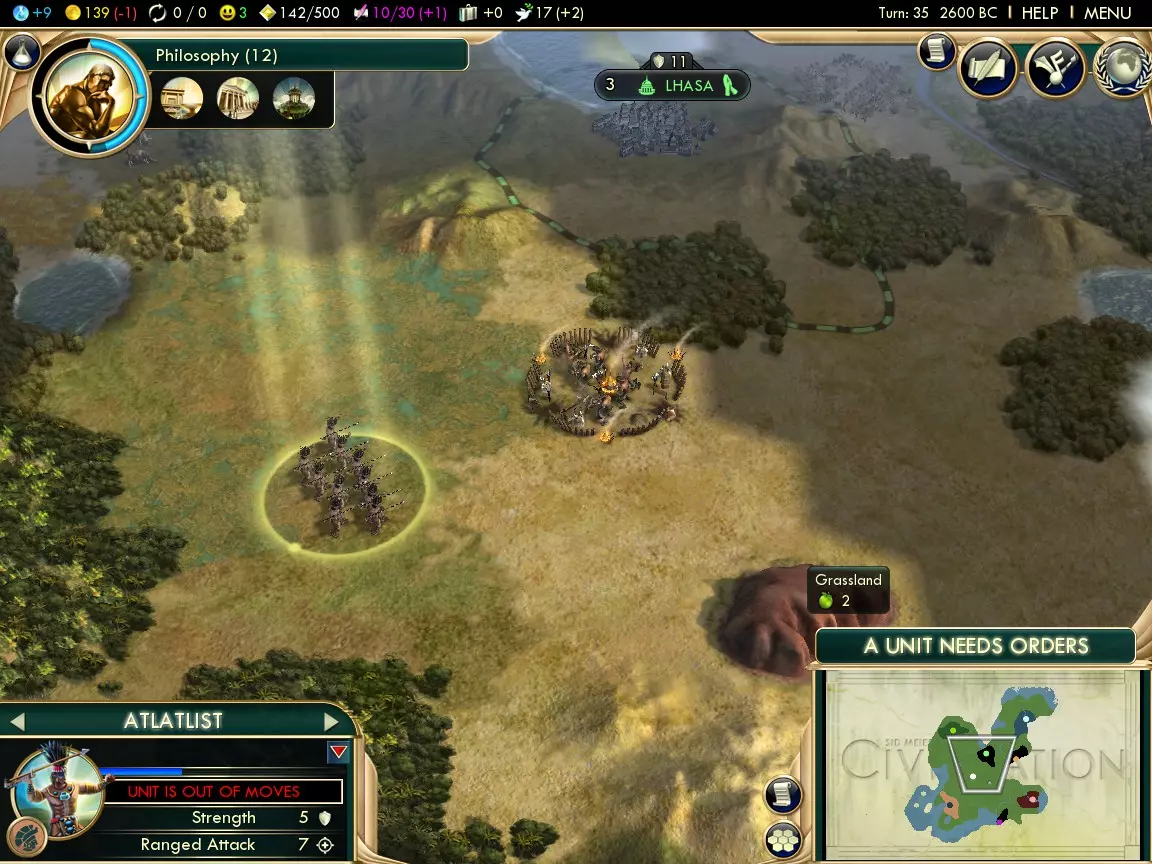
独特单位通常拥有更强的攻击力、防御力或额外的特殊能力。然而,阿兹特克投矛手有所不同。该单位本身的强度与普通弓箭手并无差异,仅在建造或购买成本上便宜10%。关键区别在于科技需求——它是仅有的两个科技需求早于普通单位的独特单位之一。无需等待弓箭术科技,你可以立即建造阿兹特克投矛手。 尽管解锁弓箭术本身只需一项科技,但要知道大多数工人相关科技并不需要它,而且在研究神学的路径上也无需弓箭术。因此,这个单位能帮你节省宝贵的回合数,这可能就是能否多完成一个394年周期的关键。除了该单位在主要战略中的定位外,值得注意的是,更早、更廉价的弓箭手还能在其他方面为你提供帮助。由于现在弓箭手比战士更便宜,几乎没有理由不将其作为你的核心防御(甚至进攻)力量。尽早且大量使用它们,有助于你获得如【后勤】和【射程】等非常强大的高等级晋升。 一个隐藏的缺点是稍高的升级成本——在标准速度的游戏中为85,而不是80。这个差距很小,但如果你拥有大量的投矛兵部队,就会成为问题。 特殊 bonus 策略:超早期战争 此策略并非玛雅玩法的核心,但值得一试。
弓箭手快攻是一种合理的策略,具体是在游戏早期集结弓箭手,在对手建立起像样的防御之前用弓箭手对其发动攻击。玛雅文明能更高效地实施这一策略,并且发起攻击的时间更早。 需要注意的是,投矛手是游戏中除侦察兵外最便宜的单位。在早期游戏中集结一支投矛手军队并不太难,而且你可以专注于研究工人科技,而不必像其他进行弓箭手快攻的文明那样必须研究“箭术”。 快攻对手的首都通常是个好主意,因为首都包含两种奢侈品——足够维持城市相当长一段时间(除非其中一种或两种奢侈品与你已拥有的相同)。此外,首都的位置通常都非常好。最重要的是,你可以尽早消灭一个竞争对手,从而获得更多可供扩张的土地。当然,你也可以选择拿钱走人。如果对方的防御比你预期的要强,这种做法是值得的。同时要记住,战争和征服行为在后期会激怒很多人。
上面:我搞砸了一场战争,我控制了麦加但没能消灭阿拉伯人。到处都是谴责,我的军队还在麦加,而巴比伦要来征服了。如果你想避免这种混乱的结局,一定要尽早开始速攻。 升级时保留特殊晋升:无 特色建筑:金字塔 不要与金字塔奇观或桑海的特色建筑泥金字塔清真寺混淆。
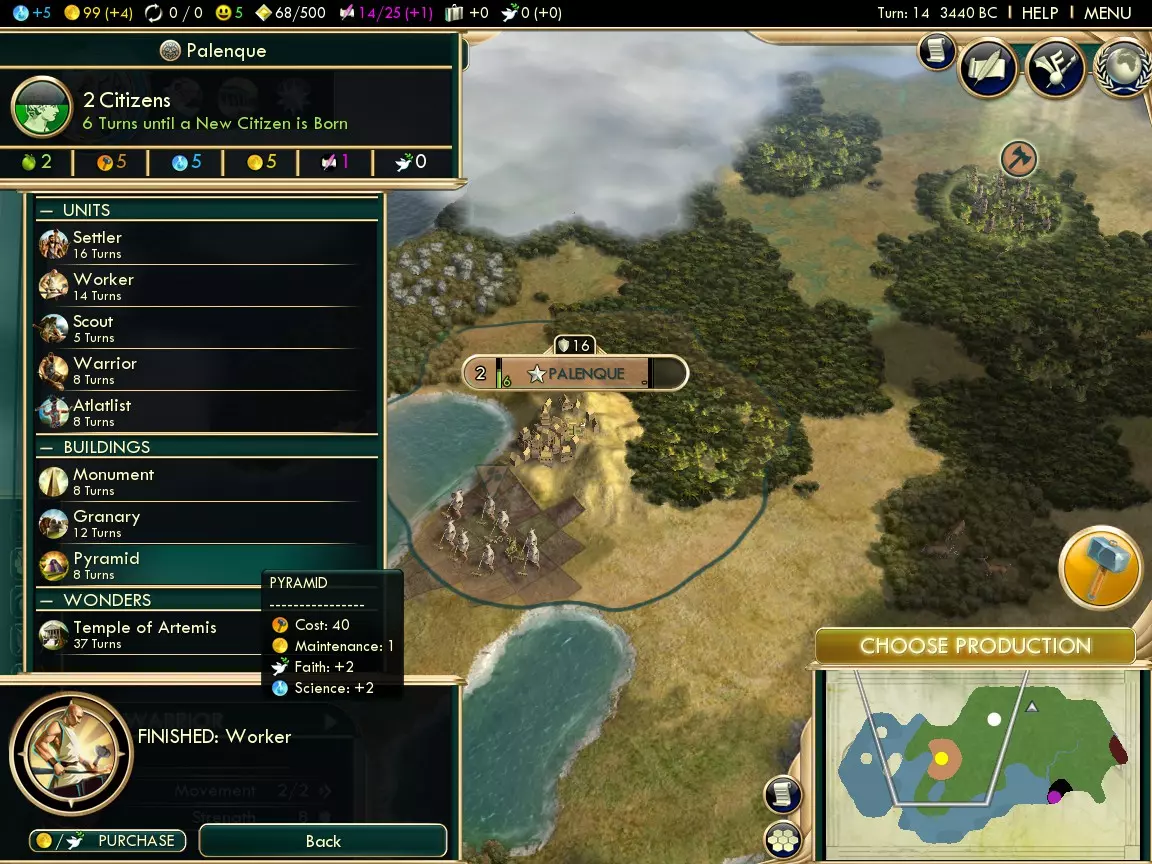
金字塔能让神龛的效果提升一倍以上。原本每1维护费产出1信仰值,现在同样的花费可获得2信仰值和2科技值。这部分科技加成相当于在图书馆建成前2人口的科技产出,或在公立学校建成后1人口的科技产出。与其他科技建筑不同,它的加成不依赖人口或其他前置建筑,因此对于城市规模不大的大型帝国来说非常实用。 还需注意,金字塔的建造成本极低,在标准速度游戏中仅需40生产力,与战士单位相同!即便是生产力低下的城市也能建造,尤其是在开启虔诚政策树首项后,其建造成本会减半。 不过,仍需注意避免过度扩张城市。虽然疆域辽阔的帝国能产生大量信仰值,但每座城市都会增加新技术的研发成本。在你有能力购买其他科技建筑之前(考虑到虔诚政策的初始效果不会影响购买价格,所以金字塔应该建造而非购买),建造大量新城很可能得不偿失。 作为神龛的替代建筑,适用于神龛的宗教信条同样适用于金字塔。【众生供养】信条能为金字塔和寺庙各提供+1食物,加快城市发展速度;【苦行主义】信条则在满足一定城市规模要求的前提下,每座金字塔提供+1幸福度。额外的幸福度有助于维持你大量城市的稳定,且无需额外成本。社会政策:自由与虔诚 开局选择自由政策或虔诚政策(也可混合选择——先从自由政策中获取集体统治,再从虔诚政策中获取宗教改革,这种组合效果相当不错)。完成上述选择后,商业政策可能会有所帮助,它可以支持签订研究协议,或者在理性主义政策可用之前,单纯用于支持城市/建筑的维护费用。 自由政策 开门政策 你的所有城市都将获得一定文化值,使其能够立即扩张边界(无需建造纪念碑,这意味着城市可以转而专注于建造金字塔),同时还有助于抵消因拥有更多城市而增加的社会政策成本。 共和政策 提供的生产力点数非常有利于在新城市中建造金字塔。集体统治 若想占据最佳城市位置,你需要尽早开始扩张。首都免费获得一名移民以及更快的移民生产速度,将对你大有帮助。 公民制度 更快的工人工作速度,如同共和政体带来的额外产能,有助于新城市快速发展。 精英政治 在进行铺城扩张时,幸福度始终是个问题。精英政治能在一定程度上缓解这一问题。 代议制 新城市不会大幅拖慢社会政策的获取速度,而且你还将获得一个黄金时代,帮助你度过游戏中幸福度开始真正造成麻烦的阶段。 政策完成奖励 因为你的文明特性还不够。这里获得的大科学家,再加上文明特性和特色建筑提供的大科学家,将为中期科技发展奠定坚实基础。虔诚 初始效果 如果你的特色建筑原本还不够强力,现在它的建造费用减半,这意味着即使是你最差的城市也能立即开始建造。如果你足够早地获得这个初始效果,甚至可能让你建造的第一个金字塔所需时间减半,从而让你的首都有更多回合来建造其他东西。
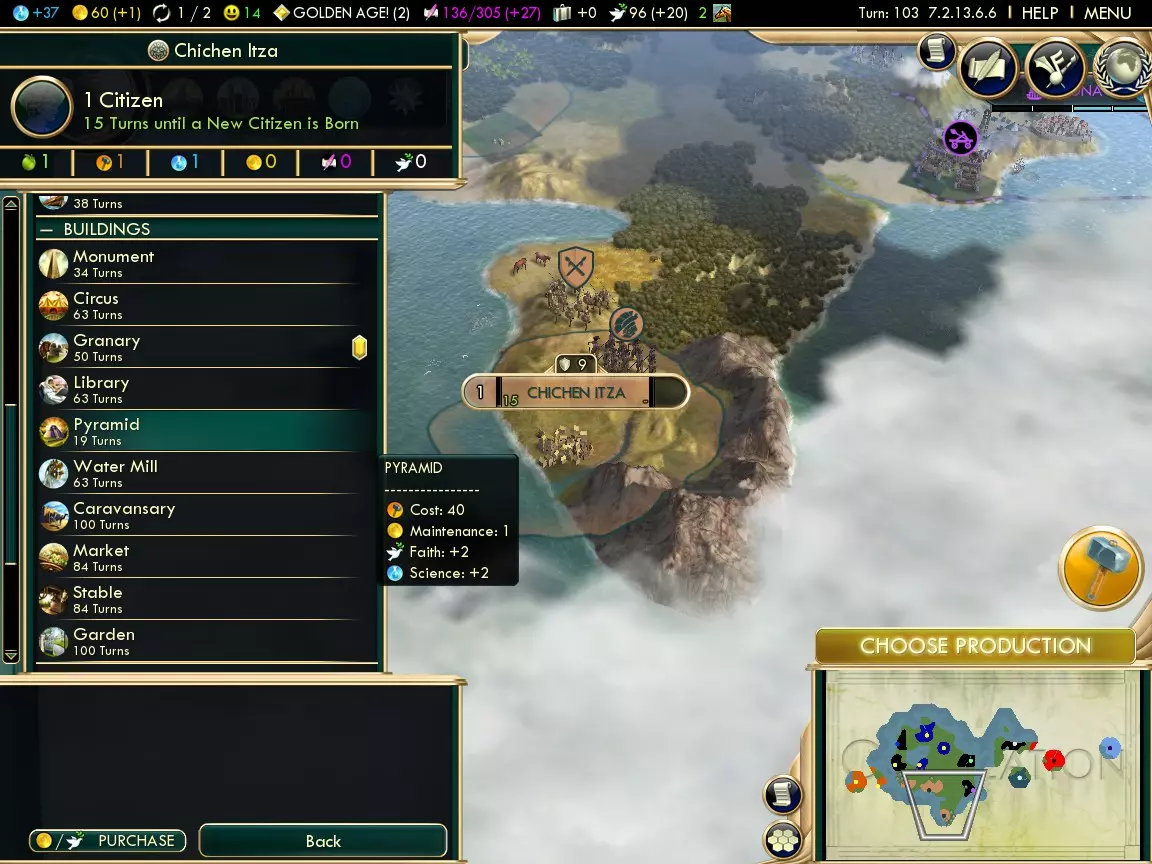
上图:对于一座产能刚过1的城市而言,19回合的时间已经相当不错了。 组织宗教 您的特色建筑现在提供的信仰值是非虔诚政策线圣地的三倍。希望您能在完成这条政策线之前强化您的宗教,而这项社会政策能让您更快达成目标。 宗教宽容 最终,敌方宗教会传入您的领土。宗教宽容允许您使用他们的万神殿,而无需该宗教成为多数宗教。如果是基于幸福度或产生信仰值的万神殿,那您就走运了。否则,如果其他文明用传教士充斥您的城市,您仍然可以使用自己的万神殿(为了所有那些科技,万神殿【神之使者】应该是您的选择)。 宗教改革 【耶稣会教育】是这里的选择。建立新城市时,一个好主意是带上一名传教士,以便立即在当地传播你的宗教。然后用金币购买图书馆,若条件允许,再用金币购买天文台,其余建筑则用信仰值购买。快速建造这些科技建筑有助于城市更快抵消5%的科技成本增长。 天命 这项政策能让你的信仰值发挥更大作用,对于购买像佛塔这类建筑尤其方便。
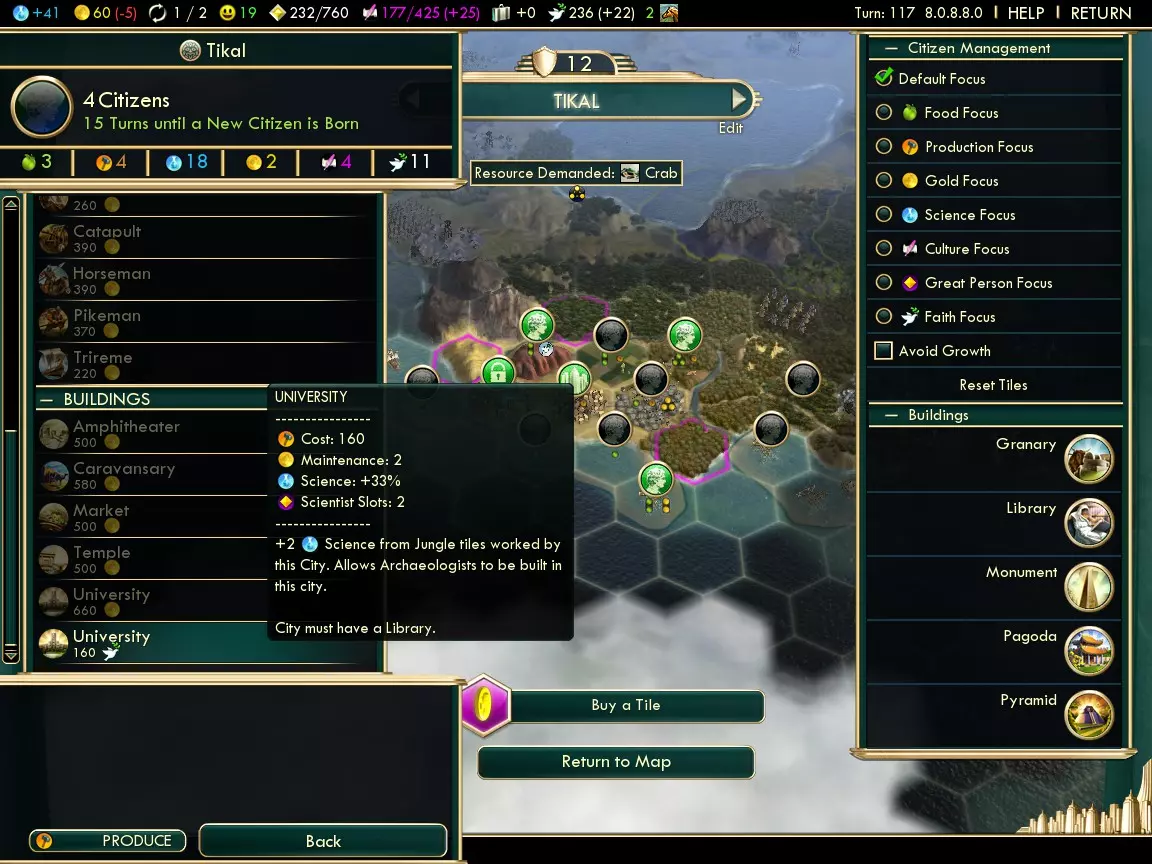
Above: It appears to work with faith-purchasing science buildings from Jesuit Education too. 160 faith for a University in the Medieval era (assuming a normal speed game) is extremely cheap and means you can use your gold and production on other things. Theocracy Theocracy doesn't make a huge impact early on, as Pyramids pretty much provide all the faith you need, reducing the need for temples. But eventually, plenty of trading posts up around your cities will bring in a good deal of gold, which this policy works to amplify. Finisher If you haven't already enhanced your religion, now's the time. Otherwise, you could send your Great Prophet out to quickly spread your religion, or put down a Holy Site for all the faith, culture and gold it makes. Social Policies: Commerce and Rationalism Commerce Opener The point of going into Commerce is that it helps you afford Research Agreements, vital to keeping your tech rate up. As soon as you hit the Renaissance era, don't go further with Commerce until Rationalism's done and you have a level 3 ideological tenet. 25% extra capital gold won't be amazing, but it's a useful step in the right direction. Trade Unions If you're in the business of keeping a wide empire, you need a lot of routes to hold it all together which may cost quite a lot of money. By halving it, you free up more cash for more useful persuits. Mercantilism If you take the Jesuit Education Reformation belief, you can buy Universities, Public Schools and Research Labs with faith. This policy won't reduce that cost, but it will reduce the cost of buying Libraries with gold, which you need for those three. It's a good idea to buy a Library with gold and the rest with faith when you set up a new city. Not only is cheaper purchasing useful, but this policy also makes gold buildings give a little science, handy in those jungle cities. Wagon Trains Still got Social Policies to spend and it's not yet the Renaissance? Or past Ideological tenets and have some policies to spare? Wagon Trains will give you a little extra cash for land trade routes, meaning more gold for late-game Research Agreements. Entrepreneurship Unfortunately pretty useless seeing as you'll get more out of Great Scientists or Engineers. But, it leads to a powerful happiness-giving policy. Protectionism This massive boost to happiness means if you want to build new cities late in the game, you can afford to do so. Alternatively, it lets you build tall with what you have. Finisher Your jungle cities will be excellent, particularly with Rationalism's Free Thought. Jungle tiles with 3 science, 2 food and 3 gold. Not bad, eh? Rationalism Opener It's compulsory to go into the Rationalism tree as the Mayans, and in nearly every situation the opener should be the first policy you pick after reaching the Renaissance. A 10% science boost helps make sure you can get all those spaceship technologies before diplomatic players or cultural players get to the end of the tech tree and use all those bonuses to win. Humanism It's not a bad idea to grow a city large to dedicate it to Great Person generation. Great Scientists should be used for academies until roughly the Modern era, where expending them for research points is typically more effective. In the end-game, shifting focus to Great Engineers will be useful for spaceship building. Free Thought Trading Posts on jungles now make a total tile yield of 3 science (provided the city working it has a University.) Such a city will be excellent for generating a tonne of science. Gold-purchasing Libraries in new cities shouldn't be hard at this point, and if you got Jesuit Education, getting Universities in every city is no problem at all, letting you really utilise that 17% bonus to science. Secularism While not many of your cities are likely to have specialists, chances are there'll be a few to generate the odd few points of extra science. Sovereignty "Science buildings" does not include Pyramids, despite the fact they generate science. (Unlike Siamese Wats, which count as culture buildings for the purpose of Tradition's Legalism.) Nonetheless, cutting maintenance is a great cash-saver for Research Agreements and suchlike. Scientific Revolution If you did an early Atlatlist rush, many will have difficulty trusting you (though hopefully by this time some relations will have recovered.) Otherwise, this really lets your cash go further in signing those Research Agreements. The Mayans are fairly likely to have more cash than Babylon or Korea due to building wide, (or via a money-focused religion,) which might just help you get a scientific edge. Finisher A good use of the free technology is an expensive one you'll need eventually but aren't working on at the moment. A good example is Electricity - you'll probably have beelined Scientific Theory and are filling out earlier technologies on the way to Plastics, which will require Electricity on the way (and you don't need any other techs besides Scientific Theory to research Electricity.) Ideology Ultimately, you'll probably be best off with Order. Freedom's level three science tenet is a little more useful to you than Order's, but the rest of the tenets favour a tall empire. This guide shows the best choices for the first "inverted pyramid" of tenets (3 from level 1, 2 from level 2, 1 from level 3) and assumes you're going for a scientific victory. Level One Policies - Order Double Agents The last thing you want is someone stealing your technologies to assist with their own victories. So, let's make it harder for them! Skyscrapers When Research Agreements are less useful, you can use that cash for getting production buildings up in plenty of cities. You'll want as many cities as possible to be up to the standards of spaceship-building, so you can get lots of them building similtaniously. Hero of the People The scientific level three tenet in Order - Spaceflight Pioneers - relies on having Great Engineers. To make full use of that, you'll need to start producing them as soon as Great Scientists begin to fade in usefulness. So, boosting GP generation is a good idea to squeeze more in (and hence more free spaceship parts) Level Two Policies - Order Workers' Faculties You can't afford to buy all your production buildings, and this tenet encourages you to build Factories the old-fashioned way. Plus, it gives you a considerable science boost which should help you get through those last few technologies. If your gold generation is somehow so spectacular you can just buy everything (or your culture generation is slow so you don't get this until very late on) it may better to get Party Leadership for the little bit of production amongst other stuff. Five-Year Plan You need all the production you can get late on to get those spaceship parts. Level Three Policy - Order Spaceflight Pioneers You probably won't use this tenet to as full a potential as a tall-building Civ would, but then again, they'd get less out of the earlier tenets. Still, it's the only scientific choice out of the three level three Order tenets, so it's this or nothing. And the free Great Engineer means you're guarenteed to see some use of this tenet towards victory. Religion With all the faith Pyramids are pumping out, having a strong religion is a must-have. While there's relatively few science-based beliefs, even one of them could net you a significant amount of science over the course of the game. This section lists a selection of the best religious choices for the Mayans, arranged in a rough priority order for each belief type. Highly terrain-dependent choices aren't listed for being too situational, though a faith Pantheon can be good for getting a religion (and hence a better pick of religious beliefs) sooner. Pantheon Messenger of the Gods Pyramids add 2 science to a city. This adds a further 2 to each city with a city connection - 4 bonus science for each city that won't take long to get adds an awful lot early in the game. This is by far your best choice. Ancestor Worship If you can't manage Messenger of the Gods, adding a culture point to every Pyramid is a decent move. These will make sure you still get a fair number of Social Policies while also helping cities to expand borders more effectively. God-King An excellent choice for a really early Pantheon, this makes your early turns easier, and gives your capital a slight edge for the rest of the game - handy if you intend to build the National College there. Sacred Waters Not the strongest of choices, but one of only two Pantheons offering happiness (and the other one requires size 6+ cities.) More happiness means more cities and more science! Goddess of Protection If you're near some pretty aggressive nations and can't manage Messenger of the Gods, boosting city ranged combat strength is an alright move to take. Certainly, it should help you out while you're postponing Composite Bowmen to get to Theology fast. Founder Tithe or Church Property If you're following the strategy of expanding your religion rapidly before others have the chance to (see the Holy Rush section) then a bonus based on the volume of your followers can go a long way. Even if you're not, Tithe and Church Property will really rake in cash for research agreements or buying things if you spread it fast enough. Interfaith Dialogue The only founder belief offering science, this requires you to be actively sending Missionaries or Prophets out to get it. You should generally only use Missionaries for converting cities if you're going down this road as the cities you convert will convert back to another religion faster, hence giving you more opportunity for science. The science earned isn't flat - larger cities tend to give you more science. Be aware of this. Unlike many other Founder beliefs, it doesn't matter if you don't bring many foreign cities to your religion. Just make sure your own are your religion, foreign cities matter less. Follower Asceticism It doesn't take much to get 3 followers of your religion in a city at this stage in the game, and pretty much every city you own will have a Pyramid. More happiness for everyone! Pagodas or Mosques or Cathedrals Pagodas are the best choice here seeing as they offer 2 happiness. Mosques are second-best seeing as you can use their full bonuses immediately. These buildings provide a helpful bit of culture, which will help defend against tourism later, as well as faith so you can make even more of them. Feed the World A bit of a backup. You don't want your cities to grow excessively tall as your science will be based more on the number of cities rather than the size of them. Nonetheless, this can make smaller Pyramid cities struggling for any growth at all over a hurdle. Enhancer Itinerant Preachers or Religious Texts Faith-purchasing may take the attention of your faith spending rather than Missionaries and Prophets. Hence, strengthening faith-free spread is useful to stop your cities falling under the sway of other religions. Itinerant Preachers is very powerful if you're using a Holy Rush strategy, seeing as you can really spread your faith's influence far and wide. Together with Tithe, you could make an enormous amount of money with it. Holy Order If you've got Interfaith Dialogue, you'll probably be spreading religion through Missionaries rather than Prophets. Holy Order makes the former cheaper (but not the latter) playing nicely into that goal. More Missionaries means more science! Even if you didn't manage to get Interfaith Dialogue, you can still spread the religion more effectively this way. Defender of the Faith With cities spread far and wide, your army may be stretched thin. A 20% bonus is more than a Great General's bonus, so it nicely balances out the battlefield. Reformation Jesuit Education
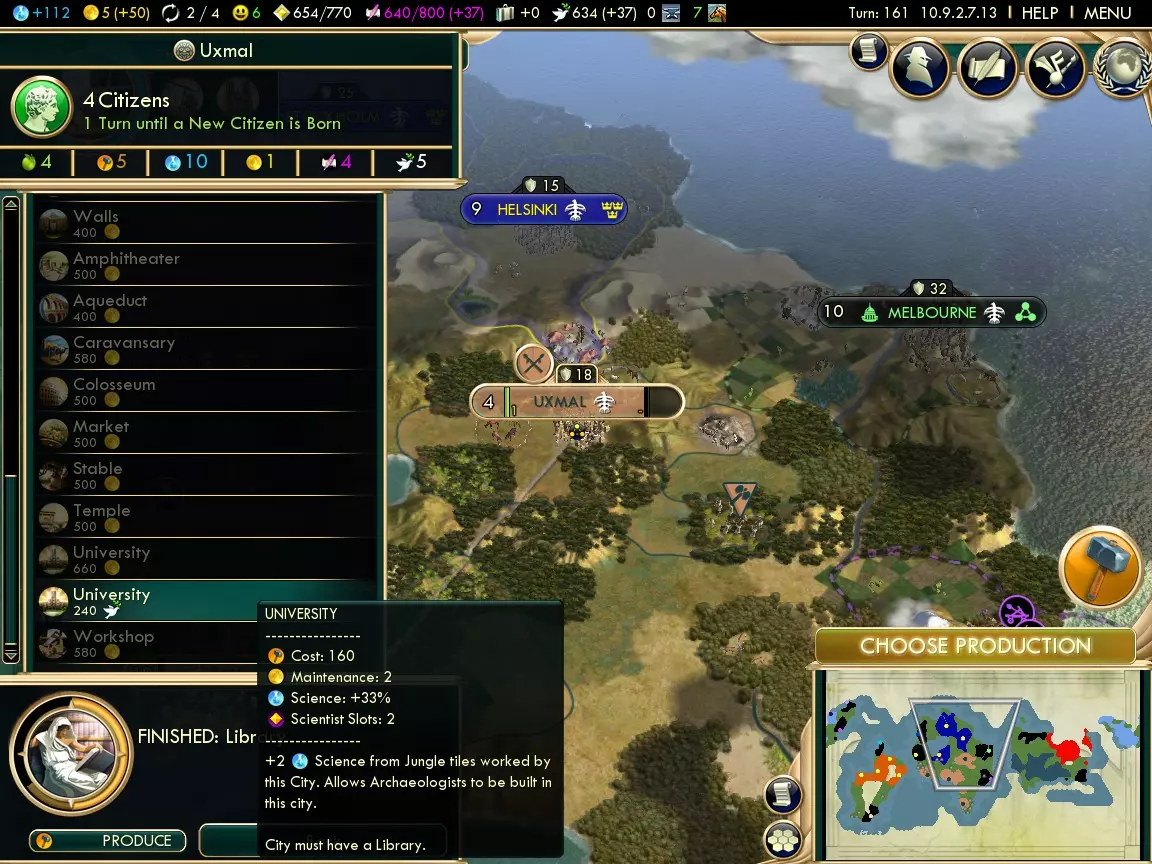
Above: The cost of faith-purchasing scientific buildings is reduced by the Mandate of Heaven Social Policy, (which you have to get anyway on the way to Reformation,) but goes up every era. In the Medieval era, Universities cost me 160 faith to buy. Jesuit Education makes a science infrastructure incredibly cheap to build up, especially considering the Mayans' high faith generation. Keep some gold spare as you can't faith-purchase Libraries and Observatories. To the Glory of God If someone's gone and stolen your Jesuit Education belief before you can get it yourself, To the Glory of God is an adequate alternative. It'll let you purchase Great Engineers with faith in the Industrial era and beyond, which combined with Spaceflight Pioneers lets you use faith to win you the game. World Congress You may very well be the first to Printing Press. If you were successful in rapidly spreading your religion earlier, you can push for it to become the World Religion, making it much easier to get your way in the World Congress. Note "priority" refers to how high you should prioritise your votes if it comes up, not how much you should prioritise putting them forward. If someone wants to implement Arts Funding, you should prioritise to vote no, for example. If you could put forward a vote, then it'd be a bad idea to put Arts Funding on the table. Note also that voting choices can vary depending on your game. Arts Funding High priority Vote no Great Scientists will help you get ahead in the game; Great Engineers will win it for you. You certainly don't want their generation getting slowed down. Cultural Heritage Sites Medium-High priority Vote no This'll help cultural players more than it helps you. Embargo City-States Low priority Abstain Unless you angered everyone with an Atlatlist rush, you're probably not going to need to rely on City-States for trading. Best to leave this vote alone. Historical Landmarks Medium priority Vote no International Games Medium priority Vote no International Space Station High priority Vote yes While you may not win the grand prize, the free Great Scientist or research boost will help out. Natural Heritage Sites Low priority Vote no unless you have a Natural Wonder of your own Nuclear Non-Proliferation High priority Vote yes Nukes cut back your cities' population points, which are needed to generate science and production. Unless you feel like warmongering with a tech advantage, get those nukes banned. Scholars in Residence High priority Vote no Sciences Funding High priority Vote yes This'll help you squeeze in an extra Great Engineer in the late-game to push you towards victory. Hopefully. Standing Army Tax Low-Medium priority Vote yes World's Fair Low priority Vote no Wonders Any world wonder that's good for a wide civ is good for the Mayans, but be careful using valuable time that could be used building Settlers, Workers or science buildings. Ancient Era Great Library The Great Library offers a considerable early-game science advantage, though it may be difficult to obtain in the earliest years. If your capital has good production, give it a shot. Classical Era Great Wall This suffers from being on a tech route that other players have time to exploit before you. If you manage to gain it, however, you'll be much harder to attack until you have time to build up a significant tech lead. Rushing it with a Great Engineer is probably the best option, trying to build it manually will probably take too long. Medieval Era Borobudur If you build this in the same city you built the Great Mosque of Djenne (which can be done by rushing one of the wonders with a Long Count Great Engineer) you get 9 spread religion uses, meaning you can make your faith dominant in the world. Great Mosque of Djenne (Piety Only) Because you'll almost certainly be the first to Theology, you have a head start with this strong faith wonder. While rushing it with a Great Engineer (mentioned before in the Holy Rush strategy section) is a possibility, your huge head start to the tech means you could safely build it even with relatively low production. The wonder itself is brilliant for spreading your religion more effectively, particularly in conjunction with the Interfaith Dialogue belief. Remember the Mosque it adds provides 3 faith, 2 culture and 1 happiness on top of the wonder's yields. Hagia Sophia Like the Great Mosque of Djenne, the Hagia Sophia is easy to build with your head start. Together with a Long Count Prophet, you can spread your religion like mad. For more information, head back to the Holy Rush strategy section. Machu Picchu The wider the empire, the more money trade routes bring in. Add 25%, and you've got yourself lots of money. Because of the fact Observatories require cities to be adjacent to mountains, you'll probably have a variety of cities that can build this. Notre Dame More happiness means more cities. Renaissance Era Himeji Castle Defensive wonders are important in the mid-game, where many aggressive opponents have powerful unique units, and any technology gap isn't quite significant enough to guarentee you the upper hand. The Himeji Castle unlike the Red Fort doesn't require you to build anything to use the wonder to its full potential, meaning you don't have to spend much effort on defensive buildings. Porcelain Tower As a science wonder, this is a must-have in most situations. In multiplayer, however, everyone will know that signing Research Agreements will favour you (though being a scientific player, they probably wouldn't sign agreements with you anyway.) Still, the free Great Scientist is nice to have. Atomic Era Great Firewall It's important to hold on to your technological advantage, particularly where vital Spaceship techs are concerned. As you're building too wide to build the National Intelligence Agency, The Great Firewall makes an effective substitute. You should probably build it in either your capital or whichever city has the highest science production. Helpfully, it also slows down cultural players with the Internet technology (though if your culture generation is really poor, they may just become influential anyway.) Information Era CN Tower In the late-game, building new cities is no longer a priority as you have all the science you need. Instead, the aim is to bring the best cities forward for building spaceship parts. With an extra point of population in every city, the CN Tower can do just that, and the extra population won't eat into your happiness, either. Broadcast Towers in every city help defend a little against cultural players. Hubble Telescope At the end of the game, it's not unlikely that most of your cities will have quite poor production while your capital storms ahead. The Hubble Telescope is a good building to help lift the lesser cities forward meaning you can get that spaceship built sooner before rivals. Pitfalls to Avoid The Mayans may be excellent at gaining science but it doesn't mean they're omnipotent. Here's a few easy mistakes to avoid. Using the Honour tree for Atlatlist rushes If you're using Atlatlists for early attacks, you don't have time to waste. You will barely touch the surface of the Honour tree in the time it takes you to launch an attack, and it will offer you little in the long-run. Liberty's a far better choice. Researching Archery before Theology You have Atlatlists for a reason - to concentrate on getting Theology early. The exception to this is if you're probably going to be invaded soon and need Composite Bowmen sooner rather than later. Straying off the path to Theology Scraping a few turns of Theology could mean the difference between an early Great Person or not. Hence, don't get technologies off its path unless either.. You're being attacked and need better defenders You need a certain worker technology like Mining, etc You've researched Theology (obviously.) Anything else will likely cost you more than it gains you. Relying on completing the Great Library Getting the Great Library is unlikely in higher difficulty games as pretty much everyone's after it, though if you think you can make it, go for it. Trying to get all the wonders listed Your production isn't spectacular, chances are. Hence, you can't afford to keep trying to build wonders which other Civs will beat you at. The only wonders you've really got an advantage building are those unlocked by the Theology technology. Over-expanding In Brave New World, having more cities increases technology costs by 5% each (though it's less on Large or Huge maps.) This isn't too bad if you can get lots of science buildings in the respective cities quickly, but too many cities will slow down your tech rate. Pillage Pacal: The Counter-Strategies The Mayans are the premier wide-building science civ, but have a below-average UA and a UU which sees limited use. Playing against the Long Count This Unique Ability offers many seeds of its own destruction. First and foremost, it encourages the Mayans to take a technology path which seriously neglects defence. Chances are, in the late Ancient to early Classical eras, your attackers will be stronger than their defenders. A few Spearmen or Swordsmen their way early will be something they'll struggle to handle. If you can't beat them, you'll likely throw them off their technology path making them lose out on one or more early Great People. In the mid-game, attacking the Mayans just before a new b'ak'tun may panic them and make them pick a military Great Person rather than a Prophet, Scientist or Engineer. This will set back their overall strategy somewhat. Playing against Atlatlists They may come slightly earlier and be slightly cheaper, but statistically, Atlatlists are identical to Archers. Warriors or Spearmen will deal with them fairly effectively. Because archery units don't have as defensive promotions as melee units, there's little trouble with picking off those doing more damage and causing more havoc. Playing against Pyramids It's hard to stop Pyramids being built due to their low cost and high reward. However, you can exploit the playstyle they encourage. The Mayans in decent hands should have lots of cities, but such size is hard to defend. Picking off some smaller cities will set back their science a little and isn't too hard to do. If you're a wider-building Civ, forcing the Mayans to settle in food-poor regions makes it take longer for them to recover the 5% increased technology cost new cities cause. A point about Assyria Few Civs are quite so clearly countered by another. The Mayans are a wide-building scientific Civ and Assyria steals technologies per city. Hence, Assyria will gain more from invading the Mayans than invading any other Civ. Especially seeing as the Mayans beeline techs on the opposite side of the tech tree to Assyria. It doesn't stop there. Assyria is strongest when the Mayans are most vulnerable - the Classical Era. The Mayans may build few Warriors seeing as Atlatlists are usually all-round better. The huge exception to this is when they're facing a strength 12 behemoth with 33% defence against ranged attacks. Strategy by Style Early-game Aggressors - Around the Bronze Working/Iron Working time, you'll have an edge over them. If you're off fighting the Mayans really early, you may find it difficult seeing as you'll almost certainly be facing Atlatlists. Mid-game Aggressors - Don't launch an attack just before a new b'ak'tun. This will likely result in the Mayans picking a Great General, which would be useful for later-game orientated players but less so for you. Instead, try going just after to avoid any unexpected bonus Great People (and force them to protect a Great Person they haven't used yet.) Late-game Aggressors - The pre-b'ak'tun intimidation tactic may work better for you. When you're ready for a real war, send two or more forces at different ends of their wide empire. Either it'll spread out their army or drive them to send everything one way, leaving the other parts vulnerable. Their technology advantage will make things hard, but a small defensive force - even if advanced - shouldn't be the hardest thing in the world to beat. Tall Builders - Make sure you know which city-spots you want before the Mayans go city-mad. Founding those cities quickly is a decent idea. Wide Builders - Cut off dispersed cities with your own and you might just deprive them of some science and gold from city connection bonuses. Unless you have a religion of your own, let theirs spread to your cities - if they have Interfaith Dialogue and Messenger of the Gods, this'll help you more than it helps them. Other Guides If you like these guides and want to send a tip, you can click here![ko-fi.com] Meta-guides These guides cover every Civ in the game and can be used as quick reference guides. Civ summaries (Gives a brief overview of how each Civ plays) Civ-specific tricks, secrets and clarifications (Compiles the lesser-known features of each Civ) Civ-specific guides, in alphabetical order All 43 Civs are covered in in-depth guides linked below. In brackets are the favoured victory routes of each Civ. America (Domination) Arabia (Diplomatic/Domination) Assyria (Cultural, Domination and Scientific) Austria (Cultural, Domination and Scientific) Aztecs (Domination/Scientific) Babylon (Scientific) Brazil (Cultural) Byzantium (Cultural/Domination) Carthage (Diplomatic/Domination) Celts (Cultural) China (Domination) Denmark (Domination) Egypt (Cultural) England (Domination) Ethiopia (Cultural/Scientific) France (Cultural) Germany (Diplomatic/Domination) Greece (Diplomatic/Domination) Huns (Domination) Inca (Scientific) India (Cultural/Scientific) Indonesia (Diplomatic/Domination) Iroquois (Domination/Scientific) Japan (Domination) Korea (Scientific) Mayans (Scientific) Mongolia (Domination) Morocco (Diplomatic) Netherlands (Diplomatic, Domination and Scientific) Ottomans (Domination) Persia (Diplomatic/Domination) Poland (Domination) Polynesia (Cultural) Portugal (Diplomatic) Rome (Domination) Russia (Domination) Shoshone (Domination/Scientific) Siam (Diplomatic/Scientific) Songhai (Domination) Spain (Cultural/Domination) Sweden (Diplomatic/Domination) Venice (Diplomatic) Zulus (Domination)