换一换
换一换 


Spain uses colonies to produce considerable faith and science, and can mix in plenty of conquest, too. Here, I detail Spanish strategies and counter-strategies. Introduction Following this guide requires the Gathering Storm expansion. It also assumes you have all other Civ 6 content, listed below, though it is not necessary to have these to utilise the key strategies of each civ. Pre-Rise and Fall content packs Vikings, Poland, Australia, Persia/Macedon, Nubia, Khmer/Indonesia Rise and Fall Expansion New Frontier content packs Maya/Grand Colombia, Ethiopia, Byzantium/Gauls, Babylon, Vietnam/Kublai Khan, Portugal These content packs include exclusive civs, city-states, districts, buildings, wonders, natural wonders, resources, and a disaster, but not core game mechanics - all you need is the base game and the Gathering Storm expansion for those. At home, some still resist against the Inquisition and the one true Catholic faith. Across Europe, heresy has been spreading. And in the New World, our Conquistadors and Missions have a difficult challenge in converting the vast number of heathens present. The world as it stands shall be the ultimate test of Spain's piety, but if we can persevere, the world shall be under one true faith and one true king. How to use this guide This guide is divided into multiple sections explaining how best to use and play against this specific civ. The Outline details the mechanics of how the civilization's unique features work and what their start bias is if they have one. The Victory Skew section describes to what extent the civ (and its individual leaders where applicable) is inclined towards particular victory routes. This is not a rating of its power, but an indicator of the most appropriate route to victory. Multiple sections for Uniques explain in detail how to use each special bonus of the civilization. Administration describes some of the most synergistic governments, government buildings, policy cards, age bonuses, pantheons, religious beliefs, wonders, city-states and Great People for the civ. Only the ones with the most synergy with the civ's uniques are mentioned - these are not necessarily the "best" choices when playing as the civ for a given victory route. Finally, the Counter-Strategies discusses how best to play against the civ, including a consideration of leader agendas if the civ is controlled by a computer. Note that all costs (production, science, etc.) mentioned within the guide assume a game played on the normal speed settings. To modify these values for other game speeds: Online: Divide by 2 Quick: Divide by 1.5 Epic: Multiply by 1.5 Marathon: Multiply by 3 Glossary Terminology used in this guide and not in-game is explained here. AoE (Area of Effect) - Bonuses or penalties that affect multiple tiles in a set radius. Positive examples include Factories (which offer production to cities within a 6 tile radius unless they're within range of another building of the same type) and a negative example is nuclear weapons, which cause devastation over a wide radius. Beelining - Obtaining a technology or civic quickly by only researching it and its prerequisites. Some deviation is allowed in the event that taking a technology or civic off the main track provides some kind of advantage that makes up for that (either a source of extra science/culture or access to something necessary for a eureka or inspiration boost) CA (Civ Ability) - The unique ability of a civilization, shared by all its leaders. Compact empires - Civs with cities close together (typically 3-4 tile gaps between city centres). This is useful if you want to make use of districts that gain adjacency bonuses from other districts, or to maximise the potential of area-of-effect bonuses later in the game. Dispersed empires - Civs with cities that are spread out (typically 5-6 tile gaps between city centres). Civs with unique tile improvements generally favour a more dispersed empire in order to make use of them, as do civs focused on wonder construction. GPP - Short for Great Person Points. Districts, buildings and wonders generate these points and with enough you can claim a Great Person of the corresponding type. GWAM - Collective name for Great Writers, Artists and Musicians. All of them can produce Great Works that offer tourism and culture, making them important to anyone seeking a cultural victory. LA (Leader Ability) - The unique ability of a specific leader. Usually but not always, they tend to be more specific in scope than civ abilities. Some leader abilities come with an associated unique unit or infrastucture. Prebuilding - Training a unit with the intention of upgrading it to a desired unit later. An example is building Slingers and upgrading them once Archery is unlocked. Sniping - Targeting a specific city for capture directly, ignoring other enemy cities along the way. Typically used in the context of "capital sniping" - taking a civ's original capital as quickly as possible to contribute towards domination victory without leading to a drawn-out war. Start bias - The kind of terrain, terrain feature or resource a civilization is more likely to start near. This is typically used for civilizations that have early bonuses dependent on a particular terrain type. There are five tiers of start bias; civs with a tier 1 start bias are placed before civs of tier 2 and so on, increasing their odds of receiving a favourable starting location. Super-uniques - Unique units that do not replace any others. Examples include India's Varu and Mongolia's Keshigs. Tall empires - Empires that emphasise city development over expansion, usually resulting in fewer, but bigger, cities. Uniques - Collective name for civ abilities, leader abilities, unique units, unique buildings, unique districts and unique improvements. UA (Unique Ability) - A collective name for leader abilities and civ abilities. UB (Unique Building) - A special building which may only be constructed in the cities of a single civilization, which replaces a normal building and offers a special advantage on top. UD (Unique District) - A special district which may only be constructed in the cities of a single civilization, which replaces a normal district, costs half as much to build and offers some unique advantages on top. UI (Unique Improvement) - A special improvement that can only be built by the Builders of a single civilization. "UI" always refers to unique improvements in my guides and not to "user interface" or "unique infrastructure". UU (Unique Unit) - A special unit that may only be trained by a single civilization, and in some cases only when that civilization is led by a specific leader. Wide empires - Empires that emphasise expansion over city development, usually resulting in more, but smaller, cities. Outline (Part 1/2) Start Bias

西班牙有3级地热裂缝的起始倾向。地热裂缝通常出现在两个或多个大陆的交界处,因此西班牙在游戏早期有很大机会扩张到第二个大陆。当西班牙能够扩张到第二个大陆时,其文明能力和传教团改良设施会显著增强。 请注意, duel-size地图只有一个大陆,因此西班牙所有与外国大陆相关的加成都将失效。同样,在小型地图上使用大陆风格地图时,可能需要到游戏后期才能找到第二个大陆。 文明能力:珍宝船队 在不包含西班牙首都的大陆上建立或占领城市,可获得一个免费的建造者。拥有祠堂政府广场建筑时,可获得两名免费建造者。位于外国大陆的城市建造区域时获得+25%生产力。 同一大陆城市间的贸易路线产出+3金币、+2信仰和+1生产力。 不同大陆城市间的贸易路线产出+9金币、+6信仰和+3生产力。 可在文艺复兴时代的重商主义市政解锁舰队和无敌舰队,而非分别需要工业时代的民族主义或现代的动员市政。 腓力二世的领袖能力:埃斯科里亚尔

所有军事单位和宗教单位对与你主流宗教不同的文明的单位和城市+5战斗力。对无主流宗教的文明或自身无主流宗教时不获得此加成。宗教审判官的【清除异端】能力额外获得1次使用次数(从3次变为4次)。宗教审判官使用【清除异端】能力时会100%清除敌对宗教的存在,而非通常的75%。 概述(第2/2部分) 特色单位:征服者

一个文艺复兴时期的近战步兵单位,可替代火枪手 研究 淘汰 升级自 升级至 成本 资源 维护费用

火药 科技 文艺复兴时代

军事科学** 技术 工业时代

持械士兵(190

10

)

线列步兵(230
20
250

ć 1000
ć 500

10
无法识别内容,已删除。
使用信仰值购买单位需要【宗师礼拜堂】政府建筑,该建筑需要中世纪时代的【神权】或文艺复兴时代的【探索】市政。 如果硝石不足,即使研究完成【军事科学】,仍可继续训练【征服者】。 战斗力 远程战斗力 移动力 射程 视野 负面属性 正面属性 58

无法识别内容,已删除。

无法识别内容,已删除。

对城市城墙和城市防御造成85%的伤害,对抗反骑兵单位时+5。若传教士、宗教审判官、使徒或古鲁位于同一格或相邻格,则+10。若该单位对城市造成最后一击,或在城市被占领时位于其相邻格,会将被占领城市转化为你帝国的主流宗教。负面改动: - 生产成本调整为250生产力、1000金币或500信仰值,较之前的240、960和480分别增加4% - 由【亲兵】升级而来的费用调整为190金币,较之前的170增加12% 正面改动: - 训练所需硝石调整为10,较之前的20减少50% - 战斗力提升至58,之前为55 - 若【传教士】、【宗教审判官】、【使徒】或【古鲁】位于同一格或相邻格,该单位战斗力+10 - 若该单位对城市造成最后一击或在城市被占领时处于相邻格,会将被占领城市转化为你帝国的主流宗教。若转化为你创立的宗教,将被视为对敌方城市的转化,并据此获得+3时代分数 - 升级为【线列步兵】的费用调整为230金币,较之前的250减少8% 特殊改良设施:【传教站】

研究 地形要求 建造者 基础掠夺产量

教育 科技 中世纪时期 无特征的已拥有土地地块

建造者 25
防御加成 直接产出 相邻产出 其他加成 最大可能产出 无 2
当位于不含首都的大陆时,额外产出:2
1

1
1

每相邻一个学院或圣地 位于外国大陆且至少相邻一个传教站的城市+2忠诚度 6
4
1
1
增强内容 研究 直接加成 相邻加成 其他加成 新最大产出

文化遗产 市政 原子时代 2
无法识别内容,已删除。
4
1
1
胜利倾向 在本节中,文明将根据其对特定胜利类型的倾向程度进行主观评分——而非其强度。评分达到3分或以上意味着该文明在该胜利路线上至少具备轻微优势。 领袖

ćĺ

ĺ¤äş¤

统治模式

ĺŽć

科技 腓力二世 6/10 (尚可)3/10 (合格)9/10 (理想)9/10 (理想)8/10 (良好) 文化胜利并非西班牙最强势的胜利途径,但表现尚可。跨大陆贸易带来的额外生产力和快速的区域建设为剧院广场的建造提供了良好开端,之后便可着手建造奇观。传教团带来的高额信仰产出有助于购买自然学家以建立国家公园,或用于组建摇滚乐队。 外交胜利是西班牙最弱势的胜利路径。贸易路线带来的额外金币可用于援助紧急事件,军事加成则可在军事紧急事件中发挥作用。 统治胜利对西班牙而言非常有效。征服者与腓力二世的能力相结合,能让你比常规火枪手获得+18的战力优势,这是所有独特单位组合中最高的加成之一。如果你的科技实力强劲,征服者将会更加强大。若科技实力不足,传教团科技应该能帮助你在后期赶上军事科技。你还可以通过政府广场建筑【大教堂】,将传教团信仰值有效用于购买单位。 宗教是西班牙的另一条优势路线,但有一个明显的问题——他们的信仰产出要到中世纪才真正开始增长,而且没有任何加成来加快大预言家的生成。值得庆幸的是,中世纪和文艺复兴时期的加成确实有助于弥补之前失去的时间。洲际贸易有助于传播你的宗教,同时还能带来大量金钱和信仰。征服者会将他们占领的城市皈依——在和平协议中将城市归还,无需花费一点信仰就能实现对其他文明的宗教皈依。此外,将传教站建在首都所在大陆以外的大陆上,能产生大量信仰。更强的宗教审判官可以减少在己方城市捍卫宗教所需的信仰值。 最后,西班牙在科技方面的表现出奇地出色,使其成为一个不错的备选胜利途径。传教站能产生一定的科技值,而到了原子时代,这一效果会大幅增强。同时,更强大的跨大陆贸易有助于西班牙发展出生产力更高的城市,用于建造太空船部件。通过【耶稣会教育】信条,可将传教任务的高信仰产出转化为科技值。文明能力:【珍宝船队】(1/2部分)
Use the Continents map lens to see specifically where the boundaries of continents are. Spain's civ ability, along with the Mission improvement, offer huge rewards for settling extensively beyond your home continent. Thankfully, to aid with this, Spain has a geothermal fissure start bias which greatly increases the odds of starting next to a continental boundary. The Complex Start of Spain To bring Spain to its full potential, there's a number of things you'll want to sort out: Spain's religious bonuses mean early Holy Sites are important for founding a religion. It's important to get decent science output to get to Missions and Conquistadors at a good pace. Settling a lot of cities increases your potential faith output, your possible trade route capacity, and increases the chance you'll be able to secure nitre resources ready for Conquistadors. Thankfully, there's a number of perks Spain has that makes this much more manageable. The Very Beginning Start off the game by training one or two units - Slingers are good for defence as they can be upgraded to Archers later, but Scouts or Warriors are fine alternatives. Look out for a continental boundary if possible. If you start near a continental boundary, research Mining and Astrology. If not, research Astrology and try to settle a city on the coast so you can build up a navy later and set up colonies on new continents. Astrology is needed for Holy Sites - two Holy Sites with Shrines, or two Holy Sites with the Divine Spark pantheon is usually enough to secure a religion. Don't build too many Holy Sites early on - once you have a religion secured you'll need the district capacity for Campuses and Commercial Hubs or Harbours. Why did I suggest researching Mining? So you can rush Holy Sites in your foreign-continent cities! By getting free Builders in cities you founded on a foreign continent, you can chop down woods or build mines/quarries for extra production, get the Holy Sites up and running sooner, and start accumulating Great Prophet Points sooner. This can help you secure the best religious beliefs! Time to Expand Spain does best with a lot of cities, preferably as many as possible not on your home continent. The Ancestral Hall Government Plaza building will be very helpful as it both provides +50% Settler production to its city, and grants all founded cities a free Builder. For Spain, settling cities on a foreign continent will now grant two free Builders! This is a considerable production saving, but also means you can get improved tiles sooner which can make new cities stronger sooner. Spain's geothermal fissure start bias may result in you having lots of good locations for Campuses, so build them up in cities with the best potential adjacency bonuses. Cities with less effective potential Campus spots can instead work on Commercial Hubs or Harbours for extra trade route capacity. Spain's cities on foreign continents have a decent +25% production bonus to all districts, so getting new cities to start developing them right away can be surprisingly affordable - especially with immediately improved tiles from the free Builders. And there you have it! A religion, a good science output, and you're beginning to expand your trade route capacity. This will put Spain into a good starting position to make the most of their other bonuses. Consider the Age Bonuses If you're likely to enter an early Golden Age or Dark Age, you may want to vary which districts you build as Spain compared to the previously-outlined general strategy. A Golden Age in the classical or medieval era allows you to use the Free Inquiry Golden Age dedication. This makes all Commercial Hubs and Harbours generate science equal to their adjacency yields, allowing you to get both science and trade route capacity from the same district. As such, you'll be able to save the district capacity you would be using on Campuses for other districts - a couple of Encampments can help you secure a Great General ready for Conquistadors, for example. All that being said, you may wish to take the Monumentality dedication instead to help with early expansion thanks to the ability to purchase Settlers with faith. A Dark Age in the classical or medieval era allows you to use the Monasticism wildcard, which adds a massive +75% science output in any city you own with a Holy Site, at the cost of -25% culture in all cities. If your geothermal fissure start bias has placed you on a continental boundary, you may have some mountain ranges excellent for Campuses and Holy Sites alike. While building more Holy Sites at this stage of the game may mean you neglect trade route capacity for the time being, the tremendous boost to science can really help you on the way to Missions and Conquistadors. Trade Route Bonuses
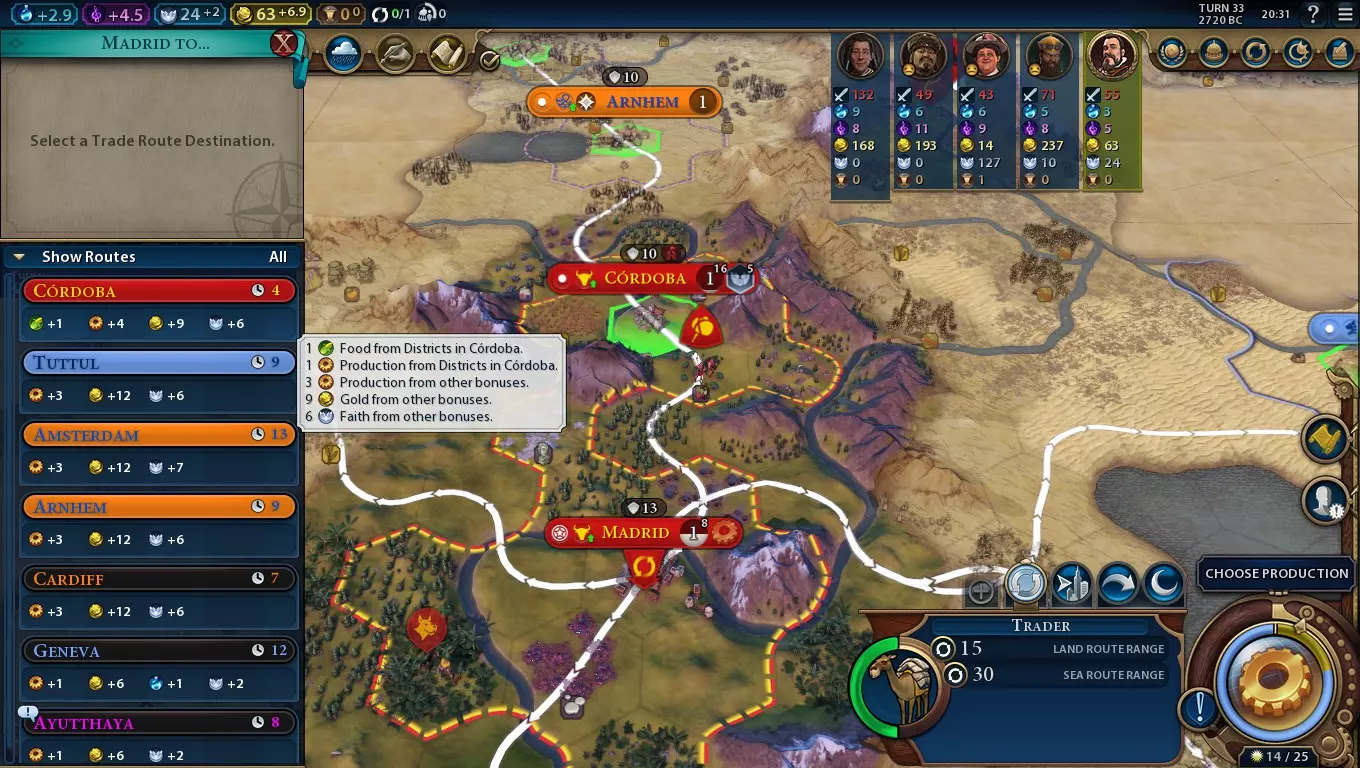
贸易路线的初始加成通常较为温和,但西班牙能显著提升其效果;若能尽早建立跨大陆贸易路线,收益更是惊人。仅与你在另一大陆拥有的城市进行贸易,就能获得至少9金币、6信仰、4生产力和1食物。即使与同一大陆的己方城市贸易,也能获得不错的3金币、3生产力、2信仰和1食物。若你在外国大陆没有自己的城市,与其他文明进行贸易也能获得类似的良好收益。从正在训练移民的城市派出第一条贸易路线,以助力早期扩张。 一旦拥有几名商人,你可以从同一城市派出多支商队,从而建立巨大的生产力优势。这对于关键的早期奇观(详见本指南【管理】部分的最佳奇观列表)或满足许多尤里卡增益的要求都很有帮助。 如果你的起始位置不在大陆边界附近,且没有其他文明可以在海外大陆进行贸易,那么这个加成的有效利用会变得困难许多。你可能需要减少对商业中心和港口的重视,转而优先发展学院和少量军营,这样就能更早地培养出更强大的征服者,因为他们的优势并不依赖于你横跨多个大陆。 在游戏后期,从同一城市出发的多条跨大陆贸易路线有助于太空港的建造和太空竞赛项目的推进。结合来自任务的科技以及地热裂缝起始倾向带来的良好学院相邻加成,若西班牙在征服或宗教方面的努力不足,仍能在科技上表现出色。 文明能力:珍宝船队(第2/2部分) 殖民优势 西班牙倾向于在远离本土大陆的地方建立城市,这使你能利用一些强大的额外加成。 文艺复兴时期的制图学科技会解锁印度群岛贸易署奇观。该奇观能让所有派驻总督且不在本土大陆的城市产出+15%的金币、生产力和信仰。这会提升西班牙所有跨大陆贸易路线的特殊产出,并让传教团的信仰发挥更大作用。 文艺复兴时期的重商主义市政会解锁贝伦塔奇观。建造它后,所有不在你的本土大陆上的城市都会免费获得它们能够建造的最便宜建筑。你可以提前为这个奇观做规划,确保你的城市建造了像纪念碑这样的低成本建筑,从而节省更多生产力。 殖民署外交政策卡(需要文艺复兴时代的探索市政)为所有不在你的本土大陆上的城市提供+15%的增长和+3忠诚度。使用此政策卡时,确保你能处理城市增长带来的宜居度成本!忠诚度加成与传教所对非本土大陆城市提供的+2忠诚度加成能很好地叠加——在新占领城市的市中心旁建造一座传教所,可以在它变成自由城市之前争取更多时间。最后是【殖民税收】外交政策卡(需要工业时代的【殖民税收】市政)。它为所有不在你本土大陆的城市提供+25%金币和+10%生产力,这与西班牙的贸易路线加成非常契合。 除此之外,当你征服新的大陆时,可以获得一些额外的建造者——非常适合修复你掠夺的地块或立即建立传教站。在外国大陆上,在被占领的城市中心相邻处建造传教站,每回合可立即获得+2忠诚度加成,因此这样做是值得的。 重商主义时期的舰队和无敌舰队。
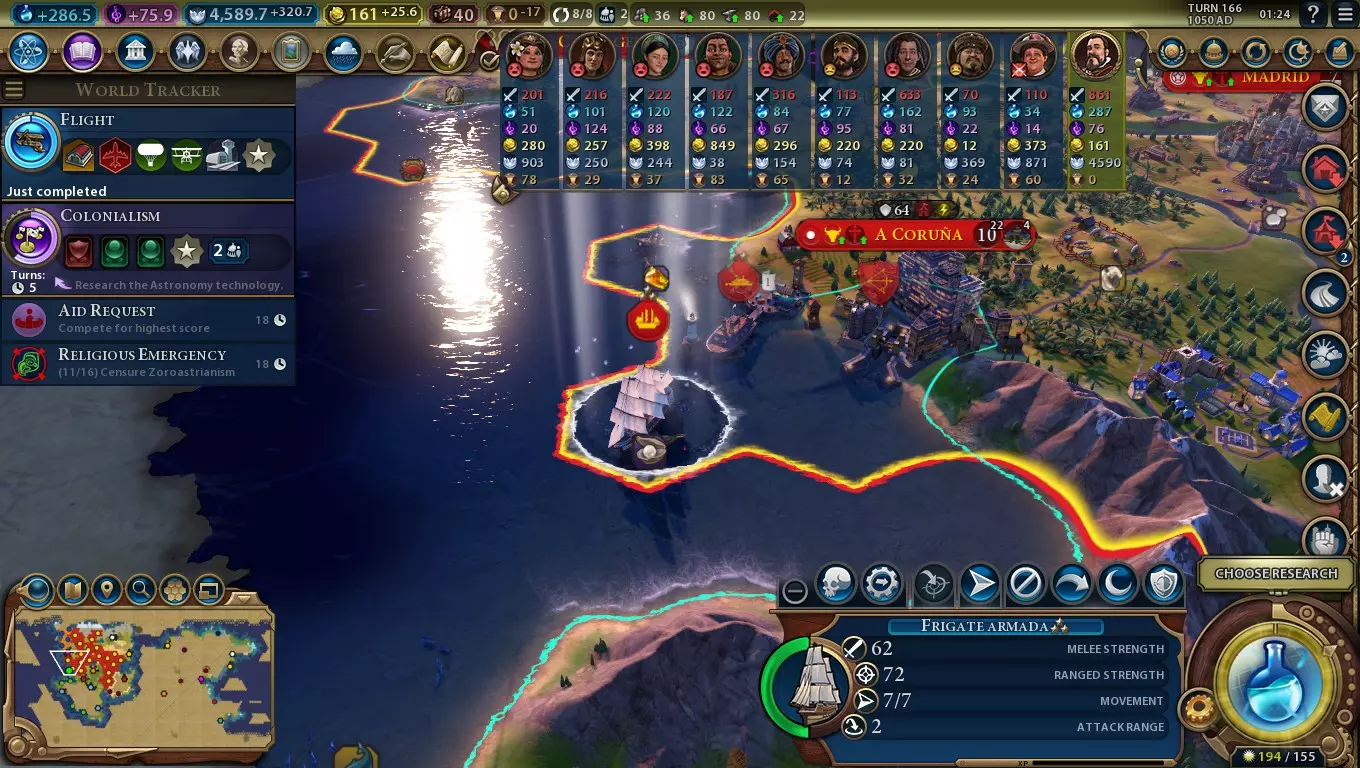
舰队比单个单位的强度高出10点。在常规单位与舰队的战斗中,舰队平均造成45点伤害,承受20点伤害(在势均力敌的战斗中,双方造成和承受的伤害平均为30点)。舰队群拥有17点的强度优势,在与同类型单个单位对抗时,平均造成59点伤害,承受15点伤害。 西班牙早期的舰队和舰队群有一个关键优势——即使你一直忽视文化发展,也能让你在海上有效竞争——考虑到西班牙需要建造一系列不同于剧院广场的区域,这种情况很可能发生。由于征服者能带来巨大的强度优势,暂时没有军团和军队也没那么糟糕。 尽管如此,组建舰队和舰队群的成本很高!你需要训练三艘海军单位来组建一支舰队——而这些生产力你本可以用来训练征服者或攻城支援单位。不过,由于舰队拥有更高的基础战斗力,且在战斗中受到的伤害更少,它们能够对敌方沿海城市施加持续压力,而单个海军单位可能无法做到这一点。
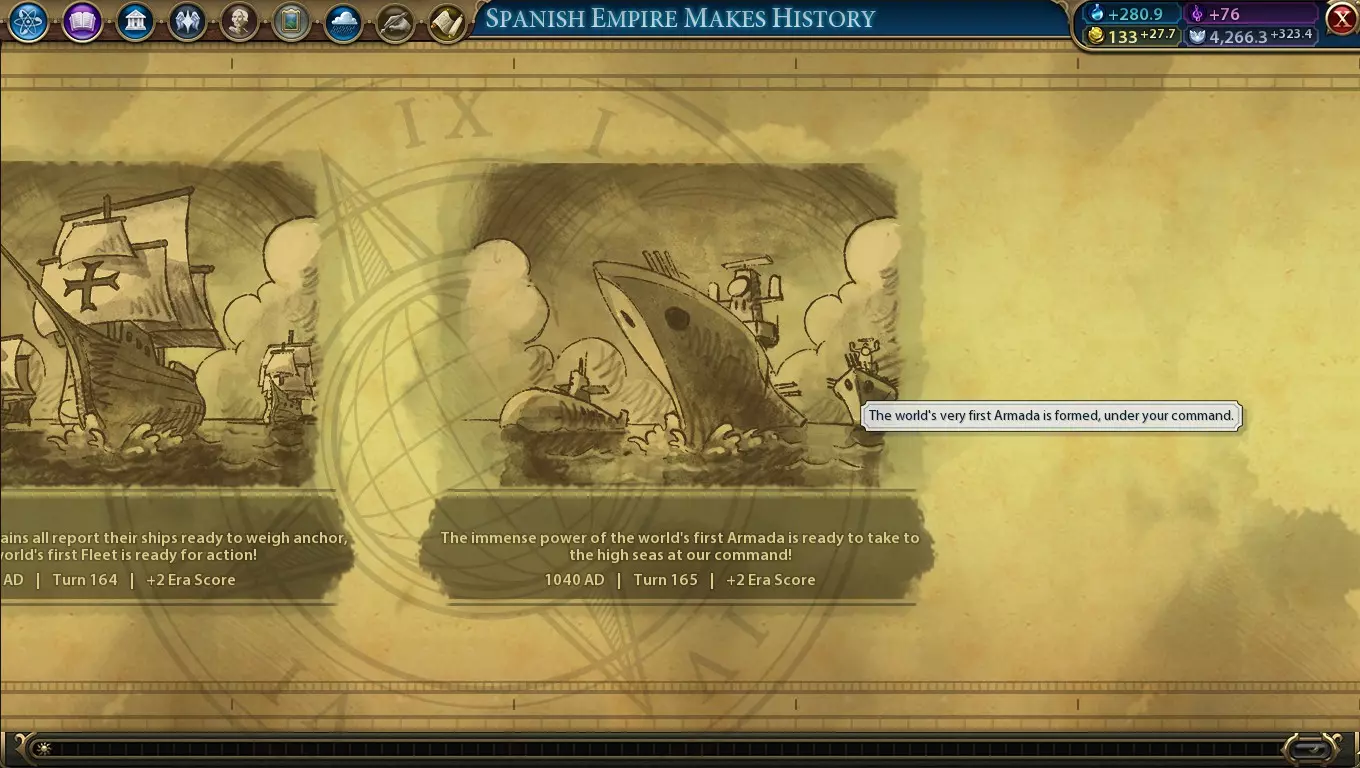
你也可以通过拥有世界上第一支舰队和无敌舰队来获得一些轻松的时代分数,前提是其他文明还没有获得那些能让他们提前组建舰队和无敌舰队的伟大海军统帅。 如果你的城市有一个沿海相邻的工业区,并且整体生产力不错(洲际国内贸易路线会有帮助),可以考虑建造威尼斯军械库奇观。它能让所在城市的海军单位产量翻倍,非常适合组建舰队和无敌舰队。很少有文明能抵挡这种海军力量,这能让你的征服者安全地跨越大洲。 总之,西班牙文明能力的这部分是一个比较小众的加成,在普通游戏中可能不会有太多用处,但至少通过减少对强大文化产出的需求来减轻了一些压力。总结:总是优先在海外大陆建立定居点,然后再考虑在本土大陆定居。 你可以使用免费的建造者砍伐树木,以快速建造最初的几个圣地。 早期不要建造过多圣地——只需足够创立宗教即可。其他区域如商业中心和港口也很重要! 利用地热裂缝的起始倾向来建造强大的校园,获得良好的早期科技优势。 腓力二世的领袖能力:埃斯科里亚尔(第1/2部分)
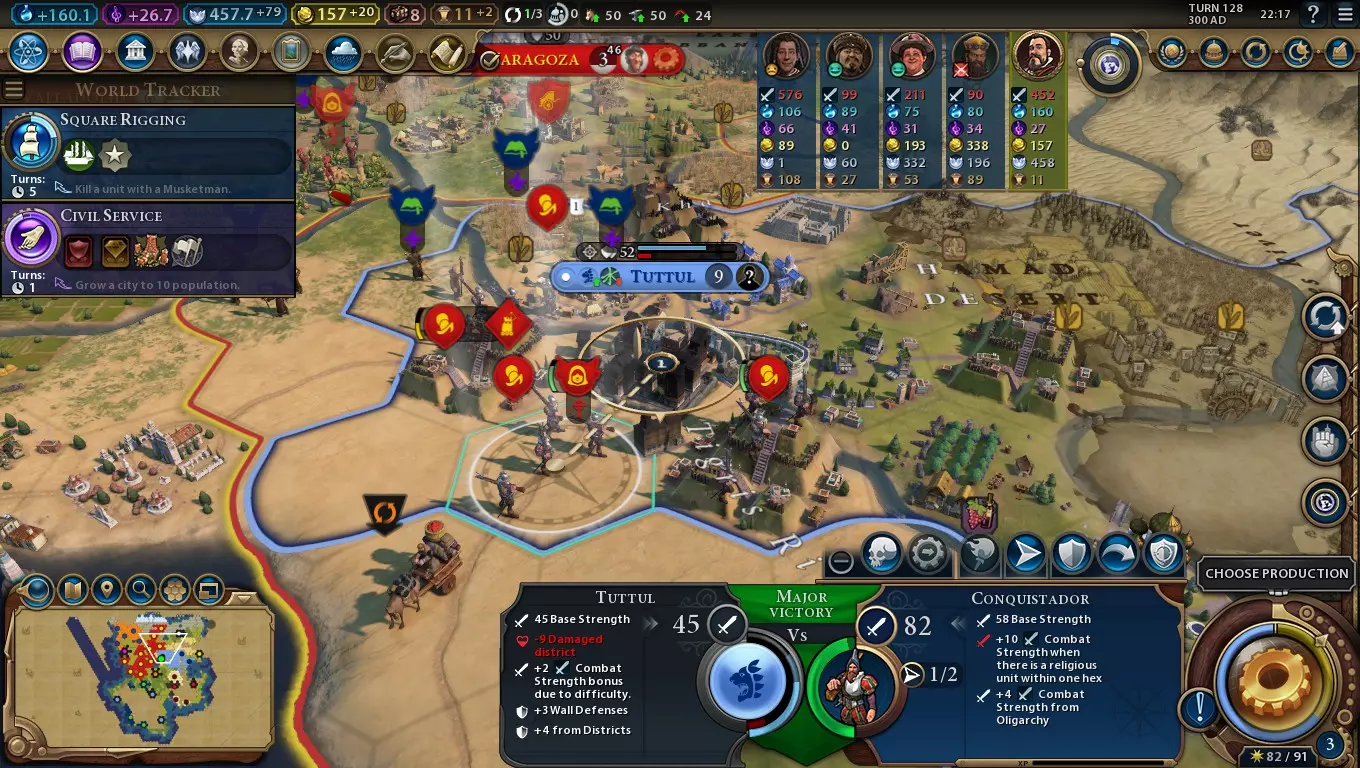
The Conquistador has 58 base strength, plus 10 from having a religious unit close by. Add 4 from Oligarchy, 5 from the World Congress Military Advisory resolution and 5 from this leader ability, and those city defences won't last long. Military Combat Bonus Philip II offers a +5 combat bonus to all military units (land, sea and air alike) so long as your opponent follows a different religion than you. This might sound an easy bonus to make use of, but remember that "following a religion" is defined as a majority of a civ's cities following one. If it's the case that either you or your opponent have no majority religion, you won't get the strength bonus! Not having a majority faith will make it harder to use the strength bonus, and will also really mess things up when you're conquering cities with Conquistadors. As such, you'll need to ensure your empire is clearly following the one true faith! Inquisitors are great at that role - use all but one charge on making sure your own cities follow your religion, then keep them for use with Conquistadors. It is possible to have a target which is already following your religion. If this is the case, the Crusade belief is very powerful, offering a +10 strength bonus near cities of your religion in another civ. This more than makes up for the loss of the +5 strength bonus. Then again, Defender of the Faith (+5 strength near cities you own of your religion) is particularly effective in conjunction with Conquistadors to help you hold onto the cities you capture. With all that out of the way, let's have a look at what a +5 strength bonus can do. A unit with a strength advantage of 5 will on average deal 37 damage while taking 25 (for reference, a unit with no strength advantage will on average deal and take 30). While not a massive difference in itself, this stacks with the strength bonus of Conquistadors or the strength advantage of forming early fleets/armadas. Conquistadors can get a +18 bonus over generic Musketmen; early armadas can have as much as a +22 strength advantage for a brief time. Be sure to take the Wars of Religion military policy card (available at Reformed Church) as well, for another +4 bonus. The strength bonus can be pretty amazing offensively once stacked with other advantages, but it's also not bad as a defensive bonus, particularly in the stage after you've founded a religion but before Conquistadors arrive. Ultimately, so long as you can ensure that a faith is dominant in your empire, the strength bonus is an easy one to use. It can be helpful for Conquistador conquests, or even towards a domination victory. Inquisitor Charges and +5 Strength for Religious Units Inquisitors usually have two functions: using up charges to keep rival religions out of your own lands, and fighting rival religious units. Spain adds a third - providing a strength bonus to stacked Conquistadors - and strengthens the other two. Remember, to obtain Inquisitors you need to found a religion, have a Holy Site with a Temple, purchase an Apostle with faith and use it to launch an inquisition. After that point, you can purchase Inquisitors with faith in any owned city that follows your religion and has a Temple. First of all, the extra charge. Squeezing one extra charge out of Inquisitors helps make up for the fact you'll usually want to leave the units with one charge left so you can stack them with Conquistadors. The first three charges can be used to ensure that your empire consistently backs the one true faith, so your strength bonus and Conquistadors can still be effective. Secondly, the extra power for Remove Heresy actions. Eliminating 100% of the religious pressure of rival religions rather than the usual 75% denies rival civs bonuses that work on a per-follower basis like Cross-Cultural Dialogue and World Church, and requires rival civs to put in more effort before they can flip the city back again. Finally, the strength bonus. As your religious units will only be fighting against units of rival religions, you can almost always use the +5 strength bonus. As strength differences in theological combat work much the same way as they do in regular combat, this bonus is just as useful. It's not just Inquisitors that gain from this - Missionaries, Apostles and Gurus do as well. For Missionaries and Gurus, this is a nice defensive bonus against rival Apostles and Inquisitors. For Apostles themselves, it, stacked with the Debater promotion, can leave rival Apostles on very low health in a single attack. Philip II's Leader Ability: El Escorial (Part 2/2) Explaining Theological Combat The four religious units in the game (Missionaries, Apostles, Inquisitors and Gurus) all can engage in theological combat with those of rival religions. This works like regular combat, but does not require a declaration of war. Apostles have 110 religious strength, making them the most powerful of the three and ideal for use offensively - though they're also the most expensive. With the Debater promotion, Apostles gain an additional +20 religious strength, which will often be enough to destroy Missionaries in just one hit. Missionaries have 100 religious strength, but cannot initiate theological combat; they can only defend. Inquisitors only have 75 religious strength, but gain a +35 bonus within their civ's lands - regardless of which religion the nearest city follows. This makes them practically useless offensively, but great defensively thanks to them being as strong as Apostles for a lower cost. Gurus have only 90 religious strength and cannot initiate theological combat, but have three charges that may be used to fully heal itself and adjacent religious units. Be sure to keep them protected as they won't last long in theological combat alone. There's a variety of modifiers to religious unit strength. Basic ones include: The less health a religious unit has, the bigger a strength penalty. This starts at -1 strength between 90 and 99 health, and down to -10 strength between 1 and 9 health. You can heal a religious unit the same way as a military unit if you bring them to a Holy Site. Religious units defending near a city of their own faith receive a +5 strength bonus Religious units can fortify, adding a defensive bonus of 3 if the unit has not moved nor performed an action this turn, or +6 for two turns. Religious units receive flanking bonuses, adding +2 strength per other owned religious unit adjacent to the target. Religious units receive support bonuses. This only applies when a unit is defending, and adds +2 strength per other owned religious unit adjacent to them. You can boost religious strength further through these means, in rough chronological order: The World Religion World Congress resolution can add +10 strength to all of a specific religion's religious units until the next World Congress. The Meenakshi Temple wonder (available at the medieval-era Civil Service civic) gives all religious units +1 movement and +5 strength if adjacent to a Guru. It also grants two free Gurus and reduces the cost of future Gurus by 30%. The Theocracy government (available at the renaissance-era Reformed Church civic) adds a +5 strength bonus to all religious units. The Religious Orders economic policy card (also available at Reformed Church) also adds a +5 strength bonus to all religious units. Having a religious alliance of at least level 2 with another civ gives all religious units +10 strength, except when fighting against religious units of the allied civ. Playing as Spain, you'll also get Philip II's +5 strength bonus to all religious units if you have a different majority religion to their opponent. Religious units can also impose zone of control on other religious units, slowing their movement if they try to move directly past your religious units. City centres also impose zone of control on religious units, which can make it awkward to manoeuvre past them. When a religious unit is defeated, all cities within 10 tiles will gain pressure of the victorious religion and lose pressure of the defeated one, at a level comparable to using an Apostle's spread religion charge. If the defeated unit is of a religion with the Monastic Isolation belief, it prevents their religion losing pressure (though the victorious unit will still add pressure for their faith). Generally, Inquisitors should be used defensively, while Apostles should be used offensively in theological combat, with Gurus providing support to Apostles. Missionaries should usually seek to avoid it in favour of spreading religion via their spread-religion charges. Conclusion Philip II's leader ability is simple enough - ensure your religion stays the majority faith in your own land (Inquisitors help), and you'll have a highly versatile strength bonus. Consider holding back on spreading your religion to civs you intend to invade so you can use this strength boost in the tricky early stages of the war. Unique Unit: Conquistador (Part 1/2)
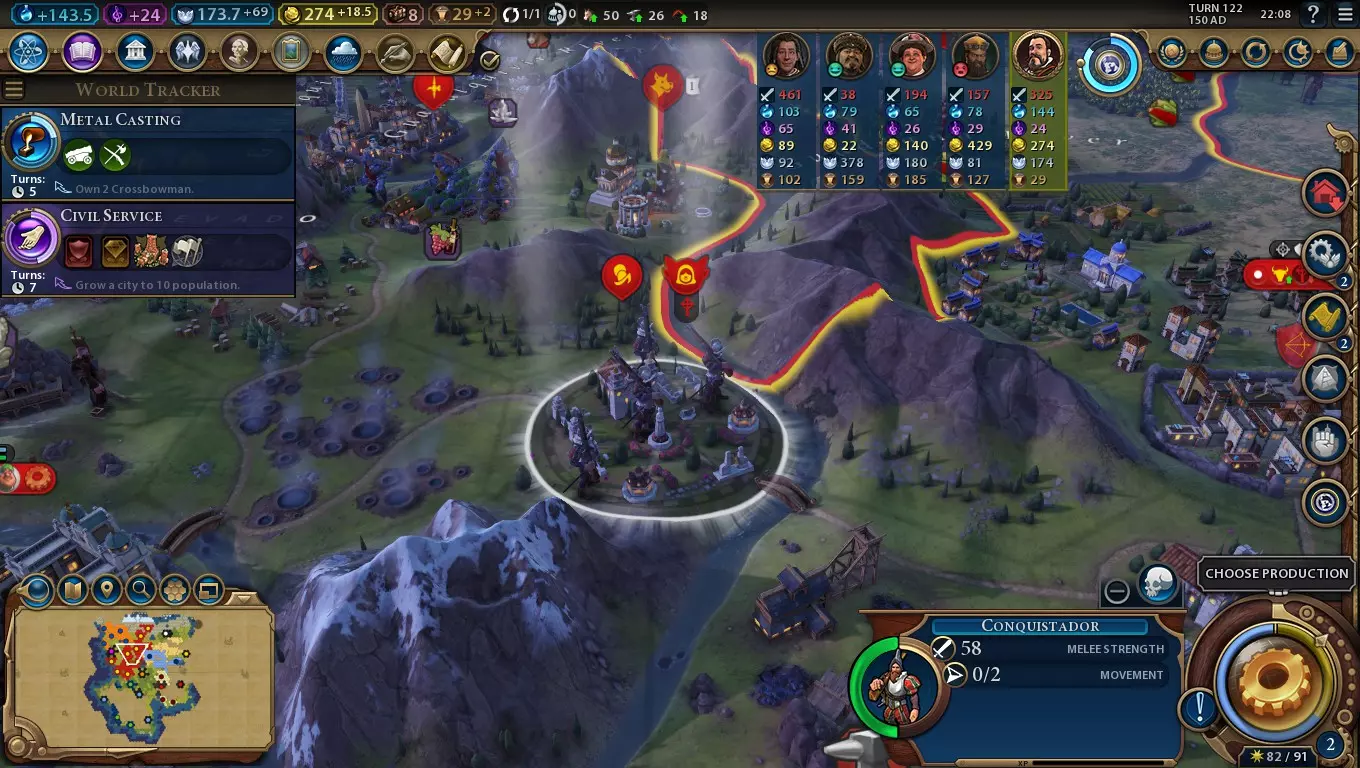
西班牙有时开局会有些棘手,但征服者单位的强大火力弥补了这一点。凭借其强大的宗教单位和腓力二世的领袖能力,你可以拥有比步兵早两个时代却几乎同样强大的单位! 准备工作 和所有独特单位一样,解锁征服者的时间越早,它们就越强大。你可以通过尽早研发青铜工作和学徒制科技来为征服者做准备,这样就能开始训练重装步兵,为日后升级做好准备。解锁中世纪时代的雇佣兵市政后,你可以使用职业军队政策卡,使单位升级费用减半,从而更容易负担升级成本。你还需要寻找硝石,所以在研究火药科技的过程中,先选择军事工程学,再研究马镫,这样你就有时间去寻找这种资源。 即使你在等待传教任务出现时一直忽略信仰,你仍然应该能获得足够的信仰来招募少量宗教单位。将你创建的任何传教士、宗教审判官或古鲁的所有次数都用完,只留一次,这样它们之后就可以和征服者堆叠。在开始用征服者占领城市之前,确保你的帝国明确信仰你的宗教,否则你可能会把城市改信错误的宗教。 另外,一定要建造一些攻城塔来配合你的征服者,这样他们才能应对城市防御。当敌人开始建造文艺复兴城墙时,带上一些加农炮或海军远程单位。 在战斗中 征服者与宗教单位叠加,再加上腓力二世的文明能力,相比火枪手有+18的战力优势,这是游戏中最大的独特战力加成之一。18点的战力优势意味着征服者平均能对火枪手造成62点伤害,同时自身仅受到15点伤害。你还可以叠加宗教战争军事政策卡和寡头政体或寡头遗产 wildcard,以获得更多战力。 征服者的高战力意味着它们在进入现代时代之前几乎能应对任何敌人,因此你无需担心军队构成过于复杂。只需带上一些征服者、宗教单位和攻城支援部队(攻城塔通常是初期的最佳选择,但 bombard 也很合理)。 注意,宗教单位无法与军事单位组成编队,因此每次都需要手动移动它们以跟上大部队。 确保尽可能多的征服者处于宗教单位相邻的格子内,这一点很重要。如果宗教单位数量不多,可以尝试让宗教单位在不同的征服者之间移动,以轮流提供+10战斗力加成。在城市周围移动时要小心——宗教单位会受到城市控制区的影响,因此如果试图在城市周围移动,其移动力会被耗尽。如果你成功击杀他们共享地块的军事单位,这可能会使他们处于危险之中,因为军事单位会向前移动,而宗教单位不会。 转化城市
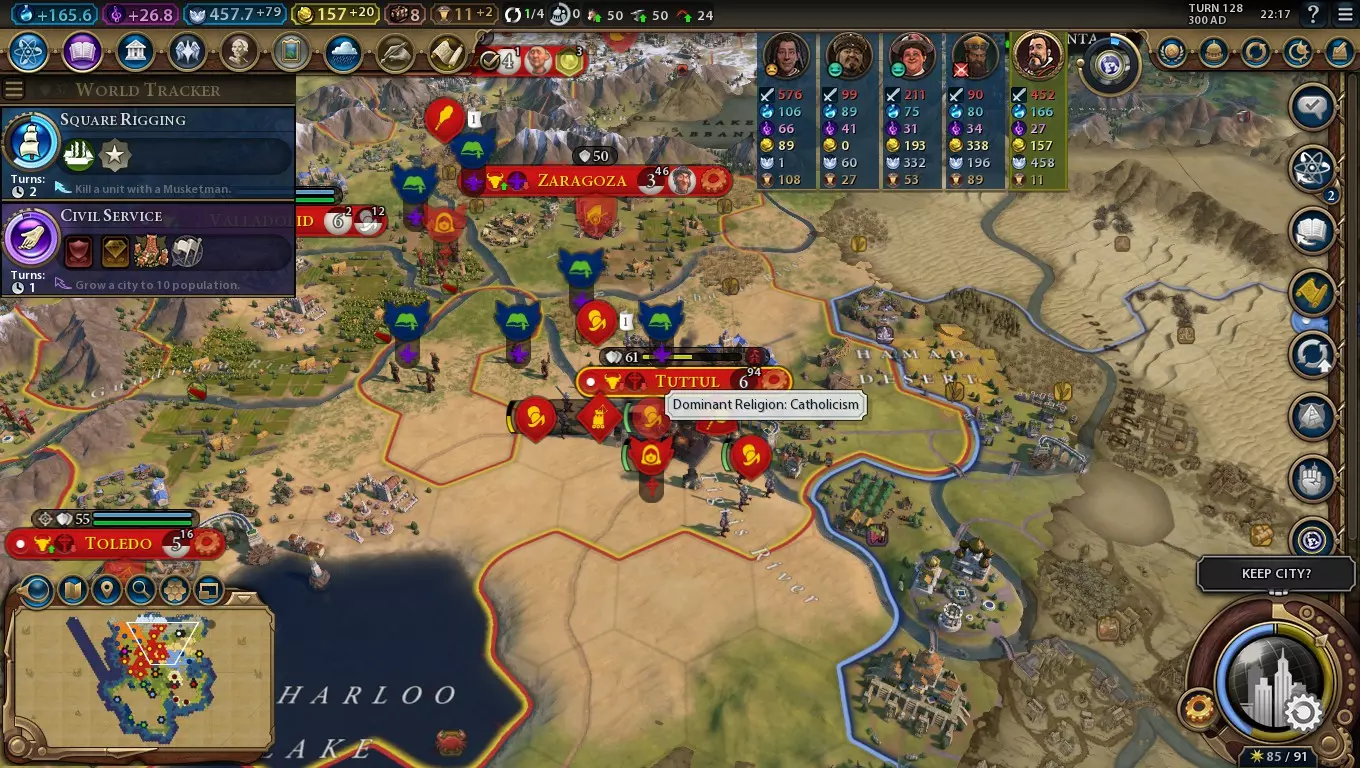
如果你直接用征服者单位占领城市,或是在城市被占领时让单位与其相邻,该城市将皈依你帝国中的主流宗教。确保你自己的宗教在帝国中占据主导地位,你将获得许多不错的增益! 最立竿见影的增益是,信仰你宗教的城市会获得+3忠诚度。这意味着你能在城市叛变为自由城市前拥有更长的控制时间,从而有更多时间占领附近其他城市。记住,将总督派驻到城市并留下驻军单位可获得更多忠诚度;如果城市不在你的本土大陆,在市中心相邻处建造传教所也能提升忠诚度。
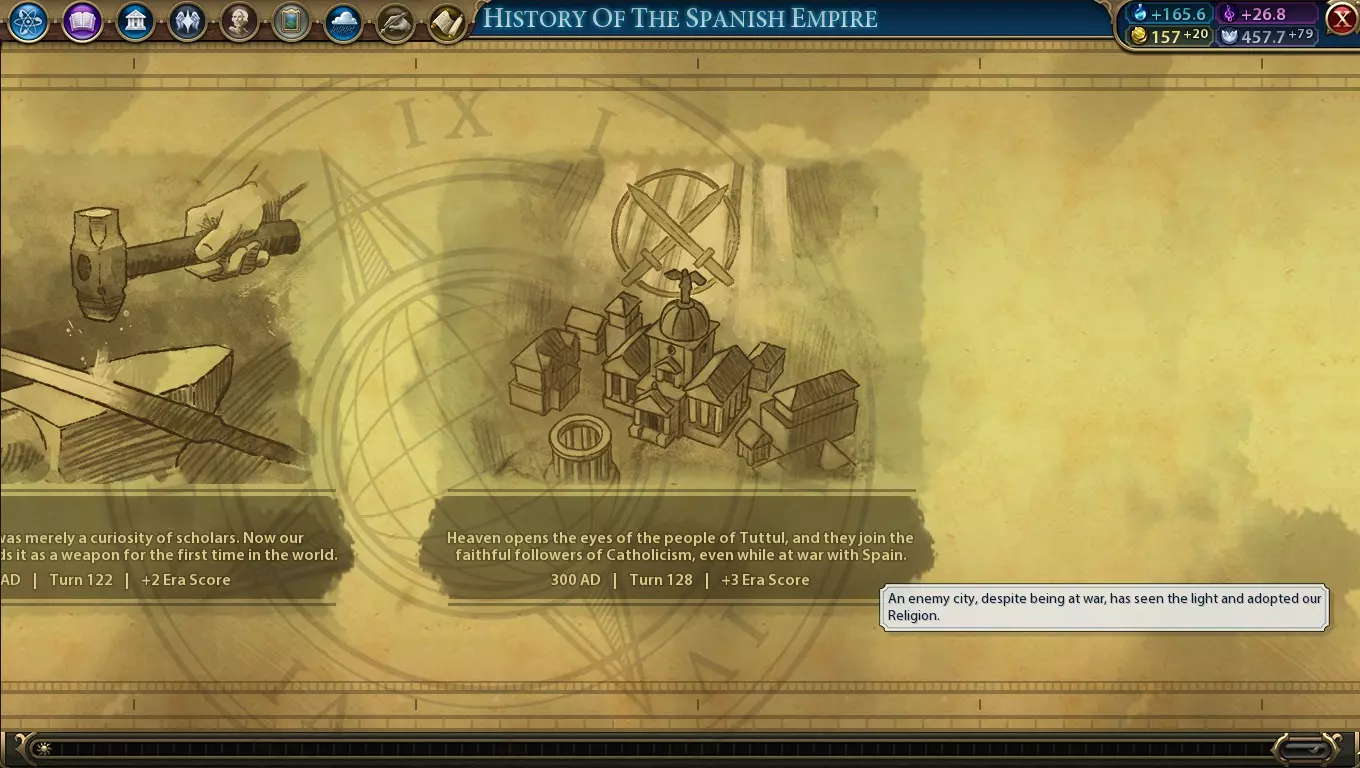
Converting the city will also grant you +3 era score. Considering this will happen every time you capture a city of a different religion with a Conquistador, you can rapidly gain enough era score to ensure subsequent Golden Ages! You can also make good use of your religious founder bonuses, such as Tithe, Cross-Cultural Dialogue and World Church. Conquistadors are fairly expensive to maintain in large numbers, so being able to gain more money for every city you capture from Tithe will be very useful. If you have the Defender of the Faith enhancer belief, you'll have a good strength bonus near cities you capture making it hard for your opponents to recapture the city. If the scientific city-state Fez is in your game, be sure to become suzerain over them, as it'll essentially give you science for every city you capture with Conquistadors! For cities which have a Shrine already, converting them to your faith allows them to immediately start purchasing Missionaries of your religion. That's helpful if you've gained a bit of faith since the start of the war and need more religious units to support your Conquistadors. Finally, converting a city can aid religious victory without you having to dedicate any faith to the conversion if you hand back some of the cities at the end of the war. Handing back a city can reduce the grievances you inflicted from taking it in the first place, which can be a good way to ensure you don't attract a huge number of denouncements from the rest of the world. It also means you have fewer cities draining your amenities. This strategy is most effective when used against civs that share your starting continent, seeing as you'll want to keep cities overseas for the maximum amount of Mission faith. Unique Unit: Conquistador (Part 2/2) Beyond the Renaissance The mighty strength advantage of Conquistadors allows them to be effective on the battlefield for quite some time. With a religious unit, they're already stronger than Line Infantry, meaning Spain should put off researching Military Science for longer than most civs. With Philip II's strength bonus, they're only 2 points weaker than Infantry of other civs, which cost 72% more to train, 33% more gold to maintain and cost oil every turn on top. As a consequence, Spain can continue relying on Conquistadors for quite some time! With the industrial-era Nationalism civic, Conquistadors can be formed into corps for a +10 strength bonus, which keeps them relevant for quite a while longer. The modern-era Mobilisation civic allows forming them to armies for a +17 strength boost. However, there's a catch - because Military Science obsoletes Conquistadors, you can't build Military Academies and therefore can't benefit from the 25% discount to new corps and armies that they offer. As such, Conquistadors cease to be a cost-effective option once forming armies with them becomes a necessity. Still, that's not to say you should get rid of your Conquistadors. They still have the unique ability to convert cities to your religion, and they don't need to get the last hit on a city to do that. Bringing Conquistador armies alongside your more advanced units is a good idea for that reason. Try to keep them safe from enemy fire, and ensure they're adjacent to a city when you're capturing it. Finally, upgrading Conquistadors or forming armies with them will free up a few religious units. This can be quite helpful for cleaning up any heresy which might have popped up in your empire while you were conquering cities abroad. Summary Take a detour to Bronze Working and Apprenticeship to train some Men-at-Arms ready for upgrading Ensure your empire clearly follows your religion before you start taking cities Bring religious units with one charge left with your Conquistadors, as well as Siege Towers or Bombards Capturing cities with Conquistadors is a great source of era score and will often secure you an industrial/modern-era Golden Age. Handing back non-capital cities on your own continent after the war can help with religious victory. When Conquistadors obsolete, form some into armies and keep them next to enemy cities so you can still convert them through conquest. Unique Improvement: Mission
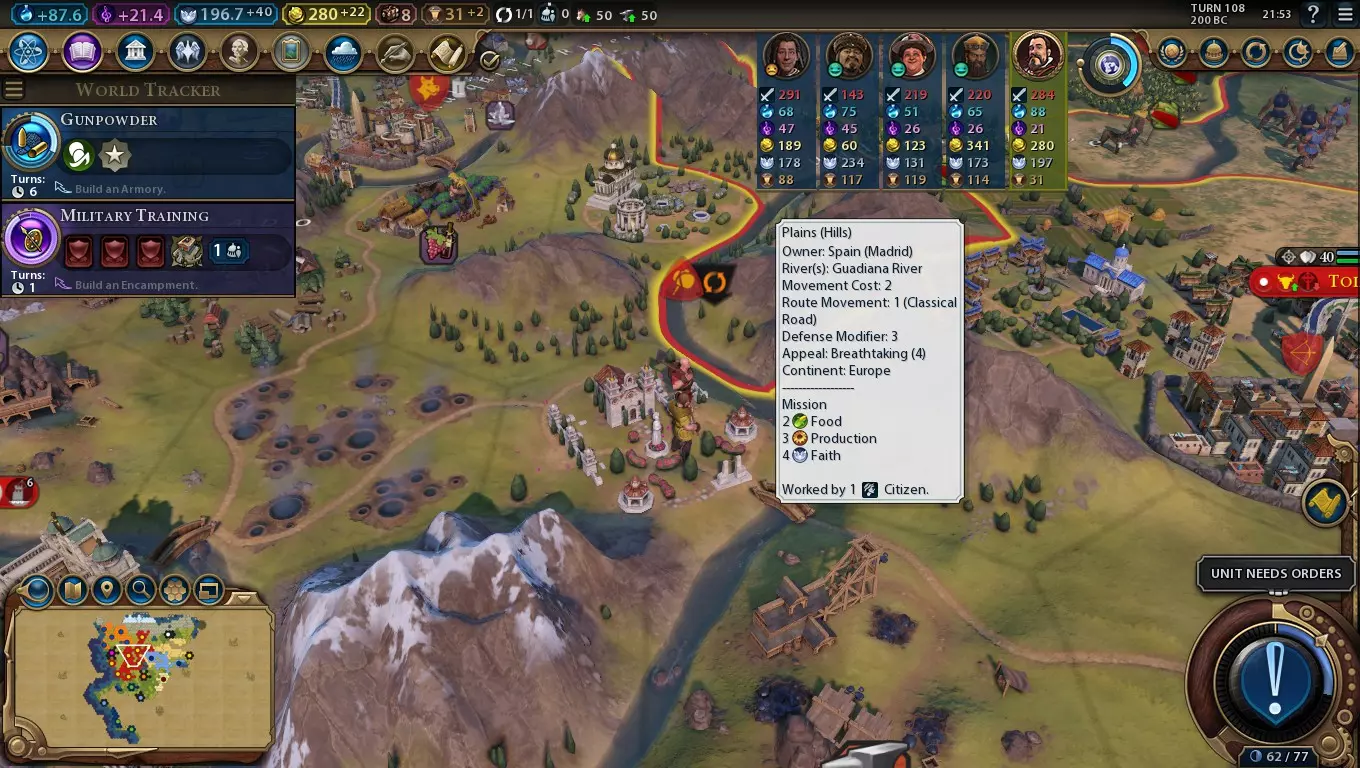
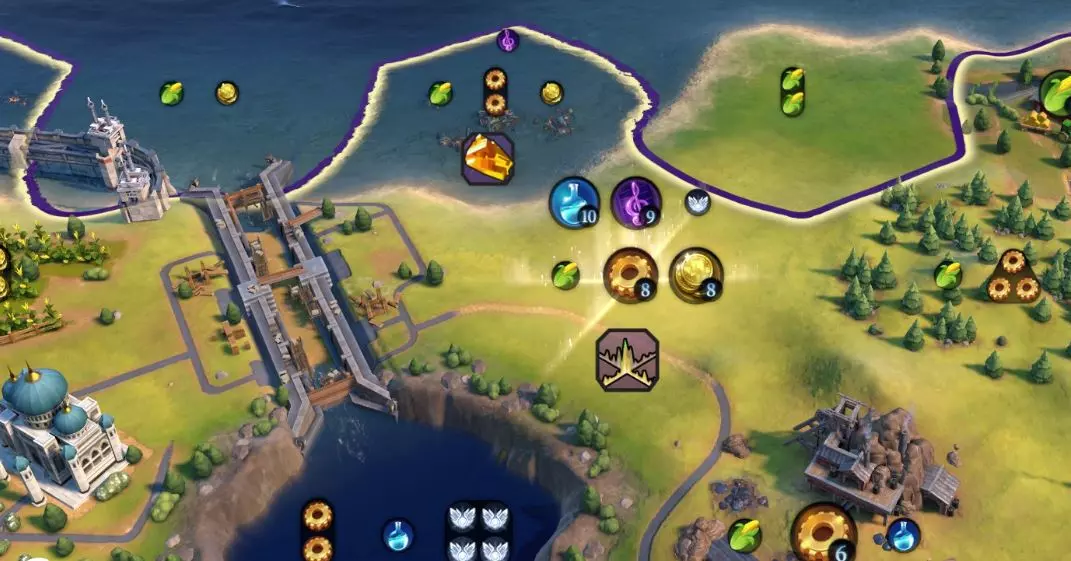
在《文明》系列游戏中,以西班牙进行游戏时,建立宗教是个不错的选择,之后可以暂时将信仰产出放在一边,专注于建立大量城市。但当“传教站”改良设施出现后,一切都会改变——是时候释放西班牙真正的宗教潜力了! 传教站在中世纪时代的“教育”科技解锁,但通常先研发文艺复兴时代的“火药”科技以解锁征服者更为明智。早期的征服者影响力要大得多,而将传教站的建造推迟几回合问题不大。 基础产出方面,在本土大陆的传教站提供2点信仰,单从这点来看并不特别值得——因此,除非你真的急需信仰,否则不必费心在本土建造传教站。然而,在外国大陆上,传教站能提供大量的4点信仰值,以及1点食物和1点生产力! 传教站的食物和生产力产出使其在游戏的这个阶段成为农场和矿山之间的一种折中选择。因此,你可以大量建造并运作它们,而不会忽视城市的整体发展。 尽管传教站不能建造在泛滥平原上,但它们可以建造在沙漠或冻土 tiles 上,分别与佩特拉和圣瓦西里大教堂奇观搭配时能产生极佳的产出。即使没有这些奇观,你也能将原本产出平平的城市转变为出色的信仰值来源。凭借任务提供的所有信仰值,你可以大量派出传教士和使徒来助力宗教胜利,或者派出任何宗教单位为征服者提供+10战力加成。此外,【大教堂】政体允许你用信仰值以半价购买军事单位,而原本用金币购买需要双倍花费。你还可以通过【耶稣会教育】追随者信条用信仰值购买文化或科技建筑,用信仰值购买博物学家来建造国家公园并提供宜居度和旅游业绩,购买摇滚乐队提升旅游业绩,甚至用于伟人赞助。 科技相邻加成
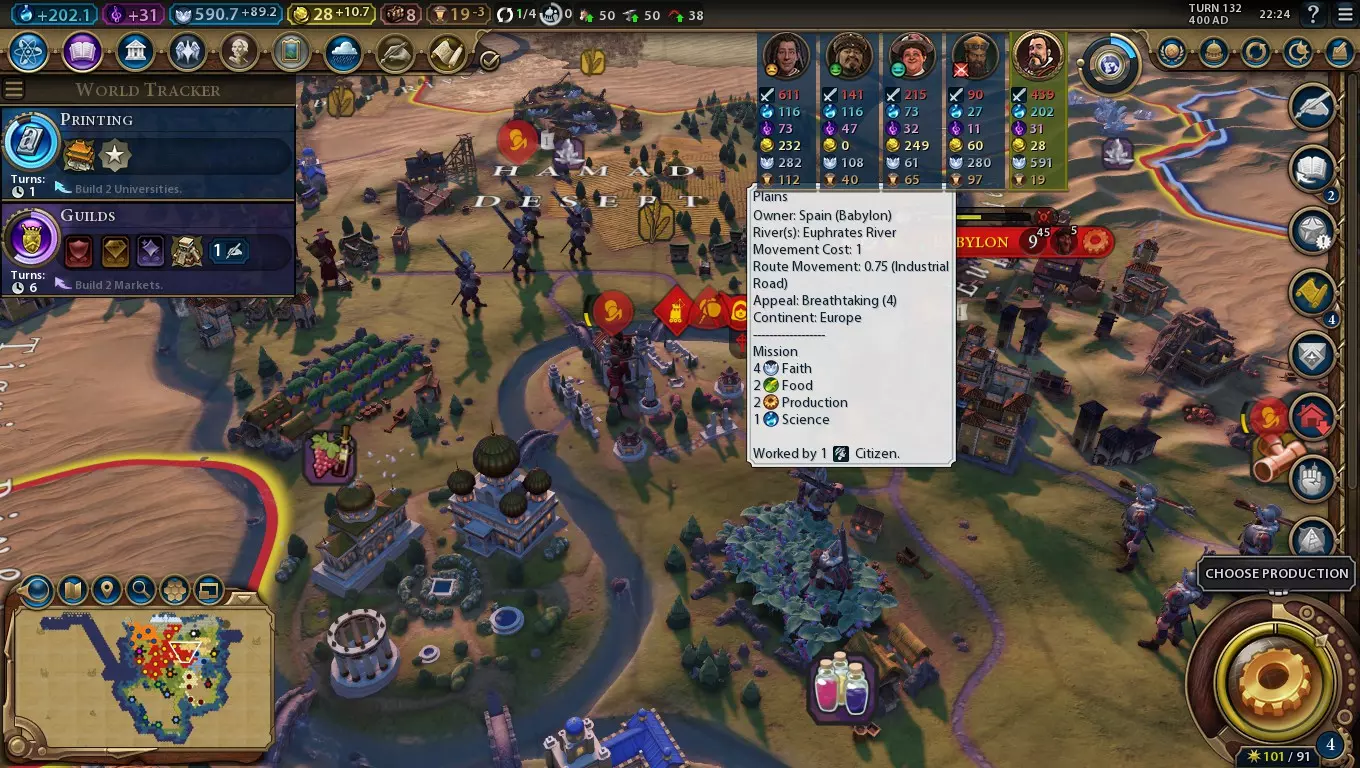
Missions yield an extra +1 science per adjacent Holy Site or Campus. This means it's a good idea to build your first Missions around Holy Sites and Campuses before you work tiles elsewhere. If you intend to build either district in a city without good potential adjacency bonuses, you can instead place it somewhere with a lot of potential adjacent Missions. The science boost is particularly welcome if you exploited age bonuses for science earlier in the game rather than building Campuses (e.g. Monasticism for a classical/medieval Dark Age, Free Inquiry for a Golden Age).The moment you're no longer able to exploit those science boosts, you have a special one of your own to keep your techologies up to date. Mission Loyalty The tricky thing about the colonial game is how easily cities become disloyal if you settle or capture close to other civs. Moving a Governor to the city will buy you some time, certain bonuses like the Hic Sunt Draconis Golden Age dedication or Colonial Offices diplomatic policy card add to that, converting the city to your religion helps, and building a Mission next to the city centre buys a little more time. The +2 loyalty bonus isn't huge, but the more time you have, the more manageable it is to conquer other nearby cities so they can start providing positive loyalty pressure on each other. Enhancement With the atomic-era Cultural Heritage civic, the science from Missions increases by two. Missions next to Campuses or Holy Sites yield at least 3 science each. While this is a very late-arriving bonus, Cultural Heritage is a fairly easy civic to beeline and the science should still be greatly useful if you still plan to fight more wars at this stage of the game. Missions on a continent not containing your capital will now be up to 4 faith, 2 science, 1 food and 1 production at a minimum - a very strong overall yield for an improvement with few placement restrictions. A strong improvement with a good potential science yield, along with Spain's production bonuses via the civ ability and the powerful geothermal fissure start bias can be the basis for a scientific route to victory. If you want to go down the road to scientific victory from the start, first take the Divine Spark pantheon to help you found a religion and generate Great Scientists faster. Once you have a religion, take the Jesuit Education belief to allow you to buy science builkdings with faith, and stop building Holy Sites - build Campuses, Commercial Hubs/Harbours and Theatre Squares instead. Outside of an initial Apostle to start an inquisition, and an Inquisitor to keep rival faiths out your land, save up faith for religious units to go with Conquistadors. Use them to conquer overseas lands, where you can build Missions. Try to get the Cultural Heritage civic quickly for the strong science boost. Finally, position your trade routes late in the game to ensure your strongest cities are getting even more production from intercontinental trade - that'll help them build Spaceports and get through space race projects. Summary Capture or found lots of cities on continents not containing your capital - when you capture a city that's disloyal, try to build a Mission adjacent to the city centre as soon as possible to buy some time. Build Missions in huge quantities, except on your capital's continent. Surround Campuses and Holy Sites with Missions Missions are generally useful for religious victory, but can help with science as well. Administration - Government and Policy Cards Note that the Administration sections strictly cover the options that have particularly good synergy with the civ's uniques. These are not necessarily the best choices, but rather options you should consider more than usual if playing this civ relative to others. Governments Tier One Oligarchy is a good choice for its legacy card, which adds +4 strength not only to Conquistadors, but also to Caravels. An early Caravel armada can be very powerful. Keep Oligarchy if you're likely to have aggressive neighbours; otherwise consider switching to Autocracy - strong trade routes stacked with Autocracy's bonuses can make an excellent early wonder-building city. Take the Ancestral Hall building to help you expand your empire and get even more free Builders. Tier Two You have a bit of choice here. Theocracy helps you get a lot out of your high faith output for religious and domination victories alike, and also has a good balance between military and economic policy cards. It also boosts the strength of your religious units, which stacks with Philip II's bonus. Merchant Republic however helps you build districts even faster. The Grand Master's Chapel is a reliably good choice of Government Plaza building. With it, you can purchase Conquistadors for 500 faith each, and get faith from pillaging anything. Tier Three If you want to continue down the warpath, Fascism will be effective for its strength bonus. Otherwise, Democracy is a reliable choice thanks to its trade route bonuses - religious victories in particular gain from its higher number of economic policy card slots. Communism's science boost makes it ideal for scientific games, and the unique Collectivisation policy card that goes with it helps boost trade route yields even further. For domination or religious victories, use the War Department so military and religious units heal from kills. The Royal Society saves some time in the scientific game as you can use Builders to rush space race projects. Policy Cards Ancient Era Caravansaries (Economic, requires Foreign Trade) - Builds on Spain's advantages to trade routes, but it's a good idea not to take this policy card until you have multiple active trade routes as other cards are generally more helpful. Corvée (Economic, requires State Workforce) - Spain's production bonus for intercontinental trade is very powerful early in the game, so you might want to consider putting that to use in wonder production. This policy card will stretch that production bonus even further! Limitanei (Military, requires Early Empire) - A helpful loyalty bonus once you start capturing cities on other continents. God King (Economic, requires Code of Laws) - The sooner you can get a pantheon going, the better a shot you have at Divine Spark and hence a religion. It's a shame to miss out on Urban Planning's production bonus, but at least you get a little gold to compensate. Classical Era Praetorium (Diplomatic, requires Recorded History) - Holding onto captured coastal cities can be tough due to the loyalty pressures, so here's a policy card that helps with that without you needing to use up a precious economic or military card slot. Veterancy (Military, requires Military Training) - Makes Encampments and Harbours particulary cheap in foreign-continent cities. Encampments are useful for Great General Points; Harbours for trade route capacity. Medieval Era Feudal Contract (Military, requires Feudalism) - Allows you to train Men-at-Arms faster, ready for upgrading to Conquistadors, or just train Conquistadors themselves faster. Professional Army (Military, requires Mercenaries) - Reducing the cost of unit upgrades will make turning a Men-at-Arms force into a Conquistador one much more affordable. Retinues (Military, requires Mercenaries) - If nitre supplies are low, this allows you to upgrade Men-at-Arms to Conquistadors for just 5 nitre each, and Trebuchets to Bombards for just 10 nitre each. Serfdom (Economic, requires Feudalism) - Together with Spain's civ ability and the Ancestral Hall Government Plaza building, newly-founded cities on foreign continents will begin with a massive 10 Builder charges (or 12 with the Pyramids wonder)! This will be excellent for preparing you for the Mission improvement. Renaissance Era Colonial Offices (Diplomatic, requires Exploration) - Settling extensively on foreign continents will provide you with lots of fast-growing cities! This policy card also boosts your loyalty in cities on foreign continents - that's particularly helpful for conquests. Logistics (Military, requires Mercantilism) - Strong as Conquistadors are, they're rather slow so the movement speed bonus offered by this policy card is very welcome. It'll also help your Inquisitors catch enemy religious units. Press Gangs (Military, requires Exploration) - Early fleets and armadas are expensive, so this policy card will help you build the individual ships in a reasonable amount of time. Religious Orders (Economic, requires Reformed Church) - Together with Philip II's ability, you can have a +10 bonus in theological combat; add the Theocracy government on top and you have +15. That's enough to keep your Missionaries safe from enemy Apostles. Triangular Trade (Economic, requires Mercantilism) - Makes trade routes worth even more gold. Wars of Religion (Military, requires Reformed Church) - Stacked with Philip II's ability, you'll have a +9 advantage over enemy armies which aren't supported by the policy card. Wisselbanken (Diplomatic, requires Diplomatic Service) - Boosts trade route yields, so long as they're with an ally. Industrial Era Colonial Taxes (Diplomatic, requires Colonialism) - Cash in on all of those cities on other continents with a 25% boost to gold output in all of them. They'll also get a 10% production bonus to help them develop even faster. Modern Era Collectivisation (Economic, Communism only, requires Class Struggle) - Internal intercontinental trade now produces masses of food. This allows you to dedicate more tiles and citizens to Missions instead of farms. Market Economy (Economic, requires Capitalism) - A great boost to science, culture and gold which makes intercontinental international trading very lucrative. Martial Law (Wildcard, Fascism only, requires Totalitarianism) - Same effect as the earlier-arriving Propaganda and stacks with it, and adds a loyalty bonus on top. Propaganda (Military, requires Mass Media) - Keeping your war weariness low is important as it prevents you receiving a penalty to faith output via amenity penalties. Information Era Ecommerce (Economic, requires Globalization) - Intercontinental trading will now be a spectacular source of gold and production! That's particularly great if you need to fund a war. Administration - Age Bonuses and World Congress Age Bonuses Only bonuses with notable synergy with the civ's uniques are covered here. Exodus of the Evangelists (Dedication, Classical to Renaissance eras) - If you're in a classical-era Dark or Normal Age, this dedication will help you follow it up with a medieval-era Heroic or Golden Age. Founding a religion causes all your cities with a Holy Site to immediately convert to it, which can instantly grant quite a bit of era score. Exodus of the Evangelists (Golden Age, Classical to Renaissance eras) - A good choice for a medieval-era Heroic Age in particular as it can help you secure your religion against rivals without you needing to spend too much faith, and you can pick it on top of other, more useful bonuses. Free Inquiry (Golden Age, Classical to Medieval eras) - All your Commercial Hubs and Harbours will now generate science. You'll want to build those districts anyway for trade route capacity, and getting lots of science means you don't have to worry about missing out on Campuses. Inquisition (Dark Age, Classical to Renaissance eras) - The science penalty is harsh, but you don't actually need this wildcard for long. Buy an Apostle, switch to this wildcard, launch an inquisition, and switch to a different wildcard like Monasticism. That way, you've unlocked Inquisitors without having to use all the charges of an Apostle. Monasticism (Dark Age, Classical to Medieval eras) - A must-have wildcard if you fall into an early Dark Age, as it allows you to focus on Holy Sites while still getting the kind of science outputs you'd expect if you built Campuses instead - or you can build both and get Missions and Conquistadors unlocked much sooner. Monumentality (Golden Age, Classical to Renaissance eras) - An excellent choice for early development as it allows you to purchase Settlers with faith, as well as Builders and Traders. Pen, Brush and Voice (Golden Age, Classical to Medieval eras) - A great support dedication for a medieval-era Heroic Age as the culture it grants will help you to get to civics like Mercantilism sooner. Hic Sunt Dracones (Dedication, Renaissance to Modern eras) - A tricky dedication to use well. If there's strong naval rivals and lots of continents to uncover, this can be a great source of era score. If you've already discovered most of the continents and there's a lack of good naval rivals, pick a different dedication. Hic Sunt Dracones (Golden Age, Renaissance to Modern eras) - Helps you to support settled/conquered colonies with the loyalty bonus and also goes nicely with your early armadas to have a speed as well as strength advantage. Reform the Coinage (Dedication, Renaissance to Modern eras) - You'll want to make a lot of trade routes, so here's an easy source of era score. Reform the Coinage (Golden Age, Renaissance to Modern eras) - Intercontinental trade routes can be vulnerable to pillaging, but this bonus allows you to circumvent that problem. Furthermore, international intercontinental trade will generate an awful lot of money. World Congress How you should vote in the World Congress will often be specific to your game - if you have a strong rival, for example, it might be better to vote to hurt them than to help yourself. Furthermore, there may be general bonuses to your chosen victory route or gameplay which are more relevant than ones that have stronger synergy with civ-specific bonuses. Otherwise, here's a list of key votes that have high relevance for this civ relative to other civs. Deforestation Treaty - Effect A (Clearing features of the chosen type yields gold equal to the production and/or food) on woods or rainforest if you're actively founding new cities Chopping woods or rainforest with your free Builder (or Builders) is a quick way to develop new cities, and getting gold on top is a nice bonus. Mercenary Companies - Effect B (Producing, or purchasing military units using the chosen currency type, is -50% of the cost until the next World Congress) on faith if you have the Grand Master's Chapel, or production otherwise. Halving the faith cost makes Conquistadors cost only 250 faith each. Halving the production cost of units, however, makes it much more affordable to put together some early fleets and armadas. Military Advisory - Effect A (Units of the chosen land promotion class gain +5 strength) for melee infantry, around the time Conquistadors are useful Conquistadors have a long window of usage so you should be able to get a lot out of this resolution. Migration Treaty - Effect B (+5 loyalty per turn but -20% population growth in this player's cities) on yourself, if you're conquering into new continents Take the Colonial Offices diplomatic policy card on top, and the growth bonus mostly cancels out this growth penalty, while the loyalty bonuses stack as if you had a Governor present in every foreign-continent city! Trade Policy - Effect A (Trade routes sent to the chosen player provide +4 gold to the sender. The chosen player receives +1 trade route capacity) on yourself An extra trade route means a good boost to production, gold and faith. World Religion - Effect A (+10 strength for all religious units of this faith) on your own religion Extends your advantage in theological combat (via Philip II's leader ability) even further. Administration - Religion and City-States Pantheons City Patron Goddess - New cities on foreign continents now get a 50% production bonus towards their first district! Dance of the Aurora - If you lack mountains or natural wonders, but have access to tundra, you can use this pantheon to get great Holy Sites you can then surround with Missions for extra science. Desert Folklore - The desert counterpart to Dance of the Aurora. Divine Spark - A great pantheon for Spain as it minimises the amount of production you need early on to build Holy Sites and Shrines, letting you focus on other things. It'll also be helpful for generating Great Scientists, and the more science you can get early on, the sooner you can obtain Conquistadors and the more effective they'll be. Monument to the Gods - Spain's civ ability can amount to an impressive early production lead, which this pantheon can help you divert towards wonder construction. Religious Settlements - A free Settler and with it a great boost to early expansion. Religious Beliefs You can have one founder, one follower, one enhancer and one worship belief. Choral Music (Follower) - More culture will help you get to Cultural Heritage sooner, and its powerful science boost to Missions. It's especially useful if you're relying on the Monasticism Dark Age wildcard for science. Cross Cultural Dialogue (Founder) - A good way to combine your religious and scientific strengths. (Domination) Crusade (Enhancer) - An excellent choice for war. Philip's unique strength bonus doesn't work against civs that follow your religion, but this belief certainly does. Keep in mind that the strength bonus is tied to the city and the surrounding area, not the civ. You won't be able to use Crusade or Philip's ability in cities that don't follow your religion belonging to civs that do, although you'll be able to use both in cities that follow your religion belonging to civs that don't. Defender of the Faith (Enhancer) - This belief is powerful in Spain's hands. If you capture a city with a Conquistador, or if a Conquistador is adjacent to the city when you do so, you'll immediately convert the city to your religion. With this belief, it'll also grant your nearby units a +5 strength bonus making it hard for your enemy to take it back. Holy Order (Enhancer) - Although it doesn't make Inquisitors cheaper, it's still good for spamming affordable Missionaries with, which can support your Conquistadors. Jesuit Education (Follower) - You'll want lots of Campus districts both for their direct science output and the bonus they offer Missions. Filling the districts can be expensive, but this belief lets you put your high faith output to good use there. This intersection between faith and science can rival that of Arabia. Pilgrimage (Founder) - As you capture cities with Conquistadors, you'll generate more faith. Religious Colonisation (Enhancer) - Settling colonies on new continents in order to get strong Missions? This belief will ensure those new cities follow your religion, saving you precious faith you can use on other things. Be careful, however - if they grow too fast and they're not getting religious pressure from elsewhere, they'll end up without a majority religion soon enough. Religious Community (Follower) - International intercontinental trade routes can be rich sources of gold with this belief! Tithe (Founder) - Keep the warpath going with a boost to gold output every time you take a city with Conquistadors. World Church (Founder) - Get more culture per turn as you capture cities with Conquistadors, getting you on the way to the Cultural Heritage civic and the +2 science boost for Missions sooner. City-States Akkad (Militaristic) - Allows Conquistadors to deal full damage against city defences without the need for siege support - even Renaissance Walls and urban defences! Bandar Brunei (Trade) - Intercontinental trade may require trade routes to pass through multiple foreign cities. Getting some extra gold out of the arrangement is rather nice. Bologna (Scientific) - Helps to improve your chances of founding a religion, much like the Divine Spark pantheon. Brussels (Industrial) - Useful early on as the wonder construction bonus works nicely with the strong production bonus of early Spanish intercontinental trade routes. Chinguetti (Religious) - Bonus faith for your trade routes, on top of the faith you already get. Fez (Scientific) - A very powerful city-state for Spain - converting a city to your religion for the first time (such as via Conquistadors) gives you science based on the city's population! Geneva (Scientific) - The science multiplier is powerful in conjunction with post-Cultural Heritage Missions. Hunza (Trade) - Intercontinental trade, as the name suggests, often entails travelling a long way. Hunza gives you extra gold for such long-distance routes. Jerusalem (Religious) - Capturing cities with Conquistadors may put your religion there, but pressures from a variety of faiths may threaten to reverse that. Jerusalem greatly improves your cities' passive religious spread, allowing you to really reinforce your religious pressure once you take a few cities. Kumasi (Cultural) - Grants you bonus culture and gold from trade routes with city-states. Mogadishu (Trade) - Intercontinental trade often requires crossing seas, which can leave your traders vulnerable to Barbarians and other pillagers. Being suzerain over Mogadishu stops this being a problem. No longer will your treasure fleets be left to the mercy of privateers! Nazca (Religious) - Nazca Lines can only be placed on desert and cannot be worked directly. However, they grant faith, food and production to adjacent tiles. This goes nicely with Missions, making even desert regions excellent for Spanish expansion. Singapore (Industrial) - Can allow you to get even more production from trade routes. Valletta (Militaristic) - If you're after a domination victory, this is a great city-state to have under your control. Your high faith output can rapidly secure your newly-captured cities by purchasing walls, and you can also develop cities quickly by buying buildings such as Granaries. Venice (Trade) - International intercontinental trade can now make massive amounts of money. Wolin (Militaristic) - Offers an alternative means of getting a Great General without the need for Encampments, allowing you to have Conquistadors with full speed and strength while freeing up district capacity for Holy Sites, Commercial Hubs, Harbours and the like. Yerevan (Religious) - You can constantly pick the Debater promotion for Apostles, and enjoy winning practically every round of theological combat considering Philip II's leader ability adds strength as well. Administration - Wonders and Great People Wonders Great Pyramids (Ancient era, Masonry technology) - Every time you settle a city on a foreign continent, you'll get 4 free Builder charges instead of 3. With the Ancestral Hall, that's 8 charges instead of 6. Oracle (Ancient era, Mysticism civic) - In the event you don't manage to found a religion, this is a useful wonder to capture as it allows you to dedicate Mission faith to Great Person patronage effectively. Stonehenge (Ancient era, Astrology technology) - Although a competitive wonder, Stonehenge is a great wonder for Spain to have if you can afford the risk. Guaranteeing a religion means you don't need to worry about building Holy Sites until the renaissance era. Colossus (Classical era, Shipbuilding technology) - Extra trade route capacity means a fair bit of extra food and production, or gold. Great Lighthouse (Classical era, Celestial Navigation technology) - Early Armadas can deal a lot of damage, but they won't do much good if they can't reach your opponents. The bonus movement speed from the Great Lighthouse will help there. Jebel Barkal (Classical era, Iron Working technology) - A strong early source of faith to get your religion off the ground ready for Missions, without the need to invest heavily in Holy Sites. Machu Picchu (Classical era, Engineering technology) - Spain's start bias increases the chance of starting near a mountain chain. With this wonder, you can get some excellent adjacency bonuses for Commerical Hubs, Theatre Squares and Industrial Zones on top of the usual Campuses and Holy Sites. Mahabodhi Temple (Classical era, Theology civic) - Two Apostles for free means you needn't let low faith generation at this stage in the game stop you from having a developed religion. Petra (Classical era, Mathematics technology) - Missions can be placed on desert tiles, and on non-home continents this makes a reasonable tile of 1 food, 1 production and 4 faith. With Petra, however, that's 3 food, 2 production, 2 gold and 4 faith - an excellent yield! Hagia Sophia (Medieval era, Buttress technology) - Extra Missionary and Apostle charges means you can get just as much out of them as other civs, and still have a charge left over allowing the units to provide the combat bonus to Conquistadors. Meenakshi Temple (Medieval era, Civil Service civic) - Can be used to extend your advantage in theological combat. University of Sankore (Medieval era, Education technology) - Internal international trade can now be a great source of science as well as some bonus faith! Casa de Contratación (Renaissance era, Cartography technology) - An ideal wonder for Spain, this allows you to get a faith, gold and production bonus on every city on a foreign continent with a Governor. In cities with a lot of Missions or intercontinental trade routes, this goes a long way. Great Zimbabwe (Renaissance era, Banking technology) - Offers +1 trade route capacity, and makes trade routes from the city exceptionally powerful. St. Basil's Cathedral (Renaissance era, Reformed Church civic) - Missions can be built in tundra tiles - on a foreign continent, the tile will be worth 2 food, 1 production and 4 faith. With this wonder, that's up to 3 food, 2 production, 4 faith and 1 culture, even before taking into account the science bonuses Missions can achieve. Taj Mahal (Renaissance era, Humanism civic) - Conquistadors grant you +3 era score every time they convert a city as part of capturing it. With the Taj Mahal wonder, that rises to +5. Enjoy your consecutive Golden Ages. Torre de Belém (Renaissance era, Mercantilism civic) - Settling extensively away from your home continent? Constructing this wonder will award you a lot of free buildings! Furthermore, this wonder allows you to get more gold out of your trade routes. Venetian Arsenal (Renaissance era, Mass Production technology) - Early fleets and armadas are much easier to make use of when you have access to a wonder that makes you produce double as many ships. Oxford University (Industrial era, Scientific Theory technology) - The science multiplier is the important thing here. If you can capture a reasonably large city on another continent, make sure lots of Campuses and Holy Sites are within range (not just the one of the city itself), build this wonder and construct plenty of Missions - you can then end up with a massive amount of science. It gets considerably better after the atomic-era Cultural Heritage civic. Great People Remember that these are only the ones that have particular synergy with Spanish uniques, not necessarily the most effective options. All Great Generals and Admirals can be useful for a domination victory, but it would be redundant to list them all. Classical Era Themistocles (Great Admiral) - A permanent boost to naval ranged unit production will be useful later in the game if you want to build Frigate fleets or armadas. Trưng Trắc (Great General) - Reduces your war weariness. Negative amenities will impact your faith yields and therefore hurt your ability to spread your religion, so being able to fight on with Conquistadors without losing much in the way of faith yields will be useful. Zhang Qian (Great Merchant) - Increases your trade route capacity. Medieval Era Æthelflæd (Great General) - Provides loyalty to a city. Ibn Fadlan (Great Merchant) - Extra trade route capacity. Marco Polo (Great Merchant) - Also offers an extra trade route. Rajendra Chola (Great Admiral) - Permanently makes all your naval units gain +3 strength. An early armada could have as much as a 20-point strength advantage now! Zheng He (Great Admiral) - Extra trade route capacity. Renaissance Era Raja Todar Mal (Great Merchant) - Boosts gold from internal trade. This is useful as it allows you to grow your colonies while also having a bit more cash for Conquistador maintenance. Industrial Era José de San Martín (Great General) - Provides +4 loyalty for a city. Napoleon Bonaparte (Great General) - A Conquistador army has enough strength to reliably kill regular Musketmen in a single hit. Modern Era John Rockefeller (Great Merchant) - Makes trading more lucrative by offering extra gold based on strategic resources in the destination city. Togo Heihachiro (Great Admiral) - Provides +6 loyalty for a city. Tupac Amaru II (Great General) - Lots of Conquistadors for free, even if you've obsoleted them by researching Military Science! Atomic Era Melitta Bentz (Great Merchant) - An extra trade route. Sudirman (Great General) - Provides +6 loyalty for a city. Counter-Strategies (Part 1/2) Spain's potential power comes with two key weaknesses. Firstly, if they can't found a religion (or their religion isn't dominant within their home lands), Conquistadors and Philip II's leader ability will be far less effective. Secondly, if they can't easily expand outside their home continent, their civ ability and the Mission unique improvement will be much less effective. Civilization Ability: Treasure Fleets Foreign-continent Builders and district construction bonus When Spain settles a city on a continent other than the one containing their capital, they get a free Builder. If they have the Ancestral Hall Government Plaza building as well, they get two. Two Builders cannot end their turn on the same tile, making it fairly likely Spain will end up with undefended Builders - fast-moving units like Horsemen or Coursers can swoop in and capture them. Pushing Spain into their home continent early on is a good idea if you can manage it. Spain's strength advantages don't come into play immediately, so settling in foreign-continent land near their capital or capturing their new foreign-continent cities should be less risky than it might at first appear. The district construction bonus means Spanish cities are likely to fill out their district capacity a little sooner than the cities of most other civs. This can make them a little more lucrative for pillaging - much like capturing Builders, Horsemen and Coursers are ideal at this job. Trade bonuses Trade between different continents requires there to be Spanish cities on different continents in the first place. If other civs can settle enough land, setting up decent colonies on other continents will be very difficult, leaving Spain with lacklustre cities. Often, intercontinental trade will require Spain to send trade routes across seas. These trade routes are the most vulnerable to pillaging. Try using Privateers or Submarines as they can pillage without being detected (except by naval melee units) - useful if Spain has a particularly strong navy. Early fleets and armadas Early fleets and armadas gives Spain a naval combat advantage for a time, assuming they have the production and/or gold to produce naval units quickly enough. Denying them the Venetian Arsenal wonder might be a good idea to prevent them getting a huge advantage. Once you have the Mobilisation civic, Spain's early armada-building ability is no longer helpful. If you have to fight Spanish armadas, it may be a good idea to focus fire on one unit at a time. A lost armada represents a huge amount of lost production or gold for Spain. Try to use ranged units like Privateers or Frigates as melee units will typically take too much damage from combat. Philip II's Leader Ability: El Escorial Military combat bonus If Spain's majority religion is present in a majority of your cities, or you control a large empire with a huge range of different religions keeping each other in check, there's nothing to worry about here. If it isn't, you can make use of the Wars of Religion military policy card, made available at the renaissance-era Reformed Church civic. The bonus there will mostly cancel out Philip's unique bonus unless he's using the policy card himself. If you're a bit behind the times in regards to civics, you can instead make use of Oligarchy's +4 strength bonus for melee infantry, anti-cavalry and naval melee units as a stopgap measure. If Spain is using Wars of Religion themselves, make good use of defensive terrain to prevent the strength bonus being too powerful. Promoted units can overcome their strength advantage pretty easily as well, so the bonus usually won't be too much of a problem by itself. All this trouble, however, can be completely avoided if you attack Spain before religions start spreading. Spain has no combat advantages in the very earliest parts of the game, making a great opportunity for an attack. Religious bonuses Philip's strength bonus also applies to religious units, and on top, all his Inquisitors gain an extra charge to remove heresy with, while those remove-heresy charges are more powerful than normal. This makes him particularly effective at defending against enemy religions. To overcome this, consider using Apostles rather than Missionaries so you can get an edge in theological combat, or bring a Guru or two to help heal them up. This will cost you a lot more faith than it does for Spain, so trying to limit how many Missions they can build away from their home continent will be a good move. Thankfully, pillaging Missions is a great source of faith for you. Philip II's Agenda: Counter Reformer Philip II actively will try to stamp out heathen religions in his own lands more than most leaders, and hates those trying to spread heathen faiths into Spain. He likes those that share his religion. He will not have the Intolerant hidden agenda as it overlaps with this main one. You'll typically get on fine with Philip if you start close by and lack your own religion, as soon enough Spanish Missionaries and Apostles will arrive to convert your cities. If you have a religion of your own, however, you can expect Philip to usually be hostile towards you. Be careful how you use your Missionaries and Apostles against Spain - it's more likely to provoke a war than it would be against most civs, and Spain has stronger military advantages than most religious civs. A war while you have religious units near Spain's cities could mean a lot of lost units and hence lost faith. To avoid this problem, try to use religious units against Spain at times where it's unlikely to start a war, such as when they're already fighting one against someone else, or if they've just ended a war against you. Philip II also has a 10% chance of having the Sycophant hidden agenda, which makes him prefer civs in Golden or Heroic Ages and dislike civs in Dark Ages. Civs that build a lot of wonders are likely to do well here, given they are excellent sources of era score and unlike some of the other strong sources of era score (converting cities when at war, building National Parks), don't lean as much on the religious game. Counter-Strategies (Part 2/2) Unique Unit: Conquistador Conquistadors stacked with religious units are scary to face, especially considering Philip's strength bonus on top, and the possibility you're behind in technology. It helps to plan a defence in advance when dealing with Conquistadors - after all, with Philip II's leader ability they have an 18-strength advantage over regular Musketmen, and a 23-strength advantage over Knights! If either you or Spain lacks a majority religion, or you both follow the same one, Philip II's strength bonus won't apply. Converting to Spain's religion might be worthwhile if you're a non-religious civ on a larger map size and Spain is a neighbour, but on smaller map sizes that might just hand Spain a religious victory. On the other hand, Spain will find it harder to use their foreign-continent bonuses on smaller map sizes, so it balances out reasonably well. Another strategy is to research Military Engineering early to reveal nitre, and target any Spanish cities which produce it for pillaging so they can't train new Conquistadors. If they don't have any, settle cities near any free nitre spots if possible. Conquistadors only reach their full strength if they're kept close to religious units. If you have some Temples of your own, consider using Apostles or Inquisitors to kill their religious units to deny them the strength advantage. Try to use all but one of their charges before doing this, as even if you kill a Spanish religious unit the Conquistador will probably condemn your unit immediately afterwards unless you can quickly move in a military unit to defend it. Alternatively, if there's only one or two religious units mixed in with Spain's army, it might be a good idea to see if you can quickly destroy the military unit stacked with the religious unit and press the Condemn Heretic button to get rid of it. Although a Conquistador stacked with a religious unit is harder to kill, eliminating the religious unit as quickly as possible will cause you fewer problems later. Even at full strength, Conquistadors are slow, which allows you to attack them with Crossbowmen from a safe distance. While this won't deal a lot of damage per hit, this can add up with a lot of Crossbowmen without the Conquistadors being particularly able to retaliate. Use terrain and promotions carefully to prevent the strength difference being too harsh. Curiassiers arrive at the industrial-era Ballistics technology, which is relatively easy to beeline. They have much better mobility than Conquistadors and while they have a strength disadvantage against them, they can deal a hit and take a counter-attack, and still have enough health to flee. Ballistics also allows you to upgrade Crossbowmen to Field Cannons for an even more effective defence. Unique Improvement: Mission Missions are relatively late-arriving as faith-based uniques go, and as such Spain has a disadvantage to faith generation relative to other religious civs for quite some time. While this is good news for civs like Russia which aim for an early religious victory, it also can be an opportunity for other religious civs in general. To make the early-game tougher for Spain, one possibility is starting an early war. This doesn't necessarily mean putting together a huge force to take over Madrid (though it's a good time to do so if you think you can), but rather a couple of fast units to pillage their tiles, capture their civilians and generally be a pest. If you can provoke Spain into building Encampments instead of Holy Sites, you will have successfully set back their religious game even further. Let's assume Spain will definitely found a decent religion. What now? Well, like Spain's civ ability, Missions depend on Spain being able to settle foreign continents for the best yields. The more land taken on other continents by other civs, the less effective Missions and therefore Spain will be. Even if you can't shut down the entire continent, small coastal colonies which cannot obtain many tiles won't have much space for Missions and hence will have a limited faith output. Because they'll generally be situated far from Spain's core, Missions are very vulnerable to pillaging. Each one you pillage is worth 25 faith - increasing throughout the game - so you can bring some light cavalry with the Depredation promotion and have a lot of fun. Other Guides If you like these guides and want to send a tip, you can click here![ko-fi.com] Gathering Storm Compilation Guides Civ summaries (Start here for an introduction for all civs) Civ-specific tricks, secrets and clarifications (Ideal for more experienced players)Individual Civilization Guides America - no additional content* (Cultural/Diplomatic/Domination) America - all additional content* (Cultural/Diplomatic/Domination/Scientific) Arabia (Domination/Religious/Scientific) Australia (Domination/Scientific) Aztecs (Domination) Babylon (Cultural/Domination/Scientific) Brazil (Cultural/Domination/Religious/Scientific) Byzantium (Domination/Religious) Canada (Cultural/Diplomatic) China (Cultural/Domination/Scientific) Cree (Diplomatic) Egypt (Cultural/Diplomatic/Religious) England (Cultural/Domination/Scientific) Ethiopia (Cultural/Religious) France (Cultural/Domination) Gaul (Domination) Georgia (Diplomatic/Religious) Germany (Domination/Scientific) Gran Colombia (Domination) Greece (Cultural/Diplomatic/Domination) Hungary (Diplomatic/Domination) Inca (Religious/Scientific) India (Domination/Religious) Indonesia (Cultural/Domination/Religious/Scientific) Japan (All) Khmer (Cultural/Religious) Kongo (Cultural) Korea (Scientific) Macedon (Domination/Scientific) Mali (Diplomatic/Religious) Māori (Cultural/Religious) Mapuche (Cultural/Domination) Maya (Scientific) Mongolia (Domination) Netherlands (Scientific) Norway (Domination) Nubia (Domination) Ottomans (Domination) Persia (Cultural/Domination) Phoenicia (Domination) Poland (Cultural/Domination/Religious) Portugal (Diplomatic/Scientific) Rome (Domination) Russia (Cultural/Religious) Scotland (Scientific) Scythia (Domination/Religious) Spain (Domination/Religious/Scientific) Sumeria (Diplomatic/Domination/Scientific) Sweden (Cultural/Diplomatic) Vietnam (Cultural/Domination) Zulus (Domination)*The Teddy Roosevelt Persona Pack splits Roosevelt's leader ability in two, meaning the game with it is substantially different from without - hence two different versions of the America guide. Lincoln was added later and is only covered in the latter guide. Other civs with alternative leader personas are not split because the extra personas added in later content do not change the existing gameplay - as such the guides are perfectly usable by players without them. Rise and Fall These guides are for those with the Rise and Fall expansion, but not Gathering Storm. They are no longer updated and have not been kept up to date with patches released since Gathering Storm. To look at them, click here to open the Rise and Fall Civ Summaries guide. The "Other Guides" section of every Rise and Fall guide has links to every other Rise and Fall guide. Vanilla The Vanilla guides are for those without the Rise and Fall or Gathering Storm expansions. These guides are no longer updated and have not been kept up to date with patches released since Rise and Fall. To look at them, click here to open the Vanilla Civ Summaries guide. The "Other Guides" section of every Vanilla guide has links to every other Vanilla guide.