换一换
换一换 




蒙古是终极的骑兵单位好战文明,能够将外交型文明的计划撕得粉碎。本指南详细介绍了蒙古的策略、独特能力以及对抗他们的方法。 简介 注:本指南假设你拥有所有改变游戏的DLC和扩展包(所有文明包、远古世界奇观、神与王以及美丽新世界)

蒙古草原上居住着一群挑战历史常规的民族。他们身处内陆,肥沃土地稀少,却对世界产生了如此重大的影响。自公元前三世纪末起,来自中国的攻击促使游牧部落联合起来,形成了匈奴帝国。此后,蒙古地区先后出现了一系列由单一民族主导的帝国。然而在1206年,孛儿只斤·铁木真最终以更平等的方式统一了蒙古各部落。他保障宗教自由,并终结了以往征服土地后进行劫掠和焚烧的常规做法,随后他获得了成吉思汗的称号。成吉思汗去世时,他已征服了从现今整个哈萨克斯坦到太平洋的广阔土地。但与阿提拉、亚历山大大帝或拿破仑的帝国不同,他的帝国在他死后依然延续——52年后的1279年,蒙古帝国版图囊括了整个中国、波斯、朝鲜,向西甚至延伸至匈牙利。其统治人口占当时世界四分之一,领土面积超过全球五分之一。然而,随着时间推移,继承权问题变得模糊不清,最终导致帝国在14世纪走向崩溃。17世纪晚期,蒙古开始处于中国统治之下,这种状况一直持续到20世纪初,但此后蒙古实际上成为了苏联的卫星国。1990年,和平抗议运动为蒙古带来了民主制度。如今,凭借广泛的盟友和雄厚的矿产资源,蒙古在这个崭新的世界中占据了有利地位。掌控全局,建立一个能够经受时间考验的文明吧。

在深入介绍本指南之前,先为新玩家解释一些我将通篇使用的术语。 直冲:专注于尽早获取某项科技,只研究解锁该科技所需的技术,不研究其他无关科技。例如,要直冲“青铜工作”,你只需研究“采矿”和“青铜工作”,在完成“青铜工作”前不研究其他任何科技。 建设型国家/帝国:通常指追求除征服胜利外其他胜利方式的和平国家。 完成奖励:完成一项社会政策树的奖励(例如,自由政策树的奖励是免费伟人)。 近战单位:在本指南中,“近战单位”通常指所有非远程军事单位,无论是陆地还是海上单位。“标准近战单位”指的是战士、剑士、长剑士、矛兵、 pikeman 及其替代单位。 开场政策 - 解锁社会政策树的奖励(例如,自由政策树的开场奖励为每个城市 +1 文化)。 侦察单位 - 能为远程单位(通常是 siege 单位)提供目标视野的单位。通常,siege 单位的最大射程大于其视野范围,因此需要侦察单位。 特色内容 - 特色能力、特色单位、特色建筑、特色地格改良和特色伟人的统称。 UA - 特色能力 - 文明所拥有的无需建造的独特事物。UGP - 独特伟人 - 替代普通伟人的单位,只能由特定文明生成,或通过完成赞助政策树后由同盟城邦提供。游戏中仅有两种独特伟人,即蒙古可汗和威尼斯商人。 UU - 独特单位 - 替代普通单位的兵种,只能由特定文明建造,或由军事城邦同盟时提供。 宽帝国 - 拥有大量城市但每个城市人口较少的帝国。 XP - 经验值 - 积累足够经验值后,单位将升级,获得治疗自身或选择晋升的能力。ZOC - 控制区域 - 一种机制,指单位若从敌人相邻的格子移动到同一敌人的另一个相邻格子时,会消耗所有移动点数。 初看(第1/2部分) 起始倾向

蒙古有平原起始倾向。这为你提供了不错的生产力基础,以便早期大量生产战车射手,为升级成怯薛骑兵做好准备。 特色单位与能力 虽然特色能力通常是大多数文明最强大的方面,但蒙古的优势在于其强大的中世纪特色单位怯薛骑兵与替代大将军的可汗之间的协同作用,可汗是游戏中仅有的两个特色伟人之一。 特色能力:蒙古之恐 所有近战骑兵单位获得+1

所有军事单位获得+30%加成

对抗城邦及其控制的城市和单位 特色单位:怯薛(替代骑士)

一个骑乘远程单位 科技 淘汰科技 升级自 升级至 生产费用 购买费用 所需资源

骑士精神 中世纪 第二列 (总第七列)

军事学 工业时代 第一列 (总第十列)

战车弓箭手(135

)*

Horsemanďź100
)*

骑兵(220
无法识别内容,已删除。

460
*

1 马匹 *假设为正常速度游戏。 力量 远程力量 移动力 射程 视野 负面属性 正面属性 15
16

5
负面变化 无法进行近战攻击 战斗力15,较之前的20下降25% 正面一次性变化 远程攻击(远程战斗力16,射程2) 移动力5,较之前的4提升25% 无法进行近战攻击 无防御地形加成 可在攻击后移动 +50%经验获取(快速学习) 对伟大将军生成的贡献提升50%(伟大将军I) *蒙古的文明特性速度加成仅影响近战骑兵单位,因此额外的速度是该单位的属性。正面的持续升级改动 +50%经验值获取(快速学习)* 提升50%对伟大将军生成的贡献值(伟大将军I) *与荣誉社会政策中的军事传统叠加后,总计提升100%经验值获取 其他改动 被归类为标准远程单位而非骑乘近战单位,因此可使用远程单位晋升,对拥有骑乘单位加成的单位不再有额外 vulnerability,且可通过阿尔忒弥斯神庙而非马厩更快建造。 独特伟人:可汗(替代伟大将军)

主要生成方式 与*共享阈值 移动力 视野 被动技能 主动技能 陆战经验值(不包括对抗蛮族) 无 5
为2格范围内的所有陆地单位提供15%的战斗加成 进行治疗时每回合额外恢复15点生命值 治疗相邻的陆地或空中单位时,每回合额外恢复15点生命值(或拥有行军晋升的单位。不影响与可汗位于同一格的单位) 可在友方领土内或相邻区域消耗,以建造堡垒(防御+100%,每回合对相邻敌方单位造成30点生命值伤害,不与其他堡垒叠加) 这会将该格及其所有相邻格纳入你的领土,但如果从其他文明和城邦手中夺取土地,会损害与它们的关系 当你生成这类伟人时,会提高该类伟人和其自身的生成成本积极的被动效果变化 移动次数从2次增加至5次(+150%) 治疗时,每回合额外恢复15点生命值 治疗时,相邻的地面或空中单位每回合额外恢复15点生命值。此效果对与可汗处于同一格的单位无效。 快速概览(第2部分/共2部分) 胜利路线 请注意,这些评分是基于对该文明的体验得出的个人观点。你可能会发现以非常规方式更有效地利用该文明的方法。

文化性:5/10

外交:1/10
统治:10/10

Scientific: 4/10 Mongolia's uniques aren't useful for anything besides warfare, but that's something they absolutely excel at. Their tech route (prioritising Keshiks as soon as possible) means they may get to Universities late, thus hurting science, while their UA actively discourages diplomatic victories. Similar Civs and uniques Overall Mongolia's mounted unit-centric strategy is shared with Poland, although Poland has a significantly more flexible UA and better economic support in exchange for a weaker UU (Winged Hussars are still strong, but they can't do hit-and-run attacks on cities as effectively as Keshiks) and the lack of the fast healing that Khans offer. China also has quite a few similarities with Mongolia. China's UA basically gives them a unique Great General (but with double the strength bonus instead of faster speed and better healing) and they also have a strong mid-game ranged unit. England is another good candidate. England, like Mongolia, lacks economic support in its uniques but makes up for it with a very strong mid-game power spike. Same start bias Mongolia's start bias is shared only with Poland. Similar to the UA Persia's UA offers combat bonuses akin to Mongolia's which are less situational. Mongolia gets a +1 movement bonus to melee mounted units, while Persia gets it for all units. Mongolia gets a 30% bonus against City-States and their units, while Persia gets a 10% bonus that works against all cities and units. The key downside is that Persia's advantages require them to be in a Golden Age, something that's fairly unreliable early on in the game. Similar to Keshiks Arabia's Camel Archers are the obvious unit to compare Keshiks to, and there's a full comparison later on in this guide. Other Knight UUs include Spain's Conquistadors, Songhai's Mandekalu Cavalry and Siam's Naresuan's Elephant. Similar to Khans The only other Unique Great Person is the Merchant of Venice, but it could barely be more different from the Khan. Instead, consider China's UA, which makes their Great Generals twice as effective, or at uniques that offer faster healing (Persia's Immortals and the Invulnerability promotion that Indonesia's Kris Swordsmen can get.) Sweden's Hakkapeliitta can make Great Generals move faster, making them the only Civ other than Mongolia that can keep up Great Generals with cavalry units without needing Autocracy's Lightning Warfare. The Broader Picture Normally I write overall strategies in the UA section, but the narrow scope of the UA could make that section too confusing. Welcome to Mongolia. They're incredibly effective land-based warmongers, but lack economic backup. You don't really need to get going with war until Keshiks roll along, so you've got time to build up a decent infrastructure. Gold, happiness and horses will be the three most crucial elements. The first two can be handled by settling cities near a diverse range of luxury resources, while researching Animal Husbandry first will reveal horses, so you can quickly take them before anyone else does. Allow time for getting Worker technologies as appropriate, as well as Writing, then head along to The Wheel. This offers you Chariot Archers, which not only make effective defensive units early on in the game, but crucially they upgrade to Keshiks and their promotions stay relevant. You don't need to build a Barracks prior to churning them out; they can farm the XP off Barbarians instead, and Keshiks gain XP so fast that it's often not worth the 1 gold-per-turn maintenance cost of Barracks. Be sure to keep a couple of horses around for Horsemen. Don't upgrade those Horsemen into Keshiks - they'll be for getting the last hit on a city after Keshiks have battered down their defences. As you can't build Horsemen after getting the Chivalry technology, make sure you have all of them you need, ready. Once you've got your Worker technologies, Writing and Horseback Riding, it's time to start beelining Chivalry to get Keshiks going as quickly as possible. Save money up for upgrading your Chariot Archers to cut down the amount of time between researching the technology and launching your attack. Despite their seemingly low strength, Keshiks can still fight perfectly well through the renaissance and even beyond! Crush the Civs that stand in your way - razing the cities you don't need so your happiness doesn't suffer - and you should have an advantage by the late-game which is hard to overturn. So, to summarise: Prioritise getting gold, happiness and horses in the early-game Build Chariot Archers so you can upgrade them to Keshiks, and at least two Horsemen you shouldn't be upgrading Beeline Chivalry after you've got Worker technologies, Writing and Horseback Riding going Use Keshik wars to give youself a massive advantage for the rest of the game So, you've got the wider framework, but now it's time to cover how all the details work... Unique Ability: Mongol Terror
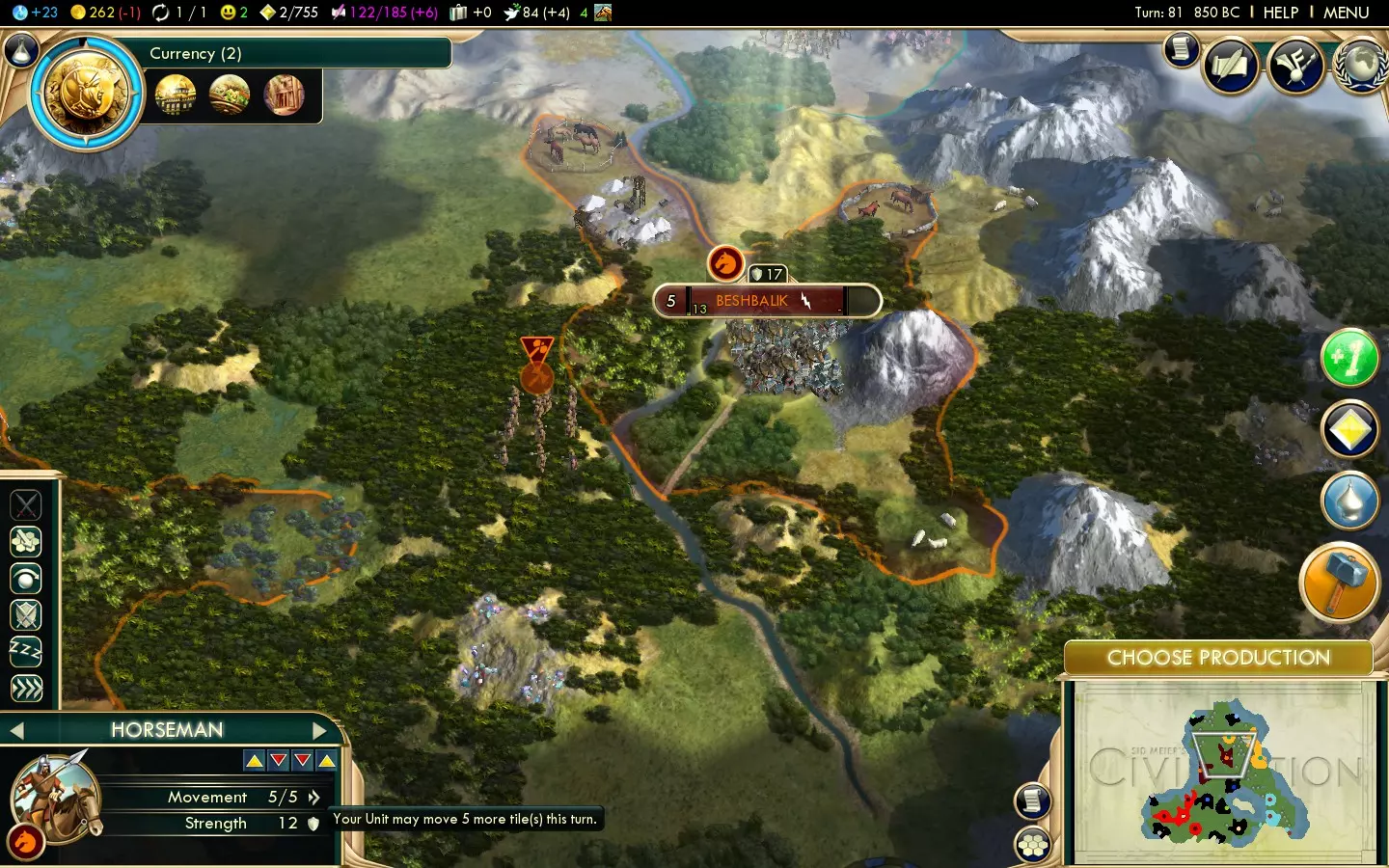
尽管蒙古文明的UA看似强大,但实际上比纸面上要弱一些。不过不用担心,怯薛(Keshik)足以弥补这一不足——在本指南的后续内容中你会明白原因。 蒙古文明的UA包含两个方面:所有近战骑兵单位+1移动力,以及对城邦及其单位造成30%的额外伤害。我们按顺序来介绍这两方面。 +1近战骑兵移动力:你的所有骑兵、枪骑兵和骑士,以及从城邦获得的任何近战骑兵UU,都拥有5点移动力而非4点。这一效果不影响战车射手,理论上也不影响怯薛(尽管怯薛本身就有5点移动力,而骑士只有4点)。 通常来说,额外的骑兵移动力主要用于支援怯薛的单位。如前一节所述,由于缺乏近战攻击能力,它们无法占领城市,这就是保留少量骑兵的用处所在。骑兵拥有更高的移动力,能更轻松地从怯薛身后的安全区域机动到城市进行攻击,且途中不会遭遇任何敌方单位。当枪骑兵出现后,你可以像使用骑兵一样运用它们,并且只需将骑兵升级为怯薛即可。 在平坦地形上,你可以用近战骑兵单位进行打带跑战术,不在城市射程范围内结束回合。你可以从三格外出发,移动两格,攻击后再撤出射程。不过,通常情况下,近战骑兵单位受到的城市攻击惩罚会使这种战术不太实用。UA这方面的一大问题是它对装甲单位无效,因此在游戏后期你会失去速度优势。独裁意识形态中的闪电战信条有助于让你重新获得机动性优势(并让可汗每回合拥有8点移动力,速度快得离谱),不过希望到那时,你在可汗时代的征服已经足以让你获得赢得游戏的势头。对城邦及其单位+30%战斗力
尽管30%的战斗加成效果显著,而且该加成对实际城市有效,而非仅对城邦单位生效,但这一优势可能要到游戏后期才能派上较多用场。在游戏早期与城邦交战会过早损害你的声誉,导致对手更有可能加强防御来阻止你;而在游戏中期,你需要专注于与其他完整文明作战。你无法摧毁所占领的城邦,因此除非它们拥有优质的自然奇观或大量奢侈品,否则或许值得避免占领它们。 不仅如此,如果你接连对至少两个城邦直接宣战,你在附近城邦的影响力将下降两倍,且你的影响力基准值会降低20。为避免这种情况,如果你确实打算攻占城邦,那就向其所属的完整文明盟友宣战。即便之后与该完整文明讲和,你仍可安全地继续与城邦的战争。 在游戏大部分阶段直接与城邦作战可能弊大于利,但获得对其单位的显著加成,对于对抗拥有众多城邦盟友的文明会很有用——你不需要那么多单位来防守自己的城市(如果结盟的城邦靠近你的领土),并且你的怯薛(Keshiks)可以更快地击溃敌方单位,减少在城邦单位上花费的时间。然而在游戏后期,攻击城邦或许正是你所需要的策略,它可以破坏其他文明的外交胜利企图,或是在新的土地上站稳脚跟,为接下来的火炮/轰炸机作战做好准备。你可以在城邦边境部署围城单位,宣战并迅速占领它,因为对城邦宣战不会将你的单位驱逐出其边境。 特殊伟人:可汗
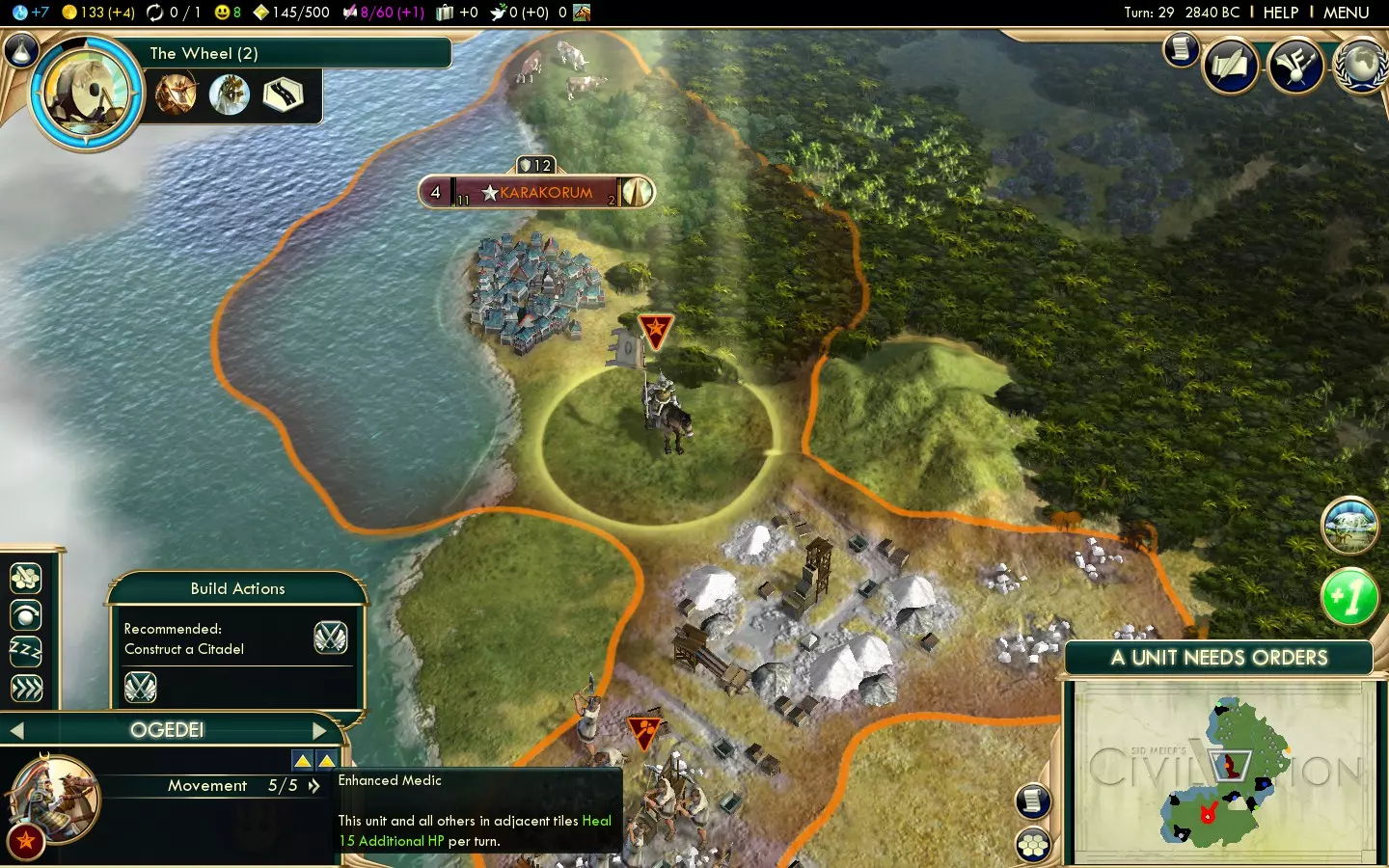
在我们深入了解怯薛的各种能力之前,先来看蒙古在好战方面的另一大显著优势——可汗。和中国类似,蒙古拥有更强大的伟大将军。不过,中国的伟大将军拥有更高的战斗加成,而蒙古的可汗则提供更广泛的实用功能:它们能帮助你的单位更快恢复生命值,并且凭借更高的移动速度,可汗能够跟上你那些高速的骑兵单位。 如果你在荣誉政策树中选择了战士准则社会政策,就能获得一名免费的可汗,并且生成可汗的速度也会加快。这在你开始使用怯薛作战时会非常有帮助,对早期游戏的防御也很有用。5点移动力 可汗拥有普通大将军两倍以上的移动力,使其速度与你的怯薛或近战骑兵单位相同。这不仅有助于更快地调动军队,还能让新生成的可汗更快抵达前线,甚至在常规大将军因速度太慢而无法安全行动的情况下,让你有机会冲到领土边缘建立堡垒。 每回合+15点生命值恢复 你的陆地单位在敌方领土 healing 时,默认每回合恢复10点生命值,在友方领土则为每回合20点。如果有可汗与该单位相邻,它们在敌方领土每回合可恢复25点生命值,在友方领土每回合可恢复35点生命值!此加成无法与医疗晋升叠加。
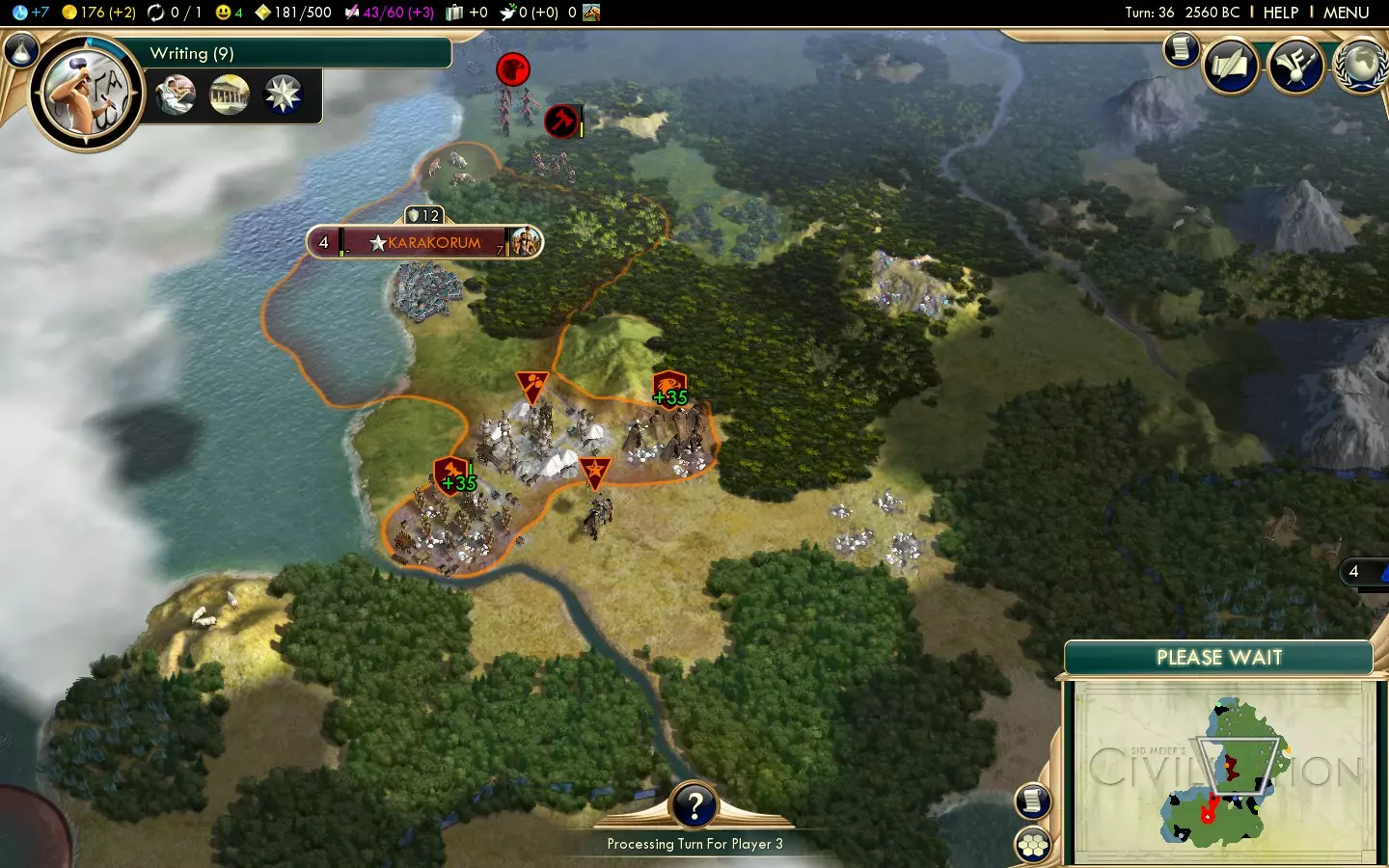
上文:可汗可以快速自愈,也能治疗相邻单位,但治疗加成不适用于与其共享同一格子的其他单位。要么让可汗与生命值已较高的单位堆叠,要么让他们远离敌人。 不过,这一能力存在一个主要限制。单位必须处于主动治疗状态(即不移动或不战斗)才能获得额外加成,或者拥有行军晋升。幸运的是,怯薛通过远程晋升,最早在第三次晋升时就能获得行军(常规骑士至少要第四次晋升),而且凭借其快速的经验值获取,你很快就能让他们达到这一阶段。 有趣的是,可汗还能提高空中单位的治疗速度。将可汗放置在满是飞行器的城市旁,你将在持久空战中获得相当大的优势。与怯薛类似,空中单位只需三次晋升就能获得相当于“行军”的效果(对它们而言是“空中维修”),这会让你的单位每回合恢复40点生命值!再加上“信仰医者”万神殿,效果会更加疯狂。 瑞典可汗及其他相关内容 任何文明都可以通过完成赞助政策树并至少与一个城邦结盟来获得可汗。这会奖励随机的伟人,其中包括两种独特伟人(因此任何文明也都能获得威尼斯商人)。 最能充分利用这一点的文明是那些在战争以及金币/影响力获取方面具有优势的文明。瑞典与可汗的协同效果尤为出色(其UA特性使维持同盟关系更加容易,芬兰轻骑兵与伟大将军有良好协同,而卡尔十二世近卫军则默认拥有行军晋升)。
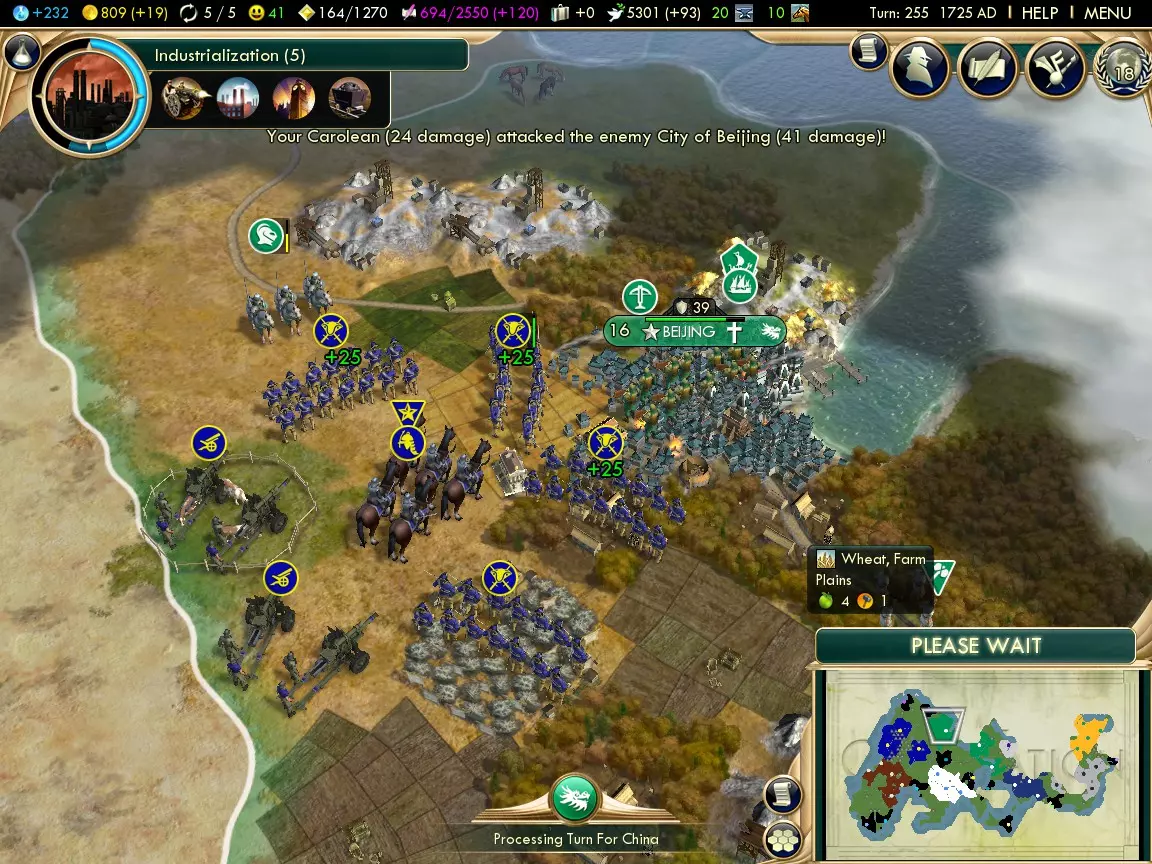
上图:取自本人的瑞典攻略。该部队基本无敌。 特色单位:怯薛(Keshik)
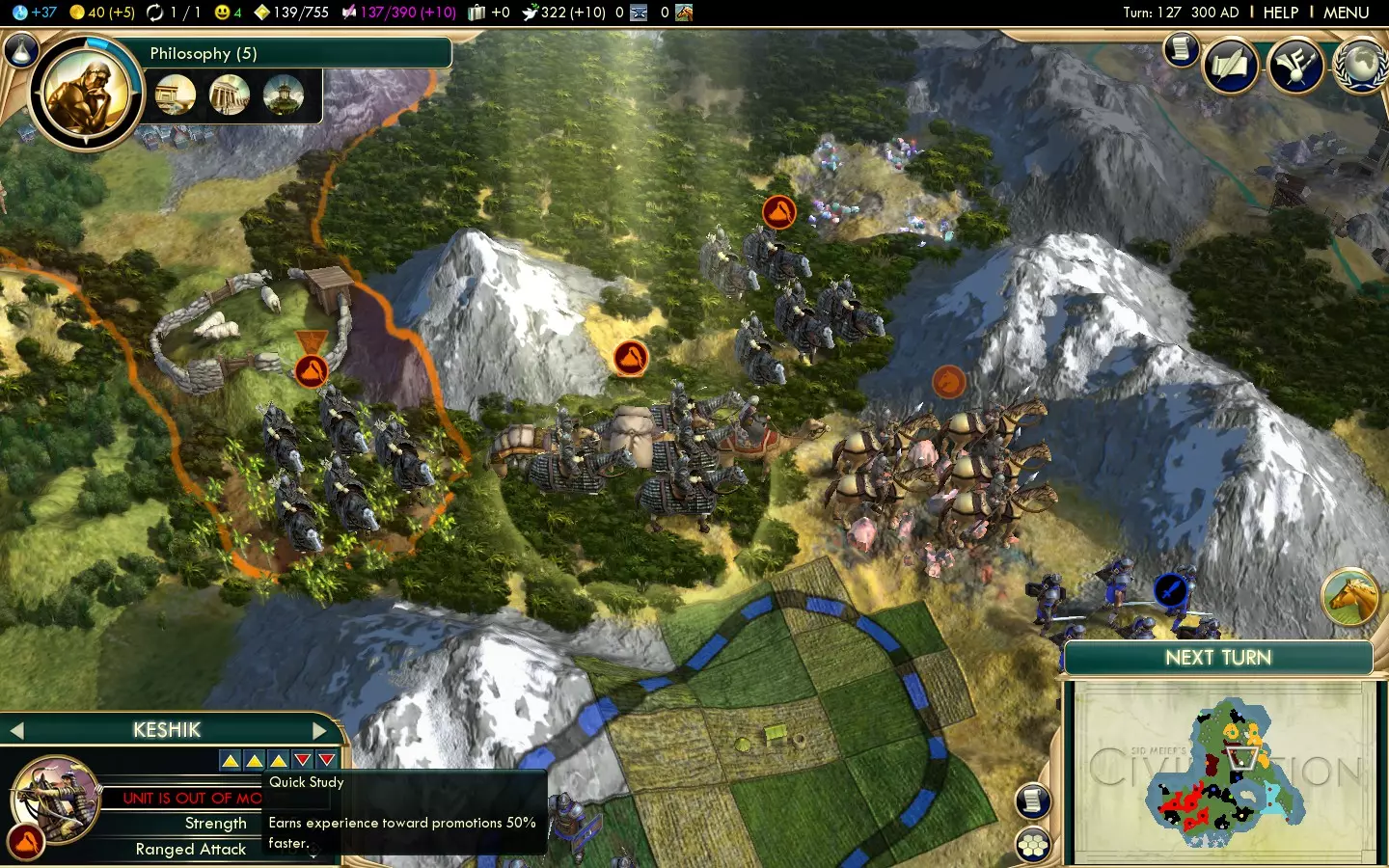
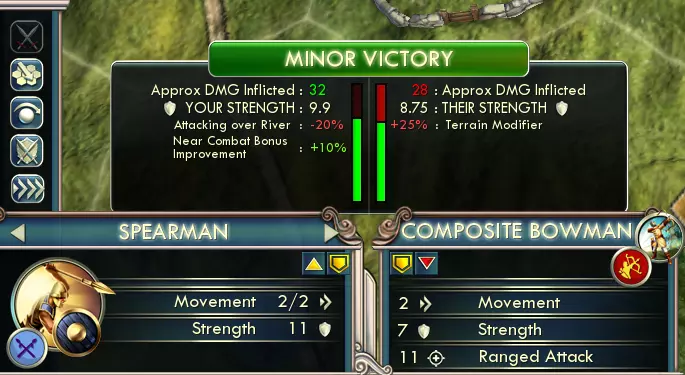
介绍 蒙古的文明特性相对较弱,但这一点被游戏中最致命的特色单位之一所弥补。尽早发起进攻(这就是我建议建造战车弓箭手、积攒资金,然后一旦研发出骑士制度就立即将其升级的原因),你就能为自己赢得巨大的优势,这种优势很难被逆转。 在详细介绍该单位的战斗情况之前,值得指出的是,由于该单位被归类为骑兵远程单位,会出现一些特殊情况。它使用远程单位的晋升路线,阿尔忒弥斯神庙会增加其生产速度,而非马厩。最重要的是,怯薛与骑士不同,它对反骑兵单位没有 vulnerability。这一下,祖鲁人可就惨了! 不要通过升级骑兵来获得怯薛(再次强调,要升级战车弓箭手)。除了大部分骑手能获得的晋升对怯薛(Keshiks)无效这一事实外,你还需要保留一些怯薛来对城市进行最后一击(因为怯薛无法占领城市,而其他单位速度较慢)。 游击战术 但这个独特单位(UU)的战斗力比骑士甚至弩手还低,为何如此致命?关键在于其攻击后仍能移动的能力。
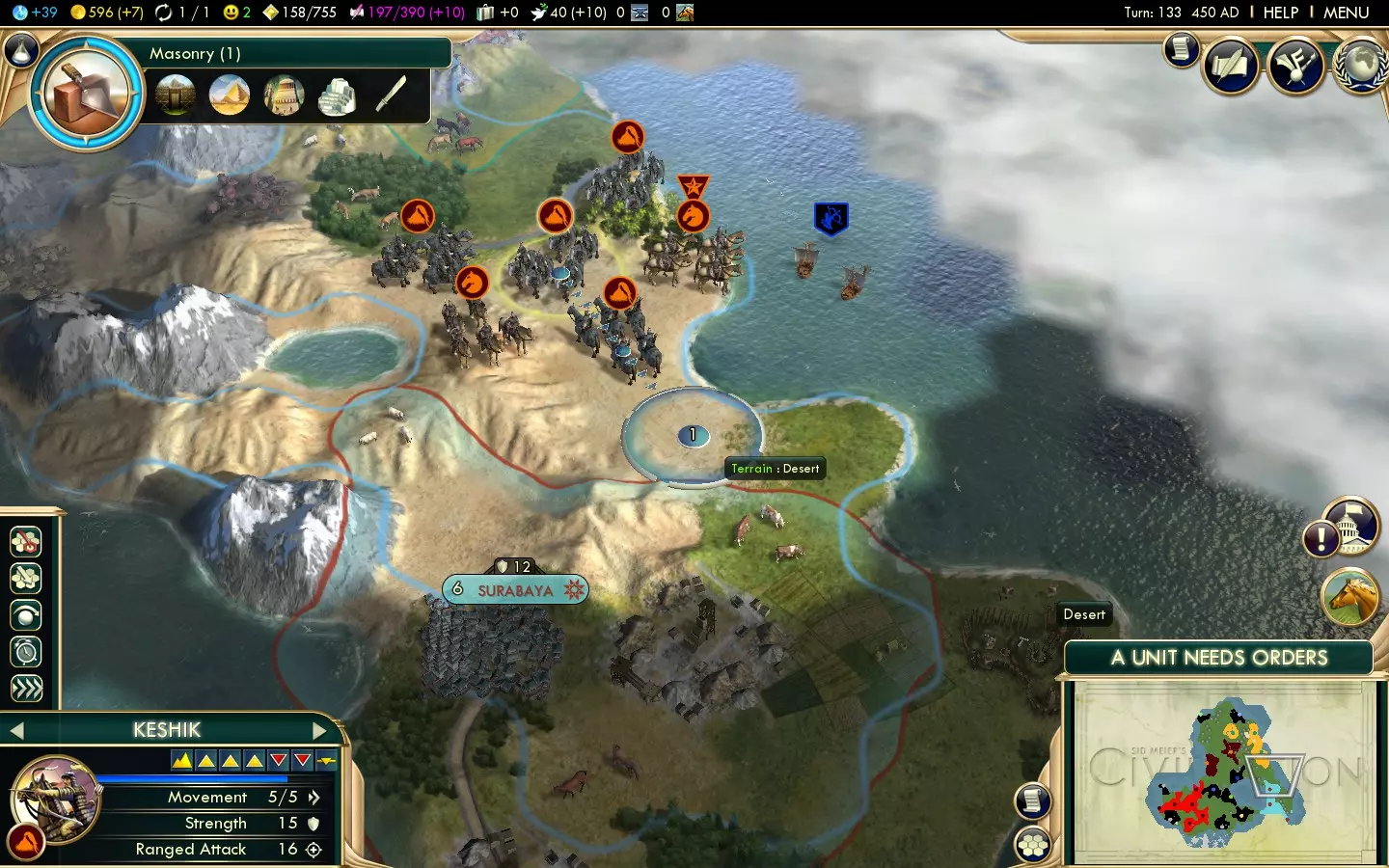
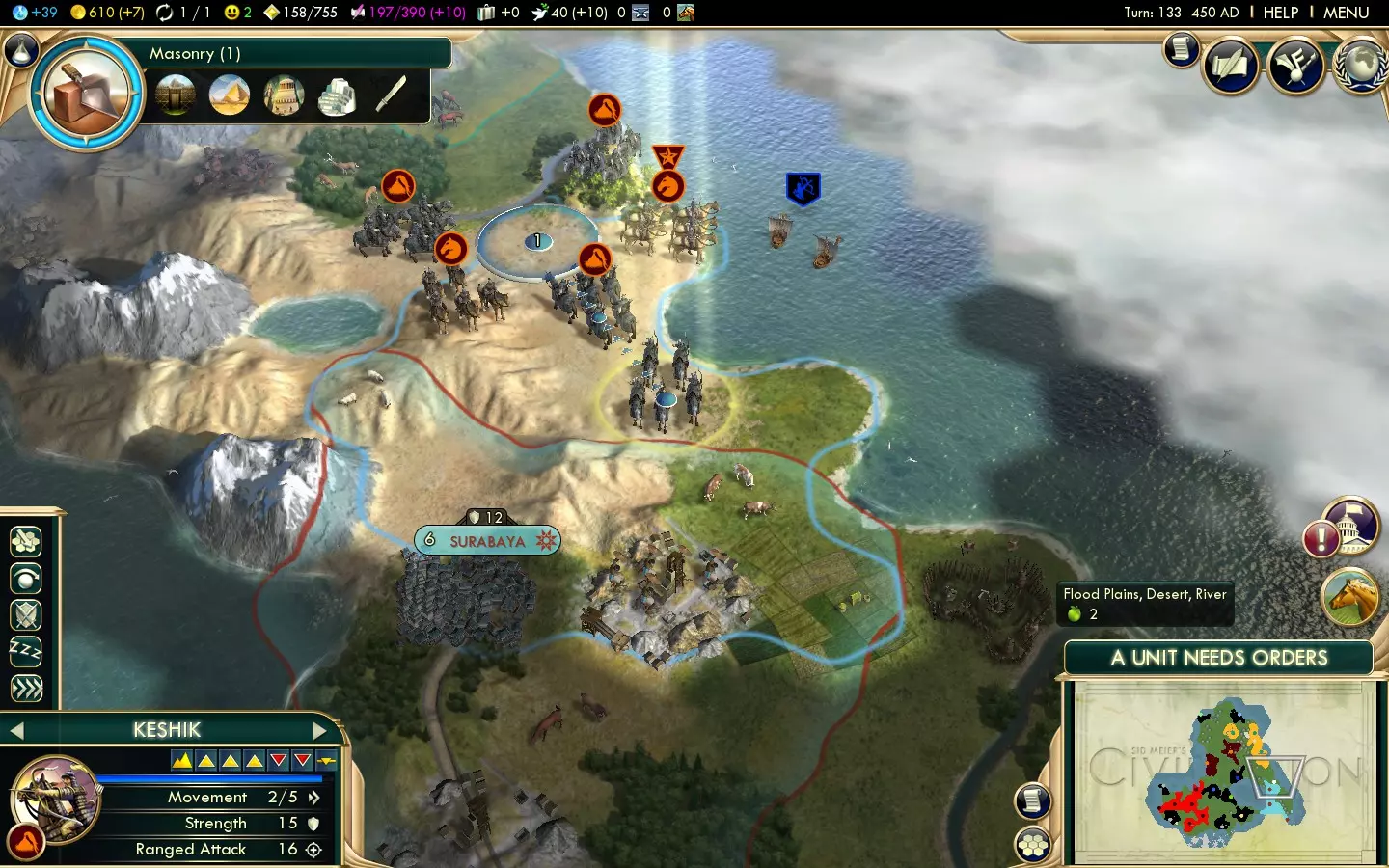
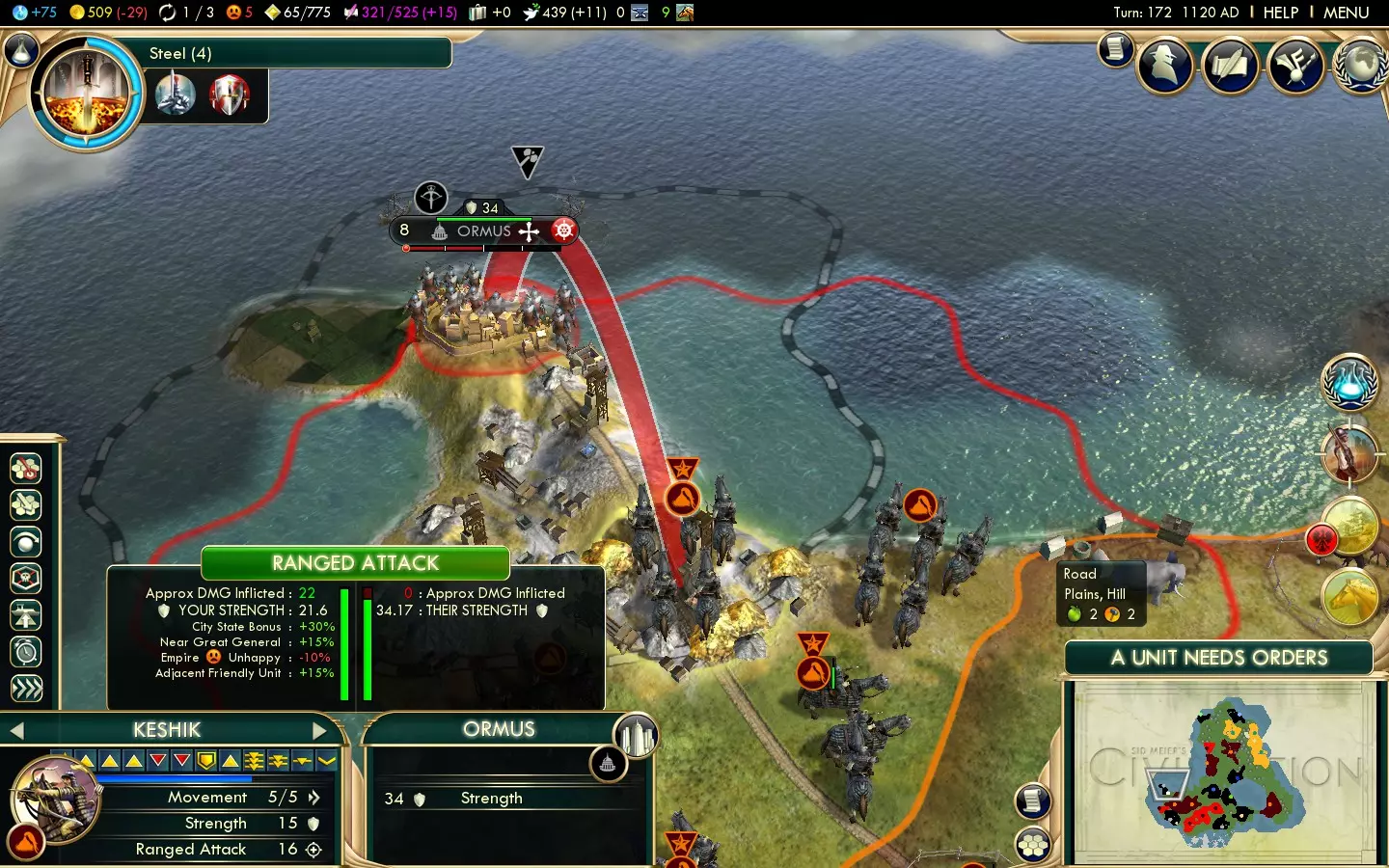
上方:进入战场,攻击城市东边的克里斯剑士,然后撤离。你可以对任何可攻击目标使用这种方法来避免自身受到攻击。 游击战术意味着你永远不应该让你的怯薛处于易受攻击的位置。为了防止敌方快速单位接近你,可以掠夺敌人的道路。高移动力应该能让你在进行掠夺时避免单位被消灭。如果能避免你的单位受到攻击,它们甚至在工业时代仍然有效(不过一旦出现飞机和火炮,它们就会被击溃)。与骑士相比,怯薛失去了对城市的常规战斗惩罚,但实际上这只会使怯薛对城市的作战能力提升20%,因为怯薛只有16点远程强度(而骑士有20点强度)。不过,对城市使用游击战术意味着在几个回合内,你对城市造成的伤害将远超过骑士20%以上。 蒙古军队不需要攻城单位或常规远程单位。你真正需要的是大量配备可汗的怯薛,以及一些骑兵,用于在城市防御被削弱后给予最后一击。你要充分利用怯薛,所以烧毁你占领的较弱城市,以防止不满情绪拖慢你的进度。 可汗协同效应 怯薛拥有5点移动力。可汗拥有5点移动力。蒙古骑兵及其他类似的近战骑兵单位同样拥有5点移动力。这使你能组建一支机动性极强的军队,但这并非怯薛与可汗协同的唯一方式。 大将军的生成基于经验值获取。怯薛不仅拥有经验值获取加成,还具备【大将军I】特性,该特性使获得的经验值对大将军进度条的贡献额外增加50%。这意味着一旦你发展起来,就能非常迅速地生成可汗。多余的可汗可用于将堡垒推进到敌方尤为棘手的区域。 如前一节所述,可汗的效果类似【医疗】晋升,因此怯薛只有在已处于治疗状态或拥有【行军】晋升时,才能获得额外治疗效果。三月的晋升对远程单位来说比近战单位更容易达成——你只需要【精准II】或【弹幕II】(近战单位需要【训练III】或【冲击III】),就能在战斗中快速恢复生命值。 晋升选择
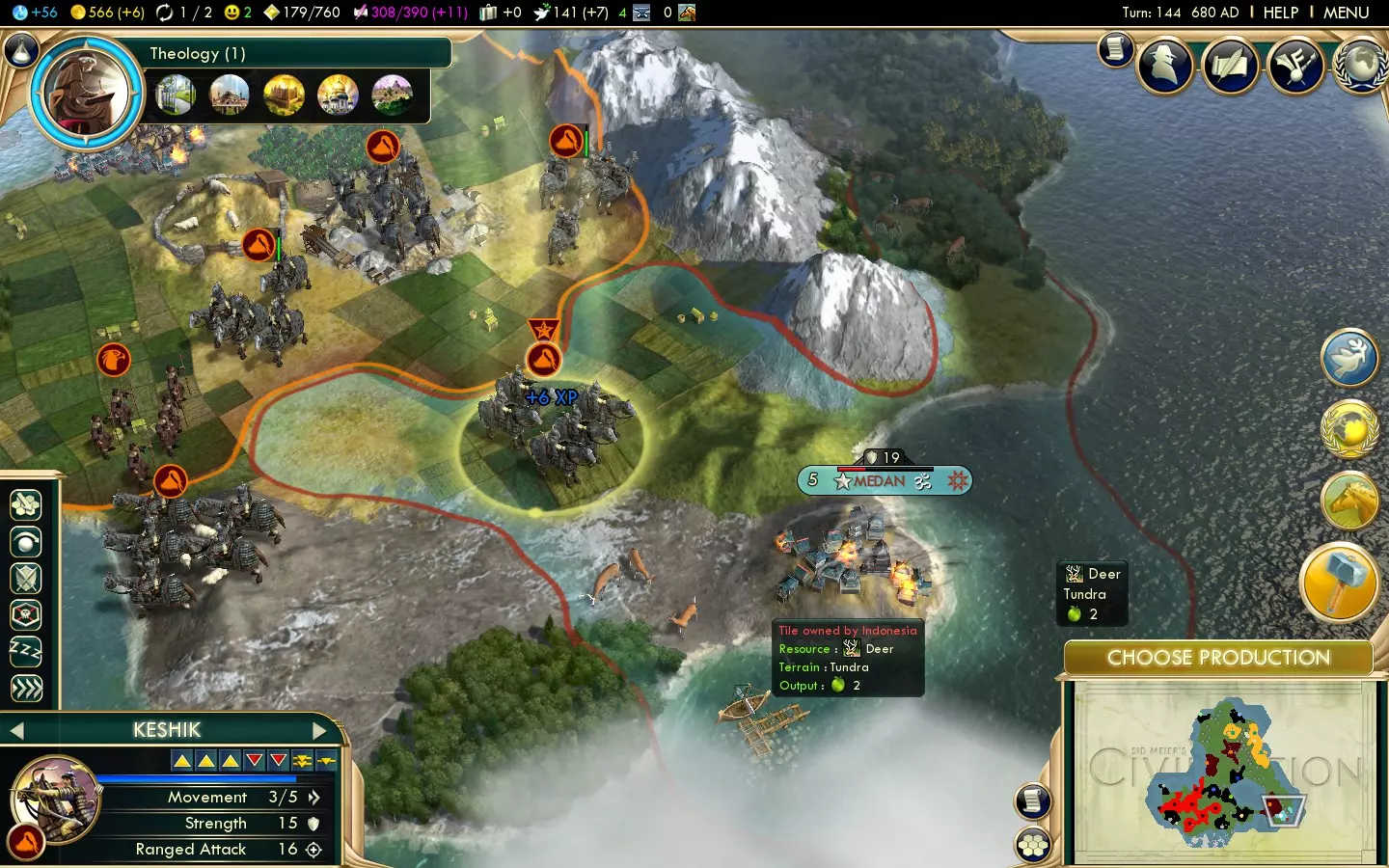
Above: Honour's Military Tradition and the extra-experience attribute of Keshiks stack nicely together to really eat up those promotions sooner. While the March promotion is easy to reach, rushing straight into getting it for all your Keshiks carries an opportunity cost. With high speed and use of hit-and-run attacks, Keshiks don't get hit often, hence the need for healing is relatively low. Rapid healing is still useful as Keshiks have a low amount of strength in defence for their era and get hit hard, but consider that getting March delays you getting Logistics or Range. Generally, work towards the Logistics promotion for all your Keshiks, and use March on units which either have Logistics already or are damaged. Logistics doubles damage output, doubles XP gain (hence doubles Khan generation) and works amazingly on a fast unit that can move after attacking. With 5 moves per turn, you can move in a tile to even rough terrain, fire twice and move out. The Range promotion is much less useful than Logistics as hit-and-run tactics fill the niche Range does (attacking without being attacked back) and it also requires use of a spotter, but you can just move your spotter unit in, fire, and move the spotter out again. The other route to go down is the two Cover promotions, but except in very rough terrain (or if you're fighting a range-heavy Civ like England) it's not that useful to have. Logistics, March and Range are all higher priority (though Range isn't if you're about to upgrade the Keshik.) Special promotions kept on upgrade +50% XP gain (Quick Study) 50% increased contribution to Great General generation (Great Generals I) Hit-and-run attacks with melee mounted units just aren't as effective as they are on ranged mounted units. To make things worse, many ranged promotions don't work on melee units (with the exception of Logistics.) Keshiks vs. Camel Archers Sooner or later some kind of comparison between the Mongolian Keshik and the Arabian Camel Archer had to be made. Both are Knight replacements that have a ranged attack and can use hit-and-run tactics. Both lack a penalty against cities and lack vulnerability to Pikemen. But here's the differences. Compared to the Keshik, the Camel Archer has... 13% more strength (17 vs 15) 31% more ranged strength (21 vs 16) 20% less movement (4 vs 5) 33% less XP gain (100% vs 150%) Reduced Great General point gain. Both the Quick Study and Great Generals I attributes contribute towards this. Economic backup from Arabia's UA and UB Slower backup units (Mongolia has 5-move Horsemen, Arabia's Horsemen move 4 points per turn) Less bonus against City-States (but this is cancelled out by Camel Archers' higher ranged strength) The lack of the Khan UGP (unless they've completed the Patronage Social Policy tree and got lucky) The lack of keep-on-upgrade advantages (Keshiks keep Quick Study and Great Generals I when upgraded) The experience gain and ranged strength are the main differences here. Camel Archers have a strong start, but Keshiks can get to Logistics much faster, doubling their damage output. So, at the start of a war, Camel Archers will have an advantage, but after a while Keshiks will have the upper hand. Eventually, when Camel Archers have Logistics, things could turn the other way, but Mongolia has the advantage of Khans. Which UU is best is a matter of personal preference, but Mongolia's uniques are better-equipped for war than Arabia's, but Arabia is more flexible in that they're a very strong diplomatic nation. Militaristic City-States Mongolia usually isn't in the business of allying City-States, but an exception occurs for militaristic City-States offering good unique units. Here's a selection of the best; prioritise alliances with those respective City-States if avaliable. Ancient Era Horse Archer (Lower priority) Starting with Accuracy I, the Horse Archer can get to March or Accuracy III just from attacking Barbarians, giving a slight advantage when you upgrade it into a Keshik and bring it into war. Lacking a horse requirement, it allows you to build up a bigger force ready for upgrading as you capture pastures. Classical Era African Forest Elephant (Medium priority) While slower than the regular Horseman, Forest Elephants have a little more strength, helping them to defend before rushing in to capture a city. Plus, the Feared Elephant penalty helps defend your Keshiks. Alternatively, you can upgrade an African Forest Elephant to a Keshik to stack Khan-generation bonuses. Most importantly, being an elephant UU, there's no horse requirement, freeing up more for Keshiks. Cataphract (Lower priority) Cataphracts make good substitutes to Horsemen as city takers. They may be a little slower, but they have as much strength in defence as Keshiks, on top of getting defensive bonuses. Companion Cavalry (Medium priority) Higher strength and more speed makes Companion Cavalry excellent city-takers. Medieval Era Camel Archer (Medium priority) Being a ranged mounted unit, Camel Archers don't gain an extra movement point from your UA, but they're still excellent units to use, and scary for opponents to face. Conquistador (Lower priority) With no city attack penalty, Conquistadors make nice alternatives to using Horsemen to capture cities with. High sight also helps to see units coming so you can stop them before they go after your Keshiks. Mandekalu Cavalry (Lower priority) Similar to Conquistadors, but without the sight, embarkment or settling abilities. Good for getting the last hit on cities, recovering quickly and moving on to the next. Naresuan's Elephant (Medium priority) Keshiks are arguably most vulnerable to other mounted units, as they can rush in fast enough to avoid being shot. Naresuan's Elephant ends that. In Mongolia's hands, Naresuan's Elephant is actually a straight upgrade to the Lancers of other Civs, as the point of less movement cancels out with your UA's extra movement. Plus, they don't require horses, leaving more for Keshiks. Renaissance Era Hakkapeliitta (Lower priority) The weakest of the three Lancer UUs, but still, a faster Lancer is a faster Lancer. Sipahi (Medium priority) If your Keshiks are having trouble taking out a city, or you want to cause a little havoc for the sake of it, a 6-move Sipahi can utterly tear apart their tile improvements like no tomorrow. Particularly good for dealing with roads. Winged Hussar (Higher priority) Now it's even faster, on top of its high strength and knockback abilities. Industrial Era Berber Cavalry (Lower priority) While the desert strength bonus will be highly situational for Mongolia, the bonus for defending your own land works nicely in defence while the rest of your army is off fighting elsewhere. Carolean (Medium priority) These have excellent synergy with Khans, healing rapidly every turn. Comanche Riders (Medium priority) A 6-move Cavalry is nice, but the main point is that the Comanche Riders' +1 movement carries over on upgrade, giving you Landships with 5 movement points and Tanks with 6 and hence a speed advantage your UA no longer provides you. Cossack (Lower priority) Higher speed makes it easier to target already-damaged units. Hussar (Medium priority) Super speed and enhanced flanking goes nicely together to quickly eliminate enemy units. Atomic Era Panzer (Lower priority) This is to make up for the lost speed advantage (as your UA doesn't increase the speed of armoured units.) Social Policies In the early-game, Liberty is a reliable option to help secure plenty of horse resources, but Honour is a possibility as well. After that, Commerce will be useful for gold and happiness, then Rationalism helps stop you falling behind tech-wise. Liberty If you're taking a hybrid Liberty/Honour approach, you can probably get the opener and two policies before switching to Honour to get Military Tradition. Opener All your cities can now expand their borders, saving you a bit of cash in buying tiles, or saving you having to build Monuments right away. If you're going down a hybrid Liberty/Honour route, head towards Meritocracy now. Otherwise, head to Collective Rule. Republic A small amount of production, helping new cities to get off the ground faster, hence helping you to get more happiness buildings to offset conquest, build new units or whatever you feel like. Collective Rule A free Settler and faster production of Settlers in the capital. While once Keshiks have got going, you may not build many cities, the saved production this policy offers gives you more time to build up infrastructure ready for churning out units. Citizenship Making Workers more efficent develops your cities faster, but importantly it also cuts down the amount of time to build routes to newly-captured cities and greater Worker efficency means you don't need as many of them as may otherwise be the case, saving you a bit of unit maintenance gold. Meritocracy Happiness is vital to warmongers, as it's the biggest thing that slows a war down. While the 5% reduced unhappiness from city population may not affect occupied cities, it does affect puppeted ones. Representation A free Golden Age helps to briefly support your finances, possibly for saving up gold to upgrade Keshiks. Finisher There's plenty of choice here. A Great Scientist will help prevent your science from falling behind other Civs, but a well-placed Manufactory from a Great Engineer helps churn out more units and a Great Merchant will help offset the costs of war. Honour Opener Attacking Barbarians for XP with Chariot Archers or Horsemen will give you a good head start going into wars later, and Honour's opener makes this whole process even easier by telling you where Barbarian encampments are. Warrior Code This gives you a free Khan, and you can generate them faster! The faster melee unit production isn't particularly useful, but the Khan certainly is. You can use it to heal up your units much faster when fighting off Barbarians, and starting your Keshik attack with a Khan gets you off to a good start. Military Tradition Normally, when range units attack other units, they get 2XP. Keshiks get 3XP a time thanks to their Quick Study attribute, and now it's 4. Against cities, your Keshiks will gain 6XP a time. In addition, as Great General generation is based off experience gain, you can generate Khans even faster. Discipline Limited in use as your main emphasis is ranged attacks, though a 15% bonus could still come in handy in the late-game. Military Caste Happiness is the biggest barrier to continuing conquests, so any way of gaining more is desirable. Plus, it's a source of culture (something usually scarce in warmongering Civs.) Professional Army If you're sticking to solely Honour for your first Social Policy tree, then you should be able to get this policy ready in time for Keshiks. If you've been saving up some cash, you can upgrade Chariot Archers/Horsemen to Keshiks and take them to war almost immediately.
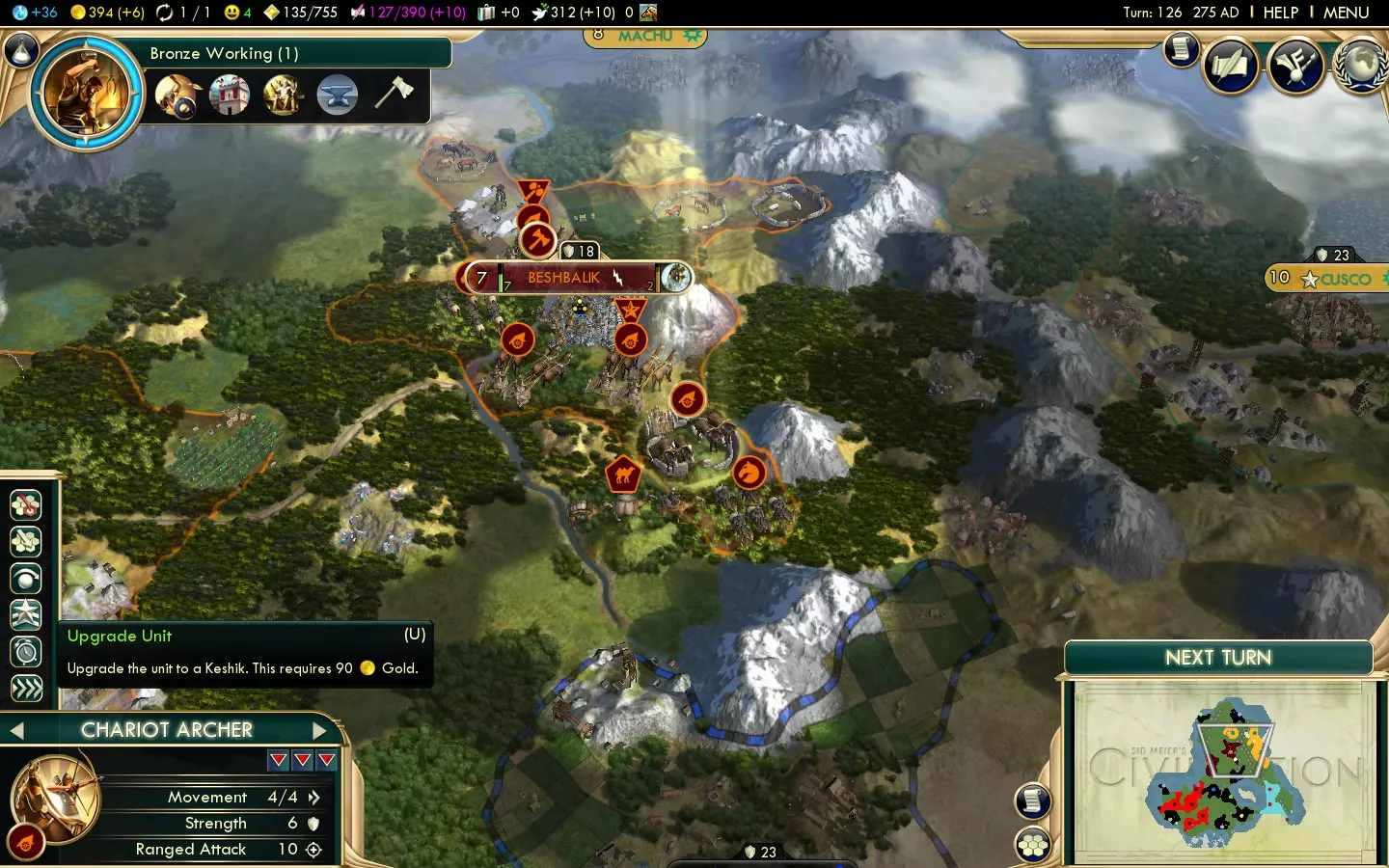
Above: 90 gold in a normal speed game is no great expense if you've been saving up some cash. Finisher Besides happiness, the other barrier to warmongering is gold. With large armies and freshly-conquered cities comes high maintenance costs, so getting gold as you kill will stop you getting into debt, ruining your tech rate and leading to units being disbanded. Commerce Opener As said with the Honour finisher, gold is a significant barrier to war, and getting a 25% bonus to gold in the capital will help offset that. Slightly. Wagon Trains Mongolia is a land-based Civ, hence many of your International Trade Routes will be by land, letting you get quite a lot out of this policy already. But add on the halved road/railroad maintenance, and you've got a tremendous economic boost which really helps out with your wars. Mercenary Army With the bulk of your army off fighting elsewhere, your homelands may be vulnerable to attack. Cheap Landsknechts will do well at dealing with that problem. Later in the lifespan of Keshiks, using Lancers where you previously used Horsemen is a good idea, and it's worth pointing out that buying Landsknechts and upgrading them to Lancers is cheaper than buying Lancers directly. So, you can really make that last hit on a city count. Mercantilism Buying units and buildings is cheaper now (so Landsknechts are exceptionally cheap) while gold buildings now generate a little science, so building them helps address two problems in one. Entrepreneurship You can turn a good-sized city into a Great Merchant farm (your capital is a good choice due to the opener's gold bonus,) which will be handy for getting even more cash to support conquests. Don't be afraid to run Trade Missions - just because you have a bonus against City-States doesn't mean you can't have a few friendly with you. Protectionism Original capitals can't be razed and have two types of luxuries nearby, meaning even if you burn everything you can, you'll still have a decent diversity of luxury resources. Protectionism gives you more happiness out of them. Finisher Trading Posts are quite a bit more effective now. Put some near your Great Merchant city and let the cash roll in. Rationalism Opener Keshiks won't last forever, and as such you need to keep ahead with technology. The opener immediately offers a 10% science bonus, so long as your empire's happy. Protectionism from the Commerce tree should make that easier. Humanism Once your finances are in order, you can place emphasis upon Great Scientist generation and help keep ahead tech-wise. Or mix Great Scientists and Great Merchants. Either way, you can generate these valuable Great People faster. Free Thought Commerce's finisher adds an extra point of gold to Trading Posts. Free Thought adds a point of science, too. So, if you've been building plenty to help get the gold going, you can really gain here. Plus, Universities are more effective. Overall, an excellent policy for upping science gain. Secularism While, chances are, you won't have loads of specialists, science is science. Sovereignty Lower science building maintenance makes having a good science infrastructure cheap, leaving more gold for unit maintenance. Scientific Revolution You won't get much use out of this due to all the warmongering you've been up to, but it's needed on the way to the finisher. Finisher A free technology and the ability to faith-purchase Great Scientists! If you're lagging behind a little tech-wise, this is a great opportunity to close that gap. Ideology Autocracy is the best fit for Mongolia thanks to the Lightning Warfare tenet, giving you back the speed advantage you've lost from mounted units going obsolete. Alternatively, consider Order for its strong infrastructural advantages. As usual, I'll be covering the best options from the first inverted pyramid of tenets, so that's three from level one, two from level two and one from level three. Level One Tenets - Autocracy Industrial Espionage Stealing technologies from other players is a good way to keep your science up. This tenet doubles the rate of tech stealing allowing you to concentrate on the military-focused bottom half of the tech tree while stealing technologies from the rest of it. Elite Forces Armoured units even with Khans may have to fight injured (particularly with the Blitz promotion.) This tenet makes that less of a problem. Fortified Borders An easy, maintenance-free way of gaining more happiness late in the game. Level Two Tenets - Autocracy Lightning Warfare Your ex-Keshiks get their speed back, a strong bonus to attack and the ability to ignore Zone of Control. Remember that melee units gain XP faster than ranged units, so even though most of the promotions you took now lack relevance, you can use Quick Study to get new ones relatively quickly. Additionally, your Khans are now the fastest things on land. They're still affected by Zone of Control, though, so use their insane speed to keep them safe. Third Alternative Tanks and planes need oil, and that's something you may be running low on. Get this policy before Lightning Warfare if you're particularly low on the stuff. Level Three Tenet - Autocracy Clausewitz's Legacy You've got 50 turns with a significant attack bonus. If you're fast, you can conquer the rest of the world in those 50 turns. If you're not quite ready when the tenet's first avaliable, take something like a Social Policy or level 1 tenet instead, and come back when you're prepared, as you'll want to get as much out of this as possible. Level One Tenets - Order Socialist Realism This is an incredibly easy source of happiness that you'll need for those late-game conquests. Young Pioneers A fairly easy additional happiness source. You should be building plenty of production buildings anyway, so it's no great effort to use this effectively. Universal Healthcare or Skyscrapers The former's better if you desperately need more happiness or have a low number of non-puppeted cities. The latter's better if you want to quickly set up bases on new continents - you can cheaply buy an Airport and start airlifting units in. Level Two Tenets - Order Workers' Faculties Factories are cheaper, and also give science. Science and production are two of the most important things for warmongers, and a tenet that can help with both is very welcome. Five-Year Plan Even more production. Well, after all, you can't rely on upgraded former-Keshiks alone. Level Three Tenet - Order Iron Curtain Annexing new cities no longer has an extra unhappiness penalty, making it much easier to support more cities contributing towards the war effort. Don't just annex everything, though - just stick to the most strategically important cities, or those with the strongest infrastructure. You can puppet or burn the rest. Additionally, internal trade routes now are 50% more effective. This provides a good incentive to stop international trading and use the high production from internal trading to build up a strong gold infrastructure instead. It might not bring in as much money as international trading, but it's much more consistent, letting you freely declare war without worrying about having your finances destroyed by trade route pillaging. Religion Mongolia can do perfectly fine without a religion of their own, but if you found one, there's a few decent choices that can really help you out. Highly-situational beliefs, including most faith Pantheons, are not listed here, but it's nonetheless a good idea to pick up an appropriate faith-giving Pantheon to increase your odds of getting a full religion. Pantheon Faith Healers Combined with Khans, you can heal up units incredibly quickly, which is excellent for rapidly recovering after a city conquest. But it's this Pantheon's interaction with air units that makes it particularly powerful. Combined with a Khan and Air Repair (which isn't that hard to get) you could have air units healing 70 HP every single turn! Messenger of the Gods More science gets you to Keshiks sooner. God of the Open Sky The need for horses means you're almost certainly going to be working some pasture tiles. This Pantheon belief lets you get culture out of them, helping to get through Social Policies sooner. Religious Settlements If you're not placing your cities right next to horses, they're going to need to expand their borders to get there. While you could buy the tiles, that uses precious gold you'll need for upgrading units to Keshiks. Here's an alternative. Founder Tithe Gold will be highly important for unit maintenance, upgrading your units or buying new ones. As your religion is unlikely to dominate, Tithe is a better choice than Church Property; not needing to be a majority religion in any city. Church Property A backup if you can't manage Tithe but want a constant source of money. Follower Pagodas A maintenance-free source of lots of happiness, though it's highly competed-over. Still, being a follower belief, if someone else gets it, you can always let their religion spread to one of your cities. Mosques An alternative to Pagodas. Providing more faith, it cuts the time between buying a faith building and buying the next one, so in the long-run it can provide more happiness than may be immediately obvious. Asceticism Shrines are easy to build, and three followers in a city isn't hard to reach either, so you can take advantage of the happiness offered here. Cathedrals A backup for Pagodas or Mosques. Has only 1 faith, happiness and culture but has a Great Art slot, (which is fairly useless as Mongolia.) Still, happiness is very useful, especially considering this is maintenance-free and requires neither production nor gold. Guruship While the only specialists you're likely to have around the time of Chivalry are Merchants, getting 2 gold and 2 production out of a single specialist isn't a bad deal. Enhancer Religious Texts This helps to keep your core cities following your own religion without having to spend faith on Missionaries, Inquisitors and/or Prophets. Itinerant Preachers Similar to Religious Texts, it helps your religion stay strong without needing to spend faith. Works particularly well with Tithe. World Congress Even Mongolia will benefit from some City-State alliances, as Keshik warmongering will eventually drive the rest of the world against you, and you don't exactly want to be embargoed, or for all your luxuries to be banned. Still, if you're already infamous, you can use your 30% bonus against City-States to crush any siding with players trying to make life harder for you. Remember, declaring war directly on at least two City-States in a short space of time will cause faster influence decay and a lower influence resting point in nearby ones. As stated before in the UA section, make sure your wars with City-States are initiated by declaring war with their ally to avoid this problem. Note that "priority" in this section refers to how high a priority it is to vote on each decision, not how high a priority it is to put the vote forward. Arts Funding Medium priority Vote no Cultural Heritage Sites Low priority Vote no unless you captured a lot of wonders earlier Embargo City-States Medium-High priority Vote no Despite being capable of butchering City-States, you'll need to keep some alive for trading, as trading with other Civs becomes too risky when they're looking for a reason to declare war on you. Historical Landmarks Low priority Vote no International Games High priority Vote no International Space Station Medium-High priority Vote no Natural Heritage Sites Low priority Vote no Nuclear Non-Proliferation High priority Vote yes if you have plenty of nuclear weapons, you lack uranium and other players have them or you're the only player with nuclear weapons. Vote no otherwise. Sciences Funding Medium priority Vote yes Standing Army Tax Very High priority Vote no World's Fair Low priority Vote no Wonders Mongolia's more about capturing wonders than building them, though you may be able to squeeze in one or two before Keshiks come along. Ancient Era Pyramids (Liberty Only) Fast Worker speed and two free Workers makes developing your cities fast, which means they can all contribute to the war effort. Statue of Zeus (Honour Only) Keshiks are deadly enough against cities, but why not make that even better? The Statue of Zeus puts their damage output against cities above that of an unboosted Crossbowman. Temple of Artemis The main point here is the 15% bonus to ranged unit production - which works on Chariot Archers and Keshiks. If you think the loss of some early production isn't worth the saving later, then there's the handy 10% food bonus as well to aid with early infrastructure. Classical Era Great Wall If you have this wonder, no-one else does and no-one can use it against you. However, it's a bit off your main tech path, which makes things complicated. Either take the player that builds it out quickly (as the speed disadvantage is less of a problem when the enemy has classical or medieval-era units) or leave them until they've researched Dynamite if you can't build it yourself. Medieval Era Alhambra While it's useless for your Keshiks, the Alhambra will be useful for building new units later in the game. It's a wonder to capture rather than build. Machu Picchu More gold means you can support more units. Notre Dame A lovely wonder to capture, as it'll usually cancel out the unhappiness of catching its city, giving you a good city for use as a military base. Renaissance Era Himeji Castle When your Keshiks are generating loads of Khans, you need a use for them all. Driving Citadels into enemy land is the best (or, rather, only) way of dealing with excess Khans (unless you're in a team game,) and the Himeji Castle helps to keep your Keshiks safe when occupying that land, as well as boosting their damage (as the Himeji Castle's bonus is based on where your units are located, not who they're targeting.) Industrial Era Big Ben (Commerce Only) By now, money problems from having lots of units will probably be dealt with, giving you more cash for purchasing units and buildings. Big Ben makes that money go further. Brandenburg Gate Particularly good in the Alhambra city, but decent otherwise, together with a Military Academy new units in the city will start with three promotions of your choice. That could mean Artillery one promotion away from Logistics... Modern Era Kremlin Most promotions Keshiks can get aren't useful when you upgrade them into Cavalry and beyond. Coupled with the high cost of getting future promotions, it's sometimes worth disbanding some of the less-powerful Keshiks or ex-Keshiks and building a new set of units to replace them. The Kremlin can help there. Neuschwanstein Together with Fortified Borders, Castles give you 2 happiness for essentially negative maintenance, with culture as well. Great for supporting late-game wars. Prora (Autocracy Only) Happiness! And even more late-game war support therefore. Atomic Era Pentagon Mongolia's likely to do plenty of upgrading due to a significant chunk of the army being former Keshiks. The Pentagon reduces the cost of that and hence reduces the time to modernise, atomicise and informationise your army. Pitfalls to Avoid Mongolia is not invincible. With a lot leaning on a resource-dependent UU and a lack of economic support in your uniques, you've got to play carefully. Here's a list of mistakes it's best not to make. Researching Animal Husbandry late Unless your starting location is absolutely full of forests and/or jungles, researching Animal Husbandry right away is a good idea. You need to know where those horses are so you can settle there, and if you research the technology late, other Civs might take those vital spots. Conquering lots of City-States Here are some reasons for conquering City-States. There may seem like quite a few, they're rather situational. The city spot is excellent and taking it justifies the attack It has horses and you don't, and there's no spots nearby with them It has an important late-game resource that you lack despite your Keshik conquests As a launchpad for attacking a full Civ next door to it To prevent other Civs using it as a launchpad against you To deny Austria or Venice from buying the City-State Denying a Civ World Congress delegates The following are not good reasons: To get horses (or any other resource) despite the fact you could easily settle near some more It gives you more score (gaining score shouldn't be a priority) You've conquered a few City-States already, and might as well carry on (this will just slow down your more meaningful conquests) And these are situations that should make you think twice about conquering City-States, even with a good reason: You've not angered anyone yet, or no-one knows of your warmongering past (if you've conquered your home continent before meeting Civs on other continents) Your happiness is low Your gold is low and the city's radius lacks gold tiles It'd use units that you need for fighting a war against a full Civ Conquering City-States is really a bit of a last resort. Generally, the 30% bonus against City-States is to stop them being a problem when attacking full Civs with lots of City-State allies. Actually conquering them will just give you an unrazable city with plenty of unhappiness unless you have a good reason to do so. In a similar point... Directly declaring war on two or more City-States in quick succession Doing this will lower the influence resting point and increase the influence decay rate of a number of City-States nearby. This is a problem if you intend to ally a militaristic City-State for a good UU or if you're simply aiming to have a presence in the World Congress. To avoid this situation, declare war on the Civ that the City-States are allied to. Not building Horsemen, or upgrading them all to Keshiks Prior to Lancers, Horsemen are the only mounted melee units Mongolia can build. With 5 moves, they can, even over rough terrain, run in and take a city after your Keshiks have battered down its defences. Make sure you have at least one (preferably 2 or more) with your Keshiks. Of course, once Lancers are avaliable, you don't need Horsemen any more and can upgrade them, but until then, keep your Horseman safe. Building lots of support units for Keshiks All you need are Keshiks, a Horseman or two and your Khans to bring down cities. You do not need to spend ages building Catapults, or Trebuchets, or bringing lots of Longswordsmen. Even Knights, the main counter to Keshiks, can be dealt with with a focused hit-and-run attack by the Keshiks themselves. Ending a Keshik's turn within two tiles of a city Keshiks are weak in defence, and can be picked apart very quickly when near a city. Always use hit-and-run attacks to keep out of the range of cities and ranged units. An exception is cities surrounded by rough terrain where it's impossible to hit it without getting close - in which case, be sure your Keshiks have an escape route in case they get hit. Keeping bad city conquests Nothing slows conquests down more than unhappiness. To help deal with that, burn down the cities you don't need. True, it initially creates more unhappiness than puppeting the city, but once it's utterly destroyed, you'll have all the happiness back you lost from capturing it. Upgrading Keshiks as soon as possible Despite the fact Cavalry have over double the strength of Keshiks, in the early industrial era, hit-and-run attacks can still be effective. Hold off upgrading them until enemy planes, Artillery or more than just the odd Cavalry unit are around. Terrify Temujin: The Counter-Strategies Mongolia's main threat is from their Keshik UU, though they can seriously ruin your day if you're playing diplomatically with a strong bonus against City-States. Playing against the UA: Mongol Terror +1 mounted melee movement The +1 mounted melee movement is a relatively small problem when you're under attack, as roads give you a speed advantage. Of course, problems can arrive if they start pillaging those roads. To minimise that issue, favour building roads through rough terrain so moving out and pillaging them would leave them vulnerable. That's the case for road building generally - if you have a choice between an open-terrain tile and a rough-terrain tile for the same length of road, the latter is usually better to build a road in. +30% vs City-States For the diplomatic players among us, this is problematic. For the warmongers, it's amazing. Mongolia's incentive to conquer City-States gives you a great opportunity if you're invading their empire yourself as you can liberate the City-State, gaining masses of influence, weakening Mongolia, improving your relations with other Civs and do all that without giving you the unhappiness you'd usually get from capturing a city. That "improving relations" point is particularly good. While it doesn't really mean a lot in multiplayer, against computer opponents, liberating cities offsets the anger at you for being a warmonger. But what about people who don't want to fight? Well, the first thing to do is avoid investing in a City-State right next door to Mongolia. Instead, favour those far away, especially ones which are hard to attack by land; Mongolia is likely to have a small navy due to the mounted unit emphasis. If they're deliberately attacking your allied City-States, then it'll turn other Civs against them; you hopefully can then bribe another Civ into attacking Mongolia. Just be warned that there's no guarentee that Civ will liberate the Mongolian-captured City-States. Playing against Keshiks For all the damage Keshiks can do with hit-and-run attacks, they're highly vulnerable in defence. Don't send Pikemen against them - the 50% bonus against mounted units doesn't work on Keshiks and their slow speed will get them killed before they can reach the Keshiks - but instead use hit-and-run attacks with Knights, or even Horsemen if you don't have Knights. Keshik hordes can easily focus fire on a single unit at a time, so get a few Knights or Horsemen ready before they come, which will help overwhelm them. Another way of dealing with Keshiks is to pick off Mongolia's melee units, such as their Horsemen, as Keshiks can't capture cities. Typically, they'll use Horsemen, which are much weaker than Keshiks and can be picked off by just about anything. If they use anything else, it'll be slow and easily picked off by ranged units or your cities' ranged attacks. Playing against Khans Khans are Great Generals with lots of mobility and the ability to make a healing unit heal up more rapidly. Like normal Great Generals, moving a military unit onto their tile when you're at war with Mongolia will destroy the Khan, but their high mobility makes killing them a tough task. If you can't kill them, then you might as well weaken their abilities. When attacking a Mongolian army, try to attack one unit at a time and attempt to destroy units before they have a chance to heal up. Prioritise attacking units you know have the March promotion. To prevent Citadel spam (which Keshiks' fast Khan generation combined with Khans' high speed makes easy for Mongolia) place a fast or high-sight unit between your lands and Mongolia's so you can see a new Khan coming (it's a good idea in peacetime anyway so you can see Keshiks coming, giving you time to prepare.) When you're at war with Mongolia, they may leave the Khan unescorted, using the high speed to try and evade interception. Good unit placement helps to stop this happening. Strategy by Style Early-game Aggressors - If you want to attack Mongolia early on, be prepared to face Chariot Archers and Horsemen. Bringing some mounted units of your own will help out. Mid-game Warmongers - Invading Mongolia while their army is off in someone else's lands may be fairly effective, but Keshiks' high mobility means they can quickly bring that army back home again. Be sure to bring some Knights along with you. Late-game Warmongers - By now, Mongolia may have conquered the odd City-State, and it's very worthwhile to liberate them. They're weakest in the late industrial to early modern eras, when Keshiks are obselete and they're recovering from warmongering unhappiness. Cultural and Scientific Players - Take a detour to Chivalry on your tech route for Knights to help defend against Keshiks. Diplomatic Players - Avoid spending money on City-States near Mongolia. If you can manage it, try to liberate those Mongolia captures, giving you a strong alliance for quite some time. If you can't, then use the World Congress to get Mongolia embargoed, or peel apart their happiness by banning their luxuries. Other Guides If you like these guides and want to send a tip, you can click here![ko-fi.com] Meta-guides These guides cover every Civ in the game and can be used as quick reference guides. Civ summaries (Gives a brief overview of how each Civ plays) Civ-specific tricks, secrets and clarifications (Compiles the lesser-known features of each Civ) Civ-specific guides, in alphabetical order All 43 Civs are covered in in-depth guides linked below. In brackets are the favoured victory routes of each Civ. America (Domination) Arabia (Diplomatic/Domination) Assyria (Cultural, Domination and Scientific) Austria (Cultural, Domination and Scientific) Aztecs (Domination/Scientific) Babylon (Scientific) Brazil (Cultural) Byzantium (Cultural/Domination) Carthage (Diplomatic/Domination) Celts (Cultural) China (Domination) Denmark (Domination) Egypt (Cultural) England (Domination) Ethiopia (Cultural/Scientific) France (Cultural) Germany (Diplomatic/Domination) Greece (Diplomatic/Domination) Huns (Domination) Inca (Scientific) India (Cultural/Scientific) Indonesia (Diplomatic/Domination) Iroquois (Domination/Scientific) Japan (Domination) Korea (Scientific) Mayans (Scientific) Mongolia (Domination) Morocco (Diplomatic) Netherlands (Diplomatic, Domination and Scientific) Ottomans (Domination) Persia (Diplomatic/Domination) Poland (Domination) Polynesia (Cultural) Portugal (Diplomatic) Rome (Domination) Russia (Domination) Shoshone (Domination/Scientific) Siam (Diplomatic/Scientific) Songhai (Domination) Spain (Cultural/Domination) Sweden (Diplomatic/Domination) Venice (Diplomatic) Zulus (Domination)