
 换一换
换一换 


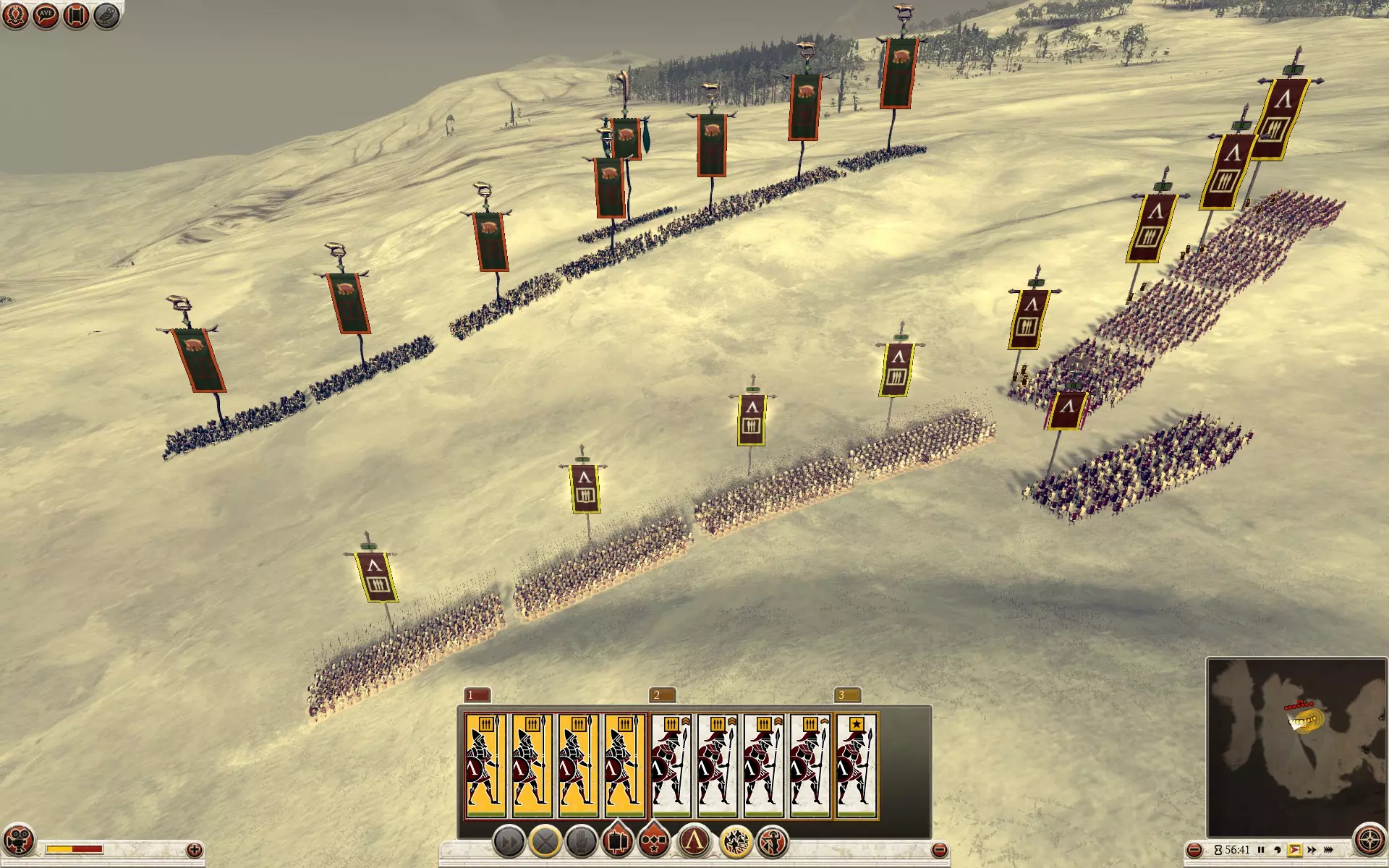
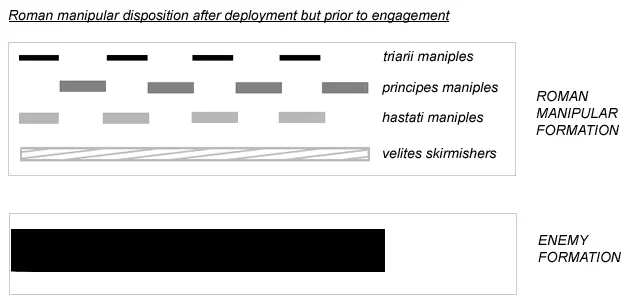
A simple guide to creating a true-to-life Republican Era Roman Legion (and some historical background information) in Total War: Rome II. Introduction Chances are if you're playing Total War: Rome II you're probably somewhat interested in the history of the Roman Empire or have a general liking of the subject. If so, then like me you've probably wondered how you can create the most historically accurate virtual representation of the Roman military within the confines of the game. The following guide will show you how to put together a Roman legion of the Republican era the best way possible in Rome II. Included also is some historical side notes and some basic tips for how to command your army on the field of battle. Before we start, please note that the limitations of unit size and army size do not allow a perfect transition but it certainly serves as an appropriate representation nonetheless. A Brief History Lesson In the Mid-Republican era - roughly around the time that the game's campaign begins - Rome's military had abadoned it's long-standing Etruscan hoplite model (578 BC - 315 BC) and had begun using the Manipular one. During its time of use the Manipular Legion went through two distinct phases: the Camillan and Polybian systems. The Camillan, the first to be adopted, introduced three distinct types of heavy infantry: the Hastati, Principes, and Triarii. These three classes were divided by personal wealth (Hastati being the poorest, Triarii the wealthiest) and all carried the hastae (spear) and scuta (shield) save for the Triarii who also carried gladii (short swords) and the large round Greek shield known as the clipei instead of the scuta. Accompanying these classes would be three groups of light infantry known as the Leves, Accensi, and Rorarii. Leves were javalin-armed skirmishers attached to the Hastati who would run to the front of the line and throw their weapons before retreating back to safety. Accensi were slingers situated at the rear with the Triarii to provide support, and the Rorarii's role is somewhat lost to history however the best guess is that they were reserve troops who stood with the Accensi and Triarii - providing support where they were needed. Lastly the Camillan legion also included Equites, cavalry, who were used to flank and/or run down retreating enemies. As the Punic Wars began (264 BC - 146 BC) the Camillan system started to shows signs of ineffectiveness - namely due to its large amount of light skirmisher infantry. Soon the Polybian system would take its place making both large and small adjustments. Chief among these changes was the division of the heavy infantry classes. Under the Polybian reforms the three ranks were no longer dependant on wealth but rather age and experience with the Hastati being composed of the younger soldiers yet to see battle, the Principes being slightly older and blooded, and the ranks of the Triarii being filled by grizzled veterans who had proven themselves in war. In addtion, the Hastati and Principes replaced their spears with gladii and now carried two pila (heavy javalins) which they threw into the enemy ranks moments before charging in with swords drawn. The Triarii on the other hand traded in their clipei for the scuta. Other changes included the replacement of the three light infantry classes with one, the Velites, who carried javalins and gladii. As with the Leves, the Velites did not form their own units but were attached to all three of the heavy infantry types and acted as skirmishers who screened the advance of the Hastati. Velites were also used to fight off war elephants and chariots if they were present on the battlefield. The Polybian system continued to be used, with occastional adjustments, until the Marian reforms of 107 BC. The Legion The Manipular Legion was named so due to the fact that each of the three heavy infantry types (Hastati, Principes, and Triarii) were divided into ten maniples each consisting of one-hundred and twenty men (aside from the Triarii which numbered at sixty men). Combined, these three ranks would add up to three-thousand men with the Velites numbering one thousand two-hundred and Equites being three hundred. In total, a Mid-Republican Legion would have a standing size of four-thousand five-hundred men though some historians believe they could've been as large as six thousand. Due to the limitations of Total War: Rome II however achieving an exact 1:1 representation within a single army is impossible. Instead, what follows is an army composition that gets nearest to the mark as the game can. Republican Manipular Legion Five (5) Hastati Five (5) Principes Five (5) Triarii or four (4) with General attached to Triarii bodyguard Three (3) Equites or two (2) with General attached to Equites bodyguard Two (2) Velites This will give you a total stack of twenty units - the max allowed for a single army. The Socii The Socii (literally "allies") were the tribes and city-states of the Italian peninsula which retained their autonomy in return for their service to Rome. Every Legion which the Republic put in the field the socii were expected to match in size. During the mid-Republic years when Consuls were given command of two Legions each the socii then were expected to raise a total of up to four armies (Alae - or "wings") in support and hand them over to Roman commanders. Specific details pertaining to the composition and order of battle of these alae is lost to time but most historians believe that it's more than likely they were outfitted similarly to the Roman Legions and fought in the same manner. Additionally, in battle each alae would personify their name by deploying on the left (sinistra) and right (dextra) flanks of the Legion. In Rome 2 your choices for socii units is somewhat limited. If in fact they were outfitted and fought in a nearly identical manner to the Legion, Creative Assembly seems to have either forgotten or chose not to include versions of the Velites, Principes, and Triarii. Interestingly though in spite of that potential oversight they have included two Extraordinarii ("special troops") units. Historically these troops were the best the Italian allies had to offer and would serve as escorts for the Consul himself as well as having a special place in the marching line and within the camp. On the field however there doesn't seem to be any evidence that they were positioned differently from the other socii. In the entire Consular army extraordinarii made up one-third of the cavalry and one-fifth of the infantry - roughly six-hundred and eighteen-hundred men respectively. After some mulling about I think I've landed on an appropriate composition that captures the socii ala's historical presence on the field of battle. Twelve (12) Socii Hastati Three (3) Socii Extraordinarii Infantry Two (2) Socii Equites Two (2) Socii Extraordinarii Equites One (1) Roman General w/Equites Bodyguard This setup will allow you to create three lines of infantry just like you would with the Republican Legion. It's up to you however if you want to deploy two lines of six Socii Hastati and one line of three Socii Extraordinarii Infantry (to kind of act in a similar fashion as the Triarii) or use two lines of five Socii Hastati and combine the remaining two with the Extraordinarii in the final line. As far as the cavalry are concerned I'd deploy them on either side of the heavy infantry but perhaps keep the Extraordinarii Equites with your General. Since sources seem to assume that the alae used the same tactics as the Legion you could choose to set them up in the quincunx formation mentioned below (in "More Historical Flavor"). Lastly, if you'd like to keep your campaign somewhat historically accurate keep in mind that the socii alae were essentially dissolved by 90 BC with the start of the Social War. This conflict, fought between the Republic and its Italian Allies, was caused by the socii's unhappiness regarding the land distribution reform (Lex Sempronia Agraria) put forth by Tiberius Gracchus in 133 BC. In a nutshell, this reform redistributed Republican state-owned land. Hoping to acquire, or in some cases reacquire, some of this land the socii found themselves cut out of the deal due to the fact that they were not considered Roman citizens. In the years following the reform the socii fumed at their second-class position and became increasingly rebellion-minded. After the assassinations of their greatest Roman supporters (Gracchus in 133 BC and Marcus Livius Drusus in 91 BC) and the passing of the Lex Licinia Mucia (a law cracking down on illegal means of earning citizenship) in 95 BC the socii gathered together and created a league of their own to fight against the Romans. Unfortunately for the socii the Social War (90 BC - 88 BC) did not end in their favor militarily however Rome would go on to eventually make concessions granting them citizenship under the Lex Julia de Civitate Latinis Danda (90 BC) and the Lex Plauti Papiria (89 BC). It wouldn't be until the reign of Augustus (27 BC onwards) that a similar military branch would be created with the founding of the Auxiliae. Fighting in the Field So now you've got your Republican Legion but you might be wondering what the most historical way to deploy and use them may be. Historical sources tell us that each of the three heavy infantry types formed lines behind one another with the Hastati in front, Principes in the center, and Triarii in the back. Before sending in the Hastati the Velites would take to the front to harrass the enemy with their javalins and the Equites then would most likely be formed up either on one or both sides of the Legion. All that being said this, or something close to this, would be what your Roman Legion should look like on the field (with, naturally, proper spacing between the ranks and maniples). ................................[V]........[V].................. ...............[H]........[H].......[H].......[H]........[H] ............... ........ ....... ....... ........ ...............[T]........[T].......[T].......[T]........[T] Again, your Equites can actually go either all on one side or you can split them up (though give them some space from the ranks of the infantry). Also it's probably not a good idea to have them too far forward. Personally I keep them as far back as the Principes but it's up to you. As far as the actual fighting goes here are some basic tactics to follow: Velites Should be placed at the very front of the legion and used to screen the Hastati. Use to engage enemy skirmishers or their front ranks. Ensure that Skirmisher mode is toggled to avoid getting too close to the enemy. When ammunition has been exhausted, the enemy advances, or the Hastati begin their march pull the Velites back behind the lines. Hastati Should compose your first line of heavy infantry. The first to engage the enemy, and most likely will do the majority of the fighting. Will only throw their pila if ordered to attack an enemy (unlike in Rome: Total War where it was a passive, fire-at-will, ability). Ensure that the line is maintained as well as possible. If overwhelmed have them fall back behind the ranks. Principes Used in the same manner as the Hastati. Can be deployed to a flank or to fill holes in the Hastati line if the battle isn't looking so great and/or your Hastati cannot break off from the enemy. If overwhelmed have them pull back behind the ranks. Triarii Your most powerful heavy infantry units but only used in dire circumstances. Their spears allow them to defend against cavalry if absolutely needed. Equites Used to engage enemy cavalry units, flank the enemy infantry engaged with yours, and/or run down retreating hostile soldiers. The charge is what makes them effective, don't have them flank an enemy and then sit and fight for long periods of time. Charge, fight a bit, then fall back and charge again. Can dismount which potentially makes them a very mobile infantry force, can be used to cover your heavy infantry's flank(s) or provided support where most needed. Sieges Unfortunately there aren't too many sources out there that give vivid accounts of the siege tactics of the Mid-Republican Legion. The taking of Syracuse (214 - 212 BC) and the fall of Carthage (149 BC) in the Punic Wars are probably the most prominent but records of these sieges offer little on the specifics. In fact the earliest that such detailed siege descriptions tend to turn up within the historical record is in Gaius Julius Caesar's memoirs concerning his conquest of Gaul in the 50s BC. We can assume however that the Roman Legion of the time was quite aware of and used the typical siege engines of the ancient world when they assaulted a walled settlement: galleries, siege towers, ladders, and battering rams or other variations of these. Undermining the walls was also another tactic used by Roman military engineers however this is no longer a feature in Rome 2. It also appears as though the Legion was not opposed to just surrounding an enemy settlement (on land and at sea if it was coastal) and waiting for the defenders to surrender. In most cases during these types of prolonged sieges in the ancient world the city would fall within months or, in extreme instances, years. Starvation and betrayal from within (or the threat of) was usually enough to drive a sieged populace mad over time. In regards to the Romans, the threat of annihilation was also possibly present as Roman law of the time dictated that if a settlement did not surrender before the first ram touched the walls the city and its people would be denied rights (more-or-less at the mercy of the Legion). It cannot be determind exactly though if this law was in effect during the Republican era or not. Prolonged sieges however are not your best choice in Rome 2. On average an enemy settlement might take anywhere from four to over ten turns to fall and since each turn equates to a year we're talking about sieges that might last double, triple, or quadruple what they would've in reality. In the mean-time your army is taking attritional damage, your generals are getting older (and you go through them fast enough as it is), and stopping to siege a city for six years tends to put a significant hamper on whatever military campaign you're currently engaged in. My advice would be to either assault the city outright (units can now set fire to the gates) or lay siege for enough turns to build one or two siege engines and then go to work. Lastly, if historical accuracy is what you're going for in your campaign it will help to remember that, despite having access to them early on in the game, the Roman Legion at this time did not use such artillery pieces as the Ballistae, Scorpio, Polyboros, or Onager. Even though half of these weapons are of Greek origin and date back to the 4th or 5th century BC they don't start showing up as part of the Roman military in sources until after the conquest of Greece in the mid-2nd century BC. The Roman Onager on the other hand doesn't start appearing until the 1st century AD during the Imperial era. More Historical Flavor So you know what to recruit and how to command your troops on the field but maybe your looking for a little more historical flavor? What follows are some more elements to make your Roman Republican military closer represent its real-life counter-part. In the early years of the Republican Era the Roman military raised Legions annually during the campaigning season(s) rather than having standing armies. Fighting against mostly local Italian foes, at season's end the Legion forces would be disbanded to return to their normal lives until called upon again. It was not unsual however for Legions to remain levied if a campaign or war continued for longer than the season but when it concluded the armies were disbanded. This practice continued well into the 3rd century BC and standing military forces wouldn't begin to appear until after the Punic Wars. This a bit challenging to effectively pull off in Total War: Rome 2 due to the fact that raising a full Legion usually takes anywhere from three to five turns - the equivalent of three to five years (whereas it would take much less than that to raise one in reality). Also if you disband your Legions you'll obviously lose those units which have earned battle experience - though I'm sure the Legion itself keeps their traditions. At the outset of the era the Republic could call up two Legions - each commanded by a Consul. After the Samnite Wars (343 BC - 290 BC) when the Manipular structure had been adopted the Roman military essentially quadrupled. A Consul was now given command of two Legions and was supported by two alae (Italian allied forces) - bringing the total number of armies that the Republic could field to eight (four Legions, four alae). Given the limitations of how many armies can be raised at once in Rome 2 this isn't exactly possible from the get-go. If you'd like to use this historical feature I'd suggest creating one Legion and one alae towards the beginning of the campaign and expanding when your economy grows stronger. Sources suggest that when the Roman Legion was in the field the three ranks of heavy infantry were deployed in a way so that the Principes covered the gaps between the Hastati maniples and the Triarii covered the gaps between the Principes maniples. This formation was called the quincux. Doing so allowed the line that was falling back and the line that was advancing to move unimpeded by the other. Although it might look a little odd this is possible to achieve. Below is a screen shot of what it will look like - apologies for not being able to get it absolutely perfect.
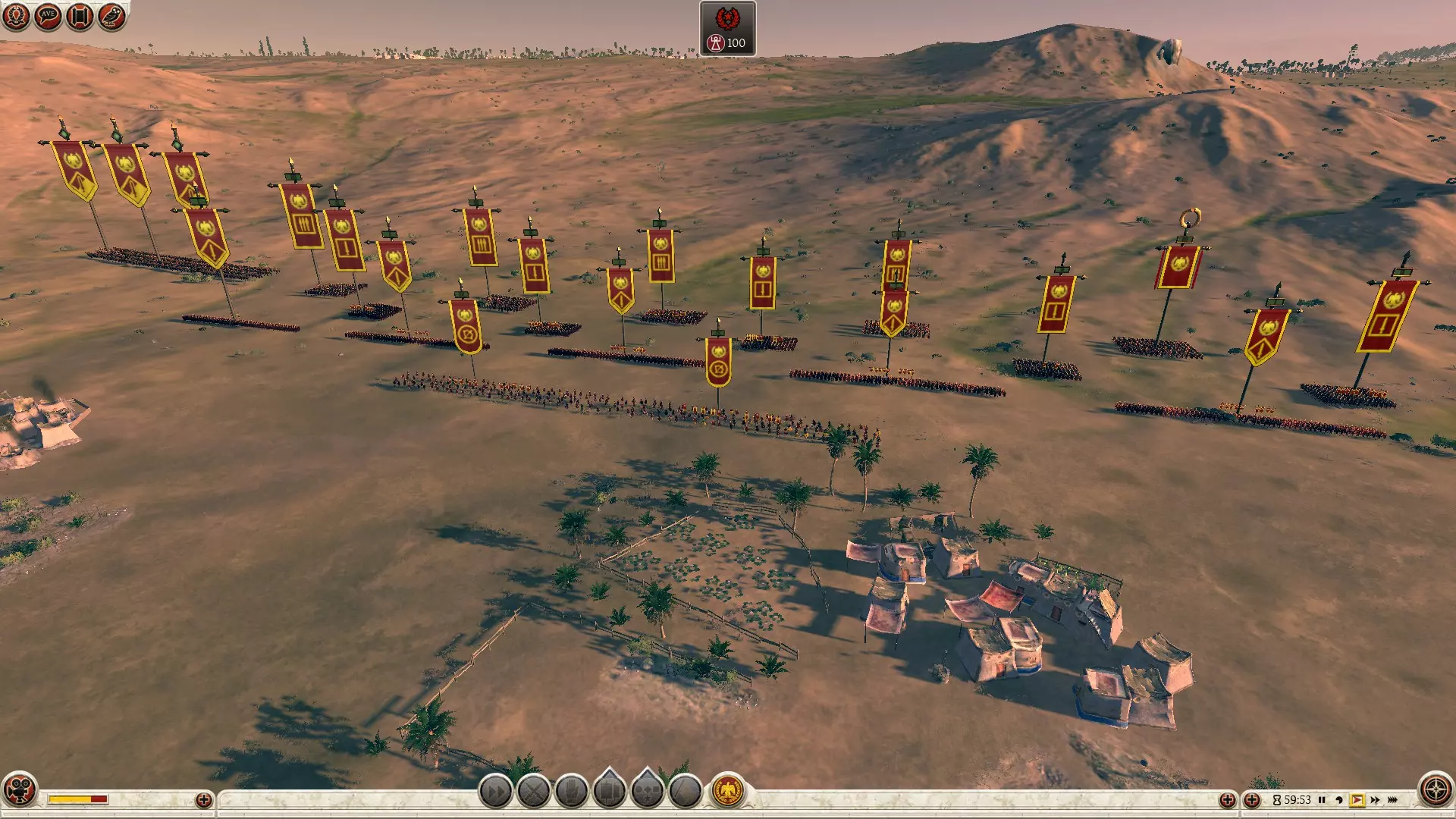
上图展示了另一个你可以带到战场上的元素——适当的队列纵深。有资料显示,青年兵队列纵深不超过三人,壮年兵为十二人,而三线兵队列纵深为十人。 如前所述,如果敌人在战场上投入战象和战车,罗马军队会部署轻装步兵来应对。在与一些战象战斗后,我可以证实,轻装步兵只要能远离这些巨兽,就能对它们造成一定伤害。 在布匿战争期间及之后,罗马军队意识到,他们有时需要一些与现有类型不同的士兵(如投石兵、弓箭手、轻骑兵)。因此,在这一时期,根据需要随时雇佣雇佣兵提供支援的做法变得相当普遍。 当时罗马共和国军团最常使用的三类雇佣兵分别是努米底亚骑兵、克里特弓箭手和巴利阿里投石兵。 和往常一样,游戏中可以招募雇佣兵单位,但你可能需要对自己的军团进行调整,以便在各处腾出位置来容纳他们。显然,你不会想要组建一支完全由雇佣兵组成的军队,因为这会导致A)极高的维护费用,以及B)不符合当时的历史实际情况。 Res Secundae! 现在,亲爱的罗马人,用你所掌握的共和国军团知识,去征服已知的世界吧!希望本指南能为你提供有用的信息,也希望你在这款虽偶有bug但依旧出色的游戏中玩得愉快。