
无尽帝国

无尽帝国

无尽帝国

欢迎来到无尽帝国社区! 
关注
20帖子·--新帖
游戏详情
全部
官方资讯
攻略创作
组队交友
问题反馈
--
--
1
--
--
--
--
--
--
--
53
--
--
--

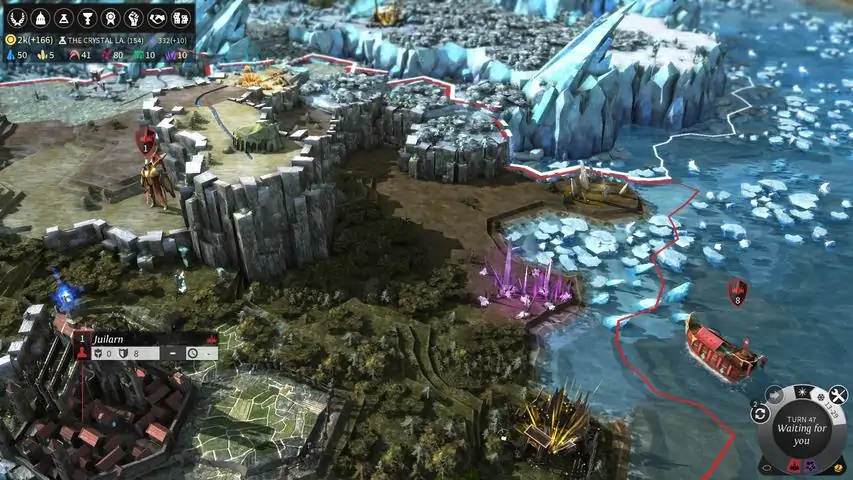
大家好! 想和大家分享一些关于《无尽传奇2》的消息,我们知道很多玩家都在期待这款游戏。 我们最近公布了两个主要派系的更多细节,希望大家喜欢 ✨ **谢雷丁之族** 谢雷丁之族是开始探索《无尽传奇2》的绝佳派系,因为(与其他一些派系不同)他们会涉及所有游戏系统,同时提供防御性建造者的玩法风格。他们擅长通过强大的工业发展领土,并凭借坚固的防御工事和纪律严明的军队来保卫领土。### 派系特性 “派系”是那些更享受专注于自身经济发展而非与敌人战斗的玩家的理想选择,因为珊瑚能够帮助他们探索世界、扩张城市,并且他们还能运用一些独特的外交互动。当然,在必要时他们也可以发动战争,但“派系”在与其他帝国、小型势力以及珊瑚和谐共处时才能发挥出最佳状态。 ### 《无尽传奇2》将亮相Triple-i-initiative活动 我们知道大家都在热切期盼着《无尽传奇2》的更多消息。 虽然今天我不能透露太多,但我们确实会在Triple-i展示会上分享一些内容。 什么是Triple-i展示会?就让活动预告片为大家说明吧:

届时也将有来自众多其他工作室的消息,所有内容都将浓缩在紧凑的45分钟内,且无广告插播,因此非常值得收看。 你可以于4月10日中欧夏令时间下午6点/太平洋夏令时间上午9点,在Youtube和Twitch上观看! 若想了解更多关于该活动的信息,请访问https://iii-initiative.com/。 Triple-i活动见!

2
--
--
--

A guide to superiority as the Cultist faction. Learn to love the Preacher, place boroughs, research efficiently and own the map. Overview This guide is meant for single player on Normal. I don't play multiplayer so I have no thoughts or comments on how Cultist perform against other players or good strategies. This is guide is meant to provide a basis for developing your own strategies and pass on a few of insights on units, research and tactics. Endless Legends offers the 4x player a medium learning curve. You'll have to play a few games to get a sense of the game's mechanics, probably around 30-35 hours. After which you'll be ready to branch out and try new factions and strategies. If you choose Cultist to start off, hopefully this guide will make those first 30 hours enjoyable. I'd like to thank the many players whose postings were invaluable to me when I first started playing for their strategy tips, game mechanics insight and city management theorizing. Unique to Cultists Cultists have only one city. Therefore, city placement and borough building is an important key to success. Because you have only one city, Empire and city approval are exactly the same. Cultists convert minor factions to build their armies, gain resources, and grow their city. You cannot conquer other cities. When you take them, they are destroyed and you receive a stockpile of Industry (and Science if you have researched the tech for that in Era II). The region is returned to neutral. You are not going to expand and conquer the world. You're just going to conquer it. If you like to build and see your faction's color spread across the map, Cultists may not be the faction for you. Certain kinds of victories are beyond your reach, Expansion, for instance. But you can win a Wonder, Quest, Elimination or Supremacy victory easily. Helpful Terms for Cultists 1. Minor Factions. Tribes native to each region of the map. When the game begins all minor factions are hostile. Minor faction villages generate hostile units. If left unpacified, hostile minor factions will gather enough strength to attack your city. 2. Pacification. Turning a hostile minor faction peaceful. This is done either through a quest granted directly from the tribe using Parley or through bribery. Attacking and destroying the village does not pacify the village. Only pacified villages can be assimilated. 3. Assimilation. Using Influence on the Empire screen, accept a minor faction into your empire. You receive a worker for each village of the assimilated minor faction in your empire as well as the perks granted by the faction. These includes pluses to research, unit hit points, vision, defense and so on. Once assimilated, you have access to that minor factions unit, can recruit it in your city and update it using the Military screen. 4. Conversion. Cultists are the only major faction that can convert a minor faction to their side. Once converted, minor factions give you a worker in your city, the FIDSI in the hexes directly surrounding their village, and generate a minor faction unit for your army occasionally. It also leeches resources in that region. 5. Leeching. Each minor faction village that is converted gives a small percentage of the resources in that region to you. This leeching allows Cultists to acquire strategy and luxury resources through their converted villages. Each village leeches separately, so multiple villages in a resource rich region will each provide the same percentage of leech. City and Borough Placement Because Cultists have only one city, city placement is extremely important. Actually, city placement and borough building is a key to success for any faction. As with most 4x games, you want to place your city as soon as possible. Split up your beginning army (Hero, Preacher, Preacher, Settler) and send them off in different directions to scout your beginning region. As a Cultist, you don't really need to worry about rivers or forests. If they are there, nice, if not, it is no significant drawback to you. You can ignore them for purposes of placing your city, although, obviously, regions rich in these things will be more advantageous at the start. What are you looking for? When placing your city, you are primarily looking for Industry and Food, with a smattering of Science and a few Dust. And, if possible, Approval, which comes on terrain near an anomaly. I prefer to pick a spot with Approval, Food, Industry, Science and Dust in that order of importance. With strong Food and Industry on your starting spot, you can put all your Population in Influence. Strong Food will also mean your city grows fast without needing to put any Population into it, which generates more Population and Boroughs. Be sure that you have a full six buildable hexes around your City Center. You will need to get your City Center upgraded to Level 2 for your Faction Quest. Therefore, you will need to build 4 boroughs around your City Center. A poorly placed starting spot will hamper your doing this. In other words, don't put your city next to your border or any unbuildable hexes, such as a village. You can see if a hex is buildable if you can put your city on it. Using your Settler, click on the City Build icon in its action panel. You then have an overlay you can move around the board to determine a good spot. The overlay will turn red at the center if you cannot build on a hex. You can move the overlay around to see what resources a build spot will give you. While you are doing this, think about where you are going to build your Boroughs. There are two formulations for Borough building, Stick and Triangle. Rather than go into detail here, I refer you to this thread: http://forums.amplitude-studios.com/showthread.php?28694-Building-Big-Efficient-Cities-Borough-Streets-amp-Leveling-Districts For Cultists, Stick layout is the most efficient because your city will be very big. You will easily build 15 or more Boroughs. In a Stick layout, Boroughs are placed two hexes wide in a straight line. Therefore, when placing your city, look to which direction you will expand in and make sure you have plenty space in a two-hex line. Look at the resources on the hexes you will likely expand into, as these will determine the FIDSI your boroughs generate. Once you grasp this concept, city placement and borough building will be easy, after the first 3 boroughs, your city will grow efficiently and districts will level up every borough placement. Research You start with Language Square, which gives you the Parley and Bribe actions with minor factions. You also start with Military Science, which gives you city fortification and garrison XP. What should be your first research? You can safely ignore anything to do with Approval. You will likely get to Fervent quickly and remain there the entire game. Ignore anything that says "during summer". After turn 150, summers will be shorter and come less often and those buildings will do you little good. It is better to give your city Governor the Cold Operator skill, which safeguards your city from winter's depredations. Here is a research suggestion: Mill Foundry (more Industry)> Public Library (more Science)> Empire Mint (more Dust)> Mercenary Market (Heroes). You may want to rearrange the first 3 depending on the strength of your starting spot. Mercenary Market is crucial, for you will want to acquire a first Hero as soon as possible, but you will not be able to afford to do so at the outset. Spending research on city improvements allows you to build up your city, but it will not be the source of gold for Heroes. That comes from ruin exploration. After these important initial acquisitions, Alchemist's Furnace and Open-Pit Mine are next. When you have greater familiarity with Cultist gameplay, you may decide not to research these and simply buy your Strategic and Luxury resources off the Market. However, please note several things: 1. Your converted villages will not leech strategic or luxury resources if you have not researched them; 2. You can't build on the resources in your territory without researching them; 3. If one of your opponents is Roving Clans, they will lock you out of the Marketplace as soon as they are able; 4. You need 8 reseaches before advancing to the next tier and very few of the other available researches are sensible for Cultists; and 5. Trinkets, through Armor research, are important for your city governor. For your last two Era I researches, choose Topography and Cultivation. It isn't very productive to research Advanced Alloys and Advanced Armor at this point, although you certainly can. You won't have enough Strategic resources this early in the game to make these viable and they aren't necessary for your units' success. You will now have advanced to Era II. Research: Nameless Guard>Meritocratic Promotion>Public Granary>Imperial Coinage Then, depending on how you are progressing the following in any order that works for you: Destructive Analysis (gives you Science on city capture) We Are Legion (XP on conversion) Native District (additional assimilated minor faction) Alchemical Alloy (Tier 2 weapons) Alchemical Armor (Tier 2 armor) Glory of the Empire (Influence) (Quests will sometimes reward this for completion, so watch for that.) It makes sense to research armor and weapons at this point because you should have done sufficient ruins exploration, quests, and converting to have Titanium and Glassteel readily available to you. You have also now opened up the Marketplace for resources, so you can buy them as well, provided you remain friendly with Roving Clans. Glory of the Empire can be picked up later or received through a quest. As your city grows it will provide a good source of Influence. You don't care about approval, trade, or peacemaking. You should have abundant approval. You aren't going to be trading with anyone. And you aren't going to be friendly with anyone. By Era III, you will likely be at war with one or more factions, have half the map's villages converted, and begin working towards your final strategy--destroy your opponents. Era III research priority will depend on how things are going for you, what minor factions you've assimilated, and so on. Here are the things to ignore: Highway Outposts Bread and Circuses Plow Factory Guardian of Dust Get: Borough Government Dust Refinery Dust Alchemy Public Works Statistical Methods Smelting Station Smelting Methods Unskilled Labor (Note: You will need 8 researches on the Era III wheel for your Faction Quest.) If you are on water, also consider: Cargo Docks Fluid Biomechanics For Era IV, concentrate on Military researches, picking up Cultural Indoctrination for another assimilation slot along the way. By this time, you'll have a pretty good idea of what you need to finish off the game. As you finish off your research, prioritize research in areas you are weak in so that you can build buildings to bolster that aspect of your city allowing you to put as much Population as possible into Influence. Governor, City Management and Build Priority Governor As soon as you have researched Marketplace, get your first bought Hero. It is crucial that this be a Cultist hero. You can finance this by selling your converted units. Place him in your city as governor. Go to Academy>Inspect>Equipment and equip him with the best trinkets you can afford for city management. You are looking for pluses to FIDSI and can ignore pluses to defense or unit health. If you have no city management trinkets, do some research in armor to get some. Each time he levels, put points in this order: Point 1: Inspirational Leader Point 2: Will of Akili Point 3: Proseltizer Point 4: Inspirational Leader Point 5: Cold Operator Cold Operator is the crowning skill here, as it will protect your city from the adverse effects of winter. You are now free to manage your city as you wish, without regards to seasonal downgrades. Invest the rest of your Governor skill points in the Faction tree, ignoring Will of Cilginka and Will of Isiver. As boosts to city resource trinkets become available, equip them on your Governor. Population As soon as you are able, put all of your Population into Influence. This will be your general strategy throughout the game. Influence is your lifeblood. You will be severely crippled without a very large pool of Influence. Put only enough Population in Dust to stay in the plus. In the early part of the game, you may need to put Population in Industry and Science, but after you've converted half a dozen good villages, this should be minimal. Be aware that the first Era will require constant attention to how your city is doing, balancing your army needs vs. your building and research needs with your number one priority of pushing your Influence as high as you can get it. Once you have converted a number of minor factions and your Governor levels, your Population need for Dust, Industry and even Science will be minimal. You should only need to put Population into Dust during the winter months and then only until your Governor gets Cold Operator. The first thing to build in your city is Founder's Memorial. After that, build each of the researched buildings as they become available. In my experience, your building outpaces your research until about Era III. You should be able to build everything as it becomes available. Boroughs. Prioritize the building of Boroughs whenever one becomes available above all else. If you use the Stick layout, the first 4 boroughs will pop your City Center to level 2, which increases all its resources. Thereafter, every borough should level a nearby borough to level 2. Notice on the following on the Borough description: -10 to Approval on city tile +20 to Fortification per level on City +15 Approval per level on tile This means that your first 3 boroughs are going to give you -30 Approval. Then your 4th borough, if placed properly, will give you +15 Approval because one of your other boroughs will pop to level 2. It does not have to be your City Center. Beginning with your 4th borough, you will get at least +15 (and possibly +30 if another district pops to level 3) approval with every borough placement for a net increase of at least +5 per borough. Content approval gives no perks. Happy gives you +15% to Food and Industry; Fervent gives you +30% to Food and Industry. This is why Borough placement is so key to success, not to mention the additional resources higher districts give you. In addition, each borough gives your city +20 to Fortification per level. Fortification makes it harder for attacking enemies to take your city. Most cities will have 350-500 Fortification. Yours will have 1500 or more, unbuffed by Luxury items and 2000 or more buffed, making your city almost impregnable to your opponent's armies, which you, of course, will be ravaging with your converted minor faction horde. So for three reasons it is important to prioritize Borough building: 1) Approval rating; 2) District resources; 3) Fortification. Conversion Conversion is the key to victory for the Cultist. For the single player, by mid-game (turn 150), you will have a large enough army to sweep the map. You don't need but two heroes, your main hero given at the start and your governor hero. But you'll be rich enough that you can certainly afford as many heroes as you'd like. You'll immediately get a quest to convert 2 minor factions. This is the beginning of your faction quest line. Convert the village in your home region. There is usually only one. If there were two, you'd be OP in no time. You can use any Cultist unit to pacify or convert. However, I usually use my hero at the beginning of the game in order to get the XP these actions give. Take your hero to the village and click on it. An action screen will come up. The far right option is Parley. Click on that. The village will give you a quest to complete in order to pacify it. It will often be the seeking out of a villain, destruction of another village, protection of the region for a length of time, or the delivery of a resource. Perform the quest. Upon completion of the quest, the minor faction is pacified and can be converted. Move your hero to the village, click on it and choose Covert from the screen. You'll notice that Conversion will cost you 25 Influence. The next conversion will cost you 30, and so on. Each village is more expensive than the last to convert. With your first two factions, it's important simply to convert them to progress the quest. After that, you need to more discerning in what villages you convert. Village placement is very important to consider. Villages give you their resources. There's little point in converting a village in a cul-de-sac on the border that's going to give you 2 or 3 hexes of resources. Villages that are surrounded by six free hexes will give you a considerable FIDSI boost. I always convert a village surrounded by six hexes. Or, if the region has valuable resources, like Titan Bones or Redsang, I will convert all the villages to increase the amount of these resources I receive. Once you've converted your village, go the City List screen. At the top you'll see your actual city, but below it you will see each of your converted villages: What region they are in, what faction they are, what FIDSI they give you and what resources they leech. Lastly, it shows you when the next unit will spawn. Village conversion is powerful. After you have converted the first 4 or 5 villages, you'll have few resource concerns. Not to mention the army it gives you. Take that first unit and put it in your Hero army. You're now ready to go out and multiply. As you move across the map exploring ruins, questing and converting, you need to consider that the other factions are doing the same. They will consider your converted villages as fair game and attack them for the XP they give. Generally, I will leave spawned units in their villages, but you need to consider the unit's weakness. Jotus and Delvers are miserable on their own. Give them an Eyeless One and a tough cavalry unit to protect them. You need to consider the make up of your guarding units as much as your own army: Ranged, frontline (cavalry or infantry) and support. Shuffle your spawned units around to provide better protection, particularly in regions with valuable resources or for villages that provide high FIDSI. If you have a safe region, send those troops to your vulnerable villages to protect. Units of any kind can enter a village, just like a city. The maximum units in a village is determined by your army unit maximum (4/6/8). You can park units outside a village to help protect it. Other factions can attack your units freely in unclaimed territory. If they attack units outside the village, the village will not reinforce. However, if they attack the village, guarding units outside the village will reinforce. Sometimes a village will give you a difficult quest, providing 30 of a rare resource, for example. If you don't have the resources, but want the village, you can simply attack the village and then convert it. There are two drawbacks to this: 1) This only affects the village you attacked; other villages in the region will not be pacified; 2) the cost of converting a destroyed village is twice the Influence. If you go the attack/convert route, be sure the advantages of the converting the village are worth the cost to you. Assimilation What to do? What to do? Here are some things to consider. 1. You can build the unit provided by the assimilated faction in your city, including upgrading it through the Military screen. (To do this, choose the unit and select either Edit or New.) 2. Assimilated factions give you a specific faction bonus. And the more of a particular faction you have converted, the more bonus you get. 3. Your assimilated choices are going to be determined by what's spawning on the map. I like Kazanji Daemons because of the Influence boost, but on some maps they are a rare spawn. As you progress through the map, you may change what factions you have assimilated. There's no point in keeping a one-village faction, even if the bonus is good, because it is minimal. Here's a convenient recap of the faction bonuses: http://endless-legend.wikia.com/wiki/Minor_Factions (This link is not updated for Guardians.) Here's a Steam thread discussing the varies attributes and strategies related to assimilated factions, which presents different perspectives on what works. As a Cultist, some of the issues in the thread won't matter to you: http://steamcommunity.com/app/289130/discussions/0/620700961014024437/?insideModal=1 Empire Plan Influence for your Empire Plan is generally not a problem. Nonetheless, plan ahead so that you don't short yourself. For your first plan you'll need 40 Influence, 20 for Economy and Population (Dust on population) and 20 for Science and Industry (Research). This will be your plan until Era II unlocks. If you have spare Influence, +Vision is nice, but hardly necessary. Better to use the early Influence points to convert. By the time of your second Empire Plan, Era II should be open, allowing you to get +25 to city approval. This plus 20% on research and Dust on population will cost you 100 Influence. With this additional approval and the approval from the luxury items from quest rewards, you should reach Fervent, with its 30% Food and Industry bonus. You can simulate the Empire Plan at any time by going to Empire> Empire Plan> Simulate. You can find the number of turns until the next Empire Plan in the Empire Plan window. This will allow you to determine which plan you want and to save Influence for it. Army Units In the beginning you'll have your starter hero and 2 Preachers. Quite a few commentators and posters have dubbed the Preacher one of the most worthless suckiest units in the game. But is it? Support units in Endless Legend are buffers. That is what they excel at. So let's look at the lowly Preacher. Unleashed Potential buffs every unit attribute but speed by 10%. Give your Preaches high initiative and have them buff your frontline units at the start of the battle for 10% increase in attack, defense, initiative, life and damage. For your starting army, you may well have whimpy Delvers or Jotus. Have your Preachers buff them rather than attack and you'll see a noticeable difference in their performance. Buffing Gauran Minotaurs, Kazanji Daemons, or Dorgeshi Burdeki just gets better. One strategy for your army is to sell all your village spawned units and use only city built units, which would include your Cultists units and your assimilated units. Preacher and Nameless are excellent units, buffer and ranged. You'll need a good heavy for your front line. I like the Gauran Minotaur as a cavalry killer. Given a movement trinket and a good weapon and buffed by Preacher, it is fast, hardy and deadly on the field. I also like Daemon for it's multiple hits. Daemon needs movement trinket, a good weapon and some additional life, but once you achieve this a couple of Daemons, Nameless and Preachers are a very resilient army. Both Gauran and Kazanji have good assimilation bonuses. Gauran give you 5% life on units per assimilated village. Kazanji give you 5% Influence per village. A lot of this depends on what minor factions spawn on your map, how many there are, and how close they are to your city. In general, you want at least one frontline cavalry/infantry unit, one buffer, and one ranged in your army. All buffers (support units) have ranged attack, although not as damaging as bow-wielding units. Give your buffers a wand with Unsteady affix so that when they do attack, they debuff the target. Eyeless Ones are an excellent secondary support unit, providing good healing to your units. When out in the field and making armies from your village spawns, try to put an Eyeless One or Ceratan arachnoid centaurs in your armies for their healing. At 8 units, my typical army will have 3 Minotaurs/Daemons, 3 Nameless, 2 Preachers. Two Minotaur/Daemons and 4 Nameless is also a good combo with 2 Preaches or Eyeless Ones to buff/heal. Remember, the makeup of your army is going to depend a great deal on what minor factions spawn on your map. My battle strategy may be different from yours. An all Nameless army with one Preacher buffing is certainly a viable option. Strategy Tips You'll develop your own strategy as you play, here are some of mine: 1. Destroy Roving Clans as soon as possible. They will Market Ban you and then bribe you to make the Market available. Over and over again. Just kill those suckers and put an end to it. 2. Don't be afraid to go to war. As soon as you have a decent army, begin attacking, destroying cities and converting villages. One of your first Faction quests will be to destroy a city. Do it and never look back. 3. Be watchful of the Victory progress messages. If you are playing against 3 opponents and wipe out 2 of them, the 3rd will win an Expansion victory. Oops! So be sure to go after the faction that is near an Expansion victory first. 4. Ignore the Status screen numbers. You just aren't going to make much of a dent in them, particularly early on. Later, that will change as you roll up the map. 5. Use Luxury Resources. by mid-game, you should have a fairly good supply of Luxury Resources. Use them. They will buff your city, units and heroes. Purchase resources in the Market if you aren't receiving them from quests or leeching. With a number of villages converted, you should be leeching enough of the predominate map luxuries to not have to buy them, but can sell them instead. 6. Be careful when you upgrade your units. Upgrades in weapons, trinkets, and armor will cost Strategic Resources, which only trickle in to you. Until you can afford to buy them on the Market, be cautious about equipping units with items that require a lot of strategic resources. Otherwise, you won't be able to build units for lack of resources. This is no big deal, since you can easily Edit or create New, but it is annoying and will strip down your resources without your really thinking about it. 7. Likewise with building. From Era II on, buildings require Strategic Resources to build. Be aware of that and make sure you have enough. (This and other resource tips are really only an issue if Roving Clans have Market Banned you. This is why it's important to take them out as soon as you can.) 8. The Order of Isivar trinket is rewarded for an early Faction quest. As soon as you are able, equip it on your Cultist units. It requires Titanium and Glassteel, but is worth it. 9. Put Movement increase trinkets on all your units, especially your heavy frontline units. They all benefit from it. 10. Get Cold Operator on your main Hero as soon as you can. I start with Strength of the Wild and Iron Taskmastker, then switch over to the middle tree at No Idle Hands and go up to Cold Operator. It forces you to take one irrelevant skill, city perks, but provides the most over benefit. Once you've got Cold Operator, you can fill in the army/hero perks on the left hand skill tree. 11. Convert, convert, convert. Once you have received Hand of the Unspoken as a quest reward, your converted villages will immediately spawn 4, that's right, 4 units. Cross the map with your army of newly spawned units taking down everything in your path. Once you have 2 or 3 8-unit armies in tow, even the most advanced cities will fall. 12. Save early. Save often.

--
--

A collection of advanced tricks for Endless Legend, to use, and to watch out for Introduction Endless Legend can be an overwhelming game. There are a variety of single- and multi-player techniques that are not immediately obvious. This is your guide to these advanced tricks. As ever, the line between a trick and an exploit is not always clear. You'll have to use your own judgment about which of these tricks are acceptable and which are exploiting the game in ways inappropriate to multiplayer play. Whatever you decide, you'll want to be aware of the ways that other players might exploit the game-- how you can tell that it's happening, and what you can do about it. Where I've considered some of these tricks to be exploits, I've made sure that the developers are aware. It's up to them to address or accept these techniques. Thanks to nonerror from reddit for some of these tricks. And even more special thanks to nonerror for declining to play multiplayer Endless Legend, because the community is not yet ready for someone of his or her "creativity" :P If any of you have more tricks, please share them in the comments! I'll integrate them into this guide with proper attribution. Revisions: 30/11/15: Revised in light of changes in 1.3.0, added Soylent Green section 25/12/15: Added "On Winged Sandals" section To Queue or Not to Queue Leftover production is buffered. If an improvement is going to finish when you hit end turn, and the next improvement you want is going to be researched when you hit end turn, don't queue anything new. Next turn, queue the newly researched improvement. Your industry won't be wasted. If you already have researched the next improvement you desire, go ahead and queue it before the last improvement is completed. Spare industry will be applied to the next improvement, reducing the cost of a buy-out and perhaps saving you a turn. Every once in a while, there'll be an improvement to be completed this turn that you want to buy-out to speed future construction. You can't buy these out when they'll be completed next turn, so queue something else, move it to the top of the priority, buy out the original improvement, and, optionally, remove the new improvement from the queue. You can use this to improve the size of your buffered industry, for instance, to more rapidly build a settler you cannot yet afford the population for, or an improvement you have not yet researched. Science is buffered as well, but there isn't any good way to take advantage of this. You're best off leaving research unqueued until your research completes in order to maintain the most flexibility. You know how settlers stop all positive food production when they're queued? There's a trick to this that you can sometimes take advantage of, which is that they only do so when on the top of the queue. So if you're willing to just use left-over industry to build your settler, you can do so without losing out on your food. And when you can build a settler in a single turn, it's preferable to build two, or to build something else at the same time, to minimize food loss. Ghetto Setseke If your settler is going to take a few turns of travelling to reach its destination, consider settling along the way. You can net a bit of extra influence, dust, and science. Move the pop to dust and queue Salt the Earth first thing. Next turn, your settler will be exactly where he was, fully healed, but without any retrofits, and you'll be a few pips up in your development. This is especially useful when on the run from a minor faction. So long as you can settle every turn, you're safe retreating from every fight and healing along the way. Another case where it's particularly useful is when you get a quest reward to settle a new city, granting a powerful booster-- but in low enough quantity that once you settle, you'll be unable to use the booster. Go ahead and settle then salt the earth. The next turn, you can use the booster, then settle in a more ideal location. Just beware that you will forfeit any quests that depend on the settled province, including the very useful Snark and Awe quest. It's not unusual for a region to provide more resources than its city's upkeep, even without improvements, food, and industry. You can settle these locations safely without worrying about boosters or empire plans-- just salt the earth the turn before the plan, or the turn before you need your booster, then resettle. These cities can collect strategics (depending on placement), build units, collect science and dust, hold territory, and maintain or improve assimilations even when they're resettled every ten turns. In Guardians, the fastest way to achieve one version of the powerful Market Alchemist deed is related: create as many settlers as you need to gain sufficient strategic generation, research the extractor tech, and settle directly on the relevant deposits to create an extractor instantly. With sufficient planning, this can be achieved just a few turns into tier 3. If you don't like the placement of these cities, or you don't want to expand, salt the earth after you achieve the deed. Don't salt the earth until after you achieve the deed, though! Deed evaluation occurs after build orders are evaluated. Here Comes the Cavalry No matter where they are, your heroes can be instantly recalled to any of your cities or armies. You can use this to rapidly meet quests like Lust for Loot or to put your general in otherwise risky situations. Unassign before you assign. That way, you can make any retrofits you need, even if the hero will be joining an army in uncontrolled territory. You can't reassign the hero for five turns after this, so reassign early rather than late, and do so with caution. You can use this to net a few extra tiles of movement on your first turn. Unassign your hero before settling, then create a new army on your city. Now, regardless of how far you had to travel to settle, your hero still its full movement. This is particularly handy for Forgotten under the Shadows expansion. You want to use all of the Forgotten heroes you can get for infiltration, but other factions' heroes will deny your armies stealth. The solution is to advance your armies without a general, and assign a general only at the last moment for the powerful battle bonuses. After that, of course, your army won't be stealthy for 5 turns.... Diplomatic Intelligence Even without the Shadows expansion, you can keep an eye on your competition by researching Diplomat's Manse tech. Open the diplomacy window to propose a peace-- don't worry, you don't need to go through with the deal. Look at your techs to see what they haven't researched, their techs to see what they have, and their dust and resource totals. You should be able to see when, for instance, Vaulters begin the transition to a new holy resource. Strike while they get the least benefit from Technolover which, incidentally, sounds like a boy band. You can do this without the tech (or to Necrophages) by closing borders beforehand. Now you can propose to open borders and see what techs your opponent has researched. Jolly Roger Due to the absence of naval warfare, you can use Shipyards tech to wage guerilla warfare. Find a city near a coastline and send one or two units, preferably with iron rings, to lay siege, denying its owner its exploitation tiles. Or, with the Shadows expansion, pillage a coastal resource. When its owner draws an army near, withdraw to the sea. You'll either deny your opponent resources or pin a stronger army to a strategically unimportant location. Either is a win. On single-continent maps, nobody expects an amphibious assault. Try keeping an army parked just outside the vision of the coastal Drakken city and bait them into a declaration of war. An offshore settler guarantees that you won't be eliminated until the game ends. You can use it to buy the time you need for your counterattack on multiple enemy capitals. Manifest Destiny If you're salting the earth with cities you capture, you're going to find yourself with a surplus of settlers. You could sell these for 50-some dust each on the mercenary market, or you could use them to distract and harass your opponent. Settlers can block or slow passing units, and, with the Shadows expansion, can pillage extractors, watchtowers, and villages. If they have to retreat in neutral territory, you can heal them to full by settling and salting the earth as in Ghetto Setseke above. Settlers also make fine mobile command bases. Settling a neutral province gives you better healing, the opportunity to retrofit armies in the field, and a location where reinforcements can be bought out, close to the front. And the city tile itself can be a nice morale boost and later a free milita. It might even strengthen one of your existing assimilations, if its villages have been pacified by a neighbor. With Vaulters, a single settler can mean the opportunity to teleport your units to or from the front. Combat settlers are a must for offensively-minded Vaulters. Soylent Green The Necrophage faction has a lot of advantages in its powerful, affordable units and in its cellulose mutation trait. One of their biggest drawbacks is their poor food generation, which requires them to take advantage of their factional trait for growth. For every 8 casualties-- on either side, so long as the Necrophage don't lose all their participating units-- Necrophages get a free food stockpile. These stockpiles can lead to rapid growth. The only problem is maintaining enough miltiary momentum to keep the battles going. But there is one type of unit that costs nothing to create: the lowly militia. So long as Necrophages can keep a single unit alive to initiate attacks and reap the cadavers, militia can regenerate every turn. For Necrophages, one of the most important parts of their starting capital location, and one of the factors driving borough tile choice, is reinforcement range to nearby villages. So long as you can reinforce an attack with your city, go ahead and park a naked forager next to the village. Don't fight to win, fight to lose. Your goal is to get all of your militia killed every battle, while doing as little damage to the enemy as possible-- and, of course, preventing any damage to the army that actually initiates the attack. One of the most important early military units a Necrophage player can build is a combat settler. Remember, by salting the earth and resettling, you can move your city any time you want. That lets you get a few extra casualties with every village you attack, while preventing your main military unit from actually taking any damage. By taking advantage of this, Necrophages don't have any real food issues. They'll grow faster than any other faction. Retrofit or Retroforge It's cheaper to buyout simple units and retrofit them than it is to buyout fully equipped units. While you probably won't be buying out units except in emergencies where you haven't the spare time to retrofit them next turn, it's important to know to speed your earliest settlers. Always build naked settlers, then buy them talismans as needed after creation. Maintaining iron-equipped units can be handy when your empire grows and demands larger garrisons as well. You may not be able to retrofit all of your armies into strategics, but you can wait to see which side of your empire is threatened before upgrading any armies. Canary Yellow Most players like to annihilate every village they come across. It's free experience, and it reduces the risk of an unexpected Minor Faction invasion, right? You could do that-- or you could leave them be. Not only does this give you a chance at future parley quests (and thus superior, quest-only equipment tech), it can also give you a good idea of where your opponents' armies are, even outside of vision. Village state is visible in any explored territory, regardless of your own vision on that village, so you can track the progress of an enemy army across the map by watching the lights blink out in their wake. Assuming, of course, that they're destroying the villages. When you march your own army across the map, keep this in mind as well: you could destroy that village, getting you 6 xp for each unit, but is it going to broadcast your location to your target? You can even see if a village has been pacified. Converted villages are going to appear as wild, unpacified villages, so be on the look out for any destroyed villages that blink back on, or any unpacified villages in regions with pacified villages. These are likely to be converted villages: send a few units their way and set your opponent back the cost of conversion. Whatever You Do, Don't Throw Me in the Briar Patch! Play psychological games with your opponents. If you're out of strategics in tier 3 and need a new template, name it "full pallad." If you want a Drakken to move some of his pop to influence, name one of your cities "Arena". Make a few unneccessary retrofits to turn your initial scouts into fearsome "Stalwart 5"s. Yes, your opponent can double-check some of this, but will they? Lure your opponents' armies out with weak-appearing armies, with your strength appearing in reserve-- or just retreat and send another army around to take an undefended city, when all of his potential defenders have already used their action point. A few well-timed curses in public chat can explain any number of otherwise suspicious behaviors. If you need to withdraw temporarily, complain in public chat about the high world difficulty and your opponent will anticipate a longer reprieve than you intend. Lies, Damn Lies, and Politics Multiplayer games are often decided less by strategy or tactics and more by political skill. The tall poppy gets cut, and the weed grows in its place. The arrogant player paints a target on his or her forehead. Etc. If you need to negotiate an informal truce with another player, make sure to establish an expiration date for the truce. That will keep you from having to warn them when you decide that it's time for their empire to fall. If you're having trouble locating another player on the world, ask the other players. You can even ask the player you're trying to locate, where another empire lies relative to them! If you know where that third empire is, you can work backwards to where the second empire is. >Hey Jojo, where is Bigballs relative to you? <birds chirping> >Hey Jojo, are you there? <cows mooing> >Hey Bigballs, where is Jojo relative to you? Aerial Blockade An early flyer, most often acquired from the mercenary market or a converted village, can be an incredible tool. Not only can they search ruins faster than any other unit, they can easily lock down other empires. If your flyer discovers an enemy city with a district lying next to a cliff, seriously consider waging war. Your flyer can lay siege from the cliff, immune to counterattack from any armies in the city that aren't themselves composed entirely of flyers. You can easily bankrupt another empire before they have a chance to purchase any flyers themselves or get an army to your capital. Even if they manage to get their scouts to the location of your flyer, your flyer is almost certain to move more quickly than them and you can escape and pin their scouts to their city. A single flyer can take on infantry armies much more powerful than it-- if it is fighting on sufficiently rocky terrain. Flyers can attack units on drastically different terrain without prompting counterattack. A single Necrodrone can wage a guerilla war against Stalwarts, whittling them down without taking any damage itself. Should you have a ranged flyer like an Ancient, it's even easier. Drakken One-Two The potential for Drakken to march on an enemy capital on turn 1 is unparallelled. What a lot of people don't recognize, however, is that they have the potential to take out two capitals in not much more time. March your army toward one capital and settle as close to the other capital as possible. Don't delay settling, though. Meanwhile, research Mercenary Market or Wyvern. By the time you take your first enemy capital, you should be capable of either purchasing or completing another unit. As Drakken, the bulk of your starting army's strength lies in the general's Army Health Boost 3 capacity-- and this general can cross any amount of space instantly via reassignment. Not enough influence to wage your second war? No problem! Salt the Earth with your capital. If it's early enough in the game, this won't prompt a supremacy victory (probably to allow for resettlement in cases of bad starts), but it will cut your influence costs to wage war in half. And you'll still have the first city you took in case everything goes south. Pimps Up Setseke Ho is a poorly understood ability of the Roving Clans-- and frankly, it's very difficult to use right and requires some creative thinking. Given enough vision and a nearby isthmus with a ruin or village, Setseke Ho can be a guaranteed escape from assault. Setseke and retreat behind the ruin. The attacking army can't pass through the ruin to attack you while you stand behind it. You can also use it to build extractors-- but beware, you might be wasting more production than you're gaining. Simply build your city center on the extractor, then Setseke again. When you resettle, the extractor will remain. A setseke can make a very handy base for healing and retrofits. When at war, follow your army with a 1-population city and settle as needed. You'll now gain the healing benefits of friendly territory, as well as having a city in which to buyout reinforcements, and you can retrofit any of your forward army as needed. Because these settlements are very vulnerable to attack, you probably won't care about improvements, but this is an ideal place for improvements like the Conscription Center if you ever plan to buyout reinforcements here. Even if your enemy manages to lay siege, a city like this can easily be a liability for your opponent, increasing influence costs and providing nearly no resources, while ownership penalties prevent salting the earth. If you're playing in the New World preset, Setseke Ho can mean colonizing the superior resources of the main continent much more rapidly than any other player. When you achieve shipyards, pack up one of your cities and march it to the mainland for a strong, early presence. But the best use of Setseke is with the new Shadows expansion. When a city setsekes, all infiltrators are immediately booted to their academies, without the vision they need to reinfiltrate. Any time you feel that you are infiltrated, seriously consider a setseke as an alternative to a roundup. Our Corpses Will Black Out the Sun Some factions can easily end up with a huge number of very subpar armies-- Cultists with their converts, Necrophages with their Battleborn. Unfortunately, once your opponent equips tier 3 strategic equipment, these units become little more than chaff. But these units can still lay siege and, by their numbers alone, eliminate fortification very rapidly. And they can starve a garrison faster than they can be killed-- if you arrange your armies strategically. Consider splitting your sieging army into as many small armies as the sieged city permits. In order to stop the siege, your opponent will have to destroy all of these armies, but each of your opponent's armies can only destroy one army per turn. Just be sure not to include any reinforcements! If your opponent gets smart and splits his garrison into multiple armies, you might consider including reinforcements. You might not be able to take 12 Marines with your horde of Battleborn, but you can probably take one or two. This can be especially devastating in the presence of infiltration. Eliminate the fortification for five turns with a level 5 action and watch the defenders starve before they can carve a path out. With enough besieiging units, even eliminating the fortification for a single turn can wipe out any number of elite defenders. Remember the Forgotten The new Shadows expansion opens up whole new tricks for you to use on your opponents. Stealth is nice-- but the best part of stealth is the threat it represents. Forgotten can sometimes get away with a defense composed entirely of bluff, neglecting any military in the hopes that their opponents will be too scared to risk an unknown assault. And for other factions, letting your opponent see even a single camouflaged unit can lead to your opponent wasting accessory slots on detection accessories. Pillage is a little weak, but you can often use it to distract your opponents. Even a settler can pillage-- start the process and watch your opponent mobilize their garrison. When the garrison is gone, strike with a stealthed army. If you're on the lookout for this, pay attention to how quickly a resource is being pillaged. By seeing the pillage progress, you can estimate the strength of the army involved in the pillage. You can pillage and siege at the same time, although it requires a specific order in which you declare the actions. But beware, pillaging an extractor in a region under siege will grant no strategic or luxury resources. Stealthed armies can participate as reserves without any warning to your opponent. You can use bait to draw your opponent into an attack and launch your hidden reserves. This is especially nice with settlers, where you opponent is likely to split a force in anticipation of retreat. If you've infiltrated a city, you can see if that city is undergoing a roundup by checking its per-pop FIDSI tooltips. As a potential infiltree, keep this in mind: they can see your roundup underway, but will they? If you want to catch a spy, consider launching your roundup at an inobvious time-- two or three turns after your opponent has gained vision, rather than on same turn. But if you want to stop infiltration and arrest any seniority, roundups are unreliable. You might consider making sure that your opponent knows that you're doing a round-up, giving them the inventive to exfiltrate earlier. You might even be able to get away with a roundup bluff this way, announcing, then cancelling. If your spy has been disabled in an action, don't fret. The cost to restore it is very affordable, and you still have active vision on the city in which the action occurred. Reinfiltrate this turn, or you'll lose the opportunity. Roving Clans, with their Setseke potential, can be a pain to infiltrate. Consider parking two individual Mysts close by, then baiting a Setseke with an obvious infiltration action. Watch them queue that Setseke, and keep your Myst selected and your finger on your mouse button. As soon as the next turn arrives, attack, even in cold war, with one Myst to bait retreat, and the second Myst to finish off the little bugger. Low latency and practiced movement is essential. You don't need any infiltrators to take advantage of infiltration. Offer infiltration services in public chat-- the roundups will surely follow. Losing a war? Tell an opponent on the other side of your opponent's empire that you can drop fortification in a border city in two turns time. Preferably in public chat. You don't have to be able to deliver on the offers or threats. >Don't know if you guys have seen the Cult city lately, but that's more Nameless than I'll ever be capable of ninjaing. Anybody else think we should take care of this before he starts the wonder? <Adom hits the roundup button> Two Great Tastes that Taste Great Together Force truce. Close borders. Again. Again. Again. When an army lies inside of closed borders at the end of the turn, and that army is not at war with the closed empire, the army is teleported to outside of the closed borders and loses all of its movement for the next turn. This is particularly nice for Drakken. By ending the turn in truce, with closed borders, you waste your opponent's army and you give yourself an extra turn before they can assault again-- even should they have the influence to redeclare war. On island maps, Drakken can pretty much guarantee their own invulnerability. Since landing requires all remaining move, using closed borders can keep an invader at bay until the Influence runs out. (And when you're Drakken, the Influence doesn't run out quickly.) If your opponent does have this influence, keep in mind that each declaration of closed borders is going to be nullified by redeclaration of war. The ideal time to declare closed borders is once, at the very end of the turn. If you're facing a Drakken player behaving like this, wait for them to close borders before declaring war again. You need to waste every bit of their influence that you can. If they don't close borders, you can declare war at the beginning of the next turn as easily as you can the end of this one. A Confederacy of Dunces The stupidity of the AI is an oft neglected resource. Even in multiplayer games, players drop and are replaced by AI. Don't neglect the opportunity to eXploit them. It can often be trivial to get an AI to declare war on another player, and it can be a more powerful technique than is at first apparent. Even a single hard AI can divide an opponent's forces between two fronts. This can easily turn the tide in a close game. Rietstengel points out that one of the ideal times to exploit an AI is when negotiating a truce. Especially with high difficulty AI, a lot of resources and/or techs can be gained from ending a lopsided war. And AI haven't the sense of justice that human players do. Try negotiating a truce after taking an AI's last city-- the AI will still be eliminated, but maybe you can get some goodies. Are you playing high level AI that expands at a ridiculous rate, leaving you with ten times too many cities for the empire plan or booster than you want? Give them away as part of a truce agreement. You can milk the population for all its influence (which isn't affected by ownership), then destroy every improvement and hand them back the turn before an empire plan. The AI will always think cities are worth it, but they'll be stuck with worthless cities at the worst possible time. Just don't give capitals back to their original owner, or you'll never make progress toward a supremacy victory. It sounds counterproductive, but you can even declare war, give all of your cities save one in truce, create an empire plan and fire off boosters, and then retake every single city that you offered in truce in the same turn. With only three cities and the anticipation of even a single level 4 empire plan, this actually costs less influence than just doing the empire plan! Exploiting the AI in this way is not going to make you any friends in the multiplayer community. Be a responsible player: if you're going to drop, salt the earth and kill off your settlers first. If you're feeling cynical, it might occur to you that some of your fellow players can be exploited almost as easily as the AI-- and you'd be right. If you need to make an alliance, why make it with your strongest opponent? It will only make your life more difficult in the end. Make some alliances with your weaker opponents instead. They can use the protection, and they won't be serious competition to your own victory once all of you, in conjunction, eliminate the competition. In the Grim Darkness of the 41st Millennium, There Is Only... Battles block activity involving the battlefield, even on the strategic map. While a battle is underway, no unit can move into the battlefield, no unit may leave the battlefield. Strategic extractors can't even be built on resources contained in the battlefield. In timed multiplayer games, you can use this to establish a no man's land where none may pass. Consider keeping an army of healers locked in perpetual war with a village near your capital. You should be able to maintain an eternal detente. By initiating the battle at the beginning of every turn and dragging it out as long as possible, you can guarantee that no player has the capability of ever laying siege on your capital. Needless to say, this is not going to make you any friends. Beware of players with less latency than yourself, who can sneak an army in before you initiate your attack. And beware of games with "last player" timers-- players will be able to outwait you, as you cannot end your own turn while the battle is underway. Intelligent Design In between bites of banana, theologians of Auriga like to ruminate on the Divine Intelligence that led to the Creation of their perfectly shaped puddle. "How glorious! how miraculous!" they exclaim, "that this world, of all worlds, seems uniquely suited to the playstyle of our glorious Host!" And in this case, the theologians are right. Not all game options are created equally, and by creating a game with various options, one strengthens certain styles of play while hamstringing others. Large regions can dramatically slow the rate with which new regions are settled, the rate with which jump-starting ruins are explored, and the power of closed borders. It might not be obvious, but a fixed number of strategic and luxury resources are placed on the world regardless of region size, meaning that with large regions, each region is likely to have a larger share of resources. So Cultists and Drakken tend to benefit heavily from larger region sizes. A Cultist, in particular, can reap a huge number of resources from a small number of villages, given large enough regions. World difficulty can similarly hamstring early expansion and force many players into investing in military much more early than they would prefer-- and even afterwards, pinning their military to their cities, denying them conquest opportunities. Cultists, unlikely to face assault from more than a single village, benefit most from higher world difficulty. The first settler in any region is likely to pick the best spot-- after that, any anomalies are acquired more or less haphazardly. That means that factions unlikely to build many early boroughs, like the Broken Lords, benefit most from a higher rate of anomalies. More cliffs mean better returns from the flyers of the Necrophage, Drakken, Cultist converts, or Roving Clan mercenaries. More rivers mean more early food for everyone except Broken Lords. Islands can turn into indomitable fortresses in the hands of Drakken. Presets like New World can turn the game into a cage match, dominated by the early military advantage factions like Drakken or the Wild Walkers possess. Partial scores are a clear if minor advantage to any faction anticipating espionage-- namely, the Forgotten. Fast games lead to stupidly expensive buyouts, hampering the Broken Lords. Spread placement can leave Broken Lords or Forgotten players on vast expanses of wasteland, devoid of any resources beyond their units' long shadows rising to meet them or striding behind them, longing for just that handful of Dust, while Ideal FIDSI placement can put a Drakken army on the doorstep of a helpless Cultist neighbor. Even activated content is a factor in this. Frozen Fangs shifts assimilation bonuses toward the militaresque. Guardians content favors Cultists heavily, who also have little to fear from pillage but are uniquely suited to it themselves. Roving Clans have the ultimate defense against infiltration in their Setseke. Everything affects balance. There is nothing you can change that will affect all players equally. This kind of tuning to a host's playstyle is unavoidable. It's just going to happen. However I would urge anyone considering playing this way to ask themselves if they really need the advantage. If you've been winning more than a quarter of your four-player matches, you're already doing better than average; you might want to consider giving the advantage to your peers, rather than claiming it for yourself. Another Brick in the Wall Even while at war, other empires' units cannot pass through a district. And it's impossible to lay siege to a city from outside that city's particular region. It doesn't happen frequently, but by extending a city's districts to the edge of its territory, you can occasionally increase an enemy's travel time to a city by building toward that enemy. If two empires are separated by a narrow pass or isthmus, building in that pass can create a wall that limits enemy access. If that wall extends to the very borders of the region, then there's no way outside of infiltration for the enemy to decrease the city's fortification. There are only occasional situations where this is useful. It depends highly on terrain, and there's a price to paid in the form of fewer exploitable tiles for your city. One good use is with mountainous island cities which have few shores on which an enemy can land. By building districts on these landing points, you can create an impervious island fortress. Another good use involves building next to a ruin or village on a narrow pass or isthmus. Your enemy cannot lay siege from behind the ruin, but cannot pass beyond the ruin because of your adjacent district. On Winged Sandals Perhaps you've experiemented with some of the several improvements and accessories that provide experience upon unit recrutiment-- underwhelming, aren't they? In the most relevant, early part of the game, these improvements don't even lead to a single level of experience. Or maybe you've experimented with the quicksilver booster, with which you might gain an extra 6 experience after your full army destroys a village. What's not entirely obvious is that experience on recruitment and quicksilver luxury boosts work in conjunction. When recruiting a unit while under the effects of a quicksilver booster, all of your experience on recruitment bonuses are doubled. That goes for Guardians as well as other units. There's no need to laboriously level your Gios. With a booster and the right improvements, you can recruit a Guardian straight to level 9. The KIS Principle There's something called the KIS principle, which stands for, "Keep it simple." It seems like it would be a nicer acronym if you could come up with some extra S, but I can't imagine anything polite that would fit the bill. After all of these tricks, I'm going to tell you not to use them. Sure, try one or two out. Use what works for you, what you get good at. It's easy to get too clever for your own good though. And you needn't assume that every player is as good as you are! Real play is messy and full of mistakes.

--
--
--
--
--
--
--
--